
Reviewed · MONTMARTRE AND SACRé-CœUR TOURS
Montmartre District and Sacre Coeur – Exclusive Guided Walking Tour
Montmartre makes the rest of Paris feel far away. On this 2.5-hour walk, you climb from the Moulin Rouge through cobbled lanes, old artist haunts, a tiny vineyard, and the white dome of Sacré-Coeur. The guide connects the sights, so you get more than a hilltop photo and a quick church visit.
I like the small-group or private format, which leaves room for questions and lets the guide adjust the pace. I also like the mix of famous stops and quieter corners, including the Jardin Sauvage de St-Vincent and the Clos Montmartre vineyard.
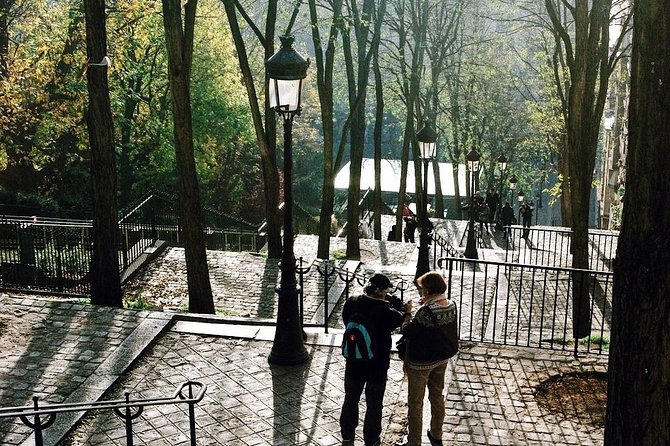
The main catch is the hill. This is not a flat stroll, and the route can include steps and uneven cobbles. Bring comfortable shoes, water, and patience, especially in summer heat or rain.
Key points to know before you book
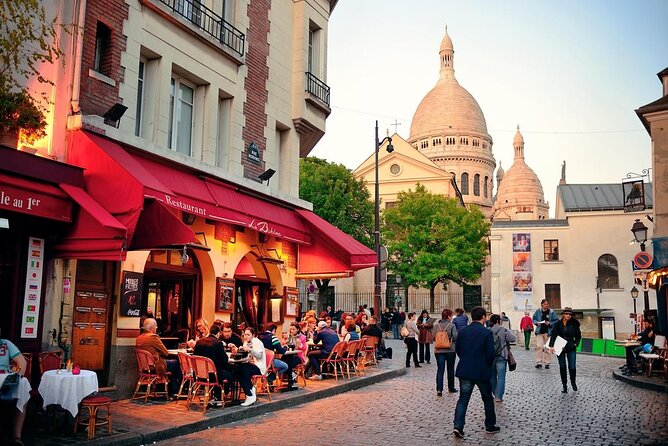
- Start at Blanche: The walk begins near the Moulin Rouge and climbs steadily toward Sacré-Coeur.
- See more than the basilica: The route includes Dalida’s statue and home, Van Gogh’s former house, Place du Tertre, the Moulin de la Galette, and the old Bateau-Lavoir.
- Expect strong storytelling: Guides such as Francois, Hugo, Eden, Tamari, Daniel, and Alasdair have been praised for clear English, humor, history, and personal recommendations.
- Choose your group carefully: The private option gives your party its own guide. A lower-priced semi-private option may place you with other participants.
- Allow for weather: The tour runs rain or shine, and evening departures may offer sunset views when the season and weather cooperate.
- Plan your own transport: Hotel pickup and drop-off are not included. The tour begins at Blanche and ends in Montmartre.
Why Montmartre works best with a guide
Montmartre is easy to underestimate. You can ride the funicular, walk around Sacré-Coeur, take a few photographs, and leave thinking you have seen it. But the neighborhood’s best details are often tucked beside ordinary doors and side streets.
A guide gives those details a place in the story. The Moulin Rouge points to Montmartre’s cabaret past. Rue Lepic brings up Vincent van Gogh and his brother Theo. The old studios and meeting places explain why painters, writers, performers, and art dealers gathered here.
I especially like the way this route moves beyond the most crowded parts of the hill. You still see the famous sights, but you also pass a wild garden, a working remnant of Montmartre’s vineyard, and residential streets that are easy to miss on your own.
The guides bring different strengths. Francois is described as animated, funny, and good at tailoring the walk to a group. Hugo is noted for clear English, a history background, and patience with questions. Eden is praised for personal stories, warmth, and careful pacing. Tamari has been especially attentive in difficult heat, while Daniel and Alasdair have been appreciated for keeping the history lively in wet weather.
Guide assignments can vary, so you should not book on the assumption that you will receive one particular person. Still, the pattern is clear: this experience depends heavily on the guide, and the guide’s role is much more than pointing out buildings.
More Montmartre and Sacré-Cœur Tours:
- Montmartre Hidden Gems and Scenic Highlights Walking Tour
★ 5.0 · 2,684 reviews - Montmartre Hill French Gourmet Food and Wine Tasting Walking Tour
★ 5.0 · 2,588 reviews - Paris: Montmartre Cheese, Wine & Pastry Guided Walking Tour
★ 4.8 · 2,255 reviews
Starting at Blanche and the Moulin Rouge
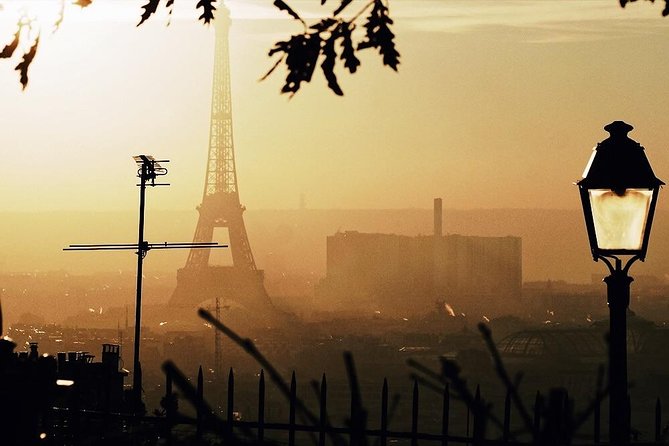
The meeting point is at Blanche, in the 18th arrondissement. This is a useful place to begin because it puts you at the lower edge of Montmartre, rather than dropping you at the basilica and skipping the climb.
The first major sight is the Moulin Rouge. Its red windmill has become one of Paris’s best-known symbols of cabaret. The building is famous for its entertainment and for its connection to artists such as Auguste Renoir.
You do not get a Moulin Rouge show with this walk, and admission is not included. The stop is about orientation and history. Your guide sets the scene before leading you uphill into the quieter streets.
This opening section also makes the physical effort clear. Montmartre is a hill, and the route gains height as it moves toward Sacré-Coeur. If you need frequent rests, tell your guide early. The tour can be adapted to the group to some degree, but you should still have a moderate level of fitness.
Van Gogh, Rue Lepic, and the artists of Montmartre
The walk continues toward the house on Rue Lepic where Vincent van Gogh lived with his brother in 1886. You see the exterior rather than entering a museum or private residence, but the address gives the neighborhood’s art story a concrete point.
From there, the guide fills in the wider picture of Montmartre as a place where artists lived, worked, argued, and shared ideas. Picasso and other major figures are tied to the area, and the old buildings make that past easier to picture.
The value here is not in seeing a grand monument. It is in noticing how close the artists’ homes and studios were to cafés, cabarets, squares, and one another. A good guide can turn a simple doorway into a useful lesson in how creative communities formed.
This is also where the tour’s English-language quality matters. Some historical names and events can become confusing when spoken quickly. Guides such as Hugo have been particularly appreciated for clear pronunciation, while Francois and Eden are known for making the stories entertaining rather than dry.
Dalida’s square and a quieter side of the hill
Place Dalida is a small square dedicated to Dalida, the French music icon. Her statue has become a local point of tribute, and fans continue to visit it.
The stop gives the walk a broader view of Montmartre. This is not only a painters’ district. Its identity also includes music, performance, personal tragedy, and the modern visitors who come to honor famous residents.
You will later see La Maison de Dalida on Rue Orchampt, where she lived from 1962 to 1987. The house is also associated with her death in 1987. The guide should handle this part with care. It is a meaningful place, but not a lighthearted photo stop.
Place Dalida is one of the moments where a private tour can feel more useful than a large group walk. You can ask about her career, the neighborhood, or how Montmartre changed over time without holding up a crowd.
More walking tours in Paris:
- Paris Top Sights Half Day Walking Tour with a Fun Guide
★ 5.0 · 2,893 reviews - Paris Île de la Cité and Notre-Dame Walking Tour With Crypt
★ 5.0 · 2,272 reviews - Paris in a Day: Louvre or Orsay, Eiffel Tower, City Walk & Cruise
★ 5.0 · 1,956 reviews - Paris: Montmartre Highlights Walking Tour with a Local Guide
★ 4.9 · 1,668 reviews
A wild garden and one of Paris’s last vineyards
Jardin Sauvage de St-Vincent is an unusual pause in the city. Instead of being manicured into formal flower beds, this sloping plot was left in a more natural state so gardeners could observe its plants, insects, and wider ecosystem.
You pass elderberry trees, ivy, and wild insects. It is a small place, but it breaks up the parade of famous names and adds a reminder that Montmartre is not only stone, paint, and tourism.
Next comes Le Clos Montmartre, one of the last remaining vineyards in central Paris. The vines are tucked among Montmartre’s lanes behind Sacré-Coeur. You do not need a long stop here to understand why it matters. The vineyard preserves a piece of the hill’s older village character.
These two stops are easy to miss if you simply follow the crowds to the basilica. They also give the walk a better rhythm. You move from art and music to plants and agriculture, then back toward the old bohemian quarter.
Au Lapin Agile and Montmartre’s bohemian past
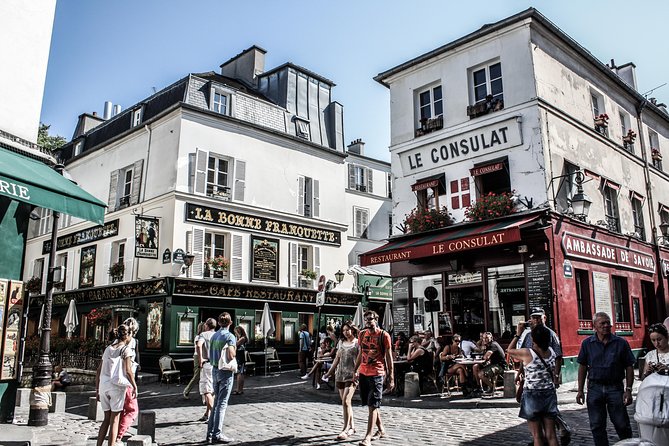
Le Lapin Agile is an old cabaret associated with the Montmartre bohemian set before 1914. Its sign remains a familiar neighborhood symbol.
The building’s importance comes from the people and conversations tied to it. Your guide may explain how cabarets helped make Montmartre a meeting place for artists and performers. Admission is not included, and this walk is not a cabaret performance.
This stop works best as part of the larger story. By this point, the route has shown you homes, studios, cafés, squares, and performance spaces. Montmartre starts to feel less like a collection of postcard locations and more like a neighborhood built around social life and creative work.
Reaching Sacré-Coeur and the great Paris view
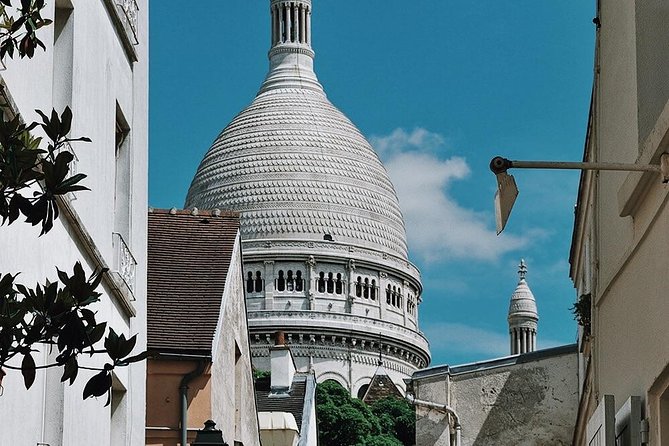
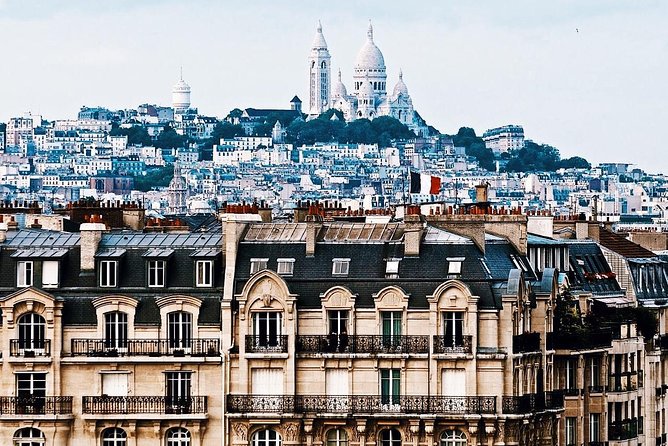
The Basilica of Sacré-Coeur is the visual prize of the climb. Its white exterior dominates the hill, and from the upper part of Montmartre you get wide views across Paris.
The church was completed in 1914 and is dedicated to the Sacred Heart of Jesus. Inside, the large mosaic of Christ is one of the major features. The tour allows time to enter and look around, though increased security measures can sometimes limit interior access at attractions.
Your guide provides context, but you also get time to take in the basilica at your own pace. Dress respectfully for the church, and remember that this is an active religious site rather than only a monument.
The view is one of the strongest reasons to choose this tour. An evening departure may line up with sunset, depending on the season and weather. I would not book solely for a guaranteed sunset, since the timing is not promised, but late-day light can make the hill especially rewarding.
The walk is still not over at Sacré-Coeur. You continue through the upper neighborhood, so save some energy for the remaining streets.
Place du Tertre and the old art quarter
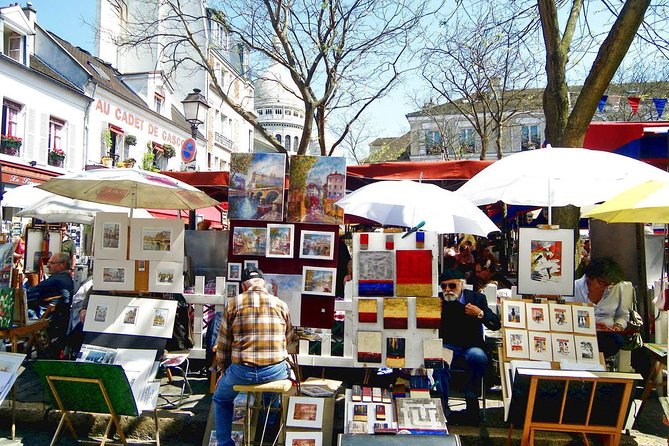
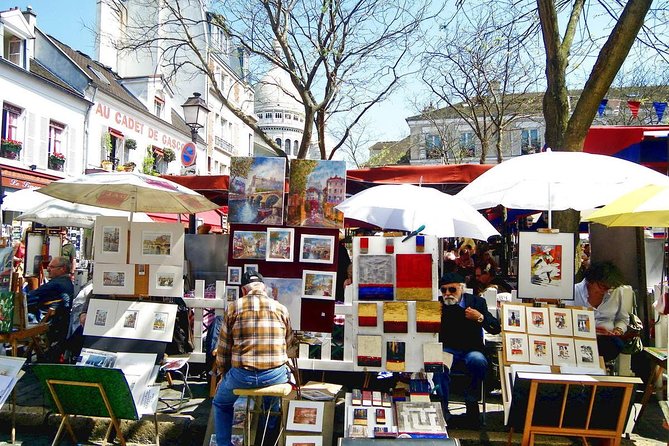
Place du Tertre is the best-known artist square in Montmartre. Painters set up easels here, continuing a tradition linked to the district’s earlier role as a center for modern art.
The square can feel crowded and commercial, especially at busy times. That is part of the experience, but it may not match the quiet bohemian image many people bring with them. A guide helps you separate the present-day scene from the older story.
Nearby, the Espace Dali is devoted to Salvador Dalí and includes about 300 original works, including sculptures and engravings. You pass the museum rather than touring it, and admission is not included. If Dalí is a major interest, you can return later for a separate visit.
The route also includes the Bateau-Lavoir, once an artist residence and meeting place for painters, writers, actors, and art dealers. It is one of the key addresses in Montmartre’s creative story, even though the stop itself is brief.
The Amélie connection and Place des Abbesses
Film fans will recognize parts of Montmartre from Amélie. The tour includes the Amélie Café area, giving you a chance to connect familiar scenes with the real neighborhood.
You also pass Place des Abbesses and its Metro entrance. Designed by Hector Guimard, it is one of only two surviving Paris Metro entrances of this type. The Art Nouveau curves make it a fitting final detail for a walk filled with old signs, studios, cabarets, and artistic design.
The tour ends in Montmartre rather than returning you to your hotel. That is convenient if you want to continue with dinner or explore on your own, but you need to arrange your onward transport. The area is near public transportation, and a taxi or Uber is recommended for hotel transfers.
Is $59.69 a fair price?
At $59.69 per person, the value depends on the group option and the size of your party. For a private tour, the price can be reasonable for a couple or family because you are paying for a dedicated English-speaking guide, not just admission to a site.
The price includes the 2.5-hour guided walk and entry to Sacré-Coeur when access is available. It does not include hotel pickup, drop-off, cabaret admission, the Dali museum, or gratuities.
The private format also gives you more control. A family with teenagers can ask for more art history. A couple interested in film can focus on Amélie. A group that wants restaurant advice can use the final minutes to ask the guide where to go next.
There is also a semi-private option at a lower price. Check the exact choice before paying, since the private guide and private group benefits do not apply to the save-money option.
Practical advice for the 2.5-hour walk
Wear shoes with a firm grip. Montmartre’s cobbles, slopes, and steps are manageable for most people with moderate fitness, but they are not a good match for flimsy footwear.
Carry a bottle of water. In hot weather, the climb can be tiring, and one guide has had to take special care of a group during temperatures around 100 degrees Fahrenheit. An umbrella helps in rain, and a hat is useful in summer.
The tour operates in all weather. Rain will not automatically stop it, so check the forecast and dress for the conditions. The route has outdoor stops throughout, even though you enter Sacré-Coeur.
Do not bring large bags or suitcases. Provide a mobile phone number with the country code when booking, since the operator says it is important for contact.
National celebrations can affect the route. In that case, an alternative path is used while retaining the main highlights, but refunds or discounts are not provided for the change.
Free cancellation is available up to 24 hours before the start time. Cancellations or changes made inside that window are not refunded or accepted.
Who will enjoy this Montmartre tour most?
I would choose this for a first visit to Montmartre, especially if you want the neighborhood explained rather than simply photographed. It also suits families, since the guide can adjust the stories and pace to the group.
Art lovers get addresses connected with Van Gogh, Picasso, Dalí, the Bateau-Lavoir, and the old artist square. Film fans get the Amélie connection. People who like city views get Sacré-Coeur and the elevated panorama.
It is less suitable if you want a flat, slow walk or a long museum visit. The route covers many places, but most stops are brief and exterior. You will see the Dali museum, Moulin Rouge, and Lapin Agile from the outside unless you return separately.
Should you book it?
Book this walk if you want Montmartre’s famous sights tied together by clear stories and smaller neighborhood details. The private option is particularly useful for families, couples, and groups with specific interests.
Skip it if your main goal is only to enter Sacré-Coeur and take the view. You can do that on your own. But if you want to understand why this hill attracted artists, singers, cabaret performers, and film makers, the guide adds real value. Just bring good shoes, allow for rain, and remember that the best part of Montmartre comes with a climb.
FAQ
How long does the Montmartre and Sacré-Coeur tour last?
The tour lasts approximately 2 hours and 30 minutes.
Where does the tour begin?
It begins at Blanche in Paris, near the Moulin Rouge.
Where does the tour end?
It ends in the Montmartre area.
Is hotel pickup included?
No. Hotel pickup and drop-off are not included. Uber or a taxi is recommended for hotel transfers.
Is the tour private?
The standard private option is for your group only. A separate semi-private option is available at a lower price, but the private guide and private group benefits do not apply to that choice.
What language is the tour offered in?
The tour is offered in English.
Does the tour enter Sacré-Coeur?
The experience includes time to explore inside Sacré-Coeur when access is available. Increased security measures can sometimes prevent interior visits.
Is the walking route difficult?
You need a moderate level of fitness. Montmartre is hilly, and the route includes cobbled streets and uphill walking.
Can I cancel for a full refund?
Yes. You can cancel at least 24 hours before the local start time for a full refund. Cancellations or changes made less than 24 hours before the start time are not refunded or accepted.
Just added around Paris
- Paris: The Da Vinci Code Walking Tour with a Local Guide★ 4.3 · 5 reviews
- Paris: Flea Market Insider’s Tour in Extra-Small Group★ 4.6 · 73 reviews
- Paris: Private Fashion Tour (Chanel, Dior, Sex & the City)★ 5.0 · 3 reviews
- Paris: Floral Earrings workshop★ 5.0 · 3 reviews
- Paris: Fashion History Walking Tour in the Heart of Paris★ 4.9 · 22 reviews
- PARIS: Family e-bike longtail renting★ 5.0 · 3 reviews
- Paris: Famous Monuments Cycling Tour★ 4.7 · 20 reviews
- Paris: private city tour with seine river cruise★ 4.8 · 28 reviews
Montmartre and Sacré-Cœur Tours, compared.

Montmartre Hidden Gems and Scenic Highlights Walking Tour
Read our review →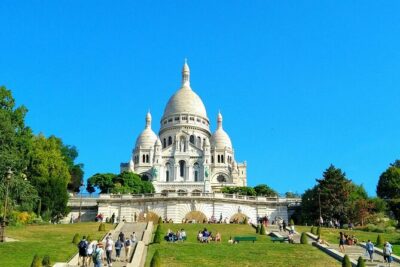
Montmartre Hill French Gourmet Food and Wine Tasting Walking Tour
Read our review →
Montmartre Cheese, Wine & Pastry Guided Walking Tour
Read our review →
Montmartre Highlights Walking Tour with a Local Guide
Read our review →
Sacré-Coeur and Montmartre Tour with Expert Guide
Read our review →
Private Montmartre Food Tour with Wine, Cheese & Pastries
Read our review →
Paris Montmartre Food Tour – A Full French Meal by Do Eat Better
Read our review →
Hidden Montmartre: Paris’ Secret Streets Walking Tour
Read our review →Browse the lists this tour appears in