
Reviewed · PARIS WALKING TOURS
Paris Revolutionary Walking Tour: Iconic French Sights & Stories
The French Revolution feels far more real when you trace it across Paris instead of meeting it only in a museum. This walk links the National Assembly, Pont de la Concorde, Place de la Concorde, the Tuileries, Place Vendôme, and the Opéra, showing how politics, architecture, and public space shaped one another. I like the small group of eight or fewer, which gives you room to ask questions. I also like the wide views from Pont de la Concorde, where several major Paris sights line up at once.
The main consideration is pace. Six stops in about two hours means you’ll get a smart introduction rather than a full treatment of every event. The tour runs rain or shine, and the route can change because of Olympic-related conditions, so come prepared to walk outdoors.
Key points to know before you book
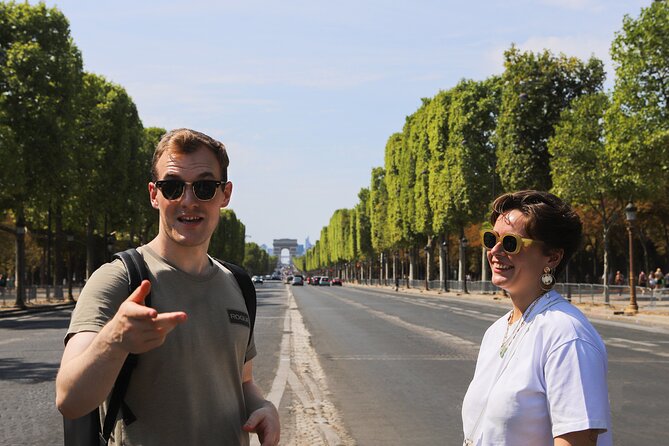
- Follow the Revolution from politics to opera: The route begins at the National Assembly and ends at Palais Garnier, linking major events with the city’s later cultural life.
- Get one of Paris’s best monument views: Pont de la Concorde brings Notre Dame, the Eiffel Tower, Alexander III Bridge, and Sacré Coeur into one broad scene.
- Keep the group personal: The maximum is eight people, with a private option also available.
- Ask practical Paris questions: City navigation advice, restaurant suggestions, and ideas for further exploring are part of the experience.
- Expect strong storytelling: Guides such as Lou, Alex, and Walid have brought humor, architecture, politics, and revolutionary events into the walk.
- Plan for outdoor conditions: There are no hotel transfers, and the tour continues in bad weather unless the provider cancels for not reaching the minimum of two people.
Why this route gives Paris a useful historical frame
Many Paris walks focus on grand buildings and attractive streets. This one asks a sharper question: what happened here when France changed its political system, challenged royal power, and remade public life?
You begin at 1 Place du Palais Bourbon, home of the National Assembly. From there, the route moves toward the Seine, Place de la Concorde, the Tuileries, Place Vendôme, and the Opéra. That progression lets you see Paris as both a political center and a city built for ceremony, power, commerce, and spectacle.
I like this approach because revolutionary history can otherwise feel like a long list of names and dates. Here, the setting does some of the teaching. A bridge, square, garden, column, or government building gives each story a physical point.
You should also expect a guide-led walk rather than a performance with elaborate props or museum access. The value comes from explanation, questions, and connections that are easy to miss when you explore these places on your own.
More walking tours in Paris:
- Paris Top Sights Half Day Walking Tour with a Fun Guide
★ 5.0 · 2,893 reviews - Montmartre Hidden Gems and Scenic Highlights Walking Tour
★ 5.0 · 2,684 reviews - Montmartre Hill French Gourmet Food and Wine Tasting Walking Tour
★ 5.0 · 2,588 reviews
Starting at the National Assembly
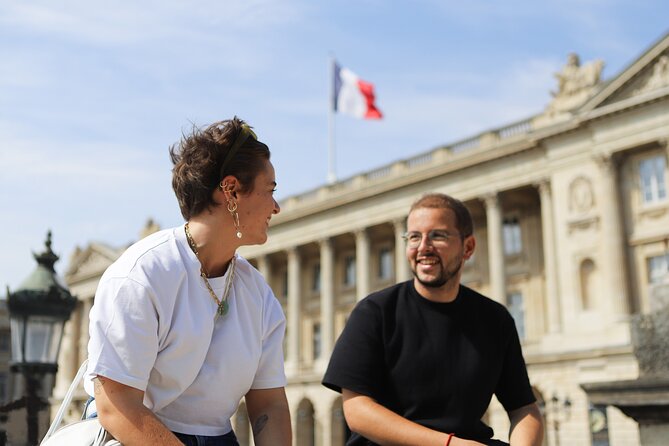
The walk opens at the National Assembly, at 1 Place du Palais Bourbon. You spend about 20 minutes here, learning how this site connects to French politics and the development of democratic government.
This is a fitting starting point. The building gives the tour a clear political anchor before the route moves into grand public spaces and royal-era settings. You can expect the guide to explain why this part of Paris mattered during periods of political change, and how national decisions continue to be made here.
The admission charge for this stop is listed as free, but the experience is an outdoor walking visit rather than a promise of an interior tour. If entering the building is important to you, ask about that before booking.
This first stop also sets the tone for the small-group format. With no more than eight people, you should have a better chance to ask about constitutional change, the Revolution, or anything else that catches your attention than you would on a large city walk.
Seeing four major monuments from Pont de la Concorde
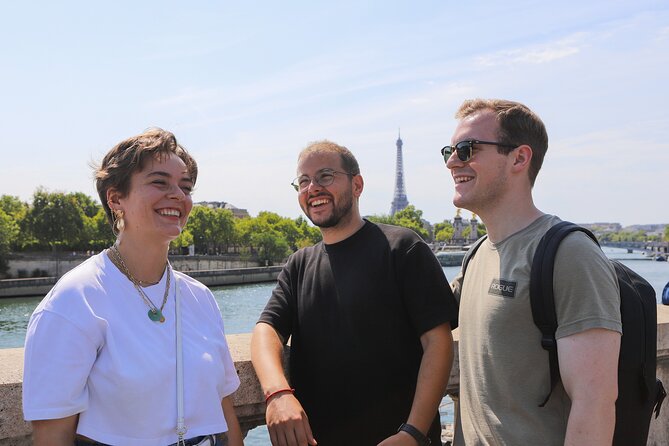
The route then reaches Pont de la Concorde for about 10 minutes. The stop is short, but the view does a lot of work.
From the bridge, you can look toward Notre Dame, the Eiffel Tower, Alexander III Bridge, and Sacré Coeur. These sights belong to different parts of Paris and different periods, yet the bridge lets you consider them together. It is a useful reminder that the city’s story did not stop with the Revolution.
I especially like this pause because it breaks up the political discussion with a clear visual reward. You can take in the river, the grand avenues, and the monuments while the guide explains how Paris fits together.
Ten minutes is enough for a look and some photographs, but not enough for a long riverside stop. If you want extended time at the bridge, you may need to return on your own later. The guide’s city-navigation advice can help you do that.
Place de la Concorde and the hard facts of revolution
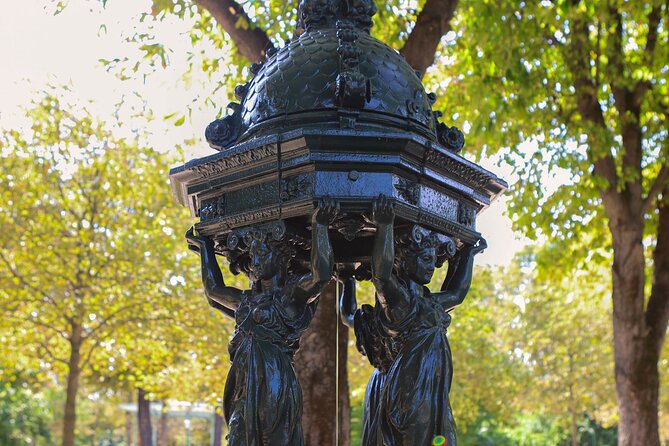
Place de la Concorde receives the longest stop, about 30 minutes. That makes sense. This is the emotional center of the route and the place where the guide can most directly connect the physical city with the French Revolution.
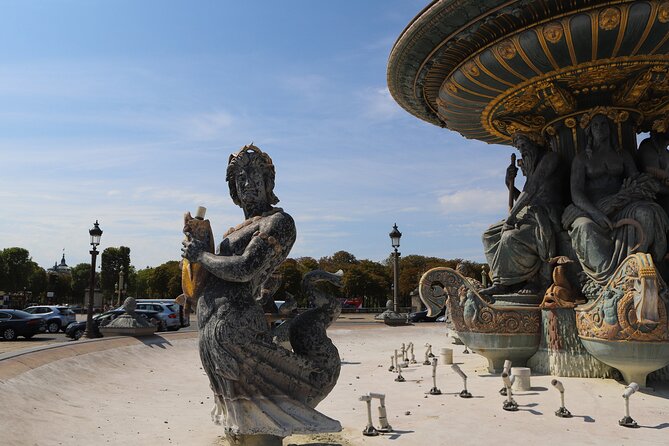
You stand in the square where King Louis XVI was executed, among other major events. The setting today is broad and ornate, with its fountain and obelisk, but its past is much more severe. That contrast gives the guide a strong way to explain how public squares could become stages for national conflict.
I would give this part your full attention. It is easy to admire the architecture and miss the human cost attached to the site. A good guide can help you hold both facts at once: this is a beautiful Parisian space, and it was also a place of violence and political judgment.
The 30-minute timing gives you room to ask questions rather than simply hear a short explanation and move on. If you are interested in the Revolution’s personalities, changing ideas, or the way public opinion shaped events, this is likely the most useful section of the walk.
Same city, a completely different afternoon:
- Paris: Louvre Museum Timed-Entrance Ticket
★ 4.6 · 71,977 reviews - Disneyland® Paris 1-Day Ticket
★ 4.6 · 49,412 reviews - Paris: Versailles Palace and Gardens Full Access Ticket
★ 4.6 · 41,579 reviews - Paris: Evening River Cruise with Music
★ 4.4 · 22,721 reviews
A quieter turn through the Tuileries
After the square, you enter the Jardin des Tuileries for about 20 minutes. The mood changes quickly. The garden offers a calmer setting after the political weight of Place de la Concorde.
The guide uses the Tuileries to explain its cultural and historical role, while you walk through one of central Paris’s most carefully arranged open spaces. I like the contrast here. A tour about upheaval needs a quiet pause, and the garden gives you one without leaving the historical route.
This is also a good place to ask broader questions about Paris. You can connect the garden to the nearby palace and public squares, or ask for advice on what to see next. The tour is designed to offer tips for navigating the city after it ends, so keep a short list of questions ready.
The stop is still only 20 minutes. You will get a taste of the garden, not a long leisurely visit from one end to the other. If you want time to sit, wander, or explore the surrounding museum area, plan to return separately.
Place Vendôme, where power takes a polished form
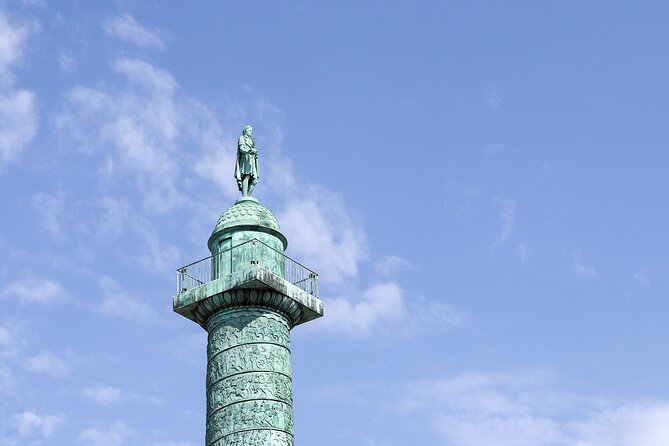
Place Vendôme shifts the subject from revolutionary politics to luxury, status, and Parisian design. You spend about 20 minutes here among prestigious hotels, high-end shops, and formal architecture.
At first glance, this may feel like a detour from the Revolution. It is actually a useful change of focus. Paris is not only shaped by protests and political institutions. It is also shaped by wealth, fashion, prestige, and the way the city presents power.
You can expect the guide to point out the square’s architecture and explain its place in Paris life. The area is also a practical orientation point if you plan to shop, continue toward the Opéra, or simply explore central Paris on your own.
The tradeoff is that this is a look at the square, not a shopping tour. The high-end stores may be interesting to see, but the experience does not include purchases, discounts, or private access.
Finishing at Palais Garnier and the Opéra
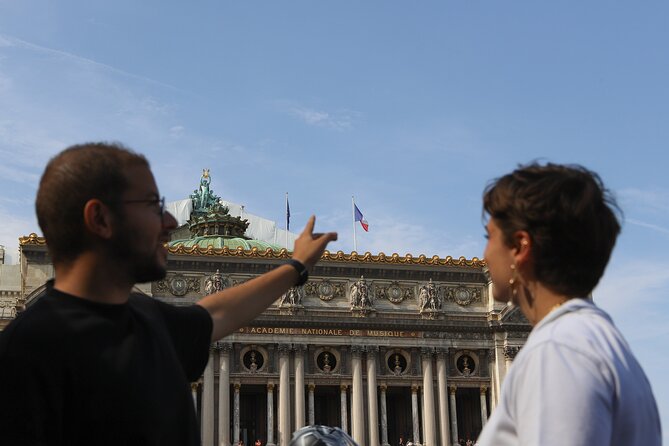
The final stop is the Opéra, ending at Palais Garnier at Place de l’Opéra. You spend about 20 minutes learning about Parisian music, art, culture, and the building’s architecture.
Ending here gives the walk a satisfying arc. You start with national politics and revolutionary change, then finish with the city’s public cultural identity. The route shows how Paris can move from government to spectacle within a short walk.
The exterior of Palais Garnier is a strong final sight, and the guide’s architectural comments help you look past the obvious grand façade. You can also use the location as a launch point for your next activity, since the tour finishes in a central part of the city.
Again, this is not listed as an interior opera-house visit. If you want to enter Palais Garnier, you should arrange that separately. The tour gives you context and a convenient ending point, but it does not promise an admission ticket.
What the small group changes
The maximum group size is eight, and that matters more than it may sound. A smaller group makes it easier to hear beside traffic, stop without blocking a large section of pavement, and ask questions without holding up a crowd.
The tour can also be booked as a private experience. That option may suit families, couples, or small parties that want more control over questions and pace. The supplied information does not give a separate private-tour price, so check the current rate before deciding.
The guides bring different personalities to the route. Lou has been described as personable and especially engaging, with a strong interest in Paris and revolutionary events. Alex connects history with architecture, while Walid adds practical city advice, including restaurant suggestions.
Those names give you a sense of the guide style, but your assigned guide may differ. The common thread is a focus on explanation, humor, and making the city easier to understand rather than rushing through a script.
Is $66.23 a fair price for two hours?
At $66.23 per person, this is not the cheapest way to walk around central Paris. You are paying for a local guide, a small group, a planned historical route, and help making sense of places you could technically visit for free.
The value depends on how you like to travel. If you already know the Revolution well and prefer to read plaques or use an audio guide, the price may feel high. If you want a human guide to connect politics, architecture, and city geography in a short time, the cost is easier to justify.
The included city tips add practical value. You can ask where to continue after Palais Garnier, which areas deserve more time, or where to find a suitable restaurant. One guide has also been praised for useful restaurant recommendations, so come ready to ask for specific advice.
The group size helps the price. A maximum of eight is a very different experience from a large crowd of 25 or more, especially at Place de la Concorde and along the river. Since every listed stop has free admission, your payment goes mainly toward the guide’s time and interpretation.
Timing, walking, and weather
The tour lasts about two hours, with the six stops adding up to that schedule. The route is long enough to give you a clear view of central Paris, but short enough to fit into a busy day.
You should wear comfortable shoes and dress for outdoor conditions. The tour operates rain or shine, and one guide continued through heavy rain, so do not book this expecting a weather backup by default.
The meeting point is near public transportation at 1 Place du Palais Bourbon. The tour finishes at Palais Garnier, not back at the starting point, which is useful if you plan your afternoon around the Opéra area.
Hotel pickup and drop-off are not included. Service animals are allowed, and most people can participate, but the experience is still a walking tour across public streets and open spaces. If you have specific mobility concerns, confirm the route details before booking.
Because the experience may be canceled if fewer than two people book, keep that possibility in mind when arranging a tightly scheduled day. Confirmation arrives when you book, and free cancellation is available up to 24 hours before the start time. Changes or cancellations inside that window are not refunded.
Who will get the most from this Paris walk?
I would choose this tour if you want historical context without spending half a day inside a museum. It suits first-time visitors who want to get their bearings, as well as returning visitors who have seen the monuments but never connected them through revolutionary history.
It should work well for families, too, especially if your group enjoys stories, architecture, and a guide with a sense of humor. The small size makes it easier to ask questions, and the two-hour length is less demanding than a full-day history tour.
History fans will find the strongest reason to book. The route puts Louis XVI’s execution, national politics, public squares, gardens, luxury, and opera into one compact story.
I would be more cautious if you want extensive time at each sight, interior admissions, or a route devoted only to the Revolution. You will see several locations, but some stops last only 10 or 20 minutes.
Should you book the Paris Revolutionary Walking Tour?
Book it if you want Paris to make more sense after your first few days in the city. The tour gives you a focused route, four major monument views from one bridge, a serious look at Place de la Concorde, and useful advice for continuing on your own.
The best fit is a curious visitor who values a lively guide over a long list of included tickets. The main limits are the two-hour schedule, outdoor-only format, and weather policy.
For $66.23, I see it as a worthwhile introduction when you want history, architecture, and practical city help in one compact walk. Just bring good shoes, a rain layer, and questions for your guide.
FAQ
How long is the Paris Revolutionary Walking Tour?
The tour lasts approximately two hours.
What is the price of the tour?
The listed price is $66.23 per person.
Where does the tour begin?
It begins at 1 Place du Palais Bourbon, 75007 Paris, France.
Where does the tour finish?
The tour finishes at Palais Garnier, Place de l’Opéra, 75009 Paris, at the opera house.
What language is the tour offered in?
The tour is offered in English.
How many people can join the group?
The maximum group size is eight travelers. A private option is also available.
Does the tour include hotel pickup or drop-off?
No. Hotel pickup and drop-off are not included.
What happens if it rains?
The tour takes place rain or shine. It may also be canceled if the minimum group size of two people is not met.
Can I cancel for a refund?
Yes. You can cancel up to 24 hours before the experience starts for a full refund. Cancellations or changes made less than 24 hours before the start time are not accepted for a refund.
Just added around Paris
- Private Paris Marche d’Aligre Walking Tour with Tastings★ 5.0 · 8 reviews
- Private Louvre Museum Tour for Kids & Families with Alberto or his team in Paris★ 5.0 · 41 reviews
- Private Highlights of Paris Tuk-Tuk Experience★ 5.0 · 26 reviews
- Paris Latin Quarter Walking Tour: History & Culture – Small Group★ 5.0 · 14 reviews
- Private Highlights of Paris Bike Tour★ 4.5 · 15 reviews
- Paris Musee d’Orsay PRIVATE TOUR with a Local Private Guide★ 5.0 · 41 reviews
- Private Half Day Historic Tour★ 5.0 · 58 reviews
- Pere Lachaise Cemetery Paris – Exclusive Guided Walking Tour★ 5.0 · 72 reviews
Paris Walking Tours, compared.
Paris Top Sights Half Day Walking Tour with a Fun Guide
Read our review →
Montmartre Hidden Gems and Scenic Highlights Walking Tour
Read our review →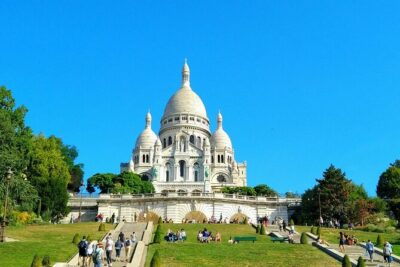
Montmartre Hill French Gourmet Food and Wine Tasting Walking Tour
Read our review →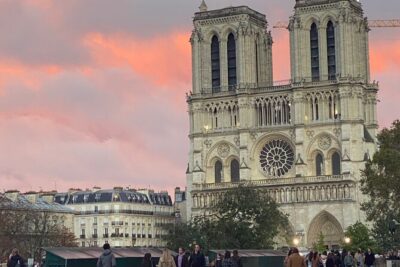
Paris Île de la Cité and Notre-Dame Walking Tour With Crypt
Read our review →
Montmartre Cheese, Wine & Pastry Guided Walking Tour
Read our review →
Paris in a Day: Louvre or Orsay, Eiffel Tower, City Walk & Cruise
Read our review →
Montmartre Highlights Walking Tour with a Local Guide
Read our review →
Browse the lists this tour appears in