
Reviewed · LOUVRE MUSEUM TOURS
Paris: Louvre Museum Skip-The-Line Tour
The clever part of this private Louvre tour is its focus. Instead of wandering through thousands of rooms and hoping you find the famous works, you follow a clear story from the early Renaissance through Neoclassicism and Romanticism. Botticelli, Mantegna, Bellini, Leonardo, David, Delacroix, and Gericault all fit into that two-hour path.
I like the small private format, which lets your guide adjust the pace and explain what catches your eye. I also like the art-history thread, especially the move from medieval religious thinking toward Renaissance humanism and later revolutionary drama. The main drawback is time: two hours gives you a strong introduction, but not a full Louvre visit.
Key points
- A focused two-hour route: See major Renaissance, Neoclassical, and Romantic works without trying to cover the entire museum.
- Private group setting: Your guide can adapt explanations to your interests and keep your party together.
- Major masterpieces included: Expect the Mona Lisa, Nike of Samothrace, Marriage at Cana, Liberty Leading the People, and more.
- Useful meeting point: Meet at the Arc de Triomphe du Carrousel, where your guide carries a red canvas tote bag.
- Guides with a personal teaching style: Boris is praised for linking art to changing ideas about light, history, and society.
- Good flexibility: You can cancel up to 24 hours ahead, and reserve now while paying later.
Why a focused Louvre route helps
The Louvre is not just large. It is easy to lose your sense of time and direction inside it. A private guide gives you a route and a reason for each stop, which matters when your visit lasts only two hours.
This tour concentrates on three major periods: the Renaissance, Neoclassicism, and Romanticism. That structure helps you compare works instead of treating each painting as an isolated treasure. You see how artists changed the way they pictured the human body, religious subjects, political power, light, and emotion.
You will also see art from a much wider span, including Ancient Egypt and Greece through the early 19th century. The advertised route focuses on selected highlights rather than every collection, so think of this as an art-led introduction to the Louvre, not a complete museum tour.
The private format is especially useful if your group has mixed interests. A guide can spend more time on Renaissance painting for one person, political history for another, or the big-name works that younger visitors already know. A family with two teenagers found the format easy to manage, with the guide keeping the visit attentive and organized.
More Louvre Museum Tours:
- Paris: Louvre Museum Timed-Entrance Ticket
★ 4.6 · 71,977 reviews - Paris: Louvre Guided Tour with Reserved Access & Boat Cruise
★ 4.3 · 16,353 reviews - Louvre Museum Masterpieces Guided Tour with Access
★ 4.5 · 12,023 reviews
Meeting at the Arc de Triomphe du Carrousel
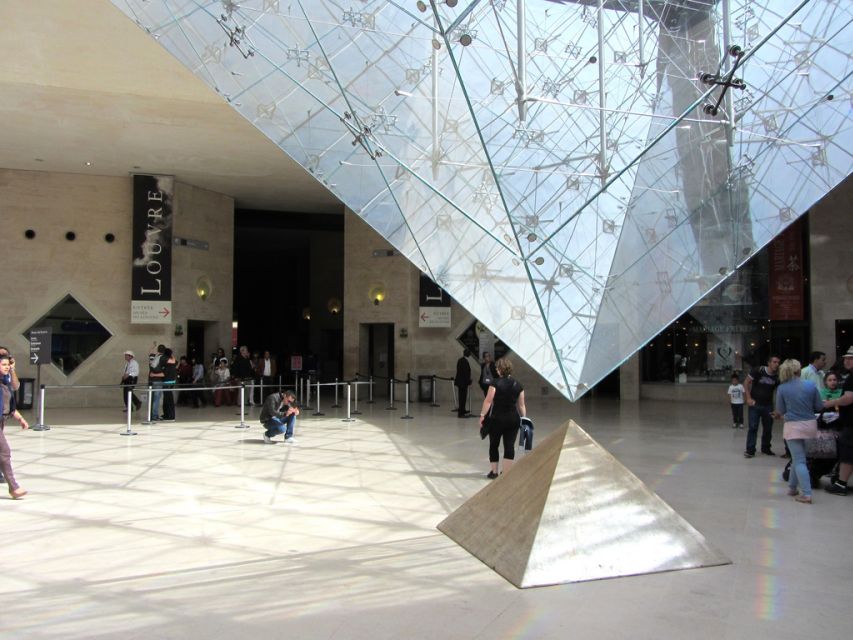
You meet at the Arc de Triomphe du Carrousel, a practical landmark near the Louvre. Look for a guide carrying a red canvas tote bag. That detail is more useful than it sounds, since the area can be crowded and several groups may be gathering nearby.
Give yourself enough time to reach the meeting point. The tour does not include food or drinks, and two hours inside the museum can pass quickly. A snack before or after the visit is sensible, especially if you are traveling with children.
The tour runs rain or shine. The meeting point is outdoors, so dress for the weather even though most of your time will be indoors. Large bags are not allowed. Any item over 55 by 35 by 20 centimeters cannot enter the museum, and oversize luggage is specifically excluded.
Nike of Samothrace and the power of first impressions
One of the route’s early highlights is the Nike of Samothrace, a 2nd-century BC marble figure of the Greek goddess Nike, or Victory. This is a good first lesson in how the Louvre can present a sculpture as an event rather than simply an object.
The figure is famous for its strong sense of movement. Even without its original head and arms, the body and wings suggest a force arriving through wind and spray. Your guide can give you the setting and artistic context that are easy to miss when you are taking a quick photo and moving on.
This stop also establishes the tour’s wider point. The Louvre holds art from many centuries, but the visit is not just a parade of famous names. You are looking at changing ideas about beauty, power, faith, the body, and public life.
Botticelli and the move toward Renaissance humanism
Botticelli’s fresco, Venus and the Three Graces Presenting Gifts to a Young Woman, brings the early Renaissance into view. Its subject and style help explain the period’s renewed interest in classical mythology and the human figure.
This is where the tour’s historical thread becomes useful. You learn about the transition from medieval ways of thinking toward humanism, a movement that placed greater attention on human experience, learning, and the classical past.
A guide can point out why a work feels different from earlier medieval art, even when the subject remains religious or symbolic. Those small changes in posture, expression, space, and attention to the body are easier to understand when someone explains them in plain language.
The fresco is also a reminder that not every Louvre highlight is a giant canvas in a grand gallery. Botticelli’s work rewards a slower look at detail, gesture, and the relationship between the figures.
More art museums in Paris:
- Paris: Louvre Museum Entry Ticket With Host and River Cruise
★ 4.6 · 9,926 reviews - Les Invalides: Napoleon’s Tomb & Army Museum Entry
★ 4.6 · 9,185 reviews - Louvre Museum – Exclusive Guided Tour (Entry Included)
★ 5.0 · 6,296 reviews - Paris: Louvre Museum Hosted Entry and Mona Lisa Audioguide
★ 4.6 · 5,235 reviews
Mantegna, Bellini, and two Renaissance directions
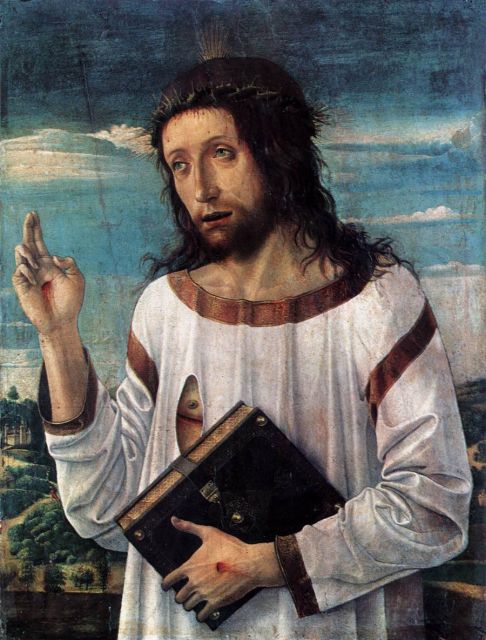
The Renaissance section includes Andrea Mantegna’s Saint Sebastian. Mantegna’s early Florentine art gives you a chance to look at how Renaissance artists handled structure, anatomy, and the physical presence of a religious subject.
The route also includes Venetian paintings by Giovanni Bellini. Bellini is a useful contrast to Mantegna. Where one artist may draw you toward firm form and careful construction, the Venetian tradition is often associated with color and atmosphere. Your guide can help you see those differences rather than leaving you with a list of names.
The tour’s value lies in these comparisons. You are not simply told that both artists were important. You get a way to look at their work side by side, asking how line, color, light, and space shape your response.
Leonardo and the unavoidable Mona Lisa
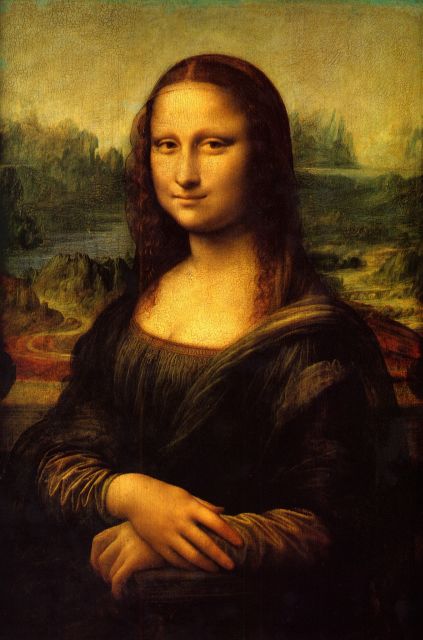
Leonardo da Vinci’s Mona Lisa is part of the route. You should expect this to be one of the busiest stops, and the visit will not give you unlimited quiet time in front of the painting. Still, seeing it with a guide can add context that is often missing in a quick crowd scene.
Leonardo represents the Renaissance ideal of the artist as observer, thinker, and experimenter. The portrait’s small scale can surprise you, especially after seeing monumental works elsewhere in the museum. A guide can direct your attention to the sitter’s expression, the subtle transitions in the face, and the atmospheric background.
The Mona Lisa is famous enough to dominate many Louvre visits. This tour gives it a place in a larger story, which is a strength. You see Leonardo as one part of Renaissance change, rather than treating the painting as the only reason to enter the museum.
Veronese’s Marriage at Cana
Paolo Veronese’s Marriage at Cana is the largest painting in the Louvre. Its size alone makes it a memorable stop, but the real reward comes from taking in the crowded arrangement of figures, architecture, gestures, and color.
The painting depicts a biblical wedding feast, yet it also feels like a grand public ceremony. Your guide can help you follow the visual activity instead of letting the work blur into a wall of detail. Look at how the figures are arranged, where the eye travels, and how the setting creates a sense of spectacle.
This is also a useful contrast with the Mona Lisa. Leonardo asks you to study a quiet face. Veronese fills your view with ceremony and movement. Seeing both in one short route makes the differences between Renaissance artists easier to grasp.
From Neoclassical order to Napoleon
The Neoclassical portion includes Jacques-Louis David’s The Oath of the Horatii and The Crowning of Napoleon. These works bring a sharper sense of public duty, political authority, and controlled composition.
The Oath of the Horatii is built around sacrifice and loyalty. The poses are clear, the gestures are deliberate, and the arrangement feels almost staged. That order is part of the Neoclassical appeal, with lessons from ancient Greece and Rome used to express modern moral ideals.
The Crowning of Napoleon shifts the focus toward ceremony and power. The canvas asks you to think about how rulers use art to shape their public image. The work is not simply a record of an event. It is also a carefully designed statement about authority.
These paintings are valuable stops if you enjoy history as much as art. You can look at brushwork and composition, but you can also ask who is being honored, who is watching, and what message the painting wants you to accept.
Ingres and the strange calm of an odalisque
Jean-Auguste-Dominique Ingres’s Une Odalisque offers a different mood. The sinuous nude is elegant, elongated, and intentionally unlike ordinary human proportions.
That distortion gives you something concrete to discuss with your guide. Why does the body appear stretched? How does the pose affect the picture’s mood? What happens when an artist chooses idealized form over realistic anatomy?
This stop works well in a private tour because it can lead to a short conversation rather than a rushed identification. If your group is interested in the body, beauty, or the rules of academic painting, Ingres gives the guide a useful example.
Romantic drama: Gericault and Delacroix
The final part of the route turns toward Romanticism, where emotion, crisis, and political action take center stage. Théodore Gericault’s The Raft of Medusa is one of the Louvre’s most powerful large paintings.
The subject is a shipwreck and the desperate struggle of survivors. The scale places you close to the drama, while the arrangement of bodies directs your eye between despair and hope. This is not calm, orderly history painting. It is a work about suffering, scandal, and human survival.
Eugene Delacroix’s Liberty Leading the People commemorates the July Revolution of 1830. The central figure of Liberty moves forward over a barricade, carrying the French flag and drawing different kinds of people behind her.
Together, these paintings show why Romanticism feels different from Neoclassicism. David gives you order, moral example, and controlled gesture. Gericault and Delacroix give you turmoil, strong emotion, and history still in motion.
The guide’s role matters here. Boris, one of the guides associated with the tour, was praised for explaining how artists used the sun and light across different periods. That approach can make these paintings more accessible, since light is not only a visual effect. It can create hope, isolate a figure, or sharpen the drama of a political scene.
What the private format changes
A private group is the main reason to choose this experience over a standard large-group visit. You are not listening to a guide who must satisfy a crowd of strangers with unrelated interests. The route can respond to your questions and may be adjusted around what your party wants to understand.
Past feedback also highlights clear explanations, flexibility, and strong historical perspective. Boris is singled out for linking art and light across the ages, while another guide was praised for accommodating a family with teenagers. Those details suggest a teaching style rather than a quick recitation of dates and titles.
The language options are English, French, and Serbo-Croatian. Confirm the language you need when booking, especially if your group depends on one language for the full explanation.
The tour is wheelchair accessible, which is helpful for visitors who need an accessible option. The museum’s size can still make any visit tiring, so the two-hour duration may be a practical advantage for some people.
Is $294 a good value?
At $294 per person, this is an expensive Louvre visit. The price makes the most sense for a private group that values a focused route, live interpretation, and the ability to ask questions.
You are not paying only for entry. The cost also covers a skip-the-line entrance ticket and a private guide. If you would otherwise spend much of your visit finding the right galleries, reading labels, and trying to connect unrelated works, the time saved may matter more than the ticket price.
The value is weaker if you want to wander alone, spend half a day with one collection, or see a large number of works at your own pace. Two hours is enough for the main route, but it is not enough to cover the Louvre in depth.
For a first visit, a family, or a group with limited time in Paris, the price can be justified. For repeat visitors who already know the museum well, a standard ticket and self-guided plan may be better.
Practical details before you book
The tour lasts two hours and operates in a private group. Starting times vary, so check availability for your date.
Skip-the-line entry is included, but you still need to arrive at the stated meeting point on time. The guide carries a red canvas tote bag at the Arc de Triomphe du Carrousel.
Do not bring oversize luggage. Anything larger than 55 by 35 by 20 centimeters will not be admitted, so leave large suitcases elsewhere. Food and drinks are not included.
You can cancel up to 24 hours in advance for a full refund. The reserve-now, pay-later option also gives you some flexibility while your Paris plans are still changing.
Who should book this Louvre tour?
I would choose this tour if you want the Louvre’s major works explained through an art-history story rather than seen as disconnected masterpieces. It is a good fit for first-time visitors, families, couples, and private groups who want to ask questions.
It also suits you if you are curious about how art changed from the medieval period to humanism, then toward political ceremony and Romantic drama. The comparisons between Botticelli, Mantegna, Bellini, Leonardo, David, Gericault, and Delacroix give the visit a clear purpose.
I would think twice if your main goal is a long, unhurried museum day. Two hours passes quickly, and the $294 price per person is hard to defend for a casual look around.
Book it if you want a structured introduction, a private guide, and the museum’s biggest artistic landmarks in one compact visit. Skip it if you prefer wandering alone or need enough time to explore the Louvre’s Egyptian, Greek, decorative arts, and other collections at length.
FAQ
How long does the Louvre tour last?
The tour lasts two hours.
What is included in the price?
The price includes a skip-the-line entrance ticket to the Louvre and a guide. Food and beverages are not included.
Where does the tour meet?
Meet at the Arc de Triomphe du Carrousel. Your guide will carry a red canvas tote bag.
Which languages are available?
The live guide is available in English, French, and Serbo-Croatian.
Is this a private tour?
Yes. The experience operates as a private group.
Is the Louvre tour wheelchair accessible?
Yes, the tour is listed as wheelchair accessible.
Can I bring a large suitcase?
No. Oversize luggage is not allowed, and items larger than 55 by 35 by 20 centimeters cannot enter the museum.
More skip-the-line tickets in Paris
- Versailles: Skip-the-Line Tour of Palace with Gardens Access
★ 4.7 · 9,778 reviews - Versailles: Skip-the-Line Guided Palace Tour and Full Access
★ 4.6 · 5,214 reviews - Louvre Museum: Skip-the-Line Small Group Guided Tour
★ 4.6 · 3,960 reviews - From Paris: Versailles Skip-the-Line Tour & Gardens Access
★ 4.7 · 3,011 reviews
Just added around Paris
- Paris: The Da Vinci Code Walking Tour with a Local Guide★ 4.3 · 5 reviews
- Paris: Flea Market Insider’s Tour in Extra-Small Group★ 4.6 · 73 reviews
- Paris: Private Fashion Tour (Chanel, Dior, Sex & the City)★ 5.0 · 3 reviews
- Paris: Floral Earrings workshop★ 5.0 · 3 reviews
- Paris: Fashion History Walking Tour in the Heart of Paris★ 4.9 · 22 reviews
- PARIS: Family e-bike longtail renting★ 5.0 · 3 reviews
- Paris: Famous Monuments Cycling Tour★ 4.7 · 20 reviews
- Paris: private city tour with seine river cruise★ 4.8 · 28 reviews
Louvre Museum Tours, compared.
Louvre Guided Tour with Reserved Access & Boat Cruise
Read our review →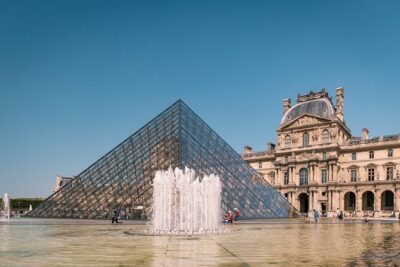
Louvre Museum Masterpieces Guided Tour with Access
Read our review →
Louvre Museum Entry Ticket With Host and River Cruise
Read our review →
Priority Access Louvre with Host -Direct to Mona Lisa
Read our review →
Mona Lisa & Louvre Masterpieces Tour with Reserved Access
Read our review →
Louvre Museum – Exclusive Guided Tour (Entry Included)
Read our review →
Louvre Reserved Ticket and River Cruise Combo
Read our review →Browse the lists this tour appears in