
Reviewed · PARIS WALKING TOURS
Medieval Paris Private Walking Tour
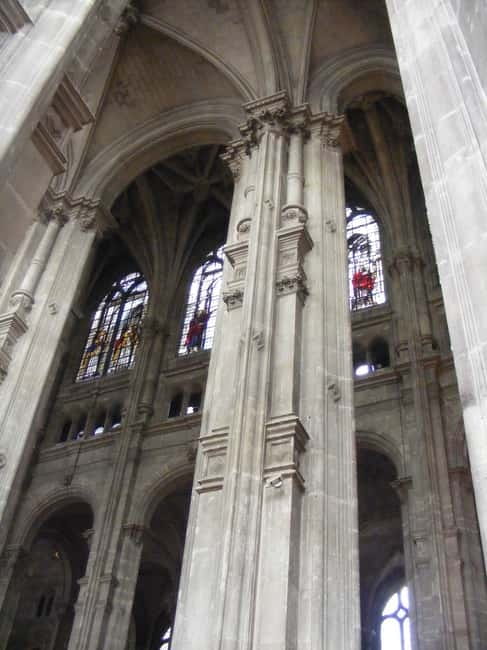
Paris becomes much more interesting when you stop looking only at grand boulevards and start reading its older streets. This private walk follows the city of 800 years ago, from Notre-Dame and the Latin Quarter to medieval traces near Les Halles and the Centre Pompidou.
I like the focused two-hour length and the private format, which give you room to ask questions instead of trailing behind a large group. I also like the unusual mix of stops, especially the links between the Middle Ages and the modern Pompidou Centre. If Isabella leads your walk, you can expect clear, well-informed storytelling.
The main drawback is the price: $171 per person for two hours is a serious investment. You are paying for a private guide and a specialized subject, not for entry to museums, meals, or drinks.
Key points at a glance
- Notre-Dame anchors the route: See the cathedral as the central monument of medieval Paris.
- The Latin Quarter brings the period to street level: Learn how medieval life survives in one of the oldest parts of the city.
- Cluny and the Sorbonne add depth: Connect medieval art, religion, education, and daily life.
- The route includes lesser-known details: Look for medieval symbols on building façades and hear the story of Saint-Jacques Tower.
- Les Halles reveals Paris as a market city: Follow the commercial past to the Fontaine des Innocents.
- A private two-hour format keeps the walk personal: You can ask questions and set the pace within the planned route.
Start at Cluny and enter medieval Paris
You meet your guide in front of the McDonald’s at Cluny la Sorbonne Metro Station on Line 10. Look for the red canvas tote bag. This is a practical meeting point, but give yourself a few minutes to find the right exit and orient yourself before the tour begins.
The location puts you close to the Latin Quarter, one of the oldest parts of Paris. It is a good place to begin because the neighborhood still feels tied to the city’s intellectual and religious past, rather than presenting medieval Paris as a collection of isolated monuments.
Your guide speaks English or French, and the tour is private. That matters here. Medieval Paris can be hard to picture from a modern street unless someone explains what you are looking at, and a private walk lets you stop for clarification when a name, date, or architectural term goes by quickly.
The route is built around the idea of Paris 800 years ago. You will hear about culture, art, architecture, and daily life while walking through streets that retain medieval symbols on their façades. The value is not just in reaching famous places. It is in learning how the pieces fit together.
More walking tours in Paris:
- Paris Top Sights Half Day Walking Tour with a Fun Guide
★ 5.0 · 2,893 reviews - Montmartre Hidden Gems and Scenic Highlights Walking Tour
★ 5.0 · 2,684 reviews - Montmartre Hill French Gourmet Food and Wine Tasting Walking Tour
★ 5.0 · 2,588 reviews
Notre-Dame, the heart of medieval Paris
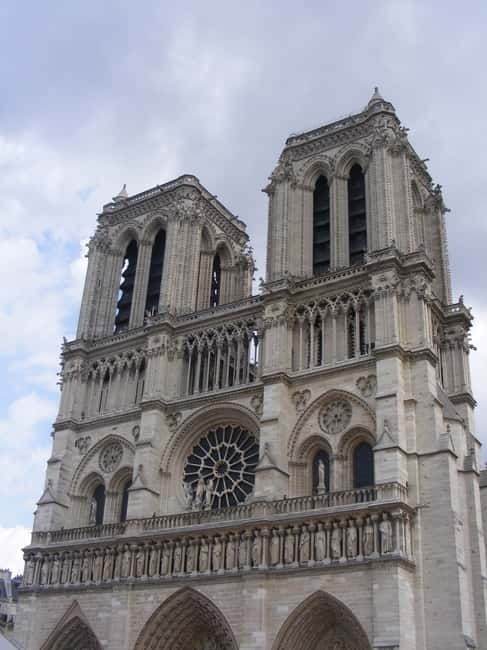
Notre-Dame is the main event of the route. The cathedral was the focal point of medieval Paris, and your guide uses it to explain the role of religion, architecture, and public life in the city.
Even from the outside, Notre-Dame gives you plenty to examine. The scale makes sense only when you remember that this was a central religious and civic building in a city whose streets and buildings were much more compact than modern Paris. Your guide can help turn the façade from a familiar postcard image into evidence of how medieval people saw power, faith, and public art.
The experience is focused on the monument and its historical meaning. It does not include food, drinks, or a separate museum admission, so you should think of it as a guided exterior visit unless your booking details say otherwise. The description promises a visit to Notre-Dame, but it does not specify interior access or timed entry.
That distinction matters if entering the cathedral is your main reason for booking. If your goal is to understand Notre-Dame’s place in medieval Paris, the stop fits the tour well. If you want a detailed visit inside the cathedral, check the current arrangements before paying.
The Latin Quarter keeps the Middle Ages close
The Latin Quarter is where the tour moves from a single major monument into the wider city. Here, you walk through one of the oldest areas of Paris and learn how medieval life survives in the modern neighborhood.
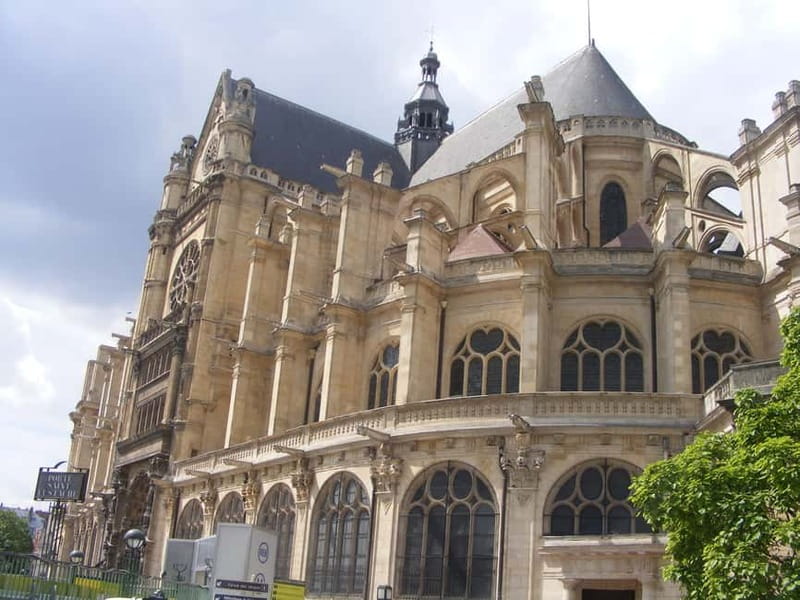
The strength of this part of the walk is the change in scale. Notre-Dame gives you a monumental view of the Middle Ages. The Latin Quarter helps you imagine the streets, institutions, and people around it. Your guide points out façades that preserve medieval symbols, allowing you to read small details instead of simply moving from one famous landmark to another.
You may find this section especially useful if you have already seen the major Paris sights and want a more specific theme. It gives the city a time frame and a storyline. You are not just walking through an old district. You are looking for clues left by an earlier Paris.
The private setup also helps in the Latin Quarter. Narrow streets and layered architecture can create a lot of questions. You can ask why a building matters, how an institution shaped the area, or how much of the visible street pattern connects to medieval Paris.
Hotel de Cluny and the art of the Middle Ages
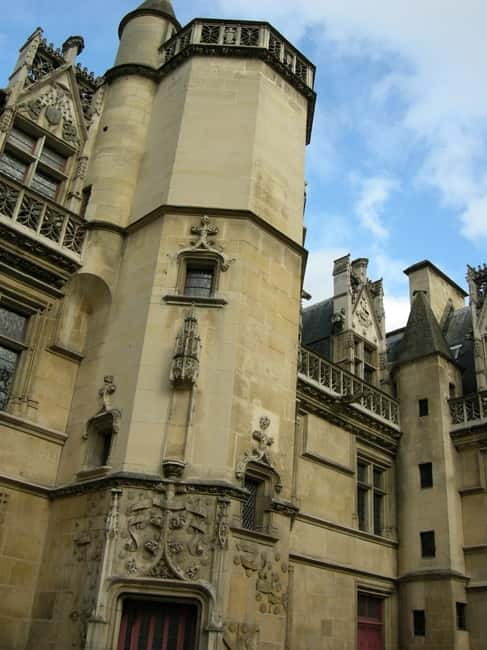
The route passes the Hotel de Cluny, a former mansion belonging to the abbots of Cluny. Today it houses the Museum of the Middle Ages, making it an important stop for understanding medieval art and material culture.
The building itself helps explain the period. It is not merely a museum address. It represents the power and wealth of a major religious order, and its presence in the Latin Quarter connects architecture with the institutions that shaped Paris.
The tour does not include admission to the museum, so you should treat the Hotel de Cluny as a guided exterior stop unless your reservation states otherwise. That can feel limiting if you want to see the museum’s collection, but it also keeps the walk within its promised two-hour schedule.
I like this stop because it gives the route a visual anchor beyond Notre-Dame. You get a second way to think about the Middle Ages: not only through a cathedral, but through a mansion tied to abbots, art, and religious influence.
If you have time after the tour, the museum may be worth considering separately. The walking tour can give you the context you need before deciding how much time to spend inside.
Same city, a completely different afternoon:
- Paris: Louvre Museum Timed-Entrance Ticket
★ 4.6 · 71,977 reviews - Disneyland® Paris 1-Day Ticket
★ 4.6 · 49,412 reviews - Paris: Versailles Palace and Gardens Full Access Ticket
★ 4.6 · 41,579 reviews - Paris: Evening River Cruise with Music
★ 4.4 · 22,721 reviews
The Sorbonne and Europe’s old university tradition
The walk continues to the Sorbonne, one of Europe’s oldest universities. This stop broadens the story from churches and noble residences to education and intellectual life.
The university is important because medieval Paris was not only a religious center. It was also a place where scholars gathered, taught, debated, and helped shape European thought. Your guide connects the Sorbonne to that longer academic tradition.
For you, the value of this stop depends on the kind of history you enjoy. If you like the story of ideas and institutions, it adds a strong layer to the tour. If you are mainly interested in buildings and visual details, the university may feel less dramatic than Notre-Dame or the Gothic Saint-Jacques Tower.
Still, it helps prevent the tour from becoming a procession of pretty façades. You see that medieval Paris was organized around learning as well as worship, trade, and political power.
Saint-Jacques Tower and a missing church
The Flamboyant Gothic Saint-Jacques Tower is one of the route’s most striking details. It is all that remains of the 16th-century Church of Saint-Jacques-de-la-Boucherie.
A surviving tower can tell a more interesting story than a complete building. You are looking at a fragment, and the fragment raises useful questions: What happened to the rest of the church? Why did the tower survive? How did later Paris grow around it?
The stop also gives you a chance to notice the decorative language of Flamboyant Gothic architecture. Your guide can help you distinguish the tower’s shape and ornament from the earlier medieval buildings on the route.
This is the sort of place that is easy to pass without context. On your own, you might register it as an attractive Gothic structure and keep walking. With a guide, it becomes evidence of the city’s repeated rebuilding and changing priorities.
Les Halles and the business of feeding Paris
The route then turns toward Les Halles, an area tied to the mercantile history of Paris. This is an important change in subject. The tour is not only about cathedrals, universities, and powerful religious figures. It also considers commerce and the ordinary business of supplying a growing city.
Markets shaped Paris in practical ways. They brought together sellers, buyers, workers, and goods, and they helped make the area a center of urban life. Your guide explains that commercial side of the medieval city as you walk through a district that has changed greatly over time.
Les Halles can be especially useful for putting medieval Paris into everyday terms. You are encouraged to think about where people bought food, how trade worked, and why certain parts of the city became important. That is a more grounded picture than a simple parade of grand monuments.
The modern setting may make this section harder to visualize than the cathedral or tower. Much has changed, and the medieval scene is not preserved as a complete open-air museum. That is exactly where the guide’s explanation earns its keep.
Fontaine des Innocents and the route’s final details
The Fontaine des Innocents is described as the oldest intact fountain in Paris. It gives the tour a smaller, more intimate landmark near the end of the walk.
A fountain is a useful reminder that city history is also about basic needs. Water, markets, roads, and public gathering places mattered as much to daily life as royal buildings and churches. The fountain helps bring the story down from monumental architecture to the practical details of urban living.
This is another stop where context makes a major difference. Without an explanation, you might admire the fountain and move on. With one, you can connect it to the development of Paris and the survival of older public structures.
The route ends back at the starting point. That is convenient if you plan to continue sightseeing in the Latin Quarter, return by Metro, or stop for a meal nearby. Food and drinks are not included, so you can choose your own break after the walk rather than being tied to a group arrangement.
The Pompidou connection adds a modern twist
One of the more unusual promises of the tour is its connection between the Middle Ages and the ultra-modern Centre Pompidou. The exact explanation will come from your guide, but the point is clear: the story of old Paris does not end at the medieval monuments.
This connection gives the tour a welcome surprise. Paris often gets divided into neat periods: medieval churches here, modern architecture there. A good historical walk shows how later Paris continues to respond to older streets, institutions, building traditions, and urban patterns.
The Pompidou reference also keeps the tour from becoming a narrow lesson in dates. You are asked to compare very different ideas about architecture and the city. That makes the route more useful for anyone who wants to understand Paris as a place built in layers.
You should not expect a full tour of the Centre Pompidou itself. It is included as part of the historical connection, not as a separate museum visit. The tour remains centered on medieval Paris.
What the $171 price buys you
At $171 per person, this is not a budget walking tour. The two-hour duration makes the per-hour cost high, especially since museum admissions, food, and drinks are not included.
The price makes more sense if you are booking for a small private group and want a specialist route rather than a standard introduction to Paris. You get a private guide, a focused subject, and a walk that combines major sights with less obvious details. You also avoid the limits of a large group, where questions and pacing can be harder to manage.
The tour operator, Paris in person private tours, was selected among the top 10 small tour operators in Europe in a 2025 industry award program, from a field of 26,000 companies. That recognition may add confidence, but it does not change the basic value calculation. You are still paying for personal attention and historical focus.
The score is 4.9 from 12 reviews, and the strongest praise centers on the quality of the historical information. One review specifically praises Isabella as a pleasant guide who explains details people often miss on standard Paris tours. That is the key benefit to look for here: not simply seeing the sights, but getting a better explanation of why they matter.
Who should book this private walk?
I would choose this tour if you already know the basic Paris highlights and want a focused introduction to the city’s medieval core. It also suits you if you enjoy architecture, religious history, universities, markets, and the way old cities change over time.
The private format is useful for couples, families, or friends who prefer to ask questions without holding up a larger group. The two-hour length works well early in a Paris visit, when you want historical bearings, or later, when you want to connect familiar monuments in a new way.
You should think twice if you want a relaxed stroll with many café breaks, extensive time inside museums, or a long visit devoted only to Notre-Dame. The schedule covers several locations, so the experience is a moving history lesson rather than a slow, single-site tour.
Wear comfortable shoes and plan for changing weather. The walk operates rain or shine, and the tour remains outdoors as it moves between sites. English and French are available, but you should select the language that lets you follow historical details most easily.
Should you book the Medieval Paris Private Walking Tour?
Book it if you value a private guide, unusual historical connections, and a compact route through the Latin Quarter, Notre-Dame, the Sorbonne, Les Halles, and nearby medieval landmarks. Isabella’s clear historical approach is a strong reason to feel good about the experience if she is assigned to your booking.
Skip it if $171 per person feels too high for a two-hour walk or if you mainly want interior visits and free time. For the right person, the cost buys a focused, personal way to see Paris as a medieval city still visible beneath the modern one.
FAQ
How long is the Medieval Paris Private Walking Tour?
The tour lasts two hours.
Where does the tour begin?
Meet your guide in front of the McDonald’s at Cluny la Sorbonne Metro Station on Line 10.
How do I recognize the guide?
Look for the guide carrying a red canvas tote bag.
Where does the tour end?
The walk ends back at the meeting point.
What languages are available?
The live tour guide can conduct the tour in English or French.
Is this a private tour?
Yes. The activity is offered for a private group.
Is Notre-Dame included?
Yes. Notre-Dame Cathedral is one of the main stops on the walking tour.
Does the tour include museum admission?
Museum admission is not listed as included. The guide passes the Hotel de Cluny, which houses the Museum of the Middle Ages.
Are food and drinks included?
No. Food and drinks are not included.
Does the tour operate in bad weather?
Yes. The tour operates rain or shine.
Just added around Paris
- Paris: The Da Vinci Code Walking Tour with a Local Guide★ 4.3 · 5 reviews
- Paris: Flea Market Insider’s Tour in Extra-Small Group★ 4.6 · 73 reviews
- Paris: Private Fashion Tour (Chanel, Dior, Sex & the City)★ 5.0 · 3 reviews
- Paris: Floral Earrings workshop★ 5.0 · 3 reviews
- Paris: Fashion History Walking Tour in the Heart of Paris★ 4.9 · 22 reviews
- PARIS: Family e-bike longtail renting★ 5.0 · 3 reviews
- Paris: Famous Monuments Cycling Tour★ 4.7 · 20 reviews
- Paris: private city tour with seine river cruise★ 4.8 · 28 reviews
Paris Walking Tours, compared.
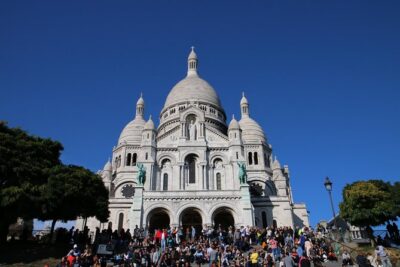
Paris Top Sights Half Day Walking Tour with a Fun Guide
Read our review →
Montmartre Hidden Gems and Scenic Highlights Walking Tour
Read our review →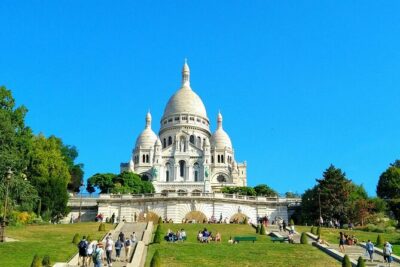
Montmartre Hill French Gourmet Food and Wine Tasting Walking Tour
Read our review →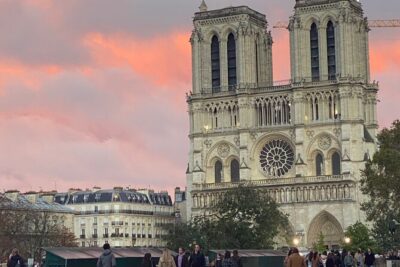
Paris Île de la Cité and Notre-Dame Walking Tour With Crypt
Read our review →
Montmartre Cheese, Wine & Pastry Guided Walking Tour
Read our review →
Paris in a Day: Louvre or Orsay, Eiffel Tower, City Walk & Cruise
Read our review →
Montmartre Highlights Walking Tour with a Local Guide
Read our review →
Browse the lists this tour appears in