

Reviewed · MUSEUMS
Paris: Paradox Museum Entrance Tickets
The Paradox Museum Paris turns optical illusions into a hands-on outing. You walk through a one-way maze of 90 reality-bending exhibits, reading short explanations, trying each puzzle, and taking photos from marked spots that help you get the intended effect.
I like the clear photo points and the mix of fun and science. I also like that children and adults can work out the displays together, with staff available in English and French. The main catch is crowding: each exhibit can take time when several people are waiting to pose.
Key things to know before you go
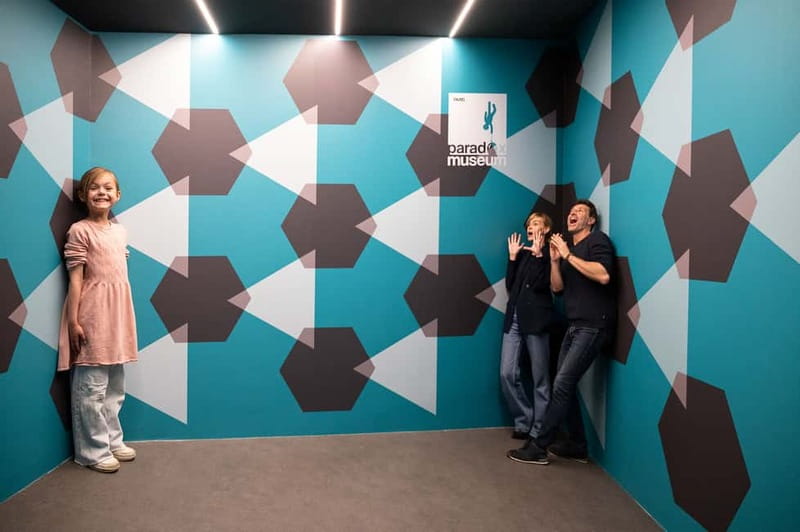
- Ninety optical illusions: Plan to test perspective, balance, scale, and your sense of what is real.
- About 84 to 90 minutes: The stated duration is 84 minutes, while the usual visit takes around 90 minutes.
- Photo-friendly layout: Marked points show you where to stand for the best effect.
- One-way museum route: Follow the signs through the displays rather than wandering freely between rooms.
- Small-group booking: The activity is limited to 10 participants, though individual exhibits can still become busy.
- Family appeal with one health warning: A seven-year-old enjoyed the visit, but the experience is not suitable for people with epilepsy.
What the Paradox Museum Paris actually offers
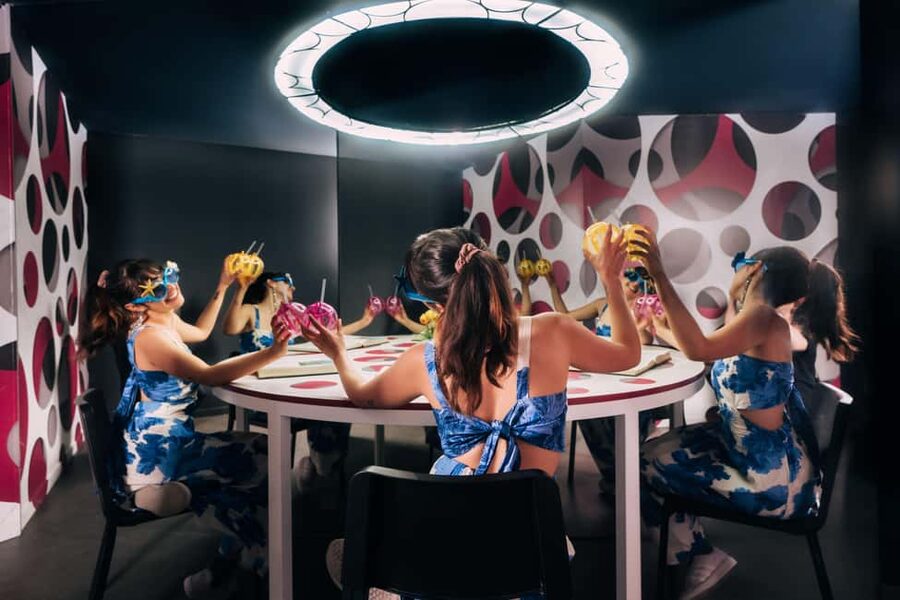
This is not a traditional museum filled with paintings, antiques, or long labels. It is an active series of visual puzzles built around paradoxes, optical tricks, and the gap between what your eyes see and what your brain understands.
You do not simply look at the exhibits. You step into them, follow instructions, pose for photos, and try to work out why the scene appears impossible. The result feels closer to an interactive science center mixed with modern experiential art than to a quiet gallery.
The collection includes 90 different illusions. That number matters because the visit has enough variety to fill a solid hour and more, rather than relying on a handful of large displays. You can take your time, repeat a few photo setups, and read the explanations without racing through.
The museum describes itself as the world’s largest collection of exhibits based on paradoxes. The useful point for you is not the title itself, but the range of things to do. You are likely to move from one type of visual trick to another instead of seeing the same idea repeated across every room.
More art museums in Paris:
- Paris: Louvre Museum Timed-Entrance Ticket
★ 4.6 · 71,977 reviews - Louvre Museum Masterpieces Guided Tour with Access
★ 4.5 · 12,023 reviews - Paris: Louvre Museum Entry Ticket With Host and River Cruise
★ 4.6 · 9,926 reviews
Following the one-way route through 90 illusions
After check-in, signs guide you through a one-way flow. This keeps the route simple and prevents you from missing displays, but it also means you cannot always double back whenever you like.
Each exhibit includes directions explaining what to do and a short note about what is happening. QR codes provide extra information, so you can choose between a quick explanation and a little more science. I like this setup because it lets children act first and ask why afterward, while adults can read more if a particular trick catches their attention.
The displays are designed to be photographed. Marked photo points indicate the best angle or position, which saves you from guessing how to frame the illusion. If you are taking group pictures, staff can help with the camera when available.
That help is useful, but do not expect a staff member at every exhibit. If you visit alone, taking some of the photos may be awkward. Even with a group, you may need to wait your turn or ask another person to press the button.
The one-way design also affects the pace. A quiet visit can move along quickly, while a busy period may bring a line at popular photo points. One practical tip is to avoid rushing through the first few rooms. If you find a display empty, use the chance to take your photos then, since you may encounter more waiting later.
Why the photo setups are a major part of the visit
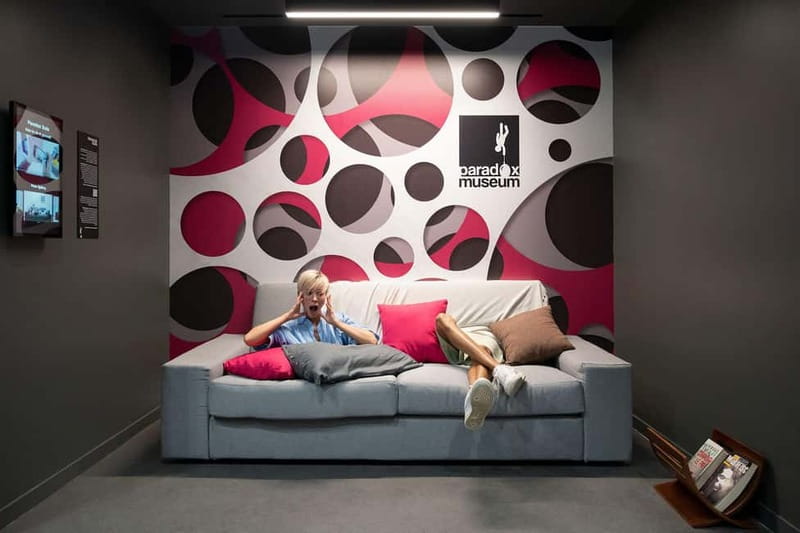
Many optical illusion museums are only as enjoyable as the photos you take home. Here, the marked points make a real difference. They tell you where to place the camera and where to stand, so you can recreate the intended visual trick instead of ending up with a confusing snapshot.
The photo stations also give the visit a social rhythm. You might first watch another person try an illusion, then take your turn, then help someone else with a group photo. That makes the museum particularly suited to families and friends who enjoy playful pictures.
The best images usually require a little cooperation. One person may need to hold the phone, another may need to stand in a precise spot, and everyone may need to wait for the background to clear. Staff are not stationed at every item, so plan to handle some of this yourself.
If you prefer museums where you quietly examine objects at your own pace, the photo focus may feel repetitive. If you like taking unusual pictures and trying displays with other people, it is one of the strongest reasons to book.
The science behind the tricks
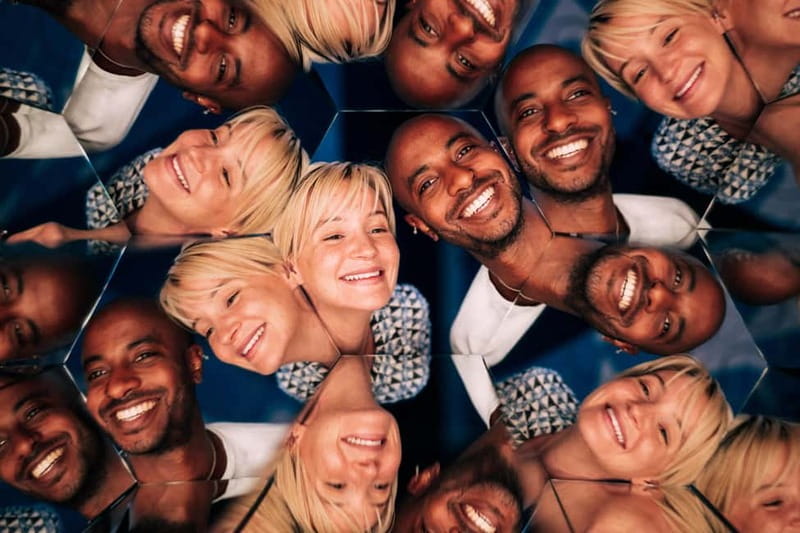
The museum gives each exhibit a short explanation of what is happening. These notes help turn a simple photo stop into a lesson about perception, perspective, and the way your brain interprets visual information.
You do not need a science background. The explanations are there to answer the natural question that follows an illusion: how did that work? QR codes offer more information for anyone who wants to read beyond the brief display text.
I appreciate this balance. The visit can be light entertainment for a child, while an adult can spend more time thinking about why the image appears to defy reality. It also gives parents an easy way to talk with children about the difference between seeing something and understanding it.
Still, this is not a guided museum tour with a named expert leading every room. The format is mostly self-directed. English and French-speaking staff are available to help, but you should expect to explore the route on your own.
That matters if you want detailed explanations for every illusion. One visitor found that it took time to discover the displays without a guide or staff member always nearby. You can get help, but the museum’s main strength is letting you set your own pace.
More tickets and entry passes in Paris:
- Disneyland® Paris 1-Day Ticket
★ 4.6 · 49,412 reviews - Paris: Versailles Palace and Gardens Full Access Ticket
★ 4.6 · 41,579 reviews - Paris: Eiffel Tower Entry Ticket with Optional Summit Access
★ 4.4 · 20,035 reviews - Paris: Moulin Rouge Cabaret Show Ticket with Champagne
★ 4.7 · 16,088 reviews
How long the visit takes, and why timing matters

The booking information lists a duration of 84 minutes. The normal visit is also described as taking around 90 minutes, so I would plan on roughly an hour and a half rather than treating 84 minutes as a strict end time.
Your pace will depend on how many photos you take, how much you read, and how long you wait at popular displays. A fast visit could be shorter. A family group taking turns at each photo point may need the full suggested time.
The last entry is at 6 p.m., two hours before closing. That rule is worth noting because a late arrival could leave you with less time than expected, especially if you want to experience all 90 illusions.
The activity is limited to 10 participants. That small-group format is helpful at check-in and may make staff assistance easier, but it does not guarantee an empty museum. The individual displays are the pinch points, particularly when each person wants a photo.
For the smoothest visit, choose a time when you can stay for the full route. Avoid booking a slot that leaves you watching the clock before dinner or another Paris attraction.
Who will enjoy this most
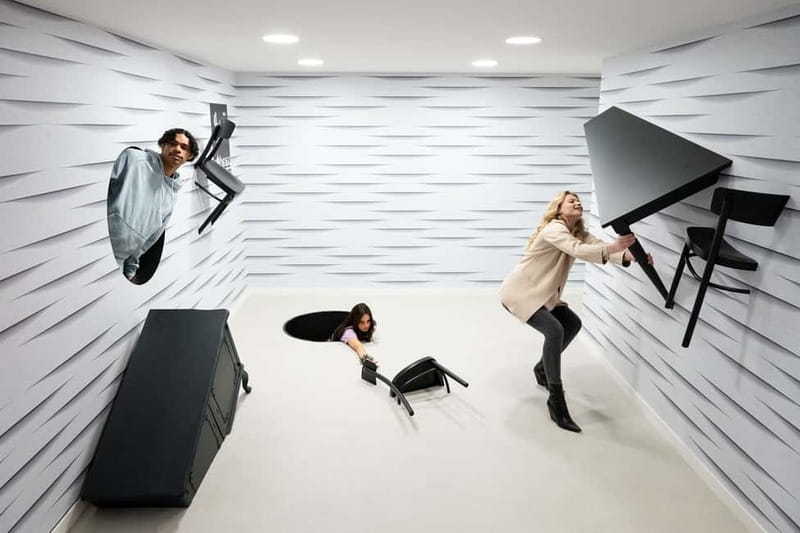
The museum works well for families. A seven-year-old enjoyed the experience, and the hands-on format gives children something to do at almost every stop. Younger visitors may need help reading the explanations or following the photo instructions, but the basic idea of trying each illusion is easy to understand.
It also suits couples, friends, and anyone who likes unusual photos. You can make the visit as playful or as thoughtful as you want. Try the display, take the picture, then read the science, or simply move from one visual surprise to the next.
The experience may be less satisfying for someone looking for a quiet art collection or a detailed, staff-led lesson. It is also not suitable for people with epilepsy, an important safety point because the museum focuses on visual effects.
Solo visitors can still enjoy the exhibits, but photography may take more effort. Staff may help at some points, yet they are not at every display. If your main aim is to create a full set of photos, visiting with a companion is easier.
The boutique and café at the end
The route ends with access to the Paradox Boutique and café. The boutique sells games, clothing, souvenirs, and accessories with a paradox theme.
This final stop makes sense after the visit because the museum’s puzzles are easy to remember through a small game or novelty item. It also gives you a chance to slow down after moving through the displays.
The shop is not reported as being especially overpriced, which helps the overall value. Still, the merchandise is optional. You do not need to buy anything for the museum visit to feel complete.
The café is included with the entry access, though no specific food or drink details are provided. Treat it as a convenient extra rather than the main reason to visit.
Is $33 a fair price?
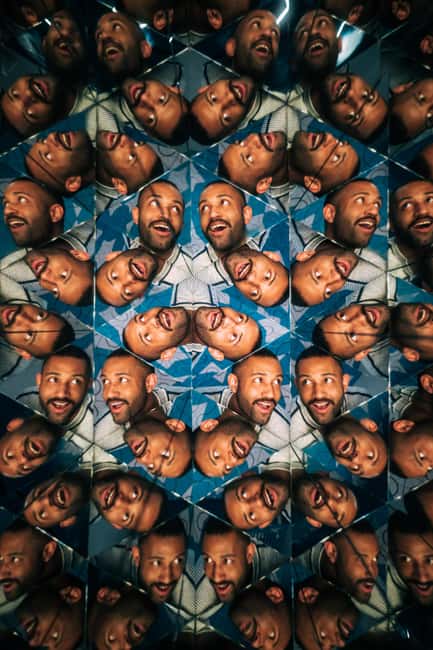
At $33 per person, this is not a cheap drop-in attraction. The value depends on how actively you use the museum.
If you spend only 30 minutes looking at a few displays, the price will feel high. If you stay for the full 84 to 90 minutes, try most of the 90 illusions, take photos, and read the science notes, the cost becomes easier to justify.
The ticket includes access to the exhibits, store, and café. It does not describe a separate guided tour, special workshop, or transport, so you are paying mainly for the interactive collection itself.
I would compare it with other paid indoor attractions in Paris based on your group. For a family that wants a playful break from churches, monuments, and long museum galleries, the ticket can provide good value. For a solo visitor who is not interested in photos, it may be harder to justify.
The strong rating of 4.4 from 635 reviews fits the experience described here: the museum is easy to enjoy, particularly when the staff are helpful and the displays are not crowded. The main value risk is waiting time at the photo stations.
Practical tips for a better visit
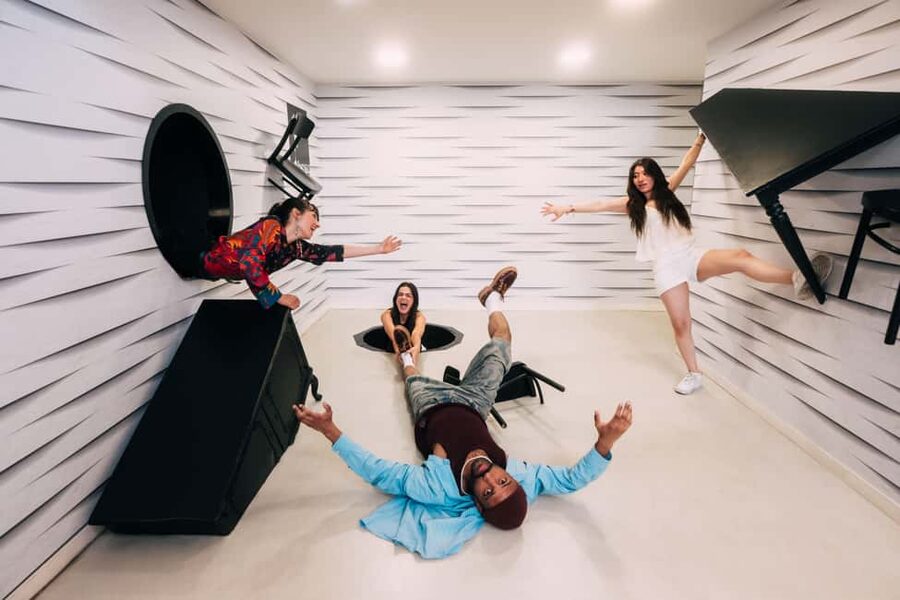
- Allow 90 minutes: The official duration is 84 minutes, but the average visit is closer to an hour and a half.
- Bring a camera or phone: Photography is built into the experience, and marked points help with framing.
- Visit with a companion if photos matter: Solo shots can be harder when staff are not at every exhibit.
- Read the display notes: They explain both the action and the science behind each illusion.
- Use the QR codes selectively: Scan them when you want more detail, but do not feel obliged to read everything.
- Expect some waiting: Popular displays can slow down if several people want to pose.
- Remember the last entry rule: Entry ends at 6 p.m., two hours before closing.
- Check the health restriction: The museum is not suitable for people with epilepsy.
Free cancellation is available up to 24 hours before the activity for a full refund. You can also reserve and pay later, which helps if your Paris schedule is still changing.
The museum is wheelchair accessible, and hosts or greeters speak English and French. Those details make the visit easier for many people, though the supplied information does not describe the layout of every individual exhibit.
Should you book the Paradox Museum Paris?
Book it if you want a playful indoor activity with hands-on illusions, family appeal, and unusual photos. It is especially useful on a Paris day when you want something lighter than a major art museum, or when children need an activity that does not depend on quietly studying paintings.
I would also recommend it for couples and friends who enjoy taking pictures together. The combination of 90 displays, marked photo spots, and short science explanations gives you more to do than simply walk through a themed room.
Think twice if you dislike waiting, prefer a fully guided experience, or want a traditional museum with original historical objects. The displays are self-directed, and staff are not stationed everywhere.
For most people who like interactive attractions, the deciding factor is timing. Visit when you can give the museum a full 84 to 90 minutes, and avoid treating it as a quick photo stop. At $33, you get the best value when you try the exhibits, read the explanations, and enjoy the process rather than racing toward the exit.
FAQ
How long does the Paradox Museum Paris visit take?
The activity duration is listed as 84 minutes, while the average visit takes around 90 minutes. Your timing may vary depending on how long you spend taking photos and reading the explanations.
How many exhibits are at the museum?
The museum has 90 different optical illusions and paradox-based exhibits.
Can I take photos inside the museum?
Yes. The exhibits are designed for photos and videos, with marked photo points showing the best angle for each illusion.
Is the museum suitable for children?
Yes. The interactive format is suitable for people of all ages, and a seven-year-old was able to enjoy the experience.
Is the visit guided?
The route is self-directed and follows a one-way flow system. English and French-speaking staff can answer questions and may help with photos, but staff are not at every exhibit.
Is the museum wheelchair accessible?
Yes, the activity is listed as wheelchair accessible.
What languages are available?
Hosts or greeters are available in English and French. Exhibit descriptions and QR code information are provided as part of the museum experience, but no other languages are specified.
Is the experience suitable for people with epilepsy?
No. The activity is specifically listed as not suitable for people with epilepsy.
What time is the last entry?
The last entry is at 6 p.m., which is two hours before closing.
Can I cancel for a refund?
Yes. You can cancel up to 24 hours in advance for a full refund. Reserve now and pay later is also available.
Just added around Paris
- Paris: The Da Vinci Code Walking Tour with a Local Guide★ 4.3 · 5 reviews
- Paris: Flea Market Insider’s Tour in Extra-Small Group★ 4.6 · 73 reviews
- Paris: Private Fashion Tour (Chanel, Dior, Sex & the City)★ 5.0 · 3 reviews
- Paris: Floral Earrings workshop★ 5.0 · 3 reviews
- Paris: Fashion History Walking Tour in the Heart of Paris★ 4.9 · 22 reviews
- PARIS: Family e-bike longtail renting★ 5.0 · 3 reviews
- Paris: Famous Monuments Cycling Tour★ 4.7 · 20 reviews
- Paris: private city tour with seine river cruise★ 4.8 · 28 reviews
Museums, compared.
Louvre Museum Masterpieces Guided Tour with Access
Read our review →
Louvre Museum Entry Ticket With Host and River Cruise
Read our review →
Les Invalides: Napoleon’s Tomb & Army Museum Entry
Read our review →
Louvre Museum – Exclusive Guided Tour (Entry Included)
Read our review →
Louvre Museum Hosted Entry and Mona Lisa Audioguide
Read our review →
Louvre Museum Tour Mona Lisa & Iconic Masterpieces
Read our review →
Browse the lists this tour appears in