
Reviewed · MUSéE D’ORSAY TOURS
Paris: Best of Orsay Museum Small Group Tour with Tickets
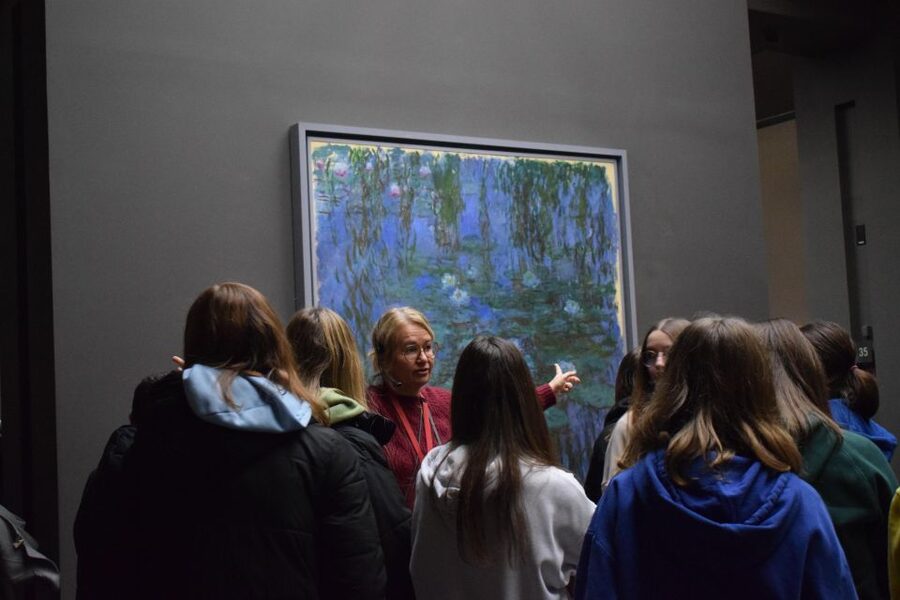
The best part of this two-hour Musée d’Orsay tour is the story it tells. You move from academic painting and Realism to Impressionism and early modern art, seeing how artists such as Manet, Monet, Degas, Renoir, and Van Gogh changed what a painting could be.
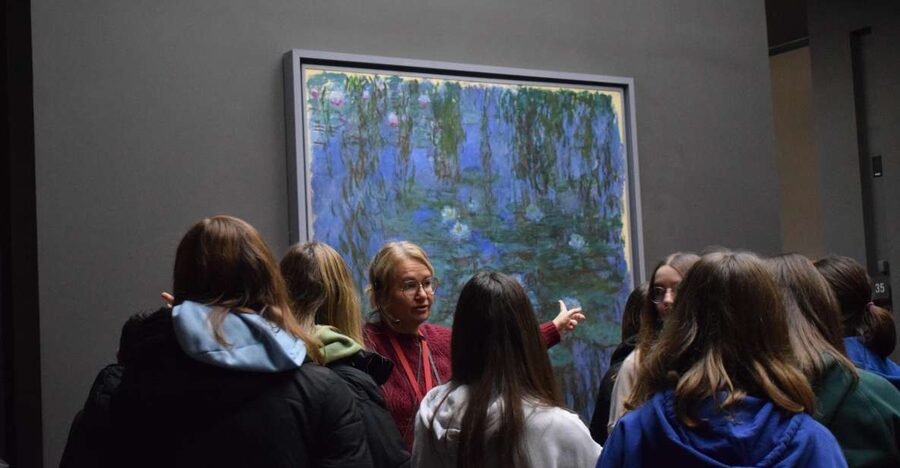
I like the small groups, often around six people or fewer, because you can hear the guide and ask questions. I also like the way the tour connects paintings to political and social change, rather than treating each canvas as an isolated masterpiece. The main drawback is crowding. Even with advance entry, you still pass through security, and packed galleries can make it hard to stand close or hear every word.
Key points to know

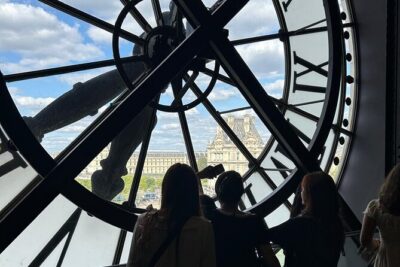
- A former railway station becomes the setting: The building itself is part of the visit, with its grand central hall, clock, and unusual proportions.
- The route follows artistic change: You begin with Realism and academic painting before reaching Monet, Renoir, Degas, Van Gogh, Cézanne, Gauguin, and Matisse.
- Small groups make a real difference: Groups may be private or shared, and several bookings have resulted in groups of only two, three, four, or six people.
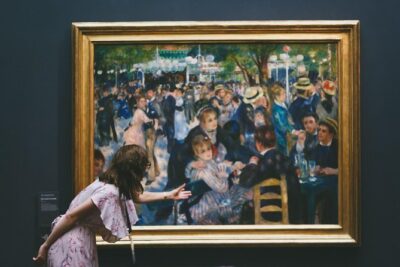
- The major works are covered: Expect famous pieces such as Renoir’s Dance at Le Moulin de la Galette, along with Impressionist and post-Impressionist highlights.
- Advance tickets save time, but not all waiting: Your ticket gives quick access to the collections, though museum security still applies.
- The pace is fixed in shared groups: Visitors with mobility needs should choose a private tour, since the shared option cannot change its pace.
Why the Musée d’Orsay works so well with a guide
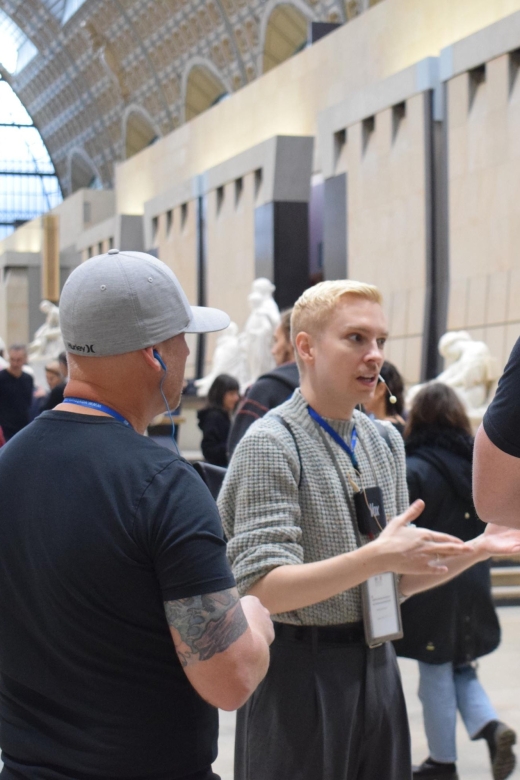
The Musée d’Orsay is easier to appreciate when you understand the argument running through its galleries. The collection is not simply a greatest-hits display of French painting. It shows how artists challenged the official rules of their day, responded to new city life, and gradually opened the door to modern art.
That shift can be difficult to follow on your own. One room may present carefully finished academic works, while another asks you to look at quick brushwork, unusual framing, or ordinary people at leisure. Without some context, the change can feel like a jump. With a good guide, it becomes a chain of cause and effect.
Guides such as Blerta, Olga, Vanina, Marine, Patrick, Antoine, Miriam, and Nadia have been especially praised for explaining art in plain language and tying it to the politics and daily life of the period. The experience depends on the individual guide, but the format gives that guide room to teach rather than simply point out famous names.
I particularly like the use of questions and visual clues. A guide may ask you to look at a gesture, a symbol, a background figure, or the way light falls across a scene. That approach helps you form your own view instead of waiting for a lecture about what you are supposed to think.
More Musée d’Orsay Tours:
- Paris in a Day: Louvre or Orsay, Eiffel Tower, City Walk & Cruise
★ 5.0 · 1,956 reviews - Paris: Musée d’Orsay Skip-the-Line Tour with Expert Guide
★ 4.5 · 1,145 reviews - Musée d’Orsay Skip-the-Line Tour with Expert Guide
★ 4.8 · 1,088 reviews
Meeting beneath the elephant statue
Your meeting point is outside the museum at 1 Rue de la Légion d’Honneur, in front of the large elephant statue. Look for a guide holding a Connecting France sign.
Allow a few extra minutes to find the statue and gather before the start. This is a busy part of Paris, and the building has more than one visible entrance. Starting outside is useful because the guide can explain the former station before you enter, giving the building a role in the story from the first minute.
Bring a passport or photo ID. Tickets are personal, and anyone aged 17 or younger must have a photo ID card. Large bags, luggage, backpacks, and umbrellas are not allowed, so pack lightly. This is not the place to arrive with a full day bag.
The railway station that became an art museum
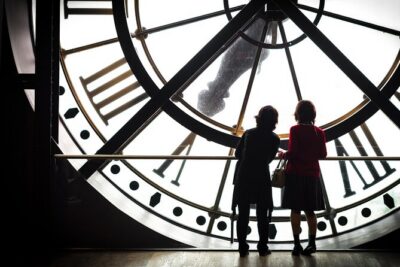
The first stop is the building itself. The Musée d’Orsay began life as a railway station, and that history explains its long central hall, tall roof, and oversized clock. It was later converted into a fine arts museum, creating a setting unlike the Louvre or a typical white-walled gallery.
I find this introduction useful because the architecture changes the way you see the collection. The huge interior was made for movement and crowds, not quiet rooms alone. Sculptures and paintings share space beneath the old station roof, and the clock reminds you that this was once a working transport hub.
The guide also places the museum in the transition from the mid-19th century to the early 20th century. That period brought major changes in Paris, and the art reflects them. You will hear how artists moved away from official subjects and polished surfaces toward scenes of city life, outdoor light, leisure, work, and modern identity.
From Manet and Realism to Impressionism
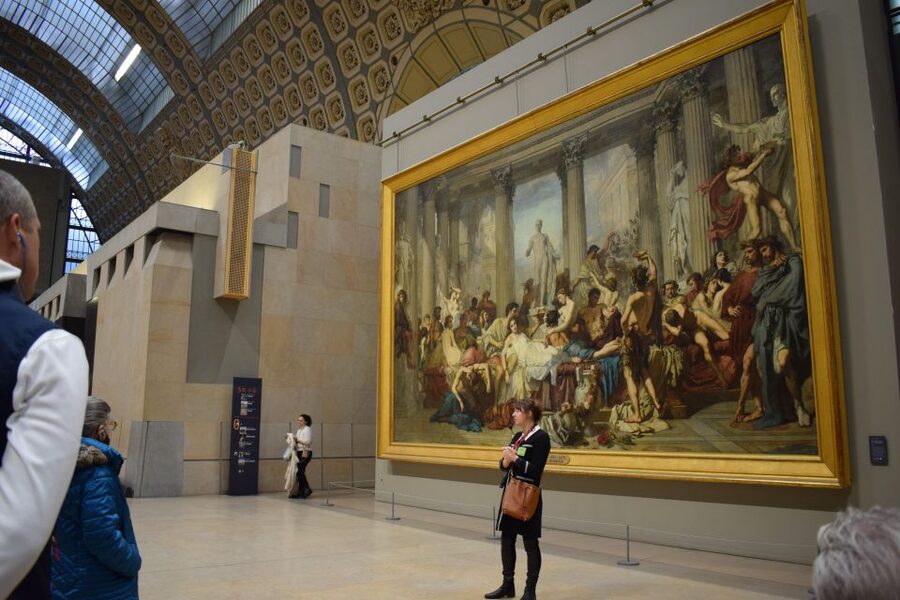
The tour usually builds its story through Realism and artists such as Édouard Manet. Manet helped challenge the academic standards that controlled the Paris art world, making it easier for later artists to question accepted subjects and methods.
This background matters. Impressionism did not appear from nowhere, and Monet, Renoir, Degas, Pissarro, and Sisley were responding to earlier artists as much as they were inventing something new. Your guide may compare the structure, finish, subject matter, and brushwork of these different periods so you can see the changes rather than simply hear about them.
The museum is especially good for this kind of comparison because works from related movements are shown within the same visit. You can look at the formal rules of academic painting, then consider how the Impressionists loosened those rules. The conversation can move from technique to social change, including who appeared in paintings and what kinds of modern life artists thought worthy of attention.
One useful feature is the attention given to artists who are often left out of a quick tour. Vanina, for example, has been praised for placing Berthe Morisot alongside better-known painters. That broader view gives you a more accurate sense of the period and avoids making Impressionism seem like a story written only by a handful of men.
More art museums in Paris:
- Paris: Louvre Museum Timed-Entrance Ticket
★ 4.6 · 71,977 reviews - Louvre Museum Masterpieces Guided Tour with Access
★ 4.5 · 12,023 reviews - Paris: Louvre Museum Entry Ticket With Host and River Cruise
★ 4.6 · 9,926 reviews - Les Invalides: Napoleon’s Tomb & Army Museum Entry
★ 4.6 · 9,185 reviews
Renoir, Monet, Degas, and the famous highlights
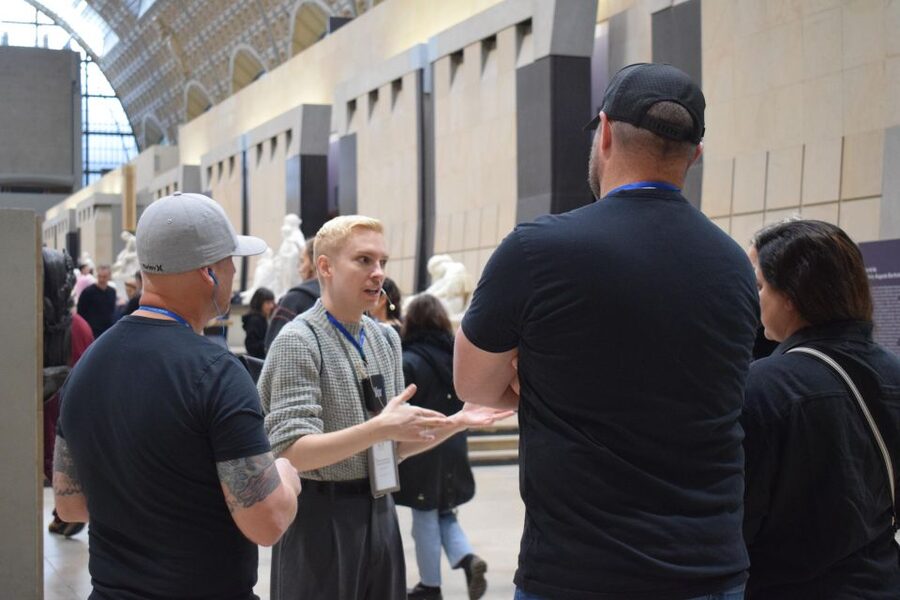
You will see major works by Renoir, Monet, Degas, and Sisley, along with other central figures of the movement. Renoir’s Dance at Le Moulin de la Galette is one of the headline paintings, showing a crowded outdoor dance and the Impressionist interest in light, movement, and everyday pleasure.
The value of seeing a famous painting with a guide is not just getting close enough for a photograph. Your guide can point out how the scene is arranged, where your eye first travels, and how the marks on the canvas create a sense of movement. Those details can be hard to notice when a room is crowded and everyone is standing in front of the same work.
Expect the gallery pace to vary. A skilled guide may hold the group at one or two important paintings, then move more quickly through less central rooms. That is sensible in a two-hour visit, since no short tour can cover the entire museum. You will see a selection of the main works, not every room or every artist.
Crowding is the most important practical issue here. On busy days, especially when another major Paris museum is closed, the Orsay can be packed. Olga and other guides have been praised for moving groups through busy rooms and finding useful viewing positions, but no guide can make a crowded gallery feel empty.
Van Gogh, Cézanne, Gauguin, and the move toward modern art
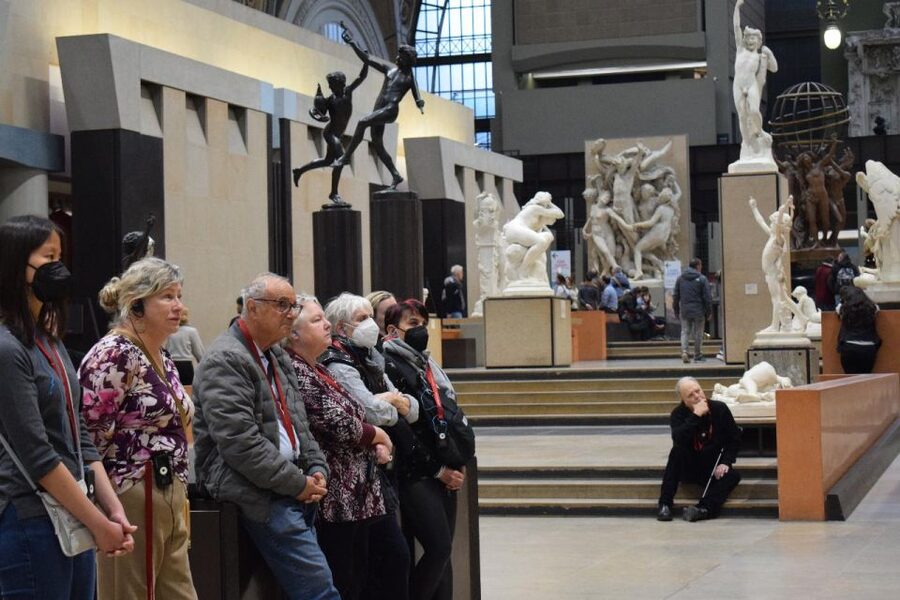
The tour continues into post-Impressionism, with works by Vincent van Gogh, Paul Cézanne, and Paul Gauguin. This is where the route becomes less about capturing a passing moment and more about personal expression, structure, color, and the artist’s own way of seeing.
Van Gogh’s paintings often attract the biggest crowds, so your time in front of them may be brief. A guide can still help you look beyond the familiar name and consider the brushwork, color choices, and emotional force of the image.
Cézanne offers a different lesson. His work helps show how artists began to simplify and rebuild what they saw, rather than copying the visible world in a straightforward way. Gauguin adds another direction, with stronger color and a more personal approach to composition.
The route may also include Matisse and the early modern movement. The point is not to provide a full course in modern art. It is to show how the experiments of the Impressionists led to further changes in color, shape, and artistic freedom.
Sculpture, Art Nouveau, and a smaller Lady Liberty
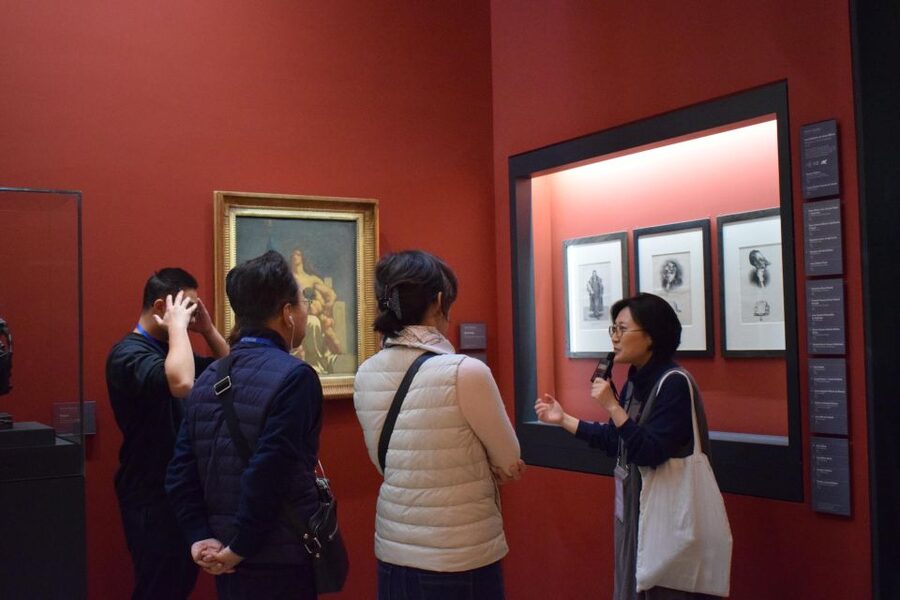
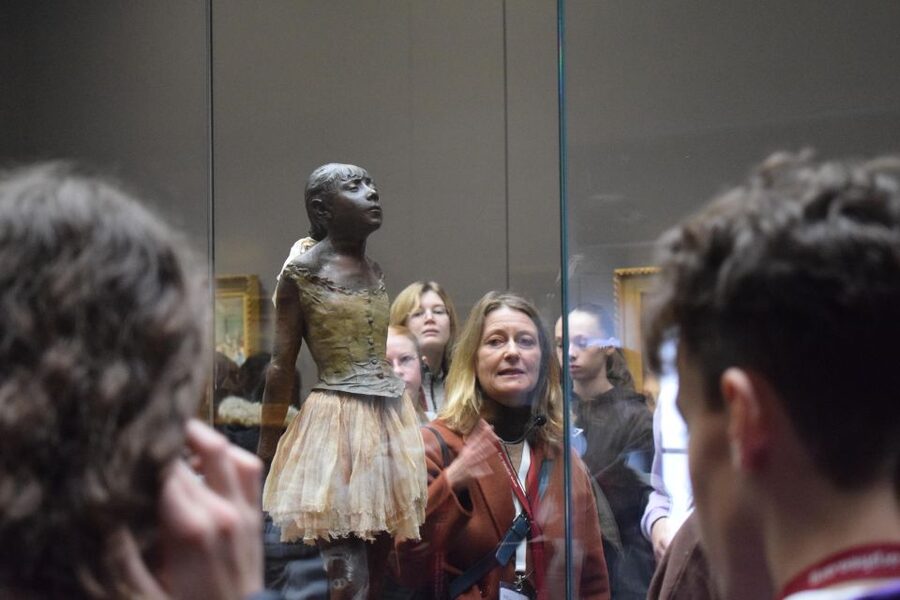
The paintings receive most of the attention, but the museum also includes sculpture and Art Nouveau features. Rodin’s work adds a three-dimensional counterpoint to the painted galleries, and the guide may use it to explain how artists approached the human body, movement, and surface in different media.
You can also see an original Lady Liberty. It is a smaller but memorable detail, especially if you know the better-known statue in New York. These stops help break up the painting route and remind you that the Orsay is a fine arts museum, not only an Impressionist gallery.
The building itself deserves attention between artworks. Architectural details, the old station structure, and the clock are easy to miss when you hurry toward the famous paintings. A guide who points them out gives you a fuller sense of place without taking the whole visit away from the collection.
What two hours feels like inside
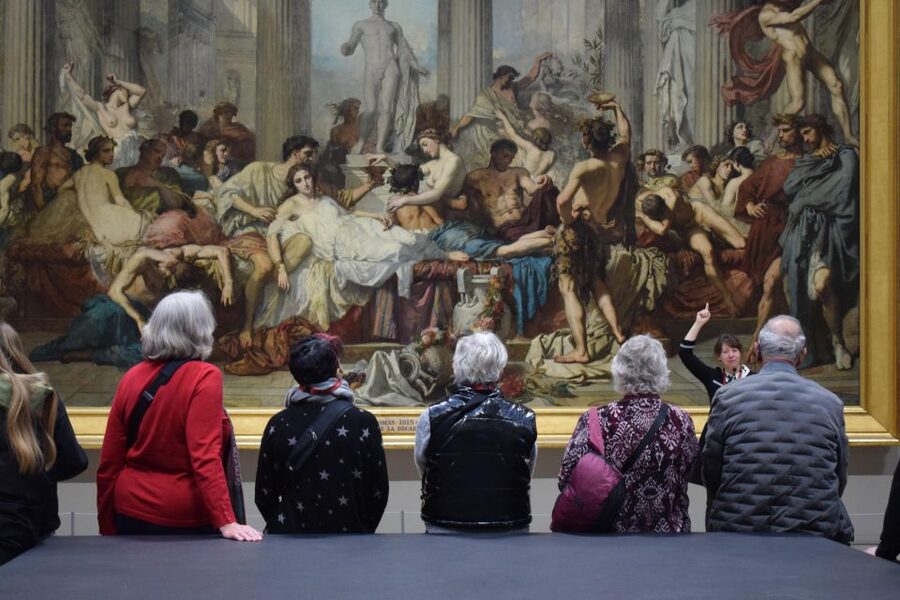
Two hours is a sensible length for a first visit. It is long enough to understand the major artistic changes and see many important works, but short enough to keep your attention from fading in a crowded museum.
The route is active. You will stand for much of the time and move between galleries, so comfortable shoes help. The shared tour follows its planned pace, and the guide cannot slow the group to match individual mobility needs. If you need frequent breaks or a slower route, choose a private tour instead.
The small-group format is one of the strongest reasons to book. A group of three, four, or six can stay close to the guide and ask questions without creating the distance common on a large coach tour. If no one else books your departure, the experience may become private, as happened for several participants, allowing the guide to adapt the conversation to your interests.
A possible weakness is sound. In crowded rooms, voices and nearby groups can make the guide harder to hear. Some visitors found the small size enough to solve the problem, while others wished for a speaking device. Stay close to the guide, especially in the busiest rooms.
Is $102 a fair price?
At $102 per person, this is not a budget museum visit. You are paying for the entrance ticket, a live guide, and the time saved by entering with a prearranged booking. The value depends on how much help you want with the art.
If you already know the Orsay well and enjoy wandering alone, a guided visit may feel expensive. You could prefer to buy admission and set your own pace. You will also have more freedom to return to a favorite painting or spend an hour in a room the tour passes quickly.
For a first visit, I think the price makes more sense. The museum is large, the collection covers several movements, and the two-hour route gives you a clear framework. The small group adds practical value, especially during busy periods when finding the best viewing spots and keeping track of a guide can be difficult.
The strongest value comes from the teaching, not the ticket alone. Guides such as Marine, Blerta, Olga, Vanina, and Antoine have been praised for combining art history with stories, political context, humor, and close looking. A strong guide can change the way you see familiar paintings long after you leave the museum.
Who should book this Orsay experience?
I would choose this tour if you are visiting the Orsay for the first time, want the major works explained, or find art museums difficult to navigate alone. It also suits families and mixed-interest groups because a good guide can make the story understandable without assuming a background in art history.
It is a good fit for anyone who wants to understand the link between Manet, the Impressionists, and early modern art. The route has enough variety for people who enjoy painting, sculpture, architecture, and social history.
I would hesitate if you dislike fixed routes, need a very slow pace, or want to study a small number of paintings for a long time. Shared tours cannot be adjusted around mobility needs, and the museum may be warm and crowded. Wheelchair users and people with mobility impairments should not book this shared option.
The museum can also close or change plans because of strikes or other unexpected events. If that happens, the provider may offer another available time or a walking tour. If the alternative does not suit you, the booking can be canceled with a refund, provided the change is handled before the 24-hour cancellation deadline.
My recommendation
I recommend this tour for a first Orsay visit, especially if you have only two hours and want the museum to make sense rather than simply collect famous paintings. Choose a small group, arrive light, stay close to the guide, and expect security even with advance entry.
The main reason to book is the combination of access and explanation. The ticket gets you inside efficiently, but the guide connects the old railway station, the political climate, the artistic rebellions, and the paintings themselves. If you want a quiet solo visit, skip the tour. If you want a clear introduction to one of Paris’s best art collections, $102 is a reasonable price for the structure and personal attention.
FAQ
How long does the Musée d’Orsay tour last?
The guided tour lasts two hours.
Where do I meet the guide?
Meet in front of the Musée d’Orsay at 1 Rue de la Légion d’Honneur, by the large elephant statue. The guide will hold a Connecting France sign.
Is museum admission included?
Yes. The price includes entrance tickets to the Musée d’Orsay and the guided museum tour.
Can I choose the tour language?
Live tours are available in English, French, Spanish, Italian, and German.
Is this a private tour or a shared group tour?
Private and small-group options are available. Shared groups may be very small, and some departures can operate privately if only one booking is made.
Can I skip the security line?
Your ticket provides quick access to the collections, but everyone must still pass through the museum security line.
What identification should I bring?
Bring a passport or ID card. Visitors aged 17 and under need a photo ID card because the tickets are personal.
Can I bring a backpack, suitcase, or umbrella?
No. Luggage, large bags, backpacks, and umbrellas are not allowed.
Is the tour suitable for wheelchair users?
No. The shared tour is not suitable for wheelchair users or people with mobility impairments. A private tour may be booked for visitors who need a different pace.
Just added around Paris
- Paris: Flea Market Insider’s Tour in Extra-Small Group★ 4.6 · 73 reviews
- Paris: The Da Vinci Code Walking Tour with a Local Guide★ 4.3 · 5 reviews
- Paris: Private Fashion Tour (Chanel, Dior, Sex & the City)★ 5.0 · 3 reviews
- Paris: Floral Earrings workshop★ 5.0 · 3 reviews
- Paris: Fashion History Walking Tour in the Heart of Paris★ 4.9 · 22 reviews
- PARIS: Family e-bike longtail renting★ 5.0 · 3 reviews
- Paris: Famous Monuments Cycling Tour★ 4.7 · 20 reviews
- Paris: private city tour with seine river cruise★ 4.8 · 28 reviews
Musée d’Orsay Tours, compared.
Paris in a Day: Louvre or Orsay, Eiffel Tower, City Walk & Cruise
Read our review →
Musée d’Orsay Skip-the-Line Tour with Expert Guide
Read our review →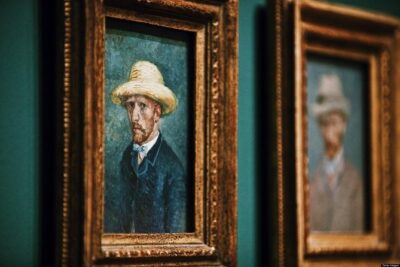
The Musée d’Orsay Guided Tour Orsay Museum Semi-Private 6ppl Max
Read our review →
Louvre & Musée d’Orsay Guided Museum Tour Semi-Private 6ppl Max
Read our review →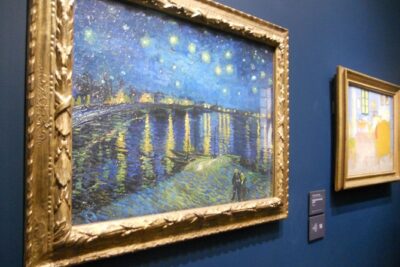
Orsay Museum – Exclusive Guided Tour (Reserved Entry Included)
Read our review →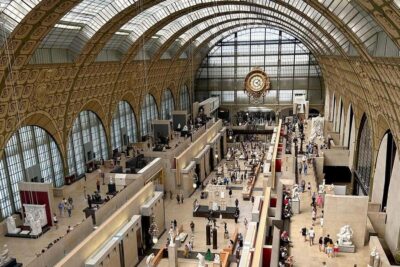
Orsay Museum and Rodin Museum Combo Entry Ticket
Read our review →Browse the lists this tour appears in