
Reviewed · PARIS BAKERY TOURS
Behind the Scenes of a Boulangerie: French Bakery Tour in Paris
A warm baguette, a working bakery, and a close look at the people who make Paris bread every day: that is the appeal here. You go behind the counter at an independent Montmartre boulangerie, where bakers produce bread and pastries in compact working rooms rather than in a staged demonstration kitchen.
I like the small group of up to eight, which makes it easier to ask questions and see the machinery. I also like the fresh food included: a baguette and croissant, with some sessions adding pastry samples or letting you make the scoring cuts on your own bread. The main drawback is clear: this is usually a demonstration, not a full hands-on baking class.
Key points to know before booking
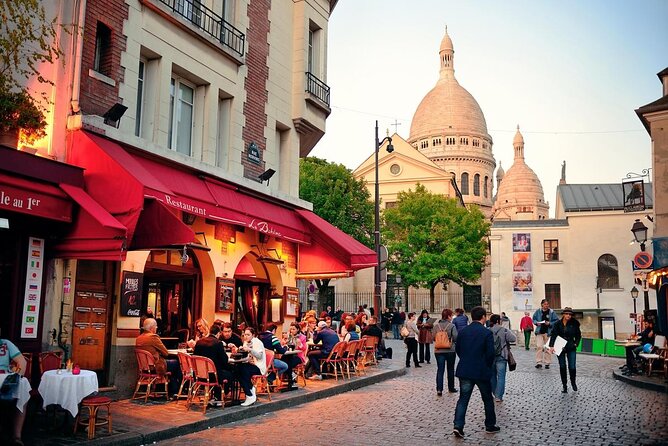
- Watch a real bakery at work: You visit production rooms at Le Grenier à Pain Caulaincourt in Montmartre.
- Learn the baguette process: The baker explains ingredients, shaping, scoring, machinery, and baking.
- Expect a compact workspace: The bakery is authentic and productive, but it can feel tight for a group.
- Take home two French staples: The experience includes one fresh baguette and one croissant.
- Best for curious families: Children age six and older can join with an adult, and several sessions have included young children.
- Choose your expectations carefully: You will see and taste more than you will mix and bake yourself.
Inside Le Grenier à Pain Caulaincourt
The meeting point is Le Grenier à Pain Caulaincourt, at 127 Rue Caulaincourt in the 18th arrondissement. The bakery sits in Montmartre, a neighborhood already worth exploring on foot, so you can pair this hour with a walk through the area.
The exact bakery address is confirmed after booking, but the stated meeting point is this Caulaincourt location. The activity ends back there, and hotel pickup is not included. A mobile ticket keeps the arrival simple, and the tour is conducted in English.
Once inside, you move beyond the customer area into the production rooms. This is where the tour earns its keep. You are not looking at a polished museum display. You are seeing a working bakery handling its daily output, with bakers moving between dough, ovens, trays, and machinery.
That authenticity also creates the tour’s chief limitation. A bakery production room is designed for efficient work, not for visitors to stand around. Even with a small group, you may feel close to the action or briefly in the way. Wear sensible shoes, since one past participant found the floor very slippery, and choose clothing that can tolerate a little flour.
More bakery tours in Paris:
- Award-Winning Paris French Bakery Experience — Le Marais, 4th Arr
★ 4.5 · 1,186 reviews - Paris: Behind the Scenes Bakery Tour with Breakfast
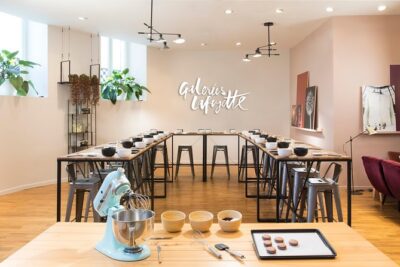
★ 4.8 · 907 reviews - Macaron Bakery Class at Galeries Lafayette Paris
★ 4.0 · 280 reviews
Seeing how a French baguette is made
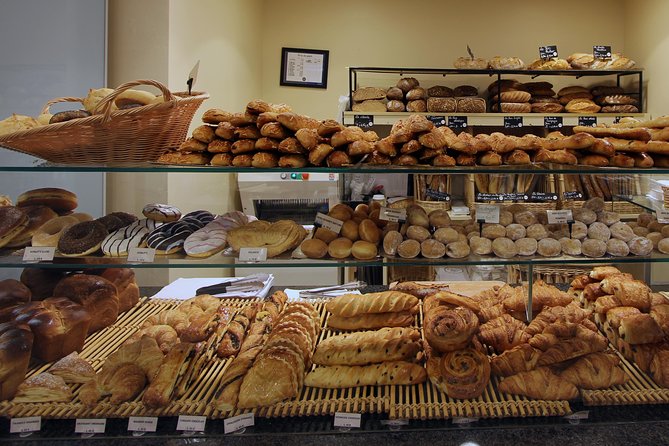
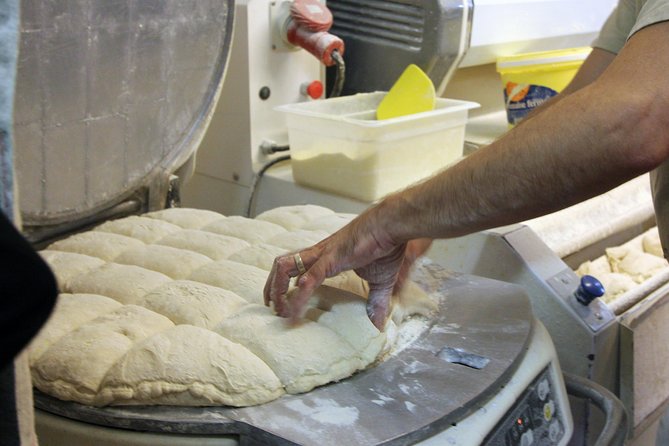
The baguette is the main event. Your guide and the baker explain how the dough is prepared, shaped, scored, and baked. You see the machinery used in the process and learn why the familiar long loaf requires more than simply stretching dough into a tube.
The guide also covers French bread rules, an unexpectedly useful part of the hour. You learn what makes a traditional baguette different and hear practical advice about ingredients and technique. One especially memorable detail from the bakery’s scale is that a single baker was reported to be making about 2,500 baguettes in one morning. That gives you a better sense of the pace behind the bread counter.
The amount of participation can vary. Some sessions are mainly watch-and-listen demonstrations. In others, the baker has allowed people to make the release cuts on their own baguettes or help briefly with a step. You should not book this expecting to knead, shape, proof, and bake your own loaf from start to finish.
That distinction matters. If you already bake bread at home, the technical information may feel basic. If you simply want to understand what happens behind the bakery counter, the close view of the process is much more useful. You can ask questions through the English-speaking guide, who may also interpret replies from the French-speaking bakery staff.
Croissants, pastries, and the sweeter side of the bakery
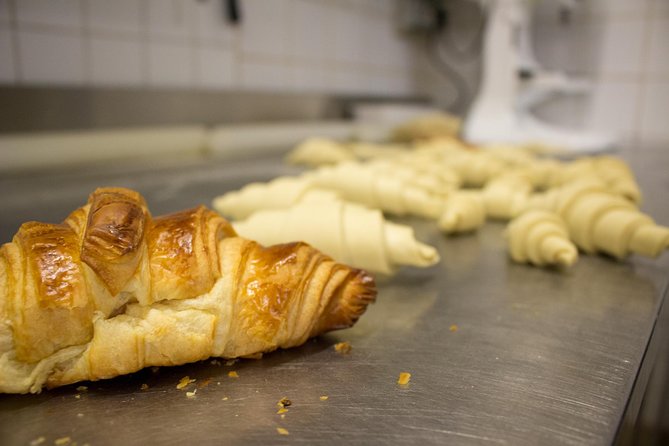
The visit also moves beyond bread. You see how pastries and cakes are assembled and learn about croissant-making, though the exact amount of hands-on work is not fixed. Some sessions have included shaping or making croissants, while others have shown the staff preparing them without much participation from the group.
This is another reason to treat the activity as a bakery visit rather than a formal cooking lesson. You get a look at the production process, hear about the work of a professional baker, and see the compact rooms where sweet and savory items are made. You do not receive a guaranteed recipe workshop with each person producing a full pastry.
The English guide helps keep the experience accessible. Past guides have included Marie, Vincent, and Mariette, and the guide’s role can be especially helpful when the bakery staff are speaking French. The best part of the interpretation is that it lets you ask about small details as they happen instead of listening to a long speech in a separate room.
At the end, you receive a freshly baked baguette and croissant. Some sessions have also included small pieces of sweet pastries, bread samples, or a pastry tasting. Because the bakery is working, the exact extras can change, but the baguette and croissant are the stated inclusions.
What the one-hour format does well
One hour is enough to give you a sharp snapshot of French baking without taking over your day. I like this length for a family schedule or for the first morning of a Paris stay, when you want one focused activity before moving on to lunch or sightseeing.
The tour packs several subjects into a short period: baguette ingredients, bread preparation, machinery, bakery work, pastries, and French baking customs. A good guide keeps the information moving and leaves time for questions. There is less standing around than on many long food tours.
The short format also keeps the price question in perspective. You are paying for access to a working bakery, a guide, interpretation, and food to take away. If the price is close to what you would pay for a substantial hands-on baking class, I would compare the two carefully. This activity gives you access and explanation, but not always the chance to make the products yourself.
For someone who wants a full lesson, the value may feel weak. For someone who wants an authentic look at a Paris bakery plus two fresh items, it can be a fair use of an hour. The quality of the guide and the amount of participation on the day make a real difference.
Same city, a completely different afternoon:
- Paris: Louvre Museum Timed-Entrance Ticket
★ 4.6 · 71,977 reviews - Disneyland® Paris 1-Day Ticket
★ 4.6 · 49,412 reviews - Paris: Versailles Palace and Gardens Full Access Ticket
★ 4.6 · 41,579 reviews - Paris: Evening River Cruise with Music
★ 4.4 · 22,721 reviews
A good family activity, with a few practical limits
Children age six and older can join, provided an adult accompanies them. This can work well for families because the tour has visible action, machines, dough, ovens, and food at the end. Young children have enjoyed seeing the bakers work, especially when the guide keeps the explanation brief and allows them to watch from close by.
The space is not built as a classroom. Children need to stay with the group and avoid machinery, hot equipment, and slippery floors. Families should also remember that the bakery may be busy, so this is not the place for unrestricted movement.
The small group limit is eight people, which is a useful feature in a tight production room. Smaller sessions can feel almost private, while a full group may require patience when everyone wants to see the same demonstration. The compact setting is part of the charm, but it is also why the experience cannot offer the same elbow room as a cooking studio.
The activity is not recommended for anyone with sensitive airborne food allergies. Flour in a working bakery can become airborne, and the setting is not presented as an allergy-controlled environment.
How authentic is the bakery experience?
The bakery is presented as an independent Parisian production unit rather than a factory designed for visitors. That difference is important. You see skilled bakers producing bread for ordinary customers, often at a surprisingly large scale, in rooms that remain compact and practical.
You may see staff working quickly while the guide explains what is happening. That can feel more real than a staged class, but it can also mean that the baker cannot stop for every question or let everyone handle the dough. The activity is strongest when you value observation and access to a place you could not normally enter.
The baker’s daily work is part of the lesson. You gain a better idea of how much repetition, timing, and physical effort goes into the foods that seem simple in a shop window. A baguette has few ingredients, but producing thousands in a morning requires skill and careful organization.
I especially like the chance to connect the finished food with the people who make it. Taking home a baguette and croissant is not just a souvenir. It gives you something to taste later and a practical reminder of the steps you watched.
What to expect from the guide
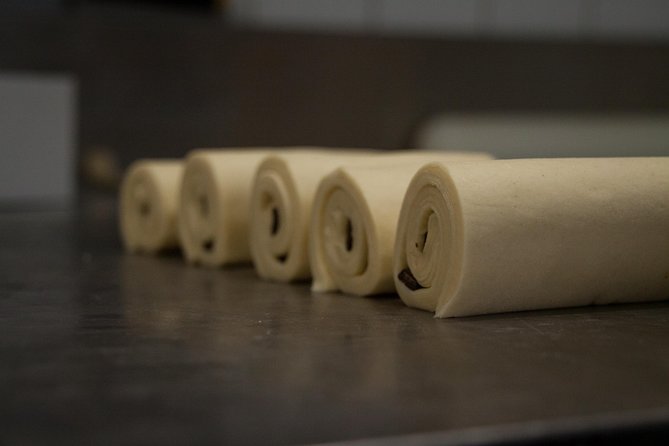
The guide is an English-speaking interpreter and bakery expert, not simply someone who points out equipment. Guides such as Marie, Vincent, and Mariette have been praised for being friendly, clear, and well informed. The guide answers questions, explains the baker’s movements, and translates when needed.
The quality of the hour depends partly on how much the guide encourages questions. A strong session includes bread-making tips, facts about croissants, details about the life of a baker, and explanations of the machines. A weaker session may feel like watching dough being rolled and pastries being assembled with only basic commentary.
You can improve your experience by arriving ready with specific questions. Ask about flour, fermentation, scoring, oven heat, croissant layers, or the difference between a traditional baguette and other French loaves. The more curious you are, the more useful a demonstration format becomes.
Do not expect a long lecture on French food history. You get a practical introduction, with some background on bread and the artisan trade. The appeal is seeing the work happen in front of you.
Transport, timing, and cancellation details
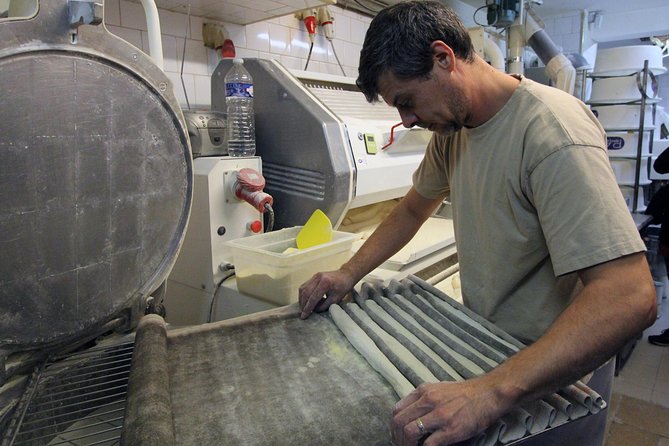
The activity is near public transportation, but hotel pickup and drop-off are not included. Plan to reach the Caulaincourt meeting point on your own and allow extra time to find the bakery, especially if you are crossing Paris from another arrondissement.
Confirmation is normally issued at booking. If you book within two days of the activity, confirmation may take up to 48 hours and remains subject to availability. The group limit is eight people, and the provider can cancel if too few people book or if a booking would exceed capacity. In that case, you are offered another date or a full refund.
Free cancellation is available up to 24 hours before the start time. Cancel within 24 hours and you do not receive a refund. Changes made inside that period are not accepted, so check your Paris schedule before committing.
Should you book this Montmartre bakery tour?
Book it if you want to see a working boulangerie, learn how baguettes are produced, ask questions through an English-speaking guide, and leave with fresh bread and a croissant. It is particularly suitable for families, first-time Paris visitors curious about everyday food, and anyone who values access to a real production space more than a polished cooking class.
Skip it if you expect to make your own baguette and croissants from beginning to end. The experience can be hands-on in short moments, but much of the hour is observation. If you already know bread baking well, the explanations may feel too elementary.
For the best match, think of this as a compact behind-the-scenes visit with tastings, not a bakery workshop. If that sounds right, the one-hour format and small group make it an easy addition to a Montmartre day.
FAQ
Where does the French bakery tour meet?
The stated meeting point is Le Grenier à Pain Caulaincourt, 127 Rue Caulaincourt, 75018 Paris, France. The exact bakery address is sent after you book.
How long does the activity last?
The tour lasts approximately one hour.
Is the tour offered in English?
Yes. The activity is offered in English, and the guide can interpret questions and answers between the group and French-speaking bakery staff.
How many people can join?
The maximum group size is eight people.
What food is included?
You receive one freshly baked French baguette and one freshly baked croissant. Some sessions may also include small pastry or bread samples.
Do I make my own baguette?
You should not expect a full bread-making class. The activity mainly involves watching the baker work, though some sessions have allowed participants to help briefly or make the scoring cuts on their own baguettes.
Can children join?
Children age six and older can participate, and they must be accompanied by an adult.
Is hotel pickup included?
No. You are responsible for getting to the meeting point, and hotel pickup and drop-off are not included.
Is the bakery suitable for people with airborne food allergies?
The activity is not recommended for people with sensitive airborne food allergies.
Can I cancel for a full refund?
Yes, if you cancel at least 24 hours before the local start time. Cancellations made less than 24 hours before the activity are not refunded.
Just added around Paris
- Paris: The Da Vinci Code Walking Tour with a Local Guide★ 4.3 · 5 reviews
- Paris: Flea Market Insider’s Tour in Extra-Small Group★ 4.6 · 73 reviews
- Paris: Private Fashion Tour (Chanel, Dior, Sex & the City)★ 5.0 · 3 reviews
- Paris: Floral Earrings workshop★ 5.0 · 3 reviews
- Paris: Fashion History Walking Tour in the Heart of Paris★ 4.9 · 22 reviews
- PARIS: Family e-bike longtail renting★ 5.0 · 3 reviews
- Paris: Famous Monuments Cycling Tour★ 4.7 · 20 reviews
- Paris: private city tour with seine river cruise★ 4.8 · 28 reviews
Paris Bakery Tours, compared.
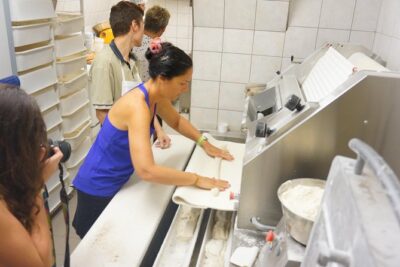
Award-Winning Paris French Bakery Experience — Le Marais, 4th Arr
Read our review →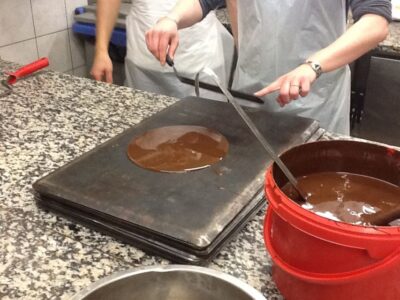
Macaron Bakery Class at Galeries Lafayette Paris
Read our review →
Browse the lists this tour appears in