
Reviewed · PARIS PASTRY AND MACARON CLASSES
Paris French Baking Class Baguettes and Croissants in a Bakery
A warm baguette comes out of the oven, you tear into it, and suddenly Parisian bread makes more sense. This class takes you behind the counter at Boulangerie Pâtisserie Le Petit Mitron, where baker Didier explains the craft, demonstrates the key steps, and lets you work with the dough.
I like the small group of no more than 10 and the mix of practical work, food history, and tasting. I also like the English interpreter, often Luz, who helps bridge the language gap while keeping Didier’s humor and personality in the room.
One important note: this is mainly a baguette class. You learn about croissants and get to roll and shape them, but some of the dough preparation is demonstrated rather than completed from start to finish by each student.
Key points to know before booking
- Baguettes take center stage: Expect the most hands-on work to focus on shaping, scoring, and handling French bread.
- Croissants are part lesson, part tasting: You learn the method, roll dough, and may also make pain au chocolat, but this is not a full croissant production course.
- Didier is the heart of the class: His flour, bread, equipment, and baking stories give the workshop a personal feel.
- English help is provided: Didier does not speak English, so an interpreter explains throughout the session.
- Fresh bread is the payoff: You taste warm baguette and pastry, and you can take a baguette home.
- Plan for 2.5 focused hours: Children as young as six may attend, but they need to stay engaged for the full class.
Inside Le Petit Mitron at Oberkampf Bastille
The class meets at Boulangerie Pâtisserie Le Petit Mitron, at 8 Rue Oberkampf in Paris’s 11th arrondissement. You return to the same place at the end, with no hotel pickup or drop-off included.
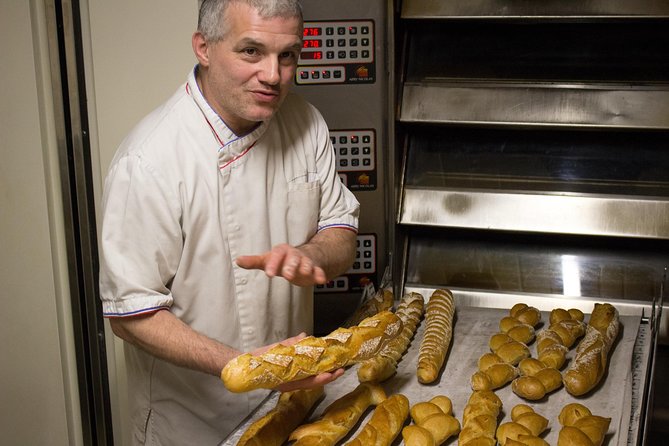
This is not a classroom set up for tourists. You go into the working bakery kitchen, where the lesson connects directly to the bread being made and sold there. That makes a difference. Instead of learning from a printed recipe alone, you see how a professional handles flour, dough, timing, shaping, and baking equipment.
The setting also helps explain why this experience costs more than a casual food walk. At $264.95 per person, this is a substantial purchase. You are paying for a small, instructor-led workshop, hands-on access to a professional bakery, an interpreter, tasting, recipes, and the chance to take bread with you. It is not the right pick if you only want a quick pastry stop, but it offers more value if you care about French food and plan to bake at home.
The meeting point is near public transportation, which makes it practical to reach from other parts of Paris. Give yourself enough time to arrive. One late arrival was handled kindly, but you do not want to rush into a hands-on class or risk missing the opening explanation.
More bakery tours in Paris:
- Award-Winning Paris French Bakery Experience — Le Marais, 4th Arr
★ 4.5 · 1,186 reviews - Paris: Behind the Scenes Bakery Tour with Breakfast
★ 4.8 · 907 reviews - Macaron Bakery Class at Galeries Lafayette Paris
★ 4.0 · 280 reviews
Didier’s bakery lesson starts with flour
Didier is not simply showing you a few tricks. He talks about why bread behaves as it does, how ingredients affect the result, and how French baking developed. The class has also included a look at flour milling, since the bakery makes its own flour on site from grain.
That detail gives the workshop a stronger sense of place. You learn that baguette quality does not begin with shaping. It begins with the grain, the flour, the dough, the fermentation, and the baker’s choices at each stage.
Didier’s teaching style is lively and personal. He is described as funny, energetic, patient, and deeply committed to his work. He may not speak English, but the interpreter keeps the lesson moving. The language difference can even add to the charm, since you watch Didier’s hands and expressions while the interpretation fills in the details.
This is also a good class for people who know little about baking. You do not need to arrive as an expert. At the same time, if you already bake bread, you will likely get more from the fast-moving explanations about flour, equipment, dough handling, and shaping.
Shaping baguettes is the main event
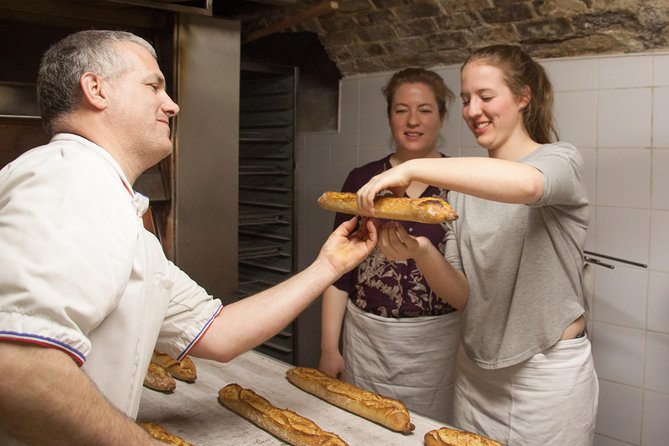
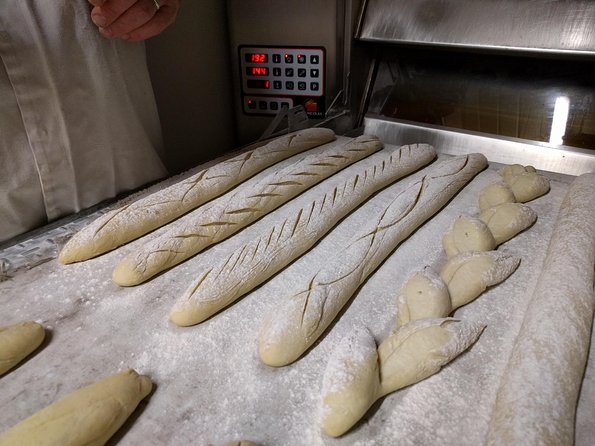
The baguette section takes up most of the practical time. Didier demonstrates how to handle and shape the dough, then you try it yourself with guidance. You may make different patterns and scoring designs before the loaves go into the oven.
This part is more useful than it may sound. A baguette looks simple, but the final shape depends on touch, pressure, and confidence. Too much handling can affect the dough. Uneven shaping produces uneven baking. Watching a professional close up, then trying the movements yourself, gives you a better chance of repeating them at home.
The class is not just a demonstration from across the room. You get to participate, and the small group makes it easier to receive corrections. With 10 people at the maximum, the instructor can pay attention to individual attempts. Some sessions may be smaller, even as intimate as two people, though you should not count on having a private class.
A particularly memorable part can be taking bread from the oven with a long wooden paddle. That simple act connects the class to the old image of the Paris baker, and it gives the process a clear finish. You have seen the dough, shaped it, marked it, baked it, and handled the finished loaf.
Croissants, pain au chocolat, and realistic expectations
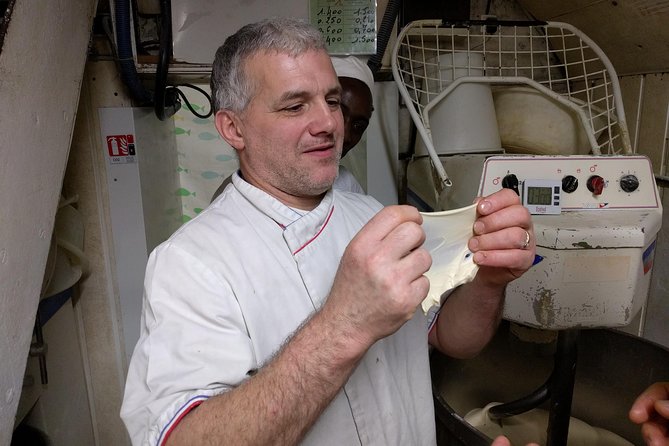
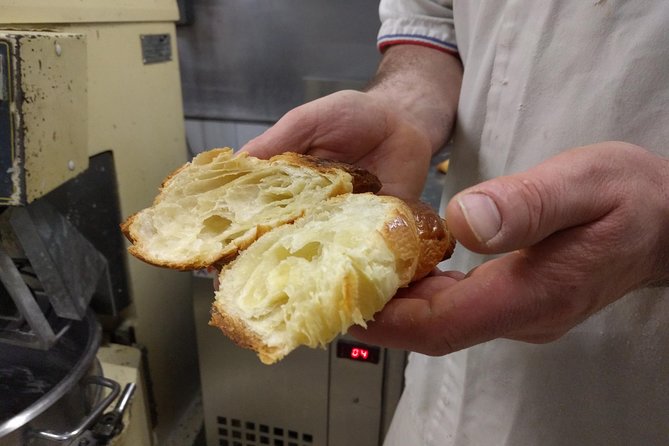
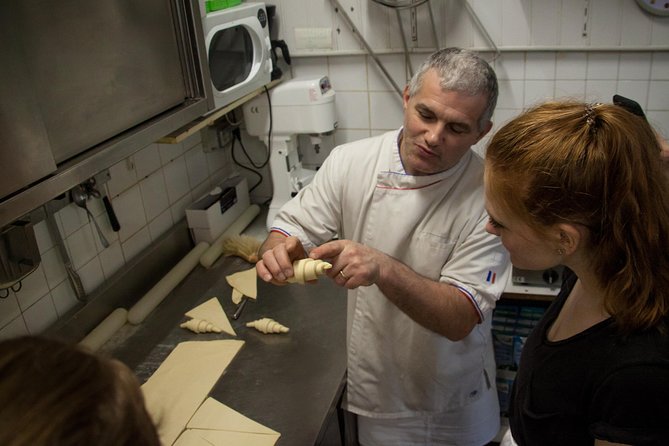
The croissant lesson covers the basics of laminated dough, the process that creates those thin, buttery layers. You watch Didier demonstrate the technique, then roll or shape the dough yourself. Pain au chocolat may also be included alongside the plain croissant.
Be clear about what you are booking. The class does not give each person a complete start-to-finish croissant session, and you may not prepare the dough from the beginning. The most hands-on time goes to baguettes. If your main goal is to master laminated dough in detail, a dedicated croissant workshop would be a better match.
Still, the croissant portion adds useful context. You see how much care goes into a pastry that many people treat as a quick breakfast purchase. You also taste the result while it is fresh, which makes the lesson memorable even if you do not leave ready to run a full pastry operation at home.
The warm tasting is one of the best parts of the timing. You are not sampling bread that has been sitting in a display case all day. You taste the baguette and pastry close to the moment they leave the oven. That gives you a clear sense of crust, texture, butter, and freshness.
More pastry and macaron classes in Paris:
- Paris: Montmartre Cheese, Wine & Pastry Guided Walking Tour
★ 4.8 · 2,255 reviews - Private Montmartre Food Tour with Wine, Cheese & Pastries
★ 5.0 · 1,027 reviews - Paris French Sweets Tasting Tour with Pastries and Chocolates
★ 4.5 · 947 reviews - Paris Croissant Small-Group Baking Class with a Chef
★ 5.0 · 910 reviews
An English interpreter keeps the class accessible
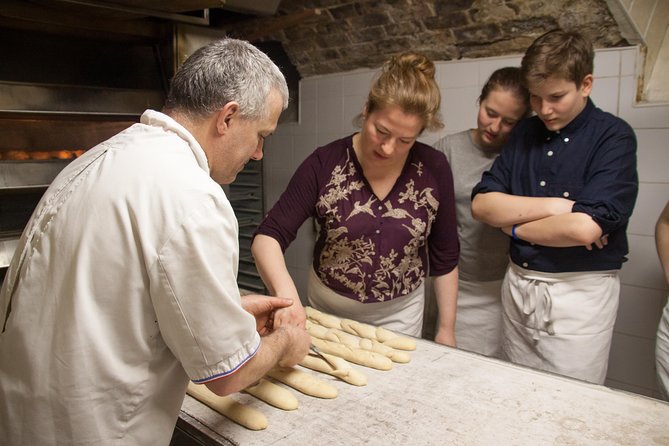
The class is offered in English, but the baker himself does not speak English. An interpreter is present throughout the session, and Luz has been praised for making the explanations clear and for working naturally with Didier.
That arrangement is worth understanding before you book. You are not getting an English-speaking baker delivering a standard lecture. You are getting a French baker working in his own language, with interpretation woven into the lesson. That means there may be pauses while information is translated, but it also preserves the baker’s personality and direct connection to his craft.
The interpreter can also help with questions. If you have baking experience, bring up the problems you face at home. If you are a beginner, ask for clarification when a technique moves too quickly. The class covers a lot in 2.5 hours, and the information can come fast.
Recipes and tips are provided so you can try the bread again at home. The practical advice is especially useful when you lack professional equipment. You may not have the same oven, tools, or flour available in your kitchen, so pay attention when the class explains how to adapt the process.
Why the small group matters
A maximum of 10 people is a sensible limit for this activity. Baking dough is physical and visual. You need to see the instructor’s hands, have room to work, and get a chance to try the technique.
The size also suits families. Children from age six can attend, and several families have found the class enjoyable for both children and adults. Kids may appreciate the flour, shaping, patterns, oven work, and warm tasting more than a museum visit. The catch is that a 2.5-hour class requires attention. A child who cannot stand and focus for that long may struggle.
Minors must be accompanied by an adult. The class is also not recommended for people with sensitive airborne allergies. Flour is part of the working environment, so this is not a minor detail.
The group format can vary because a minimum number is required. If too few people book, the provider may cancel after confirmation and offer another date or a full refund. That possibility matters if your Paris schedule is tight. Check your final time and messages carefully, especially if the booking platform changes the original schedule.
What you take home
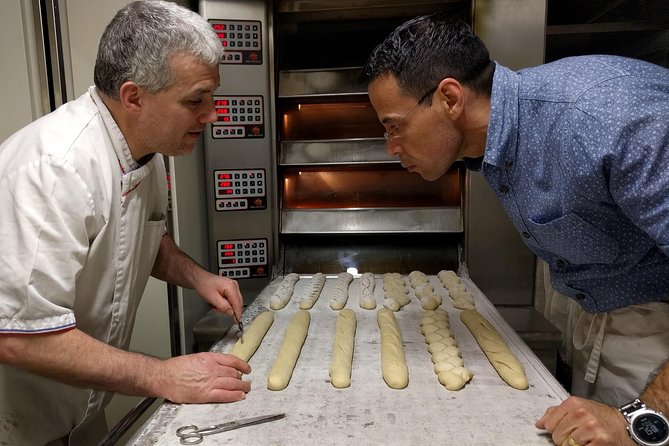
The clearest take-home item is a baguette. You also receive recipes, and the methods can be tried again in your own kitchen. The real value is not just the bread you carry away. It is knowing what to watch for when dough feels too sticky, shaping looks uneven, or a home oven gives a different result.
You may also leave with the urge to visit a cheese shop and turn the bread into a picnic. That is a practical way to extend the experience without adding another formal activity to your day. Buy cheese, fruit, and something to drink, then let the baguette do the work.
The class can also change the way you shop in Paris. After learning about flour, crust, and freshness, you may pay closer attention to bakery displays and ask yourself how the bread was made. That is a small but lasting souvenir.
Timing, price, and who gets good value
Morning and afternoon sessions are available, so you can fit the class around museums, sightseeing, or dinner. The total length is about 2 hours and 30 minutes. That is long enough to feel substantial, but short enough to fit into a busy Paris day if you plan transportation carefully.
At $264.95 per person, the price is high for a food activity. The cost makes the most sense if you value direct instruction, a small group, an interpreter, tasting, and recipes. It is less attractive if you simply want to eat a croissant or watch a baker work.
I would also factor in the experience’s role in your trip. Paris can fill your schedule with monuments and museums. This class gives you a quieter, more physical activity with a local working baker. You are still learning about French culture, but through bread, flour, technique, and conversation rather than a formal sightseeing route.
The 92 percent recommendation rate and 4.7 rating from 172 ratings indicate strong overall satisfaction, but the practical cautions matter more than the number. The class is baguette-heavy, the croissant work is limited, and booking changes have caused serious problems for some customers. Confirm the time, arrive at the stated bakery, and keep your schedule flexible enough to handle a provider change.
Should you book this Paris baking class?
Book it if you want a personal, hands-on food experience and you are happy to spend most of the class on baguettes. It is especially well suited to families with attentive children, couples, first-time bakers, and home bakers who want to improve their shaping and bread technique.
I would not book it if your only goal is a full croissant course, a relaxed pastry tasting, or a short activity between tightly scheduled attractions. For the right person, though, the class offers something a standard bakery visit cannot: you learn how the bread is made, work with it yourself, hear the baker’s stories, and eat it warm.
Before paying, check the exact session time and any provider messages. Then bring curiosity, an appetite, and enough patience to let the baguette have the starring role.
FAQ
Where does the Paris baking class meet?
The class starts and ends at Boulangerie Pâtisserie Le Petit Mitron, 8 Rue Oberkampf, 75011 Paris, France.
How long does the baking class last?
The experience lasts approximately 2 hours and 30 minutes.
Is the class available in English?
Yes. The activity is offered in English through an interpreter. The baker himself does not speak English, but an interpreter explains the lesson and helps with communication.
What will I learn to make?
You learn about French baguettes and croissants. The class includes baguette shaping and croissant techniques, with possible preparation of pain au chocolat as well.
Do I make croissants completely from scratch?
Not necessarily. The class focuses mainly on baguettes. You learn how croissants are made and get to roll or shape the dough, but the full croissant preparation is not completed individually by every participant.
Is food included?
Yes. The class includes tasting of baguettes and pastries, including croissants. You can also take a freshly baked baguette with you.
What is the minimum age?
The minimum age is six. Minors must be accompanied by an adult.
Is the class suitable for people with allergies?
It is not recommended for people with sensitive airborne allergies because the class takes place in a working bakery where flour is present.
Can I cancel for a full refund?
Yes. You can cancel at least 24 hours before the experience start time for a full refund. Cancellations or changes made less than 24 hours before the start time are not accepted for a refund.
More perfume and craft workshops in Paris
- Fragonard Paris: Mini Perfume Workshop
★ 4.5 · 1,924 reviews - Paris: Macaron Class at Galeries Lafayette
★ 4.3 · 905 reviews - Paris: 2-Hour Perfume Creation Workshop
★ 4.8 · 731 reviews - Paris: French Macaron Culinary Class with a Chef
★ 4.9 · 591 reviews
More cooking classes in Paris
- Paris Cooking Class and Lunch with Wine plus Market Visit Option
★ 5.0 · 1,024 reviews - Paris: French Croissant Baking Class with a Chef
★ 4.9 · 712 reviews - Paris Cooking Class: Learn How to Make Macarons
★ 5.0 · 634 reviews - Paris Evening Cooking Class French Dinner and Market Visit Option
★ 5.0 · 430 reviews
Just added around Paris
- Private Paris Marche d’Aligre Walking Tour with Tastings★ 5.0 · 8 reviews
- Private Louvre Museum Tour for Kids & Families with Alberto or his team in Paris★ 5.0 · 41 reviews
- Private Highlights of Paris Tuk-Tuk Experience★ 5.0 · 26 reviews
- Paris Latin Quarter Walking Tour: History & Culture – Small Group★ 5.0 · 14 reviews
- Private Highlights of Paris Bike Tour★ 4.5 · 15 reviews
- Paris Musee d’Orsay PRIVATE TOUR with a Local Private Guide★ 5.0 · 41 reviews
- Paris Revolutionary Walking Tour: Iconic French Sights & Stories★ 5.0 · 11 reviews
- Private Half Day Historic Tour★ 5.0 · 58 reviews
Paris Pastry and Macaron Classes, compared.
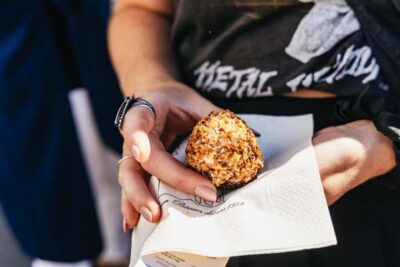
Montmartre Cheese, Wine & Pastry Guided Walking Tour
Read our review →
Private Montmartre Food Tour with Wine, Cheese & Pastries
Read our review →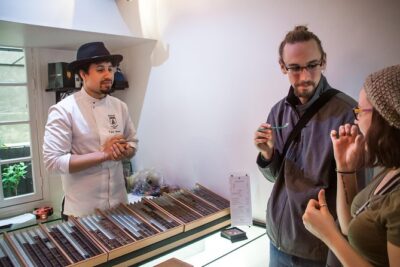
Paris French Sweets Tasting Tour with Pastries and Chocolates
Read our review →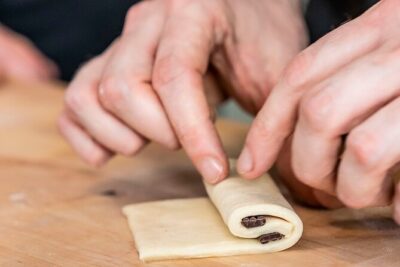
Paris Croissant Small-Group Baking Class with a Chef
Read our review →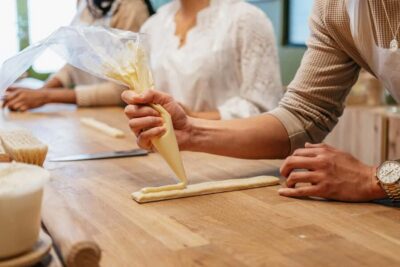
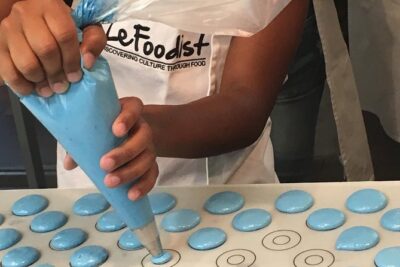
Paris Cooking Class: Learn How to Make Macarons
Read our review →
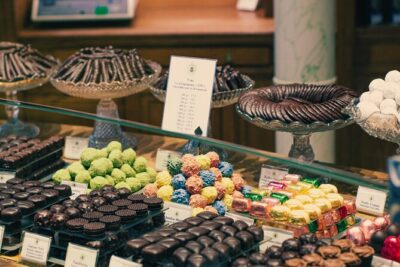
A Morning in Paris Food Tour: Croissants, Baguettes & Chocolate
Read our review →Browse the lists this tour appears in