
Reviewed · PARIS WALKING TOURS
Harlem in Paris : the Birth of Jazz in France (Small Group Walking Tour)
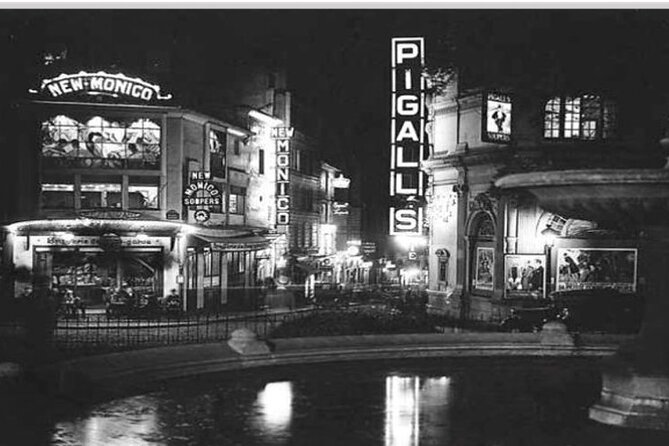
Paris’s jazz story comes alive in Pigalle, where Josephine Baker danced, Louis Armstrong ate choucroute, and Black musicians helped turn postwar nightlife into a cultural force. This tour pairs an indoor presentation with a roughly 2-kilometer walk past former clubs and cabarets.
I like the mix of music, photographs, and video with street-level history. I also like the attention given to less familiar figures such as Eugene Bullard, Bricktop, Valaida Snow, and Alberta Hunter, not just the names you already know.
The main caution is that many clubs have closed or disappeared. You will often look at ordinary buildings and use your imagination, so this suits curious history and jazz fans more than anyone expecting preserved interiors or live performances.
Key points to know before you book
- Josephine Baker opens the story: Learn how the teenage dancer arrived in Paris in 1925 and became the Black Venus of Paris.
- The tour begins indoors: Expect a presentation with songs, images, recordings, and video before the neighborhood walk.
- Pigalle is the setting: The route links Place Blanche, Rue Mansart, Rue Pierre-Fontaine, and Rue Victor Massé.
- The lesser-known figures matter: Eugene Bullard, Bricktop, Valaida Snow, and Alberta Hunter receive serious attention.
- It is a private English tour: Only your group participates, with Ellen as the guide.
- The walk is modest but meaningful: The route covers about 2 kilometers, with plenty of storytelling along the way.
Why jazz took root in Paris after Harlem
This is not a standard Paris walk through grand monuments. It is a look at the city through music, race, migration, nightlife, and performance.
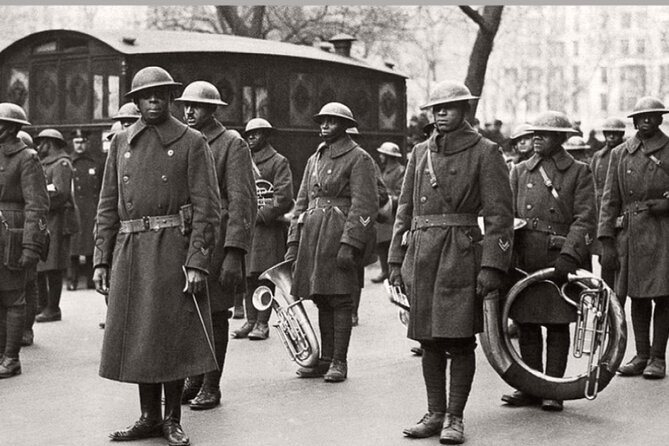
The story begins with African American entertainers arriving in France during the 1920s. Paris offered work, audiences, and a degree of freedom that many Black Americans did not find at home. Jazz was not simply imported as a sound. It came with dancers, singers, soldiers, club owners, cooks, writers, and entrepreneurs who shaped the city’s nightlife.
Ellen builds that setting before taking you outside. The indoor introduction is an important part of the experience, not filler before the walk. Using a tablet or presentation format, she brings in old photographs, songs, documents, and video clips. You get faces and voices to match the names, which helps when the buildings themselves no longer look as they did.
The tone is personal and story-driven. You are not handed a list of dates and club names. You hear about careers that rose quickly, lives interrupted by war, and artists who had to reinvent themselves more than once.
That approach works especially well for a group with mixed knowledge. A serious jazz student may already know Louis Armstrong, but the stories of Valaida Snow or Eugene Bullard may be new. Someone with little background can still follow the main thread without needing to prepare first.
More concerts and classical music in Paris:
- Paris: Classical Music Concert in Saint-Julien-le-Pauvre
★ 4.8 · 791 reviews - Paris: Classical Music Concert Tickets in Parisian Churches
★ 4.7 · 405 reviews - Paris: Romantic Piano Concert at Saint-Julien-le-Pauvre
★ 4.7 · 126 reviews
Starting near Place Blanche with Josephine Baker
The meeting point is Artemisia Montmartre at 11 Rue Fromentin, near the Pigalle and Montmartre area. The tour begins at 2 p.m., and the indoor setting gives you a comfortable introduction before the pavement portion starts.
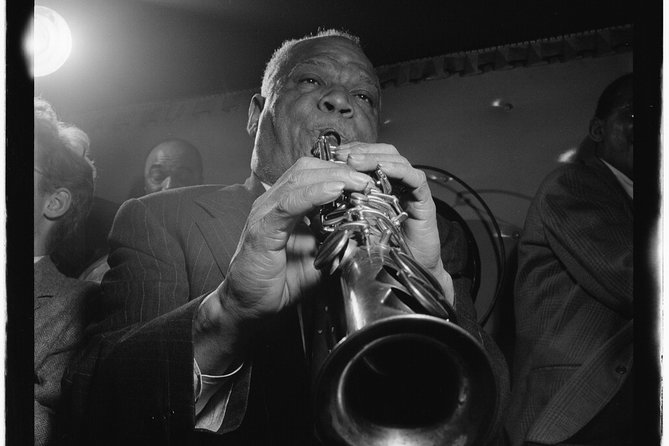
The first major character is Josephine Baker. In 1925, she arrived in France as a dancer with the New York Syncopated Orchestra. She was accompanied by a young clarinet player, Sidney Bechet, and soon became the star of the Revue Nègre at the Théâtre des Champs-Élysées.
She was only 18. Her performance, daring costume, and erotic dancing made an immediate impact on Parisian audiences. The tour explains how Baker moved from vaudeville in Harlem to international fame in France, where she later became a French citizen.
You stop near Place Blanche, next to the former location of Chez Josephine. Baker lived in Paris from 1925 until her death in 1975, so her connection to the city was not a brief chapter in a touring career.
I find this a strong opening because it gives you a recognizable name while setting up the wider subject. Baker was not alone. She was part of a flow of performers who changed how Paris heard and watched American music.
The limitation is simple: you will not enter an operating Josephine Baker club. The site is remembered through the guide’s explanation and visual material rather than a preserved venue.
Rue Mansart, Louis Armstrong, and a plate of choucroute
At Rue Mansart, the tour turns toward Louis Armstrong’s life between rehearsals and performances. You stop at the bistro where he would eat after working at a nearby recording studio.
The small detail here is the food. Armstrong discovered choucroute, a dish of sausage and cabbage, while dining in the neighborhood. Such details make the story feel less like a distant account of a famous musician and more like a working life in Paris: rehearsals, recording sessions, meals, and meetings with other players.
This is also where Django Reinhardt enters the story. The encounter between Armstrong and the local Gypsy jazz guitarist connects American jazz with a distinctive European sound. It reminds you that Paris was not only receiving jazz. Local musicians were responding to it, adapting it, and creating something of their own.
The stop lasts about 10 minutes, so do not expect a long restaurant visit or a meal included in the price. Food and drinks are not part of the tour. You are visiting the location and hearing the story.
Zelli’s and the many careers behind Pigalle nightlife
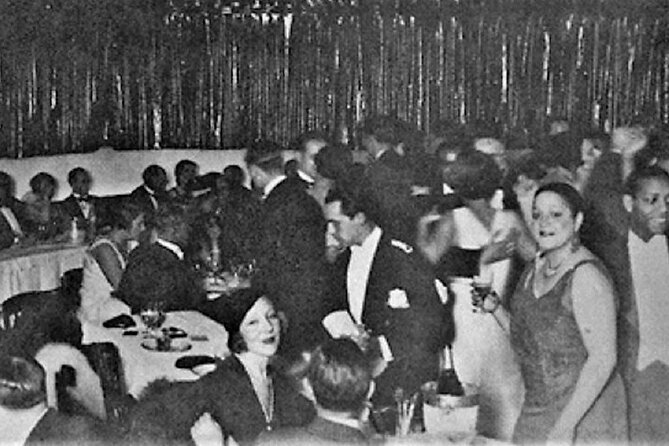
Rue Pierre-Fontaine brings you to the former site of Zelli’s, one of the celebrated cabarets of 1920s Paris. Its appeal came from avant-garde jazz, and the club became part of Pigalle’s busy nightlife.
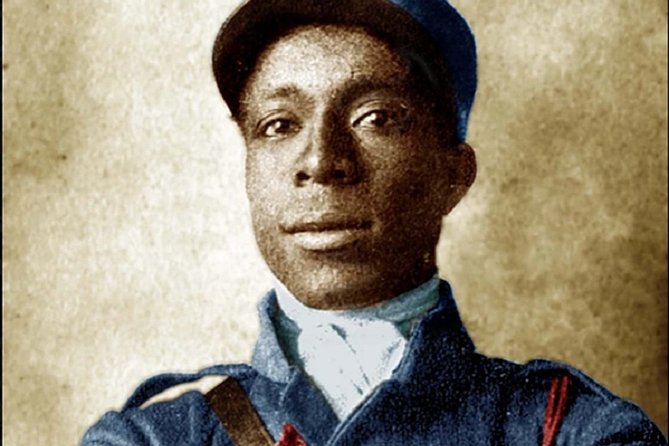
Here the tour introduces Eugene Jacques Bullard, one of its most compelling figures. Bullard was the son of a formerly enslaved man from Martinique. He became the first African American fighter pilot in history, flying for France during the First World War.
Bullard flew 30 missions, downed two German planes, and earned the nickname Black Jacques. After the war, he learned drums and worked as a musician at Zelli’s. He eventually became the club’s manager and, with support from Joe Zelli, opened the Grand Duc.
The Grand Duc mixed hot jazz with soul food and became one of Paris’s popular clubs. Bullard’s story makes the tour broader than a list of famous singers. It shows how Black Americans and people from the wider French colonial world took on many roles in Paris: performer, manager, club owner, pilot, and business operator.
You also get a useful reminder that the city’s jazz scene was built by people who had lives outside music. Bullard’s wartime service and later club work do not fit into a neat celebrity biography. That is exactly why his story belongs here.
The old club locations can be visually underwhelming. Some buildings are vacant or have changed use. If you want original stages, signs, or interiors, this will feel thin. If you enjoy reconstructing a vanished neighborhood from evidence and stories, the lack of visible remains becomes part of the experience.
More walking tours in Paris:
- Paris Top Sights Half Day Walking Tour with a Fun Guide
★ 5.0 · 2,893 reviews - Montmartre Hidden Gems and Scenic Highlights Walking Tour
★ 5.0 · 2,684 reviews - Montmartre Hill French Gourmet Food and Wine Tasting Walking Tour
★ 5.0 · 2,588 reviews - Paris Île de la Cité and Notre-Dame Walking Tour With Crypt
★ 5.0 · 2,272 reviews
The jazz women of Place Blanche
Back at Place Blanche, the focus shifts to women whose careers deserve more space in the usual account of jazz.
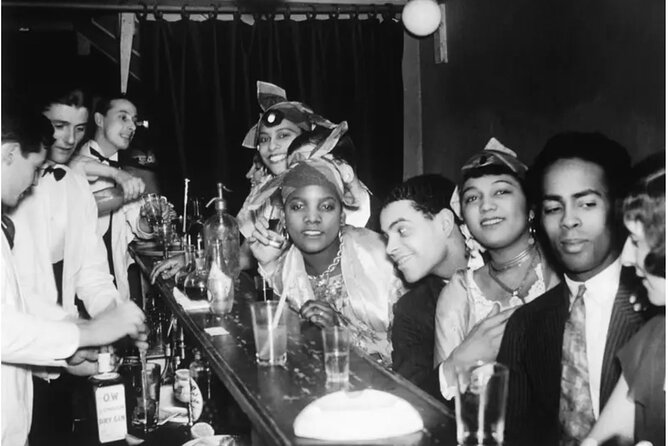
You meet Bricktop, known as the Queen of Pigalle. She arrived in Paris with only $24 and built a career that brought her into contact with royalty and celebrities. Her rise shows how a performer could become a powerful social and business figure in a city that rewarded style, nerve, and talent.
Then comes Valaida Snow, a singer, dancer, and multi-instrumentalist. She played eight instruments, and Louis Armstrong called her the second-best trumpet player in the world. She became a major European star in the 1930s.
Snow’s life also reveals how quickly an artist’s world could be shattered by war. While performing in Denmark in 1940, she was arrested by the Nazis. She was later freed through a prisoner exchange and returned to the United States deeply affected by the experience, though she eventually resumed her career.
This section is one of the tour’s strongest because it does not treat women as side characters. Their work, public image, and survival are central to the story.
The stop lasts about 20 minutes, longer than several of the other locations. That extra time helps Ellen give context instead of rushing through names. Her presentation style, paired with photos and sound, is particularly useful here because many of these performers are not familiar to a general audience.
Alberta Hunter and a club that is no longer open
On Rue Victor Massé, you hear about Alberta Hunter outside the former club where she once performed. The club is closed, a reminder that this tour is about a vanished nightlife district as much as it is about its musicians.
Hunter lived through the Jazz Age in both Harlem and Paris. She left music in the 1940s and worked as a nurse for two decades. Then, at age 83, she was persuaded to return to the stage.
Her comeback became another successful chapter. She resumed singing and once again became a star, showing that a career in music does not always follow a straight line from youth to retirement.
This stop gives the tour a useful change of pace. Instead of ending with a glamorous club story, it considers work, aging, memory, and second chances. It also reinforces the theme that these artists were full people with careers that changed in response to war, money, family, and circumstance.
What the indoor presentation adds
Some people book a walking tour because they want to keep moving. If that is you, pay attention to the structure before booking. A substantial portion of this experience takes place indoors at the beginning, with the street walk following afterward.
That presentation includes music, photographs, video, and historical material. It may take place over a drink in a hotel or restaurant setting, but the drink itself is not included. The indoor portion lets Ellen show performers in action rather than asking you to picture everything from a few words outside an altered building.
I like this format for a subject with so little surviving physical evidence. A former club may now be a different business, an empty space, or an ordinary facade. A photograph of Josephine Baker, a recording by a bandleader, or a film clip of a performer can restore some sense of what the neighborhood once offered.
The trade-off is that the experience feels partly like a compact illustrated lecture. One less enthusiastic assessment found too much time indoors and not enough walking. That is a fair concern if you want a traditional outdoor tour. The tour covers about 2 kilometers and visits six locations, so the walking portion is purposeful rather than extensive.
Price, group size, and practical value
At $107.84 per person, this is not a bargain-priced stroll. I would judge the cost against the preparation and format rather than against the distance covered.
You are paying for a focused subject, a private group arrangement, and an unusually large amount of supporting material. Ellen has gathered photographs, recordings, documents, and video to explain people who are often left out of standard Paris sightseeing. If you value music and social history, that can justify the price.
If you measure value by hours on your feet or by the number of landmarks visited, it may not. The route is fairly short, and several sites no longer operate as clubs. You need to be comfortable paying for interpretation, research, and storytelling rather than preserved attractions.
The private format can help. Only your group participates, so the pace can be adjusted within the scheduled time. The experience is offered in English, and the confirmation arrives when you book. Service animals are allowed, and the route is near public transportation.
The walk is suitable for most people, and one family used it with a stroller. Still, you should expect city sidewalks and a total experience of about two and a half hours. There are no hotel transfers, food, or drinks included.
Free cancellation is available up to 24 hours before the 2 p.m. start time. Poor weather can cause cancellation, in which case you are offered another date or a full refund. The same applies if the minimum number needed to run the tour is not reached.
Who will enjoy this Pigalle tour most
I would choose this for:
- Jazz fans who want more than a famous-name checklist.
- Black history enthusiasts interested in artists, entrepreneurs, and performers in Paris.
- Repeat visitors who have already seen the major monuments and want a focused neighborhood story.
- Families with older children or teenagers who respond well to music, photos, and human stories.
- Curious first-time visitors who want a different way to understand Pigalle and Montmartre.
I would hesitate if your main goal is a long outdoor walk, active club visits, or live music. This is not a nightlife tour, a food tour, or a visit to functioning jazz venues. It is an illustrated history lesson combined with a short walk through the places where that history happened.
Ellen’s enthusiasm is a major part of the experience. She presents from memory, uses visual material with care, and answers questions. The best fit is someone willing to listen closely, then look at present-day Paris and imagine its earlier life.
Should you book Harlem in Paris?
Book it if you want to understand how African American performers helped shape Parisian culture in the 1920s and beyond. The strongest parts are the presentation, the music and visual clips, and the attention to artists such as Eugene Bullard, Bricktop, Valaida Snow, and Alberta Hunter.
Skip it if you expect grand interiors, a long route, or a club that is still open at every stop. The buildings often provide only a physical starting point for the story.
For the right audience, this is a thoughtful way to see Pigalle. You leave with a better sense of the people behind the music, not just the names printed in a guidebook.
FAQ
Where does the Harlem in Paris tour begin?
The tour begins at Artemisia Montmartre, 11 Rue Fromentin, 75009 Paris, France.
Where does the tour end?
The tour ends at Place Pigalle.
What time does the tour start?
The scheduled start time is 2 p.m.
How long does the tour last?
The experience lasts approximately two hours and 30 minutes.
Is food or a drink included?
No. Food and beverages are not included, and hotel transfers are also not included.
What happens if the tour is canceled because of bad weather?
You are offered another date or a full refund. The same options apply if the minimum number of participants is not met.
Just added around Paris
- Paris: The Da Vinci Code Walking Tour with a Local Guide★ 4.3 · 5 reviews
- Paris: Flea Market Insider’s Tour in Extra-Small Group★ 4.6 · 73 reviews
- Paris: Private Fashion Tour (Chanel, Dior, Sex & the City)★ 5.0 · 3 reviews
- Paris: Floral Earrings workshop★ 5.0 · 3 reviews
- Paris: Fashion History Walking Tour in the Heart of Paris★ 4.9 · 22 reviews
- PARIS: Family e-bike longtail renting★ 5.0 · 3 reviews
- Paris: Famous Monuments Cycling Tour★ 4.7 · 20 reviews
- Paris: private city tour with seine river cruise★ 4.8 · 28 reviews
Paris Walking Tours, compared.
Paris Top Sights Half Day Walking Tour with a Fun Guide
Read our review →
Montmartre Hidden Gems and Scenic Highlights Walking Tour
Read our review →
Montmartre Hill French Gourmet Food and Wine Tasting Walking Tour
Read our review →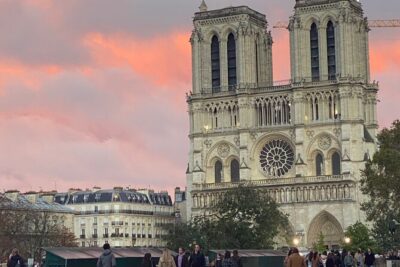
Paris Île de la Cité and Notre-Dame Walking Tour With Crypt
Read our review →
Montmartre Cheese, Wine & Pastry Guided Walking Tour
Read our review →
Paris in a Day: Louvre or Orsay, Eiffel Tower, City Walk & Cruise
Read our review →
Montmartre Highlights Walking Tour with a Local Guide
Read our review →
Browse the lists this tour appears in