
Reviewed · PARIS WALKING TOURS
Haussmannian Paris 2-Hour Private Walking Tour
Paris changes character when you begin looking at its streets as a grand 19th-century project rather than a collection of famous sights. This private two-hour walk follows the work of Baron Haussmann, whose sweeping redesign replaced much of the old city with broad boulevards, uniform façades, grand public buildings, and carefully planned parks.
I like the focus on urban planning and architecture, not just postcard views. I also like the small human details, including the cafés and drinking spots linked with Picasso and other artists. The main thing to consider is the pace: two hours gives you a useful introduction, but not enough time for long interior visits or a slow look at every stop.
The guides speak English or French, and the private format lets you ask questions as you go. Recent tours were led by Tina and Hanna, with Hanna praised for explaining city planning, architecture, and local tips clearly. The meeting point is easy to find at Café de la Paix, where your guide carries a red canvas tote bag.
Key points at a glance
- Opéra Garnier anchors the walk: Begin near one of Paris’s grandest 19th-century buildings and the clearest symbol of Haussmann’s age.
- Boulevard Haussmann shows the plan in action: Wide streets, ordered façades, and major department stores reveal how the new city was meant to work.
- Galeries Lafayette adds a practical Paris angle: You see how shopping and spectacle became part of the modern capital.
- Park Monceau provides a change of pace: The elegant park helps you understand Haussmann’s concern with open space as well as stone.
- Artistic Paris gets a nod: The walk includes places connected with Picasso and the city’s café culture.
- Private means personal: You travel with your own group, in English or French, and can ask for more detail on the subjects that interest you.
Why Haussmann’s Paris is worth two hours
Many first visits to Paris focus on medieval streets, royal monuments, or the Eiffel Tower. This tour asks you to look at something less obvious: the shape of the city itself.
During the 19th century, Baron Georges-Eugène Haussmann led an enormous rebuilding program under Napoleon III. Almost the entire city was flattened and rebuilt, with only two neighborhoods left outside the main intervention. The goal was practical and visual at once: improve movement through Paris, create healthier and more functional streets, and produce a capital that looked grand and unified.
That transformation came at a price. Old buildings and streets disappeared, along with much of the irregular medieval city. The result can feel excessive, but it is also remarkably coherent. Once you understand the plan, the long avenues and matching façades stop looking like background scenery. They become evidence of a deliberate decision about how a modern capital should look and operate.
I find this kind of tour useful early in a Paris visit because it gives you a framework for later sightseeing. Afterward, you may notice building height, balconies, street alignment, and the way major avenues lead your eye toward monuments. The tour does not simply point out pretty buildings. It explains why so much of central Paris has a shared visual character.
More walking tours in Paris:
- Paris Top Sights Half Day Walking Tour with a Fun Guide
★ 5.0 · 2,893 reviews - Montmartre Hidden Gems and Scenic Highlights Walking Tour
★ 5.0 · 2,684 reviews - Montmartre Hill French Gourmet Food and Wine Tasting Walking Tour
★ 5.0 · 2,588 reviews
Meeting at Opéra Garnier and Café de la Paix
The walk begins at Métro Opéra, in front of Café de la Paix. This is a practical meeting place in one of the city’s most impressive urban settings. Look for the guide carrying a red canvas tote bag.
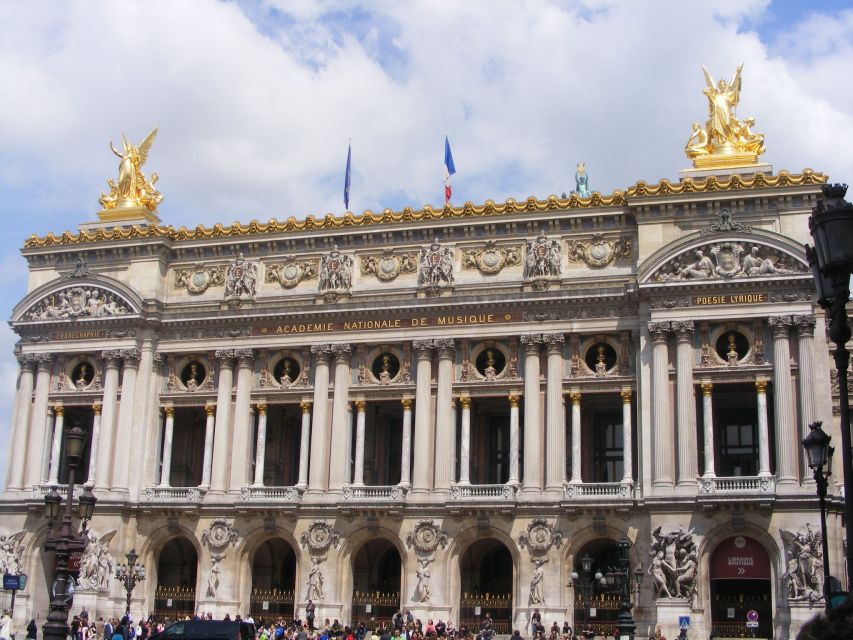
The location puts you immediately beside Opéra Garnier, the great opera house of the period. It is often described as one of the most beautiful buildings in Europe, and the claim is easy to understand once you see its theatrical exterior, elaborate decoration, and commanding position near the boulevard network.
The opera house is especially useful as an opening lesson. It shows the confidence of Haussmann’s Paris in one glance. This was not an age of modest public buildings. The city wanted monuments that expressed wealth, order, culture, and power.
The tour is a walking experience, so wear shoes you can use comfortably for two hours. The exact route and time spent at each stop can vary, but the program is built around outdoor viewing and explanation rather than a full guided visit inside every building. If entering Opéra Garnier is your main goal, you should treat that as a separate activity.
Reading Boulevard Haussmann’s broad design
From the opera district, the walk turns toward Boulevard Haussmann, the avenue named for the man who reshaped Paris. Here, the urban plan becomes easier to read than in a single monument.
Haussmann’s streets were designed for movement and visibility. Broad avenues replaced many narrow lanes, and long rows of buildings created a regular street wall. The façades share common proportions and materials, yet they still leave room for individual decoration. You get repetition without total sameness.
For me, this is where the tour earns its keep. A guide can point out relationships that are easy to miss when you are simply walking from one attraction to the next. The boulevards were not just made wider for beauty. They were intended to improve circulation and make the city easier to manage.
The plan also changed how Parisians shopped, met, and spent leisure time. The new avenues made room for grand stores, cafés, theaters, and public gathering places. You see a city designed not only for residents moving between home and work, but also for the new rituals of urban life.
The drawback is that boulevard architecture can seem repetitive if you are not interested in details. That is why the guide matters. Without explanation, you may see a string of handsome façades. With the right questions, you begin to notice the rules behind them.
Galeries Lafayette and the rise of department-store Paris
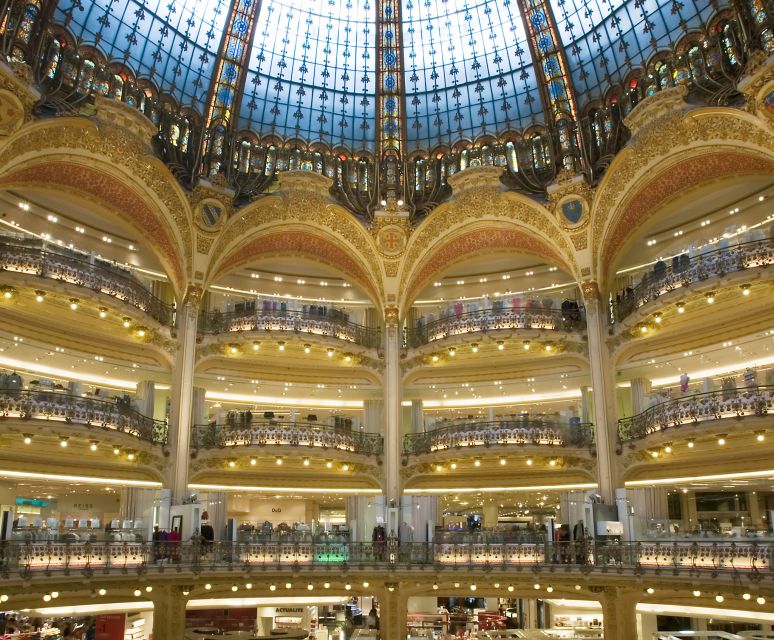
Galeries Lafayette gives the tour a different angle on Haussmann’s city. This is not simply another ornate building. It represents the growth of modern shopping and the new role of the department store in Parisian life.
The store is known for its elegant interior and grand architectural style. Even if you are not planning to buy anything, it helps to see how commerce became part of the city’s visual drama. Shopping was no longer limited to small specialist shops along older streets. Large stores turned browsing into a social activity and used architecture to attract people inside.
This stop also makes the tour useful for visitors who want more than a list of monuments. You see how urban planning affected ordinary routines: where people walked, where they gathered, and how the new boulevards supported large commercial buildings.
You may want to return to Galeries Lafayette after the tour for a longer visit, especially if you care about its interior details or want to shop. The two-hour walk can introduce the building, but it does not leave much time for browsing. Think of it as a quick architectural stop within a larger story.
More two-hour experiences in Paris:
- The Père Lachaise Cemetery: Guided 2-Hour Small-Group Tour
★ 4.7 · 1,065 reviews - Paris: 2-Hour Perfume Creation Workshop
★ 4.8 · 731 reviews - Paris Louvre: 2-Hour Private Tour for Groups or Families
★ 4.6 · 639 reviews - Paris Montmartre: 2-Hour City Tour in German
★ 4.9 · 299 reviews
Jacquemart-André and the private side of the period
The Museum of Jacquemart-André represents another side of 19th-century Paris: the private mansion built for wealth, taste, and display. The building is described as a lavish villa of the period, and it helps balance the public scale of the opera house and boulevards.
Here, the focus shifts from citywide planning to personal ambition. Haussmann’s Paris was not only about government projects and public streets. It also created an environment in which wealthy families could display art, status, and refined living.
If you enjoy grand residences, this stop may be one of the most appealing parts of the route. If you prefer street life and public buildings, you may find the exterior explanation more useful than a longer pause. The tour is designed as a broad look at the era, so it does not function as a full museum visit.
That distinction matters when you plan your day. The walk helps you understand where the museum fits into the period’s architecture and social world. You would need a separate visit for the full collection and interior experience.
Saint Augustin’s unusual architectural solution
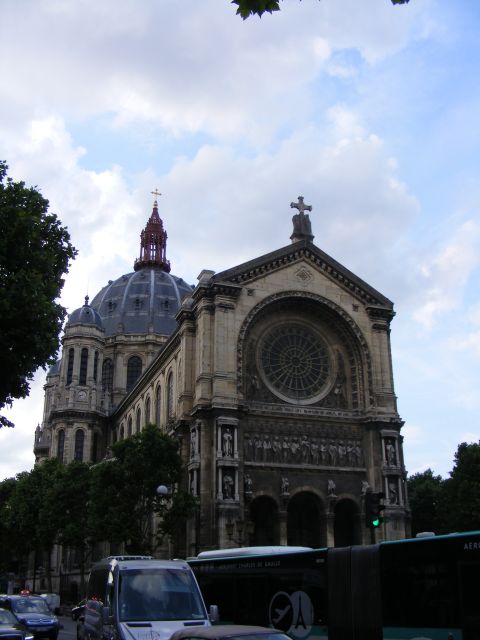
The Church of Saint Augustin adds a religious building to the route and shows how architects adapted older forms to newer city conditions. It is described as an architectural marvel, and its place in the Haussmannian setting makes it more than a quick church stop.
The church helps explain how the grand rebuilding program affected different types of buildings. Paris needed churches, public institutions, commercial structures, and private residences that could fit the new avenues. Saint Augustin gives you a chance to compare religious architecture with the more familiar apartment façades and civic monuments.
A guide can also connect the church to the larger question of style. Haussmannian Paris is unified, but not every building serves the same purpose or uses decoration in the same way. That variety keeps the walk from becoming a simple lesson in matching façades.
As with the other stops, the available information does not promise a full interior tour. Expect to see and discuss the building as part of the walking route rather than plan on an extended church visit.
Park Monceau, where stone gives way to open space
Park Monceau is billed as the city’s most elegant park, and it offers a welcome change after the grand streets and dense architecture. The park shows that the Haussmann project was not only about paving over old Paris with boulevards and buildings. Open space also mattered.
A park provides room for walking, rest, and a different view of the city. At Park Monceau, you can consider how landscaped public areas fit into the larger plan. The contrast is useful: the regular streets make the city orderly, while the park gives it breathing room.
This is likely to be one of the more relaxed sections of the walk. You can ask your guide about the purpose of parks in the 19th-century city and how they fit alongside the new avenues. The stop also gives you a break from looking upward at façades.
Do not expect a long park outing. The entire experience lasts two hours, and several major sights are included. You will see Park Monceau as part of a connected route, not spend an afternoon exploring every path and corner.
Picasso, cafés, and the city behind the monuments
The tour includes favorite drinking spots associated with Picasso and other artists. That detail gives the walk a human scale.
Grand buildings explain the official story of Paris, but cafés reveal how people used the rebuilt city. Artists, writers, residents, and visitors turned the new boulevards and commercial districts into places for conversation, work, and social life. The reference to Picasso adds a link to the artistic Paris many people hope to find beyond the major monuments.
This part may appeal most if you like stories about people and habits as much as architecture. You can ask which cafés or drinking dens are being discussed and how they fit into the period covered by the guide. The supplied information does not promise a food or drink tasting, so plan to pay separately if you want refreshments.
Food, snacks, and drinks are not included. That is not a major problem on a two-hour walk, but it is worth knowing if you expected a café stop built into the price. The café references are part of the storytelling, not a meal program.
What the private format adds
This is a private group walk, which changes the experience in useful ways. You are not trying to keep up with a large crowd or wait for strangers to finish taking photos. You can ask the guide to explain a point about planning, architecture, art, or your own Paris itinerary.
The reviews supplied for this experience give special weight to the guides’ explanations and practical advice. Tina is described as friendly, while Hanna helped one visitor understand city planning, architecture, and city history and also offered tips for the rest of a Paris stay. Another review praised the planning of the visit and the guide’s strong command of the subject.
The operator, Paris in person private tours, was selected among the top ten small tour operators in Europe from 26,000 companies in the 2025 TourReview Arival Spotlight Awards. That recognition does not guarantee that every guide or departure will suit every person, but it is a useful sign that the company has earned notice beyond this single tour.
You should still arrive with a few questions ready. Ask about the buildings that interest you, how much of the old city was lost, or where you should return for a longer visit. A private tour gives you the best chance to shape the conversation.
Is $176 per person good value?
At $176 per person, this is not a budget walk. You are paying for a private guide, a focused route, and the ability to ask questions in a small setting. Food, drinks, and admission to attractions are not included.
The value depends on your priorities. If you want a broad introduction to Haussmann’s Paris in two hours and prefer personal explanation over a large group, the price can make sense. It is also useful for a first or second day in the city, when you want a strong sense of how central Paris fits together.
If you mainly want to enter Opéra Garnier, shop at Galeries Lafayette, or spend time inside a museum, the price is harder to justify because the walk is not built around long interior visits. You would be paying for interpretation and context, not admission tickets or a meal.
The 4.9 rating from 11 reviews is encouraging, and the repeated praise centers on clear explanations, strong planning, and passionate guides. The sample is small, so I would treat the rating as a helpful signal rather than a guarantee. The most consistent strength is the guide’s ability to turn architecture and planning into an understandable story.
Who should book this Paris walk?
I would recommend it to you if:
- You want to understand why Paris has such a consistent 19th-century look.
- You enjoy architecture, city planning, and urban history.
- You prefer a private guide to a large scheduled group.
- You want local advice alongside the main sightseeing.
- You have already seen the major monuments and want a different angle on the city.
- You are comfortable spending much of the two hours outdoors.
I would be more cautious if you want a food tour, extensive shopping time, or long museum visits. The route covers many important places, but its purpose is to connect them through Haussmann’s transformation.
The walk is wheelchair accessible, and tours operate rain or shine. Check the starting times before booking, and dress for the weather since this is an outdoor experience. English and French are available.
Should you book the Haussmannian Paris tour?
Book it if you want Paris to make more sense as a city, not just as a series of famous addresses. The strongest parts are the clear focus on Haussmann’s rebuilding, the mix of public monuments and everyday urban life, and the private format with room for questions.
Skip it if your priority is entering several buildings or keeping costs low. For everyone else, this is a compact way to see Opéra Garnier, Boulevard Haussmann, Galeries Lafayette, Jacquemart-André, Saint Augustin, and Park Monceau while learning what ties them together. The city may look familiar when you finish, but you will read it differently.
FAQ
Where does the Haussmannian Paris walking tour meet?
Meet your guide at Métro Opéra, in front of Café de la Paix. The guide will carry a red canvas tote bag.
How long does the walking tour last?
The tour lasts two hours.
Is this a private tour?
Yes. The experience is offered for a private group.
Which languages are available?
The live guide can conduct the tour in English or French.
Is the tour wheelchair accessible?
Yes, the tour is listed as wheelchair accessible.
Are food, snacks, or drinks included?
No. Food, snacks, and drinks are not included in the tour price.
What happens if it rains?
Tours operate rain or shine. Since this is a walking tour, you should prepare for the weather on the day of your visit.
Just added around Paris
- Paris: The Da Vinci Code Walking Tour with a Local Guide★ 4.3 · 5 reviews
- Paris: Flea Market Insider’s Tour in Extra-Small Group★ 4.6 · 73 reviews
- Paris: Private Fashion Tour (Chanel, Dior, Sex & the City)★ 5.0 · 3 reviews
- Paris: Floral Earrings workshop★ 5.0 · 3 reviews
- Paris: Fashion History Walking Tour in the Heart of Paris★ 4.9 · 22 reviews
- PARIS: Family e-bike longtail renting★ 5.0 · 3 reviews
- Paris: Famous Monuments Cycling Tour★ 4.7 · 20 reviews
- Paris: private city tour with seine river cruise★ 4.8 · 28 reviews
Paris Walking Tours, compared.
Paris Top Sights Half Day Walking Tour with a Fun Guide
Read our review →
Montmartre Hidden Gems and Scenic Highlights Walking Tour
Read our review →
Montmartre Hill French Gourmet Food and Wine Tasting Walking Tour
Read our review →
Paris Île de la Cité and Notre-Dame Walking Tour With Crypt
Read our review →
Montmartre Cheese, Wine & Pastry Guided Walking Tour
Read our review →
Paris in a Day: Louvre or Orsay, Eiffel Tower, City Walk & Cruise
Read our review →
Montmartre Highlights Walking Tour with a Local Guide
Read our review →
Browse the lists this tour appears in