
Reviewed · LOUVRE MUSEUM TOURS
Louvre Museum: Mona Lisa Without the Crowds Last Entry Tour
The best part of this Louvre visit comes at the end: a quieter look at the Mona Lisa just before the museum closes. After two and a half hours among major works, you reach Leonardo’s small, famous portrait with time to study it instead of being pushed along by a packed crowd. The late timing is the tour’s clever idea.
I like two things here. First, an art historian gives the masterpieces a story, so you are not simply ticking off famous names. Second, the group is limited to 15 people, and headsets help you hear guides such as Hugo, Violette, Claire, Antoine, and Adam even when other rooms are busy. The main drawback is that three hours on foot can be tiring, and this tour is not suitable for wheelchairs, strollers, or anyone with mobility limits.
Key points at a glance
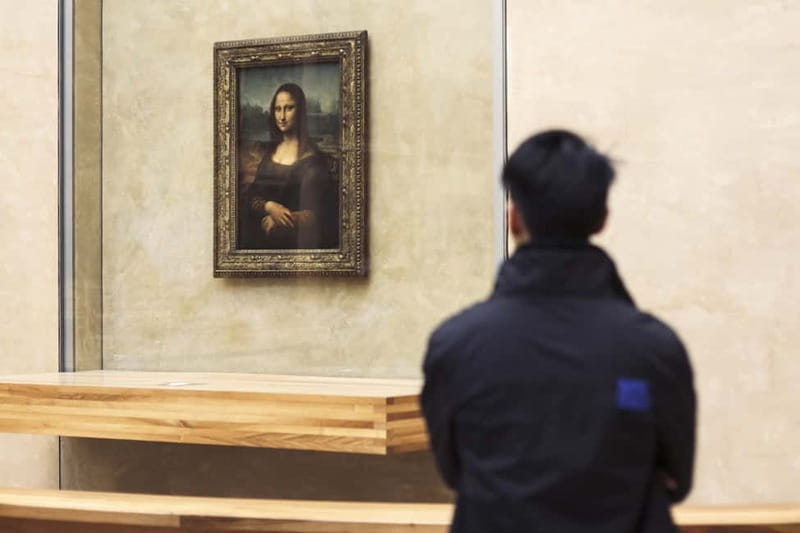
- Mona Lisa near closing time: Finish in the Mona Lisa Room when the daytime crowds have thinned.
- A strong first-visit route: See the Venus de Milo, Winged Victory, Michelangelo’s Slaves, Liberty Leading the People, The Raft of Medusa, and Crown Jewels.
- Small group format: The maximum group size is 15, giving you a better chance to hear and ask questions.
- Art history with context: Guides connect paintings and sculpture to French history, social events, artistic technique, and later works.
- Skip-the-line museum entry: The tour helps you avoid the regular ticket line, although you should still expect security procedures.
- A late finish: The activity ends back at the Louvre meeting point, with no hotel transportation included.
Why the last Louvre entry can be a smart choice
The Louvre is too large for a casual walk-around visit. You can spend hours crossing its enormous galleries and still miss the works you most wanted to see. This tour solves part of that problem by giving you a three-hour route through selected highlights, then saving the Mona Lisa for the final half-hour.
The timing matters. The tour begins late enough for the museum to feel calmer than it does during the busiest daytime periods. That does not mean you will have the galleries entirely to yourself. The Louvre remains a major Paris attraction, and famous rooms can still be crowded. But the final visit to the Mona Lisa is designed to be less frantic, with a better chance to look closely and take a photo.
I also like the order. You do not rush straight to Leonardo’s painting and then wonder what else to do. Instead, you get an introduction to the palace, its collections, and several major works before reaching the museum’s most famous resident.
At $97 per person, this is not a cheap Louvre ticket. You are paying for skip-the-line entry, an English-speaking art historian, headsets, and a guided route that saves you from planning your own path through a huge building. The value is strongest if this is your first Louvre visit, your Paris schedule is tight, or you want art explained rather than simply viewed.
If you already know the Louvre well, or prefer to wander at your own pace, the price may feel harder to justify. You will see only selected rooms, not every department. That is the tradeoff: less freedom, but far less guesswork.
More Louvre Museum Tours:
- Paris: Louvre Museum Timed-Entrance Ticket
★ 4.6 · 71,977 reviews - Paris: Louvre Guided Tour with Reserved Access & Boat Cruise
★ 4.3 · 16,353 reviews - Louvre Museum Masterpieces Guided Tour with Access
★ 4.5 · 12,023 reviews
Meeting at the Arc de Triomphe du Carrousel
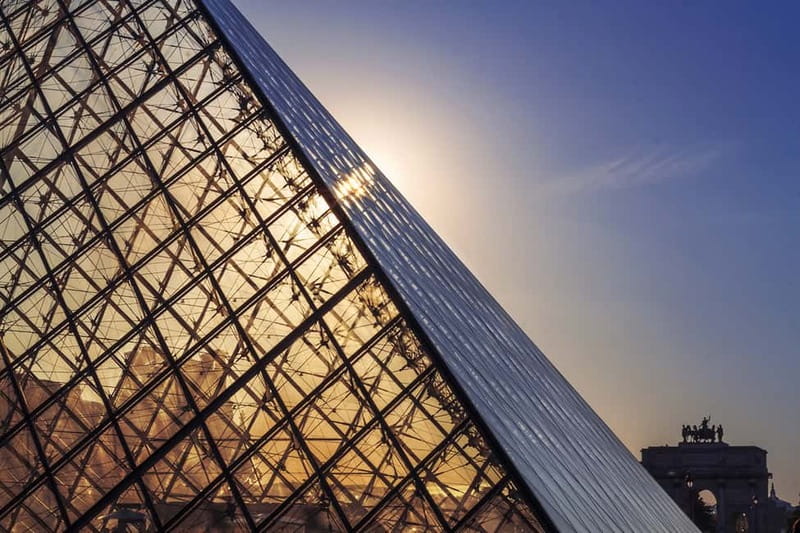
The tour begins at the Arc de Triomphe du Carrousel, not at the larger Arc de Triomphe at the end of the Champs-Élysées. This distinction is important. The meeting point is in front of the Louvre, opposite the pyramid and near the entrance to the Tuileries Gardens.
When facing the arch, look for the winged statue on the left. Your guide will be holding a green Walks sign. Arrive 15 minutes early. The meeting point is outside the main museum entrance, so do not assume you can simply meet the group inside after entering.
This is one place where a little preparation pays off. The Louvre area has several monuments, entrances, and open spaces, and a first-time visitor can easily walk to the wrong arch. Put Arc de Triomphe du Carrousel into your map, allow time to find the statue, and keep your booking details accessible.
The tour ends back at the Louvre meeting point. Hotel pickup and drop-off are not included, so you will need to arrange your own route afterward.
Palace foundations before the masterpieces
The visit begins with the Louvre’s foundations and moat. This opening gives you a useful reminder that the museum was not built as a museum in the modern sense. Before its galleries held paintings and sculpture, the site served as a fortified royal residence.
That brief look at the foundations helps make sense of the building around you. The Louvre is not one tidy exhibition hall. It is a vast former palace shaped by different periods of French history, with grand rooms and long corridors added over time.
From there, the guide leads you into the classical Greek sculpture collection. The route includes two of the Louvre’s best-known works: the Venus de Milo and the Winged Victory of Samothrace.
The Venus de Milo is famous partly because so much remains uncertain about it. The missing arms invite endless guesses, while the sculpture’s pose and calm expression continue to draw a crowd. Your guide can give you a way to look beyond the familiar name and notice the balance, movement, and idealized human form.
The Winged Victory offers a sharp contrast. Set high on a monumental staircase, it appears to move forward into the air even without a head or arms. The position, flowing clothing, and spread wings create a sense of motion that works especially well when you see the sculpture in its grand setting.
A guide is particularly useful here because both works are often photographed in a hurry. You may already know their names, but an explanation of how they were made, displayed, and understood gives the visit more depth.
Michelangelo, Cupid and Psyche, and the power of sculpture
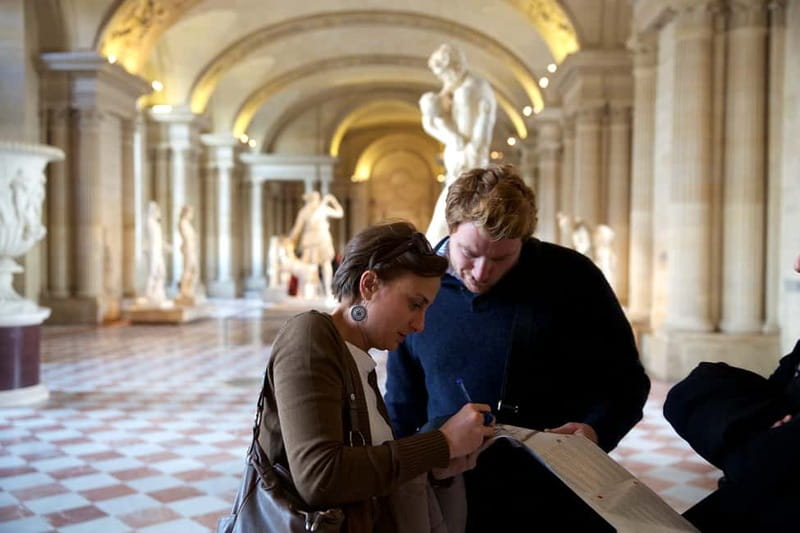
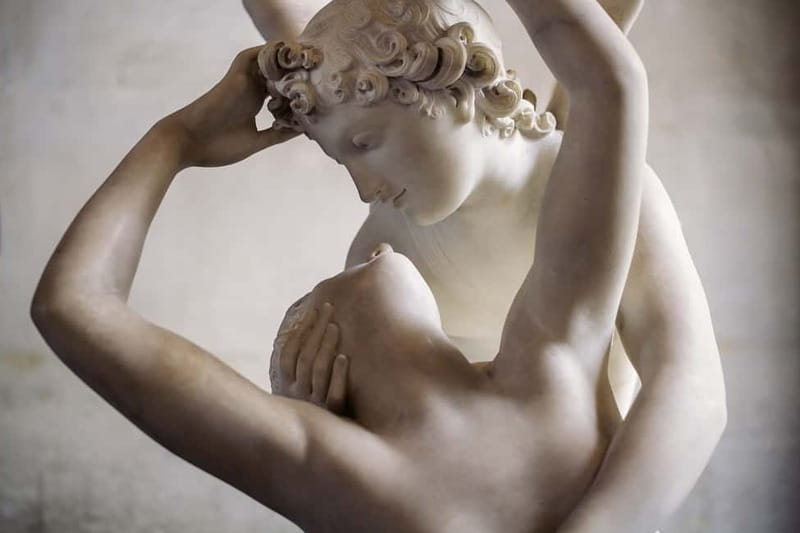
The route continues with Cupid and Psyche and Michelangelo’s Slaves. These works give you a chance to compare different ideas about the human body, emotion, and unfinished form.
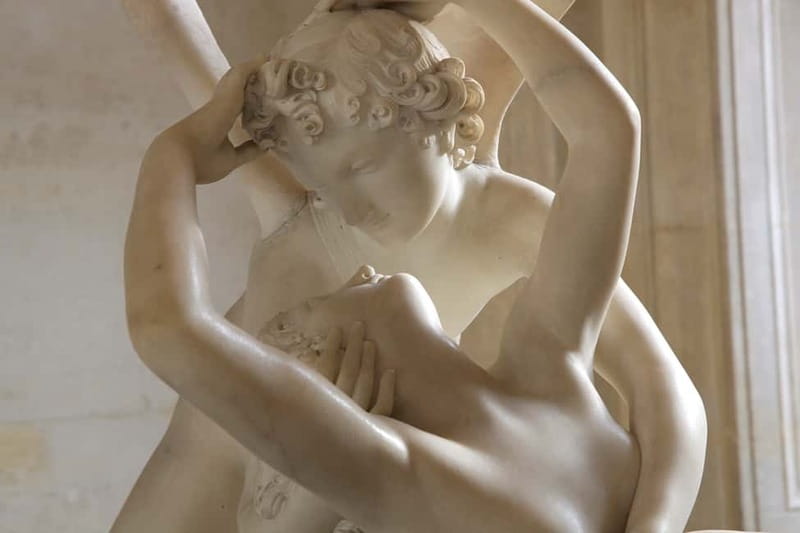
Cupid and Psyche has a graceful, theatrical quality. The figures seem caught in a private moment, yet the sculpture is arranged for a public audience to admire from several angles. It is the kind of work that rewards patience, especially when a guide points out how the bodies and arms lead your eye through the composition.
Michelangelo’s Slaves bring a different mood. The unfinished surfaces are part of their character, showing the figures emerging from stone or remaining trapped within it. A guide can help you consider whether to see the rough areas as incomplete work, deliberate expression, or both.
These stops also break up the parade of famous paintings. The Louvre can become visually exhausting when every room offers another large canvas. Sculpture gives your eyes and attention a different task, and the guide’s commentary helps connect technique with the emotional effect of each piece.
The group moves at a moderate pace. You should be comfortable walking for the full three hours, often standing while listening. Wear comfortable shoes, and do not plan this as a relaxed seated museum visit.
More art museums in Paris:
- Paris: Louvre Museum Entry Ticket With Host and River Cruise
★ 4.6 · 9,926 reviews - Les Invalides: Napoleon’s Tomb & Army Museum Entry
★ 4.6 · 9,185 reviews - Louvre Museum – Exclusive Guided Tour (Entry Included)
★ 5.0 · 6,296 reviews - Paris: Louvre Museum Hosted Entry and Mona Lisa Audioguide
★ 4.6 · 5,235 reviews
Painting French history through Delacroix and Géricault
The painting portion includes Eugène Delacroix’s Liberty Leading the People and Théodore Géricault’s The Raft of Medusa. These are not just famous pictures to point at and photograph. Both carry strong political and social meaning, and both benefit from a clear explanation.
Liberty Leading the People shows a symbolic figure carrying the French flag over fallen bodies. It is easy to reduce the painting to a heroic image, but the scene also presents the cost of political struggle. A good guide can connect the picture’s dramatic arrangement with the events and ideas that shaped it.
The Raft of Medusa is another emotionally demanding work. Géricault’s huge painting shows desperation, hope, and human suffering after a shipwreck. The scale matters. You can study reproductions beforehand, but standing before the original makes the arrangement of bodies and the reach toward the distant rescue ship much more forceful.
This is where the tour’s strongest guides make a real difference. Guides such as Laurence, Bel, Claire, and Violette have been praised for joining art technique to social history and major events. That kind of explanation helps you understand not only what a painting depicts, but also why it mattered when it was made.
The Louvre’s size makes these connections difficult to find on your own. You might recognize a painting but miss the political background, the artistic choices, or the way later artists responded to it. The guide gives you a framework without requiring you to read every wall label.
Leonardo, Raphael, and Caravaggio along the way
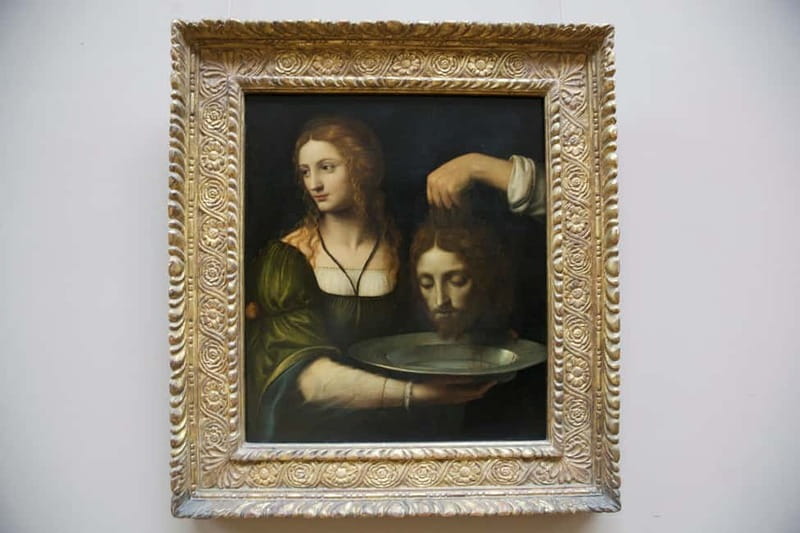
The route also includes works associated with Leonardo da Vinci, Raphael, and Caravaggio. The exact rooms visited can change because museum areas may close, so you should treat the route as a selection rather than a fixed checklist.
That flexibility is sensible in a museum as large and busy as the Louvre. A guide may need to alter the path to avoid a closed room or manage crowd conditions. The important point is that the tour focuses on major works from the collection rather than attempting to cover every gallery.
Leonardo’s presence naturally prepares you for the Mona Lisa. You may encounter his work or ideas before reaching the portrait itself, giving you a little context for his approach to expression, observation, and composition.
Raphael offers another point of comparison, especially in the balance and clarity associated with his paintings. Caravaggio brings stronger drama, with light and shadow used to direct your attention and heighten emotion. Moving between artists helps you see that the Louvre is not simply a collection of isolated masterpieces. It is also a place to compare different solutions to the same artistic problems.
The best part of this section is the chance to ask questions. Guides including Antoine, Adam, Hugo, and Manuel have been praised for combining serious art knowledge with humor and lively storytelling. That matters during a long museum visit. A dry lecture can make three hours feel longer, while a well-told explanation keeps you alert.
Crown Jewels and the grandeur of royal power
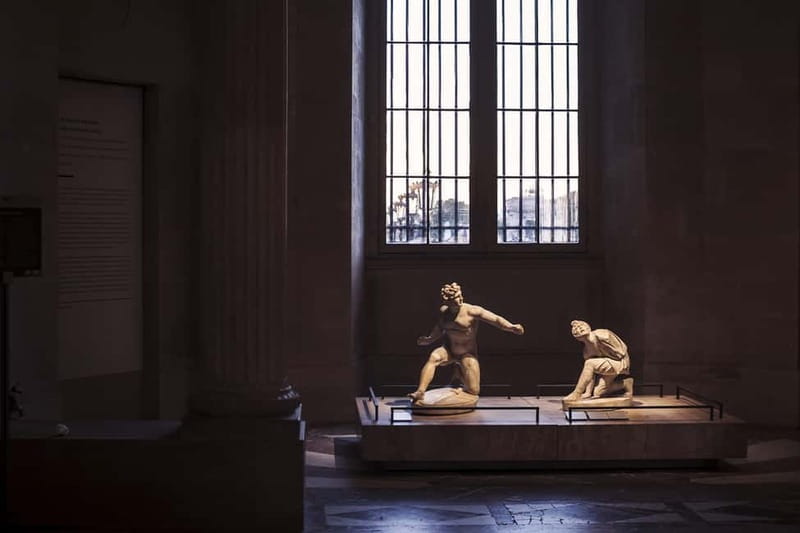
The route includes a room filled with Crown Jewels. This adds a different kind of spectacle to the tour, with precious objects that speak to monarchy, ceremony, wealth, and political authority.
After large paintings and monumental sculpture, the jewels offer a close look at craftsmanship on a much smaller scale. You may find yourself focusing on stones, metalwork, and the way objects were made to be seen in royal settings.
This stop also reinforces the Louvre’s identity as a former palace. The museum is not only a place for art history. Its rooms and objects show how rulers used architecture, luxury, and display to project power.
Because museum rooms can close or change access, the Crown Jewels should be viewed as part of the intended route rather than a guaranteed promise for every departure. Your guide may substitute another important area if needed.
The Mona Lisa with 30 minutes at the finish
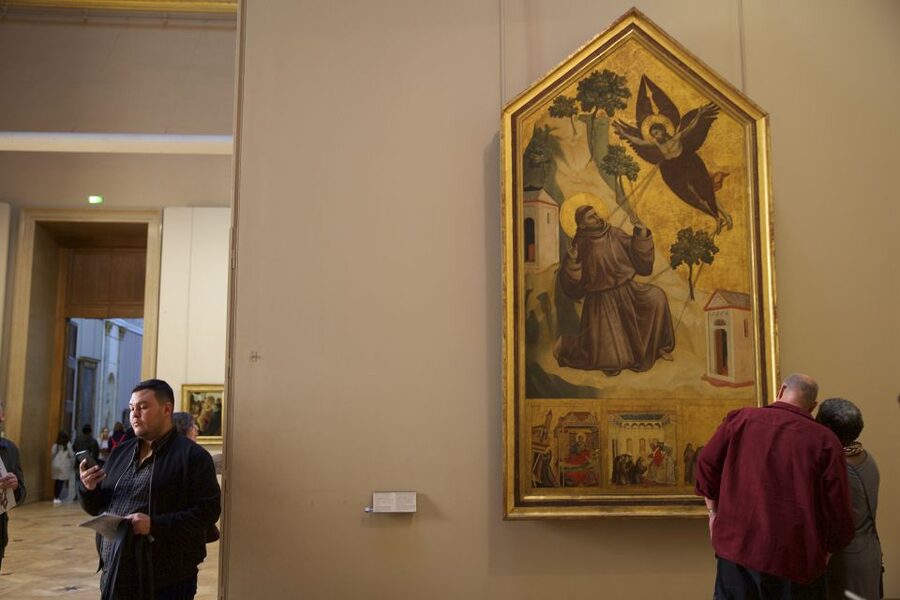
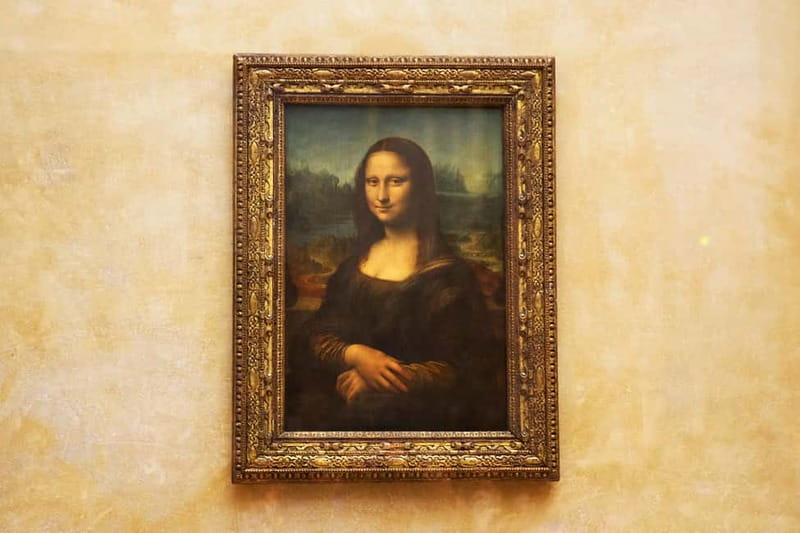
The final 30 minutes are devoted to La Joconde, or the Mona Lisa. This is the moment most people book the tour for, and the timing gives it a clear advantage over a rushed daytime stop.
The painting is smaller than many first-time visitors expect. Its fame can create a strange mismatch between expectation and scale. You may arrive expecting a huge portrait and instead see a compact panel protected behind glass and surrounded by a large room.
That is precisely why a quieter visit helps. With less pressure from a dense crowd, you have more time to notice the soft transitions in the face, the distant background, and the uncertain expression that has inspired centuries of argument. You can stand back, look carefully, and take in the picture without feeling that you must move immediately.
The tour description promises the chance to get close, but conditions still depend on museum capacity and the behavior of other people in the room. No evening tour can guarantee complete solitude. The practical benefit is a better chance of a calmer view at the end of the day.
Your guide remains with you for this part, offering interpretation before you have time to look on your own. That balance is useful. Listen first, then spend a few quiet minutes examining the painting without commentary in your ear.
Afterward, you leave the museum with the guide and return to the meeting point. The visit ends at the Louvre, and you should not count on shopping afterward. One person found the gift shop closed at the end of the tour, so plan any museum purchases earlier if that matters to you.
Group size, headsets, and the walking pace
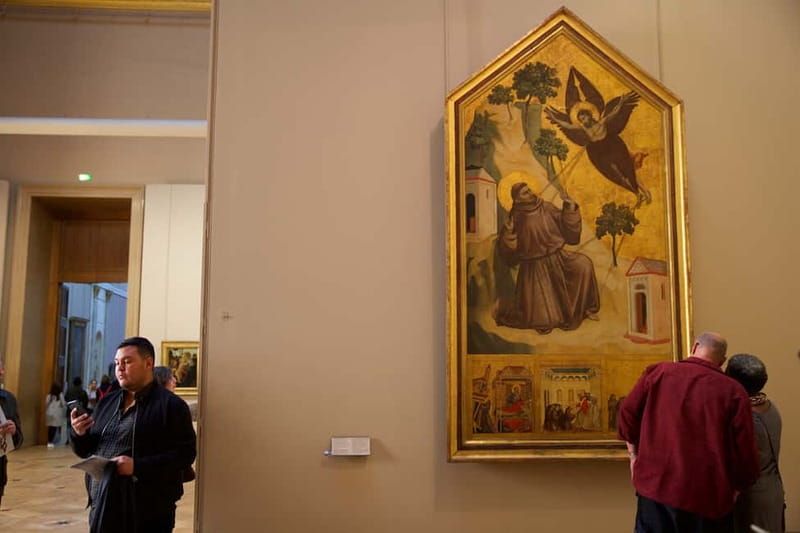
The maximum group size is 15 people, which is small enough to feel more personal than a large coach-style tour. It also gives the guide a better chance to answer questions and keep the group together through busy galleries.
Headsets are included. They are useful in the Louvre, where voices echo and nearby groups can be loud. You can stay close to a painting without missing the explanation, though you still need to remain attentive to the guide’s position as the group moves.
The tour is conducted in English. Several guides have been praised for their humor, energy, and ability to include different ages, including teenagers. That makes the experience suitable for families with older children, provided everyone can maintain the walking pace.
Bring a passport or ID card. Large bags, luggage, oversized luggage, baby strollers, and wheelchairs are not allowed for this experience. The tour is not suitable for people with mobility impairments, and you should be able to walk at a moderate pace without difficulty.
Is $97 a fair price?
I would judge the price by what you need from the Louvre. If you want a quick, organized introduction with major works, an art historian, skip-the-line entry, and a quieter Mona Lisa visit, $97 can be fair. The guide may save you considerable time and prevent the museum from becoming an exhausting maze.
The price is less attractive if you only want to see the Mona Lisa. In that case, the two and a half hours of additional museum touring may feel like an obligation rather than a benefit. You also give up the freedom to focus on a particular department or stay with one painting as long as you wish.
For a first visit, I think the value is strongest. The route covers sculpture, painting, palace foundations, royal objects, and French political art in one evening. You leave with a broad sense of what makes the Louvre important, rather than one hurried photograph.
You can cancel up to 24 hours before the tour for a full refund, and reserve now while paying later. Those policies help if your Paris schedule is still shifting, but check the available start times carefully because the late entry is central to the experience.
Should you book the Louvre last-entry tour?
Book it if you want the Louvre’s main sights explained by an art historian, prefer a small group, and care about seeing the Mona Lisa at a calmer time. It is especially useful for a first visit, a short stay in Paris, or anyone who finds huge museums hard to plan.
Skip it if you need wheelchair or stroller access, dislike walking for three hours, or want an unstructured museum day. Also skip it if your main aim is a long visit to one department, since this route covers selected highlights.
For most first-time visitors who want guidance, I would choose the late tour over a rushed independent visit. The Mona Lisa is the hook, but the real value is learning how the Louvre’s sculpture, paintings, palace rooms, and royal treasures fit together.
FAQ
How long does the Louvre last-entry tour last?
The tour lasts three hours. About two and a half hours are devoted to the Louvre’s main collections, followed by about 30 minutes in the Mona Lisa Room.
Where does the tour meet?
It meets at the statue next to the Arc de Triomphe du Carrousel, in front of the Louvre and opposite the pyramid at the Tuileries Gardens entrance. When facing the arch, meet at the winged statue on the left.
How early should I arrive?
Arrive 15 minutes before the scheduled start time. Look for a guide holding a green Walks sign.
Is the tour conducted in English?
Yes. The live tour guide speaks English, and headsets are included.
Is skip-the-line entry included?
Yes. Skip-the-line entry to the Louvre Museum is included, along with the local guide and headsets.
Is the tour suitable for wheelchair users or strollers?
No. The tour is not suitable for wheelchair users, people with mobility impairments, or strollers. Luggage, large bags, oversized luggage, and baby strollers are not allowed.
Just added around Paris
- Paris: The Da Vinci Code Walking Tour with a Local Guide★ 4.3 · 5 reviews
- Paris: Flea Market Insider’s Tour in Extra-Small Group★ 4.6 · 73 reviews
- Paris: Private Fashion Tour (Chanel, Dior, Sex & the City)★ 5.0 · 3 reviews
- Paris: Floral Earrings workshop★ 5.0 · 3 reviews
- Paris: Fashion History Walking Tour in the Heart of Paris★ 4.9 · 22 reviews
- PARIS: Family e-bike longtail renting★ 5.0 · 3 reviews
- Paris: Famous Monuments Cycling Tour★ 4.7 · 20 reviews
- Paris: private city tour with seine river cruise★ 4.8 · 28 reviews
Louvre Museum Tours, compared.
Louvre Guided Tour with Reserved Access & Boat Cruise
Read our review →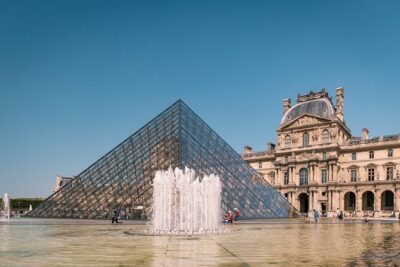
Louvre Museum Masterpieces Guided Tour with Access
Read our review →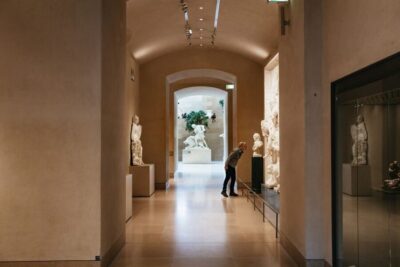
Louvre Museum Entry Ticket With Host and River Cruise
Read our review →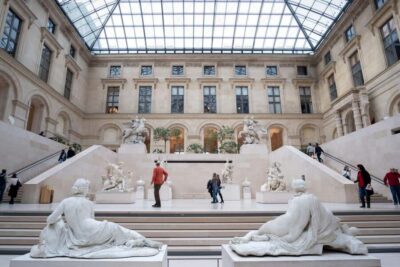
Priority Access Louvre with Host -Direct to Mona Lisa
Read our review →
Mona Lisa & Louvre Masterpieces Tour with Reserved Access
Read our review →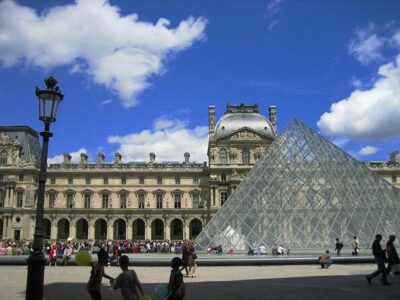
Louvre Museum – Exclusive Guided Tour (Entry Included)
Read our review →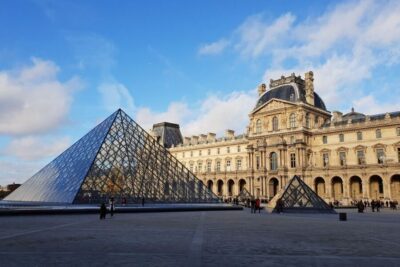
Louvre Reserved Ticket and River Cruise Combo
Read our review →Browse the lists this tour appears in