
Reviewed · MONTMARTRE AND SACRé-CœUR TOURS
Montmartre : private family tour
Montmartre is at its best when you leave the grand staircase of Sacré-Cœur and turn into the quieter lanes behind it. This two-hour family tour leads you through the hilltop village, with stops for the Passe-Muraille story, the pink Maison Rose, Dalida’s statue, old windmills, artists’ corners, and the Wall of Love. It gives children a reason to look up from the pavement.
I like the carefully planned route, which helps you see more than the usual basilica and souvenir shops. I also like the guide’s family focus: guides such as Gonzalo, Santiago, Pedro, and Marin have used questions, stories, and a small activity booklet to keep children involved. The main drawback is that two hours passes quickly, and the tour does not include entry to the Basilica of the Sacred Heart or the funicular.
Key points to know before you book
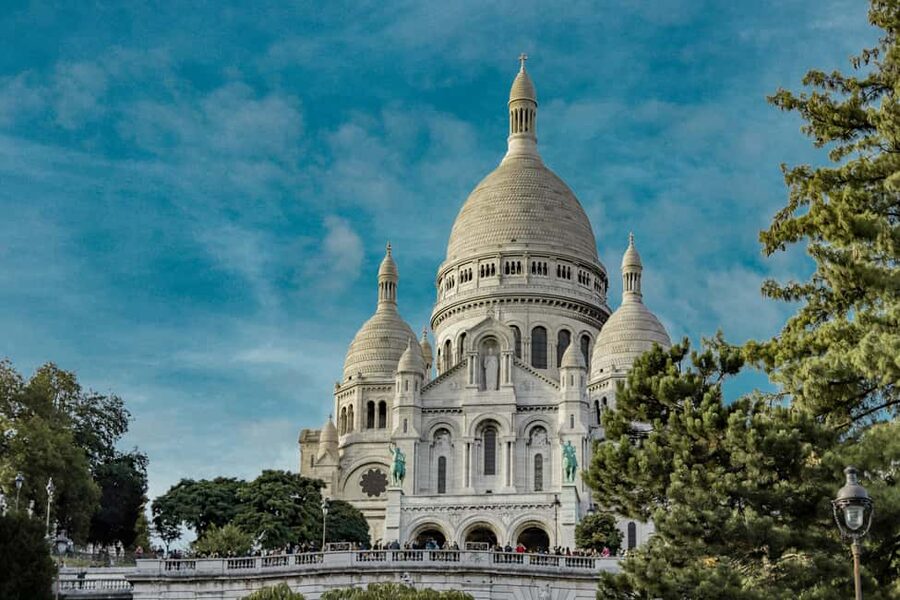
- The route covers 12 Montmartre sights, including Sacré-Cœur, La Maison Rose, Place du Tertre, the last Paris windmills, and the Wall of Love.
- The activity booklet gives children a job to do, but this is not a treasure hunt.
- The $249 rate covers up to 10 people, so the value improves when you fill most of the group.
- The pace is designed for families, with time for questions, stories, and short stops rather than a fast march uphill.
- You finish near the starting area, with drop-off at either 12 Place Saint-Pierre or Abbesses.
- English, French, and Spanish guides are available, and the experience can be private or arranged for a small group.
Why Montmartre works so well for a family walk
Montmartre feels different from the broad boulevards and grand museums farther south in Paris. Its streets climb sharply toward the Basilica of the Sacred Heart, then twist past old houses, cafés, small squares, painted walls, and traces of the neighborhood’s artistic past.
That variety helps with children. You are not standing in one room looking at one object for an hour. Instead, you move every few minutes and get a new visual clue: a statue, a painted house, a strange legend, a carousel, or a view across Paris.
The route also gives you the story behind the scenery. The Passe-Muraille tale introduces a man who could walk through walls. Dalida’s statue connects the neighborhood with a famous singer. The old windmills remind you that Montmartre was once more village than city.
A guide makes these details easier to notice. On your own, you might walk past the last windmills in Paris without understanding why they matter. You might photograph La Maison Rose without knowing why this little pink building has become one of Montmartre’s most recognizable sights.
More Montmartre and Sacré-Cœur Tours:
- Montmartre Hidden Gems and Scenic Highlights Walking Tour
★ 5.0 · 2,684 reviews - Montmartre Hill French Gourmet Food and Wine Tasting Walking Tour
★ 5.0 · 2,588 reviews - Paris: Montmartre Cheese, Wine & Pastry Guided Walking Tour
★ 4.8 · 2,255 reviews
Starting at Place Saint-Pierre and reaching Sacré-Cœur
The meeting point is at 12 Place Saint-Pierre, although the exact starting point can vary with the option you book. From here, the walk heads toward the hill and the Basilica of the Sacred Heart.
The first challenge is physical. Montmartre is hilly, and the approach includes cobbled streets and steps. The tour lasts only two hours, but you should still wear comfortable shoes and expect some climbing. The funicular is not included, so you need to walk the route or pay separately if you choose to use it.
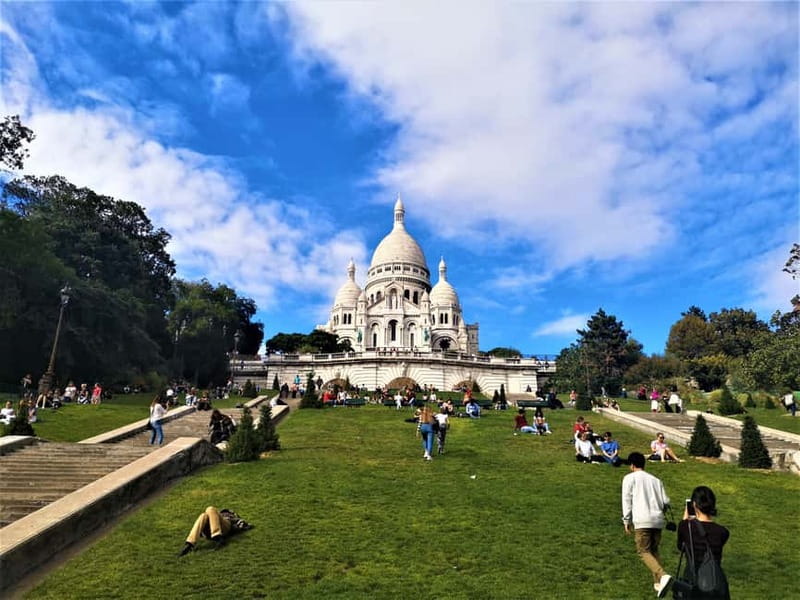
Sacré-Cœur is the natural opening point. The bright white basilica is one of Paris’s best-known sights, and the broad steps give you a large view over the city. The guide’s role here is to help your family place the building within Montmartre rather than simply take a photograph and move on.
The guided portion at the basilica is listed as about 20 minutes. Entry into the Sacred Heart is not included, so check the arrangement before you assume you will receive an interior visit. This matters if your family wants to see the inside, since the tour itself is mainly a neighborhood walk.
Rue du Mont-Cenis and the quieter side of the hill
From the basilica, the route continues along Rue du Mont-Cenis. This section helps you move away from the biggest crowds and into the more local-looking lanes of Montmartre.
The stop is short, about 10 minutes, but that is typical of the tour. You are not given long lectures. Instead, the guide uses the street itself as a prompt for stories and observations. For children, short explanations work better than a long account of Parisian history.
This is also where the route begins to feel less like a checklist. The pleasure comes from linking small details together: the hill, old village lanes, artists, cafés, and the legends that made Montmartre famous.
La Maison Rose and Dalida’s statue
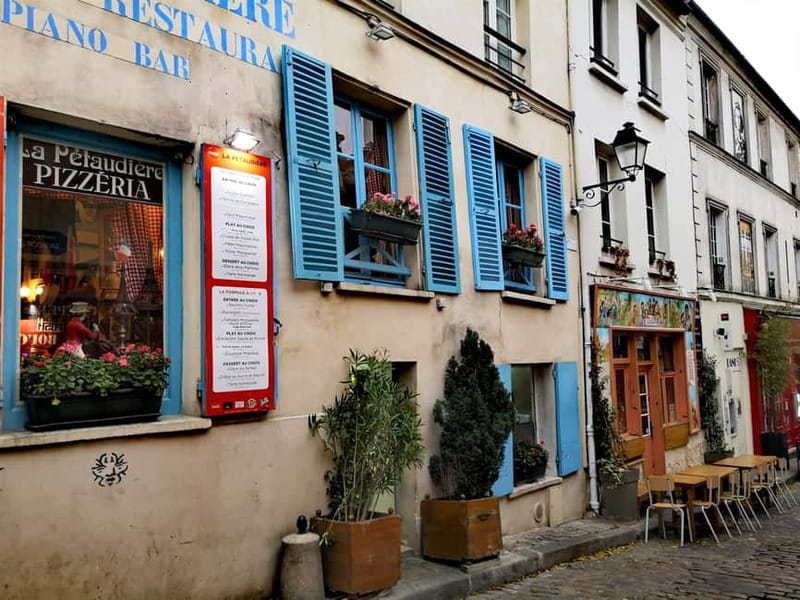
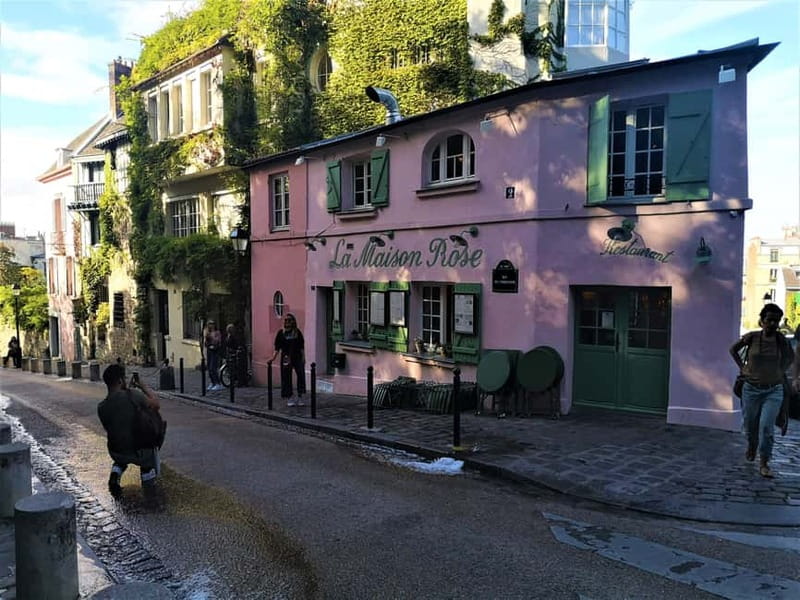
La Maison Rose is one of the most photographed buildings in Montmartre. Its pink walls and green shutters make an immediate impression, especially for children who enjoy spotting unusual colors and shapes.
The stop includes a guided explanation and a short walk. Do not expect a long interior visit. The appeal is the building’s place in the neighborhood and the chance to see it as part of a wider route rather than as an isolated photo stop.
Next comes the statue of Dalida. The stop lasts about 10 minutes. A guide can explain why this particular statue matters and connect it to Montmartre’s artistic and musical identity.
This is one place where a family guide can make a real difference. Young children may not know Dalida, but they can still engage with the idea that famous performers and artists have long lived, worked, or gathered in this hilltop district. The guide can adjust the explanation to your children’s age and attention span.
More family-friendly days in Paris:
- Paris: Louvre Private Family Tour for Kids + Reserved Entry
★ 4.6 · 508 reviews - Paris Kids and Families Private Louvre Tour
★ 5.0 · 430 reviews - Paris Sightseeing Family Friendly Guided Electric Bike Tour
★ 5.0 · 405 reviews - Paris: Family-Friendly River Seine Guided Cruise
★ 4.3 · 359 reviews
Square Suzanne Buisson and the Passe-Muraille

Square Suzanne Buisson offers a pause from the narrow streets. The garden setting gives children a little room to reset before the next group of stops.
The route then reaches Le Passe-Muraille, a sculpture tied to the famous story of a man who could pass through walls. This is exactly the sort of detail that gives Montmartre a playful edge. It is odd, easy to picture, and more memorable than a list of dates.
The guide booklet fits naturally here. Children can follow clues, answer questions, or complete simple activities while you hear the adult version of the story. The activity is not a treasure hunt, so do not book it expecting a competitive game with hidden objects. It is better understood as a light learning aid that gives children something active to do.
Several families specifically valued guides who kept children involved without forcing them to behave like miniature adults. Marin, for example, used a short quiz and extra visual material on an iPad, while other guides handed out activity books. The exact approach can vary by guide, but the family format is central to the experience.
Le Consulat and La Bonne Franquette
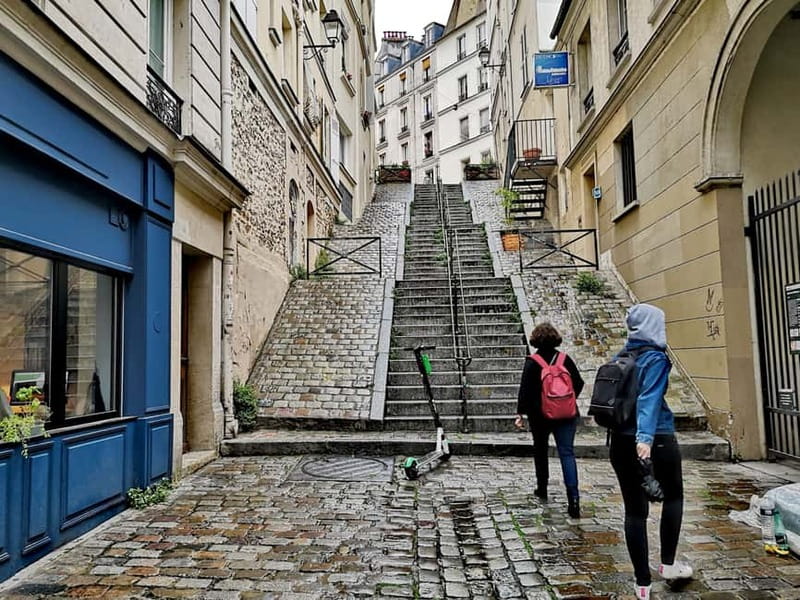
Le Consulat is one of Montmartre’s best-known café façades. The stop is brief, about five minutes, but it adds to the feeling that you are walking through a neighborhood shaped by artists, writers, cafés, and visitors.
La Bonne Franquette follows with another short guided stop. These are not lengthy meal breaks, and food and drinks are not included. Think of them as story points along the route, not restaurant reservations.
That distinction is useful when planning your day. If you want lunch or a drink in Montmartre, schedule it before or after the tour rather than expecting the two-hour walk to include refreshments. The route gives you a good sense of the café culture, but it does not build in a dining experience.
Place du Tertre and the artists’ quarter
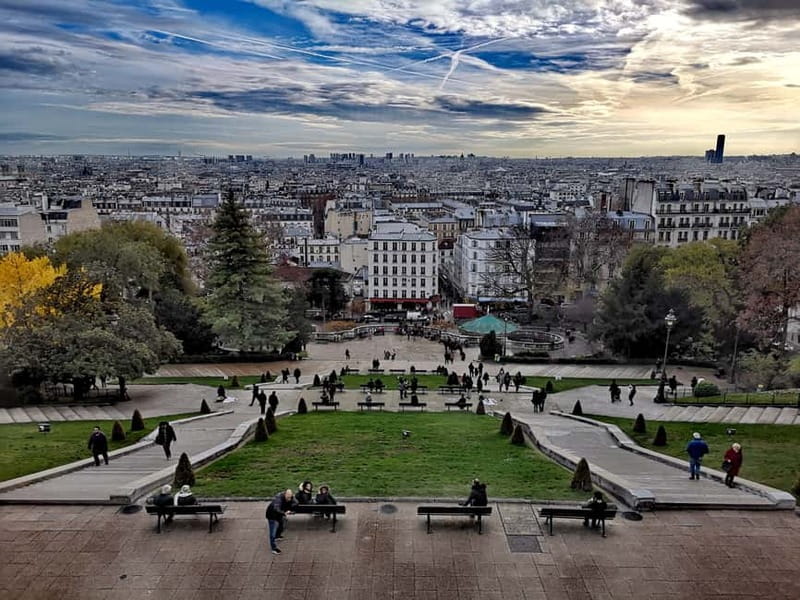
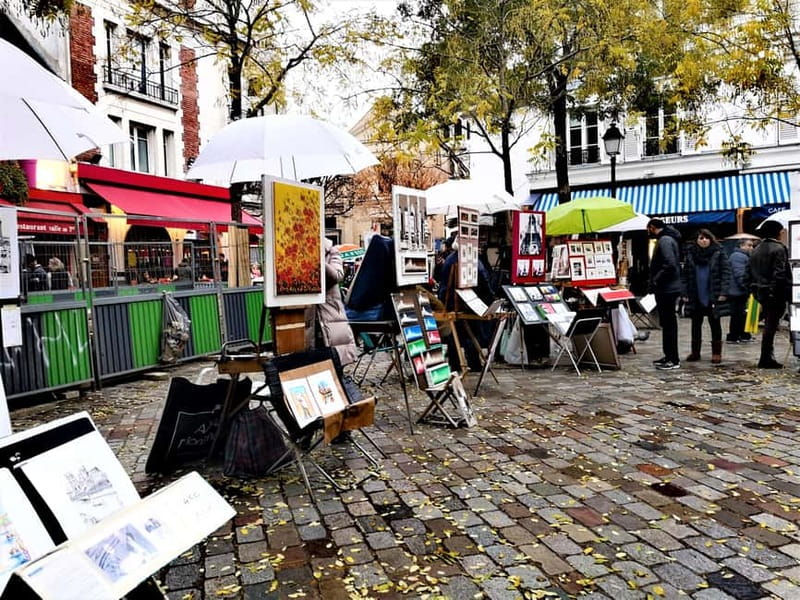
Place du Tertre is the most obvious artistic center on the route. Painters work around the square, and the atmosphere can feel lively and crowded. It is also one of the places where Montmartre’s romantic image meets present-day tourism.
The guide helps you understand the square as part of the neighborhood’s story. You can look at the artists’ work, hear about writers and painters connected with Montmartre, and consider how the area changed from a village on the edge of Paris into one of the city’s most visited districts.
The stop is listed at about 10 minutes. That is enough for an introduction, though not necessarily enough for a relaxed meal, a portrait, and extended shopping. If your family wants to linger, ask the guide how the route can be adjusted, especially since private tours allow more flexibility than a fixed group walk.
Abbesses and the Wall of Love

The Passage des Abbesses brings the tour toward the Abbesses area. This part of Montmartre has a more intimate street feel, and it is a useful contrast to the open space around Sacré-Cœur and Place du Tertre.
The final major stop is the Wall of Love, where the phrase I love you appears in many languages. It is a simple idea, but it makes an easy family photo and gives children a chance to look for familiar languages.
The tour ends near either 12 Place Saint-Pierre or Abbesses, depending on the arrangement. That is practical because Abbesses is a useful place to continue exploring, find food, or make your way onward. Confirm the exact end point when you book so you can plan the next part of your day.
What the family guide adds
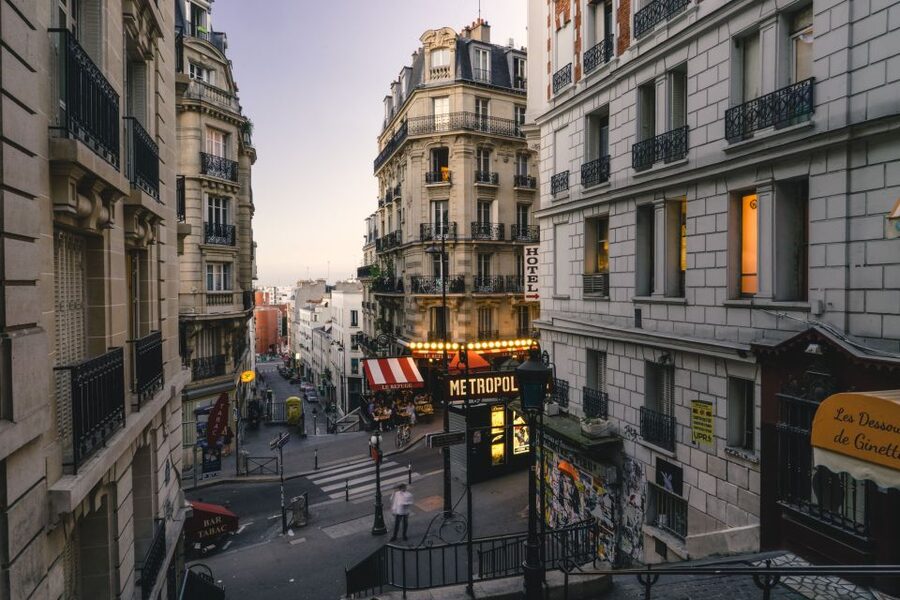
The strongest part of this experience is not any single monument. It is the way a good guide connects the stops and keeps the pace manageable.
Several guides have received especially warm praise for working well with children. Gonzalo used fun stories for children around six to ten years old and kept the walk relaxed. He also connected with older children in families with ages nine to thirteen, making the same route interesting for different age groups.
Santiago was particularly good at noticing children’s interests and adapting the tour around them. Pedro adjusted the pace and style to suit the family and provided an activity book. Marin used a quiz, an iPad, and even a seasonal costume during one Halloween walk.
These details point to an important booking question: the individual guide matters. The experience is designed for families, but the exact energy, storytelling style, and use of the booklet can differ. Guides named in the supplied information include Leo, Santiago, Pedro, Gonzalo, and Marin. Availability of a particular guide is not guaranteed, so treat those names as examples rather than a promise.
Is $249 a fair price for up to 10 people?
At $249 per group, the price makes the most sense for a family or group that can use much of the 10-person capacity. Ten people would bring the cost to about $25 per person. A family of four would pay about $62 per person, so the value depends heavily on your group size and how much you want personal attention.
The price includes a specialist family guide and the guided walking route. It does not include food, drinks, the funicular, or entry to the Basilica of the Sacred Heart.
I see the main value in the time saved and the route planning. Montmartre is easy to visit on your own, but it is also easy to stay around Sacré-Cœur and miss the side streets, stories, and smaller sights. If your children lose interest quickly, a guide who uses questions and a booklet may be worth more than a standard adult history walk.
For a small family on a tight budget, the price is harder to justify. You can see many of the exteriors without paying for a tour. The strongest case for booking comes when you want a private pace, help with children, and a connected explanation of the neighborhood.
Who should book this walk?
This tour suits families with children who enjoy short stops, stories, unusual objects, and a little walking uphill. It also works well for parents who would rather not plan a route through Montmartre while managing directions, stairs, and children’s questions.
It is a good choice for a first visit because it introduces many of the district’s main sights in two hours. You can then return to the places you liked best, such as Place du Tertre, Abbesses, or the Wall of Love.
You may want something else if your priority is an in-depth basilica visit, a long art lecture, a food tour, or a full-day exploration. The tour gives you a broad introduction, not a detailed study of every church, artist, or café.
Cancellation is free up to 24 hours before the activity, and you can reserve now and pay later. The tour is offered in English, French, and Spanish, with private or small-group options.
Should you book the Montmartre family tour?
Book it if you want your children to see more than the front steps of Sacré-Cœur. The route has enough variety to hold a family’s attention, and the best guides turn Montmartre’s odd stories and small landmarks into a walk children can follow.
I would be most inclined to book for a group of six to ten people, since the $249 price then spreads more comfortably. For a smaller family, book only if the family guide, activity booklet, and private pace are important to you.
Wear good shoes, allow for stairs, and plan a separate basilica visit or meal if those matter to you. With those expectations in place, this is a useful and cheerful introduction to Montmartre that reaches the back streets many first-time visitors miss.
FAQ
How long does the Montmartre family tour last?
The tour lasts two hours. Starting times depend on availability when you book.
What languages are available?
The live guide can conduct the tour in English, French, or Spanish.
How many people can join for $249?
The listed price is $249 for a group of up to 10 people.
Is the tour private?
Private and small-group options are available. The exact group type depends on the option you book.
Does the tour enter the Basilica of the Sacred Heart?
Entry to the Sacred Heart is not included. The route does stop at the basilica and includes a guided portion of about 20 minutes.
Is the Montmartre funicular included?
No. Funicular access is not included in the tour price.
Is food or drink included?
No. Drinks and food are not included.
Do children receive an activity booklet?
A game booklet is included. The activity is not a treasure hunt.
Where does the tour begin and end?
The starting point may vary by booking option, with 12 Place Saint-Pierre listed as a starting location. The activity ends back at the meeting point, with drop-off options at 12 Place Saint-Pierre or Abbesses.
Just added around Paris
- Paris: The Da Vinci Code Walking Tour with a Local Guide★ 4.3 · 5 reviews
- Paris: Flea Market Insider’s Tour in Extra-Small Group★ 4.6 · 73 reviews
- Paris: Private Fashion Tour (Chanel, Dior, Sex & the City)★ 5.0 · 3 reviews
- Paris: Floral Earrings workshop★ 5.0 · 3 reviews
- Paris: Fashion History Walking Tour in the Heart of Paris★ 4.9 · 22 reviews
- PARIS: Family e-bike longtail renting★ 5.0 · 3 reviews
- Paris: Famous Monuments Cycling Tour★ 4.7 · 20 reviews
- Paris: private city tour with seine river cruise★ 4.8 · 28 reviews
Montmartre and Sacré-Cœur Tours, compared.

Montmartre Hidden Gems and Scenic Highlights Walking Tour
Read our review →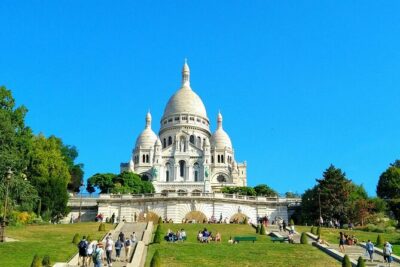
Montmartre Hill French Gourmet Food and Wine Tasting Walking Tour
Read our review →
Montmartre Cheese, Wine & Pastry Guided Walking Tour
Read our review →
Montmartre Highlights Walking Tour with a Local Guide
Read our review →
Sacré-Coeur and Montmartre Tour with Expert Guide
Read our review →
Private Montmartre Food Tour with Wine, Cheese & Pastries
Read our review →
Paris Montmartre Food Tour – A Full French Meal by Do Eat Better
Read our review →
Hidden Montmartre: Paris’ Secret Streets Walking Tour
Read our review →Browse the lists this tour appears in