
Reviewed · MONTMARTRE AND SACRé-CœUR TOURS
Montmartre/Sacre-Coeur/Paris- Artistic & Bohemian Epicenter
Montmartre still feels like Paris’s most theatrical neighborhood, where steep cobbled lanes lead past painters, old windmills, movie locations, and the white domes of Sacré-Coeur. This two-hour walk brings those pieces together with local stories from guides such as Jill and Matt, rather than treating the district as a checklist of monuments.
I especially like the small group of no more than 15 and the way the route mixes major sights with details such as Dalida’s former home, Bateau-Lavoir, Van Gogh’s Montmartre years, and local food shops. The main consideration is the uphill walking and the crowds around Sacré-Coeur, particularly since the line to enter the basilica is separate from the tour.
Key points to know before you book
- The route climbs from Place des Abbesses to Sacré-Coeur, with cobbled streets and uphill sections.
- Place du Tertre brings you close to working artists, including portrait sketchers who may draw on request.
- The tour connects art, film, music, and food, with stories about Picasso, Van Gogh, Dalida, Erik Satie, and Amelie.
- Guides Jill and Matt receive strong praise for clear, lively storytelling without burying you in minor facts.
- The group size is capped at 15, making questions and route adjustments easier.
- The $48.37 price is fair for a local-led two-hour walk, though coffee, tea, food, and any artist sketch cost extra.
Starting in the village at Place des Abbesses
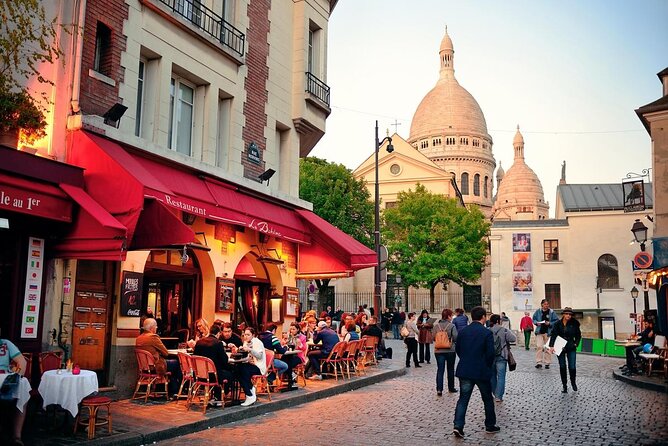
The walk begins at 22 Rue des Abbesses, beside Place des Abbesses. This is a useful starting point because it puts you into Montmartre’s village-like streets before the tour reaches the grand basilica above.
Allow a few extra minutes to find your guide. One person found the first meeting point confusing, so it is worth checking the address carefully and keeping your phone ready for the mobile ticket and confirmation details.
Place des Abbesses gives you an early look at local life. You can see Art Nouveau features and the ordinary rhythm of the neighborhood before the route becomes more focused on painters and famous names.
That opening matters. Montmartre is not only a hilltop monument with souvenir shops. It was once a working-class village north of Paris, and the tour tries to show how that village identity survives among cafés, bakeries, small food stores, and residential streets.
More Montmartre and Sacré-Cœur Tours:
- Montmartre Hidden Gems and Scenic Highlights Walking Tour
★ 5.0 · 2,684 reviews - Montmartre Hill French Gourmet Food and Wine Tasting Walking Tour
★ 5.0 · 2,588 reviews - Paris: Montmartre Cheese, Wine & Pastry Guided Walking Tour
★ 4.8 · 2,255 reviews
Rue Lepic and the footsteps of artists
Rue Lepic is one of the tour’s best sections for connecting famous people with real streets. You follow routes associated with Impressionist artists and hear how Montmartre attracted painters, writers, musicians, and performers.
The focus is not just on names. A good guide explains why artists came here, what they saw in the district, and how its lower rents, hillside setting, nightlife, and loose creative circles shaped their work. Jill is especially effective when discussing Vincent van Gogh and his time in Montmartre.
You also pass locations used in the French film Amelie. If you know the movie, these stops add a playful layer to the walk. If you do not, the locations still show how Montmartre’s winding lanes and old façades can turn everyday streets into movie settings.
Expect plenty of looking up, down, and around. Street art is part of the experience, and a local guide can point out pieces you could easily miss while rushing toward Sacré-Coeur.
Bateau-Lavoir and Montmartre’s creative circle
Bateau-Lavoir recalls the early twentieth-century art scene, when artists met, worked, argued, and built friendships in cramped studios. Picasso came to Paris in 1900 and became closely linked with Montmartre, and the walk passes the site associated with his studio.
This stop helps explain why Montmartre became more than a pretty neighborhood. Its importance came from the people who gathered here and exchanged ideas, not only from the buildings themselves.
You should not expect to enter every historic site on the route. The value is in seeing the places from the street and hearing how they fit into the district’s story. For an art lover, that context can make the later stops at Place du Tertre feel less like a tourist display and more like part of a long tradition.
The route can also be adjusted through conversation. Jill once shaped part of a walk around a participant’s interest in opera, adding stories about composers such as Erik Satie. That kind of response is one reason a small group works better here than a large crowd moving silently behind a flag.
Place du Tertre and the working artists
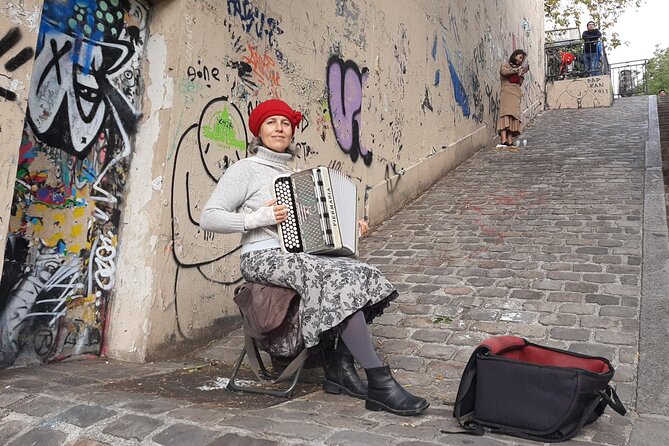
Place du Tertre is the most obvious postcard stop, but it remains a key part of the walk. Artists set up their easels here, and you can watch portraits and quick sketches take shape.
Some artists may offer an instant sketch at your request. Treat that as an optional purchase, not part of the tour price. The guide can explain the setting and local tradition, but any artwork or food you choose to buy is extra.
This square can be crowded. You will have less room to pause than on the quieter side streets, and the atmosphere is more commercial than in other parts of Montmartre. Still, seeing artists work in the open gives the place a direct connection to its creative past.
I like this stop best when you give yourself a few minutes to watch rather than simply take a photograph. Look at how each artist handles faces, posture, and speed. Then step away from the square and notice how different the surrounding lanes feel.
Same city, a completely different afternoon:
- Paris: Louvre Museum Timed-Entrance Ticket
★ 4.6 · 71,977 reviews - Disneyland® Paris 1-Day Ticket
★ 4.6 · 49,412 reviews - Paris: Versailles Palace and Gardens Full Access Ticket
★ 4.6 · 41,579 reviews - Paris: Evening River Cruise with Music
★ 4.4 · 22,721 reviews
Dalida’s home and the personal side of fame
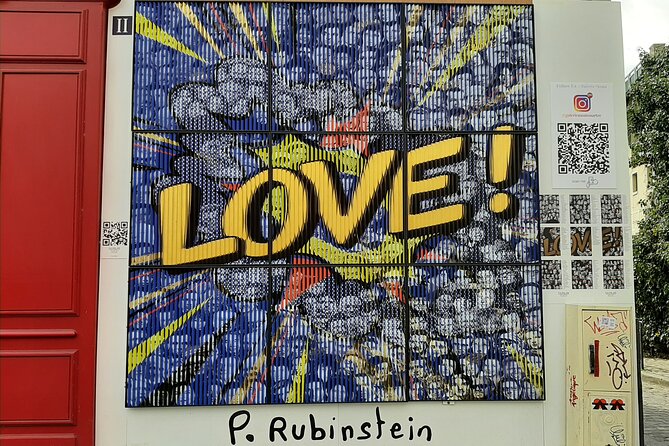
The route includes La Maison de Dalida, the former residence of the French and Italian star who was born in Egypt and became Miss Egypt in the mid-1950s. The stop is brief, about ten minutes, but it adds music and popular culture to a walk otherwise centered on painters.
You see the residence from outside and hear about Dalida’s connection with Montmartre. It is a reminder that the neighborhood’s famous residents were not limited to the artists usually found in guidebooks.
This is also a good example of the tour’s broader approach. Instead of presenting Montmartre as one narrow art-history subject, it moves between painting, film, music, architecture, food, and neighborhood life.
The windmills and the older village
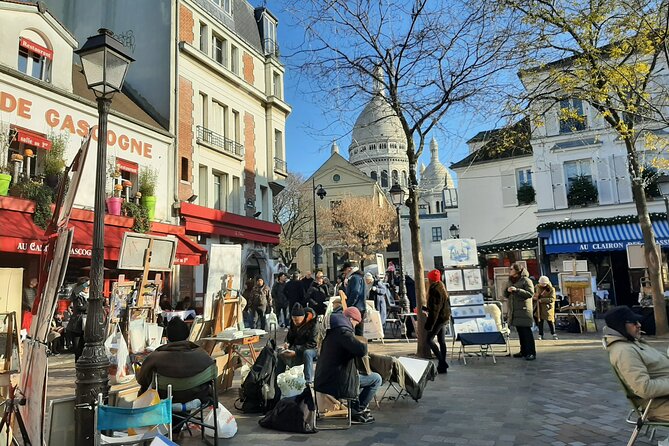
Montmartre once had windmills, and the first one dates from the seventeenth century. The district was then a village beyond the main city, with a working population and a very different pace from central Paris.
The windmill stop gives you a glimpse of that older Montmartre. It also helps you understand why the neighborhood feels unlike the grand boulevards farther south. The streets rise, twist, and narrow, and the village past remains visible in the layout.
Do not expect a long visit at every stop. The windmills are covered in roughly ten minutes, as are several other locations. The strength of the experience comes from the links between stops, with the guide explaining how one part of Montmartre leads into another.
The final climb to Sacré-Coeur
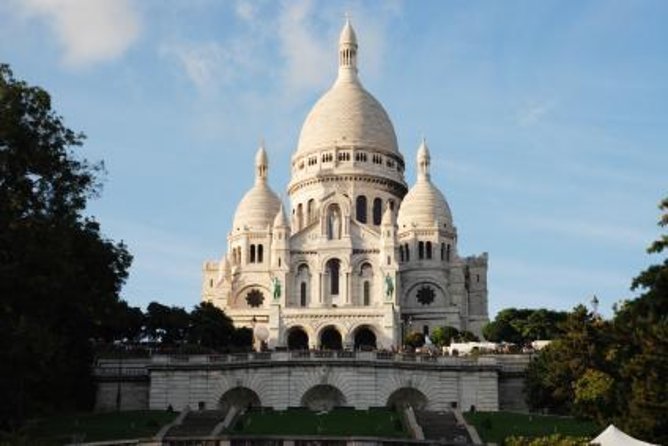
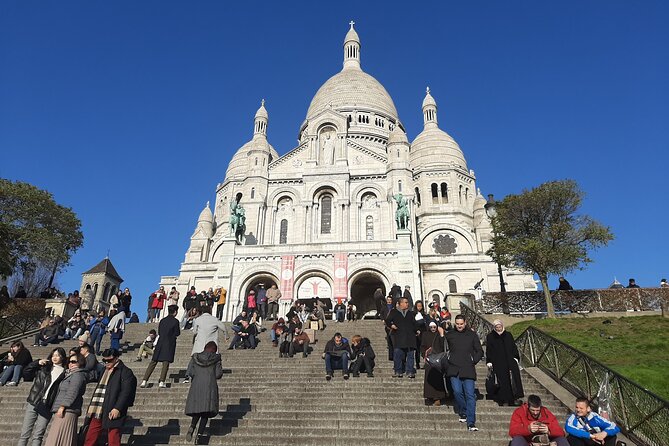
The walk ends at Basilique du Sacré-Coeur de Montmartre, at 35 Rue du Chevalier de la Barre. The route reaches the basilica through old cobbled streets and uphill sections, so wear shoes that can handle uneven pavement and take your time on the climb.
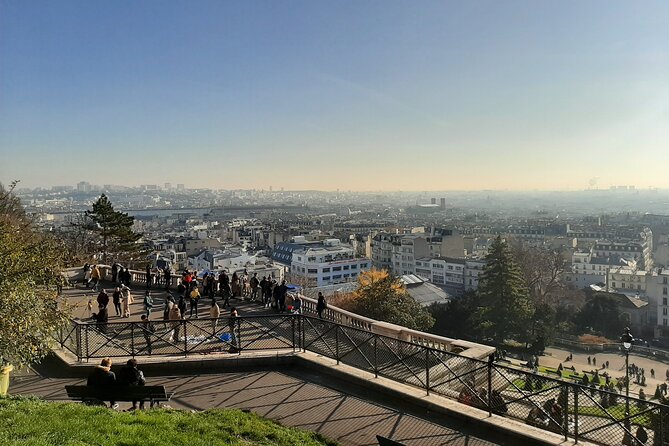
Sacré-Coeur is the visual payoff. Its white exterior rises above the hill, and the view across Paris is broad and memorable. You get time to take in the city from above, rather than seeing the basilica only as a quick photo stop.
Admission to the basilica is listed as free. The practical catch is the line. Crowds waiting to enter are not part of the tour, so a long queue can affect your plans after the walk. If entering matters to you, leave extra time beyond the scheduled two hours.
The end point is useful even if you do not go inside. You can finish with the city panorama, continue exploring Montmartre, or use the guide’s food recommendations before moving on.
What two hours really gives you
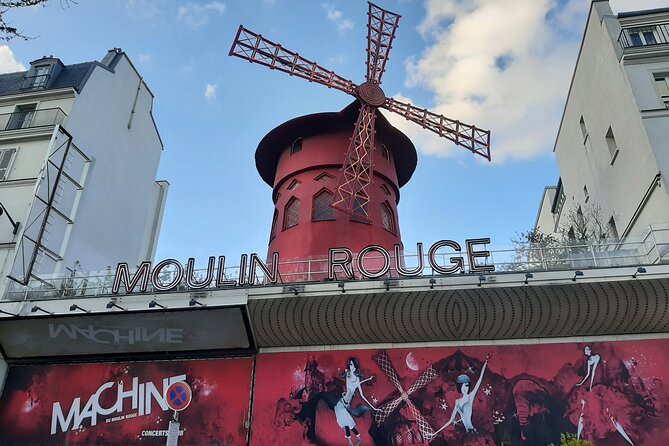
Two hours is enough for a lively introduction, not a complete study of Montmartre. The listed stops add up to more than an hour of visit time, and the rest is used for walking, explanations, photographs, and the climb.
That pace suits you if you want orientation early in a Paris visit. You get the major landmarks, a sense of the streets, and enough names and stories to explore on your own later.
It may feel short if you want to linger at every artist’s stand, enter Sacré-Coeur, stop for a full meal, and visit every film location. The tour includes food culture and recommendations, but coffee, tea, and purchases are not included.
Several people have found the guide’s restaurant, bakery, pâtisserie, crêperie, and even specialty shop suggestions useful during the rest of their stay. Bring a note on your phone so you can save recommendations as you go.
The guide makes the difference
The strongest part of this experience is the guide’s storytelling. Jill receives particular praise for making Montmartre feel personal, linking past residents with the streets you are walking through. Her style is conversational, with room for questions and changing the emphasis around the group.
Matt is also praised for knowing the history while keeping the explanations focused. That balance matters in Montmartre, where it would be easy to drown you in dates, movements, and famous names.
The guides are local Paris specialists and the experience is led in English. The tour description identifies the guide as a Montmartre resident and art lover, which fits the way the walk combines neighborhood details with art history.
The small-group limit helps. With no more than 15 people, you are more likely to hear the guide clearly and ask about a doorway, painting, restaurant, or film scene. Some departures may be much smaller, which makes the walk feel closer to a stroll with a local than a formal lecture.
Price, pace, and practical value
At $48.37 per person, this is not the cheapest way to see Montmartre. You can walk the streets and view Sacré-Coeur without paying an admission fee.
The price makes sense if you want interpretation rather than simple access. You are paying for two hours of connected stories, a local guide, a small group, and recommendations that can improve the rest of your time in the neighborhood.
I would book it early if your Paris dates are fixed. The experience is often reserved about 29 days ahead, which suggests that popular times can fill before your arrival.
The booking includes a mobile ticket and free cancellation up to 24 hours before the start time. Changes or cancellations inside that 24-hour window are not accepted for a refund.
Who should choose this walk
This tour suits first-time visitors who want a clear introduction to Montmartre without spending half a day on a formal museum visit. It also works well for repeat visitors who want the art, music, and film connections behind streets they may have seen before.
Art lovers will get the most from the Picasso, Van Gogh, Impressionist, and Bateau-Lavoir material. Film fans will appreciate the Amelie locations, while music lovers may enjoy the stories about Dalida and Satie.
Families and older walkers should consider the hills and cobbles. Most people can take part, and service animals are allowed, but the route is still a walking tour with an uphill finish.
You should also decide how much free time you want at Sacré-Coeur. If you need a long basilica visit or a relaxed café stop during the two-hour route, this may feel brisk. If you want a focused introduction followed by your own exploring, the timing is useful.
Should you book it?
Book this Montmartre walk if you want the neighborhood explained by a local guide who can connect artists, movie scenes, musicians, food shops, and village streets. Jill’s personal storytelling and Matt’s clear delivery are strong reasons to choose this experience over a basic self-guided stroll.
Skip it if you prefer to wander alone, dislike hills, or already know Montmartre well. For most visitors, though, the $48.37 cost is reasonable for a small-group introduction, especially when you use the final recommendations to shape the rest of your Paris stay.
FAQ
Where does the Montmartre tour start?
The tour starts at 22 Rue des Abbesses, 75018 Paris, France, near Place des Abbesses.
Where does the tour finish?
It ends at Basilique du Sacré-Coeur de Montmartre, 35 Rue du Chevalier de la Barre, 75018 Paris, France.
How long does the tour last?
The walking tour lasts approximately two hours.
What language is the tour offered in?
The experience is offered in English.
How large is the group?
The tour has a maximum of 15 participants.
Is admission to Sacré-Coeur included?
Admission is listed as free. Any line to enter the basilica is separate from the walking tour and may require extra time.
Can I cancel for a full refund?
Yes. You can cancel at least 24 hours before the experience start time for a full refund. Cancellations or changes made less than 24 hours before the start time are not accepted.
Just added around Paris
- Private Paris Marche d’Aligre Walking Tour with Tastings★ 5.0 · 8 reviews
- Private Louvre Museum Tour for Kids & Families with Alberto or his team in Paris★ 5.0 · 41 reviews
- Private Highlights of Paris Tuk-Tuk Experience★ 5.0 · 26 reviews
- Paris Latin Quarter Walking Tour: History & Culture – Small Group★ 5.0 · 14 reviews
- Private Highlights of Paris Bike Tour★ 4.5 · 15 reviews
- Paris Musee d’Orsay PRIVATE TOUR with a Local Private Guide★ 5.0 · 41 reviews
- Private Half Day Historic Tour★ 5.0 · 58 reviews
- Pere Lachaise Cemetery Paris – Exclusive Guided Walking Tour★ 5.0 · 72 reviews
Montmartre and Sacré-Cœur Tours, compared.

Montmartre Hidden Gems and Scenic Highlights Walking Tour
Read our review →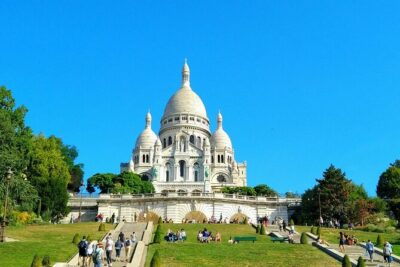
Montmartre Hill French Gourmet Food and Wine Tasting Walking Tour
Read our review →
Montmartre Cheese, Wine & Pastry Guided Walking Tour
Read our review →
Montmartre Highlights Walking Tour with a Local Guide
Read our review →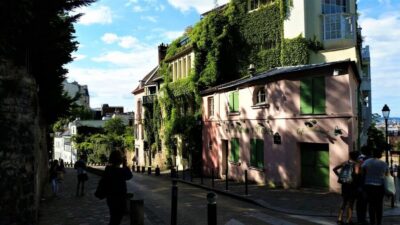
Sacré-Coeur and Montmartre Tour with Expert Guide
Read our review →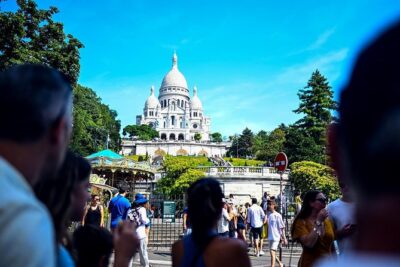
Private Montmartre Food Tour with Wine, Cheese & Pastries
Read our review →
Paris Montmartre Food Tour – A Full French Meal by Do Eat Better
Read our review →
Hidden Montmartre: Paris’ Secret Streets Walking Tour
Read our review →Browse the lists this tour appears in