
Reviewed · MONTMARTRE AND SACRé-CœUR TOURS
Montmartre Walking Tour Cultural Charm and Tasty Treats
Montmartre is where Paris feels most like a film set, but this two-hour walk gives the neighborhood more substance than pretty lanes and postcard views. You’ll trace the old artist quarter from the Moulin Rouge to Sacré-Cœur, with stops tied to Picasso, Van Gogh, Renoir, and Toulouse-Lautrec.
I like the route’s mix of famous sights and quieter corners, especially Le Moulin de la Galette and Place Émile Goudeau. I also like the small group limit of 20, which should make it easier to hear the guide and ask questions. The main drawback is pace: ten stops in two hours means some places receive only a brief look, and the tour does not include food or drink despite its tasty-treats theme.
Key points
- Follow Montmartre’s artist trail: See places linked with Picasso, Modigliani, Renoir, Van Gogh, and Toulouse-Lautrec.
- Cover the classic sights: The route includes the Moulin Rouge, Place du Tertre, the Wall of Love, and Sacré-Cœur.
- Look for the old windmill: Le Moulin de la Galette is one of the area’s most distinctive remaining reminders of village Montmartre.
- Enjoy a small-group walk: The maximum group size is 20 people, with a local professional guide.
- Plan for a short, active outing: The tour lasts about two hours and includes streets, squares, and the climb toward the basilica.
- Know what is not included: Food, drinks, and guide tips are extra, and the advertised route does not provide a formal tasting.
Why Montmartre Works Best on Foot
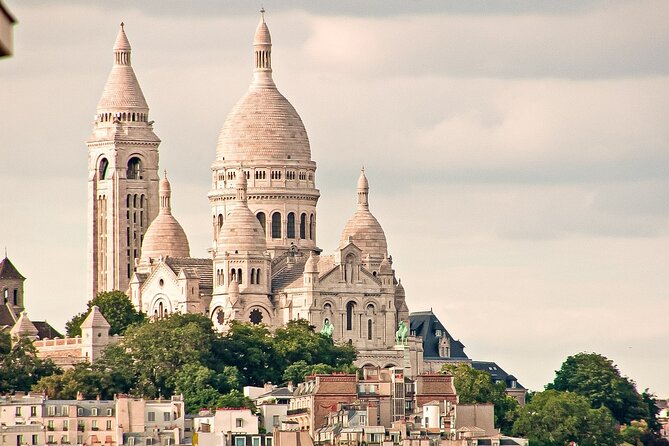
Montmartre sits on a hill, and its character changes as you move from the lower streets near the Moulin Rouge toward Sacré-Cœur. A walking tour lets you connect those parts. You see the nightlife district, old cafés, artist addresses, small squares, and religious monuments as one story rather than a string of unrelated stops.
The route is also useful if this is your first visit to the neighborhood. Montmartre can feel confusing because its lanes rise, twist, and split around stairways and small plazas. A guide gives you a path through the area while explaining why the neighborhood became associated with painters, cabaret performers, writers, and bohemian life.
This is not a museum tour. Much of the experience happens outdoors, in public streets and squares. That makes the atmosphere part of the visit, but it also means the quality depends on the guide’s storytelling and on how much time the group spends at each stop.
More Montmartre and Sacré-Cœur Tours:
- Montmartre Hidden Gems and Scenic Highlights Walking Tour
★ 5.0 · 2,684 reviews - Montmartre Hill French Gourmet Food and Wine Tasting Walking Tour
★ 5.0 · 2,588 reviews - Paris: Montmartre Cheese, Wine & Pastry Guided Walking Tour
★ 4.8 · 2,255 reviews
From the Moulin Rouge Up Rue Lepic
The walk begins at Cœur Sacré, at 5 Rue Saint-Éleuthère, in the 18th arrondissement. The first stop is the Moulin Rouge, where you get a short introduction to the famous cabaret and the can-can dance.
The building itself is a quick photo stop, but the useful part is the setting. The Moulin Rouge helps explain Montmartre’s old nightlife, when cabarets, cafés, performers, and artists drew people uphill from central Paris. You should not expect admission to a show. The tour only provides an outside introduction, and the ticket is free because no entry is included.
From there, the walk continues along Rue Lepic. This street offers a more everyday view of Montmartre, with cafés and shops lining the route. You pass Café des 2 Moulins, known for its appearance in the film Amélie. Film fans will enjoy the connection, while other visitors may simply appreciate a stop in a classic neighborhood café setting.
The ten-minute allotment at each stop tells you how to use this part of the tour: listen for context, take a few pictures, and keep moving. If you want to sit for coffee or spend time inside the café, plan to return after the guided walk.
Le Moulin de la Galette and Montmartre’s Village Past
Le Moulin de la Galette is one of the more interesting stops because it points to a Montmartre that existed before the neighborhood became a major sightseeing district. The windmill is a reminder of the area’s rural past, when Montmartre had mills, gardens, and a village feel outside the center of Paris.
The site also connects directly to the art world. The tour discusses the windmill’s influence on artists such as Renoir and Van Gogh. That connection gives the stop more weight than a simple photo opportunity. You begin to see why painters were drawn to Montmartre’s changing mix of open space, cheap studios, nightlife, and local life.
Do not expect to enter the windmill or spend a long time studying it. The stop lasts about ten minutes. Still, I consider it one of the best uses of limited time on the route because it adds background that you cannot get from simply walking toward Sacré-Cœur.
Abbesses, the Wall of Love, and Café Streets
Place des Abbesses brings you into one of Montmartre’s best-known local squares. The nearby Abbesses Metro Station is noted for its Art Nouveau entrance, a decorative detail that fits the neighborhood’s artistic character.
The square and the surrounding streets are good places to notice how Montmartre balances daily life with tourism. You’ll find cafés, shops, and people moving through the area rather than only grand monuments. The tour’s short stop gives you orientation, but you may want to return later if you want to browse or have a relaxed drink.
Next comes Le Mur des Je t’aime, or the Wall of Love. This mural displays the words I love you in more than 300 languages. It is a compact stop, but it offers a gentler change of mood after the cabaret and artist stories. The wall is easy to understand without much explanation, yet the guide can give the setting a sense of place and help you notice details you might otherwise pass by.
Rue des Abbesses continues the theme of Montmartre as a place to wander. Here the focus is on streets where artists lived and worked, along with boutiques, cafés, and small corners that reward a slower look. The route is not promising access to private studios or artist homes. Instead, it uses the streets themselves to explain the district’s creative past.
The title of the experience refers to tasty treats, but no food or beverage is included in the price. You can see cafés and shops during the walk, then choose your own stop afterward.
More walking tours in Paris:
- Paris Top Sights Half Day Walking Tour with a Fun Guide
★ 5.0 · 2,893 reviews - Paris Île de la Cité and Notre-Dame Walking Tour With Crypt
★ 5.0 · 2,272 reviews - Paris in a Day: Louvre or Orsay, Eiffel Tower, City Walk & Cruise
★ 5.0 · 1,956 reviews - Paris: Montmartre Highlights Walking Tour with a Local Guide
★ 4.9 · 1,668 reviews
Place Émile Goudeau and the Bateau-Lavoir
Place Émile Goudeau is one of the most important art-related points on the walk. It marks the site of the Bateau-Lavoir, associated with artists including Picasso and Modigliani.
This is the kind of stop that benefits from a guide. The building and square may not look as dramatic as Sacré-Cœur, and there is no promise of an interior visit. Without context, you could pass through quickly. With the story of the artists who worked there, the place becomes a useful link between Montmartre’s modest streets and the paintings that later made its name famous.
I like that the tour includes this stop rather than focusing only on movie locations and scenic views. It gives the walk an art history thread, although ten minutes is enough for an introduction, not a full study of Picasso or Modigliani.
Saint-Pierre de Montmartre Before the Big Basilica
Eglise Saint-Pierre de Montmartre provides a quieter historical pause. The church dates from the 12th century and is described as one of the oldest in Paris.
Its age adds a different layer to Montmartre. The neighborhood is often presented through cabarets, painters, and cafés, but Saint-Pierre shows that the hill has a much older religious past. This stop also helps prepare you for Sacré-Cœur, which is far more imposing and much more familiar to most people.
The visit is mainly a guided outdoor stop in the route as described. You should not assume that an extended interior tour is included. If entering the church matters to you, ask the guide what is possible on the day.
Place du Tertre and the Working Art Scene
Place du Tertre is the lively artistic center of the route. Street artists and portrait painters display their work here, creating the atmosphere most people expect from Montmartre.
This is also where you need to keep your expectations sensible. The square is a public place, not a private art studio, and it can feel busy. You’ll have a chance to look at the artists’ work and sense the neighborhood’s creative identity, but the ten-minute stop is not enough for a long portrait session or careful shopping.
I like Place du Tertre as a midpoint between history and present-day Montmartre. Earlier stops explain the artists who shaped the area. Here, you see how the artistic tradition continues in a more commercial form. If you want to buy a picture or commission a portrait, you may need to return with extra time and budget.
Sacré-Cœur and the Best View in the Neighborhood
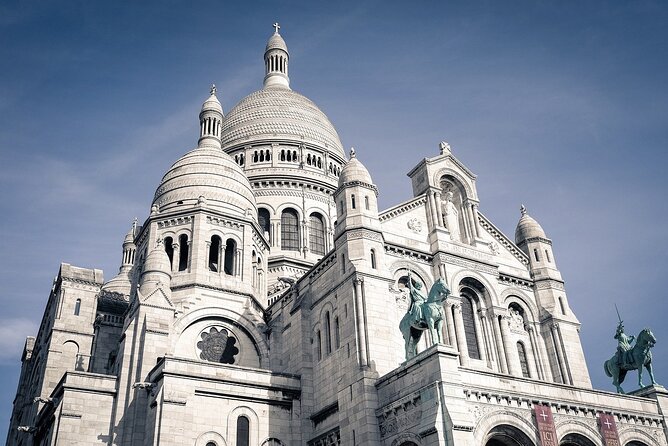
The tour finishes at the Basilique du Sacré-Cœur de Montmartre, the white-domed church at the highest point in Paris. The final stop offers time to take in the exterior, enjoy the broad city view, and choose between exploring the basilica’s interior or resting on the steps.
The view is a strong finish. After walking through narrow streets and small squares, you get a wide look across Paris. The ascent is part of the experience, and one French-language review specifically praised the climb to the basilica for its impressive view. Other comments focused on the romantic cafés, cobbled lanes, artistic mood, and feeling of stepping back a century.
The basilica itself is imposing, but ten minutes is not enough for an unrushed visit inside and a long period on the steps. If you want quiet time for prayer, photographs, or the interior, plan to continue on your own after the guided portion.
There is one practical point to clarify before booking. The route description says the tour ends at Sacré-Cœur, while the meeting information says the activity ends back at the starting point. Since those details do not fully match, confirm the exact end location with the provider before the day of your visit.
What $40.48 Buys You
At $40.48 per person, the price is reasonable if you want a guided introduction to Montmartre and prefer a set route. You are paying for a local professional guide, a two-hour visit, and the convenience of connecting ten separate sights without planning your own walking path.
The value depends on how much you use the guide’s commentary. If you only want photographs of the Moulin Rouge and Sacré-Cœur, you can see those places without paying for a tour. The fee makes more sense if you want to understand the links between the streets, the artists, the cabarets, and the older village and church sites.
The group limit of 20 is another plus. It is not a private tour, but it is small enough to be more manageable than a large crowd. Since most stops are short, being able to hear the guide matters.
There are extra costs to remember. Food and drinks are not included, and tips are not included. The experience has free cancellation if you cancel at least 24 hours before the start time. A cancellation inside that window is not refunded, and changes are not accepted.
Who Will Enjoy This Walk Most
I would recommend this tour to a first-time Paris visitor who wants a clear introduction to Montmartre without giving up an entire day. It also suits anyone interested in art, old Paris neighborhoods, film locations, cabarets, or city views.
Couples may especially like the route. The cobbled lanes, café stops, Wall of Love, and Sacré-Cœur viewpoint create a pleasant outing, though the tour itself is still a group activity rather than a private romantic walk.
Art lovers should appreciate the stops connected with Picasso, Modigliani, Renoir, Van Gogh, and Toulouse-Lautrec. Just keep the scope in mind. This is a neighborhood walk with art context, not a museum seminar.
The experience is also suitable for most people, and service animals are allowed. It is near public transportation. You should be comfortable walking for about two hours through streets and uphill sections toward the basilica. If you want a slow café morning, extensive shopping, or a long basilica visit, this tour may feel too quick.
Should You Book the Montmartre Walk?
Book it if you want a compact, guided route through the artistic side of Montmartre, with the Moulin Rouge, Rue Lepic, the old windmill, Place du Tertre, and Sacré-Cœur all connected in one outing. The strongest parts are the art history links, the small-group size, and the mix of famous sights with less obvious stops such as Le Moulin de la Galette and Saint-Pierre.
Skip it if you mainly want food tastings, a private guide, or long visits inside each site. The name suggests treats, but you buy any café food yourself, and the schedule gives each stop only about ten minutes.
For $40.48, I see this as a useful orientation walk rather than the final word on Montmartre. Take the tour for the stories and route, then stay in the area afterward for a café, more photographs, Place du Tertre, or extra time at Sacré-Cœur.
FAQ
How long does the Montmartre Walking Tour last?
The tour lasts approximately two hours.
How much does the tour cost?
The listed price is $40.48 per person.
Where does the tour start?
The stated meeting point is Cœur Sacré, 5 Rue Saint-Éleuthère, 75018 Paris, France.
Where does the tour end?
The meeting information says the activity ends back at the meeting point. The route description presents Sacré-Cœur as the final sightseeing stop, so confirm the exact end location with the provider.
What sights are included?
The route includes the Moulin Rouge, Rue Lepic, Café des 2 Moulins from the outside, Le Moulin de la Galette, Place des Abbesses, the Wall of Love, Rue des Abbesses, Place Émile Goudeau, Saint-Pierre de Montmartre, Place du Tertre, and Sacré-Cœur.
Is food included?
No. Food and drinks are not included. The route passes cafés and shops, but there is no stated tasting included in the tour price.
How large is the group?
The activity has a maximum of 20 participants.
Can I cancel for a full refund?
Yes, if you cancel at least 24 hours before the experience start time. Cancellations made less than 24 hours before the start time are not refunded, and changes inside that period are not accepted.
Just added around Paris
- Private Paris Marche d’Aligre Walking Tour with Tastings★ 5.0 · 8 reviews
- Private Louvre Museum Tour for Kids & Families with Alberto or his team in Paris★ 5.0 · 41 reviews
- Private Highlights of Paris Tuk-Tuk Experience★ 5.0 · 26 reviews
- Paris Latin Quarter Walking Tour: History & Culture – Small Group★ 5.0 · 14 reviews
- Private Highlights of Paris Bike Tour★ 4.5 · 15 reviews
- Paris Musee d’Orsay PRIVATE TOUR with a Local Private Guide★ 5.0 · 41 reviews
- Private Half Day Historic Tour★ 5.0 · 58 reviews
- Pere Lachaise Cemetery Paris – Exclusive Guided Walking Tour★ 5.0 · 72 reviews
Montmartre and Sacré-Cœur Tours, compared.

Montmartre Hidden Gems and Scenic Highlights Walking Tour
Read our review →
Montmartre Hill French Gourmet Food and Wine Tasting Walking Tour
Read our review →
Montmartre Cheese, Wine & Pastry Guided Walking Tour
Read our review →
Montmartre Highlights Walking Tour with a Local Guide
Read our review →
Sacré-Coeur and Montmartre Tour with Expert Guide
Read our review →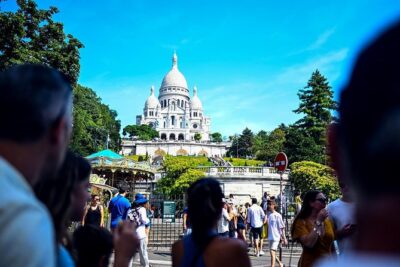
Private Montmartre Food Tour with Wine, Cheese & Pastries
Read our review →
Paris Montmartre Food Tour – A Full French Meal by Do Eat Better
Read our review →
Hidden Montmartre: Paris’ Secret Streets Walking Tour
Read our review →Browse the lists this tour appears in