
Reviewed · MONTMARTRE AND SACRé-CœUR TOURS
Montmartre Walking Tour in English
Montmartre’s best stories begin with a severed head, a hill of windmills, and artists who came for cheap wine and low rents. This 150-minute walk takes you from the Moulin Rouge up through the old village, linking Van Gogh, Picasso, Modigliani, Amélie, and Parisian cabaret culture along the way.
I love the way the tour connects familiar sights to the people who made Montmartre famous. I also like the useful meeting point at Metro Blanche and the chance to hear guides such as Eva and Raj bring the neighborhood to life with humor and personal energy.
The main consideration is pace. One recent booking found the talk a little slow and speech-heavy, so this is better for you if you enjoy a detailed story rather than a brisk checklist of sights. The hill and winding streets also call for comfortable shoes.
Key points at a glance
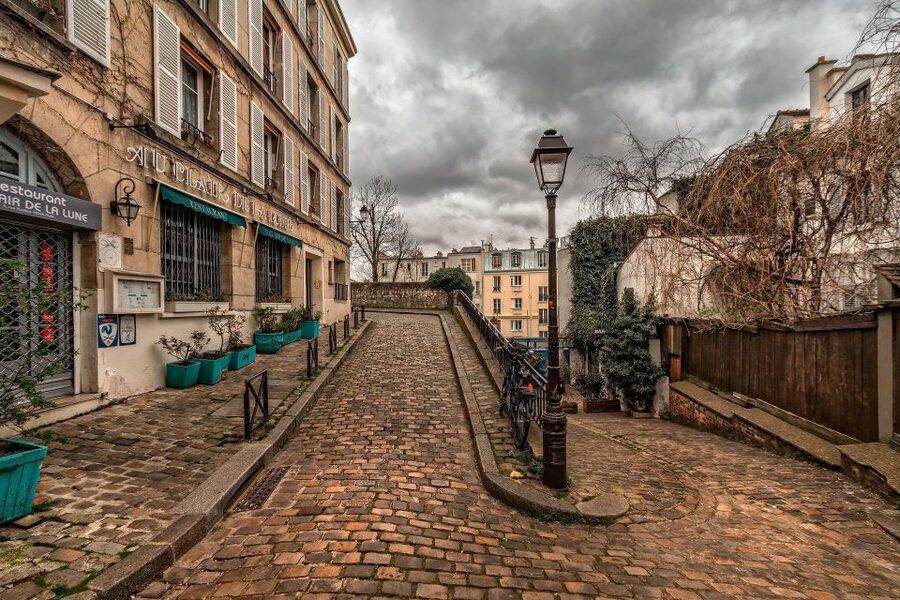
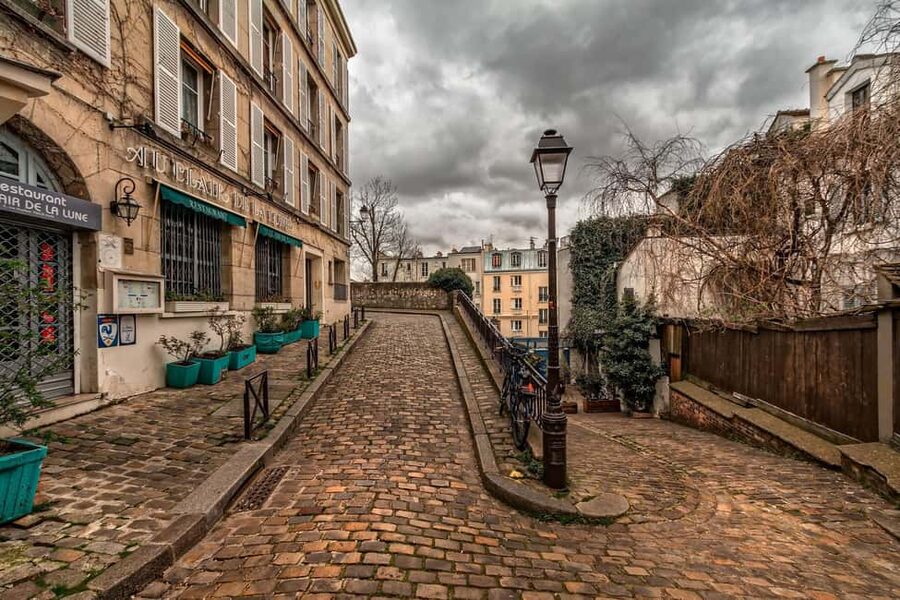
- A 150-minute climb through old Montmartre: Follow the neighborhood from Metro Blanche into its former village streets, vineyards, mills, and artists’ quarters.
- Film and art in the same walk: See Cafe Deux Moulins from Amélie, Van Gogh’s house, and studios linked with Picasso and Modigliani.
- A useful history lesson: Learn how a sleepy hill village became a center for painters, cafés, cabarets, and nightlife.
- A pay-what-you-wish format: The $31 paid at booking is a small online reservation fee, with the remaining payment decided by you for the guide.
- English with a live guide: Eva and Raj are among the guides associated with this walk, and the route is built around storytelling, humor, and anecdotes.
- Rain or shine: The walk continues in poor weather, with shelter found if rain or cold becomes an issue.
Starting at Metro Blanche, below the Moulin Rouge
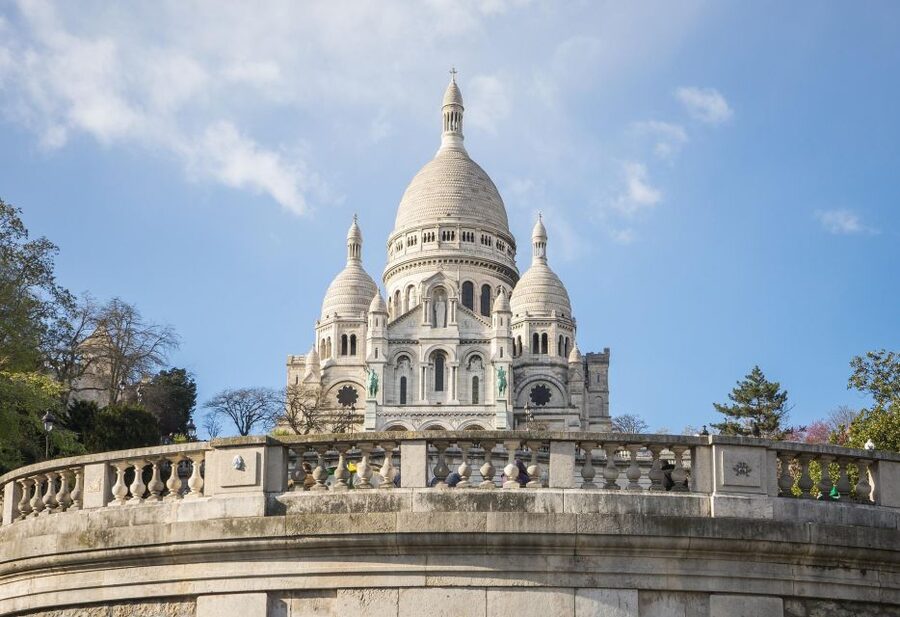
The meeting point is simple: stand in front of Metro Blanche, at the only exit, and look for the yellow umbrella. That detail matters in Montmartre, where several streets meet around the lower edge of the hill and a vague meeting point could waste your first minutes.
You begin near the Moulin Rouge, one of Paris’s most famous cabarets. Its name is tied to the red windmill that has become a symbol of Montmartre, even though the neighborhood once had many working mills. The walk uses this starting point to show how the district moved from rural production to drinking halls, dancing rooms, and artistic nightlife.
Do not expect a theater ticket or an inside visit to the Moulin Rouge. Its value here is as a doorway into the story of old Montmartre. You see the setting and learn why this part of Paris drew artists, entertainers, and people looking for cheap rooms and cheap wine.
Because the walk lasts two and a half hours, you have time for explanation rather than just quick photographs. That also means you should arrive ready to pay attention. If you prefer constant movement with only brief facts, the slower storytelling style may test your patience.
More Montmartre and Sacré-Cœur Tours:
- Montmartre Hidden Gems and Scenic Highlights Walking Tour
★ 5.0 · 2,684 reviews - Montmartre Hill French Gourmet Food and Wine Tasting Walking Tour
★ 5.0 · 2,588 reviews - Paris: Montmartre Cheese, Wine & Pastry Guided Walking Tour
★ 4.8 · 2,255 reviews
Montmartre’s name and the story of Saint Denis
The neighborhood name comes from the Latin Mons Martyrum, or Hill of Martyrs. The story behind it is wonderfully grim. Saint Denis, described as the first bishop of Paris, was beheaded by the Romans after refusing to abandon his faith.
According to the legend, he picked up his severed head and walked down the hill before finally dying. It is the kind of tale that makes Montmartre feel older and stranger than its postcard streets suggest.
A good guide can use this story to separate legend from the neighborhood’s more certain past. You are not simply walking through pretty lanes. You are moving through a place whose identity was shaped by religion, rural life, art, sex, drink, and show business.
That mixture is one reason I would choose a guided walk here instead of wandering alone. Montmartre looks easy to understand at first glance, but the most interesting details are not always marked. The guide’s narrative gives the streets a timeline.
From vineyards and mills to an artists’ quarter
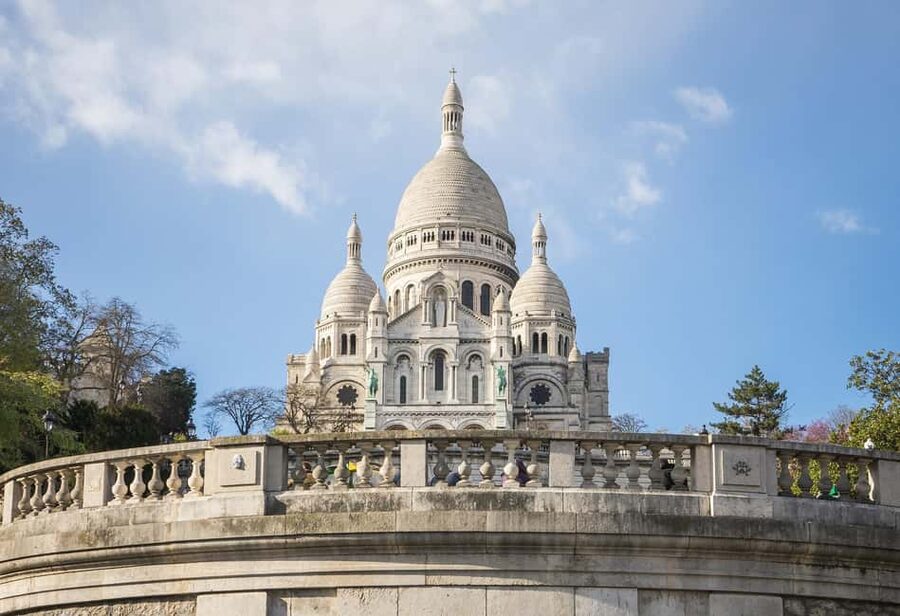
Before the cafés and studios, Montmartre was a quiet village on a hill, surrounded by vineyards, orchards, and gardens. As many as 13 mills once worked on its slopes, grinding wheat, barley, and rye.
Only two mills survived. Today, the windmill is one of the neighborhood’s clearest symbols, linking the rural village to the cabaret district you see below. The contrast is striking: Montmartre can feel like a country village in one street and a famous entertainment quarter in the next.
The tour’s vineyard stop adds another useful piece to that story. It reminds you that the hill was not just a place for artists to rent cheap rooms. It had an agricultural life long before painters and film directors claimed it.
You should not expect a long vineyard visit or a wine tasting from the information provided. Think of it as a stop that helps explain what Montmartre used to be. That context makes the later cafés and studios more meaningful.
Cafe Deux Moulins and the world of Amélie
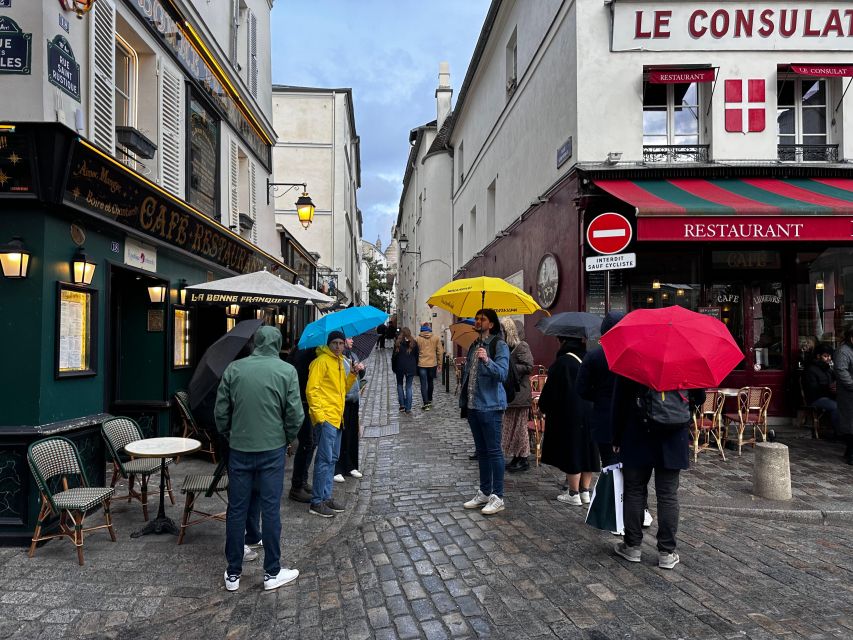
Cafe Deux Moulins is one of the walk’s most recognizable film stops. The café became known around the world through Amélie, the French film that turned Montmartre’s streets, cafés, and small details into part of its visual charm.
For film fans, this is a clear highlight. You can connect an actual Paris location with scenes that many people first encountered on screen. Even if you have not seen the film, the café fits the neighborhood’s long connection with cafés and everyday drama.
The important point is that this stop is not presented as an isolated movie prop. It sits within the wider story of Montmartre as a place where people gather to watch, gossip, flirt, argue, drink, and create. The film connection gives the site extra appeal, but the café tradition is older than the movie.
A practical tip: the stop is best treated as part of the walking route, not as a guaranteed meal break. The tour information does not include food or drinks, so plan to return later if you want to sit down inside.
More walking tours in Paris:
- Paris Top Sights Half Day Walking Tour with a Fun Guide
★ 5.0 · 2,893 reviews - Paris Île de la Cité and Notre-Dame Walking Tour With Crypt
★ 5.0 · 2,272 reviews - Paris in a Day: Louvre or Orsay, Eiffel Tower, City Walk & Cruise
★ 5.0 · 1,956 reviews - Paris: Montmartre Highlights Walking Tour with a Local Guide
★ 4.9 · 1,668 reviews
Van Gogh’s house and the artists who followed
Montmartre attracted artists from many countries because rents were low, wine was affordable, and the social atmosphere was loose and welcoming. Van Gogh lived here, and the tour points out his house as part of that larger artistic story.
This is not presented as a museum visit. You should expect an exterior stop and an explanation of the artist’s connection with the neighborhood. That can be more useful than a quick photo if the guide explains how Montmartre helped shape the artistic community around him.
The route also includes studios associated with Picasso and Modigliani. Their presence helps you see how many major figures passed through the district. Monet, Renoir, Matisse, Degas, and Toulouse-Lautrec are also tied to Montmartre’s artistic world.
The point is not that every famous painter lived in the same building or at the same time. Instead, you get a picture of a crowded creative quarter where artists crossed paths, shared ideas, and lived alongside cabaret performers and café regulars.
The guide’s style matters here. Eva has been praised for presenting Montmartre’s story with passion and humor, while Raj has been noted for supplying plenty of useful information. You may get either guide, so the exact tone can vary, but the route depends on a strong spoken narrative.
Cabarets, cancan, and Montmartre after dark
Montmartre’s artistic reputation cannot be separated from its nightlife. In the late 19th and early 20th centuries, cafés, drinking halls, and cabarets helped make the district one of the most exciting parts of Paris.
Le Chat Noir and the Moulin Rouge belong to this story. The Moulin Rouge became famous for cancan dancing, with performers kicking their legs high enough to shock respectable Paris. The neighborhood’s freedom was part of its appeal, but so were the cheap rooms and relaxed social rules.
The walk also includes the oldest cabaret in Paris. The exact identity of that stop is not specified in the tour details, so you should let the guide explain the claim and its setting rather than expecting a formal museum-style presentation.
What makes this section worthwhile is the connection between art and entertainment. Painters were not working in a sealed-off studio world. They were surrounded by music, dancers, drink, scandal, and people willing to challenge polite society.
The stories can be adult in tone. The neighborhood’s past included drugs, sex, and hard living, so this is not a sanitized art-history walk. That makes it a better fit for adults and older teenagers than for families looking for a gentle children’s tour.
Why the uphill route changes your view of Paris
Montmartre is defined by its slope. The walk starts at the lower end near Blanche, then takes you through streets that rise and twist into the old neighborhood. The tour information does not give a precise accessibility rating, so you should assume ordinary city walking with an uphill section and uneven or steep streets.
The climb is part of the experience. It helps you understand why Montmartre once had mills and vineyards, and why its streets feel separate from the broad boulevards of central Paris. You are not moving through a flat sequence of monuments. You are following a hill that shaped the district’s work, homes, views, and social life.
Wear shoes you trust. Also allow some flexibility in your expectations. The guide may stop often to explain a building, story, or artist, and one recent booking found the pace slower than preferred because of the amount of speech.
I would choose this walk early in your Montmartre visit. The stories can help you decide which cafés, film locations, and streets deserve a second look later, when you are free to wander at your own speed.
The $31 price and what you really pay
The listed price is $31 per person, but the payment structure needs careful attention. You are joining a general pay-what-you-wish tour. The amount paid online is only a small booking fee, and you decide how much to pay the guide.
That can be good value if you want a full two-and-a-half-hour introduction without committing to a fixed premium tour price. You get a live English-speaking guide and a constructed narrative rather than a self-guided map.
It also means the $31 should not be understood as the complete payment. Budget for an additional amount for the guide, based on your judgment of the experience. The guide is the main product here. There are no included meals, drinks, hotel transfers, or entry tickets listed.
For me, the value depends on how much you enjoy stories. If your ideal Montmartre visit is a quick route to the Moulin Rouge, Cafe Deux Moulins, and a few photo stops, you may find the spoken detail more than you need. If you want the district’s odd connections explained, the format makes sense.
Free cancellation up to 24 hours before the start gives you some flexibility, and you can reserve now and pay later. The tour runs in rain or cold, with cover found when needed, so check the forecast and dress sensibly.
Who will enjoy this Montmartre walk most
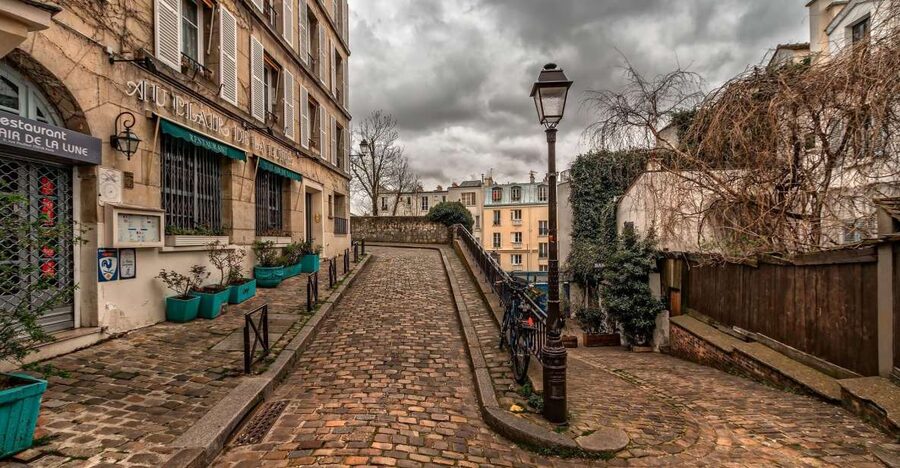
I would recommend it to you if you like neighborhoods more than isolated monuments. The walk links rural Montmartre, religious legend, film, painting, cabaret, and everyday café life in one route.
It also suits fans of Amélie and visitors curious about Van Gogh, Picasso, Modigliani, Toulouse-Lautrec, and other artists connected with the area. You do not need a specialist art background. The guide’s job is to make those names part of a street-level story.
This is a good choice for a first look at Montmartre if you want direction and context. It is less suitable if you dislike hills, long explanations, or a tour that continues in poor weather.
The strongest part of the experience is the human story. You hear why artists came, why cabarets flourished, and how a village with mills and vineyards became a famous Paris neighborhood. The buildings matter, but the characters and scandals make the walk memorable.
Should you book the Montmartre Walking Tour?
Book it if you want Montmartre explained rather than simply photographed. The route covers Cafe Deux Moulins, Van Gogh’s house, Picasso and Modigliani connections, the vineyard, cabaret history, and the Moulin Rouge, all in a manageable 150 minutes.
Go in knowing that the booking price is only part of a pay-what-you-wish arrangement and that the pace may favor detailed storytelling over speed. Meet at Metro Blanche under the yellow umbrella, wear good shoes, and leave room in your day for the hill.
If those terms suit you, this is a thoughtful way to meet Montmartre before exploring it on your own.
FAQ
How long does the Montmartre Walking Tour last?
The tour lasts 150 minutes, or two and a half hours.
What language is the tour conducted in?
The tour is conducted in English with a live guide.
Where is the meeting point?
Meet in front of Metro Blanche, at the only exit. Look for the yellow umbrella.
How much does the tour cost?
The listed price is $31 per person. This is a small online booking fee for a general pay-what-you-wish tour, and you decide the amount paid to the guide.
Does the tour include hotel pickup and drop-off?
No. Hotel pickup and drop-off are not included.
Which places are included on the walk?
The route includes Cafe Deux Moulins, Van Gogh’s house, studios associated with Picasso and Modigliani, a vineyard, the oldest cabaret in Paris, and the Moulin Rouge.
Does the tour run in bad weather?
Yes. The tour operates in rain or cold, and cover is found if weather conditions require it.
Can I cancel for a full refund?
Yes. You can cancel up to 24 hours in advance for a full refund.
Just added around Paris
- Paris: Flea Market Insider’s Tour in Extra-Small Group★ 4.6 · 73 reviews
- Paris: The Da Vinci Code Walking Tour with a Local Guide★ 4.3 · 5 reviews
- Paris: Private Fashion Tour (Chanel, Dior, Sex & the City)★ 5.0 · 3 reviews
- Paris: Floral Earrings workshop★ 5.0 · 3 reviews
- Paris: Fashion History Walking Tour in the Heart of Paris★ 4.9 · 22 reviews
- PARIS: Family e-bike longtail renting★ 5.0 · 3 reviews
- Paris: Famous Monuments Cycling Tour★ 4.7 · 20 reviews
- Paris: private city tour with seine river cruise★ 4.8 · 28 reviews
Montmartre and Sacré-Cœur Tours, compared.

Montmartre Hidden Gems and Scenic Highlights Walking Tour
Read our review →
Montmartre Hill French Gourmet Food and Wine Tasting Walking Tour
Read our review →
Montmartre Cheese, Wine & Pastry Guided Walking Tour
Read our review →
Montmartre Highlights Walking Tour with a Local Guide
Read our review →
Sacré-Coeur and Montmartre Tour with Expert Guide
Read our review →
Private Montmartre Food Tour with Wine, Cheese & Pastries
Read our review →
Paris Montmartre Food Tour – A Full French Meal by Do Eat Better
Read our review →
Hidden Montmartre: Paris’ Secret Streets Walking Tour
Read our review →Browse the lists this tour appears in