
Reviewed · MONTMARTRE AND SACRé-CœUR TOURS
Montmartre Walking Tour with a Local Guide
Montmartre is best understood on foot, one sloping street at a time. This two-hour walk follows the neighborhood’s artists, cabarets, movie locations, and village-like corners before finishing at Sacré-Cœur, where Paris opens out below you. The path includes the Moulin Rouge, Place du Tertre, La Maison Rose, and the Wall of Love.
I like two things right away: the tour links famous sights with small details you might miss alone, and the pace is gentle enough for questions, photos, and short breaks. Guide Samy is often singled out for his warmth, clear English, local advice, and care with children and older walkers. The main drawback is the hill. You need comfortable shoes and should be ready for moderate uphill walking.
Key points at a glance
- Artists and cabarets: Connect Picasso, Van Gogh, Lautrec, and other figures with the streets where they lived and worked.
- A useful uphill route: Reach Sacré-Cœur by a less demanding approach than simply tackling the famous front steps.
- Small-group feel: Some departures are very small, and Samy has been noted for keeping groups to about eight people.
- More than postcard stops: Look for graffiti, old windmill stories, film locations, and details around Montmartre’s side streets.
- A strong finish: Enter Sacré-Cœur and take in views toward the Eiffel Tower, Notre-Dame, and Montparnasse Tower.
- Good value: At $27 for two hours with an English-speaking local guide and family photos, the tour costs less than many major Paris attractions.
Starting near Blanche and the Moulin Rouge
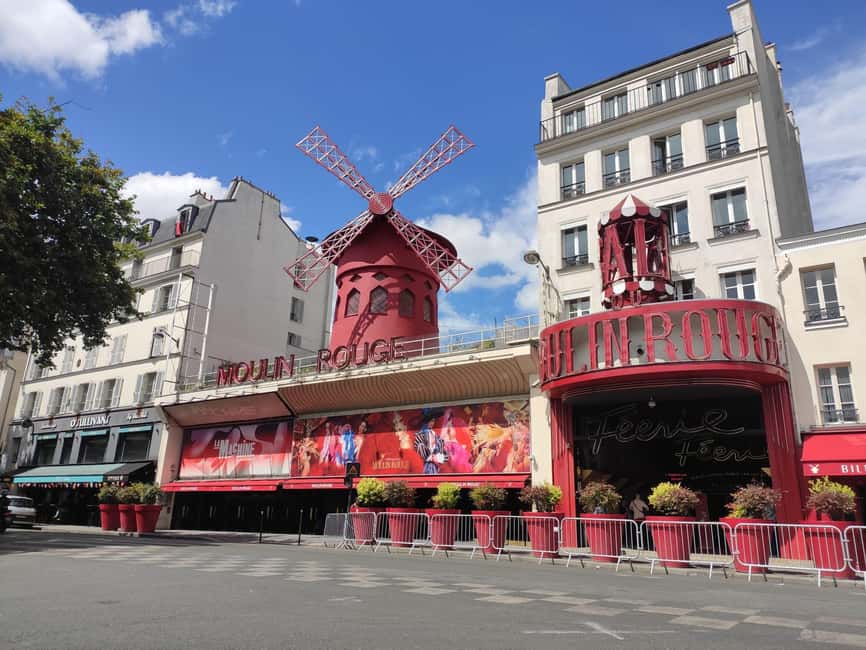
Meet near the exit of Blanche Metro station, served by Line 2. Your guide carries a green booklet and wears a green badge, which makes the meeting point easier to spot amid the crowds near the Moulin Rouge.
The location is practical. You begin at the lower edge of Montmartre, then work uphill through the district rather than arriving at the basilica first and walking downhill without much context. I prefer this order because the neighborhood gradually changes as you climb. The streets become quieter, the views open up, and the famous white domes of Sacré-Cœur feel like a proper destination.
The Moulin Rouge is the first photo stop, with about ten minutes of guiding. You will not attend a cabaret show on this tour. Instead, the stop gives your guide a chance to explain Montmartre’s performance culture and the role of cabarets in the area’s artistic identity.
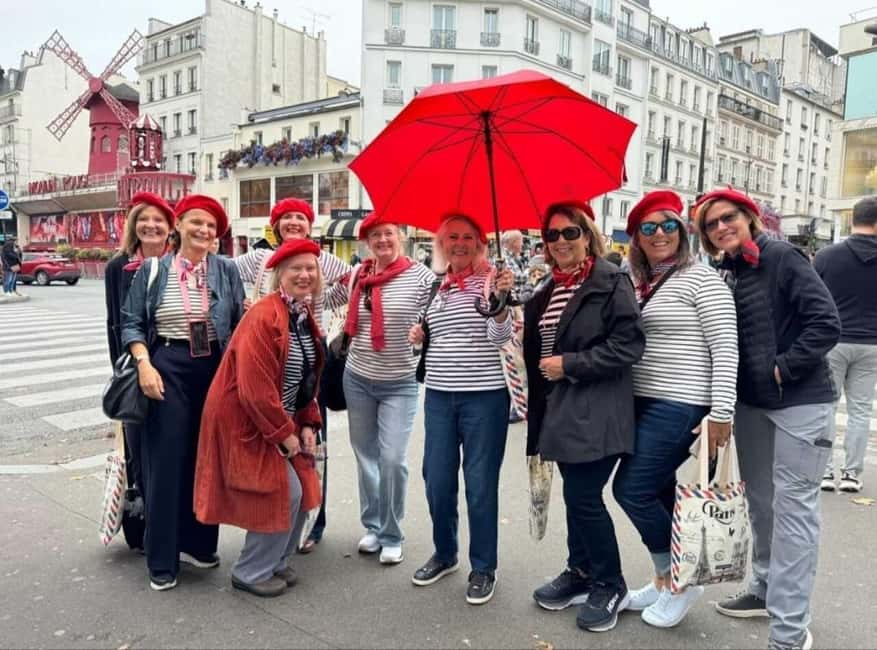
The first section also sets the tone for the walk. This is not a rapid checklist of sights. Samy is praised for answering questions, taking pictures, and adjusting the pace when a child, an older family member, or a slower walker needs more time.
More Montmartre and Sacré-Cœur Tours:
- Montmartre Hidden Gems and Scenic Highlights Walking Tour
★ 5.0 · 2,684 reviews - Montmartre Hill French Gourmet Food and Wine Tasting Walking Tour
★ 5.0 · 2,588 reviews - Paris: Montmartre Cheese, Wine & Pastry Guided Walking Tour
★ 4.8 · 2,255 reviews
Stories at the Wall of Love
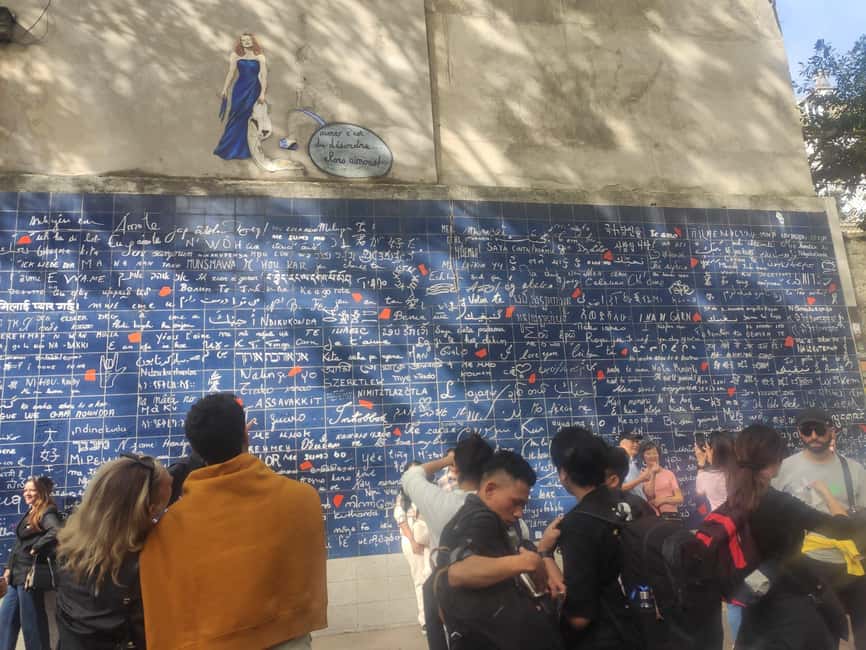
The Wall of Love, or Le Mur des Je T’aime, is a natural early pause. The artwork displays the words I love you in many languages, making it a popular photo stop and an easy place to connect the romance of Paris with the everyday character of Montmartre.
You spend around ten minutes here with the guide. That may sound brief, but the stop is not meant to be a long visit. Its value comes from having someone point it out and explain why it fits the neighborhood’s image as a place of artists, lovers, and street-level creativity.
This is also a good spot to ask for practical Paris advice. Samy often gives suggestions for later activities and other parts of the city. That matters on a first day, when a local guide can help you use the rest of your time more wisely.
Moulin de la Galette and Montmartre’s artistic past
At the Moulin de la Galette, the tour turns more firmly toward Montmartre’s artists. The district was once home to painters such as Picasso and Van Gogh, along with Lautrec and other figures tied to Parisian art and nightlife.
The stop is mainly for photographs and explanation, not for an extended interior visit. You see how Montmartre’s old mills, cafés, dance halls, and narrow streets became part of the setting that drew artists here. The best part is the link between a physical place and the people associated with it.
I like this section because it gives the neighborhood more substance than its pretty façades. You are not simply collecting photos of Paris. You are learning why this hill became famous and how art, entertainment, and ordinary local life overlapped.
The route includes moderate climbs. Several people found the pace manageable because the walk included pauses, but you should not treat it as flat city sightseeing. If your knees or balance are a concern, the organizer says the tour is not suitable for people with mobility impairments or wheelchair users.
Dalida, La Maison Rose, and the details between stops
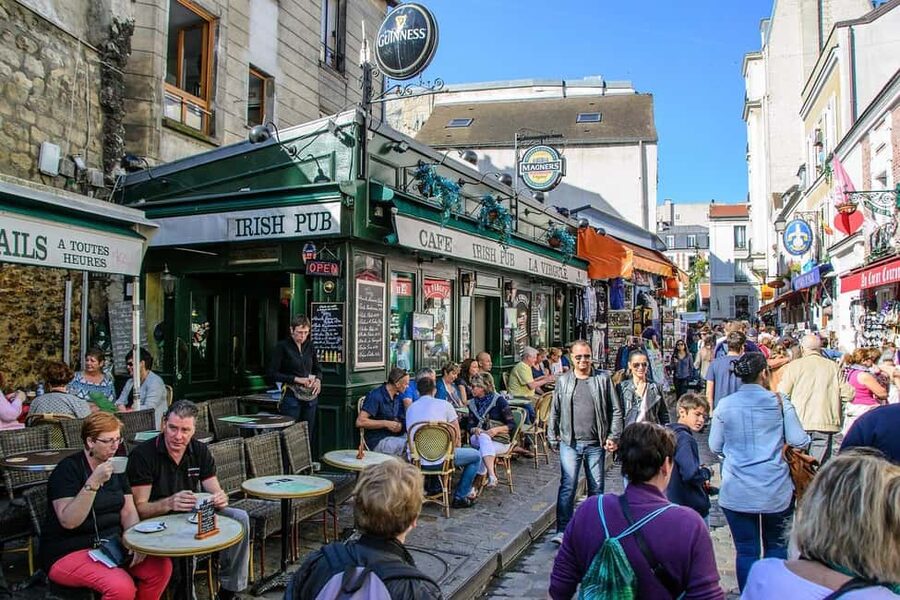
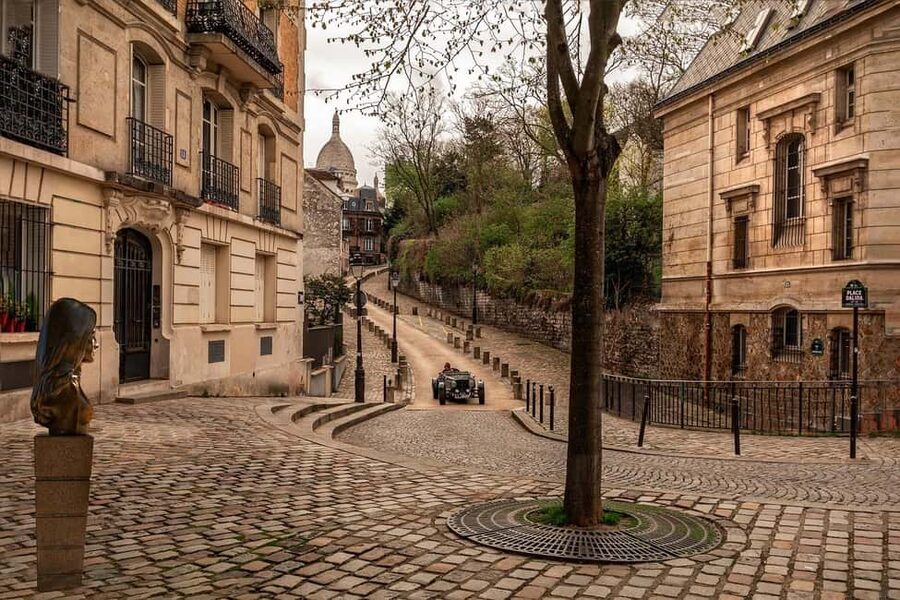
The Dalida Statue is another ten-minute photo and guide stop. The statue honors the singer who lived in Montmartre and remains closely linked with the neighborhood. Your guide may also point out small features nearby that would be easy to walk past without local help.
La Maison Rose provides another recognizable Montmartre image. Its pink exterior is one of the district’s most photographed sights, but the tour helps place it within the larger story of the hill rather than treating it as an isolated picture stop.
This stretch is where a guide earns the $27 price. Montmartre is easy to wander, but it is also easy to miss the meaning behind what you see. Samy has been praised for pointing out graffiti, side-street details, and small features that do not appear in a standard sightseeing list.
The group size matters here. A large crowd can make a narrow street feel awkward, and it is harder to hear a guide while people stop for photos. Small departures are a recurring feature of this experience, and groups of about eight have been noted. That gives you a better chance to ask a question or get a family picture without slowing the whole walk.
More walking tours in Paris:
- Paris Top Sights Half Day Walking Tour with a Fun Guide
★ 5.0 · 2,893 reviews - Paris Île de la Cité and Notre-Dame Walking Tour With Crypt
★ 5.0 · 2,272 reviews - Paris in a Day: Louvre or Orsay, Eiffel Tower, City Walk & Cruise
★ 5.0 · 1,956 reviews - Paris: Montmartre Highlights Walking Tour with a Local Guide
★ 4.9 · 1,668 reviews
Place du Tertre, where painters still work
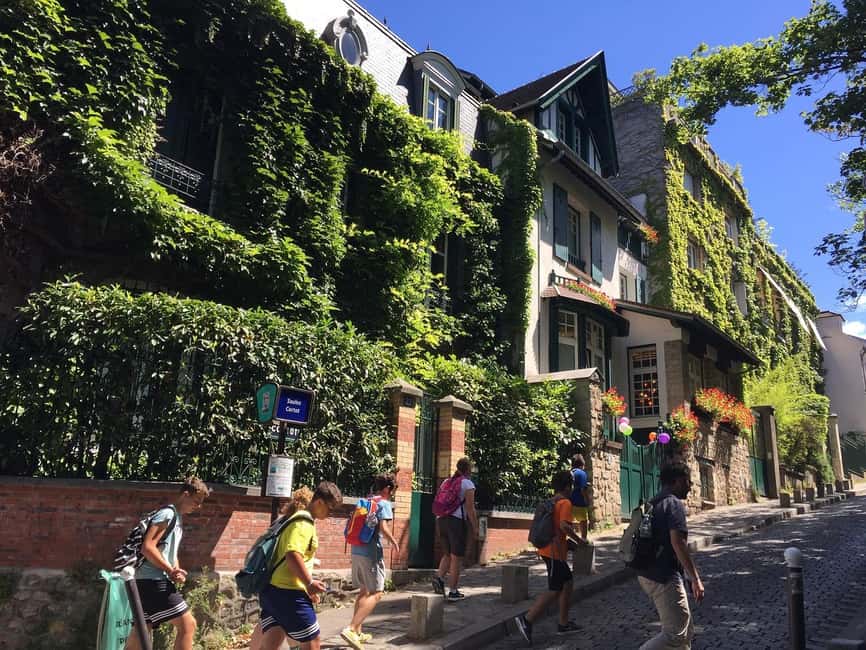
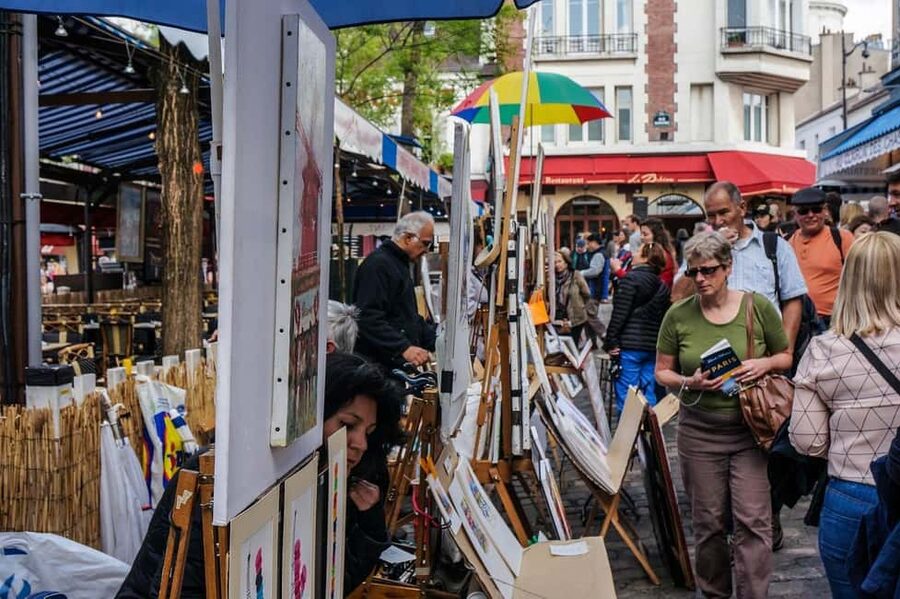
Place du Tertre is the liveliest stop on the route. Painters display their work around the square, continuing a tradition that helps explain why Montmartre remains tied to art in the public imagination.
You have time to walk around, take photographs, and listen to the guide. This is not presented as a formal art class, and food or drinks are not included. Still, the square is useful for seeing how Montmartre’s artistic identity functions today, not only as a story about people from the past.
Expect crowds here, especially during popular visiting hours. One useful reality check is that the area can feel busy and commercial, with many people pursuing the same sights. The guide helps by giving the square context, but no walking tour can remove the crowds from one of Paris’s best-known neighborhoods.
I would use this stop to look around before buying anything. You can enjoy the paintings and atmosphere without feeling that you must turn the visit into a shopping stop.
Reaching Sacré-Cœur by the back way
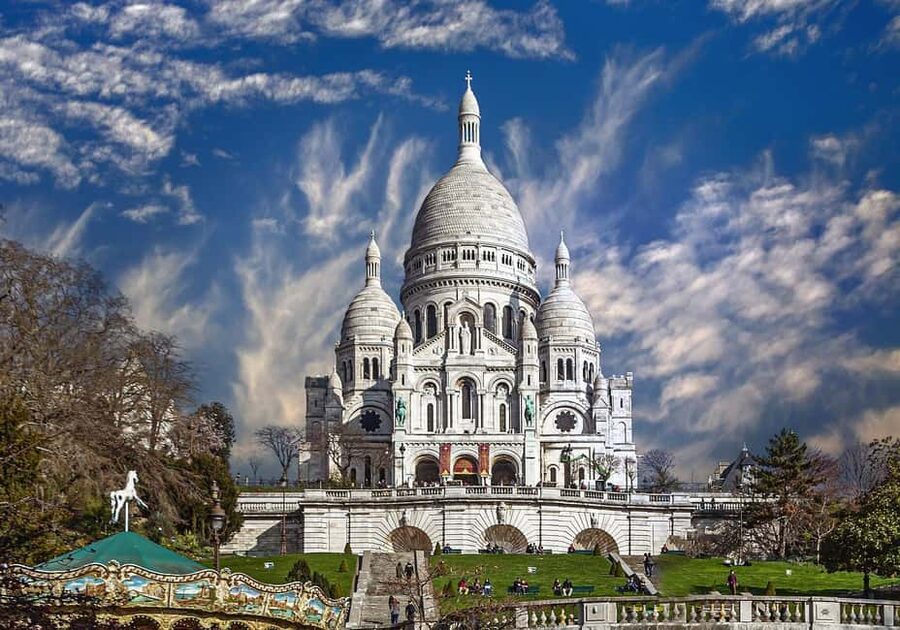
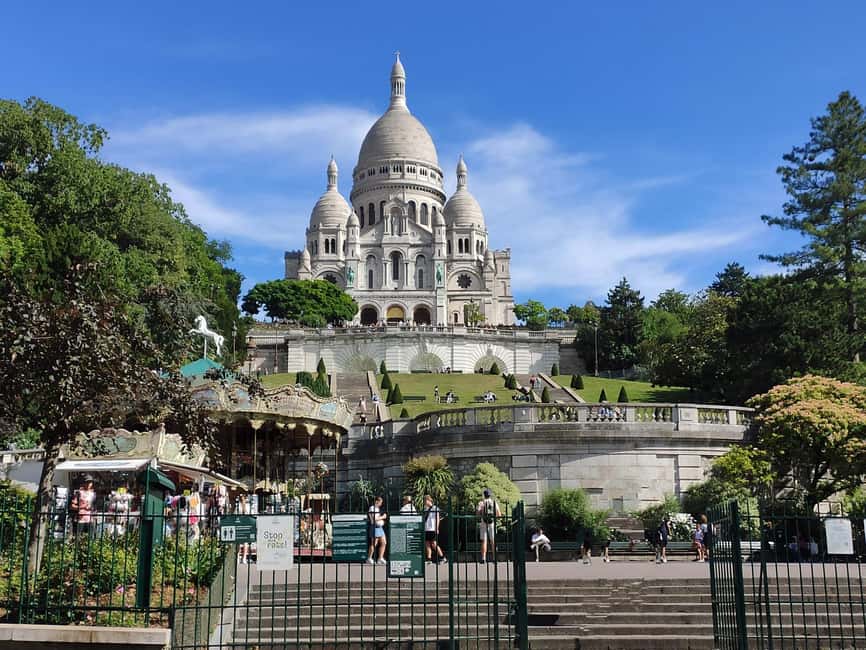
The route ends at the Basilica of Sacré-Cœur de Montmartre, with time to see the exterior and enter the church. The approach uses smaller inclines and reaches the basilica from the back side, which can be easier than climbing the full run of steps at the front.
That does not make the walk effortless. You are still climbing a hill, and the tour runs rain or shine. Bring shoes with a firm sole and dress for the weather. If rain is forecast, a waterproof layer will make the cobbled streets and pauses much more pleasant.
The basilica is the emotional high point of the walk. Its white domes are visible from much of Paris, but seeing them after moving through Montmartre’s streets gives the building more meaning. You get both the outside view and the inside visit, rather than stopping only on the broad terrace.
The tour does not promise a timed entrance to a special area or a separate paid attraction. It gives you an introduction to the basilica and finishes there, so you can continue exploring at your own pace afterward.
Paris from Montmartre’s highest point
From the hill, you can look across the city toward major landmarks including the Eiffel Tower, Notre-Dame, and Montparnasse Tower. The view is one of the strongest reasons to choose this tour instead of staying at street level.
The panorama changes with weather and light. On a clear day, you can pick out the city’s major landmarks. On a gray day, the view may be softer, but the elevated setting still gives you a useful sense of Paris’s shape.
Family photos are included, and guides are willing to take pictures during the walk. That is a small but practical benefit. You do not have to choose between taking the photo and appearing in it, and Samy has been especially noted for taking thoughtful pictures of groups.
After the tour, you can remain at Sacré-Cœur, explore more of Montmartre, or use the funicular down the hill. The funicular is not included, and you need your own metro fare. One useful tip is to check your route before the tour ends, since the basilica is not at the same place as the starting point near Blanche.
What the guide adds to the experience
The strongest part of this tour is the guide’s personal delivery. Samy is repeatedly described as friendly, patient, energetic, and easy to understand. He brings up both local history and present-day culture, and he is comfortable answering questions instead of forcing the walk into a rigid script.
That flexibility helps families. Children have been accommodated with changes in pace and extra effort to keep them interested. Older walkers have also received extra time without being made to feel like a problem. One family with an 87-year-old participant found the guide attentive to safety and comfort.
The walk may also run longer than two hours if the group moves slowly, stops often, or needs more time. That can be welcome, but plan your day with some breathing room. Do not book this immediately before a timed museum entry or restaurant reservation across Paris.
The tour is in English only. If you want a French-language walk or a formal art-history lecture, this is not the right fit. If you want clear storytelling, local tips, and a relaxed introduction to Montmartre, it is a better match.
Is $27 a fair price?
At $27 per person, I consider this a strong value for a two-hour guided walk. You are paying for an English-speaking guide, explanations at several stops, a route through a complicated neighborhood, entry to the basilica itself, and family photos.
The price is especially fair if Montmartre is your first stop in Paris. A self-guided walk costs nothing, but you would need to research the artists, locate the less obvious stops, work out the best uphill route, and supply your own context. The tour saves that preparation time.
The value is less clear if you already know Montmartre well or prefer to wander alone. You will follow a set route and spend about ten minutes at each named stop, so independent visitors may want more time for cafés, shops, churches, or photography.
Food and drinks are not included. That is no surprise for a walking tour, but leave room in your budget for a café break or a meal after reaching the basilica.
Who should book this Montmartre walk?
I would recommend it to first-time Paris visitors, families, couples, and anyone who wants the neighborhood explained rather than simply photographed. The easygoing pace also suits people who prefer frequent pauses and conversation.
It is a good choice for a first day because the route gives you orientation, history, local suggestions, and a high view of the city. The guide can also point you toward other Paris activities once the walk ends.
I would think twice if you dislike hills, have mobility limits, use a wheelchair, or want a quiet route away from busy sightseeing areas. Montmartre is popular, and Place du Tertre can be crowded. You should also be comfortable walking on cobbled streets in changing weather.
Should you book it?
Book this tour if you want a friendly introduction to Montmartre with real explanation, not just a string of photo stops. The combination of artists, cabarets, street details, Sacré-Cœur, and the city view gives you a well-shaped two-hour visit.
The strongest reason to choose it is Samy’s approach. He is praised for clear history, useful tips, photos, patience, and adjusting the walk to suit the group. At $27, that personal help is worth paying for, especially on your first visit.
Skip it if you already have a detailed plan for Montmartre or cannot manage moderate uphill walking. For most visitors who want to understand why this hill matters, though, it is an affordable and practical choice.
FAQ
Where does the Montmartre walking tour begin?
Meet your guide near the exit of Blanche Metro station on Line 2, close to the Moulin Rouge. The guide can be identified by a green booklet and green badge.
Where does the tour finish?
The walk finishes at the Basilica of Sacré-Cœur de Montmartre.
How long does the tour take?
The scheduled duration is two hours. It can vary depending on the group’s pace, number of stops, and how much time participants need.
What language is the tour conducted in?
The tour is conducted in English with a live English-speaking guide.
Which sights are included?
The route includes the Moulin Rouge, Wall of Love, Moulin de la Galette, Dalida Statue, La Maison Rose, Place du Tertre, and Sacré-Cœur Basilica.
Does the tour enter Sacré-Cœur?
Yes. The experience includes exploring the outside and inside of the Basilica of Sacré-Cœur.
Is food or drink included?
No. Food and drinks are not included.
What should I bring?
Bring comfortable shoes. The walk includes cobbled streets and moderate uphill sections.
Is the tour suitable for wheelchair users?
No. The activity is not suitable for wheelchair users or people with mobility impairments.
Just added around Paris
- Paris: The Da Vinci Code Walking Tour with a Local Guide★ 4.3 · 5 reviews
- Paris: Flea Market Insider’s Tour in Extra-Small Group★ 4.6 · 73 reviews
- Paris: Private Fashion Tour (Chanel, Dior, Sex & the City)★ 5.0 · 3 reviews
- Paris: Floral Earrings workshop★ 5.0 · 3 reviews
- Paris: Fashion History Walking Tour in the Heart of Paris★ 4.9 · 22 reviews
- PARIS: Family e-bike longtail renting★ 5.0 · 3 reviews
- Paris: Famous Monuments Cycling Tour★ 4.7 · 20 reviews
- Paris: private city tour with seine river cruise★ 4.8 · 28 reviews
Montmartre and Sacré-Cœur Tours, compared.

Montmartre Hidden Gems and Scenic Highlights Walking Tour
Read our review →
Montmartre Hill French Gourmet Food and Wine Tasting Walking Tour
Read our review →
Montmartre Cheese, Wine & Pastry Guided Walking Tour
Read our review →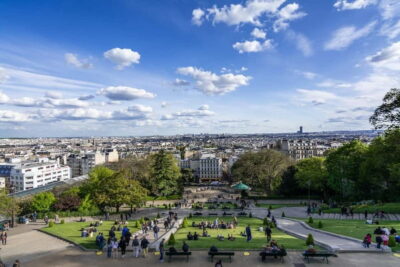
Montmartre Highlights Walking Tour with a Local Guide
Read our review →
Sacré-Coeur and Montmartre Tour with Expert Guide
Read our review →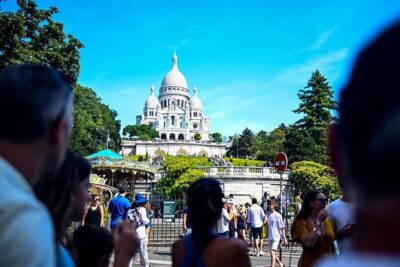
Private Montmartre Food Tour with Wine, Cheese & Pastries
Read our review →
Paris Montmartre Food Tour – A Full French Meal by Do Eat Better
Read our review →
Hidden Montmartre: Paris’ Secret Streets Walking Tour
Read our review →Browse the lists this tour appears in