
Reviewed · PARIS WALKING TOURS
Montmatre Walking Tour: the essential highlights+
Montmartre is at its best when you leave the grand staircase of Sacré-Coeur and follow the small streets where painters, poets, cabaret owners, and eccentrics made their mark. This walking tour connects the famous sights with tucked-away corners, old stories, and the neighborhood’s lingering artistic mood.
I like the artist-focused route, which goes beyond the basilica and Place du Tertre to places such as Lapin Agile, Le Bateau-Lavoir, and the Moulin de la Galette. I also like the guides’ lively approach: Johnny has been praised for his humor and care, while Ewan brings useful insight into French daily life. The main drawback is timing. A 5:30 p.m. start in cool weather can mean artists are packing up, the basilica may be affected by Mass, and the final stretch can be dark.
- Anvers to Sacré-Coeur: Begin near the Anvers metro station and work uphill toward Montmartre’s best-known landmark.
- Artists’ Montmartre: See Place du Tertre, Le Bateau-Lavoir, and streets linked with major 20th-century artists.
- Cabaret and bohemian stories: Pass Lapin Agile, Moulin de la Galette, the Moulin Rouge, and other reminders of Montmartre after dark.
- Small details beyond the headline sights: Look for an old vineyard, the bust of Dalida, and the Passe-Muraille sculpture.
- English-speaking local guide: Expect an informal, story-led walk rather than entry into ticketed attractions.
- Simple value: At $41 per person, the tour pays for context, navigation, and access to corners you might skip alone.
Why Montmartre Works Best on Foot
Montmartre feels less like a single attraction and more like a collection of moods. You have the white-domed Sacré-Coeur, postcard artists at Place du Tertre, quiet residential lanes, old cabarets, and the nightlife of Pigalle all within one walk.
That mix is the reason I would choose a guided stroll here instead of simply taking the funicular, snapping a photo, and moving on. A guide can connect a building or statue to the people who lived nearby. You also get help finding the less obvious corners, including alleyways you might not think to explore on your own.
The route covers about 2.5 hours. That is long enough to gain a feel for the district without turning the day into an exhausting march, though you should still come ready to walk. The tour takes place rain or shine, so comfortable shoes and a weatherproof layer matter more than dressing for a formal Paris outing.
The meeting point is by the kiosk near Anvers metro station. The guide holds a sign, which keeps the start simple. From there, the walk heads toward the hill and the basilica.
Sacré-Coeur and the First Climb
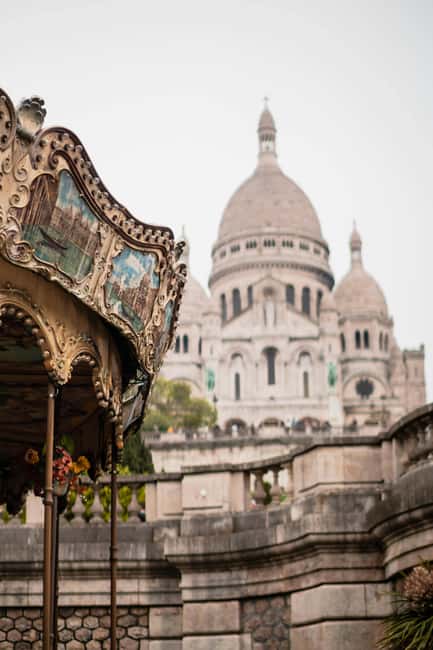
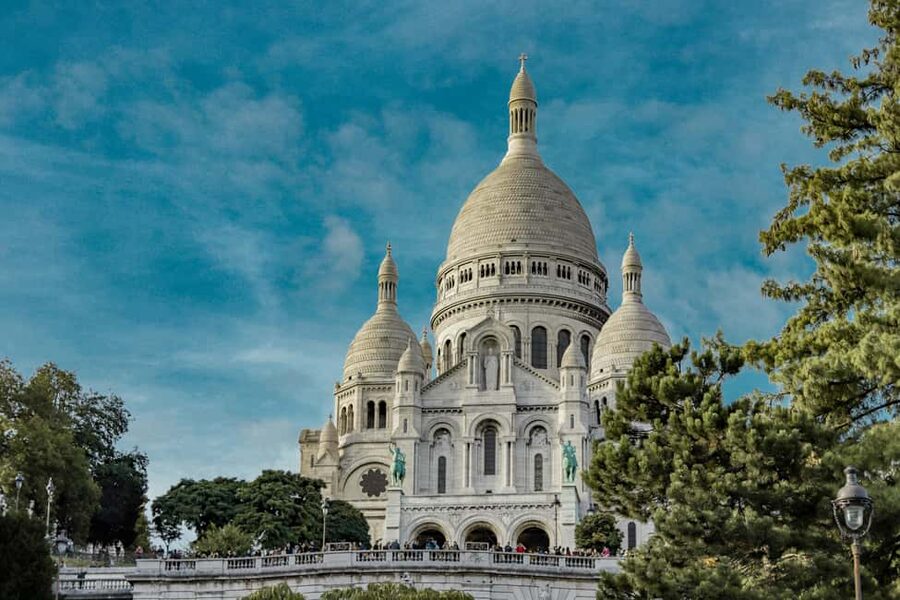
Sacré-Coeur is the grand opening scene. Its pale stone domes can be seen from much of Paris, and the broad approach gives you a strong sense of Montmartre’s height above the city.
The scheduled stop includes about 30 minutes of guided attention. You can expect the guide to explain the basilica’s place in Montmartre rather than simply point out its exterior. The tour description presents the church as a place to recharge your spiritual batteries, but you do not have to be religious to appreciate the quiet contrast between the busy streets and the basilica’s interior.
There is an important limitation here: this tour does not include paid attraction tickets, and it does not promise entry into every site. Mass may also affect access or the timing of an interior visit. If seeing the inside of Sacré-Coeur is especially important to you, confirm the plan when you meet the guide and consider booking an earlier start.
The time of day makes a real difference. One 5:30 p.m. departure meant that the basilica visit was delayed by Mass, and the end of the walk became cold and dark. In summer, that same late start may feel more pleasant. In winter or early spring, morning or early afternoon is the safer choice if you want daylight and active artists.
More city highlights tours in Paris:
- Bateaux Parisiens Seine River Gourmet Dinner & Sightseeing Cruise
★ 4.5 · 6,930 reviews - Paris Seine River Hop-On Hop-Off Sightseeing Cruise by Batobus
★ 4.0 · 3,411 reviews - Paris Top Sights Half Day Walking Tour with a Fun Guide
★ 5.0 · 2,893 reviews
Place du Tertre and the Working Artists
Place du Tertre is Montmartre’s best-known artist square. Easels and portraits give the space its familiar character, though the mood changes with the hour and season.
The tour allows about 15 minutes for a guided look at the square. That may sound brief, but it works well as one part of a larger route. You get enough time to understand why this spot became tied to painters and portrait artists without spending the whole afternoon watching commissions take shape.
Do not expect the square to look the same at every departure. In the late afternoon, artists may be packing away, especially outside the summer season. An earlier start gives you a better chance of seeing the open-air work that forms one of the tour’s central attractions.
I like the way this stop fits into the larger story. Place du Tertre is not presented as an isolated photo stop. It becomes a bridge between the tourist-facing Montmartre of today and the artists who once made the neighborhood their home.
Lapin Agile and the Bohemian Side of the Hill
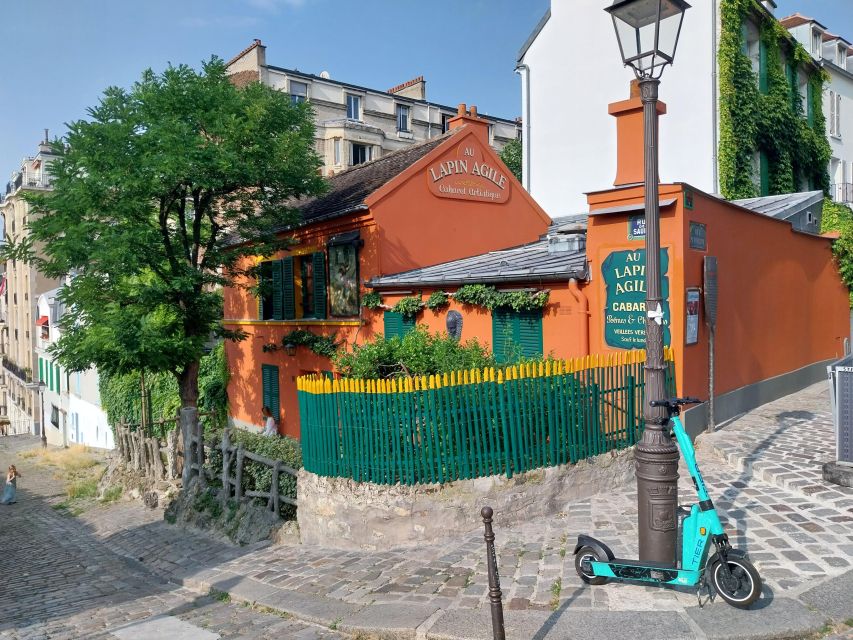
From the square, the walk moves toward Lapin Agile, one of Montmartre’s famous cabaret landmarks. The stop lasts around 15 minutes, giving the guide room to explain the role of small performance spaces in the district’s social life.
Montmartre was not only a place for easels and studios. It was also known for cafés, cabaret halls, nightlife, dance venues, and a red-light district. The neighborhood developed a reputation for letting people test social and artistic boundaries. That history helps explain why so many different kinds of artists were drawn here.
This is where a good guide adds real value. Names and dates alone can make Montmartre feel like a museum exhibit. Anecdotes about performers, painters, and residents make the streets easier to read. Johnny’s style has been described as funny and attentive, while Ewan was praised for bringing the French way of life into the tour. Those qualities suit this part of Paris, where the stories are often as memorable as the buildings.
The Old Vineyard and Dalida’s Montmartre
One of the pleasures of this walk is that it includes details that are easy to miss when you follow a standard sightseeing route. You pass an old vineyard and the bust of Dalida, adding quieter layers to the better-known artist and cabaret story.
The vineyard is a reminder that Montmartre was once more rural in character than the packed streets around Sacré-Coeur suggest today. The Dalida bust points toward a later chapter of the neighborhood’s cultural life. Together, these stops keep the tour from becoming only a parade of famous painters.
You may also encounter the Passe-Muraille, a sculpture linked to the strange, playful side of Montmartre. It is the kind of detail that rewards a guide who knows where to look. Alone, you could easily walk past it without understanding why it belongs in the story of this hill.
The route’s charm comes from these changes in scale. One minute you are hearing about major artists of the 20th century. The next, you are looking at a modest statue or a small street feature that gives the area its odd personality.
More walking tours in Paris:
- Montmartre Hidden Gems and Scenic Highlights Walking Tour
★ 5.0 · 2,684 reviews - Montmartre Hill French Gourmet Food and Wine Tasting Walking Tour
★ 5.0 · 2,588 reviews - Paris Île de la Cité and Notre-Dame Walking Tour With Crypt
★ 5.0 · 2,272 reviews - Paris: Montmartre Cheese, Wine & Pastry Guided Walking Tour
★ 4.8 · 2,255 reviews
Moulin de la Galette and the Belle Époque Mood
The Moulin de la Galette brings you into Montmartre’s festive past. Once associated with dancing and social life, the mill helps you picture the Belle Époque atmosphere that made the district famous.
The guided stop lasts about 15 minutes. You will not get a full evening at a dance hall, of course, but the guide can use the site to explain how Montmartre became known for pleasure as well as painting.
This is one of the more useful historical contrasts on the route. The hill was not simply a quiet artists’ colony. It had places where residents and visitors came to eat, drink, dance, meet, and watch performances. The Moulin de la Galette helps connect the daytime art scene with the after-dark culture that later made Montmartre a symbol of Parisian nightlife.
If you are most interested in the neighborhood’s famous paintings and cabarets, this stop gives you both sides of the story. If you prefer a purely architectural tour, the emphasis on anecdotes and social history may feel less focused.
Le Bateau-Lavoir and the 20th-Century Artists
Le Bateau-Lavoir is among the strongest reasons to book this walk rather than wander without a plan. The site is tied to artists who helped shape 20th-century art, and the guide places it within the larger network of studios and gathering places around Montmartre.
The route does not treat famous names as a simple checklist. Instead, you follow the paths associated with the people who worked, lived, argued, and created here. That makes the neighborhood feel connected. The buildings are not just backdrops for photographs. They mark a period when Montmartre attracted artists from different backgrounds and artistic movements.
You should keep expectations realistic. This is an outdoor walking tour, not a museum visit, and you will not enter paid attractions as part of the price. The value lies in seeing the places in their neighborhood setting and hearing why they matter.
For me, this is the point where the tour earns its $41 price. You could walk past many of these places for free, but you would lose the names, anecdotes, and connections that turn a pleasant walk into a meaningful one. The price is reasonable if you want interpretation. It is less compelling if you only want a quick set of photographs.
Streets You Might Skip Without a Guide

The official route includes general sightseeing through Montmartre between the named stops. That matters because the district’s character is not limited to its monuments.
A guide can steer you through lanes you might not choose on your own, especially if you are unfamiliar with the hill. One visitor specifically appreciated being shown alleys that would otherwise have been missed. That is a practical benefit, not just a pleasant extra. Montmartre rewards wandering, but its steep streets and many turns can make an unplanned walk feel scattered.
The guide also helps you understand the contrast between the postcard version of Montmartre and the ordinary neighborhood around it. You see the famous sights, but you also pass places connected with everyday life, local legends, and the less polished side of the district.
The route is in English. The tone is intended to be fun and informal, so you should expect conversation, jokes, and stories rather than a formal lecture. A coffee stop may be included, but it is optional and should not be treated as a guaranteed feature.
Finishing at the Moulin Rouge

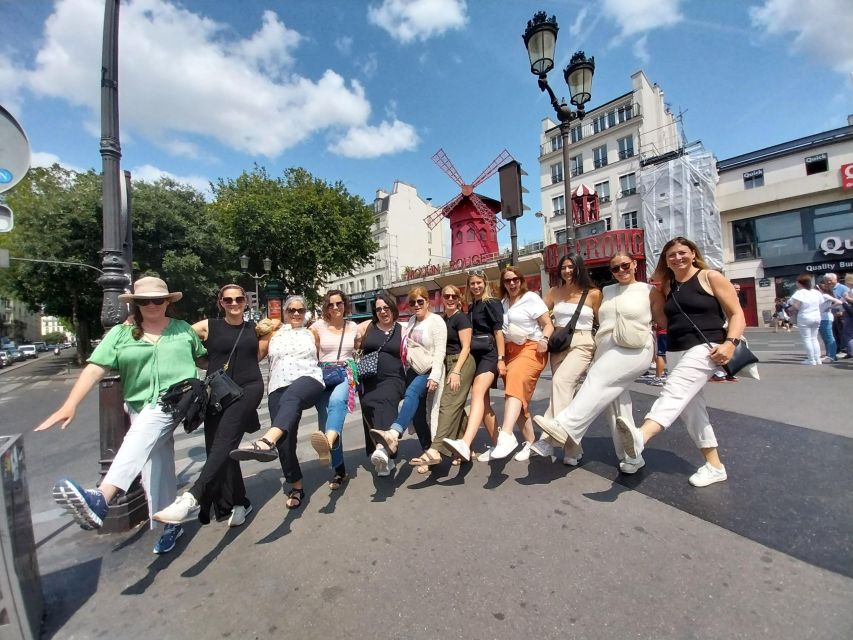
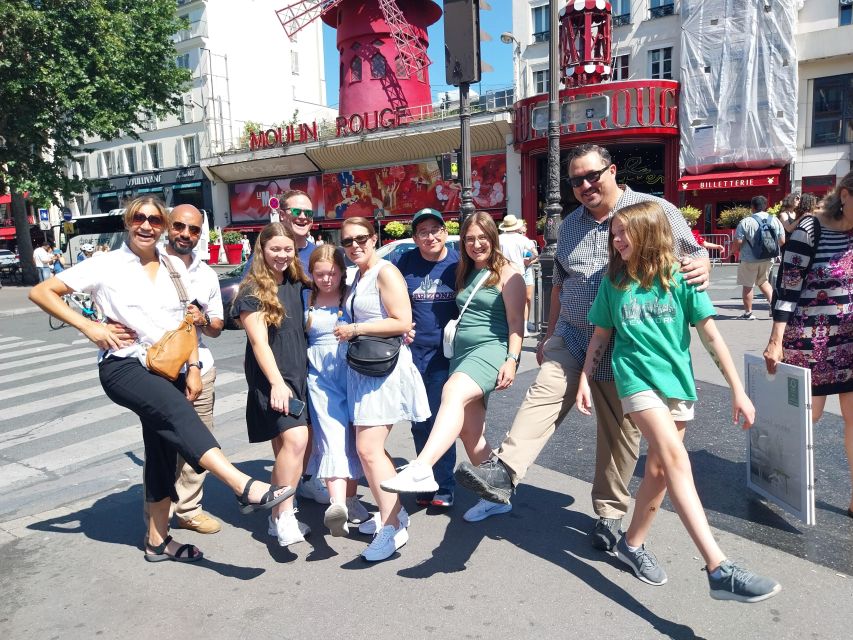
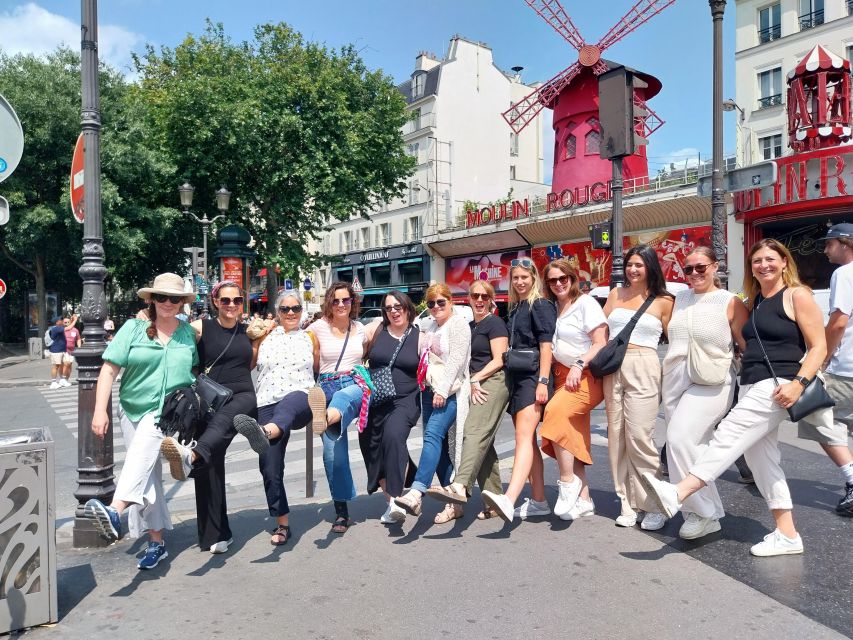
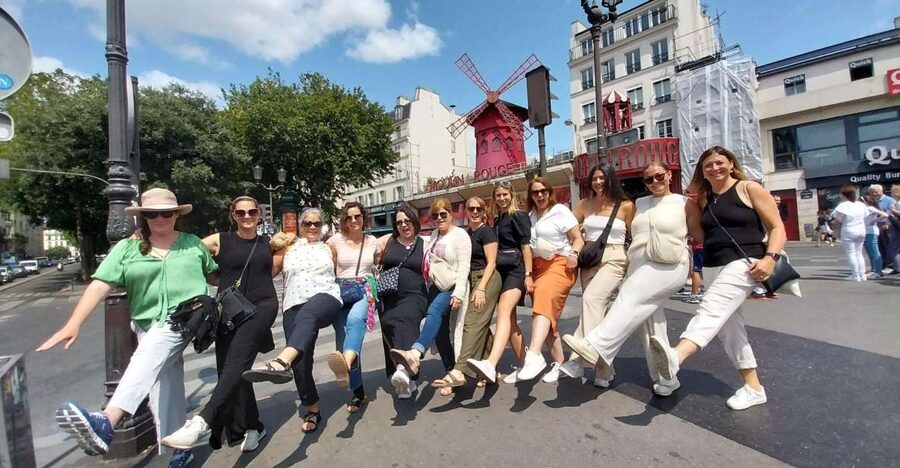
The tour ends at the Moulin Rouge, giving you a clear finish in the Pigalle area. Its famous red windmill provides a natural closing image after a walk through artists’ studios, vineyards, cabarets, and old dance halls.
The ending also shows how Montmartre changes as you move downhill. You begin near the basilica’s religious calm and finish near one of Paris’s best-known entertainment venues. The route links two very different symbols of the district without pretending they represent the same side of Montmartre.
You do not enter the Moulin Rouge on this tour. If you want a show, dinner, or an interior visit, that requires a separate plan and ticket. Still, ending here is useful because you can continue exploring Pigalle afterward or use the nearby metro connections for your next stop.
Timing, Comfort, and Accessibility
The tour is listed as wheelchair accessible, and the meeting point is easy to find near Anvers metro station. At the same time, the activity is a walking tour through a hill district, so anyone with mobility concerns should confirm that the exact route suits their needs before booking.
The weather policy is straightforward: the walk operates rain or shine. Bring suitable clothing, since the route has outdoor stops and the late portion can feel cold after sunset.
I would choose a morning or early afternoon departure if you want the best chance of seeing artists at Place du Tertre and entering Sacré-Coeur without a service delay. A later start can work in summer, especially if you like the idea of finishing near the Moulin Rouge after dark, but the season matters.
The guide is English-speaking, and guides named Johnny and Ewan have received especially warm praise for humor, clear explanations, and insight into French life. The experience seems best suited to people who prefer a personable local host over a large, formal group presentation.
Is the $41 Price Fair?
At $41 per person, the tour is not the cheapest way to walk around Montmartre. Many of the streets and exterior sights cost nothing. The question is what you want your money to provide.
I think the price is fair if you want the neighborhood explained as a connected story. You get about 2.5 hours with a guide, a route from Anvers to the Moulin Rouge, and several stops that are easy to overlook. You also avoid spending your limited Paris time guessing which lane or building matters.
The value is weaker if you plan to visit Sacré-Coeur and Place du Tertre on your own and have no interest in artist biographies, cabaret history, or local anecdotes. Since paid attractions are not included, you should view the fee as payment for guiding and interpretation, not admission.
Free cancellation up to 24 hours before the start and the option to reserve now and pay later make the booking relatively flexible. The activity is valid for one day, with starting times subject to availability.
Who Should Book This Montmartre Walk?
I would recommend it to first-time visitors who want a strong introduction to Montmartre without spending a full day on a formal sightseeing program. It also suits returning visitors who have seen Sacré-Coeur but want to understand the artist and cabaret connections behind the streets.
Art lovers will appreciate Le Bateau-Lavoir, Place du Tertre, and the references to major 20th-century figures. People interested in Paris nightlife will get more from Lapin Agile, Moulin de la Galette, and the final stop at Moulin Rouge.
Families and casual sightseers can enjoy the stories, though the walk requires steady movement and weather tolerance. If your main goal is an interior visit to Sacré-Coeur, check the timing first. If you dislike hills, outdoor walking, or anecdotal history, this may not be the right fit.
Should You Book It?
Book this tour if you want Montmartre to feel like a lived-in neighborhood rather than a collection of famous photo stops. The best parts are the connections between artists, cabarets, old vineyards, unusual statues, and the streets that tie them together.
Choose an earlier departure for daylight, active artists, and a better chance of avoiding Mass-related delays at Sacré-Coeur. Choose a later summer departure if you prefer a cooler walk and an evening finish near the Moulin Rouge.
At $41, it is a sensible buy for a guided introduction led by an engaging English-speaking Paris aficionado. Just remember that the tour gives you stories and access to the route, not entry tickets, and that Montmartre is best approached with comfortable shoes and a little patience for the hill.
FAQ
Where does the Montmartre walking tour begin?
The tour begins at Anvers metro station, by the kiosk near the metro entrance. The guide will be holding a sign.
Where does the tour finish?
The walk finishes at the Moulin Rouge.
How long does the walking tour last?
The tour lasts around 2.5 hours.
Is the tour conducted in English?
Yes. The tour has a live English-speaking guide.
Does the price include entry to Sacré-Coeur or other attractions?
No. This is an outdoor walking tour, and paid attraction tickets are not included.
Can I cancel the tour for a full refund?
Yes. You can cancel up to 24 hours in advance for a full refund. You can also reserve now and pay later.
Just added around Paris
- Paris: The Da Vinci Code Walking Tour with a Local Guide★ 4.3 · 5 reviews
- Paris: Flea Market Insider’s Tour in Extra-Small Group★ 4.6 · 73 reviews
- Paris: Private Fashion Tour (Chanel, Dior, Sex & the City)★ 5.0 · 3 reviews
- Paris: Floral Earrings workshop★ 5.0 · 3 reviews
- Paris: Fashion History Walking Tour in the Heart of Paris★ 4.9 · 22 reviews
- PARIS: Family e-bike longtail renting★ 5.0 · 3 reviews
- Paris: Famous Monuments Cycling Tour★ 4.7 · 20 reviews
- Paris: private city tour with seine river cruise★ 4.8 · 28 reviews
Paris Walking Tours, compared.

Paris Top Sights Half Day Walking Tour with a Fun Guide
Read our review →
Montmartre Hidden Gems and Scenic Highlights Walking Tour
Read our review →
Montmartre Hill French Gourmet Food and Wine Tasting Walking Tour
Read our review →
Paris Île de la Cité and Notre-Dame Walking Tour With Crypt
Read our review →
Montmartre Cheese, Wine & Pastry Guided Walking Tour
Read our review →
Paris in a Day: Louvre or Orsay, Eiffel Tower, City Walk & Cruise
Read our review →
Montmartre Highlights Walking Tour with a Local Guide
Read our review →
Browse the lists this tour appears in