

Reviewed · LOUVRE MUSEUM TOURS
Murders and Mysteries of the Louvre Museum
The Louvre is more interesting when you stop treating it as a checklist of famous objects. This two-hour tour uses the museum’s darker side as a thread, linking medieval ruins, ancient rituals, royal scandals, and violent scenes in art before bringing you to the Mona Lisa.
I like the small group, limited to eight people, and the chance to stay inside the museum after the guided visit. I also like the route’s mix of major sights and overlooked works. The main caution is sound: one guide received praise for expertise but had a soft voice and difficult-to-follow English, a real problem in crowded galleries.
Key points at a glance
- The Louvre’s medieval remains: See the old fortress beneath the modern museum and learn how the building changed from royal stronghold to art museum.
- Dark stories behind famous art: Ancient magic, forgotten rituals, betrayal, scandal, murder, and violent scenes give familiar works a sharper edge.
- Major sights in a short visit: The route includes the Egyptian collection, Venus de Milo, crown jewelry, French masterpieces, and Mona Lisa.
- Small group of up to eight: A compact group makes it easier to stay near the guide and ask questions, though the museum’s crowds can still cause problems.
- Your ticket lasts beyond the tour: After the two-hour visit, you can continue exploring the Louvre independently.
- Security still takes time: Skip-the-line entry applies to the museum entrance, not the security queue.
A darker way to see the Louvre
The Louvre can overwhelm you within minutes. Its galleries stretch across a former palace, and the famous works sit among thousands of objects. Without a plan, you may spend your whole visit navigating corridors and searching for the Mona Lisa.
This tour gives you a clear route and a subject to follow. Instead of presenting the museum as a parade of masterpieces, your guide looks for the unsettling stories attached to its objects and rooms. You hear about magic and old rituals in the ancient collections, violent events shown in paintings, and the scandals that shaped the Louvre itself.
I like this approach because it gives the museum an emotional hook. You are not simply told that a work is important. You are encouraged to ask what happened, what the artist wanted you to feel, and why people once feared or admired the subject.
The tour still covers the expected highlights. That matters if you have only a few hours in Paris and want help finding the museum’s best-known pieces. At the same time, the focus on lesser-seen works keeps the visit from feeling like a basic Mona Lisa march.
More Louvre Museum Tours:
- Paris: Louvre Museum Timed-Entrance Ticket
★ 4.6 · 71,977 reviews - Paris: Louvre Guided Tour with Reserved Access & Boat Cruise
★ 4.3 · 16,353 reviews - Louvre Museum Masterpieces Guided Tour with Access
★ 4.5 · 12,023 reviews
Meeting beneath the glass pyramid
You meet at the Statue of Louis XIV in front of the Louvre Pyramid on Rue de Rivoli. The precise meeting instructions appear on your voucher, so check them before you leave your hotel.
The meeting point is outside the ticketed entrance, underneath the immense glass pyramid, and after the security check. This detail matters. The guide provides skip-the-line access to enter the museum, but you still need to wait for security. Arrive prepared for that part of the process.
Bring a passport or identity card. Large bags and luggage are not permitted, and anything larger than 55 by 35 by 20 centimeters cannot enter. A small day bag is the sensible choice. Do not arrive with airport luggage or an oversized shopping bag and expect to store it inside.
Once the group is together, the guide leads you into the museum. The group size is limited to eight, which is a major advantage in a building where a large crowd can quickly lose sight of one another. Still, keep close. One participant found that two members of a group were separated in the museum crowd, so the small size does not remove the need to pay attention.
The medieval fortress beneath the palace

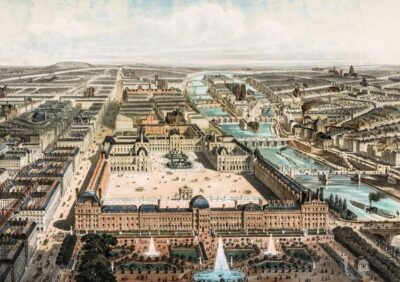
One of the tour’s most distinctive stops is the medieval foundation of the Louvre. Before the building became a royal residence and then a museum, it served as a fortress. The surviving remnants help you picture an earlier Paris, when the Louvre was part of the city’s defense rather than a place for displaying paintings.
This section gives useful context to the rest of the visit. The Louvre is not just a very large art museum housed in an old palace. Its walls carry the marks of changing power. Military defense, royal living, political ambition, and public culture all occupy the same site.
The dark theme fits naturally here. The building’s story includes betrayal, scandal, and murder, and the guide uses those events to make the rooms feel less static. You may find that the architecture becomes easier to remember once you connect it with the people who controlled it and the conflicts that surrounded them.
The medieval remains are also a welcome change from the museum’s celebrated paintings and marble statues. If your main reason for booking is to see objects that an independent visitor can easily miss, this part alone helps justify the guided format.
Ancient Egypt, magic, and old rituals
The Egyptian collection brings a different kind of mystery. The guide discusses magic and long-forgotten rituals while helping you understand the beliefs behind the objects.
You should not expect an academic lecture on every case. The value here is the story-led framework. Egyptian objects can look unfamiliar when seen without context, but references to ritual and magic give you a way to think about what they meant to the people who made or used them.
I like this stop because it broadens the tour beyond European murder scenes. The theme is not simply blood and shock. It also includes fear, spiritual practice, death, and the human desire to control forces that cannot be seen.
The collection is vast, so a two-hour visit can only touch part of it. That is a limitation, not a flaw. A guide can point you toward objects that support the theme, while you can return to the Egyptian galleries later if you choose to remain in the museum after the tour.
More art museums in Paris:
- Paris: Louvre Museum Entry Ticket With Host and River Cruise
★ 4.6 · 9,926 reviews - Les Invalides: Napoleon’s Tomb & Army Museum Entry
★ 4.6 · 9,185 reviews - Louvre Museum – Exclusive Guided Tour (Entry Included)
★ 5.0 · 6,296 reviews - Paris: Louvre Museum Hosted Entry and Mona Lisa Audioguide
★ 4.6 · 5,235 reviews
Venus de Milo and the power of an unfinished story
The Venus de Milo is one of the Louvre’s essential stops. You see the statue as part of a route that asks you to look past its fame and consider why certain works continue to hold attention.
The statue’s missing arms are part of its lasting mystery. The tour’s wider approach encourages you to notice how incomplete or uncertain stories can make an object more compelling, rather than less. Your guide may also help connect the work to the way the Louvre presents ancient art to modern audiences.
This is a useful stop for first-time visitors. You get the familiar sight, but not as an isolated photo opportunity. The guide places it among other objects and stories, giving you more to remember than its name and location.
The drawback is time. Popular works may be surrounded by people, and you may not get a quiet moment to study every detail. The small group helps, but it cannot clear the gallery.
Crown jewelry and the dangers of royal display
The crown jewelry collection adds another form of drama. These objects are beautiful, but they also point to wealth, status, ambition, and the risks of being close to power.
This is where the tour’s focus on betrayal and scandal can become especially effective. Royal jewels are not only decorative pieces. They are symbols of authority and public display, and they connect the museum to the political world outside its galleries.
The collection also gives the itinerary some visual variety. After ancient objects and sculpture, you move into the world of precious materials and royal ceremony. If you enjoy learning how art reflects power, this will likely be one of the more rewarding sections.
Do not expect the tour to explain every item in the jewelry collection. The guide must keep moving to cover the major sections in two hours. You are getting a selected route, not an exhaustive examination.
French masterpieces and violent scenes
French paintings provide the tour with its clearest link between art and dark events. Your guide brings attention to scenes of violence and the stories they depict, showing how artists turned betrayal, death, and conflict into dramatic images.
I find this more useful than simply labeling a painting famous. A guide can point out relationships between artists, artistic techniques, and the choices that make a scene disturbing or memorable. One highly praised guide was particularly effective at explaining those connections and at showing lesser-known works alongside major names.
There is some variation in how strongly the murder theme comes through. One participant felt the guide selected several gruesome paintings but did not always explain the mystery behind them in enough detail. That is worth keeping in mind if you expect a tightly plotted detective-style tour.
The experience seems strongest when you treat the theme as a lens rather than a promise of nonstop crime stories. You will see dark subjects, but you will also learn about artistic choices, cultural beliefs, and the museum’s larger story.
The Mona Lisa with a new question in mind
The Mona Lisa is included, as you would expect. The guide encourages you to consider her enigmatic smile from a different perspective rather than treating the painting as a final box to tick.
That can make a crowded viewing area more worthwhile. You may not have much time or personal space in front of the painting, but a question about the sitter’s expression, the artist’s technique, or the painting’s fame gives your brief look some purpose.
The Mona Lisa is not the tour’s only goal, and that is a strength. A visit focused entirely on reaching her can leave you with little sense of the Louvre as a whole. Here, she arrives after the medieval rooms, ancient collections, sculpture, jewelry, and French art, so she becomes part of a larger story.
The guide also helps with the practical challenge of moving through the museum. At its best, this means you spend less time trying to orient yourself and more time looking at art. Keep your expectations realistic, though. The museum can be loud, and the guide’s voice may be hard to hear in a busy gallery.
What two hours can realistically cover
Two hours is enough for a guided introduction, not enough for the entire Louvre. The route includes a striking number of subjects: medieval remains, Egyptian art, Venus de Milo, crown jewelry, French masterpieces, the Mona Lisa, and the building’s scandals.
That pace suits you if you have limited time or want a strong first visit before exploring on your own. It is less suitable if you prefer to sit with a small number of works for long stretches.
The tour’s greatest practical benefit comes at the end. Your admission allows you to stay in the Louvre and continue independently. You can revisit a favorite gallery, look for a work the guide only mentioned, or simply slow down after the guided route.
Plan your energy accordingly. The Louvre is large, and two hours of walking and standing can be tiring. Wear comfortable shoes and carry only what the museum permits. Since the ticket remains useful after the tour, you should not treat the guide’s finish as the end of your museum visit.
Is $200 a fair price?
At $200 per person, this is an expensive two-hour activity. The price includes museum admission, a live guide, skip-the-line access at the museum entrance, and a group capped at eight people. The ticket also lets you remain inside afterward.
The value depends on what you need. If you are short on time, uneasy about navigating a huge museum, or interested in stories beyond the standard art-history script, the fee may feel reasonable. A guide who can move you efficiently between major sights and lesser-known works can save effort and make the visit more memorable.
If you are comfortable reading museum information and finding the main galleries yourself, the price is harder to defend. You are paying for interpretation, route planning, and a small group, not for exclusive access to the artworks.
The strongest value comes when your guide is both clear and engaging. The experience has received a high overall rating of 4.6 from 28 ratings, with repeated praise for friendly guides, strong explanations, useful photo help, and good coverage of the museum’s major sights. But guide quality can vary. Clear English and a voice that carries matter greatly here, and one poor experience was made worse by difficulty hearing in the museum.
Who should book this Louvre tour?
I would recommend it for a first-time Louvre visitor with limited time, especially if you like art mixed with stories of power, mystery, and darker history. The small group is a good fit for couples, families, or solo visitors who want more personal attention than a large group can provide.
It also suits people who want both structure and freedom. You get a guided route for two hours, then you can remain in the museum and follow your own interests.
You may want to skip it if you prefer a quiet, slow visit or if $200 feels too high for a short introduction. It is also not the best choice if you are carrying large luggage, since bags over the stated size limit are not permitted.
English and French tours are available. Cancellation is free up to 24 hours before the start, and you can reserve now and pay later, which gives you some flexibility when building a Paris schedule. Tips are optional and not included.
Should you book the Murders and Mysteries of the Louvre?
Book this tour if you want the Louvre’s famous works presented with a sharper story and a clear route. The medieval fortress, ancient rituals, royal jewelry, French scenes of violence, and Mona Lisa create a varied two-hour introduction, and staying inside afterward adds useful value.
I would book it most confidently when your time is tight and you want guidance rather than guesswork. Before committing, make sure you are comfortable with the price and ask yourself how important clear spoken English will be in a crowded museum. If those points work for you, this is a lively way to see the Louvre as a place shaped by art, ambition, fear, and power, not just a hall of famous names.
FAQ
Where do I meet the guide?
Meet at the Statue of Louis XIV in front of the Louvre Pyramid, at the Louvre Museum on Rue de Rivoli in Paris. The precise meeting point will be shown on your voucher.
How long does the tour last?
The guided visit lasts two hours. Afterward, your ticket allows you to remain in the Louvre and explore independently.
Is museum admission included?
Yes. Museum entrance fees are included in the tour price.
Does skip-the-line access include security?
No. Skip-the-line access applies to entering the museum, but you still need to wait in the security queue.
What languages are available?
The tour is available in English and French.
How large is the group?
The tour is limited to eight participants.
What should I bring, and what is not allowed?
Bring a passport or identity card. Luggage and large bags are not allowed, and items larger than 55 by 35 by 20 centimeters cannot enter the museum.
Just added around Paris
- Paris: The Da Vinci Code Walking Tour with a Local Guide★ 4.3 · 5 reviews
- Paris: Flea Market Insider’s Tour in Extra-Small Group★ 4.6 · 73 reviews
- Paris: Private Fashion Tour (Chanel, Dior, Sex & the City)★ 5.0 · 3 reviews
- Paris: Floral Earrings workshop★ 5.0 · 3 reviews
- Paris: Fashion History Walking Tour in the Heart of Paris★ 4.9 · 22 reviews
- PARIS: Family e-bike longtail renting★ 5.0 · 3 reviews
- Paris: Famous Monuments Cycling Tour★ 4.7 · 20 reviews
- Paris: private city tour with seine river cruise★ 4.8 · 28 reviews
Louvre Museum Tours, compared.

Louvre Guided Tour with Reserved Access & Boat Cruise
Read our review →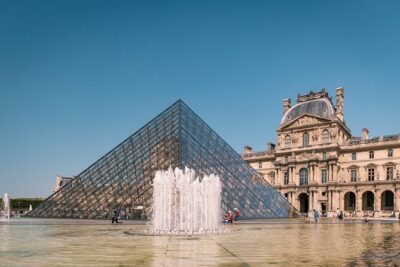
Louvre Museum Masterpieces Guided Tour with Access
Read our review →
Louvre Museum Entry Ticket With Host and River Cruise
Read our review →
Priority Access Louvre with Host -Direct to Mona Lisa
Read our review →
Mona Lisa & Louvre Masterpieces Tour with Reserved Access
Read our review →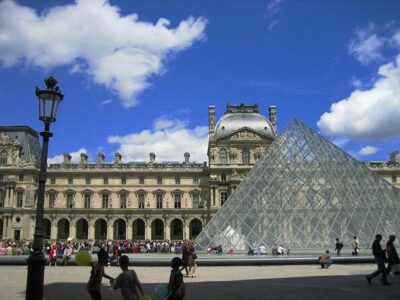
Louvre Museum – Exclusive Guided Tour (Entry Included)
Read our review →
Louvre Reserved Ticket and River Cruise Combo
Read our review →Browse the lists this tour appears in