
Reviewed · LES INVALIDES AND NAPOLEON TOURS
Napoleon III’s Paris city tour
Paris changed almost beyond recognition between 1853 and 1870. Under Napoleon III, George-Eugène Haussmann cut broad boulevards through the medieval city, replaced crowded streets with ordered avenues, and helped create the Paris you know today. This private walking tour follows that change through banks, department stores, churches, and grand public spaces.
I like two things right away. First, the tour treats Haussmann’s work as both an engineering triumph and a cultural disaster, since more than 70 percent of old Paris was destroyed. Second, it connects architecture to daily life: banking, shopping, politics, religion, and modern city living. The main drawback is simple: at $347.28 per group, the value depends heavily on group size, and you do not enter the Opéra Garnier.
The tour has earned a perfect rating from its small set of posted reviews. Boris, the company’s founder, has discussed Haussmann on the Earful Tower podcast, while guide Amy is praised for answering questions about 19th-century Paris, architecture, and art. Expect a focused, serious walk rather than a general introduction to Paris.
Key points to know before booking
- You follow the birth of modern Paris: The route shows how a medieval city became an industrial capital in only 17 years.
- The tour is private for up to six people: Your group gets a professional art historian guide rather than joining a large crowd.
- The route links beauty with destruction: Grand boulevards and elegant buildings are explained alongside the loss of older neighborhoods.
- Department stores are central to the story: Galeries Lafayette and Printemps show how shopping became part of modern urban culture.
- The tour runs about two hours: It begins at Place Vendôme and ends near Saint-Augustin Church at boulevard Malesherbes and boulevard Haussmann.
- Most stops are exterior visits: You see the Opéra Garnier from outside, and food, drinks, and interior admissions are not included.
Why Haussmann’s Paris is worth two hours
Many visitors see Paris as an old city that simply grew over centuries. This tour asks you to look again. Much of the central Paris that feels timeless today was planned, demolished, and rebuilt during the Second Empire.
Napoleon III wanted a capital suited to modern industry, commerce, administration, and political power. Haussmann gave him wide avenues, regular building lines, grand intersections, improved circulation, and a more controlled city. The result was handsome and practical, but it came at a heavy cost.
Old streets and neighborhoods disappeared. Families were displaced. Medieval Paris, with its winding lanes and mixed architectural styles, lost much of its physical character. The tour’s strongest idea is that beauty can be part of a political program. The stone façades, long boulevards, and carefully placed monuments were not accidental decoration. They helped present Paris as a confident modern capital.
I like this subject because it explains more than buildings. It explains modern urban life, from the rise of department-store shopping to the way banks presented themselves as institutions of trust and power. It also gives you a better eye for the city after the tour. Once you understand the logic of Haussmann’s streets, many parts of Paris begin to make more sense.
More Les Invalides and Napoleon Tours:
- Les Invalides: Napoleon’s Tomb & Army Museum Entry
★ 4.6 · 9,185 reviews - Paris: Aura Invalides Immersive Experience Entry Ticket
★ 4.7 · 3,360 reviews - Paris Entrance Ticket to the Aura Invalides Immersive Show
★ 4.0 · 174 reviews
Place Vendôme sets the architectural standard
The tour starts at Place Vendôme, at 2013 Place Vendôme in the 1st arrondissement. This elegant square dates from the end of the 17th century and is one of Paris’s five royal squares.
The stop lasts about 10 minutes, but its purpose is important. Place Vendôme offers the architectural and visual model that later planners used when reshaping Paris. Its ordered façades, formal proportions, and controlled sense of space give you a useful reference point before you encounter the larger boulevards of the Second Empire.
This is also a strong starting place because it presents Paris as an intentional composition rather than a random collection of old buildings. Your guide can use the square to explain how royal planning, classical order, and state power influenced the later rebuilding.
You will not spend long here, so do not expect a full history of every building around the square. The value is in learning to notice alignment, scale, symmetry, and the way architecture directs your attention.
Opéra Garnier becomes the new center
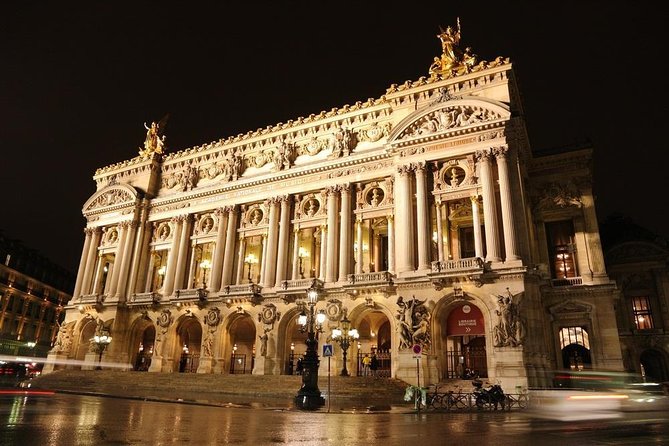
From Place Vendôme, the walk continues to the Palais Garnier, also called the Opéra Garnier. You spend about 20 minutes outside the opera house.
The building is treated as the symbolic center of Haussmann’s new Paris. The tour presents it as a replacement for the old city’s spiritual focus, Notre-Dame de Paris. That does not mean Notre-Dame lost its religious importance. It means the modern capital now had a new public focus tied to entertainment, culture, wealth, and state-sponsored urban design.
The Opéra Garnier is an especially useful stop because it brings several themes together. It was not just a performance hall. It helped define a new district, anchor broad streets, and give the rebuilt city a grand public face.
You do not enter the opera house. This matters if your main reason for booking is its interior, staircase, ceiling, or auditorium. The tour addresses the building from the outside, so you should plan a separate visit if you want to explore inside.
Societe Generale and the architecture of money
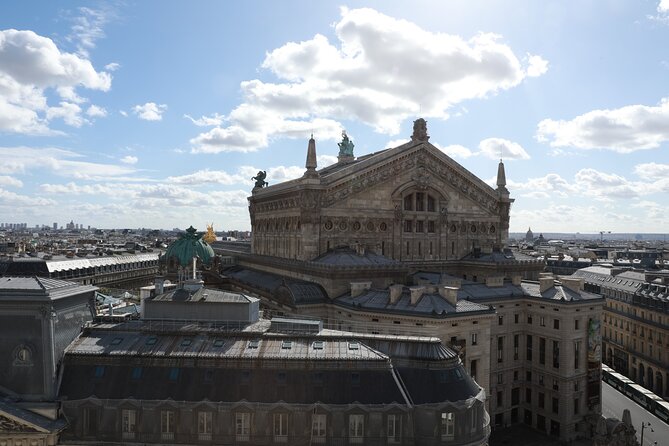
The next stop is Societe Generale, where you spend about 20 minutes. The tour presents the bank as a cathedral of wealth, and that description points to a useful change in 19th-century life.
A bank visit sounds ordinary today. In the new Paris, though, financial institutions used grand architecture to make money feel stable, serious, and almost sacred. Ornate design turned a practical transaction into a public display of confidence and prosperity.
This stop also widens the story beyond government planning. Haussmann’s Paris was built for commerce as well as administration. Banks, offices, shops, and transport routes needed a city that could move people and money more efficiently.
The language used to describe this building is enthusiastic and subjective, so you should expect a strong point of view from the guide. That is part of the appeal for architecture fans, though people who prefer a neutral survey may find the praise a little theatrical.
More city highlights tours in Paris:
- Eiffel Tower Summit Option with Seine River Cruise and City Tour
★ 3.5 · 2,176 reviews - Paris in a Day: Louvre or Orsay, Eiffel Tower, City Walk & Cruise
★ 5.0 · 1,956 reviews - Paris: City Highlights Bike Tour
★ 4.7 · 1,835 reviews - Paris: Eiffel Tower Hosted Tour, Seine Cruise and City Tour
★ 4.0 · 1,507 reviews
Galeries Lafayette shows the rise of consumer culture
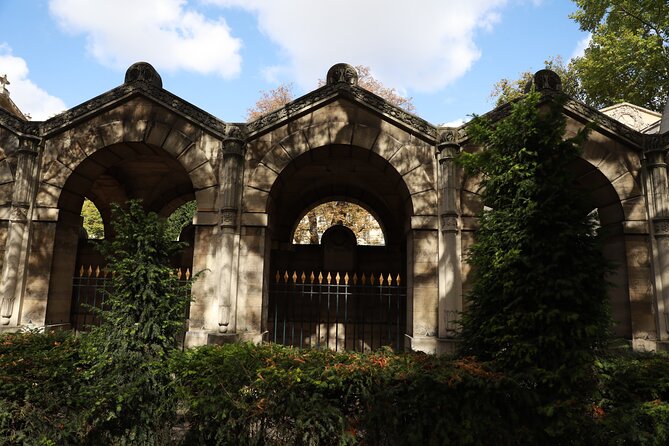
The route then reaches Galeries Lafayette Paris Haussmann, with about 20 minutes devoted to the department store. Here, the subject shifts from finance to shopping.
The department store was one of the great inventions of modern urban life. It gathered many goods under one roof, made browsing part of the experience, and turned shopping into a public activity. The building’s scale and decoration helped make consumption feel special, even ceremonial.
This is one of the tour’s most useful connections. You are not looking only at attractive architecture. You are seeing how Paris helped create habits that still shape city life: window-shopping, brand culture, department-store spectacle, and shopping as leisure.
The stop also makes the tour suitable for people who do not normally choose architecture walks. If you are more interested in social change, fashion, retail, or the origins of consumer culture, Galeries Lafayette gives the subject a clear and familiar entry point.
Again, the information provided describes an exterior-focused experience, not a shopping visit or a guided tour of the store’s interior. You may have time to look around on your own, but the two-hour schedule is built around the larger city story.
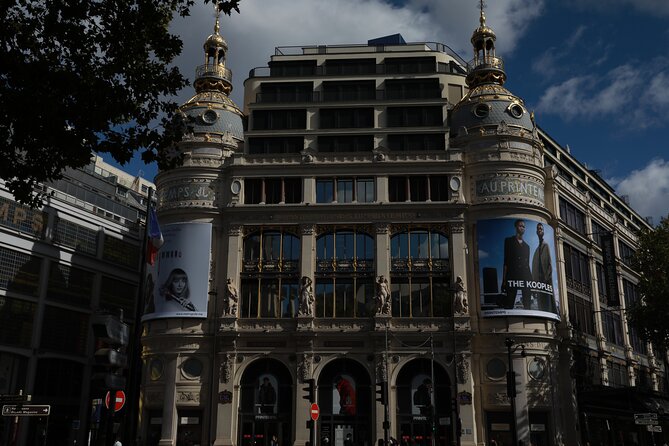
Printemps adds a second version of luxury
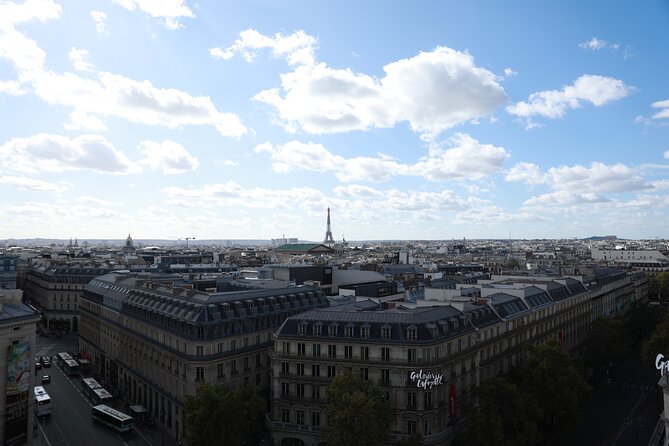
Printemps follows Galeries Lafayette, with roughly 10 minutes at the stop. The two stores are close enough in theme to invite comparison.
The tour presents Printemps as another example of luxury, spectacle, and commercial ambition. Seeing both stores helps you understand that Haussmann’s Paris was not built around a single grand monument. Its identity also came from a network of commercial buildings that made shopping part of the capital’s public life.
Ten minutes is enough for a clear explanation, but not for a long architectural study. If department stores are a major interest, you may wish you had more time here. The advantage is pace: the route keeps moving and avoids turning one subject into an extended retail history.
Boulevard Haussmann explains the new street plan
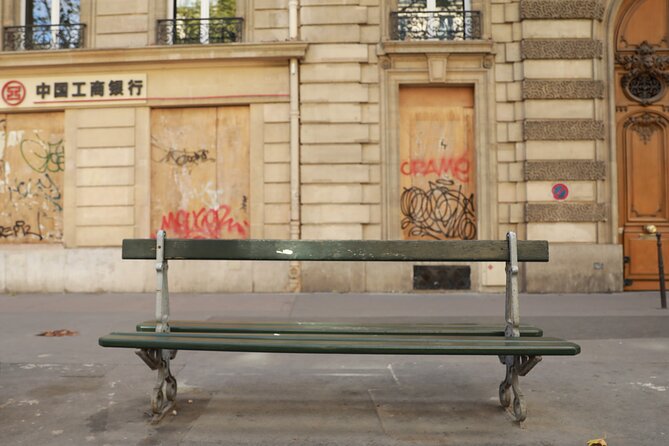
At Havre-Caumartin, the guide gives about 15 minutes to boulevard Haussmann and the boulevard as a type of street.
This is where the pieces begin to fit together. The boulevard was more than a wide road. It was a planning tool that changed how people moved, how buildings faced the street, and how the city could be seen and managed.
The new boulevards offered a regular rhythm of façades and a larger sense of space than the old medieval streets. They made room for traffic, commerce, public display, and military movement. They also made it harder for neighborhoods to remain isolated from the rest of the city.
I find this kind of explanation more useful than memorizing dates. Once you understand what the boulevard was meant to do, you can read the street in front of you. Notice its width, the line of its buildings, and the relationship between shops, offices, monuments, and movement.
Chapelle Expiatoire brings politics into the walk
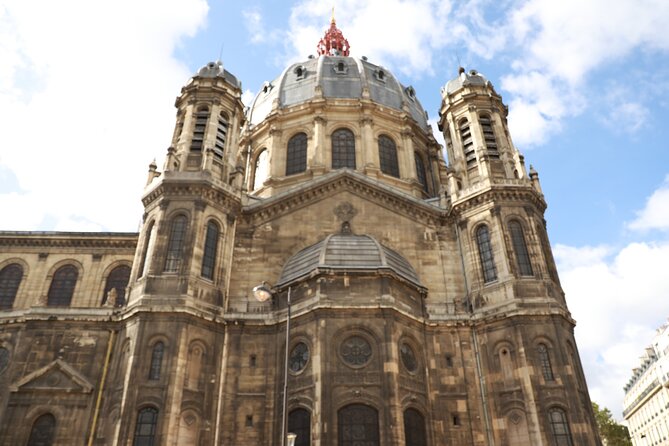
The Chapelle Expiatoire is the next stop, lasting about 10 minutes. Here the subject turns to the political divisions that continued to trouble France in the second half of the 19th century.
The chapel is tied to attempts to reconcile monarchist aristocrats and republican members of the bourgeoisie. That conflict gives the tour a needed political edge. Haussmann’s Paris was not only a project of streets and buildings. It was also an argument about what France should become.
This stop may feel quieter and less immediately famous than the opera house or department stores, but it helps prevent the tour from becoming a celebration of grand façades alone. The rebuilding took place in a country still dealing with competing ideas of monarchy, republic, class, and national identity.
The tour does not present modernization as a clean, shared project in which everyone benefited equally. That balance is one of its strongest features.
Saint-Augustin Church closes the story
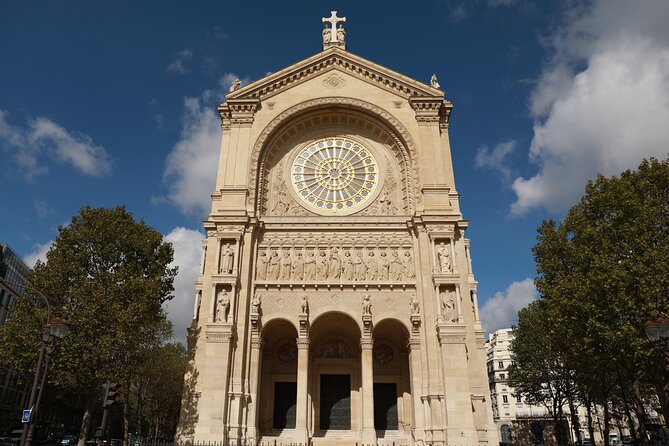
The final stop is Saint-Augustin Church, with about 10 minutes of discussion. The tour ends near the junction of boulevard Malesherbes and boulevard Haussmann.
Saint-Augustin represents a meeting between religious tradition and industrial technology. It was the first church in Paris to make extensive use of steel, linking modern engineering with the older role of the church in public life.
That combination makes the church a fitting ending. At the beginning, Place Vendôme shows the formal ideals that influenced the new Paris. At the end, Saint-Augustin shows those ideals being remade with modern materials and industrial methods.
The ending is also practical. You finish in the 8th arrondissement, rather than returning to the starting point. You can continue along boulevard Haussmann, use nearby public transport, or treat the tour as a bridge to more sightseeing in the area.
What the private format adds
This is a private tour for your group alone, with a maximum of six people. That matters most if you want to ask questions or connect the tour to your own interests.
The material covers architecture, art, politics, economics, and city planning. A private guide can spend more time on the subjects that interest you most, though the available information does not promise a custom route or a specific guide for every booking.
The guides associated with this experience include Boris and Amy. Boris has appeared on the Earful Tower podcast to discuss Haussmann and other Paris subjects. Amy is praised for her ability to handle questions about 19th-century Paris, art, and architecture. Guide assignment may vary, so you should not assume one particular person will lead your date.
The private format also changes the price calculation. At $347.28 for up to six people, the cost works out to about $58 per person if you fill the group. For two people, it is roughly $174 each. For one person, it is a costly two-hour experience, even with a specialist guide.
Timing, walking, and practical limits
The tour lasts about two hours and uses a mobile ticket. It begins at Place Vendôme and ends at Saint-Augustin Church, with the final point near boulevard Malesherbes and boulevard Haussmann.
The route includes several stops across central Paris, so comfortable walking shoes make sense. Exact walking distances and terrain are not provided, but you should expect to move between outdoor locations and spend time standing while the guide explains each site.
Food and drinks are not included. Since the walk is only about two hours, this is not a serious problem, but you may want to eat before or after the experience.
The tour is near public transportation, service animals are allowed, and most people can participate. The experience has free cancellation up to 24 hours before the scheduled start. Booking well ahead may be wise: it is booked, on average, 72 days in advance.
Who should book Napoleon III’s Paris tour
I would choose this tour if you want to understand why central Paris looks the way it does. It suits architecture fans, urban-planning enthusiasts, history students, and anyone curious about how modern consumer life began.
It is also a good choice if you have already seen the main monuments and want a more focused way to read the city. The tour gives familiar places, especially the Opéra Garnier, Galeries Lafayette, and boulevard Haussmann, a wider political and social meaning.
I would hesitate if you want interior access to the Opéra Garnier, a general overview of Paris, or a relaxed stroll with little lecture time. The route is tightly focused, and its strongest rewards come from listening closely.
Should you book it?
Book this tour if you want the story behind Haussmann’s Paris, not just the postcard view. The private format, art historian guide, and clear route from royal square to industrial church make the experience especially useful for a small group that can share the cost.
Skip it if you mainly want to enter famous buildings or keep the day unstructured. For the right audience, though, this is a sharp two-hour explanation of how Paris became modern, beautiful, commercial, and deeply changed.
FAQ
How long does Napoleon III’s Paris city tour last?
The tour lasts approximately two hours.
Where does the tour begin?
It begins at 2013 Place Vendôme, 75001 Paris, France.
Where does the tour end?
It ends at Saint-Augustin Church, near the junction of boulevard Malesherbes and boulevard Haussmann.
Is the tour private?
Yes. Only your group participates, with up to six people included in the group price.
Is the Opéra Garnier visited from inside?
No. The Opéra Garnier is discussed from the outside. Interior access is not included in this tour.
Who leads the tour?
The experience includes a professional art historian guide. Guides associated with the company include Boris and Amy, but a specific guide is not guaranteed in the provided information.
What is included in the price?
The price includes the private tour and professional art historian guide. Food and drinks are not included.
Can I cancel for a full refund?
Yes, if you cancel at least 24 hours before the experience start time. Cancellations or changes made less than 24 hours before the start are not refunded.
Just added around Paris
- Private Paris Marche d’Aligre Walking Tour with Tastings★ 5.0 · 8 reviews
- Private Louvre Museum Tour for Kids & Families with Alberto or his team in Paris★ 5.0 · 41 reviews
- Private Highlights of Paris Tuk-Tuk Experience★ 5.0 · 26 reviews
- Paris Latin Quarter Walking Tour: History & Culture – Small Group★ 5.0 · 14 reviews
- Private Highlights of Paris Bike Tour★ 4.5 · 15 reviews
- Paris Musee d’Orsay PRIVATE TOUR with a Local Private Guide★ 5.0 · 41 reviews
- Pere Lachaise Cemetery Paris – Exclusive Guided Walking Tour★ 5.0 · 72 reviews
- Paris Revolutionary Walking Tour: Iconic French Sights & Stories★ 5.0 · 11 reviews
Les Invalides and Napoleon Tours, compared.

Les Invalides: Napoleon’s Tomb & Army Museum Entry
Read our review →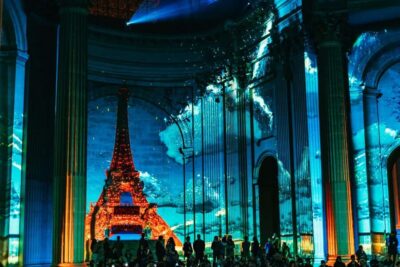
Aura Invalides Immersive Experience Entry Ticket
Read our review →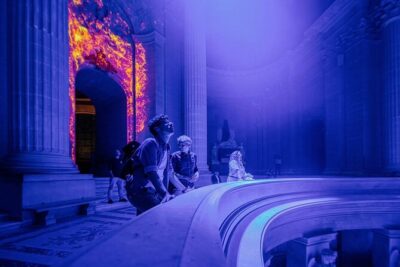
Paris Entrance Ticket to the Aura Invalides Immersive Show
Read our review →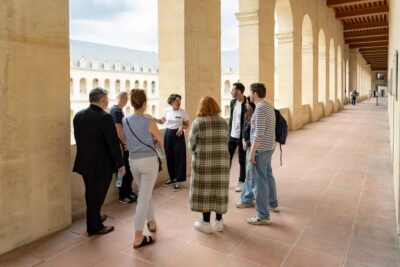
Napoleon’s Tomb & Invalides Small Group Guided Tour
Read our review →
Napoleon’s Tomb and the Invalides Small-Group Guided Tour
Read our review →
Napoleon Bonaparte: Life & Legacy Guided Tour + Visit to his Tomb
Read our review →
Invalides Dome – Skip-the-Line Guided Museum Tour
Read our review →
Napoleon Walking Tour with Les Invalides & Tomb Entry
Read our review →Browse the lists this tour appears in