
Reviewed · LES INVALIDES AND NAPOLEON TOURS
Napoleon’s Paris: A Self-Guided Audio Tour
Napoleon’s Paris unfolds as a walk through grand avenues, royal gardens, military monuments, and one very tempting pastry stop. You begin at the Arc de Triomphe du Carrousel and finish beneath the golden dome of Les Invalides, where Napoleon’s tomb brings the story to a grand close.
I like the freedom to start whenever you want and the GPS guidance that keeps the route clear. I also like the pause button. You can stop for water, a snack, or a restroom without losing your place, a useful feature if you walk at a slower pace.
The main drawback is simple: this is an outdoor walking route, so hot weather can make the 90-minute to two-hour outing tiring. You also need your own smartphone and headphones, and any food, transport, or paid attraction entry comes at your expense.
Key points to know before you go
- Start at the Arc de Triomphe du Carrousel: The route opens beside the Louvre and leads into the Tuileries.
- Follow Napoleon’s city through its grand streets: You’ll connect the Tuileries, Rue de Rivoli, Place Vendôme, Concorde, and Les Invalides.
- Use the audio at your own pace: Pause, replay, or stop for breaks whenever you like.
- Expect a pastry stop, not a food tour: A famous pâtisserie is part of the route, but food and drink are not included.
- Finish at Napoleon’s tomb: The final stop is inside the Invalides complex, beneath its famous gilded dome.
- Download the route before walking: Offline audio, maps, and geodata are included, which helps if your connection drops.
A self-guided route through Napoleon’s grand Paris
This tour is less about one isolated monument and more about how Napoleon’s Paris fits together. You walk from the Louvre area across formal gardens and planned streets, then pass grand squares and military buildings before reaching the emperor’s final resting place.
That shape gives the tour a clear story. Napoleon wanted order, ceremony, and public reminders of French power. The route shows those ideas in stone, bronze, gardens, columns, and long straight streets.
The audio tour takes about 90 minutes to two hours. Your actual time depends on how often you pause, take photographs, stop for refreshments, or enter places along the way. Since you are not tied to a group, you can make it a brisk historical walk or a slower half-day outing.
More Les Invalides and Napoleon Tours:
- Les Invalides: Napoleon’s Tomb & Army Museum Entry
★ 4.6 · 9,185 reviews - Paris: Aura Invalides Immersive Experience Entry Ticket
★ 4.7 · 3,360 reviews - Paris Entrance Ticket to the Aura Invalides Immersive Show
★ 4.0 · 174 reviews
Starting beneath the Arc de Triomphe du Carrousel
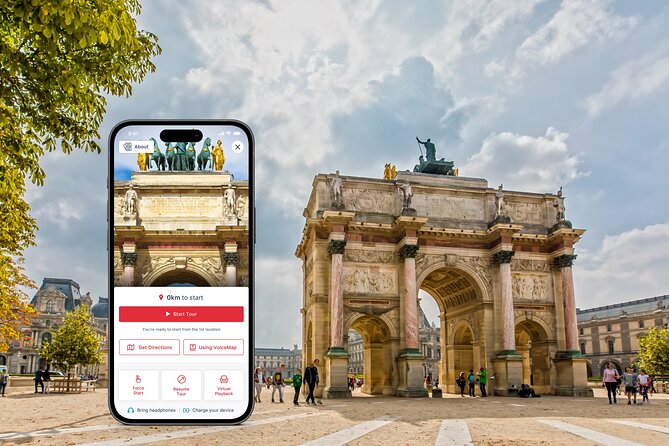
The meeting point is the Arc de Triomphe du Carrousel, at Place du Carrousel beside the Louvre. This is a more compact and decorative cousin to the famous Arc de Triomphe farther west on the Champs-Élysées.
Look up at the bronze quadriga, the horse-drawn chariot crowning the arch. Bas-reliefs celebrate Napoleon’s military victories, so the tour begins with his preferred language: victory presented as public art.
The arch also frames the entrance to the Tuileries Garden. That view matters because it turns the first few minutes into a lesson in urban design. You are not simply walking toward a park. You are moving through a carefully arranged imperial setting, with the Louvre, the arch, the garden, and the long axis of central Paris working together.
This is a good starting point for a phone-guided walk because the location is easy to identify. Still, give yourself a moment to get oriented before pressing play. The route depends on your phone’s location, and a few minutes spent checking that you are at the correct arch can prevent confusion later.
The Tuileries Garden and the shape of royal power
The Tuileries Garden brings a change of pace. Its tree-lined paths, classical statues, fountains, and carefully trimmed spaces offer room to walk without fighting city traffic at every step.
The garden began with royal connections, but it later became part of the public face of Paris. That contrast is useful to keep in mind. Napoleon’s Paris was not created from scratch. It reused older royal spaces and gave them new political meaning.
You can listen while walking the main paths, then pause near a fountain or statue if you want to study the surroundings. This flexibility is one of the tour’s strongest points. A live guide would need to keep the group moving. Here, you control the rhythm.
On a hot day, the garden can still feel demanding. There are shaded paths, but the route remains outdoors, and the broad formal spaces can expose you to the sun. Carry water, especially if you plan to linger.
Rue de Rivoli and Napoleon’s orderly city
From the garden, the route leads toward Rue de Rivoli, one of the defining streets of central Paris. Arcaded buildings, repeated architectural lines, shops, and wide sidewalks show the kind of regular city planning associated with Napoleon’s era.
The arcades are not just decorative. They make the street feel like a connected public passage, where pedestrians can walk beside shops and buildings without being fully exposed to traffic or weather. The long, consistent facades also give the street a disciplined look that fits the tour’s theme.
This is a section where audio guidance earns its keep. On your own, you might notice the arcades and admire the symmetry, but the narration helps explain why this street matters in the larger story of Paris.
Rue de Rivoli is also a working city street, not a quiet museum corridor. You will encounter shops, traffic, and ordinary city movement. That is part of its appeal, but it means you should keep your attention on the pavement and your surroundings rather than stare at your phone while walking.
More self-guided and audio tours in Paris:
- From Paris: Giverny Day Trip with Audio Guide or Live Guide
★ 4.3 · 2,372 reviews - Paris: Catacombs Entry & Seine River Cruise with Audio Guide
★ 4.4 · 1,150 reviews - From Paris: Versailles Palace Self Guided & Gardens tickets
★ 4.4 · 1,100 reviews - Paris: Catacombs, Audio Guide, and River Cruise Option
★ 4.6 · 966 reviews
A madeleine break along the route
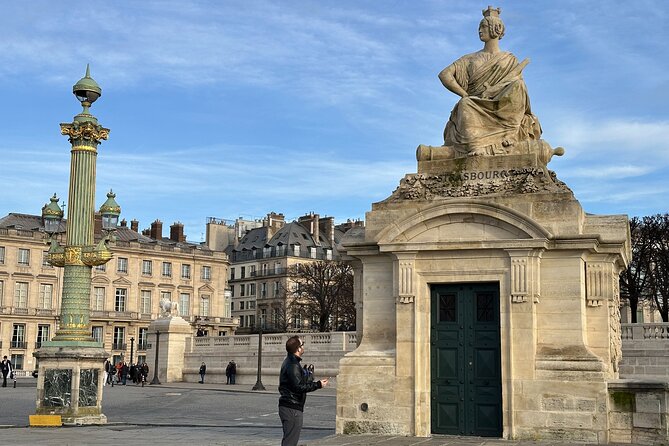
One stop brings you to a pâtisserie known for buttery, golden madeleines. The pastry is a small detail, but it gives the tour a welcome human touch.
Napoleon’s Paris can become a parade of arches, columns, armies, and official buildings. A madeleine reminds you that French cultural identity is also built through everyday pleasures, including the habit of stopping for something sweet.
The food is not included, so plan to pay for anything you buy. You can pause the audio, make your purchase, and continue when ready. This is exactly the sort of break that works well on a self-guided route.
Do not treat this as a full food tour. The pâtisserie is one stop within a historical walk. If you are hungry, you may need to make your own plans beyond this brief culinary pause.
Rue Saint-Honoré and the polished side of Paris
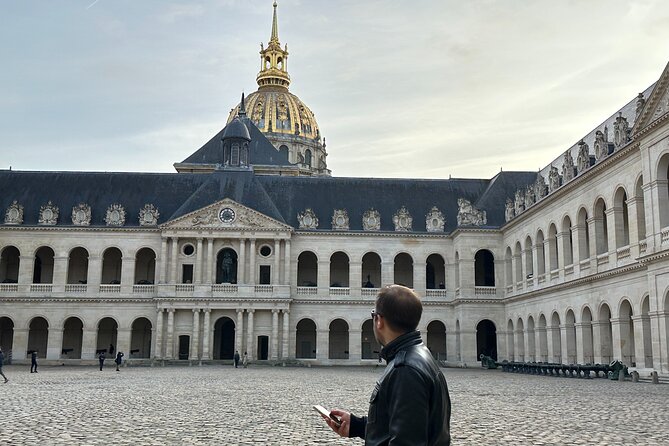
The route continues along a famous street lined with luxury shops and historic buildings. This part of Paris presents a more polished, commercial side of the city, with modern elegance placed against older facades.
The street helps show how Napoleon’s grand planning still supports present-day Paris. Formal avenues and historic buildings are not frozen in the past. They remain part of a working city, filled with shops and pedestrians.
You may find this section less focused on monumental sightseeing than the opening and closing stops. That is not a weakness, but it does change the mood. The value lies in seeing how imperial streets connect with the modern city around them.
La Madeleine and the marks of revolution
You pass a baroque-style church whose facade still carries bullet holes connected with the French Revolution. The building’s calm religious setting sits against evidence of violence on its exterior.
That contrast gives the audio story a sharper edge. Napoleon’s public image relied on ceremony and order, but Paris had already passed through upheaval, conflict, and political change. The marks on the church help make that past visible.
Take time to look closely at the facade. This is one of the route’s more rewarding moments because the history is not only in the narration. It is on the building itself.
The tour does not include entry fees for attractions, so if you decide to go inside any site along the way, that cost is separate. The route can still be completed from the outside if you want to keep moving.
Rue de Castiglione and stories of intrigue
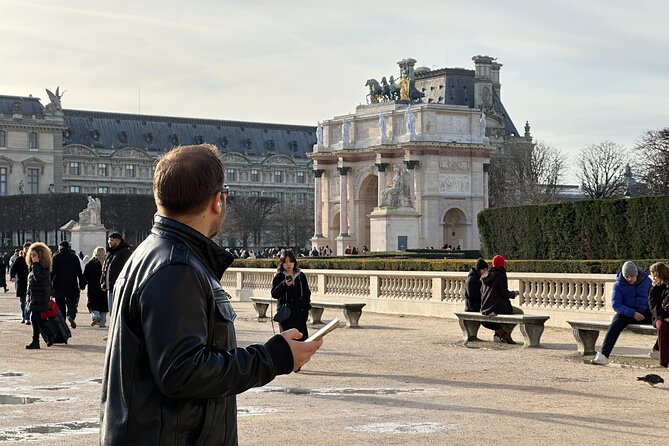
Rue de Castiglione brings you through a handsome stretch of Neoclassical arcades associated with Napoleon’s city planning. It is a compact, elegant section of the walk, with strong lines and a more controlled visual feel than many Paris streets.
The audio adds stories of assassination plots and political intrigue tied to the area. These details keep the walk from becoming a simple architecture lesson. They connect the buildings with the risks surrounding power.
This is a good place to slow down. Look through the arcades, notice the repeated columns, and listen before moving on. Because the route is private to your own group, you do not have to hurry to stay with anyone else.
Place Vendôme and the bronze column
At Place Vendôme, Napoleon’s military image returns in a very direct form. The central bronze column is wrapped in spiraling reliefs made from melted enemy cannons, a striking piece of political symbolism.
The square itself is more controlled and intimate than a large open plaza. Its surrounding buildings form a regular frame around the column, making it easy to see how architecture can reinforce authority.
The column is worth studying from several angles. The reliefs spiral upward, so details become harder to read as they rise. The audio helps explain the meaning behind the monument, while your eyes take in the scale and surface work.
You should also remember that Napoleon’s image changed over time. Public monuments were part of his effort to shape how victories were remembered. The tour is strongest when it lets you see both the craftsmanship and the message.
Place de la Concorde and France’s political turning points
The route next reaches Place de la Concorde, one of Paris’s largest and most important squares. The Luxor Obelisk gives the space its most recognizable visual marker, while the broad open area offers wide views across the city.
This is a place where the tour’s political story widens. The square connects royal grandeur with the violence and turmoil of the Revolution. Its size can make those events feel abstract, so the audio narration is useful in giving the space a human and political frame.
Crossing the square requires attention. It is open and exposed, and the sun can be strong. This is another reason to avoid the hottest part of the day if possible, though the tour has no fixed start time and lets you choose a cooler hour.
The National Assembly and the machinery of modern France
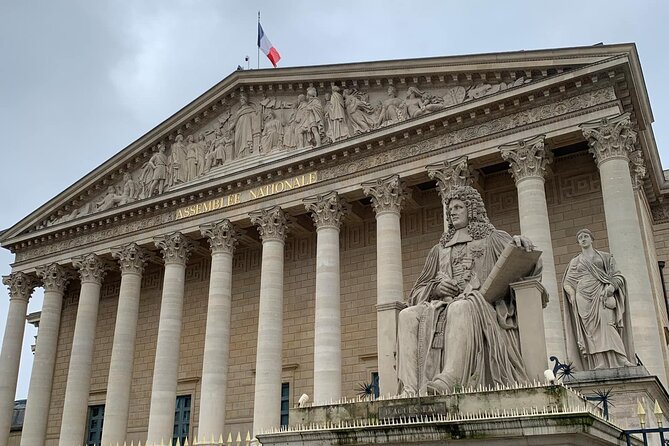
You pass the grand building that houses the French National Assembly. Its Neoclassical columns reflect the taste for formal, classical design that shaped much of post-Revolutionary Paris.
This stop adds an important layer to the route. Napoleon is the central figure, but the walk is also about the institutions and visual language of France after the Revolution. The National Assembly represents government in a way the military monuments do not.
You will mainly experience the building from outside. The point is its setting, architecture, and political role, not an interior visit included in the tour. If you enjoy understanding how monuments fit into national life, this section will add more than another photo stop.
Les Invalides, from military hospital to national monument
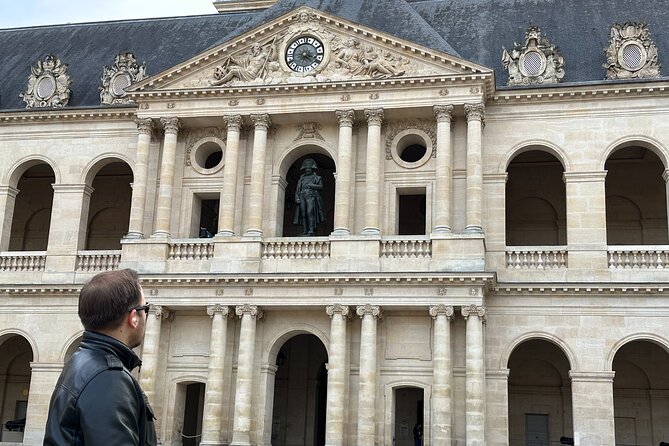
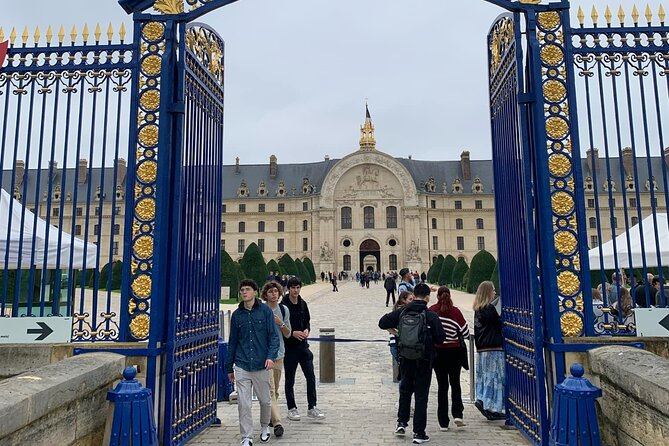
The final stretch leads to Les Invalides, a large complex with courtyards, a gilded dome, and a long connection to French military life. It was originally built as a hospital for wounded soldiers, which makes its purpose different from the triumphal arches and victory columns earlier in the walk.
The complex joins practical care with national ceremony. Its courtyards and grand architecture show how France honored its army while also caring for those damaged by war.
This is the longest-feeling part of the route for some people because you are nearing the end after a steady city walk. The reward is that the surroundings become more imposing as you approach the dome.
The tour ends at Napoleon’s Tomb, so allow enough time to reach the final site before any personal plans. The listed opening hours cover every day around the clock for the tour itself, but that does not mean every interior attraction has unlimited entry. If you want to visit paid sites, check their separate opening rules.
Napoleon’s tomb beneath the golden dome
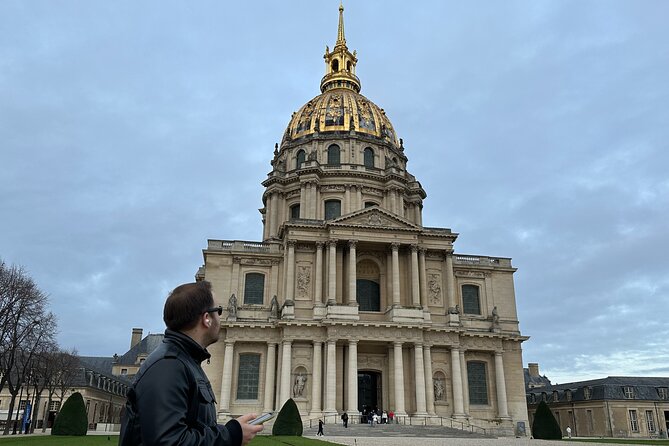
The final stop is Napoleon’s tomb, beneath the gilded dome of Les Invalides. His marble sarcophagus is surrounded by sculptures, creating a deliberately grand setting for a figure whose public image depended so heavily on scale and ceremony.
This ending works because the route has shown you the symbols before showing you the final memorial. You have seen victories in bronze, power in stone, order in streets, and political change in public squares. At the tomb, those ideas gather in one place.
The memorial is not a quiet, modest grave. It is a carefully designed statement about legacy. You can admire the art while also asking what the monument wants you to believe about Napoleon.
Price, technology, and practical value
At $11.99 per person, the tour is inexpensive for a Paris walk lasting up to two hours. The real value depends on how you use it. If you listen once while rushing from stop to stop, it is a modest audio guide. If you pause, replay sections, and use the lifetime access on another visit, the price becomes easier to justify.
Lifetime access is especially useful if your schedule changes. You can start before the booking date or use the tour later, and the route does not force you into a specific departure time.
The app works on Android and iOS and includes offline audio, maps, and geodata. Downloading the material before you begin is wise. You need a smartphone and headphones, and neither is supplied.
Transportation and personal costs are also separate. The route is designed around walking from the Arc de Triomphe du Carrousel to Napoleon’s tomb, so wear comfortable shoes and leave room for breaks.
Who should book this Paris audio walk
I would choose this tour if you like history but do not want to join a fixed group. It suits solo visitors, couples, families with older children, and anyone who prefers to set a slower pace.
It is also a good match if Napoleon is only one part of your interest. The walk includes royal gardens, revolutionary landmarks, Neoclassical architecture, shopping streets, pastry culture, and French government buildings.
You may want something else if you prefer a live guide who can answer questions, adjust the route, or provide company throughout the walk. The audio format gives you independence, but it cannot respond to your mood or interests in the moment.
Free cancellation is available until 24 hours before the start time. Cancellations made within 24 hours are not refunded, and late changes are not accepted.
Should you book Napoleon’s Paris?
Book it if you want a low-cost, flexible way to connect central Paris with Napoleon’s monuments and final resting place. The GPS guidance, offline maps, pause function, and lifetime access make it practical, especially for anyone who walks at a slower pace.
Skip it if you dislike listening through headphones or if hot weather will make a long outdoor walk unpleasant. For the best experience, start with a full phone battery, bring water, wear comfortable shoes, and give yourself more than the minimum 90 minutes so the city does not become a race.
FAQ
How long does Napoleon’s Paris take?
The tour takes approximately one hour and 30 minutes to two hours, depending on your walking speed and how often you stop.
Where does the tour start?
It starts at the Arc de Triomphe du Carrousel at Place du Carrousel, 75001 Paris.
Where does the tour end?
It ends at Napoleon’s Tomb at Les Invalides, 129 Rue de Grenelle, 75007 Paris.
Is the tour guided by a person?
No. It is a self-guided audio tour using a smartphone app with GPS directions.
What is included with the tour?
You receive lifetime access in English, GPS guidance, directions to the start, an Android and iOS app, and offline access to audio, maps, and geodata.
Do I need to bring anything?
You need your own smartphone and headphones. Food, drinks, transportation, personal expenses, and attraction costs are not included.
Just added around Paris
- Private Paris Marche d’Aligre Walking Tour with Tastings★ 5.0 · 8 reviews
- Private Louvre Museum Tour for Kids & Families with Alberto or his team in Paris★ 5.0 · 41 reviews
- Private Highlights of Paris Tuk-Tuk Experience★ 5.0 · 26 reviews
- Paris Latin Quarter Walking Tour: History & Culture – Small Group★ 5.0 · 14 reviews
- Private Highlights of Paris Bike Tour★ 4.5 · 15 reviews
- Paris Musee d’Orsay PRIVATE TOUR with a Local Private Guide★ 5.0 · 41 reviews
- Paris Revolutionary Walking Tour: Iconic French Sights & Stories★ 5.0 · 11 reviews
- Private Half Day Historic Tour★ 5.0 · 58 reviews
Les Invalides and Napoleon Tours, compared.

Les Invalides: Napoleon’s Tomb & Army Museum Entry
Read our review →
Aura Invalides Immersive Experience Entry Ticket
Read our review →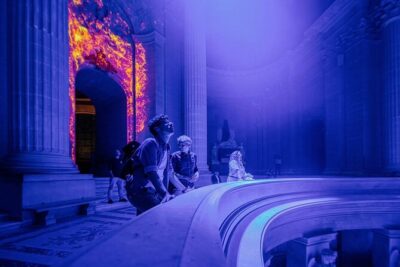
Paris Entrance Ticket to the Aura Invalides Immersive Show
Read our review →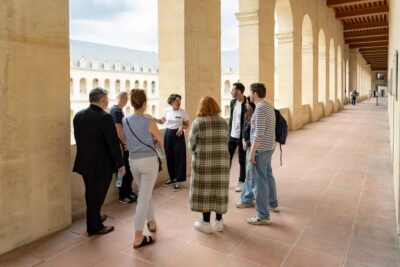
Napoleon’s Tomb & Invalides Small Group Guided Tour
Read our review →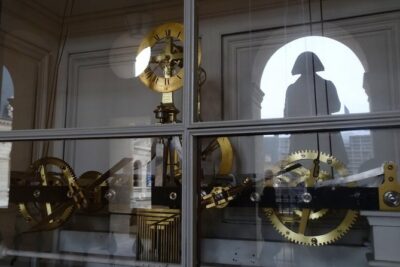
Napoleon’s Tomb and the Invalides Small-Group Guided Tour
Read our review →
Napoleon Bonaparte: Life & Legacy Guided Tour + Visit to his Tomb
Read our review →
Invalides Dome – Skip-the-Line Guided Museum Tour
Read our review →
Napoleon Walking Tour with Les Invalides & Tomb Entry
Read our review →Browse the lists this tour appears in