
Reviewed · MONTMARTRE AND SACRé-CœUR TOURS
Paris: Charms of Montmartre Guided Walking Tour
Montmartre’s best stories unfold on foot, and this tour links them in a tidy two-hour climb from the Moulin Rouge to Sacré Coeur. You’ll move from cabaret scandal to Picasso’s old studio, Renoir’s drinking spots, Van Gogh’s neighborhood, and the little streets that give the hill its village feel.
I like the strong art connection and the finish at Sacré Coeur, where the city opens below you. I also like the tour’s small, human details, such as the last vineyard in Paris, an original windmill, and the Wall of Love at Place des Abbesses. The drawback is simple: Montmartre is a hill, so stairs and slopes can make this a tiring walk, especially in wet weather.
Key points at a glance
- Start at the Moulin Rouge: Hear the cabaret’s saucy past before leaving the busy boulevard behind.
- Walk through artist country: See places tied to Picasso, Van Gogh, Renoir, Toulouse-Lautrec, and other major artists.
- Find the village details: Look for the Maison Rose, a working vineyard, an original windmill, and leafy squares.
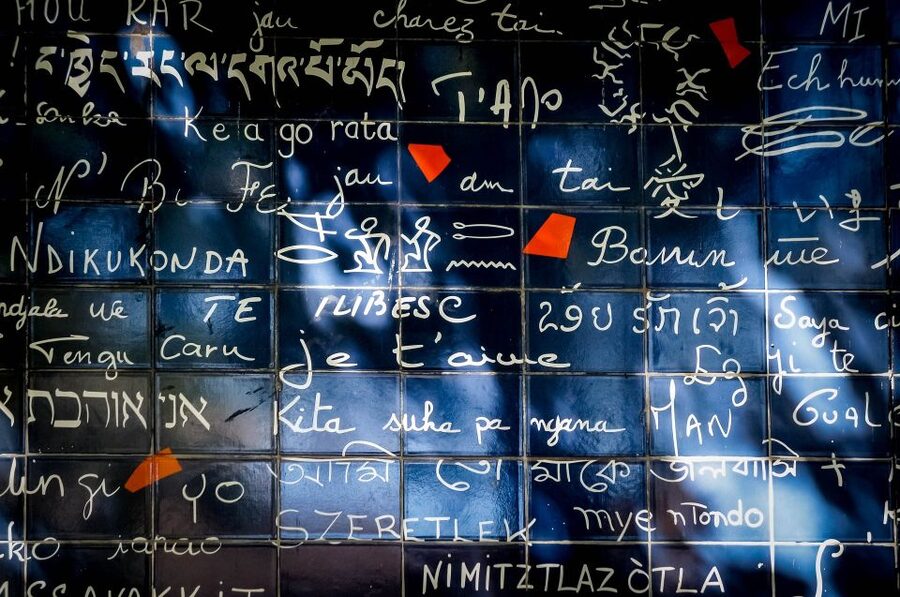
- Pause at Place des Abbesses: Visit the Wall of Love, a playful monument to romance in many languages.
- Shop for original art: The famous artists’ square offers paintings and drawings made on site.
- Finish at Sacré Coeur: Take in one of Paris’s finest hilltop views after the climb.
Starting beneath the Moulin Rouge lights
The meeting point is in front of the Moulin Rouge, with the guide wearing a badge. If city works block the usual spot, the group may meet in the square facing the cabaret instead. That small detail matters in a busy part of Paris, so arrive with enough time to locate the guide.
The tour begins with the Moulin Rouge’s past. This is not just a photo stop. The cabaret sets the tone for Montmartre, a district long linked with nightlife, performance, artists, and adventures that did not always fit polite Parisian society.
You’ll hear about the golden age of cabarets before heading uphill. The change comes quickly. One moment you are beside a famous entertainment venue and a major city street; soon you are walking toward narrower lanes, old buildings, and quieter corners.
This opening works well because it gives the rest of the walk a clear frame. Montmartre is not only a pretty hill topped by a church. It was also a place where painters, dancers, writers, and drinkers found room for new ideas and unusual company.
More Montmartre and Sacré-Cœur Tours:
- Montmartre Hidden Gems and Scenic Highlights Walking Tour
★ 5.0 · 2,684 reviews - Montmartre Hill French Gourmet Food and Wine Tasting Walking Tour
★ 5.0 · 2,588 reviews - Paris: Montmartre Cheese, Wine & Pastry Guided Walking Tour
★ 4.8 · 2,255 reviews
Climbing toward Amélie and Van Gogh
The walk soon turns uphill. You will encounter stairs and sloping streets, and the pace is described as physically moderate rather than effortless. Wear comfortable shoes, and think twice before booking if steep climbs are difficult for you.
One stop connects Montmartre to the film Amélie. The experience does not require you to be a film expert, but the location adds a modern layer to the older art and cabaret stories. It is a useful reminder that Montmartre continues to shape the way people picture Paris today.
The route also reaches places linked with Vincent van Gogh. You’ll hear about his old stomping grounds and how the neighborhood became part of the artistic world that shaped his work. The value here is not a museum-style look at paintings. Instead, you are placing the artist within the streets, cafés, and hilltop setting where his life unfolded.
That approach suits Montmartre. The neighborhood’s appeal comes from connections between places. A square, house, windmill, or café means more when you know which artists gathered there and what kind of life they were chasing.
Place des Abbesses and the Wall of Love
Place des Abbesses provides one of the tour’s lighter stops. Here you’ll see the Wall of Love, a public artwork dedicated to lovers around the world. It brings a bit of fun to a walk otherwise filled with artists, cabarets, and old scandals.
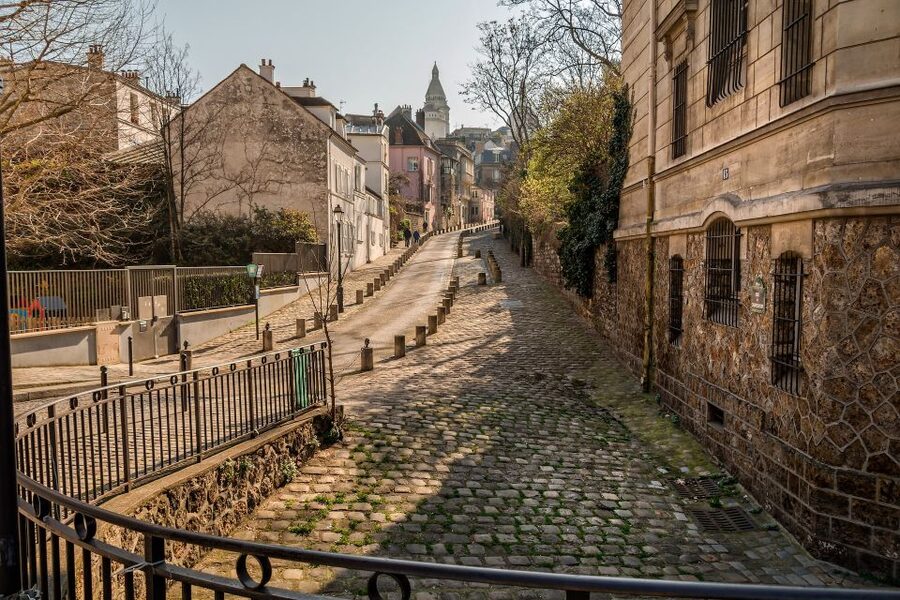
This is also a good point to appreciate Montmartre’s village character. The hill has famous sights, but it is not only a sequence of major monuments. Small public squares and leafy streets make the neighborhood feel separate from the grand avenues below.
You should keep your expectations in check. This is a walking tour, not a long stop for sitting, eating, or people-watching. The guide’s job is to connect the details and keep the group moving toward the next part of the hill.
Still, Place des Abbesses helps break up the climb. It gives you a memorable image and a change of pace before the tour returns to the world of studios, paintings, and bohemian stories.
Picasso’s studio and a painting that changed art
The next stage focuses on Picasso’s famous studio. The guide discusses a momentous painting connected with the artist and the way it changed the art world forever. The supplied details do not name the painting, so you should treat this as a story stop rather than expect entry into a museum or private studio.
That distinction is important. You will see the setting associated with Picasso, but the tour does not include admission to an indoor collection or a guided look at original paintings. The reward is context: you get to understand the streets and buildings where major artistic experiments took shape.
I like this part because it shifts the focus from famous names to working lives. Picasso was not simply a figure in a textbook. On Montmartre, he belonged to a loose network of studios, drinking places, entertainers, and fellow artists.
The guide also brings in Renoir, Van Gogh, and Toulouse-Lautrec. Their names are not used as decoration. They help explain why this hill became so important to modern art and why ordinary-looking corners can carry unusual meaning.
More walking tours in Paris:
- Paris Top Sights Half Day Walking Tour with a Fun Guide
★ 5.0 · 2,893 reviews - Paris Île de la Cité and Notre-Dame Walking Tour With Crypt
★ 5.0 · 2,272 reviews - Paris in a Day: Louvre or Orsay, Eiffel Tower, City Walk & Cruise
★ 5.0 · 1,956 reviews - Paris: Montmartre Highlights Walking Tour with a Local Guide
★ 4.9 · 1,668 reviews
A guinguette, an old windmill, and weekend revelry
The route continues to a classic guinguette. In plain terms, this was the kind of place where people went to drink, dance, socialize, and enjoy a less formal side of Paris. Artists also set up their easels here.
Works made on site by Renoir, Van Gogh, Picasso, and Toulouse-Lautrec preserved scenes of the weekends spent in such places. You’ll hear how those moments of drinking and dancing became part of the artistic record.
There is also an original windmill. It gives the stop an especially strong sense of old Montmartre, when the hill had a more rural feel than it does today. The windmill is a physical reminder that the neighborhood was once far removed from the polished center of Paris.
This is one of the tour’s most appealing combinations: art, social life, and a surviving object from the past. You are not just looking at a building and hearing a date. You are getting a picture of how people used the place.
The stop may be less satisfying if you want long periods inside historic buildings. The tour is conducted outdoors, and the experience depends on the guide’s storytelling and your ability to picture the past from what remains.
Paris’s last vineyard and a tiny cabaret
Montmartre’s last vineyard still produces wine, adding to the hill’s village atmosphere. You won’t get food or drinks as part of this tour, and there is no promise of a tasting. The value is seeing a working remnant of the neighborhood’s rural identity.
This is a nice contrast with the Moulin Rouge. At the start, Montmartre appears as a place of bright lights and nightlife. Here, it feels quieter and more local, even though the district is one of Paris’s best-known sights.
The tour also passes a tiny cabaret that Picasso favored. It was the source of several outlandish adventures, which the guide can explain. The exact stories depend on the guide, but the stop gives you another look at the loose, unpredictable social world around the artists.
If you enjoy old anecdotes, this section should be a highlight. If you prefer only major monuments, the vineyard and small cabaret may seem less important than Sacré Coeur. I think they are worth keeping, since they show why Montmartre feels different from a standard monument-to-monument walk.
The artists’ square and one-of-a-kind souvenirs
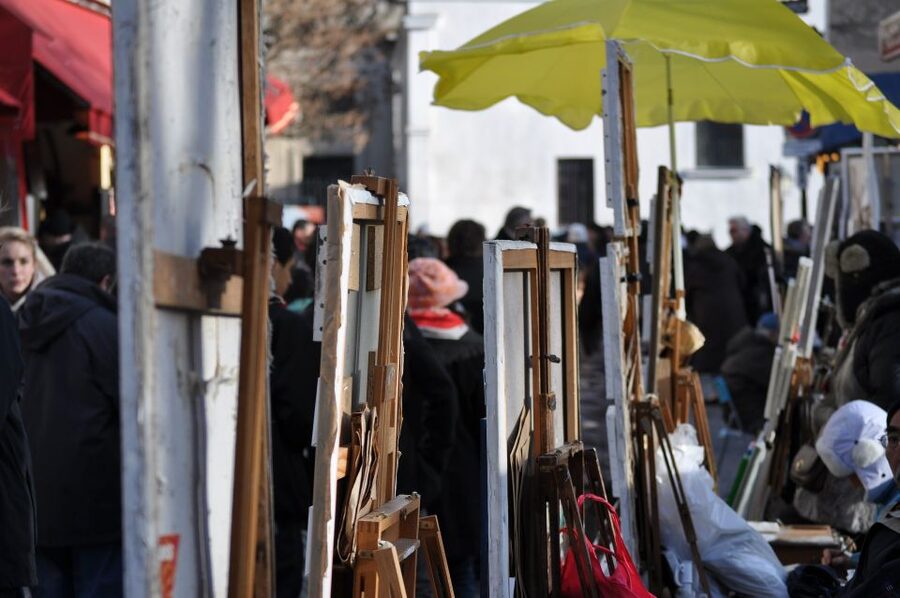
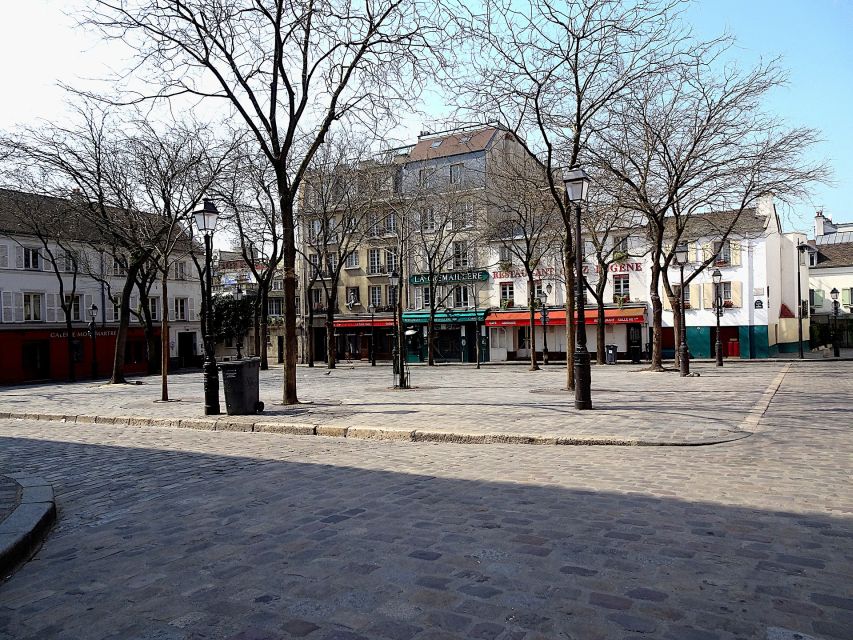
Farther up the hill, you’ll reach a famous square where outdoor artists paint and draw original work for sale. This is a natural place to pause and browse.
You may find a souvenir here that feels more connected to Montmartre than a mass-produced item from a shop. The artwork is made on site, and you can choose something that reminds you of the streets you have just walked.
Keep in mind that buying art is optional and not included in the $57 price. The square can also be busy, and you should not expect every piece to be a museum-quality bargain. The point is the setting and the chance to look at local, handmade work.
I like this stop because it gives the tour a practical finish before the final climb. You can take home something personal, or simply watch the artists work while the guide explains the square’s place in Montmartre’s creative life.
Sacré Coeur and the Paris panorama
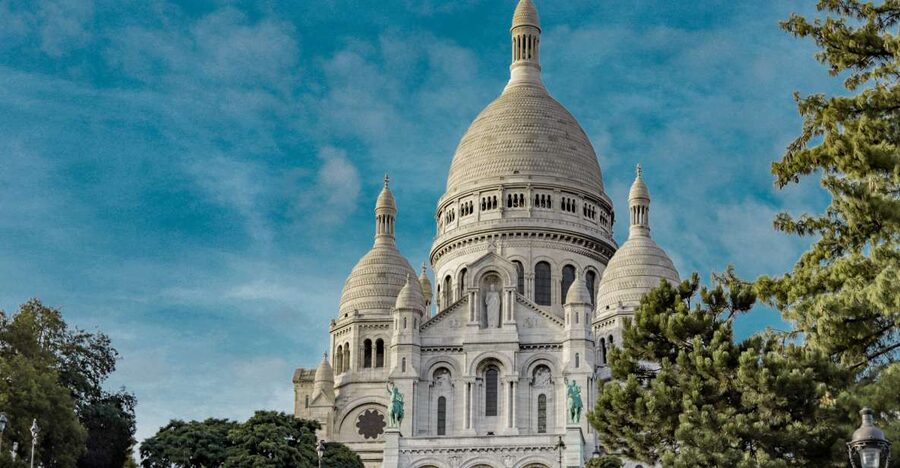
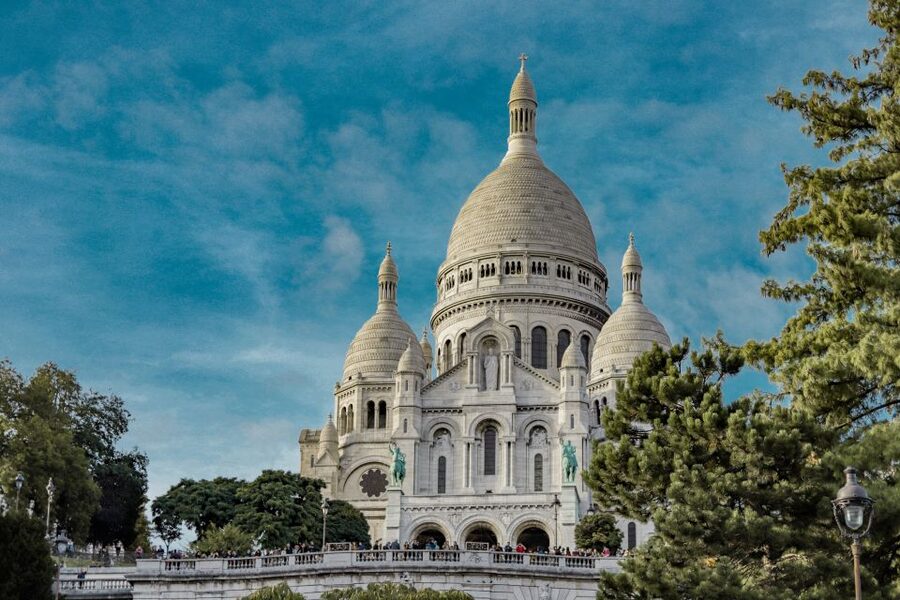
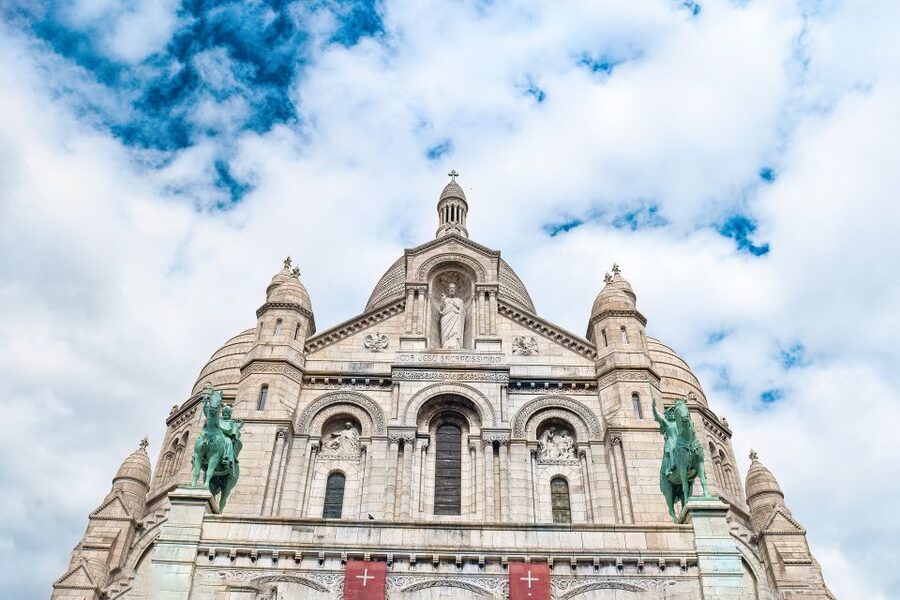
The tour ends in front of Sacré Coeur, the white basilica perched at the top of Montmartre. Its ornate appearance can feel a little fancy after the rougher, more bohemian streets below, but that contrast is part of the experience.
The payoff is the view. From the hilltop, Paris spreads out below in a broad panorama. After two hours of walking, the sight gives the route a clear finish and a chance to catch your breath.
You should not expect the tour to include a separate interior visit to Sacré Coeur. The supplied details place the ending in front of the basilica, with the view as the main reward.
This ending also gives you flexibility. Once the guided walk is over, you can spend more time around Sacré Coeur on your own, if your plans allow. The activity itself remains focused and compact, which is useful if you have only part of a day for Montmartre.
Is $57 a fair price for two hours?
At $57 per person, this is not the cheapest way to walk around Montmartre. You can see the basilica, streets, and several public places without paying for a guide.
The price becomes easier to justify if you want the connections explained as you go. In two hours, you are not merely being led uphill. You are getting the Moulin Rouge, Amélie, Van Gogh, Picasso, Renoir, Toulouse-Lautrec, a guinguette, an old windmill, a vineyard, a cabaret, the artists’ square, and Sacré Coeur in one organized route.
A guide also saves planning time. Montmartre’s points of interest are spread across the hill, and some are easy to miss if you do not know what to look for. The tour gathers them into a single story.
The value is strongest for a first visit or for anyone who wants art and local character rather than only photographs. It is weaker for repeat visitors who already know Montmartre well or who want long visits inside museums.
The tour has a 5 out of 5 rating from four verified bookings. One English-language tour led by Camille took place in the rain with only two people, and the guide still provided an interesting and informative experience. You should not assume every departure will be that small, but the example suggests that wet weather can produce a more personal walk.
Weather, pace, and who should book
The tour operates rain or shine unless conditions become truly severe. Bring a rain layer if the forecast looks uncertain. Wet cobblestones and stairs can make the hill harder, so weather is not just a comfort issue.
Comfortable shoes are essential. Avoid bringing weapons or sharp objects, and smoking, vaping, alcohol, and drugs are not allowed during the activity.
I would choose this tour if you want a story-led introduction to Montmartre and can handle a moderate uphill walk. It suits art lovers, film fans, first-time Paris visitors, and anyone who likes seeing famous sights alongside small details.
I would hesitate if you need a flat route, dislike walking in rain, or want a museum tour with extended indoor time. Hotel pickup and drop-off are not included, and food and drinks are also your responsibility, so plan your arrival and departure around the Moulin Rouge and Sacré Coeur locations.
The English-speaking guide is live, which gives you the chance to ask questions during the walk. Starting times vary, so check availability before booking. You can reserve now and pay later, and cancellation is free up to 24 hours before the tour.
Should you book the Montmartre walking tour?
Book it if you want Montmartre explained through its artists, cabarets, village corners, and hilltop view, rather than simply photographed. The route is well suited to a first look at the neighborhood, and the combination of Picasso’s studio, the vineyard, the windmill, and Sacré Coeur gives you more variety than a basic basilica visit.
Skip it if stairs are a serious problem or if you prefer to explore slowly at your own pace. At $57, the tour earns its price through the guide’s stories and efficient route, not through included food, museum entry, or transportation.
For most visitors who want a focused two-hour introduction, I would book it early in a Paris stay. You’ll finish with a better sense of why Montmartre became one of the city’s most memorable neighborhoods.
FAQ
How long is the Montmartre walking tour?
The tour lasts two hours.
What language is the tour conducted in?
The tour is conducted in English with a live guide.
Where does the tour meet?
Meet in front of the Moulin Rouge. The guide will wear a badge. If city works prevent a meeting there, the group may meet in the square facing the Moulin Rouge.
Where does the tour finish?
The tour finishes in front of Sacré Coeur, at the top of Montmartre.
Is the tour physically difficult?
It is described as a moderately physical walking tour. Montmartre is a hill, so you will need to manage stairs and slopes.
What should I bring?
Bring comfortable shoes. You may also want rain protection because the tour operates in wet weather unless it is raining very heavily.
Are food and drinks included?
No. Food and drinks are not included.
Can I cancel the tour for a refund?
Yes. You can cancel up to 24 hours in advance for a full refund.
Just added around Paris
- Paris: The Da Vinci Code Walking Tour with a Local Guide★ 4.3 · 5 reviews
- Paris: Flea Market Insider’s Tour in Extra-Small Group★ 4.6 · 73 reviews
- Paris: Private Fashion Tour (Chanel, Dior, Sex & the City)★ 5.0 · 3 reviews
- Paris: Floral Earrings workshop★ 5.0 · 3 reviews
- Paris: Fashion History Walking Tour in the Heart of Paris★ 4.9 · 22 reviews
- PARIS: Family e-bike longtail renting★ 5.0 · 3 reviews
- Paris: Famous Monuments Cycling Tour★ 4.7 · 20 reviews
- Paris: private city tour with seine river cruise★ 4.8 · 28 reviews
Montmartre and Sacré-Cœur Tours, compared.

Montmartre Hidden Gems and Scenic Highlights Walking Tour
Read our review →
Montmartre Hill French Gourmet Food and Wine Tasting Walking Tour
Read our review →
Montmartre Cheese, Wine & Pastry Guided Walking Tour
Read our review →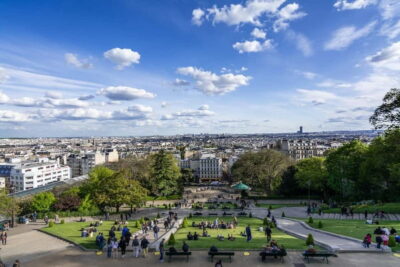
Montmartre Highlights Walking Tour with a Local Guide
Read our review →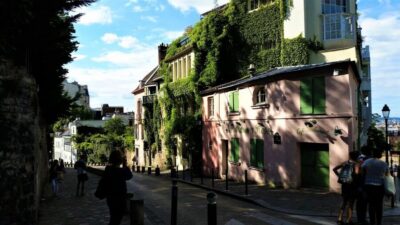
Sacré-Coeur and Montmartre Tour with Expert Guide
Read our review →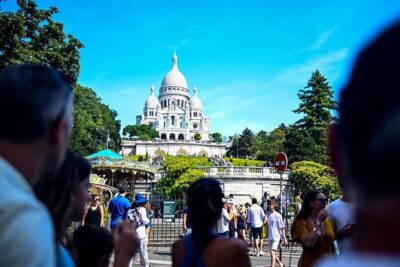
Private Montmartre Food Tour with Wine, Cheese & Pastries
Read our review →
Paris Montmartre Food Tour – A Full French Meal by Do Eat Better
Read our review →
Hidden Montmartre: Paris’ Secret Streets Walking Tour
Read our review →Browse the lists this tour appears in