
Reviewed · PARIS PASTRY AND MACARON CLASSES
Paris: French Macaron Culinary Class with a Chef
French macarons look simple, but the small details matter: whipped meringue, careful folding, neat piping, and enough resting time for a crisp shell with a soft center. This 150-minute class turns those fussy steps into a hands-on lesson with a chef beside you.
I like the small groups, capped at six, and the fact that you make the macarons yourself rather than just watching a demonstration. I also like the practical finish: you leave with a box of your own pastries and tips you can use at home. The main consideration is that the class is aimed at beginners, so experienced bakers may find the instruction fairly basic.
Key points at a glance
- Small class size: Up to six participants means the chef can watch your technique and help when the batter goes wrong.
- Real pastry work: You practice meringue, macaron shells, piping, and ganache instead of simply sampling finished sweets.
- Family-friendly format: Children as young as five and six have taken part successfully, with the chef helping them stay involved.
- English instruction: The class is taught in English, with some chefs also explaining steps in French.
- A useful souvenir: You take home a box of macarons, with some participants making roughly a dozen or more.
- Flexible booking: You can cancel up to 24 hours ahead for a full refund and reserve without paying immediately.
Why macarons make a good Paris cooking class
A macaron is a small sandwich cookie with a delicate shell and a flavored filling. The outside should have a slight bite, while the center stays soft. Getting that contrast right is harder than it looks, which makes the pastry a good subject for a short class.
You will not simply be handed a recipe and sent to a workbench. The chef explains how to make the meringue, how to fold the mixture, and how to prepare ganache. Those are the points where home attempts often fail, especially if the batter is overmixed, undermixed, or piped unevenly.
I like that this class focuses on technique instead of treating macarons as a decorative Paris souvenir. You get to see how the texture develops and why the shells need to be handled carefully. The lesson also leaves room for small choices, including colors and flavors, according to the class details shared by participants.
The class takes place at Maison Fleuret School, a pastry-school setting rather than a sightseeing stop. That matters. You are there to work with ingredients and equipment in a proper teaching kitchen, not to tour a bakery from behind a glass window.
More cooking classes in Paris:
- Paris Cooking Class and Lunch with Wine plus Market Visit Option
★ 5.0 · 1,024 reviews - Paris Cooking Class: Learn How to Make Macarons
★ 5.0 · 634 reviews - Paris Evening Cooking Class French Dinner and Market Visit Option
★ 5.0 · 430 reviews
Meeting the chef at Maison Fleuret School
Your meeting point is in front of the grey door at the reserved time. There is reportedly no large sign out front, so do not expect an obvious shop entrance. Check the meeting instructions carefully and arrive with enough time to find the door without rushing.
Once inside, you meet the other participants and settle into the kitchen. The group limit is six, though one participant described a class of no more than eight, so it is sensible to confirm the exact group size when booking. The published limit is six.
This small format is one of the class’s strongest features. Macaron batter can change quickly, and you may need help judging its consistency or holding the piping bag. With only a few people at the counter, the chef has a reasonable chance to correct problems before they affect the finished shells.
The teaching style can vary slightly by chef, but the names praised by participants include Alice, Delphine, Amélie, Christian, Matthieu, Matteo, Felix, William, and Pauline. Alice was described as upbeat and helpful. Delphine has taught in both French and English, while Matthieu was praised for explaining each step clearly and encouraging nervous beginners.
You should not book this expecting a celebrity pastry chef or a formal demonstration with a large audience. The appeal is personal instruction, a friendly room, and enough support to help you produce a good result.
Making the meringue and macaron shells
The first major lesson is the meringue. This is the base of the macaron, and its texture affects almost everything that follows. Your chef shows you how to reach the right consistency and explains the care needed when combining the meringue with the other ingredients.
The folding stage is often called macaronage. The goal is to combine the ingredients until the batter is smooth and workable without knocking out too much air. You need enough folding to remove large air pockets, but too much can make the mixture loose and difficult to pipe.
This is where the chef’s help has real value. A recipe can tell you to fold until the batter reaches a certain texture, but a beginner may not know what that looks like. In class, you can compare your mixture with the chef’s example and ask for a correction before piping.
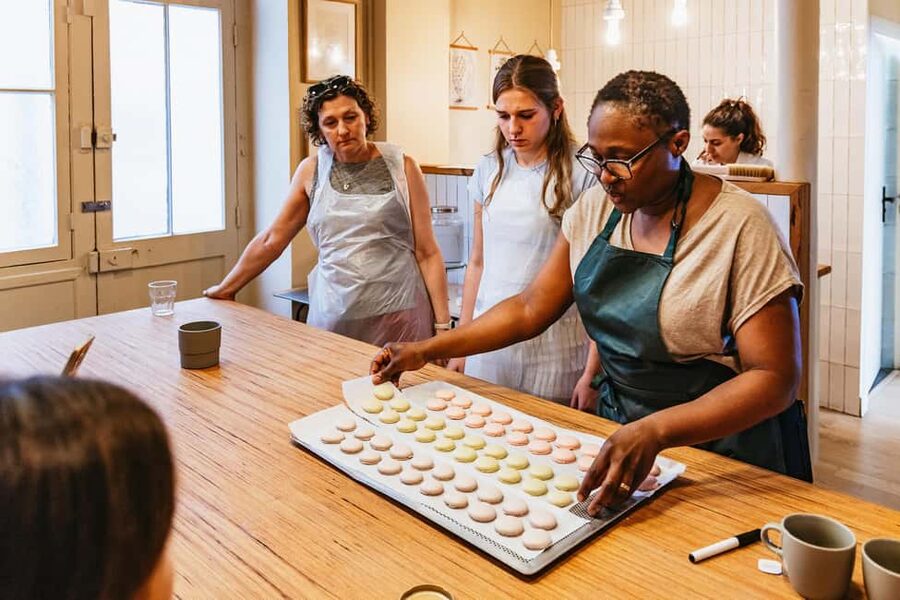
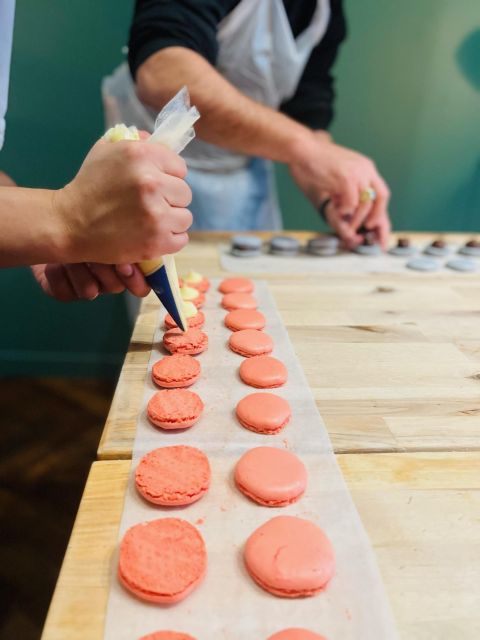
Next comes piping the shells. You learn to make rounds that are similar in size so the finished macarons will match when sandwiched. Perfect circles are not guaranteed, especially on your first attempt, but the chef can help you adjust your pressure and angle.
The shells need to form a crisp outer layer with a soft middle. That contrast is the central lesson of the class. You will also learn how the shell should look before it goes into the oven, although the exact baking setup and timing can vary with the session.
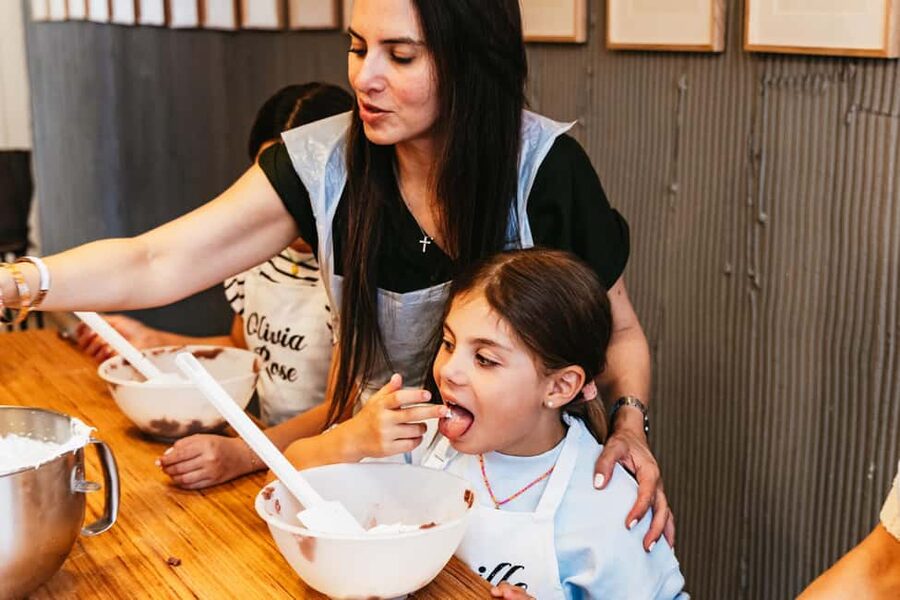
Several families appreciated how hands-on the work was. Children took part in measuring, mixing, piping, and choosing colors, with the chef stepping in when needed. One family with children aged seven and nine said the finished macarons looked as good as the adults’ batch, which suggests that the process is forgiving enough for young participants when an instructor is nearby.
That does not mean the class removes every challenge. You may still pipe uneven shells or make a few that look more homemade than pastry-shop perfect. That is part of the fun, and the chef’s guidance seems designed to keep mistakes from becoming discouraging.
Ganache, flavors, and the soft center
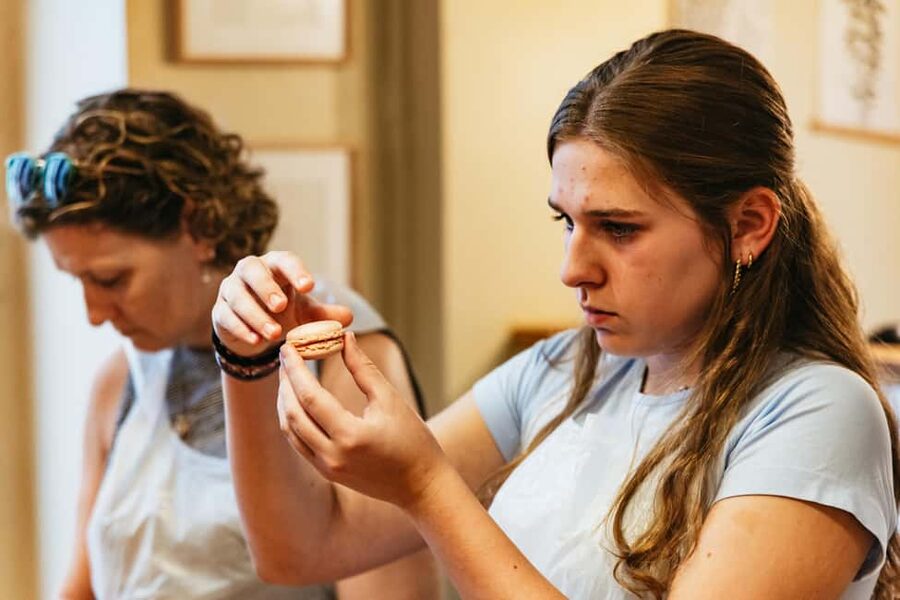
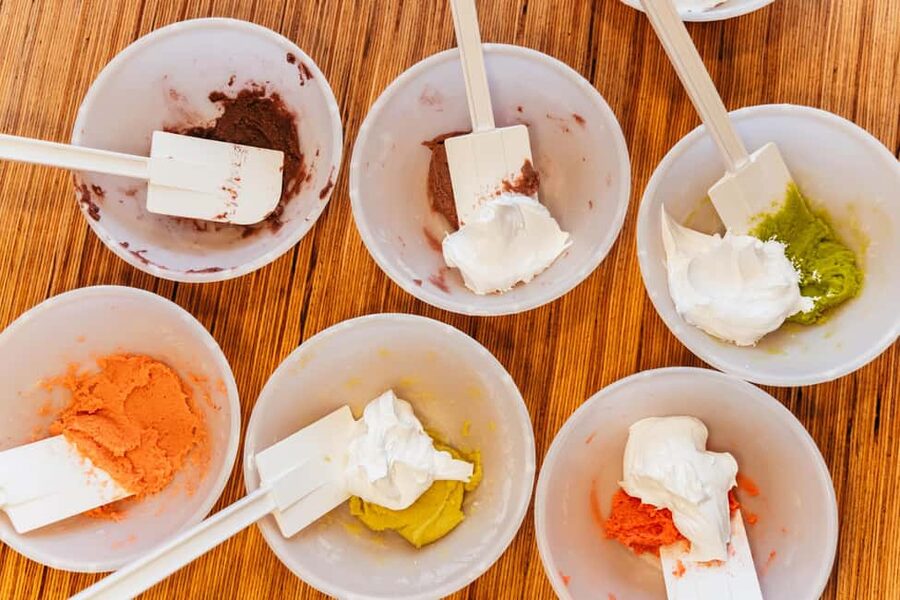
After the shells, the class turns to ganache. This filling brings flavor and moisture to the macaron, and it must be smooth enough to pipe without overwhelming the shell.
You learn the basic ganache method and how to create a filling with a delicate center. Some sessions let you choose colors and flavors, and one participant specifically enjoyed making multicolored macarons. Those choices give the class a little creative freedom without turning it into an unstructured baking project.
The filling also shows why macarons taste better after some time together. The shell and ganache need to balance each other. A crisp shell with a soft, flavorful center is the target, not a dry cookie with a sweet filling.
This portion is useful for home bakers because ganache is easy to underestimate. The mixture needs the right consistency for sandwiching, and too much filling can crack the shell or make the macaron messy. The chef can demonstrate how much to pipe and how to match the shells.
If you already make macarons regularly, this may be the least challenging part of the class. One participant found the session insufficient for more advanced information. That is a fair warning. The lesson is best for beginners and cautious home bakers, not for someone seeking professional-level pastry theory or unusual flavor development.
More pastry and macaron classes in Paris:
- Paris: Montmartre Cheese, Wine & Pastry Guided Walking Tour
★ 4.8 · 2,255 reviews - Private Montmartre Food Tour with Wine, Cheese & Pastries
★ 5.0 · 1,027 reviews - Paris French Sweets Tasting Tour with Pastries and Chocolates
★ 4.5 · 947 reviews - Paris Croissant Small-Group Baking Class with a Chef
★ 5.0 · 910 reviews
A friendly class with room for children
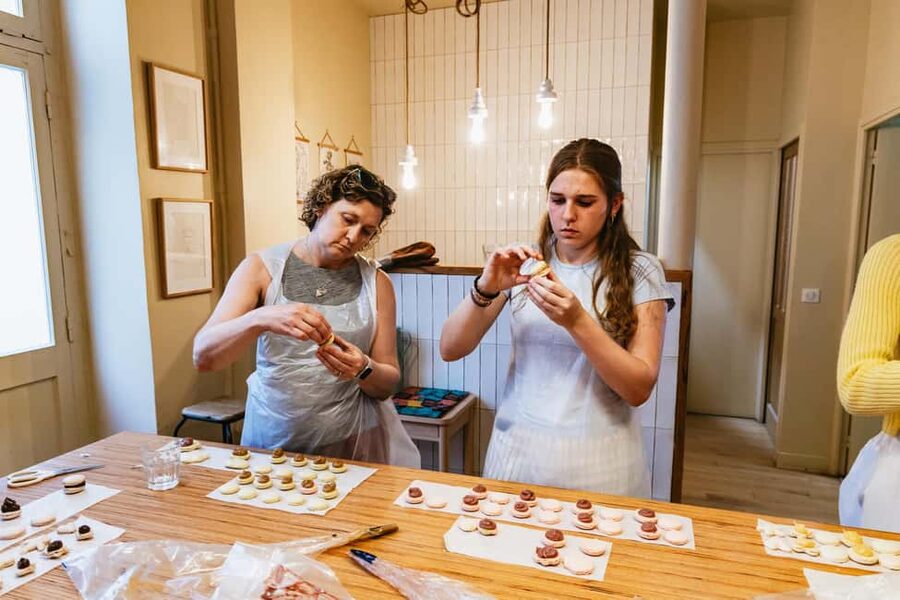
The tone is informal and social. You work alongside other people, compare shapes and colors, and share the small triumph when the shells come out properly. Several participants described the chefs as funny, patient, and encouraging, which matters when a technical recipe could otherwise feel tense.
Families are particularly well served. Children aged five, eight, nine, eleven, thirteen, and fourteen have all been included in successful family sessions. The chefs are used to giving younger bakers manageable jobs and keeping them involved without expecting adult-level precision.
I would still think about your child’s patience before booking. This is a real lesson, not a quick sugar activity. There are steps to follow, waiting periods, and careful handling. Younger children may need an adult to help them stay focused, but the class appears to give them enough practical work to remain interested.
Teenagers also fit the format well. Several parents took the class with teenage daughters and described it as one of the best parts of their Paris visit. It offers a shared activity without requiring advanced cooking skills, and the box of macarons gives you something tangible at the end.
The room can become noisy during the final part, according to one participant. If you want a quiet, highly formal pastry lesson, the social atmosphere may feel less polished. For most people, though, the conversation and laughter are part of the point.
What you take home after 150 minutes
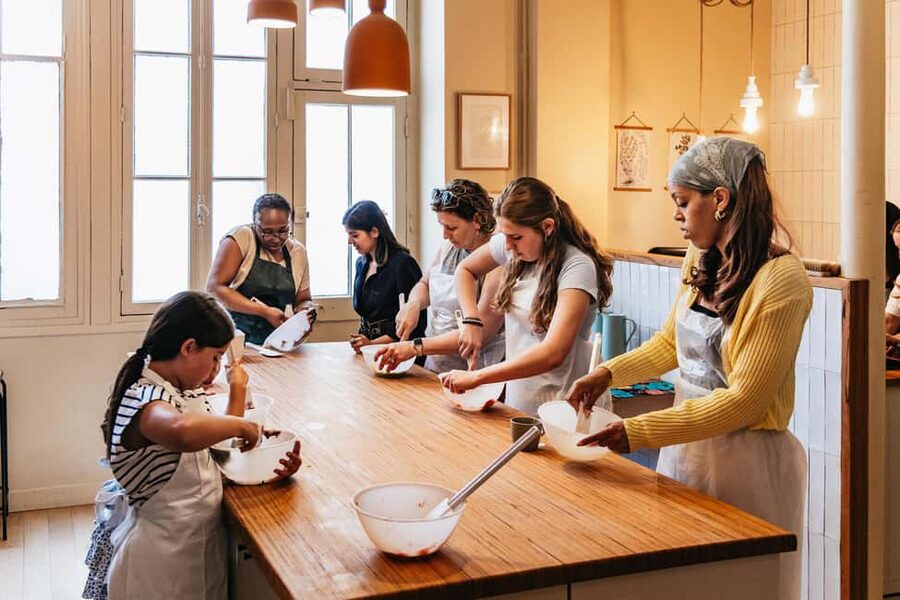
The advertised duration is 150 minutes, or two and a half hours. That is a useful block in your Paris schedule, particularly on a rainy day or between sightseeing plans.
Actual timing may be shorter. One participant finished in about one hour and 45 minutes, so you should not assume the full two and a half hours will always be used. The difference may depend on the group, the pace of the chef, or how much preparation has been completed before the class.
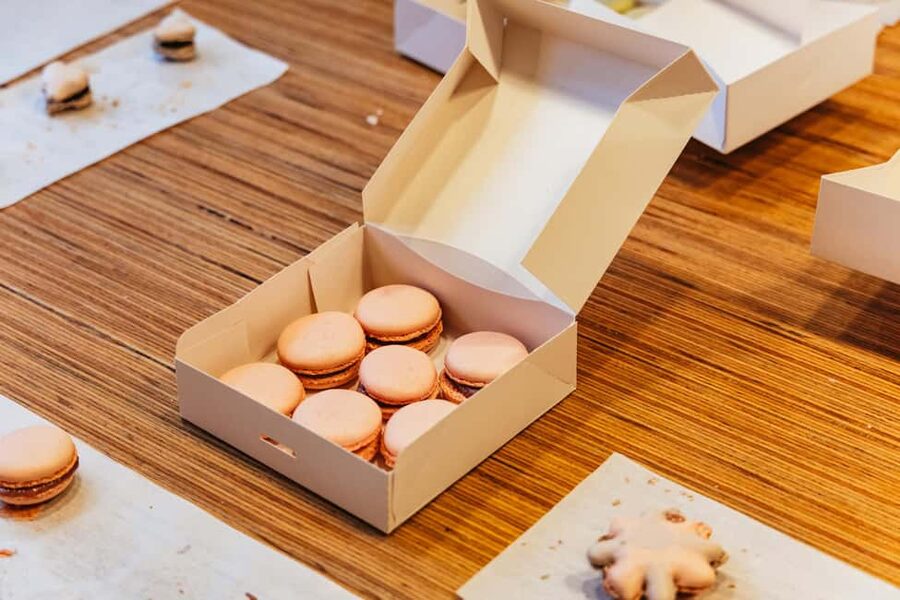
At the end, you receive a box of macarons made during the lesson. One participant reported making about a dozen plus a few extra. The exact number can vary, but you should have enough to share with family or save for later.
Transporting them takes a little care. A participant managed to carry the box back to the United Kingdom in warm weather, but macarons are delicate. Keep the box level, avoid crushing it in a packed day bag, and do not leave it in strong heat. The class does not include hotel pickup or drop-off, so you handle your own journey to and from the school.
The box is more than a sweet souvenir. It lets you taste the result while the instructions are still fresh in your mind. You can compare the shell texture and filling with what you hope to make at home.
Is the class worth the money?
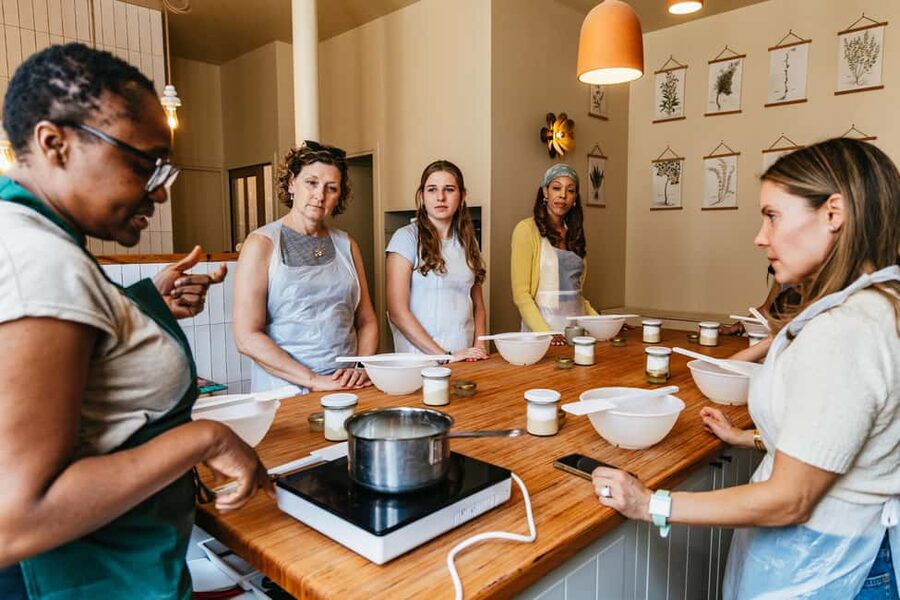
A price is not provided here, so I cannot judge the exact value without seeing your booking total. I would compare the cost with other Paris pastry classes by checking four things: the class length, the maximum group size, whether ingredients and equipment are included, and how many macarons you take away.
This class includes the cooking lesson, chef instruction, and a box of macarons. You are paying for guided practice, not just food. The small group is important because a cheaper large class may give you less personal help with the difficult stages.
The value is strongest if you have never made macarons or have tried and failed at home. The class gives you visual clues that a printed recipe cannot provide, especially for meringue texture, folding, and piping.
The value is less clear for an experienced pastry cook. You may already know the basic methods, and the class does not promise advanced decoration, professional production methods, or a wide range of recipes. In that case, choose it for the social activity and Paris setting, not for specialist training.
The reserve-now, pay-later option is practical if you are arranging a busy trip. You can hold a place without paying at once, and free cancellation is available up to 24 hours before the class. Still, check the final terms and meeting details at booking, especially since the location or time can occasionally change. One family appreciated receiving clear notice when its location changed the day before.
Who should book this Paris macaron class?
I would recommend it most strongly to:
- First-time macaron makers who want an instructor close by
- Families with children who enjoy practical food activities
- Couples or friends looking for a shared indoor activity
- Teenagers who prefer doing something creative to sitting through a formal tour
- Home bakers who want confidence with basic shells and ganache
- Anyone who would rather take home a handmade souvenir than buy another packaged gift
You may want another type of pastry class if you are already comfortable with macaronage or want advanced pastry instruction. The class does not appear designed for professional development, and the teaching stays focused on producing a successful batch in a friendly setting.
It is also worth checking the language arrangement. English is the stated teaching language, and Delphine has taught bilingually in French and English. If you need another language, this activity may not suit you.
The activity is wheelchair accessible, which makes it easier for more people to consider, though you should confirm the practical setup for your needs before booking.
My verdict on this hands-on Paris pastry lesson
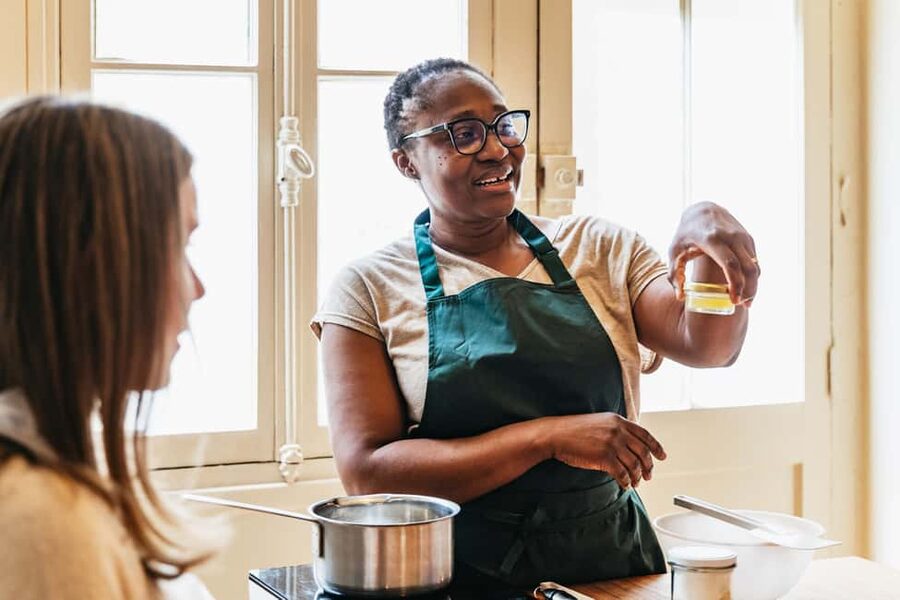
The strongest reason to book is the combination of small-group instruction and a real edible result. You are not just told how macarons work. You practice the tricky parts, get help from a chef, and leave with a box made during the class.
The class also works unusually well for families. Children can take part, adults have enough technique to learn, and the finished pastries give everyone a shared goal. The chefs named in the feedback, including Alice, Amélie, Christian, Delphine, and Matthieu, were repeatedly praised for patience, humor, and clear teaching.
My caution is simple: keep your expectations at the right level. This is a beginner-friendly workshop, not an advanced pastry course. The session may finish before the advertised 150 minutes, and the room can become noisy near the end.
For most visitors who like food and want a break from museums, I would book it. You get useful instruction, a social Paris activity, and a sweet souvenir that you made yourself. Just arrive at the grey door on time, protect the box afterward, and leave room in your schedule for the possibility that the class runs shorter than expected.
FAQ
How long does the macaron class last?
The advertised duration is 150 minutes. One participant finished in about one hour and 45 minutes, so the actual session may be shorter depending on the group and class pace.
Where does the class meet?
The class begins at Maison Fleuret School in Paris. You should meet at the reserved time in front of the grey door. There may not be clear signage outside.
Is the class taught in English?
Yes. English is the stated teaching language. Some chefs, including Delphine, have also explained the class in both French and English.
How many people are in the class?
The published maximum is six participants. Some feedback refers to groups of up to eight, so confirm the group size for your chosen session when booking.
What is included?
The booking includes the macaron cooking class, a chef instructor, and a box of macarons made during the lesson. Hotel pickup and drop-off are not included.
Can children take part?
Yes. Families with children as young as five and six have taken part, and children and teenagers have been actively included in the cooking. The activity is also listed as wheelchair accessible.
More perfume and craft workshops in Paris
- Fragonard Paris: Mini Perfume Workshop
★ 4.5 · 1,924 reviews - Paris: Macaron Class at Galeries Lafayette
★ 4.3 · 905 reviews - Paris: 2-Hour Perfume Creation Workshop
★ 4.8 · 731 reviews - Paris: French Croissant Baking Class with a Chef
★ 4.9 · 712 reviews
Just added around Paris
- Paris: The Da Vinci Code Walking Tour with a Local Guide★ 4.3 · 5 reviews
- Paris: Flea Market Insider’s Tour in Extra-Small Group★ 4.6 · 73 reviews
- Paris: Private Fashion Tour (Chanel, Dior, Sex & the City)★ 5.0 · 3 reviews
- Paris: Floral Earrings workshop★ 5.0 · 3 reviews
- Paris: Fashion History Walking Tour in the Heart of Paris★ 4.9 · 22 reviews
- PARIS: Family e-bike longtail renting★ 5.0 · 3 reviews
- Paris: Famous Monuments Cycling Tour★ 4.7 · 20 reviews
- Paris: private city tour with seine river cruise★ 4.8 · 28 reviews
Paris Pastry and Macaron Classes, compared.
Montmartre Cheese, Wine & Pastry Guided Walking Tour
Read our review →
Private Montmartre Food Tour with Wine, Cheese & Pastries
Read our review →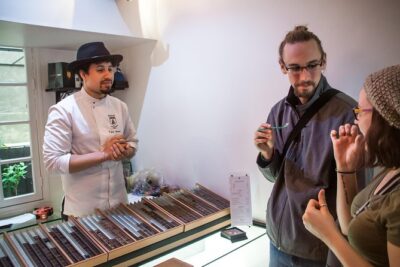
Paris French Sweets Tasting Tour with Pastries and Chocolates
Read our review →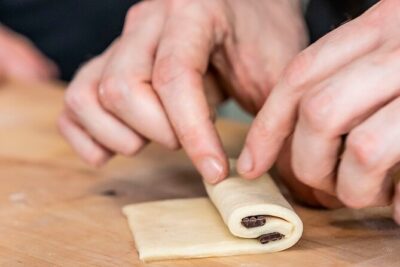
Paris Croissant Small-Group Baking Class with a Chef
Read our review →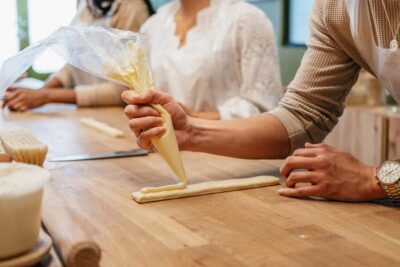
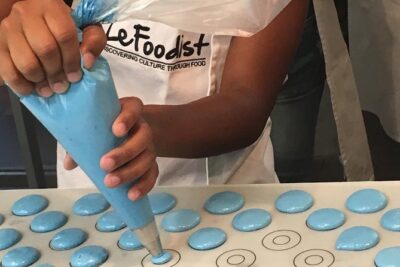
Paris Cooking Class: Learn How to Make Macarons
Read our review →
A Morning in Paris Food Tour: Croissants, Baguettes & Chocolate
Read our review →
Chocolate & Patisserie Walking Tour with Tastings
Read our review →Browse the lists this tour appears in