
Reviewed · MONTMARTRE AND SACRé-CœUR TOURS
Paris: Montmartre Private Walking Tour
Montmartre is Paris at its most theatrical: white-domed Sacré-Coeur above, old cabarets below, and streets where painters, writers, dancers, and drinkers once made their own rules. I like that this private two-hour walk connects famous sights with the less polished stories behind them. You get the Moulin Rouge, Place du Tertre, and Sacré-Coeur, but also the old drinking spots favored by Picasso and Modigliani.
I also like the personal format. Your guide can adjust the pace and explain the neighborhood in English, French, or Serbo-Croatian. Boris has kept children aged 10 and 12 engaged on the walk, while Isabella has been praised for making the tour both informative and fun. The main drawback is time: two hours goes quickly, especially with uphill streets, photo stops, and a guide with plenty to explain.
Key points to know before booking
- Start at Metro Blanche: Meet your guide outside the station, near the exit, where they carry a red canvas tote bag.
- Follow the artists’ Montmartre: Rue Lepic, Place du Tertre, Lapin Agile, and the old cafés connect the neighborhood to Picasso, Modigliani, and Impressionism.
- See the cabaret district: The Moulin Rouge and former Maison Blanche area reveal Montmartre’s rowdy side, including the early Can-Can scene.
- Expect an uphill walk: Rue Lepic climbs toward Sacré-Coeur, so comfortable shoes matter.
- Private means personal: The guide leads only your private group, with no larger party listed.
- Book with flexibility: You can cancel up to 24 hours before the tour for a full refund, and reserve now while paying later.
Starting below Montmartre at Metro Blanche
The meeting point is by the exit of Metro Blanche, at the foot of Montmartre. Look for the guide carrying a red canvas tote bag. This is a useful starting place because you begin among the district’s famous nightlife addresses rather than at the top of the hill with only the grand view in mind.
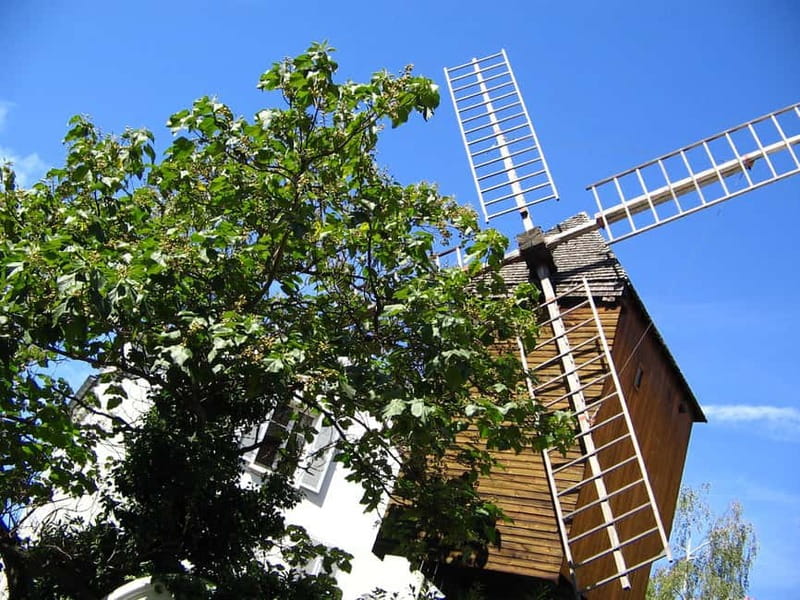
The first part sets up Montmartre’s unusual past. It was once outside Paris’s jurisdiction, which helped it develop a reputation for cheap drink, illegal alcohol, rough lodging, and behavior that respectable Paris preferred to keep at arm’s length. Over time, that unruly suburb became one of the city’s most fashionable and artistic quarters.
I appreciate this approach because it gives the famous sights some grit. Montmartre is not only white stone, charming lanes, and artists selling sketches. Its identity grew from the clash between poverty and glamour, religious devotion and nightlife, respectable homes and run-down slums.
Your guide can explain that shift as you walk, rather than leaving you to read disconnected plaques. Boris, one of the named guides, has a broad command of Paris and its past, and his English has worked well for families. Isabella is another guide associated with the experience, and her style is described as both lively and informative. Since the tour is private, you can ask about the subjects that interest you most.
More Montmartre and Sacré-Cœur Tours:
- Montmartre Hidden Gems and Scenic Highlights Walking Tour
★ 5.0 · 2,684 reviews - Montmartre Hill French Gourmet Food and Wine Tasting Walking Tour
★ 5.0 · 2,588 reviews - Paris: Montmartre Cheese, Wine & Pastry Guided Walking Tour
★ 4.8 · 2,255 reviews
The Moulin Rouge and Montmartre’s cabaret past
The route includes the Moulin Rouge, one of Paris’s best-known cabarets. It is easy to treat the red windmill as a quick photo stop, but this tour uses the area to explain how Montmartre became linked with music halls, dancers, risqué entertainment, and late-night drinking.
You will hear about the Can-Can and the way it was once considered obscene. That detail helps explain why Montmartre attracted artists and outsiders. The district offered a place where conventions could be bent, and where a night out could be cheaper and less proper than in central Paris.
The nearby Metro Blanche area also had an earlier connection to Maison Blanche. The tour includes this former name as part of the neighborhood’s changing story. These small details matter because they show Montmartre as a working district with layers of names and uses, not just a preserved stage set for tourists.
You should not expect entry to the Moulin Rouge or a cabaret performance. This is a walking tour, and the cabarets are seen from the street. That makes the experience a good choice if you want context during the day or evening, but not if your main goal is a show.
Rue Lepic and the painters’ Montmartre
From the lower district, the walk follows ancient Rue Lepic. The street climbs through Montmartre and helps connect the neighborhood’s old village feel with its artistic past. The climb is part of the point, though it can make the two-hour schedule feel full.
Rue Lepic is tied to the art movements that took shape in Paris during the 19th century. Your guide describes the birth of Impressionism and the artists who found material, cheap rooms, lively company, and unusual characters here. You are not simply looking at pretty façades. You are being shown the setting that drew painters to Montmartre in the first place.
The street also reveals the contrast that defines the district. Along the route, lavish houses appear near poorer streets and former slums. That mixture is easy to miss if you only visit the postcard corners. A private guide can point out how the neighborhood’s social divisions sat close together.
This is one of the strongest parts of the tour for anyone interested in art. You do not need a specialist background. The guide’s job is to connect the streets to the artists and movements that made Montmartre famous, in plain terms that work for adults and older children.
Place du Tertre and the village inside Paris
Place du Tertre offers the classic Montmartre scene: artists at work, small lanes, and a village-like square in the middle of a major capital. It can feel charming, crowded, commercial, or all three at once. The guide helps you see why the square matters beyond its picture-postcard appeal.
This is where the old village character comes forward most clearly. Montmartre once felt separate from central Paris, and Place du Tertre still gives that impression through its scale and layout. The setting is especially useful after the darker cabaret stories because it shows the district’s softer public face.
You may find street artists working during your visit, but the supplied details do not promise a specific number of artists or any included sketch. Do not book this walk expecting an art lesson or a purchase. Think of the square as one part of a historical walk.
I would keep your camera ready here, but listen before rushing to take photos. The square is more meaningful when you understand its role in the neighborhood’s artistic life. Since the walk is private, you can ask the guide about the painters connected with Montmartre and how the area changed as its fame grew.
More walking tours in Paris:
- Paris Top Sights Half Day Walking Tour with a Fun Guide
★ 5.0 · 2,893 reviews - Paris Île de la Cité and Notre-Dame Walking Tour With Crypt
★ 5.0 · 2,272 reviews - Paris in a Day: Louvre or Orsay, Eiffel Tower, City Walk & Cruise
★ 5.0 · 1,956 reviews - Paris: Montmartre Highlights Walking Tour with a Local Guide
★ 4.9 · 1,668 reviews
Sacré-Coeur and the climb above the city
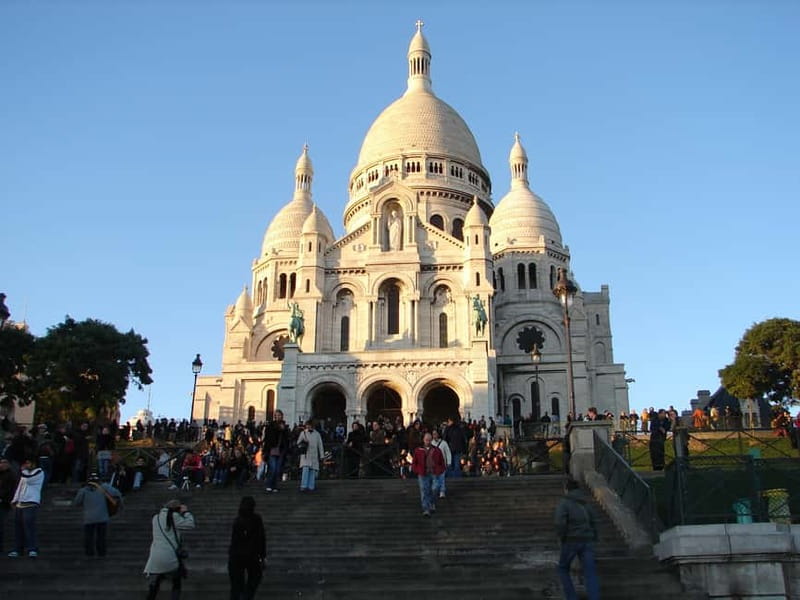
The route continues toward the white façade of Sacré-Coeur. The basilica is one of Paris’s most recognizable sights, and its bright stone creates a sharp contrast with the darker cabaret history below.
The walk to the church includes uphill streets, especially Rue Lepic. That is the practical point to remember. Two hours may sound gentle, but Montmartre is not flat, and you will spend much of the time on foot. Wear shoes that can handle slopes and uneven city pavement.
The tour does not list entry inside Sacré-Coeur, so you should expect to see and discuss the building rather than count on an interior visit. The guide can place it within the neighborhood’s story, showing how a religious monument became part of a district known for nightlife, art, and unconventional living.
The white basilica also gives the route a strong visual finish, even though the tour continues afterward and ends back at the original meeting point. You get a sense of Montmartre rising above the city, while the earlier stops explain what happened on its lower streets.
The vineyard that keeps Montmartre’s old village spirit alive
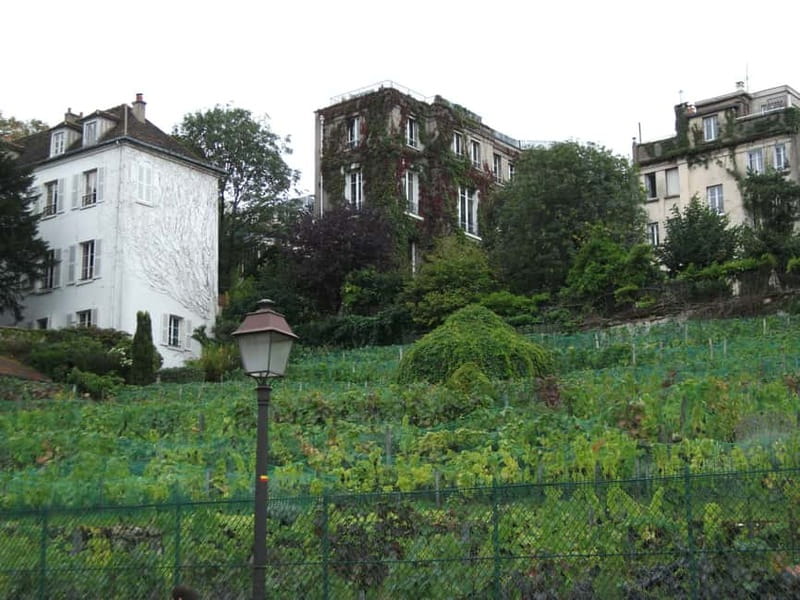
The Vigne de Montmartre, or Montmartre vineyard, is another welcome change from the district’s grander monuments. It points back to the days when this hill was more rural and village-like. The vineyard is small compared with the famous wine regions of France, but its presence helps explain why Montmartre once felt separate from Paris.
You should not expect a wine tasting, since food and drinks are not included. The vineyard is part of the walk and its story, not a tasting stop. That distinction helps set the right expectations.
I like this stop because it gives the neighborhood a practical sense of place. Montmartre’s identity did not begin with cabarets and painters. It also came from its hilltop setting, older local traditions, and distance from the city center. The vineyard makes that earlier character easier to picture.
Lapin Agile and the artists’ drinking dens
The walk includes Lapin Agile, one of Montmartre’s old cabarets. It is particularly useful for understanding the social side of the artistic quarter. Artists did not create their work in isolation. They met in bars, cabarets, and informal gathering spots where ideas, arguments, and friendships grew.
Your guide explains why Lapin Agile was favored by struggling artists and writers, including Picasso and Modigliani. That detail gives a human scale to names that can otherwise feel remote. These were working artists making their way through a difficult period, not yet the museum stars they would become.
The tour also covers drinking dens connected with Picasso and other artists. Again, this is not a pub crawl, and food and drinks are not part of the price. The value is in the stories and the physical places, not in a tasting menu or scheduled cabaret entry.
This stop may appeal most to you if you like the social history of art. If you want only major monuments, Lapin Agile could feel less essential than Sacré-Coeur. If you want to understand how artists actually spent time and found one another, it adds welcome depth.
What a private two-hour format changes
A private group can make a short tour more useful. You are not waiting for a large party to gather or listening to a fixed speech aimed at every age and interest. You can ask about Impressionism, cabarets, architecture, family questions, or the artists tied to a particular street.
The named guides give you a sense of the tone to expect. Boris has handled families with young daughters and boys aged 10 and 12, keeping the children involved. Isabella is presented as especially engaging and good company while explaining the sights. The tour is offered in English, French, and Serbo-Croatian.
The 4.9 rating from 45 reviews suggests a strong record, but I would still judge the tour by its format. Two hours is enough for an introduction, not a complete study of Montmartre. You will see a carefully chosen line through the district, but you will not cover every street, museum, or church.
The walk can also take place at night, depending on the starting time available. A night walk changes the mood around the cabarets and streets, while a daytime tour may make it easier to see façades and street artists. Check the available times when booking rather than assuming a particular departure.
Is $171 per person a fair price?
At $171 per person, this is not a budget walk. The price makes the most sense for a small private party that values personal attention, a chosen pace, and a guide who can connect many separate stories.
For one person or a couple, the cost is harder to justify than a standard group tour. You are paying for privacy rather than included meals, tickets, transport, or drinks. Since the guide is the only listed inclusion, keep your expectations focused on the walking commentary and personal access to the guide’s time.
For a family or group of friends, the value can improve because the private format lets everyone share one guide instead of splitting up or adapting to a large group. Families may also appreciate that Boris has kept children engaged, though no special children’s program is promised.
The tour operator, Paris in person private tours, was selected among the top 10 small tour operators in Europe from 26,000 companies in the 2025 Arival TourReview Spotlight Awards. That recognition does not change the route or guarantee a particular guide, but it gives you another reason to consider the provider when comparing private walks.
Free cancellation up to 24 hours before the start and the option to reserve now and pay later reduce the financial risk. The walk runs rain or shine, so bring suitable clothing and accept that weather may affect the mood.
Who will enjoy this Montmartre walk?
I would choose this tour if you want a compact introduction to Montmartre with a strong story line. It suits first-time Paris visitors who want the major sights but also want to understand why the district became famous.
It is especially fitting for:
- Couples who want a private walk through the cabaret and artists’ quarter
- Families with older children who can manage uphill streets and a two-hour walk
- Art lovers interested in Impressionism, Picasso, and Modigliani
- Visitors who prefer stories and local context to a checklist of monuments
- People who want a flexible private guide in English, French, or Serbo-Croatian
I would think twice if you have difficulty with hills or want lots of time inside monuments. The route is outdoors, includes climbing, and does not list admission to Sacré-Coeur, Moulin Rouge, or Lapin Agile.
Should you book it?
Book it if you want Montmartre explained as a living neighborhood, not just photographed as a pretty hill. The route gives you the Moulin Rouge, Rue Lepic, Place du Tertre, Sacré-Coeur, the vineyard, and Lapin Agile, while the guide ties them to cabarets, Impressionism, and the artists who drank and worked here.
Skip it if $171 per person feels too high for a two-hour walk or if you mainly want entry tickets and food. For a family, a private group, or anyone who values a guide’s full attention, the personal format makes the price easier to defend. For the best fit, choose a starting time that matches your interest: daytime for street art and façades, or evening for the cabaret side of Montmartre.
FAQ
How long is the Montmartre private walking tour?
The tour lasts two hours. Starting times vary, so check availability when you choose your date.
Where does the tour start?
Meet your guide by the exit of Metro Blanche. The guide will be carrying a red canvas tote bag.
Where does the tour end?
The activity ends back at the meeting point near Metro Blanche.
Is this a private tour?
Yes. The tour is for a private group rather than a shared group.
Which languages are available?
The live guide can conduct the tour in English, French, or Serbo-Croatian.
Are food and drinks included?
No. Food and drinks are not included in the tour price.
What happens if it rains?
The tour takes place rain or shine. Dress for the weather and wear comfortable shoes for the uphill streets.
Just added around Paris
- Paris: The Da Vinci Code Walking Tour with a Local Guide★ 4.3 · 5 reviews
- Paris: Flea Market Insider’s Tour in Extra-Small Group★ 4.6 · 73 reviews
- Paris: Private Fashion Tour (Chanel, Dior, Sex & the City)★ 5.0 · 3 reviews
- Paris: Floral Earrings workshop★ 5.0 · 3 reviews
- Paris: Fashion History Walking Tour in the Heart of Paris★ 4.9 · 22 reviews
- PARIS: Family e-bike longtail renting★ 5.0 · 3 reviews
- Paris: Famous Monuments Cycling Tour★ 4.7 · 20 reviews
- Paris: private city tour with seine river cruise★ 4.8 · 28 reviews
Montmartre and Sacré-Cœur Tours, compared.

Montmartre Hidden Gems and Scenic Highlights Walking Tour
Read our review →
Montmartre Hill French Gourmet Food and Wine Tasting Walking Tour
Read our review →
Montmartre Cheese, Wine & Pastry Guided Walking Tour
Read our review →
Montmartre Highlights Walking Tour with a Local Guide
Read our review →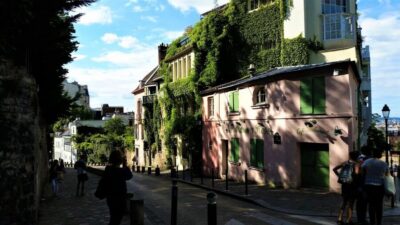
Sacré-Coeur and Montmartre Tour with Expert Guide
Read our review →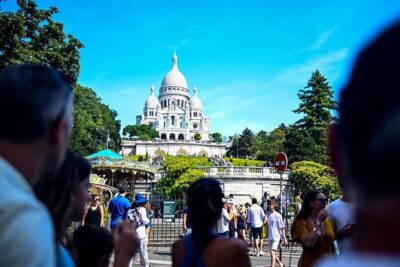
Private Montmartre Food Tour with Wine, Cheese & Pastries
Read our review →
Paris Montmartre Food Tour – A Full French Meal by Do Eat Better
Read our review →
Hidden Montmartre: Paris’ Secret Streets Walking Tour
Read our review →Browse the lists this tour appears in