
Reviewed · MONTMARTRE AND SACRé-CœUR TOURS
Paris: Walking Tour of Montmartre
Montmartre is best understood on foot, one sloping street at a time. This two-hour walk begins by the Moulin Rouge and works gradually uphill through old windmills, artist cafés, quiet lanes, Place du Tertre, and finally Sacré-Cœur. Guides such as Vera, Nadine, Solene, and Christin bring the neighborhood alive with stories rather than simply pointing at buildings.
I like the small-group walking format, which gives you room to ask questions and notice details you could easily miss on your own. I also like the route’s balance of famous sights and less-touristed corners, especially the quieter side streets Christin is praised for showing.
The main drawback is practical: Montmartre is hilly, and the meeting point outside Blanche metro station can be hard to identify among the traffic islands near the Moulin Rouge. One English-language group also had a problem when its guide failed to arrive, so confirm the language and meeting details carefully.
Key points to know before booking
- The route climbs from Blanche to Sacré-Cœur: Expect cobblestones, slopes, and a steady walk rather than a flat city stroll.
- The Moulin Rouge starts the story: You get more than a photo stop, with attention to the cabaret’s surprising past and place in Parisian culture.
- Several famous Montmartre addresses are included: The Moulin de la Galette, La Maison Rose, Place du Tertre, and Sacré-Cœur all appear along the way.
- The guides are the heart of the experience: Vera, Nadine, Solene, and Christin are singled out for warmth, humor, clear English, and memorable stories.
- English tours run only on selected days: Choose Monday, Wednesday, or Saturday. German tours run Tuesday, Thursday, Saturday, and Sunday.
- The $34 price pays for interpretation, not admission: Food, drinks, and entry to paid attractions are not included.
Starting by the Moulin Rouge at Blanche
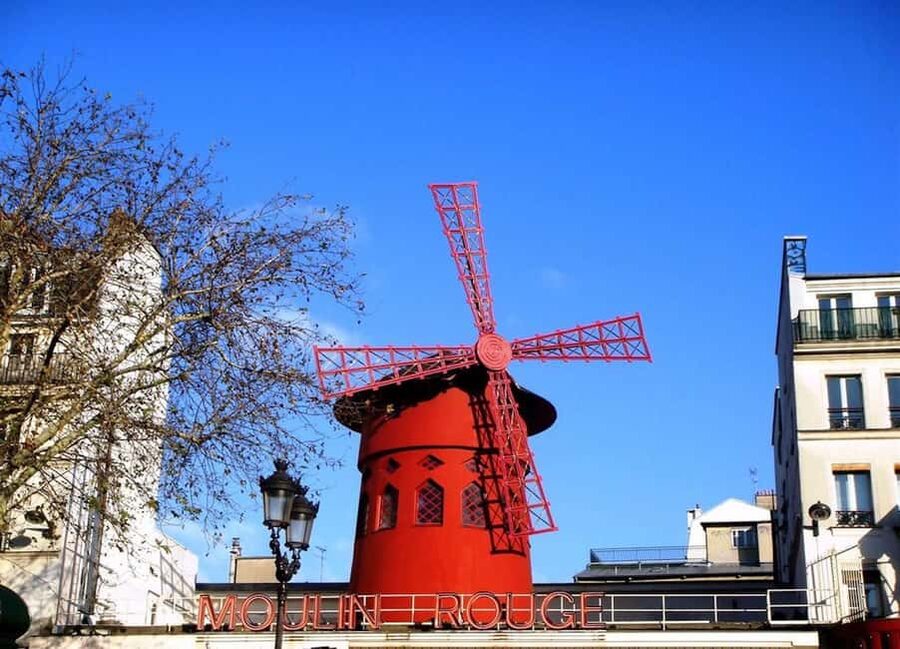
Your meeting point is outside Blanche metro station, at the traffic island in front of the Moulin Rouge. Look for a guide carrying a HelpTourists bag and wearing a pink base cap.
That sounds simple, but the area has more than one traffic circle near the cabaret. Give yourself extra time to find the correct spot. The Moulin Rouge is an obvious landmark, but the precise place to meet can still be easy to miss in the traffic and foot traffic.
From there, the group sets off on foot. The tour lasts about two hours, so the pace needs to keep moving, though the route is described as a gradual walk up the hill rather than a punishing climb. I would wear shoes with a firm sole. Montmartre’s cobbled streets can be awkward, and the final approach to Sacré-Cœur includes more uphill walking.
The provider tries to keep groups small. On public or national holidays, the group may be larger, which can make it harder to hear or ask questions. If personal attention matters to you, a regular weekday may be the better choice.
More Montmartre and Sacré-Cœur Tours:
- Montmartre Hidden Gems and Scenic Highlights Walking Tour
★ 5.0 · 2,684 reviews - Montmartre Hill French Gourmet Food and Wine Tasting Walking Tour
★ 5.0 · 2,588 reviews - Paris: Montmartre Cheese, Wine & Pastry Guided Walking Tour
★ 4.8 · 2,255 reviews
The Moulin Rouge and the secrets behind the red windmill
The Moulin Rouge is a strong opening stop because it gives the walk a clear sense of place. Its bright façade is one of Paris’s most recognizable sights, but the tour focuses on more than the familiar red windmill and a quick photograph.
The guide shares curious details about the cabaret and its role in the legendary entertainment district around Pigalle and Montmartre. The supplied description specifically promises surprising secrets, so this is where the experience begins to move beyond postcard Paris.
You should not expect to go inside for a show. This is a photo stop and an outdoor sightseeing point, with the guide’s stories providing the substance. That makes the stop useful for first-time visitors who want context without paying for a cabaret performance.
It also sets up one of the tour’s main strengths: Montmartre is not presented only as a pretty hill topped by a white basilica. The neighborhood is tied to nightlife, art, ordinary Parisian life, and the people who made the area famous.
Moulin de la Galette and the older village feel
The walk continues to the Moulin de la Galette, another of Montmartre’s windmill landmarks. This stop connects the present-day neighborhood with its earlier identity as a hilltop village on the edge of Paris.
The windmill is especially valuable when explained by a guide. On your own, you might take a photograph and move on. With the right explanation, it becomes part of a wider story about the district’s old mills, dance halls, artists, and changing character.
This section of the route is also where the walking format earns its price. A vehicle could get you near the major monuments, but it would not give you the same feel for the narrow streets and abrupt changes in the neighborhood. You see the transition from busy tourist routes to quieter residential corners.
The tour is not designed as a long art lecture. It uses short historical details and personal stories to keep you moving. That approach will suit you if you like facts that help a place make sense but do not want a dense academic presentation.
La Maison Rose and Montmartre’s picture-book side
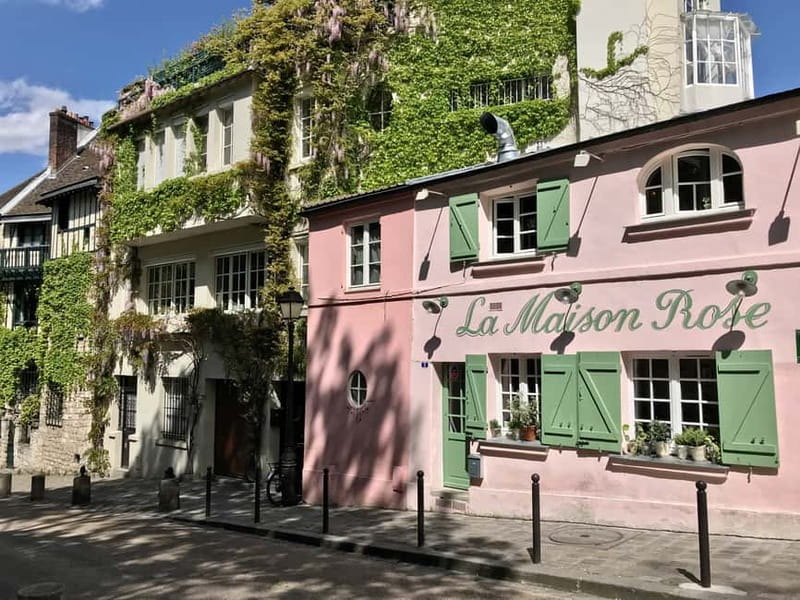
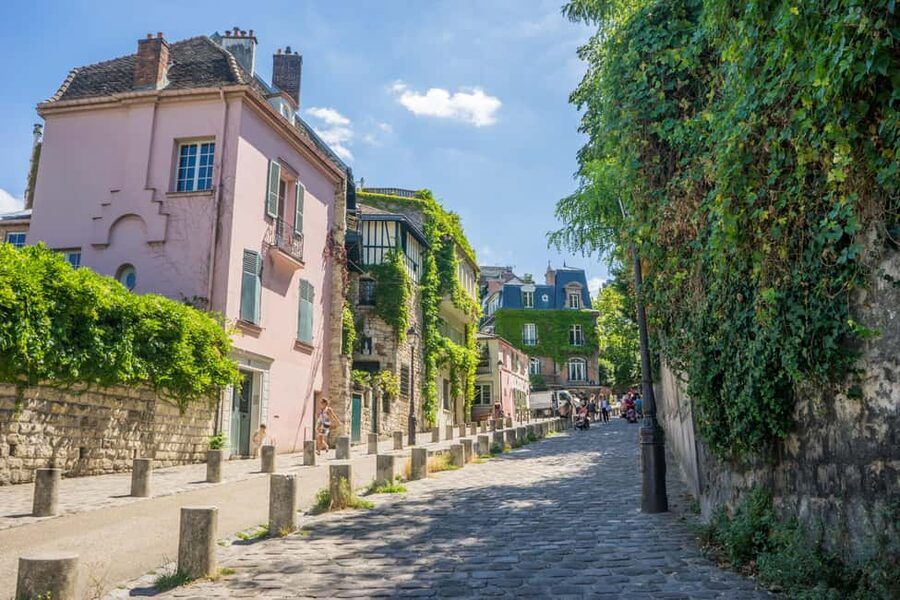
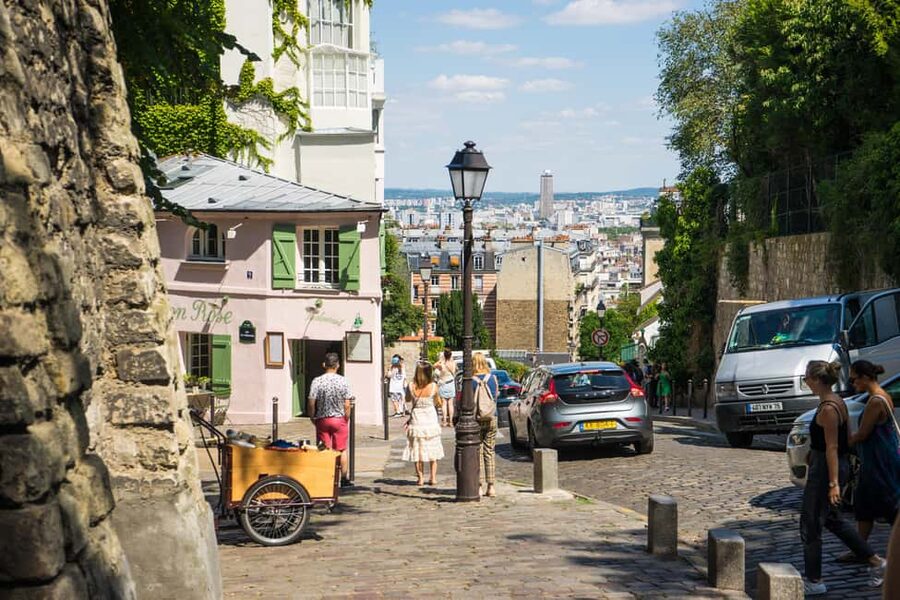
La Maison Rose is one of Montmartre’s most photographed buildings, with its pink exterior and corner location. It is a quick stop, but it helps explain why this district attracts painters, photographers, and casual visitors in equal measure.
The danger with famous addresses is that they can become a checklist. A guide adds value by connecting the building to Montmartre’s artistic identity and by pointing out the character of the surrounding streets.
This is a good place to keep your expectations realistic. The walk does not promise private access, a meal, or a long pause inside the café. You get sightseeing, photographs, and stories from outside. Food and drinks are not included, so plan your café stop separately.
One practical advantage is that the tour gives you a sense of where you may want to return later. If La Maison Rose or the quieter lanes around it catch your eye, you can come back after the guided walk with more time and less pressure.
More walking tours in Paris:
- Paris Top Sights Half Day Walking Tour with a Fun Guide
★ 5.0 · 2,893 reviews - Paris Île de la Cité and Notre-Dame Walking Tour With Crypt
★ 5.0 · 2,272 reviews - Paris in a Day: Louvre or Orsay, Eiffel Tower, City Walk & Cruise
★ 5.0 · 1,956 reviews - Paris: Montmartre Highlights Walking Tour with a Local Guide
★ 4.9 · 1,668 reviews
Place du Tertre, where the art scene meets the crowds
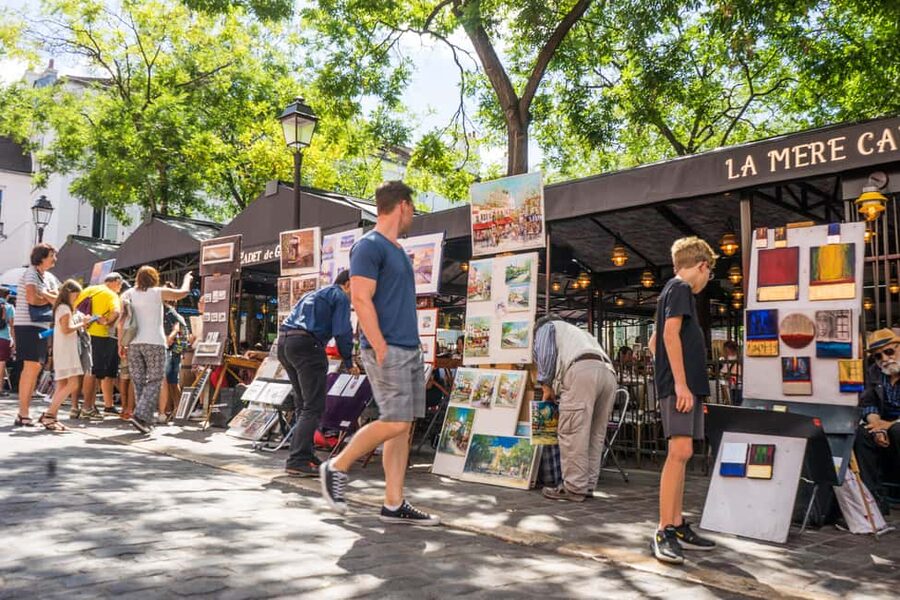
Place du Tertre is Montmartre’s best-known artist square and one of the liveliest parts of the route. Artists still work outdoors here, and you can see portraits and paintings being made in the open air.
The square is also the point where the district’s charm and its tourist pressure are most obvious. It is photogenic, historic, and full of character, but it can feel crowded. The guide’s role is useful here because you can learn how the square fits into Montmartre’s artistic past instead of simply weaving between easels.
The tour allows a short visit and sightseeing stop rather than a full art-buying session. One participant bought art during the afternoon, so you may find something that appeals to you, but purchases are your own responsibility and not part of the tour.
I would listen closely for the everyday stories here. The experience promises anecdotes about Parisian life, not only famous painters. That helps keep the square from feeling like a museum display. You are encouraged to see Montmartre as a living neighborhood where work, tourism, art, and local routines share the same small streets.
The final climb to Sacré-Cœur

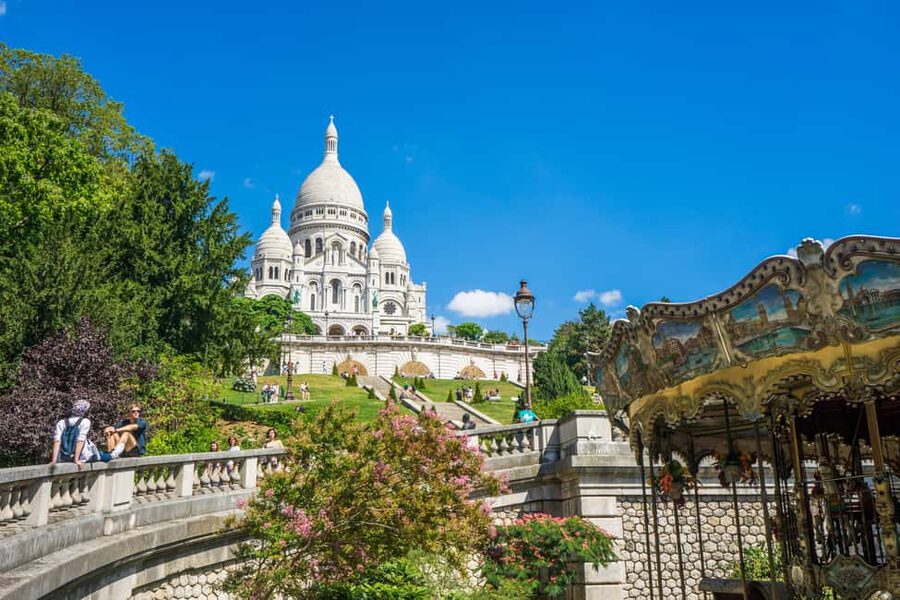
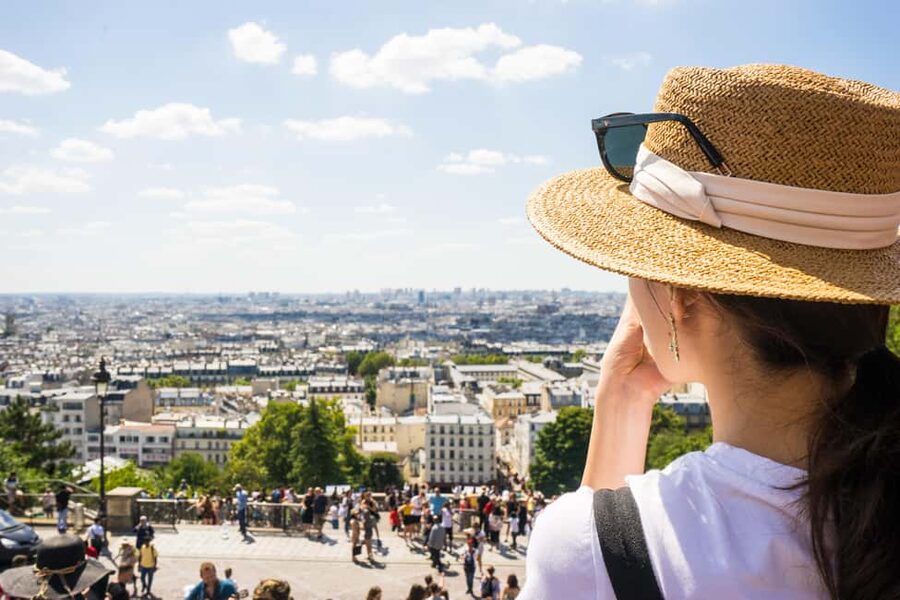
The Basilica of Sacré-Cœur is the visual payoff of the route. Sitting high above Paris, it offers the kind of broad city view that makes the climb worthwhile.
The basilica is included as a visit and sightseeing stop, though the details provided do not promise a guided interior tour or guaranteed time inside. You should treat the guide’s explanation and the setting as the main parts of this stop.
Arriving here after walking through the district gives the basilica more meaning. Instead of taking the funicular or coming directly from a metro station, you have followed the hill through its streets and stories. The white church then feels like the end of a neighborhood walk, not an isolated monument.
The route information lists the basilica as the finishing location, while the activity details also say the experience ends back at the meeting point. Because those details do not fully match, ask the guide at the start where the group will finish and how the return works. Either way, Sacré-Cœur is the final major sight named for the tour.
What the guides add to the walk
The strongest part of this experience is the guide’s personality. Vera is praised for filling the gradual climb with historical facts and anecdotes. Nadine is described as funny, attentive, and generous with details, while Solene is noted for clear, fluent English and an engaging manner.
Christin is especially associated with the quieter, less-touristy side of Montmartre. That matters because the district’s main sights are easy to find, but its smaller streets are where a guide can give you something you would not get from a basic map.
A guide’s style can vary from day to day. The experience is run by German and English-speaking guides, and the English schedule is Monday and Wednesday at 3 p.m., plus Saturday at 5 p.m. German tours run Tuesday and Thursday at 4 p.m., Saturday at 3 p.m., and Sunday at 2 p.m.
Pay attention to the language when booking. One English booking turned into a German-led walk with only brief English recaps after the expected guide did not arrive. That appears to be an exception, but it is a useful reason to confirm your selected language and contact the provider if anything looks unclear.
Is $34 a fair price for two hours?
At $34 per person, this is not the cheapest way to walk around Montmartre. You can visit the Moulin Rouge exterior, Place du Tertre, and Sacré-Cœur without paying for a guide.
The value comes from having the district explained in order. You get a local guide, a planned route, and stories that connect cabaret culture, artists, old windmills, cafés, and daily Paris life. For a first visit, that can save you time and help you understand what you are seeing.
There are no food, drinks, or attraction admissions included. If you want a meal at a café or a cabaret show, budget for those separately. The tour is best viewed as a compact orientation walk, not a full-day attraction package.
The cost becomes easier to justify if you like asking questions or want a human voice to lead you through the hill. It is less useful if you prefer to wander alone, stop for long photographs, or spend substantial time inside Sacré-Cœur and other sites.
Who will enjoy this Montmartre walk?
I would recommend it to first-time Paris visitors who want a clear introduction to Montmartre without spending half a day on a large sightseeing route. It also suits people who enjoy local stories, old neighborhoods, and a guide who can explain why ordinary streets became famous.
The tour works well for couples, solo visitors, and small groups who want a social walk. The guides are described as friendly, funny, and attentive, and several took time to answer questions.
It is less suitable for anyone who has difficulty walking uphill or on cobblestones. The tour is not suitable for wheelchair users, and even fit walkers should expect slopes and uneven pavement.
The schedule can also limit your choices. English is available on only three days, with Saturday offered at 5 p.m. If you want a morning walk, this is not the right option based on the listed times.
Practical details that affect your choice
You can cancel up to 24 hours before the activity for a full refund, and the reserve-now, pay-later option keeps your plans flexible. Those policies help if your Paris schedule is still changing.
Bring water, since drinks are not included, and wear comfortable shoes. You may want to leave room in your schedule after the tour for photographs, a café stop, or more time around Sacré-Cœur.
The group may be larger on public holidays. If you want the best chance of hearing every story and speaking directly with the guide, avoid those dates when possible.
The experience is led in English or German, with live guiding rather than an audio recording. That is important in Montmartre, where the value lies in the guide’s anecdotes and answers as much as in the buildings themselves.
Should you book it?
Book this walk if you want Montmartre explained through people, stories, and streets rather than reduced to a list of monuments. The route covers the district’s essential sights, but the best reason to choose it is the guide-led connection between them.
I would choose it for a first or second day in Paris, when a two-hour orientation can help you decide where to return later. Vera, Nadine, Solene, and Christin have all been praised for warmth, humor, and useful detail, though guide availability and group size can vary.
Skip it if you want extensive interior visits, a food experience, or a flat route. For most walkers comfortable with hills, $34 is a reasonable price for a focused introduction to Montmartre, especially when the guide takes you beyond the busiest corners.
FAQ
How long does the Montmartre walking tour last?
The tour lasts two hours.
Where does the tour start?
It starts outside Blanche metro station, at the traffic island in front of the Moulin Rouge. Look for the guide with a HelpTourists bag and a pink base cap.
Where does the tour finish?
The named route finishes at the Basilica of Sacré-Cœur de Montmartre. The activity information also says the experience ends back at the meeting point, so confirm the exact return arrangement with the guide at the start.
Which languages are available?
Live tours are available in English and German.
Which days are English tours offered?
English tours take place on Mondays, Wednesdays, and Saturdays. The listed Saturday English departure is at 5 p.m.
Is the tour suitable for wheelchair users?
No. The activity is not suitable for wheelchair users.
What is included in the price?
The price includes the walking tour and a tour guide. Food and drinks are not included.
Just added around Paris
- Paris: The Da Vinci Code Walking Tour with a Local Guide★ 4.3 · 5 reviews
- Paris: Flea Market Insider’s Tour in Extra-Small Group★ 4.6 · 73 reviews
- Paris: Private Fashion Tour (Chanel, Dior, Sex & the City)★ 5.0 · 3 reviews
- Paris: Floral Earrings workshop★ 5.0 · 3 reviews
- Paris: Fashion History Walking Tour in the Heart of Paris★ 4.9 · 22 reviews
- PARIS: Family e-bike longtail renting★ 5.0 · 3 reviews
- Paris: Famous Monuments Cycling Tour★ 4.7 · 20 reviews
- Paris: private city tour with seine river cruise★ 4.8 · 28 reviews
Montmartre and Sacré-Cœur Tours, compared.

Montmartre Hidden Gems and Scenic Highlights Walking Tour
Read our review →
Montmartre Hill French Gourmet Food and Wine Tasting Walking Tour
Read our review →
Montmartre Cheese, Wine & Pastry Guided Walking Tour
Read our review →
Montmartre Highlights Walking Tour with a Local Guide
Read our review →
Sacré-Coeur and Montmartre Tour with Expert Guide
Read our review →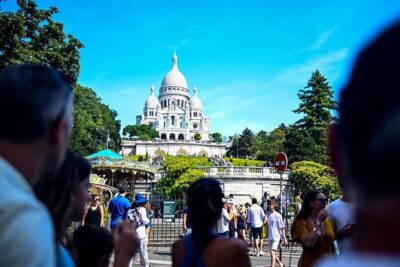
Private Montmartre Food Tour with Wine, Cheese & Pastries
Read our review →
Paris Montmartre Food Tour – A Full French Meal by Do Eat Better
Read our review →
Hidden Montmartre: Paris’ Secret Streets Walking Tour
Read our review →Browse the lists this tour appears in