
Reviewed · LE MARAIS TOURS
Paris: Jewish Marais District Walking Tour
Paris’s Jewish Marais is not simply a pretty quarter of narrow lanes and old mansions. It is a place where Jewish life, persecution, migration, worship, and remembrance all meet within a short walk. This private tour follows that story from the Synagogue des Tournelles to the Mémorial des martyrs de la Déportation.
I like the private format, which lets the guide adjust the pace and answer detailed questions. I also like the way the route connects everyday places, such as kosher shops and synagogues, with major memorials tied to the Holocaust and the deportation of French Jews.
The main drawback is the $160 per-person price for a walk lasting about two hours, or up to 160 minutes according to the booking details. The tour also visits several sites from outside, so it suits you best if you want guided context rather than museum interiors or a long synagogue visit.
Key points to know before booking
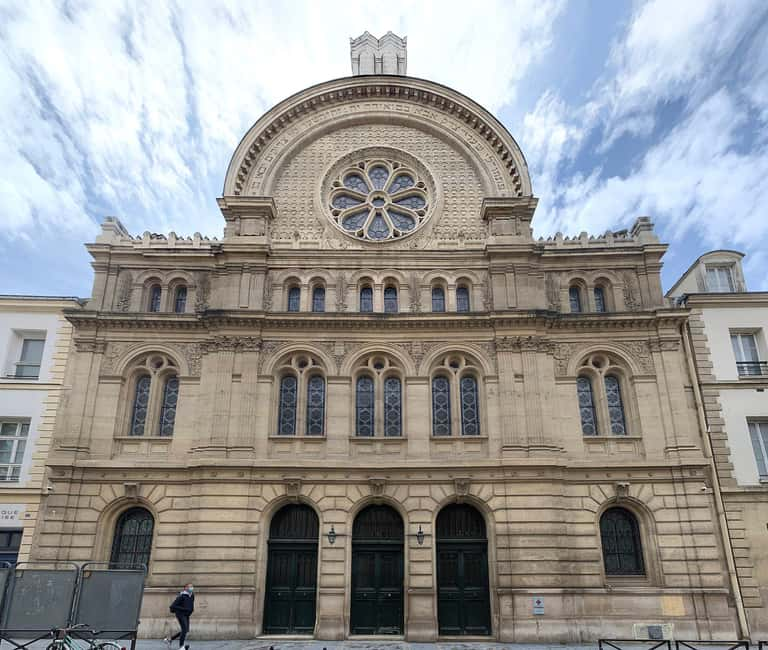
- Start at the Synagogue des Tournelles: The tour begins in the Marais and follows a route through Paris’s best-known Jewish quarter.
- See historic sites from outside: Synagogues and the Museum of Jewish History are viewed externally, while the guide explains their place in the community.
- Connect past and present: Kosher shops and active neighborhood sites help balance the memorials and difficult chapters of French Jewish history.
- Visit Anne Frank’s garden: The route includes the garden dedicated to Anne Frank, along with memorial sites connected to deportation and the Shoah.
- Private English or French tour: Guides named in the feedback include Simon and Camille, with Simon adapting one tour to an older couple’s pace and interests.
- Plan for moderate walking: Comfortable shoes, water, sun protection, and a head covering are useful. The route is not suitable for wheelchair users or people with mobility impairments.
Why the Jewish Marais is the right place for this tour
The Marais gives you a compact way to understand a subject that stretches across nearly two thousand years. The Jewish presence in France reaches back to the first century, after the Roman conquest of Gaul. Jewish communities lived under the Merovingians and found a period of prosperity under the Carolingians.
The story then turns sharply. Medieval Jewish life produced major religious scholarship, including the work of Rashi, the 11th-century rabbi and Talmudist. But crusades, trials of the Talmud, persecution, and expulsions repeatedly damaged those communities.
By 1394, under Charles VI, Jews were expelled from the kingdom of France. Earlier expulsions included an edict issued by Philippe le Bel in 1304. For a period, no Jewish community remained within the kingdom itself, though Jewish communities continued in Alsace, Lorraine, and the papal territories.
A walk through the Marais makes these changes easier to grasp because the route moves between streets used for daily life and places built to remember suffering. I find that more useful than hearing a long list of dates in a lecture hall. The neighborhood gives the story a physical setting.
More Le Marais Tours:
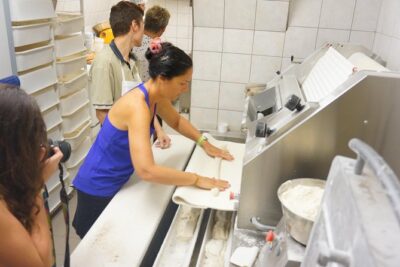
- Award-Winning Paris French Bakery Experience — Le Marais, 4th Arr
★ 4.5 · 1,186 reviews - Paris Le Marais Food Tour With 10+ Tastings, Cheese, Wine & More
★ 5.0 · 985 reviews - Paris Le Marais District Original Food and Wine Tasting Tour
★ 4.5 · 880 reviews
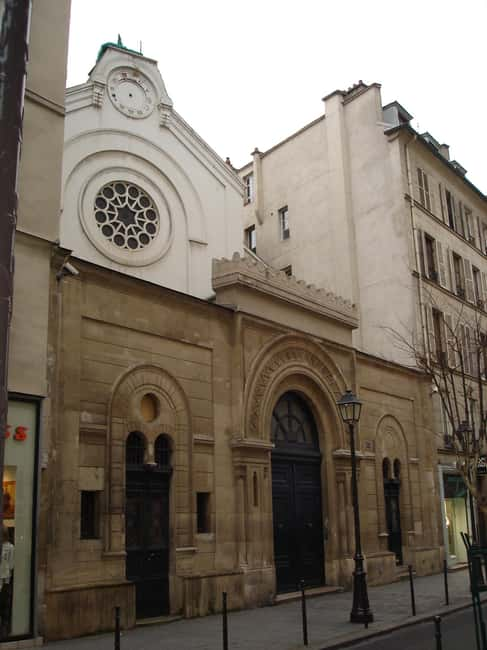
Starting at the Synagogue des Tournelles
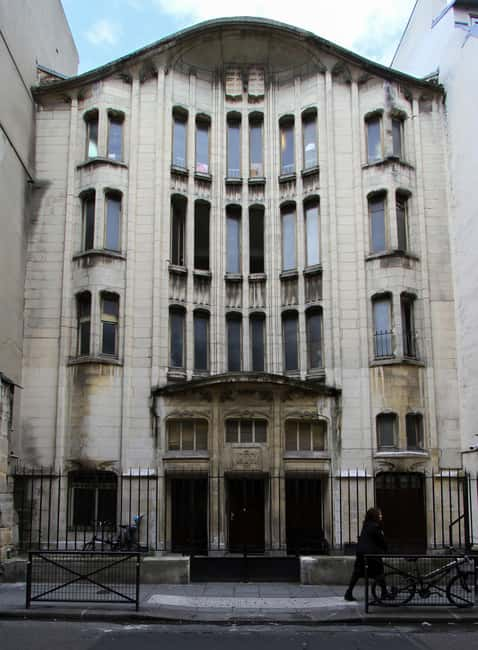
Your meeting point is the Synagogue des Tournelles, also known as the Synagogue de la rue des Tournelles. This is a practical starting point because it places you directly in the Marais’s Jewish quarter rather than beginning with a general Paris sightseeing stop.
The synagogue is visited from outside, so you should not expect an interior tour or a service. The value is the explanation around the building: how Jewish institutions fit into the neighborhood, how worship shaped community life, and how the Marais became linked with Parisian Jewish identity.
I would arrive with time to spare. The tour is private, but that does not make Paris traffic predictable. One person arriving late because of traffic received extra patience from guide Simon, yet you should still aim to reach the meeting point on time.
Because modest dress may be requested at some sites, bring a head covering or kippah. This is especially sensible for a tour centered on Jewish religious places, even though the listed visits are primarily from outside.
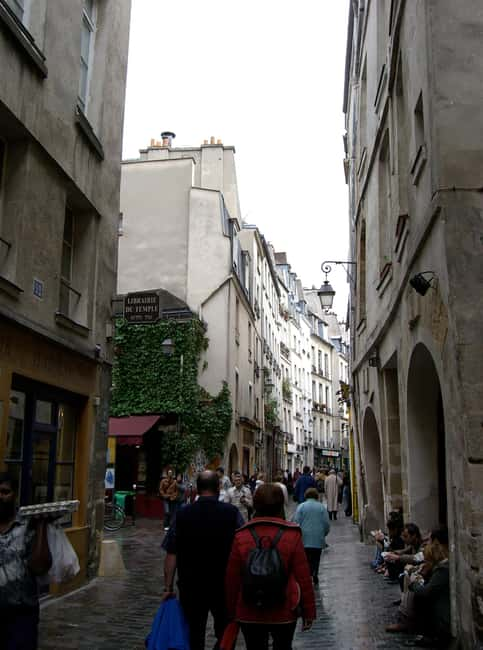
Walking through the Marais and its kosher shops
The tour then leads through the Jewish Marais, with stops at kosher shops and other sites tied to the neighborhood. These places matter because they show Jewish life as something more than monuments and memorials.
A kosher shop may look like a simple stop on a food street, but it helps you see how religious practice, family life, and neighborhood commerce continue in present-day Paris. The tour’s focus is not only on what happened centuries ago. It also addresses the community that lives in France today.
The guide explains the shift from an older, largely Ashkenazi and assimilated community to one that is now predominantly Sephardic. Many French Jews arrived from Egypt and North Africa during the 1950s and 1960s, and roughly 70 percent of France’s Jewish population is described as having roots in the Arab world.
France’s Jewish population is estimated at 450,000 to 550,000 people, with many living in Paris and the Paris region. Those figures help explain why the Marais remains an important place for Jewish culture, even as Jewish life extends well beyond this one neighborhood.
I like this section because it keeps the tour from becoming a memorial-only experience. You see a community shaped by old European traditions, migration from North Africa, religious practice, and modern French life.
Synagogues, schools, and the limits of an outside visit
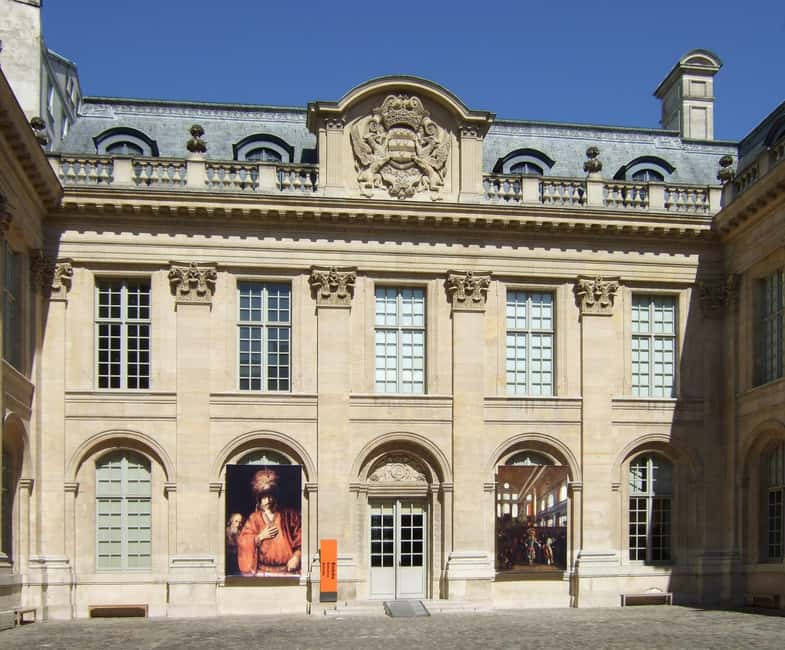
Several historic synagogues are included, but the visits are from outside. The same applies to the Museum of Jewish History. This detail should shape your expectations before you pay the $160 price.
You are buying interpretation and a guided route, not admission to multiple buildings. If you want to study synagogue interiors, museum displays, or collections at length, this tour may feel too brief. If you want someone to explain why these buildings matter as you pass them, the outside stops can work well.
One guide, Camille, took a visitor past beautiful synagogues, Anne Frank and Elie Wiesel gardens, a school badly affected by deportations, and the memorials to deportation and the Shoah. The route can therefore include more than the basic synagogue and kosher-shop outline, depending on the guide and the day’s pacing.
The private format is helpful here. Simon created a route around an older couple’s interests in history, culture, and community, and allowed time for rests and conversation. That is a real benefit if you prefer questions and discussion over a fixed speech.
Still, guide quality can vary. Simon is described as patient, friendly, and willing to adapt, while one dissatisfied participant found a guide’s English difficult to understand and felt the tour consisted too much of translating plaques. Since the activity is built around spoken explanation, clear communication matters. When booking, confirm your preferred language and, if possible, ask who will guide the tour.
More Jewish heritage tours in Paris:
- Le Marais District & Jewish Quarter Guided Walking Tour 12ppl Max
★ 5.0 · 361 reviews - Le Marais/Paris – The Historic, Trendy, Jewish, LGBT district
★ 5.0 · 341 reviews - Paris: Le Marais & Montmartre Jewish History Walking Tour
★ 4.8 · 170 reviews - Le Marais District & Jewish Quarter – Exclusive Guided Walking Tour
★ 5.0 · 154 reviews
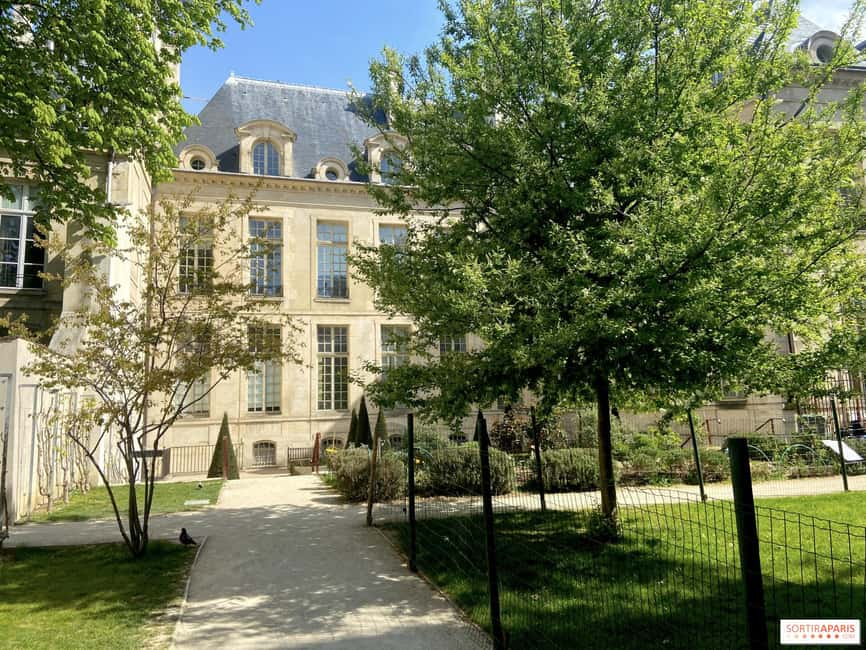
Anne Frank’s garden and the human scale of memory
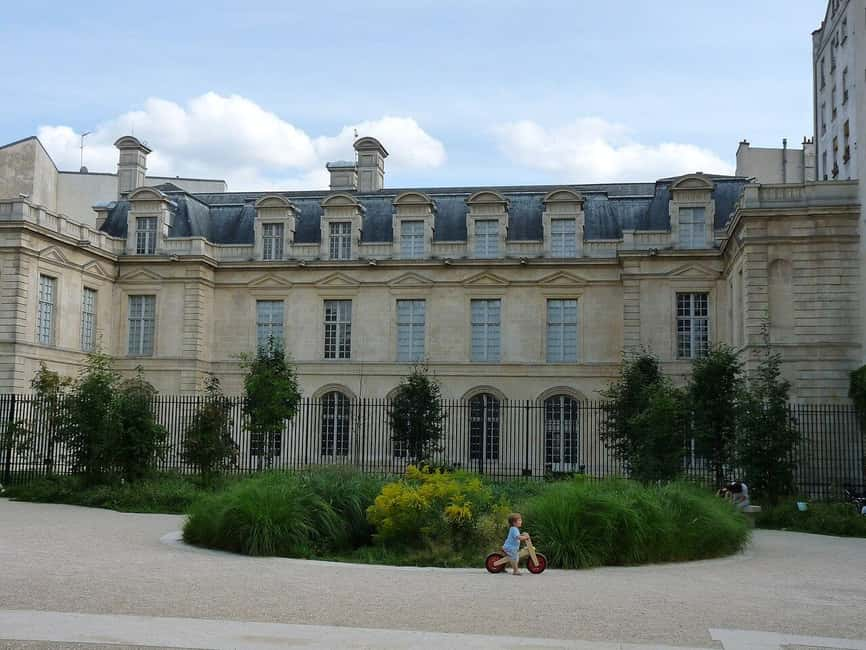
The Anne Frank Garden gives the route a quieter pause. Its connection to Anne Frank places the story of Jewish persecution within the life of a young person, rather than leaving it only as a sequence of laws, dates, and institutions.
The tour may also include a garden dedicated to Elie Wiesel. These spaces are not substitutes for a museum or archive, but they can make the subject more personal and reflective. You will have the guide’s explanation nearby, while the setting gives you a moment to absorb what you have heard.
The gardens also help break up the walking route. A two-hour tour covering religious sites, neighborhood streets, and memorials can feel information-heavy. These open spaces provide a natural place to pause, ask questions, and reset before the more solemn final stops.
Photography should be handled carefully. Flash photography is not allowed, and some locations may restrict photography altogether. Follow posted signs and let the guide set the tone, particularly at memorial sites.
The Shoah Memorial and the Deportation Memorial
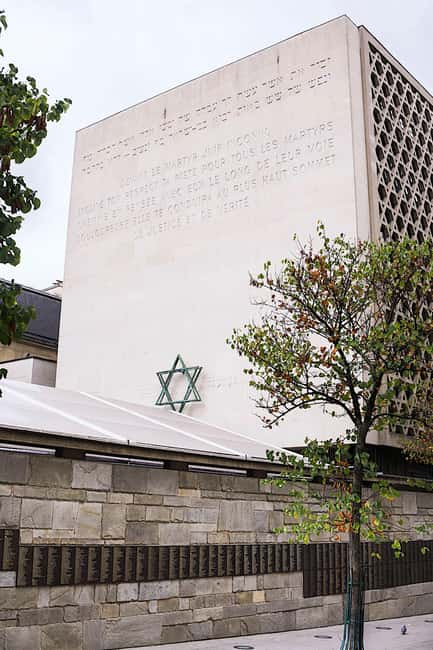
The final part of the route turns toward the Shoah Memorial and the Mémorial des martyrs de la Déportation. These are the places where the tour confronts the Holocaust and the deportation of Jews from France under the German occupation and the Vichy regime.
About 75,000 Jews died during the occupation. The tour places that fact within the longer story of French anti-Semitism, which intensified during the Dreyfus affair, grew in the 1930s, and became official policy under Vichy.
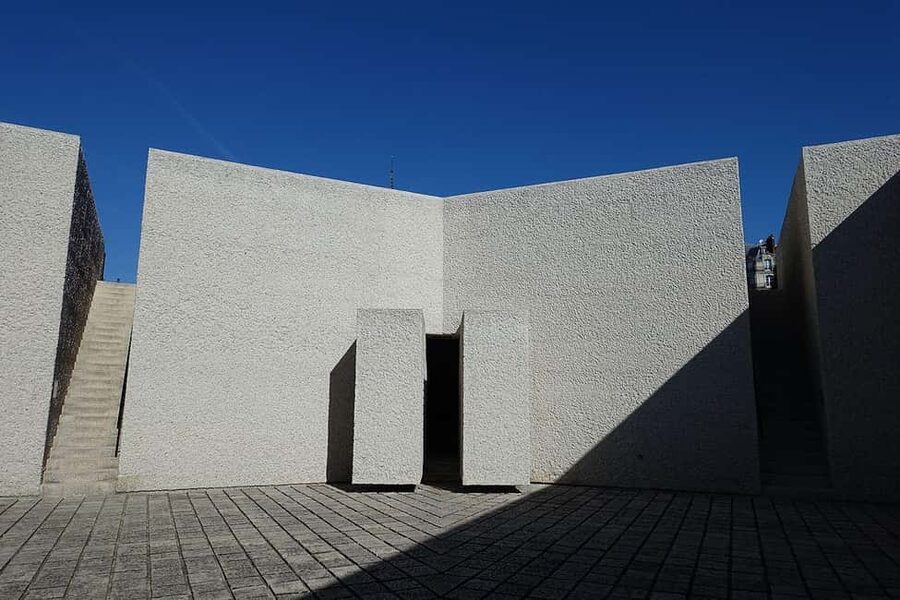
The Mémorial des martyrs de la Déportation is the listed finishing point. Its location gives the walk a clear emotional direction, moving from neighborhood life toward national remembrance. You should not expect a light final stop. This part calls for attention and quiet.
The Shoah Memorial is also seen on the route, but the supplied details do not promise an interior museum visit. That distinction matters. If you want a full museum experience, check the exact plan before booking. If you want the memorial sites explained within the geography of the Marais, the route gives you that connection.
I find the pairing of the two memorial stops useful because they address related but distinct layers of memory. One points to the Shoah and Jewish remembrance in France. The other focuses on deportation. Together, they give the final section more weight than a single plaque or monument could provide.
How the history fits together
The tour’s historical arc does not end with medieval expulsions or the Second World War. During the French Revolution, Jews received French nationality. That legal change helped create a French Jewish identity, but it did not end prejudice.
A movement sometimes called Franco-Judaism developed alongside French anti-Semitism. The Dreyfus affair showed how deeply anti-Jewish suspicion could enter public life, long before the Vichy period.
After the Second World War, France became a destination for Jews leaving Egypt and North Africa in the 1950s and 1960s. That migration changed the makeup of French Jewish life. The community today is not simply the continuation of one old Ashkenazi population. It includes many Sephardic families whose histories connect France with the wider Mediterranean and Arab world.
For you, this context makes the Marais more than a historic district. It becomes a place where several chapters overlap: medieval scholarship, expulsion, emancipation, modern migration, occupation, and present-day religious and cultural life.
What the $160 price really buys
At $160 per person, this is an expensive walking tour. The price is easier to justify for a private group that wants a tailored conversation, a slower pace, or a specialist focus on Jewish history in Paris.
The value is less convincing if you simply want to walk past the main memorials. One unhappy participant felt the guide mainly pointed out plaques and translated them, and said the memorials could have been visited independently. That criticism is worth taking seriously because the route includes several exterior stops.
I would book it when at least one of these describes your plans:
- You want a private guide rather than a large group.
- You value historical explanation and conversation.
- You are interested in both Jewish heritage and Holocaust remembrance.
- You want to adjust the pace around age, interests, or rest stops.
- You would otherwise struggle to connect the sites into one clear story.
If you are comfortable reading plaques, navigating the Marais, and visiting memorials independently, the price may be hard to defend. You will need to decide how much guided interpretation is worth to you.
The booking terms do reduce some risk. You can cancel up to 24 hours in advance for a full refund, and you can reserve now and pay later. Those policies are useful, but they do not change the central value question: you are paying mainly for the guide.
Timing, walking, and practical preparation
The tour is described as two hours, with the activity details also giving a duration of 160 minutes. Check the selected time and allow enough room for a longer walk if the guide expands the route or pauses for questions.
Expect a moderate amount of walking through city streets. Wear comfortable shoes, bring water, and pack sunscreen and a hat in warm weather. The route is not suitable for wheelchair users or people with mobility impairments, so anyone needing step-free access should not book without confirming the route directly.
The tour is offered in English or French and is private. That is useful if your group has a preferred language or wants to ask detailed questions without holding up strangers.
Bring a head covering or kippah. Some sites may require modest clothing. Smoking is not allowed, and flash photography is prohibited.
The guides and the importance of communication
Simon and Camille are the guide names connected with the strongest individual experiences supplied for this tour. Simon was praised for waiting patiently after a late arrival, answering questions, adjusting the route to an older couple, and allowing rest stops. Camille was valued for showing a broad range of sites, including synagogues, gardens, a school linked to deportations, and both memorial areas.
Those details tell you what a good version of this tour can offer: time for questions, flexibility, and a link between ordinary neighborhood sites and major historical events.
The weaker experience also gives you a useful warning. If the guide’s English is difficult for you to follow, the tour loses much of its purpose. The subject is too layered to reduce to plaques and quick translations. Confirm the language and ask whether the guide can adapt the pace to your group’s needs.
Who should book the Jewish Marais walking tour?
I would recommend this tour to a private group with a serious interest in Jewish history, French history, or Holocaust remembrance. It is particularly suitable for people who want a guide to connect sites that might otherwise feel scattered.
It can also suit older participants if you confirm that the guide will allow rests. Simon’s reported flexibility shows the private format’s potential, though you should still expect moderate walking.
Families and first-time visitors may appreciate the route’s structure, but the subject is difficult. The memorial portion requires maturity and attention. Anyone seeking a light neighborhood stroll should choose a different Marais walk.
Should you book it?
Book this tour if you want the Marais explained as a living Jewish neighborhood and as a place of remembrance. The strongest parts are the private format, the chance to discuss questions directly, the mix of kosher shops and religious sites, and the final movement toward the Shoah and deportation memorials.
Skip it if you mainly want interiors, museum admission, or a cheap orientation walk. With several stops viewed from outside and a price of $160 per person, the guide must provide clear, thoughtful interpretation to make the cost worthwhile.
Before booking, confirm the guide’s language, ask which sites will be included, and be ready for moderate walking. With a strong guide such as Simon or Camille, this can be a moving and useful way to understand how Jewish life in France has changed across centuries. With a guide who only translates plaques, it will feel overpriced.
FAQ
Where does the tour begin?
The tour begins at the Synagogue des Tournelles in Paris’s Marais district.
Where does the tour finish?
The tour finishes at the Mémorial des martyrs de la Déportation.
How long does the tour last?
The activity is described as lasting two hours, with the details also listing 160 minutes. Check the available starting time when booking.
Is the tour private?
Yes. The activity is offered as a private group tour.
Which languages are available?
The tour is offered in English and French.
Does the tour enter the synagogues?
The synagogues are visited from outside. You should not assume that the tour includes interior access.
Is the Museum of Jewish History visited inside?
The Museum of Jewish History is included as an outside stop. The supplied details do not promise museum admission or an interior visit.
What should I bring?
Bring comfortable shoes, water, a hat, sunscreen, and a head covering or kippah. Modest dress may be required at some sites, and flash photography is not allowed.
More walking tours in Paris
- Paris Top Sights Half Day Walking Tour with a Fun Guide
★ 5.0 · 2,893 reviews - Montmartre Hidden Gems and Scenic Highlights Walking Tour
★ 5.0 · 2,684 reviews - Montmartre Hill French Gourmet Food and Wine Tasting Walking Tour
★ 5.0 · 2,588 reviews - Paris Île de la Cité and Notre-Dame Walking Tour With Crypt
★ 5.0 · 2,272 reviews
Just added around Paris
- Private Paris Marche d’Aligre Walking Tour with Tastings★ 5.0 · 8 reviews
- Private Louvre Museum Tour for Kids & Families with Alberto or his team in Paris★ 5.0 · 41 reviews
- Private Highlights of Paris Tuk-Tuk Experience★ 5.0 · 26 reviews
- Paris Latin Quarter Walking Tour: History & Culture – Small Group★ 5.0 · 14 reviews
- Private Highlights of Paris Bike Tour★ 4.5 · 15 reviews
- Paris Musee d’Orsay PRIVATE TOUR with a Local Private Guide★ 5.0 · 41 reviews
- Paris Revolutionary Walking Tour: Iconic French Sights & Stories★ 5.0 · 11 reviews
- Private Half Day Historic Tour★ 5.0 · 58 reviews
Le Marais Tours, compared.
Award-Winning Paris French Bakery Experience — Le Marais, 4th Arr
Read our review →
Paris Le Marais Food Tour With 10+ Tastings, Cheese, Wine & More
Read our review →
Paris Le Marais District Original Food and Wine Tasting Tour
Read our review →
Paris Bike Tour Hidden Secrets in the Latin Quarter & Le Marais neighborhoods
Read our review →
Food and Wine Tasting Walking Tour in Le Marais
Read our review →
Le Marais District & Jewish Quarter Guided Walking Tour 12ppl Max
Read our review →
Le Marais/Paris – The Historic, Trendy, Jewish, LGBT district
Read our review →
Paris Le Marais Food & Wine Tour with Eating Europe
Read our review →Browse the lists this tour appears in