
Reviewed · PARIS PASTRY AND MACARON CLASSES
Kids in the Kitchen – CrOisSaNtS
The best part of this Paris activity is simple: your child gets to make breakfast instead of only looking at it in a bakery window. In a private apartment near the Picasso Museum, an English-speaking host introduces kids to croissants, pain au chocolat, and the laminated dough called pâte feuilletée levée.
I like the small group, capped at six, and the fact that children do the work themselves. I also like the playful touches, including coloring croissants and making chocolate or cinnamon-sugar versions, while adults get coffee or tea and a useful lesson in the difference between viennoiseries and French pastry.
The main caution is the setting. You must climb to a fifth-floor apartment with no elevator, and one family found that the hands-on work felt limited despite the stated small group and supplied batches of ingredients. At $159.70 per person, this is a costly 90-minute activity, so it works best for families who value participation more than a bargain.
Key points to know before booking
- A private Le Marais apartment: The class takes place at 14 Rue des Coutures Saint-Gervais, beside the Picasso Museum.
- Kids make their own pastries: The hands-on session centers on croissants and pain au chocolat, with child-friendly coloring and shaping.
- A small group of up to six: This should allow personal help, although the amount of individual participation may depend on how the session is organized.
- English instruction: The experience is offered in English, with coffee or tea for the adults.
- A fifth-floor walk-up: There is no elevator, so this is not suitable if you cannot manage the stairs.
- A pricey but memorable option: The cost makes sense for families seeking a special activity, not for anyone simply wanting a pastry lesson at the lowest price.
A pastry class instead of another Paris landmark
Paris can fill a family day with grand sights, long queues, and tired children. This workshop offers a change of pace. You enter an apartment in the Marais and spend about an hour and a half working with dough, shaping pastries, and learning why the French breakfast table separates viennoiseries from other pastries.
That setting gives the class a personal feel. You are not in a large cooking school with rows of workstations. You are in a private Parisian home near the Picasso Museum, which makes the activity easy to pair with a museum visit or a walk through the Marais.
The class is built around croissants, but the menu also includes pain au chocolat. Children make the pastries themselves, and the finished snacks are part of the experience. That matters with younger children, who often remember what they touched and shaped more clearly than another painting or church interior.
The workshop is offered in English, so you and your child can follow the explanations without needing French. The hosts named in the supplied information include Yasmin, Noura, Maria, and Carlos. The tone can vary by host, but the strongest accounts describe patient guidance, encouragement, and close attention to children.
More family-friendly days in Paris:
- Paris: Louvre Private Family Tour for Kids + Reserved Entry
★ 4.6 · 508 reviews - Paris Kids and Families Private Louvre Tour
★ 5.0 · 430 reviews - Paris Sightseeing Family Friendly Guided Electric Bike Tour
★ 5.0 · 405 reviews
Working with pâte feuilletée levée
The technical heart of the class is laminated dough. The host explains the dough used for French breakfast pastries, including how the layers create the flaky texture associated with a good croissant.
You should not treat this as a professional baking course in miniature. Ninety minutes is enough for an introduction and hands-on shaping, but not for a full baker’s education. The value is in giving children a clear sense of how a familiar pastry is made and why it takes more care than mixing a simple cake batter.
The lesson also covers the difference between viennoiseries and French pastry. That distinction adds useful context. Viennoiseries are the buttery, often yeasted breakfast pastries associated with croissants and pain au chocolat, while French pastry covers a wider range of sweets and baked treats.
For adults, this vocabulary makes a visit to a Paris bakery more rewarding. You begin to notice that the morning pastry counter is not just a row of attractive shapes. Different doughs, fillings, and methods lead to different names and textures.
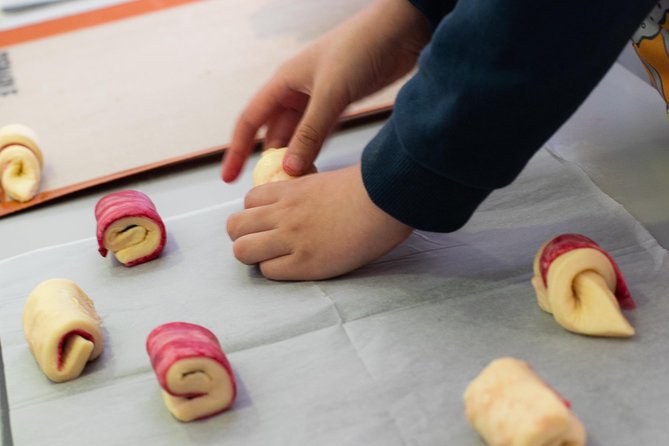
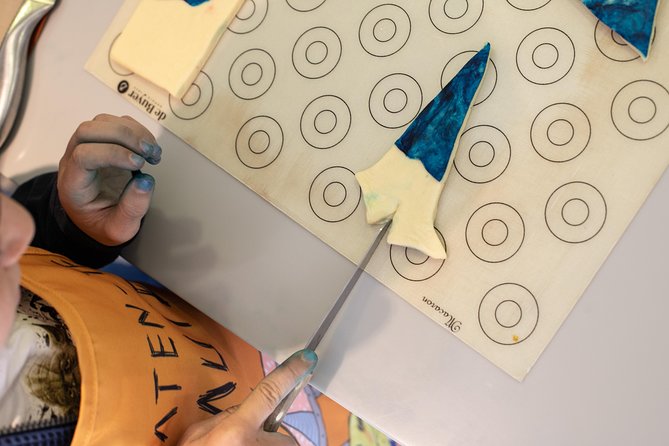
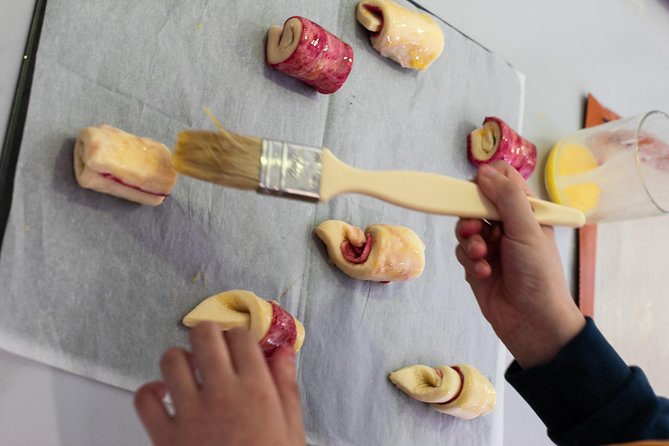
The children’s role is practical rather than decorative. The activity is designed so they stretch, shape, and work with the dough. One particularly positive account describes children taking part in every step, while another notes that the host praised a child throughout the process. That kind of steady encouragement can make a nervous young baker willing to try.
Coloring croissants and shaping breakfast
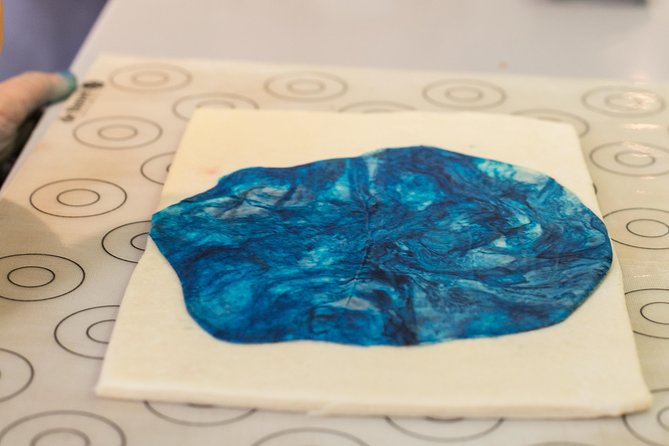
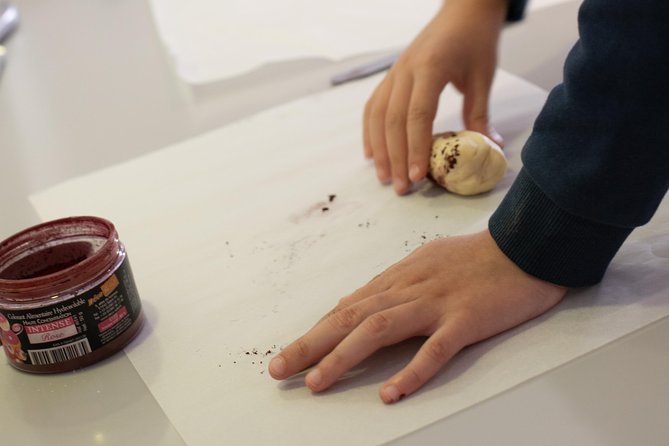
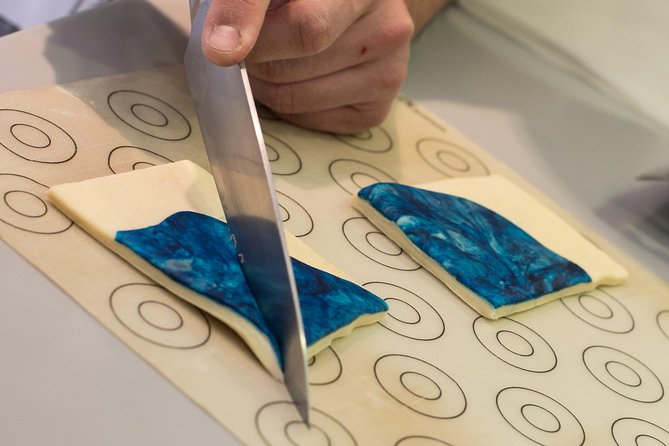
The coloring element gives the class a playful edge. It is aimed at children, not at producing bakery-perfect pastries, and it helps keep the activity lively while the host explains the process.
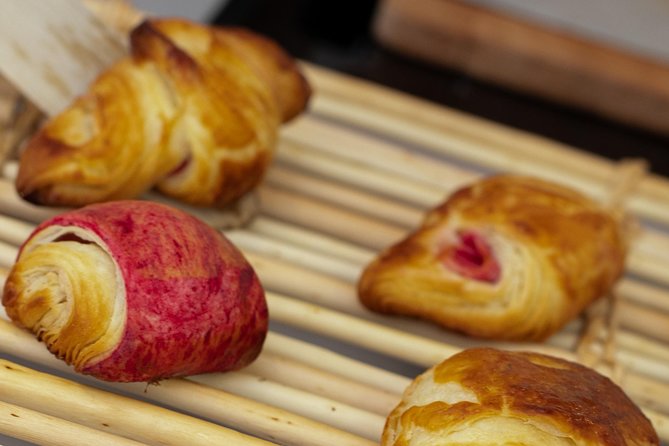
The menu includes croissants and pain au chocolat, and the hands-on versions may include chocolate and cinnamon-sugar fillings. These choices give children room to make something familiar and something a bit different. A plain croissant can feel like a lesson, while a chocolate or cinnamon-sugar pastry feels like a personal creation.
You should expect the finished pastries to be eaten as snacks during or after the class. Ingredients, tools, and aprons are provided for use during the session. You may also take photos and videos, which is useful when a child wants to remember the shapes and repeat the recipe later.
The class does not promise that you will leave with a box of pastries for the rest of the day. The supplied food is described as croissants and pain au chocolat made by the children, so plan to enjoy them at the apartment rather than count on taking a large supply across Paris.
This is also a good activity for a child who likes to work with their hands. If your child would rather watch a demonstration, the class may feel less rewarding. The strongest benefit comes when the child is ready to participate rather than sit back.
What the small group means in practice
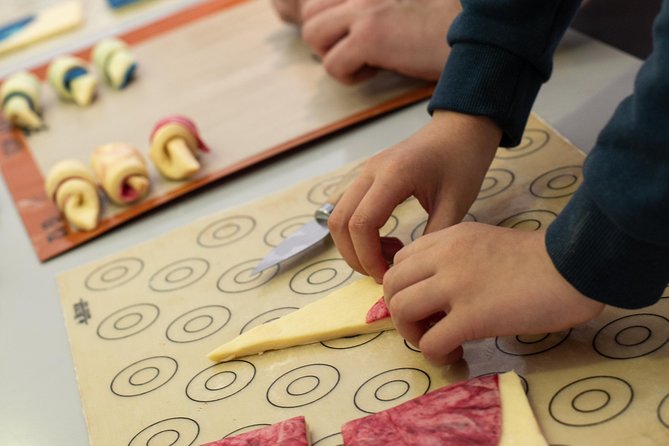
The maximum group size is six. That is a useful limit for a family class because the host can watch children shape the dough and answer questions without managing a full room.
Still, you should understand one possible weakness. One family of six felt that only two people could participate because there were not enough materials available at the same time. The organizer’s response was that each participant received a batch, suggesting that the problem may have been confusion or uneven organization rather than a planned limit on participation.
I would treat this as a point to clarify before booking if every member of your party wants equal hands-on time. Ask how many children can work at once and whether each person receives their own dough batch. That is especially important at this price.
The best experiences appear to come when the host gives children direct attention. Noura is praised for patience and clear instruction, while Maria is described as warm with children and passionate about cooking. Yasmin is also singled out as fun and engaging. Names and teaching styles may vary by date, but the host is central to the quality of the class.
Adults should be ready to help without taking over. A parent who lets the child handle the dough, even when the shape is imperfect, will get more from the activity. You may learn enough to try croissants at home, though the first home attempt could be messy. That is part of the fun, provided you do not expect a professional bakery result on your first try.
More pastry and macaron classes in Paris:
- Paris: Montmartre Cheese, Wine & Pastry Guided Walking Tour
★ 4.8 · 2,255 reviews - Private Montmartre Food Tour with Wine, Cheese & Pastries
★ 5.0 · 1,027 reviews - Paris French Sweets Tasting Tour with Pastries and Chocolates
★ 4.5 · 947 reviews - Paris Croissant Small-Group Baking Class with a Chef
★ 5.0 · 910 reviews
The fifth-floor setting near the Picasso Museum
The address is 14 Rue des Coutures Saint-Gervais in the Marais, close to the Picasso Museum. This is a convenient area for a family day because you can build the class into a walk around one of central Paris’s most visited neighborhoods.
The apartment itself is part of the experience. You get a more personal setting than a commercial kitchen, and the atmosphere can feel welcoming for children. Several positive accounts specifically value the cozy apartment environment and the sense that the class is a shared family activity.
There is a practical tradeoff. The apartment is on the fifth floor and has no elevator. The activity is not suitable for anyone who cannot manage that climb, and parents with small children should think about carrying bags, coats, or tired children upstairs.
The address is near public transportation, so reaching the neighborhood should be straightforward. The supplied details do not specify a particular metro station or route, so check your own route on the day and allow enough time to find the building.
The end point is the same as the meeting point. You will not be sent across town after baking, which makes it easier to plan a museum visit, lunch, or a quiet walk afterward.
Is $159.70 per person good value?
At $159.70 per person, this is not a low-cost pastry lesson. A family of four would spend a substantial amount before adding any other Paris activities, so the price deserves a clear reason.
You are paying for more than ingredients. The cost includes an English-speaking host, a private apartment setting, tools, an apron, coffee or tea, and a structured activity aimed at children. You also get the rare Paris experience of making a classic breakfast pastry rather than simply buying one.
The price is easier to justify if your child is excited by cooking and your family wants a memorable break from sightseeing. It is harder to justify if you mainly want to taste a croissant. Paris has many bakeries where you can buy excellent pastries for a fraction of the cost.
A nonparticipating companion costs 35 euros, payable on site. This matters if one parent wants to watch without baking, or if a relative is accompanying the family. It may be more economical for every person who attends to participate, provided the age and group arrangements suit them.
The activity requires a minimum number of participants. If that minimum is not reached and the class is canceled, you are offered another date or experience, or a full refund. In every other case, the booking is non-refundable and cannot be changed for any reason. That strict rule makes travel planning important, especially for families with uncertain schedules.
Who will enjoy this most?
I would recommend this for families with children who enjoy cooking, crafts, or making things with their hands. It is also a good choice for a child who needs a quieter activity after several busy sightseeing days.
The workshop suits parents who want to take part without needing advanced baking skills. The host supplies the ingredients, tools, and apron, and the session is taught in English. You can focus on your child rather than packing equipment.
It may also work well as a birthday-style activity during a Paris trip, though the supplied information does not promise a private booking or special celebration setup. The maximum group size of six keeps the event relatively small, but you should confirm participation arrangements if your party fills all six places.
I would think twice if your child is too young to follow a hands-on lesson, dislikes food preparation, or becomes frustrated when a project does not look perfect. Croissant dough can be delicate, and the class is more enjoyable when the child sees the process as play rather than a test.
Practical details for a smooth visit
The duration is about 90 minutes. That is long enough to feel like a real activity, but short enough to fit before or after another Marais plan. Do not schedule a rushed museum entry immediately afterward, since finding the apartment and climbing five floors may take more time than expected.
The workshop is mobile-ticket friendly and confirmation is provided when you book. Bring a phone with the ticket available, and check the meeting address carefully before leaving.
Coffee and tea are included. The children’s croissants and pain au chocolat are also included, along with the ingredients, tools, and apron used during the class.
Wear clothes that can handle a little flour or chocolate. An apron is supplied, but children working with dough can still get messy around sleeves and hands. This is practical advice rather than a dress requirement.
Take pictures if you wish. The activity allows photos and video throughout, which is particularly useful for recording the shaping steps and the child’s finished pastry.
My verdict: book it for the activity, not just the food
I would book Kids in the Kitchen for a family that wants an active Paris memory and has a child eager to bake. The strongest features are the personal setting, the chance for children to do the work, the English instruction, and the encouragement provided by hosts such as Noura and Maria.
I would not book it as a budget breakfast or if the fifth-floor stairs are a problem. The cost is high, the cancellation policy is strict, and the hands-on arrangement deserves clarification after one family found participation uneven.
If you confirm that each child will have a proper turn with the dough, this can be a lovely pause in a busy Paris schedule. You leave with a better understanding of French breakfast pastries, a few useful baking ideas, and the sort of flour-dusted family memory that a standard bakery visit cannot provide.
FAQ
Where does the croissant workshop take place?
The activity takes place at 14 Rue des Coutures Saint-Gervais, 75003 Paris, in a private apartment in Le Marais near the Picasso Museum.
How long does the experience last?
The workshop lasts approximately 1 hour and 30 minutes.
Is the class offered in English?
Yes. The activity is offered in English.
What pastries do children make?
The class focuses on croissants and pain au chocolat. The supplied information also refers to chocolate and cinnamon-sugar croissants.
Are ingredients and equipment included?
Yes. Ingredients, tools, and an apron are provided for use during the experience. Coffee and tea are also included.
Can a companion attend without taking part?
Yes, but a nonparticipating companion ticket costs 35 euros and must be paid on site.
Is the apartment accessible by elevator?
No. The apartment is on the fifth floor without an elevator, so the activity is not suitable for anyone who cannot manage the stairs.
Just added around Paris
- Private Paris Marche d’Aligre Walking Tour with Tastings★ 5.0 · 8 reviews
- Private Louvre Museum Tour for Kids & Families with Alberto or his team in Paris★ 5.0 · 41 reviews
- Private Highlights of Paris Tuk-Tuk Experience★ 5.0 · 26 reviews
- Paris Latin Quarter Walking Tour: History & Culture – Small Group★ 5.0 · 14 reviews
- Private Highlights of Paris Bike Tour★ 4.5 · 15 reviews
- Paris Musee d’Orsay PRIVATE TOUR with a Local Private Guide★ 5.0 · 41 reviews
- Private Half Day Historic Tour★ 5.0 · 58 reviews
- Pere Lachaise Cemetery Paris – Exclusive Guided Walking Tour★ 5.0 · 72 reviews
Paris Pastry and Macaron Classes, compared.
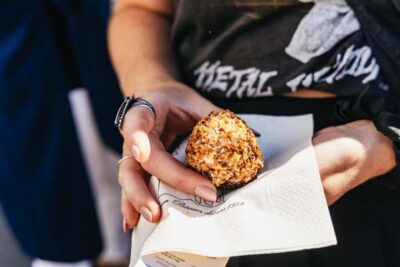
Montmartre Cheese, Wine & Pastry Guided Walking Tour
Read our review →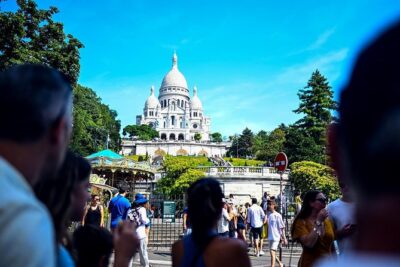
Private Montmartre Food Tour with Wine, Cheese & Pastries
Read our review →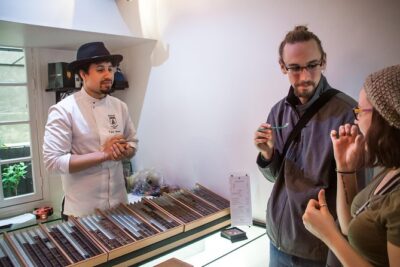
Paris French Sweets Tasting Tour with Pastries and Chocolates
Read our review →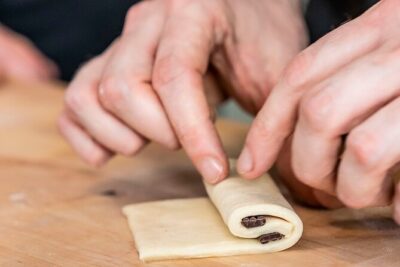
Paris Croissant Small-Group Baking Class with a Chef
Read our review →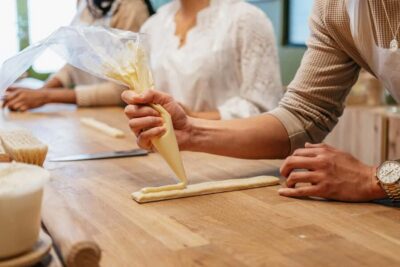
Paris Cooking Class: Learn How to Make Macarons
Read our review →
A Morning in Paris Food Tour: Croissants, Baguettes & Chocolate
Read our review →Browse the lists this tour appears in