
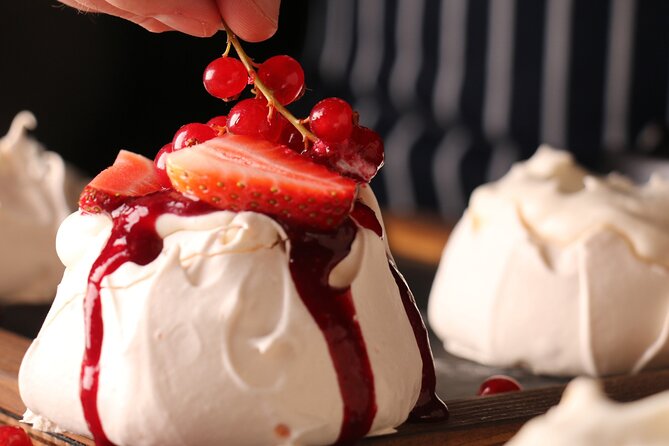
Reviewed · PARIS PASTRY AND MACARON CLASSES
All about meringue: a pastry & culinary arts workshop in Paris
The fun here is not just eating meringue. You learn how three meringue methods work, then use them in Pavlova, lemon meringue pie, and meringuettes. Evelyne adds stories about the Pavlova and French pastry, while a pastry chef guides the hands-on work.
I like the small maximum of eight people, which should give you room to ask questions and get help. I also like the blend of technique and culture: this is a pastry class with a history lesson tucked inside it, not simply a recipe demonstration. The main thing to consider is the limited public detail about the exact Paris meeting address and the price, so check those before booking.
Key points at a glance
- Three meringue styles: Learn the French, Swiss, and Italian approaches and see how each suits different desserts.
- Three finished desserts: Make Pavlova, lemon meringue pie, and small meringues called meringuettes.
- Cultural stories included: Evelyne discusses Pavlova’s history and broader French pastry traditions.
- Small English-language group: The class lasts about three hours and accepts no more than eight people.
- 3 pm start: The afternoon timing leaves your morning free for other Paris plans.
- Flexible cancellation: Cancel at least 24 hours before the start for a full refund.
Three meringues, three very different results
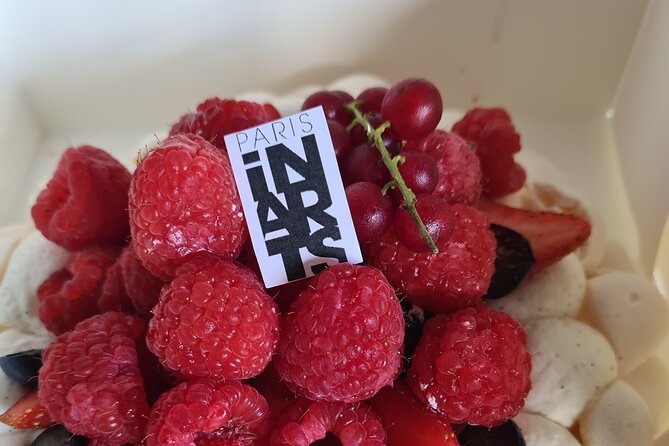
Meringue looks simple. Egg whites and sugar do most of the work. Yet the method changes the texture, stability, and best use of the finished mixture.
This workshop covers French, Swiss, and Italian meringue, giving you a useful foundation rather than one narrow recipe. French meringue is generally associated with whipping sugar into raw egg whites. Swiss and Italian methods use heat in different ways, which affects how the mixture behaves. The class description does not promise a technical chart or formal comparison sheet, but the structure of the workshop lets you see why pastry cooks do not treat all meringue as the same thing.
That distinction matters once you assemble desserts. A crisp little meringue calls for a different result from a soft Pavlova center. A lemon meringue topping also needs to work with a tart filling, not merely taste sweet on its own.
I like this format because it gives you a way to connect technique with purpose. You are not memorizing three names for the sake of it. You are making several desserts and seeing how the preparations support them.
More cooking classes in Paris:
- Paris Cooking Class and Lunch with Wine plus Market Visit Option
★ 5.0 · 1,024 reviews - Paris Cooking Class: Learn How to Make Macarons
★ 5.0 · 634 reviews - Paris: French Macaron Culinary Class with a Chef
★ 4.9 · 591 reviews
Pavlova comes first as a story and a dessert
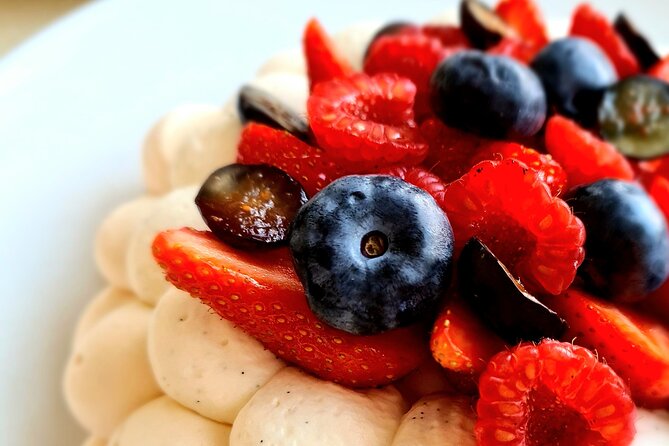
Pavlova is one of the best teaching desserts for meringue. It pairs a crisp shell with a softer interior and usually works with cream and fruit, though the exact preparation here is not fully specified.
Evelyne discusses the history of the Pavlova, along with cultural details tied to the dessert. That adds welcome context. Pavlova is often wrapped in a simple story about its name and origin, but its cultural path is more interesting than a quick recipe card suggests. The workshop uses that background to show how desserts travel, change, and pick up meaning along the way.
You also learn about the cream that accompanies the meringue and how the parts are assembled. Assembly is where many home bakers need help. A dessert can have good components and still feel heavy, flat, or unbalanced if they are put together without care.
The value here is practical. You get to think about texture, sweetness, and structure as parts of one dessert. If you already bake, this may sharpen your judgment. If you are new to pastry, it gives you a clear example of how a finished dessert is built.
Lemon meringue pie brings contrast
The lemon meringue pie portion gives the class a different problem to solve. Pavlova is light and open in form. Lemon meringue pie brings a pastry base, lemon cream, and a meringue topping into one slice.
The advertised workshop specifically includes lemon cream, so you should expect attention to the relationship between sharp citrus and sweet meringue. That contrast is one reason the dessert is such a useful classroom example. The meringue is not there by itself. It has to balance the lemon and sit properly with the pastry.
The class also covers the creams that accompany each dessert, including lemon and whipped cream. That is a strong point for anyone who wants more than a decorative baking session. Creams affect moisture, sweetness, and how long a dessert holds its shape. Even a short lesson on those links can change the way you approach recipes at home.
The exact kitchen equipment, recipe quantities, and take-home arrangements are not provided, so do not book expecting a detailed list of inclusions unless the provider confirms them. The useful promise is the hands-on process and the explanation of how the components fit together.
Meringuettes keep the focus on technique
Meringuettes are small meringues, and they make a sensible part of this workshop. A large dessert can hide mistakes under cream, lemon, or fruit. Small plain meringues put the mixture itself on display.
That makes them useful for noticing texture and finish. You can pay attention to how the meringue is shaped and how it behaves after baking. The available information does not specify the exact shape, flavor, or decoration, so I would treat this as a technique exercise rather than expect a particular design.
For home bakers, these small pieces may be the easiest lesson to repeat. They can help you understand the basic meringue method before you attempt a more involved Pavlova or pie. They also show how one pastry preparation can move from a central dessert component to a small finished sweet.
More pastry and macaron classes in Paris:
- Paris: Montmartre Cheese, Wine & Pastry Guided Walking Tour
★ 4.8 · 2,255 reviews - Private Montmartre Food Tour with Wine, Cheese & Pastries
★ 5.0 · 1,027 reviews - Paris French Sweets Tasting Tour with Pastries and Chocolates
★ 4.5 · 947 reviews - Paris Croissant Small-Group Baking Class with a Chef
★ 5.0 · 910 reviews
The cream and assembly lesson matters
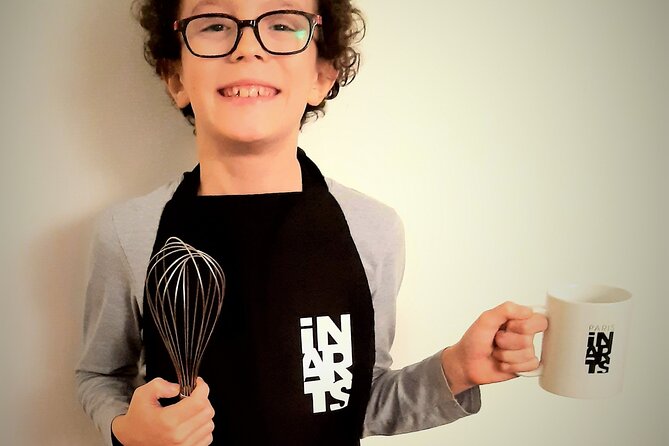
Many pastry classes focus on making a base. This one also includes the creams and the assemblies, which is important. A finished dessert depends on timing and order, not just on a successful meringue.
You should expect to work through how the meringue is paired with lemon cream or whipped cream. The class description does not spell out the exact assembly sequence, so I cannot promise that every participant makes every component from start to finish. Still, the stated focus makes it clear that the workshop is designed around complete desserts rather than an isolated bowl of whipped egg whites.
This is also where the small group helps. With a maximum of eight people, you have a better chance to see the chef’s method and ask about texture, thickness, or presentation. The group size is not a guarantee of one-to-one instruction, but it is more manageable than a large demonstration.
A pastry class with a cultural layer
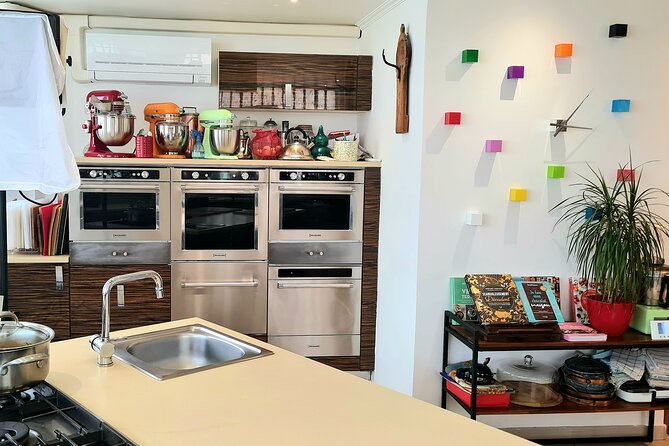
iN ARTS presents this as both a pastry and culinary arts workshop. The cultural side covers the history of French pastry and major trends that have passed through different periods.
That idea gives the afternoon a wider frame. You are not only learning how to make three desserts. You are also looking at how French pastry developed and how particular sweets connect to wider food culture.
Evelyne is the host named in the available information, and her role includes the anecdotes about meringue. Past participants also singled out her stories and the clear explanations from the pastry chef. The chef’s name is not provided, so you should not expect to select a particular instructor when booking.
I value this combination because pastry can otherwise become a string of instructions: whip, fold, pipe, bake. Stories help explain why a dessert matters and why a technique became popular. They also make the class more memorable than a standard recipe lesson.
At the same time, the cultural part will not suit someone who wants a nonstop practical class with no discussion. The workshop is intentionally built around both practice and food culture. If you want only to bake as quickly as possible, the historical material may feel like extra time.
What the three-hour afternoon looks like
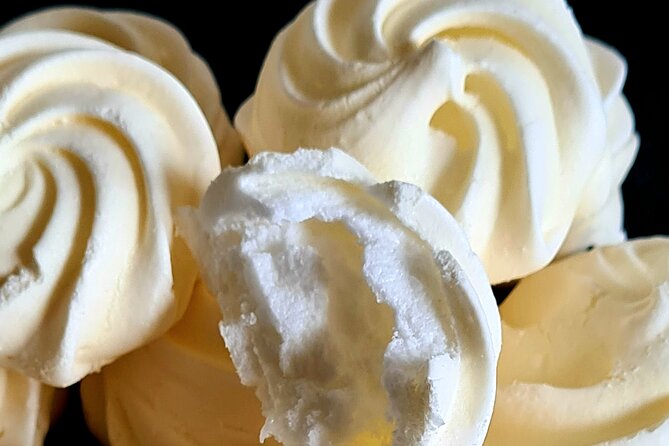
The session starts at 3 pm and lasts about three hours. That is a useful Paris schedule. You can spend the morning at a museum or market, have lunch, and then attend the class without giving up an entire day.
The exact running order is not published, but the content points to a clear progression:
- An introduction to the three meringue styles and the cultural background.
- Preparation of meringue and accompanying creams.
- Work on Pavlova, lemon meringue pie, and meringuettes.
- Guidance on assembly and discussion of pastry traditions.
Because the class includes several desserts, expect a steady pace. Three hours is enough for a focused workshop, but not enough for long pauses between every stage. If you prefer slow, highly private instruction, the group setting and broad menu may feel brisk.
The activity begins and ends at the meeting point in Paris. The listing gives Paris as the start location but does not provide a street address in the supplied details. Confirm the precise meeting point before setting out. The class is near public transportation, which should make the afternoon easier to fit into your plans, but the exact transit stop is not stated.
The small group changes the feel
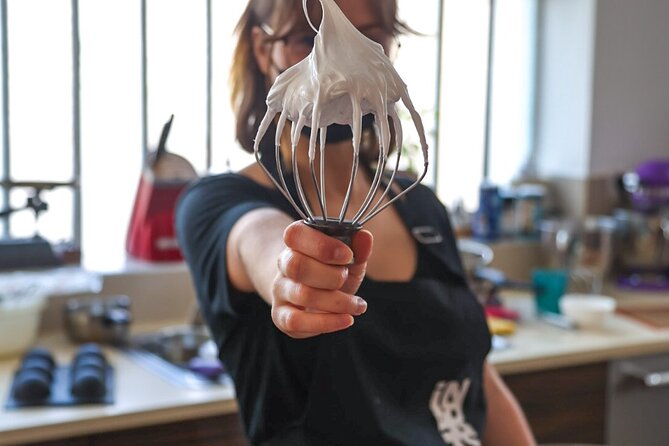
A maximum of eight people is one of the clearest advantages here. You are likely to have a more personal setting than in a large cooking school, with fewer people competing for the chef’s attention.
That matters when meringue goes wrong. Whipping, folding, shaping, and assembling all benefit from quick corrections. A small group also makes it easier to follow questions about the differences between French, Swiss, and Italian methods.
The class is offered in English, so you can take part without relying on translation. The information does not state the language abilities of every staff member beyond the English offering, nor does it specify whether recipes are provided in print. Ask if those details matter to you.
The tone appears designed to be friendly and relaxed. That can help beginners, especially those who feel nervous around pastry. It may be less appealing if you want an advanced professional course with a formal syllabus and highly technical pastry theory.
Who gets the most from this workshop
I would recommend this experience to several kinds of people:
- Meringue fans: You get three desserts built around the same core subject.
- Home bakers: The comparison of methods and the attention to assembly can be useful after you return home.
- Food-history enthusiasts: Evelyne’s anecdotes and the discussion of French pastry trends add context beyond the recipes.
- Couples and friends: The three-hour format gives you a shared activity with something to taste and discuss.
- First-time pastry students: The small group and clear explanations should make the class approachable.
Families with young children should confirm age rules before booking, since no age policy is supplied. The same applies to dietary restrictions. Lemon, cream, eggs, sugar, and pastry are central to the advertised menu, but the provider does not state whether substitutions are available.
This class is less suited to someone seeking a full tour of Paris or a broad French cooking course. It has one tight subject: meringue and the desserts built from it.
Value, timing, and booking details
No price is provided in the information available here, so I cannot judge the exact cost against other Paris cooking classes. I can still explain what you are paying for: about three hours of instruction, a small group capped at eight, three dessert preparations, pastry chef guidance, English-language teaching, and cultural discussion led in part by Evelyne.
That package offers better value for you if you want both a practical activity and a food story. If you only want to eat a dessert, a pastry shop will cost less and take less time. If you want to learn a repeatable technique in a personal group, the class has a stronger case.
Booking confirmation arrives within 48 hours, subject to availability. Keep that timing in mind if your Paris schedule is tight. You receive a mobile ticket, and the experience is scheduled to return to the same meeting point.
The cancellation terms are friendly if your plans may change. Cancel at least 24 hours before the local start time for a full refund. Inside that 24-hour window, you receive no refund, and changes are not accepted. I would confirm the address, price, age rules, dietary policy, and what happens to the finished desserts before paying.
Final decision: book it for focused pastry learning
I would book this workshop if you want a small, English-language afternoon centered on how meringue works and why these desserts matter. The strongest features are the three meringue styles, the mix of Pavlova, lemon meringue pie, and meringuettes, and the cultural stories that keep the class from feeling like a plain recipe demonstration.
The main cautions are simple: the exact price and meeting address are not included here, and the activity may move at a steady pace because it covers several desserts in three hours. Confirm those practical points first.
If you enjoy pastry, like learning with your hands, or want a Paris activity that produces more than a photograph, this is a sound choice. If you want a general French cuisine lesson, a full market visit, or a long, slow baking course, choose something broader.
FAQ
Where does the meringue workshop take place?
The workshop takes place in Paris. The supplied details identify Paris as the start and end location but do not give the exact street address.
How long does the experience last?
The workshop lasts approximately three hours.
What time does the class start?
The scheduled start time is 3 pm.
What desserts will I make?
The sample menu includes Pavlova, lemon meringue pie, and meringuettes.
Which meringue methods are covered?
The workshop covers French, Swiss, and Italian meringue.
Is the workshop offered in English?
Yes. The experience is offered in English.
How many people can attend, and what is the cancellation policy?
The group has a maximum of eight people. You can cancel at least 24 hours before the start time for a full refund. Cancellations or changes made within 24 hours are not accepted and are not refunded.
More perfume and craft workshops in Paris
- Fragonard Paris: Mini Perfume Workshop
★ 4.5 · 1,924 reviews - Paris: Macaron Class at Galeries Lafayette
★ 4.3 · 905 reviews - Paris: 2-Hour Perfume Creation Workshop
★ 4.8 · 731 reviews - Paris: French Croissant Baking Class with a Chef
★ 4.9 · 712 reviews
Just added around Paris
- Private Paris Marche d’Aligre Walking Tour with Tastings★ 5.0 · 8 reviews
- Private Louvre Museum Tour for Kids & Families with Alberto or his team in Paris★ 5.0 · 41 reviews
- Private Highlights of Paris Tuk-Tuk Experience★ 5.0 · 26 reviews
- Paris Latin Quarter Walking Tour: History & Culture – Small Group★ 5.0 · 14 reviews
- Private Highlights of Paris Bike Tour★ 4.5 · 15 reviews
- Paris Musee d’Orsay PRIVATE TOUR with a Local Private Guide★ 5.0 · 41 reviews
- Pere Lachaise Cemetery Paris – Exclusive Guided Walking Tour★ 5.0 · 72 reviews
- Paris Revolutionary Walking Tour: Iconic French Sights & Stories★ 5.0 · 11 reviews
Paris Pastry and Macaron Classes, compared.
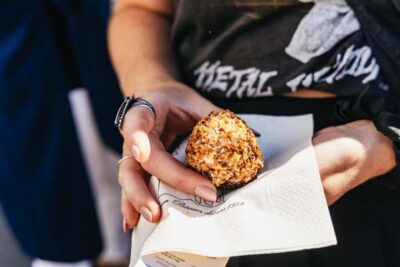
Montmartre Cheese, Wine & Pastry Guided Walking Tour
Read our review →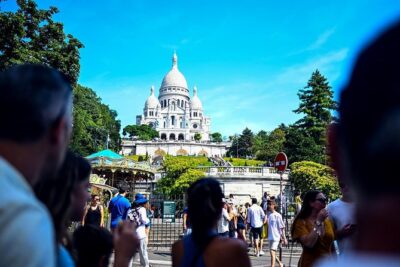
Private Montmartre Food Tour with Wine, Cheese & Pastries
Read our review →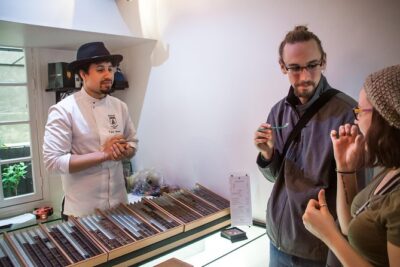
Paris French Sweets Tasting Tour with Pastries and Chocolates
Read our review →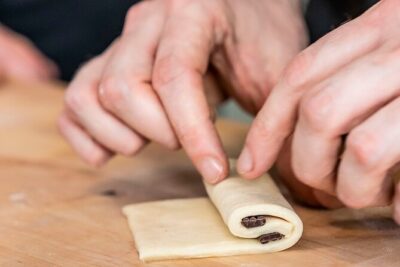
Paris Croissant Small-Group Baking Class with a Chef
Read our review →
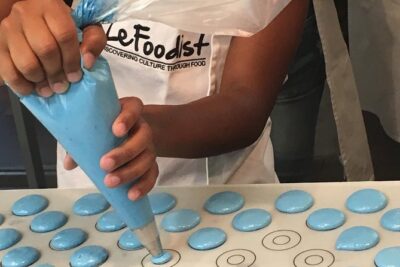
Paris Cooking Class: Learn How to Make Macarons
Read our review →
A Morning in Paris Food Tour: Croissants, Baguettes & Chocolate
Read our review →Browse the lists this tour appears in