
Reviewed · PARIS WALKING TOURS
Historic Paris Walking Tour in English
Paris makes more sense when you connect its grand monuments with the events that shaped them. This 150-minute walking tour links the Louvre, Notre Dame, Pont des Arts, Tuileries Gardens, Sainte-Chapelle, and other central sights through stories of kings, revolutions, art, and daily life.
I like the strong narrative and the practical starting point at Hotel de Ville, close to the river and easy to reach by metro. I also like the guides’ lively approach. Tom, Harry, Thomas, Yazid, Francesca, and others have been praised for making art and political history clear without turning the walk into a lecture.
The main drawback is that this is an outdoor overview, not a museum visit. You will see major sights from the outside, but the price does not include entry to the Louvre, Sainte-Chapelle, Notre Dame, or other attractions. Paris streets can also be crowded, and the tour covers a lot in two and a half hours.
Key points to know before booking
- A smart first-day introduction: The route gives you a useful map of central Paris and helps you decide which sights deserve a longer visit.
- Stories connect the monuments: Expect Quasimodo, Napoleon, the Mona Lisa theft, revolution, religion, war, and urban redesign.
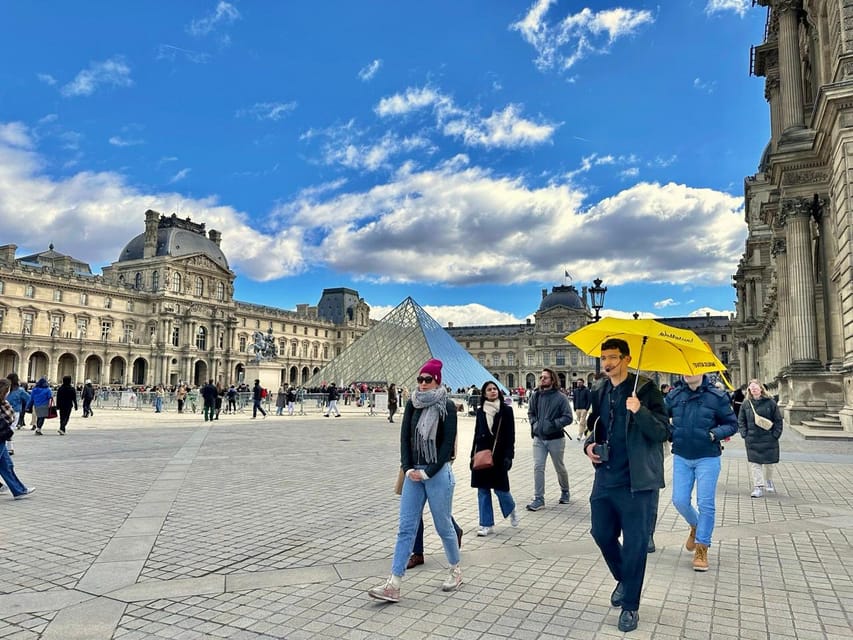
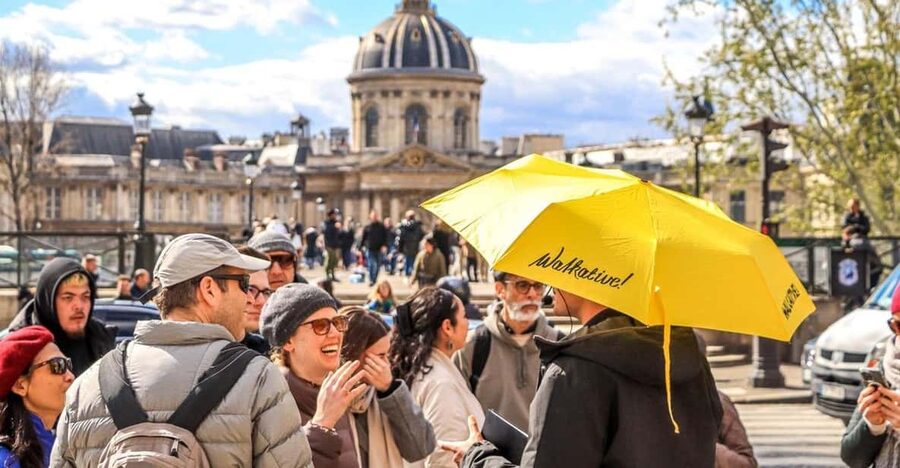
- Central meeting point: Meet outside Hotel de Ville metro station at exit 5, under a yellow umbrella.
- English-only walking tour: A live local guide leads the group in English for 150 minutes.
- Good value for a history-minded visitor: At $31, you pay for a guided overview and a carefully shaped story, not attraction admission.
- Best in comfortable weather: You spend the entire tour outdoors, so sensible shoes and weather-ready clothing matter.
Why this is a useful first walk in Paris
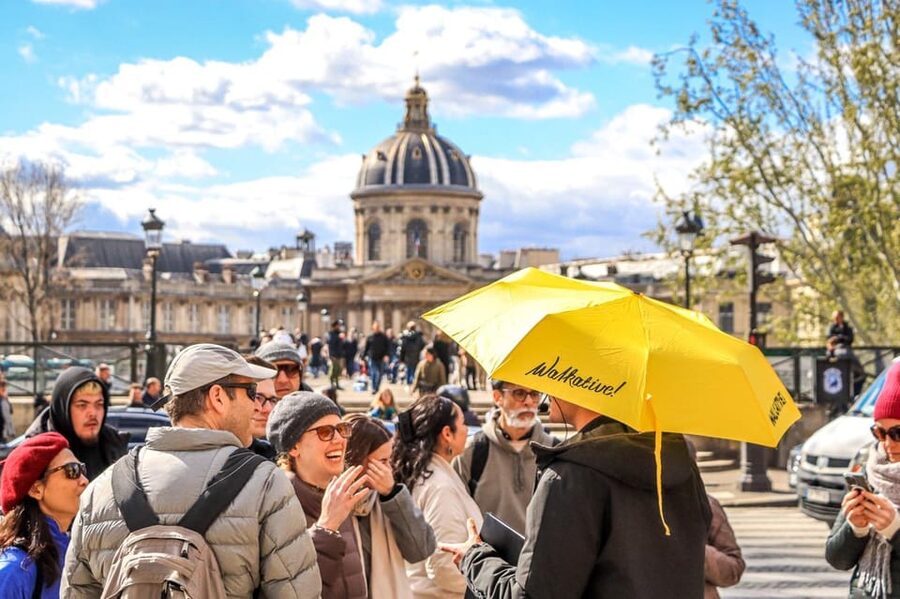
Paris can feel like a pile of famous names at first: Louvre, Notre Dame, Seine, Tuileries, Pont des Arts, Sainte-Chapelle. The value of this walk is that it puts those places into one connected story.
You begin near Hotel de Ville, a natural place to start thinking about Paris as a political city. From here, the guide can place the Seine, the historic center, and the old power structures on a mental map. That matters because the city is easy to admire but harder to understand. A good guide helps you see why a palace became a museum, why churches mattered so much, and why wide boulevards changed the way people moved and rebelled.
This is also a good choice if you are visiting alone. One solo participant described the tour as a comfortable first activity in France, and that makes sense. You get company without committing to a full-day excursion, and the guide gives you enough context to explore afterward with more confidence.
The walk is designed for people with different levels of interest. If you already know French royal history, you may enjoy the extra connections between buildings, art, and political power. If kings, queens, wars, and revolutions usually make your eyes glaze over, the storytelling and humor should keep the material moving.
More walking tours in Paris:
- Paris Top Sights Half Day Walking Tour with a Fun Guide
★ 5.0 · 2,893 reviews - Montmartre Hidden Gems and Scenic Highlights Walking Tour
★ 5.0 · 2,684 reviews - Montmartre Hill French Gourmet Food and Wine Tasting Walking Tour
★ 5.0 · 2,588 reviews
Hotel de Ville and the story of Paris
The meeting point is outside the metro at Hotel de Ville, exit 5. Look for the yellow umbrella, and arrive about 10 minutes early. That small amount of preparation is worth it in a busy city, especially if you are unfamiliar with Paris metro exits.
The opening story reaches back to the Parisii, the Gallic people associated with the early settlement around the Seine. From there, the guide traces Paris through Roman rule, the rise of the Franks, medieval growth, religious conflict, the Enlightenment, revolution, Napoleon, and the rebuilding of the 19th century.
The useful part is not simply the number of dates. The tour explains how Paris became France’s political, religious, economic, and cultural center. You hear about the Sorbonne and the city’s role in education, along with the pressures of poverty and inequality that helped drive the French Revolution.
This section gives the rest of the walk a frame. When you later see a palace, church, bridge, or boulevard, you have some idea of which part of Parisian power it represents.
Notre Dame and medieval Paris
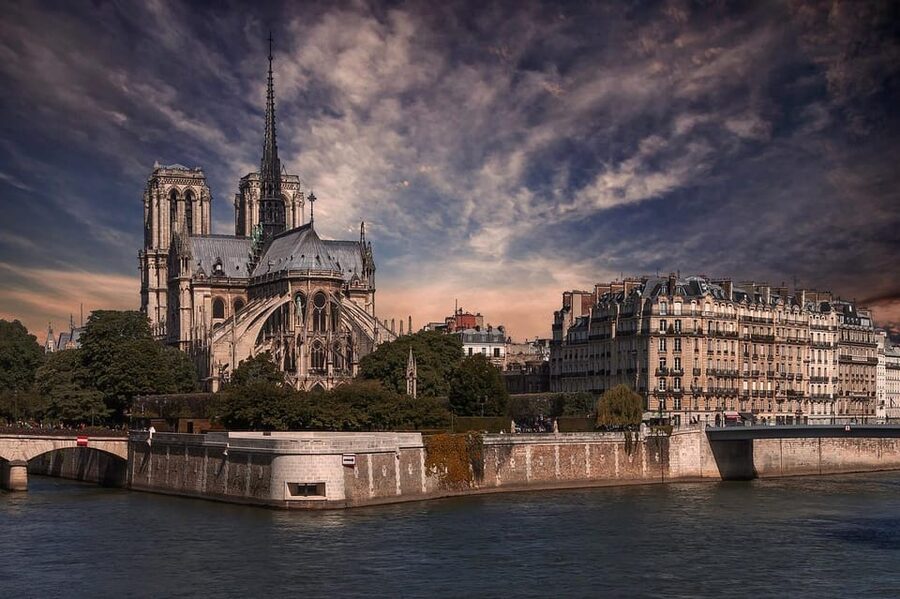
Notre Dame is one of the key stops, and the cathedral provides a strong lesson in medieval Paris. The tour focuses on its place in the city’s religious and cultural life, along with stories linked to Quasimodo and Victor Hugo’s famous fictional world.
You should not expect a full interior visit. The experience is a walking tour, and entry tickets are not included. The value here is the guide’s explanation of why the cathedral matters and how it fits into the older city around the Seine.
Notre Dame also helps you notice the contrast between medieval Paris and the later city built around it. The older center developed in tight, complicated patterns, while later rulers and planners pushed for greater order, wider routes, and more formal public spaces.
If you want to spend serious time inside Notre Dame or inspect its details at close range, plan a separate visit. Treat this stop as an orientation and a chance to hear the stories before you return on your own.
Sainte-Chapelle and the power of spectacle
Sainte-Chapelle appears among the sights covered on the route. It is another reminder that medieval Paris was not only a commercial city but also a center of royal and religious power.
The guide’s role here is to place the chapel within that larger story. You may see the exterior and hear why the site matters, but this tour does not include admission. That distinction is important because Sainte-Chapelle is the sort of place many people will want to revisit for its interior.
I like this approach for a first visit. You get enough information to decide if you want to return, rather than spending your entire day inside one monument before you understand how it relates to the rest of the city.
More history tours in Paris:
- Paris: Dark History and Ghostly Guided Walking Tour
★ 4.7 · 1,000 reviews - Le Marais/Paris – The Historic, Trendy, Jewish, LGBT district
★ 5.0 · 341 reviews - Paris: Le Marais & Montmartre Jewish History Walking Tour
★ 4.8 · 170 reviews - Arc de Triomphe Rooftop: Unveil History & Breathtaking Views
★ 3.1 · 23 reviews
Pont des Arts and the Seine
Pont des Arts gives the walk one of its most pleasant pauses. The bridge connects the grand museum district with the river and offers a clear sense of how the Seine organizes central Paris.
The bridge is also a useful place for the guide to discuss Parisian culture, romance, art, and the city’s habit of turning ordinary infrastructure into a setting for drama. You get a different view of the Louvre, the riverbanks, and the movement of the city from here.
This is a walking tour, not a photo stop expedition, so the pause may be brief. Still, the bridge helps break up the history and lets you experience the city rather than only hear about it.
Bring a camera if you like, but keep your attention on the group. With several major sights packed into 150 minutes, the guide needs to keep everyone moving.
The Louvre as palace, museum, and crime scene
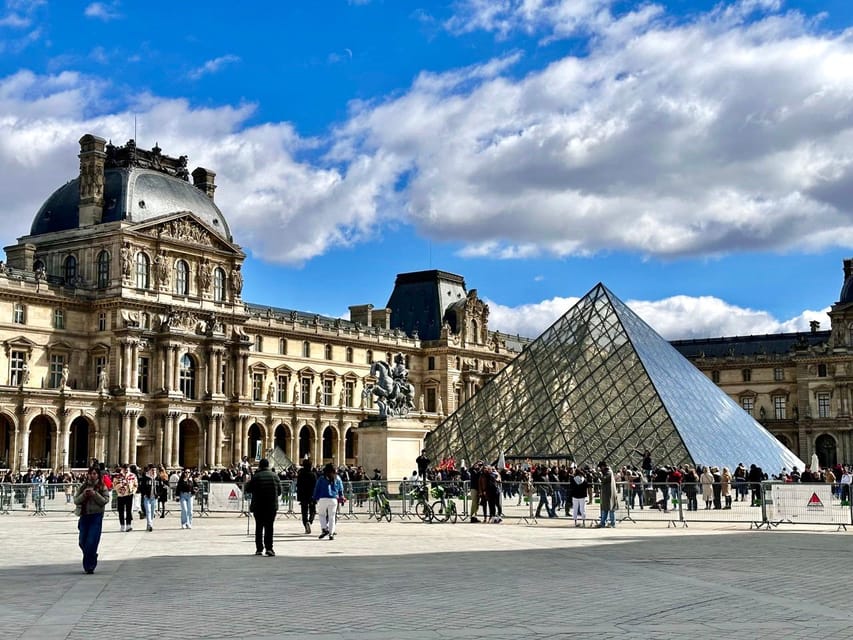
The Louvre is one of the tour’s main subjects. The important idea is that the Louvre was not built simply as a museum. Its history reaches back to its role as a royal palace, which helps explain its scale, courtyards, wings, and place in French national identity.
The guide also tells the story of the Mona Lisa theft, described as one of the boldest art thefts in history. This is exactly the sort of detail that makes a large institution feel human. Instead of only hearing about collections and architecture, you hear about desire, opportunity, fame, and the strange power of a single painting.
The tour does not include Louvre entry or time inside the galleries. That is both a limitation and a sensible choice. The Louvre can consume an entire day, and trying to combine a meaningful museum visit with a broad city walk would leave you rushing through both.
Use the tour to learn how the Louvre fits into Paris. Then return with a plan for the departments or works you most want to see.
Tuileries Gardens and the grand city
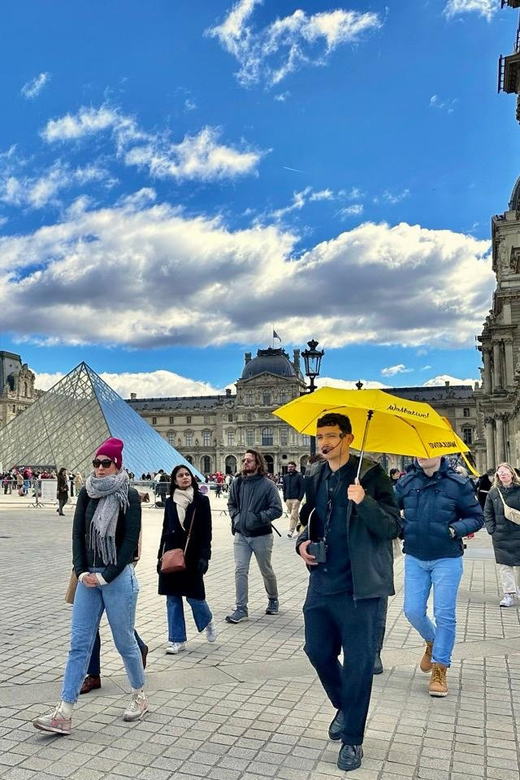
The Tuileries Gardens offer a welcome change from buildings and bridges. Here, the guide can explain how gardens, palaces, public space, and royal authority were tied together.
The gardens also help you understand the grand axis of central Paris. From the Louvre through the Tuileries, the city opens into a more formal sequence of paths and views. It is a good place to talk about the image Paris wanted to project: controlled, elegant, and powerful.
You may want to stay after the tour for a slower walk or a picnic. The tour description specifically points toward the pleasure of enjoying French food and wine in the city’s gardens, so consider buying a baguette, cheese, and something to drink before or after the walk. The guide does not provide food, but the setting makes an easy extension to your afternoon.
Boulevards, revolutions, and Napoleon
A major strength of the narrative is the connection between Parisian rebellion and urban planning. Paris was repeatedly shaped by revolts, political clashes, and street fighting. In the 19th century, the city was rebuilt with wide boulevards, parks, aqueducts, and sewers.
The practical reason for the wide boulevards was not only hygiene and traffic. They also made it harder to build barricades. That is a memorable way to understand how architecture can serve political aims.
Napoleon adds another layer to the story. His rise followed the Revolution, and his influence reached far beyond France. The tour uses Napoleon as a bridge between revolution, military power, national ambition, and the monuments that still shape Paris.
The Eiffel Tower is also included among the sights associated with the walk. You should expect an exterior view or discussion rather than a climb, since admission is not part of the activity. The story of Parisians first protesting the tower and later embracing it gives the monument a useful human edge.
The guides and the feel of the walk
The guide can make or break a history walk, and the strongest pattern here is clear: the best guides keep the group involved. Tom is described as informative and helpful with questions. Yazid brings art history and enthusiasm. Harry is praised for storytelling and for making the past feel close. Thomas combines detailed history with humor, while Francesca is credited with sharing less obvious places along the route.
The names may vary by departure, so you should not book expecting one particular person unless the reservation specifically confirms it. What you can reasonably expect is an English-speaking local guide with a prepared narrative.
The walk is not presented as a strenuous hike. One participant described it as good exercise without being hard, and another noted that the group finished on time. Still, you are on your feet for 150 minutes, so comfortable shoes matter more than stylish ones.
Group size can vary. One account described a group of fewer than 20 people, but that should not be treated as a fixed limit. A smaller group makes questions easier, while a larger one may feel less personal.
Is $31 good value?
At $31 per person, this tour sits in a useful middle ground. You are not paying for attraction tickets, transport, food, or hotel pickup. You are paying for an English-language guide and a planned story that brings several major sights together.
I consider that fair if you are new to Paris or want a quick historical framework. A private guide would cost much more, while exploring alone can leave you looking at famous buildings without knowing what deserves your attention.
The booking information also describes this as a general pay-as-you-wish tour, with the reservation fee covering the booking and guide payment in this case. Read the payment terms carefully when booking so you understand that the $31 is not simply an optional tip.
Free cancellation is available up to 24 hours before the activity, and you can reserve while paying later. Those terms are helpful if your Paris schedule is still shifting.
Who should book this Paris walk?
I would recommend it to first-time visitors, solo visitors, couples who want context before exploring alone, and anyone who enjoys stories about art, power, religion, and revolution.
It also suits mixed-interest groups. A serious history fan can follow the political and military material, while a less committed companion can enjoy the architecture, humor, bridges, gardens, and unusual stories.
You may want something else if your main goal is interior access. This is not the right choice if you want a long Louvre visit, a detailed cathedral tour, or a specialized art lecture. It is also less appealing in poor weather because the whole activity takes place outside.
FAQ
How long does the Historic Paris Walking Tour last?
The tour lasts 150 minutes, or two and a half hours.
What language is the tour in?
The tour is conducted in English by a live guide.
Where is the meeting point?
Meet at Hotel de Ville, outside the metro at exit 5. Look for a yellow umbrella.
How early should I arrive?
You should arrive 10 minutes before the activity begins.
What sights are covered?
The experience covers or discusses the Louvre, Notre Dame Cathedral, Pont des Arts, Tuileries Gardens, Sainte-Chapelle, the Eiffel Tower, Parisian boulevards, and bridges.
Is admission to the Louvre included?
No. The price covers the walking tour and guide, not entry to the Louvre.
Is hotel pickup available?
No. Hotel pickup and drop-off are not included.
Can I cancel for a refund?
Yes. You can cancel up to 24 hours in advance for a full refund.
Can I reserve now and pay later?
Yes. The booking terms allow you to reserve your place and pay later.
Should you book it?
Book this tour if you want a lively introduction to central Paris, especially at the start of your visit. The route covers the city’s biggest names, but the real benefit is the connection between them: palace and museum, cathedral and story, bridge and river, garden and royal power, boulevard and revolution.
At $31, it is a sensible buy for a first orientation, provided you understand that major interiors are not included. Choose comfortable shoes, arrive early at Hotel de Ville, and leave time afterward for the Louvre or Sainte-Chapelle if their interiors are high on your list.
Just added around Paris
- Paris: The Da Vinci Code Walking Tour with a Local Guide★ 4.3 · 5 reviews
- Paris: Flea Market Insider’s Tour in Extra-Small Group★ 4.6 · 73 reviews
- Paris: Private Fashion Tour (Chanel, Dior, Sex & the City)★ 5.0 · 3 reviews
- Paris: Floral Earrings workshop★ 5.0 · 3 reviews
- Paris: Fashion History Walking Tour in the Heart of Paris★ 4.9 · 22 reviews
- PARIS: Family e-bike longtail renting★ 5.0 · 3 reviews
- Paris: Famous Monuments Cycling Tour★ 4.7 · 20 reviews
- Paris: private city tour with seine river cruise★ 4.8 · 28 reviews
Paris Walking Tours, compared.
Paris Top Sights Half Day Walking Tour with a Fun Guide
Read our review →
Montmartre Hidden Gems and Scenic Highlights Walking Tour
Read our review →
Montmartre Hill French Gourmet Food and Wine Tasting Walking Tour
Read our review →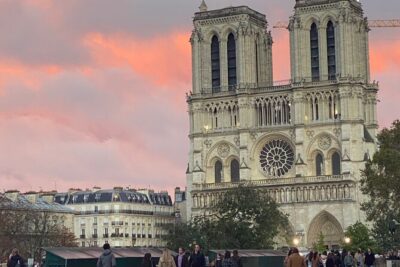
Paris Île de la Cité and Notre-Dame Walking Tour With Crypt
Read our review →
Montmartre Cheese, Wine & Pastry Guided Walking Tour
Read our review →
Paris in a Day: Louvre or Orsay, Eiffel Tower, City Walk & Cruise
Read our review →
Montmartre Highlights Walking Tour with a Local Guide
Read our review →
Browse the lists this tour appears in