
Reviewed · PARIS PASTRY AND MACARON CLASSES
Paris: French Croissant Baking Class with a Chef
Making a croissant is less about tossing dough in the oven and more about patience, butter, folds, and careful shaping. At Maison Fleuret, you work through the process with a pastry chef, then leave with croissants, pain au chocolat, and often cinnamon pastries made by your own hands. The small group size and step-by-step teaching make this a friendly class for beginners.
I like two things in particular: you get practical skills you can use at home, and the class turns a rainy morning into a warm, social Paris experience. Instructors such as Guillaume, Felix, Alice, and Erika are praised for clear teaching and good humor. The main consideration is cost: at $159 per person, this is not a cheap breakfast, though the generous supply of pastries and take-home food helps explain the price.
Key points at a glance
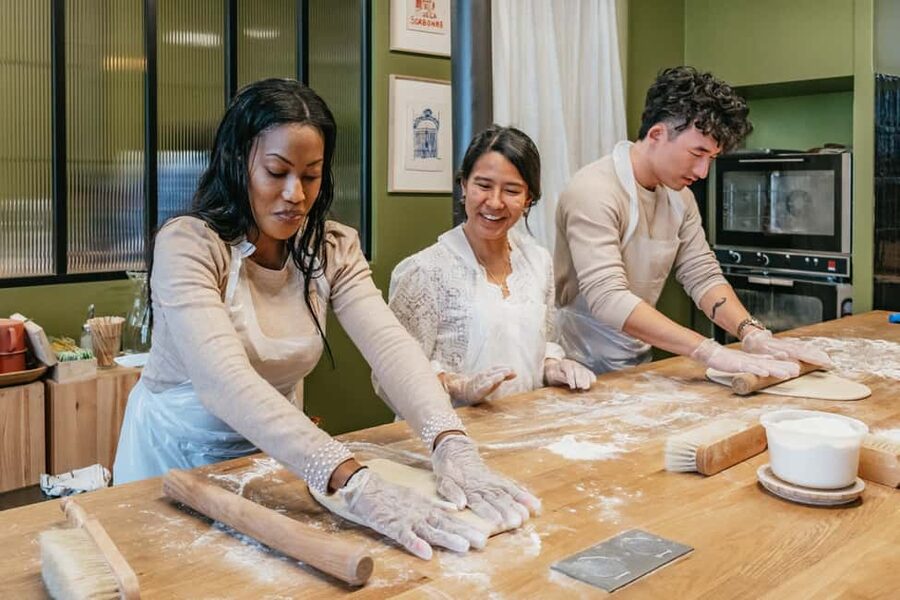
- A real croissant workshop: Learn butter-rich laminated dough, shaping, and baking with a professional chef.
- Small class of up to eight: You get room to ask questions and receive hands-on help.
- More than plain croissants: The class can include pain au chocolat and cinnamon swirls or chocolate snails.
- A useful Paris souvenir: Take home the pastries you make, along with recipes sent afterward.
- English instruction: The chefs teach in English, making the technical steps easier to follow.
- A Left Bank setting: Maison Fleuret is at 3 Rue des 3 Portes, near Notre Dame and other central sights.
What happens at Maison Fleuret
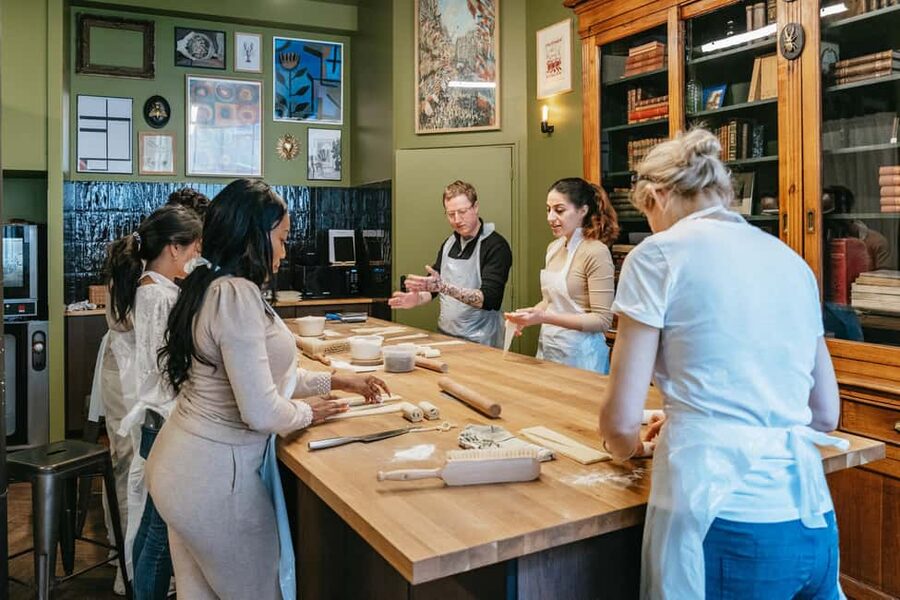
The experience begins at Maison Fleuret, a pastry school on the Left Bank at 3 Rue des 3 Portes. The setting is designed to feel like a traditional French home, rather than a large commercial kitchen. That matters here. A croissant class works best when you can see the chef’s hands, hear the instructions, and keep track of your own dough.
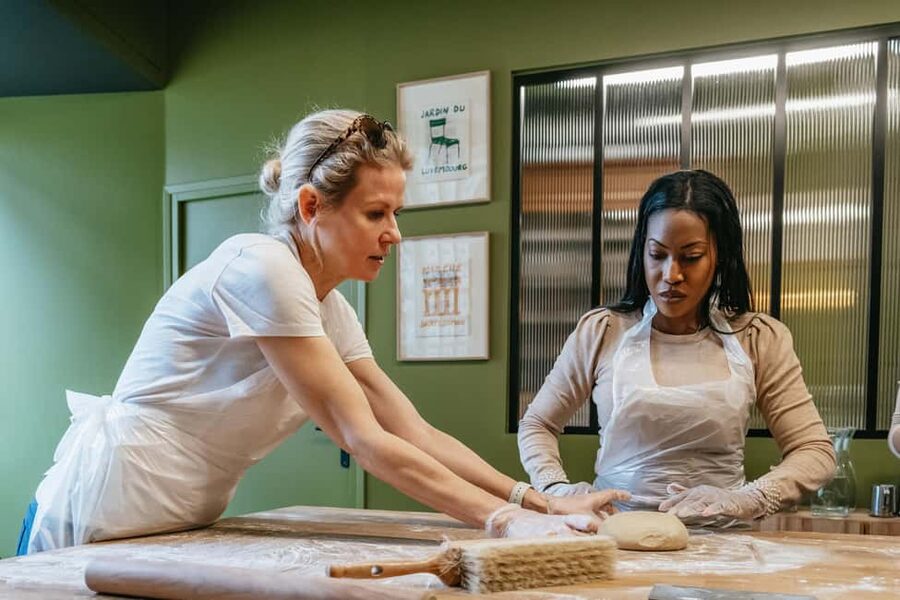
The class lasts 150 minutes, or two and a half hours. You meet your chef and the other participants, receive the equipment you need, and settle into a small working group. The maximum of eight people keeps the session personal without making it feel like a private lesson.
The chef introduces the basic idea behind the croissant and explains how this pastry became popular in France, particularly with Parisians in the early 20th century. It is a short cultural lesson, not a formal lecture, but it gives the food some context before you start handling flour and butter.
The class is taught in English. Different sessions may have different instructors, including chefs named Guillaume, Felix, Alice, Erika, Ke, Lauren, and Manel. The teaching style can vary slightly, but the consistent aim is clear: show you each stage, let you do the work, and correct mistakes before they ruin the final pastry.
More pastry and macaron classes in Paris:
- Paris: Montmartre Cheese, Wine & Pastry Guided Walking Tour
★ 4.8 · 2,255 reviews - Private Montmartre Food Tour with Wine, Cheese & Pastries
★ 5.0 · 1,027 reviews - Paris French Sweets Tasting Tour with Pastries and Chocolates
★ 4.5 · 947 reviews
Why laminated dough takes patience
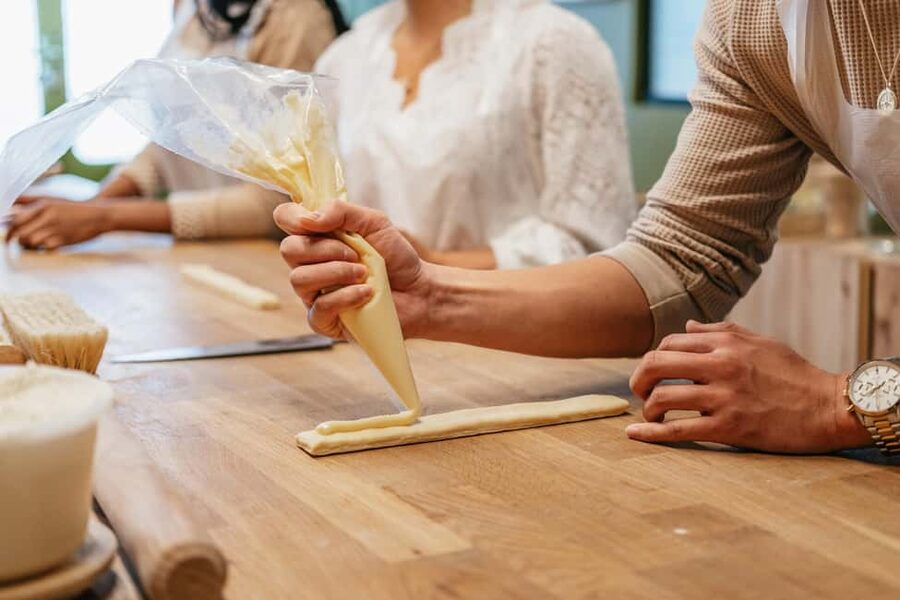
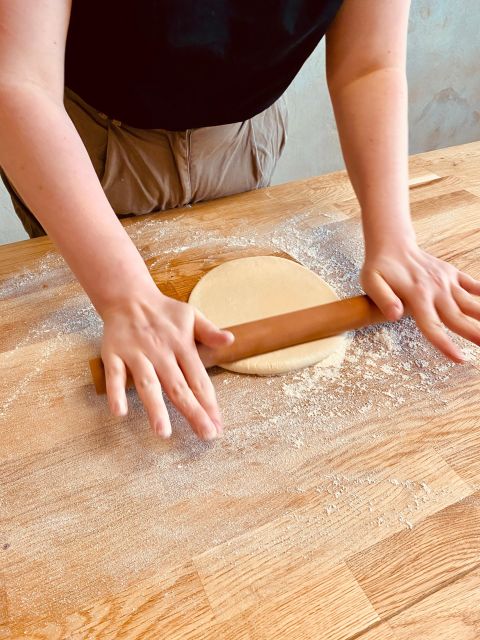
The heart of the class is laminated dough. This is the process that creates the delicate layers inside a good croissant. You work butter into the dough through repeated folding and rolling, then shape the dough into pastries that can bake into crisp, airy crescents.
The technique looks simple when a professional does it quickly. At home, it is easy to press too hard, let the butter soften too much, or roll the dough unevenly. That is where the chef’s guidance earns its keep. You see how the dough should feel and look at each stage, rather than relying only on a printed recipe.
You are involved in the work instead of watching a demonstration from the sidelines. That makes the class more useful for anyone who has tried to bake croissants before and ended up with dense dough, leaking butter, or layers that never opened properly.
Several instructors are praised for breaking a difficult process into manageable steps. Guillaume, in particular, is described as patient and clear, while Felix is noted for combining serious pastry skills with a playful manner. That mix is useful because croissant making can feel intimidating at first.
Shaping croissants, pain au chocolat, and cinnamon pastries
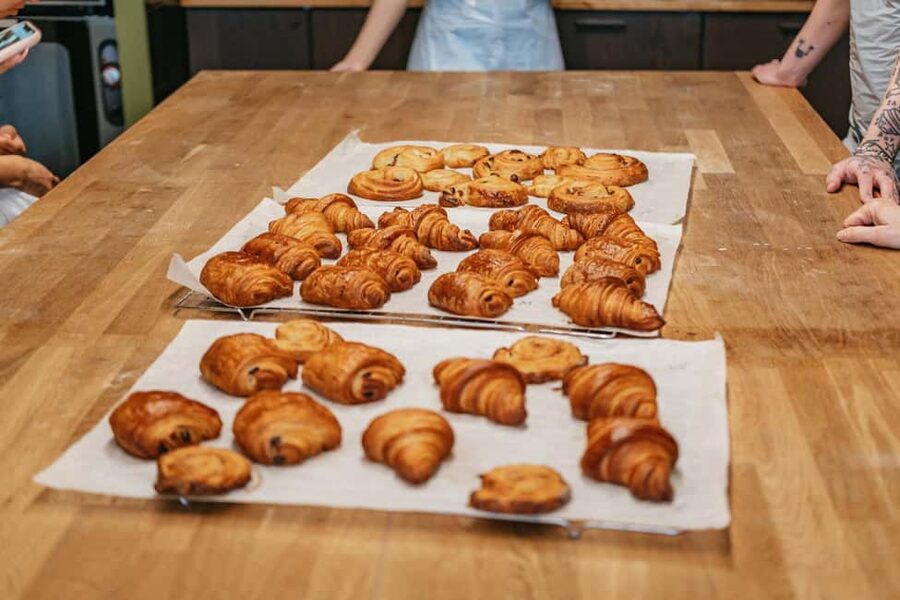
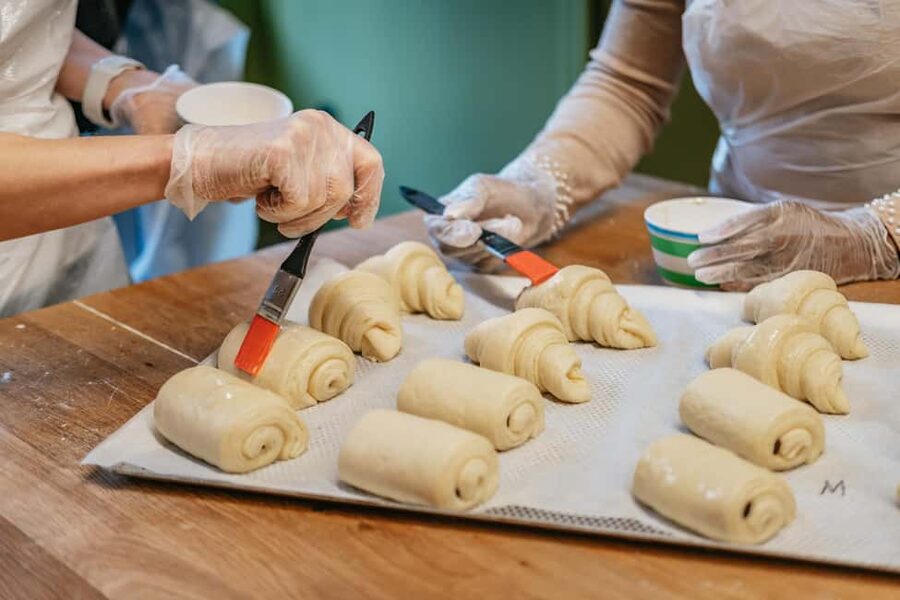
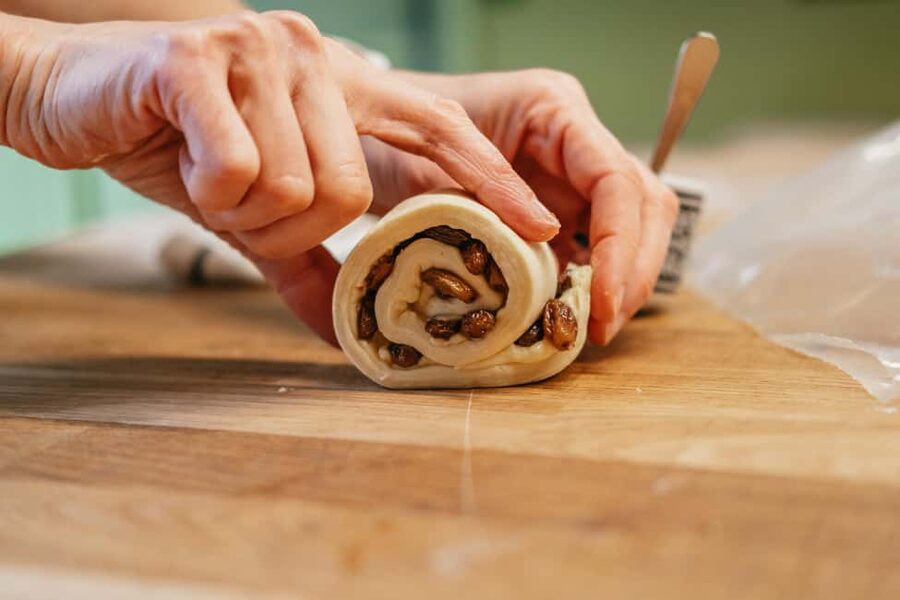
Once the dough is ready, you shape the pastries. You learn the familiar crescent form for croissants, as well as the folding method for pain au chocolat. Depending on the session, you may also make cinnamon rolls or chocolate snails.
This variety gives the class more value than a single-recipe demonstration. You see how the same dough can become several different pastries, each with its own filling or shape. It also gives you a better chance of finding a favorite to repeat at home.
The shaping stage is fun, but it is also where small differences show. A croissant needs enough space to expand, a neat roll, and a shape that allows the layers to separate as they bake. Your chef can point out problems while they are still easy to fix.
The class commonly involves working in pairs. That works well for couples, friends, and parents with children, but it is worth knowing in advance. A family of five may need one person to work with someone from another group. This is a small class, not necessarily a separate workstation for every individual.
The best part is the warm pastry
The payoff comes when the pastries are baked and you taste the results. Fresh croissants straight from the oven are hard to compare with a packaged breakfast pastry. The butter, crisp edges, soft center, and warm chocolate make the final tasting feel like a proper Paris morning.
You usually make enough to eat some and take others away. Several participants have found that the pastries provide breakfast for the next few days, which changes the value calculation a little. You are not simply paying for a snack and a demonstration. You are also leaving with food, a recipe, and a skill.
The amount you take home can be generous, especially if you make several types of pastry. Bring a bag that can handle baked goods, and avoid planning a long stretch of sightseeing before returning to your hotel. The pastries are part of the souvenir, but they are also fragile and best enjoyed soon.
One useful tip is to consider booking this early in your Paris visit. You can eat the results during the rest of your stay, and the class gives you an enjoyable way to get oriented in the Left Bank area. It also works well as a rainy morning activity, when outdoor sightseeing is less appealing.
More cooking classes in Paris:
- Paris Cooking Class and Lunch with Wine plus Market Visit Option
★ 5.0 · 1,024 reviews - Paris Croissant Small-Group Baking Class with a Chef
★ 5.0 · 910 reviews - Paris Cooking Class: Learn How to Make Macarons
★ 5.0 · 634 reviews - Paris Evening Cooking Class French Dinner and Market Visit Option
★ 5.0 · 430 reviews
How good is the teaching?
The strongest part of this experience is the instruction. The chefs are not just there to keep the schedule moving. They explain the reasons behind the steps and help you recover when the dough does not behave perfectly.
Guillaume is praised for going slowly enough that participants understood each stage. Felix is described as professional but fun, and Alice is noted for making beginners feel capable. Erika has also received praise for making the class accessible to people with little or no baking experience.
Those details matter because croissant making has a steep learning curve. If the chef simply handed you dough and told you to copy the shape, the class would be entertaining but not very useful. Here, the emphasis is on learning a repeatable method.
The class also appears to work well for families and teenagers. Children aged 11 and 12 have enjoyed it, as have teenagers and a 14-year-old participant. The activity is hands-on, social, and food-focused, so it can hold the attention of young people better than a long museum visit.
That said, interest levels can vary. The class requires patience and some repeated work. A child who dislikes careful shaping or waiting for dough may lose interest before the baking stage. The chef can help, but this is still a cooking lesson rather than a quick pastry tasting.
A pleasant way to spend time near Notre Dame
The meeting point is on the Left Bank, close to Notre Dame. One useful feature of this location is that you can combine the class with other central Paris plans. The area also has nearby cafés, restaurants, and shops, and one instructor has shared local suggestions for the rest of the day.
The class itself takes place indoors, so the weather does not matter. Rainy mornings are especially suitable, but you do not need bad weather to justify it. A cooking lesson breaks up a sightseeing schedule and gives you a different view of French daily life.
Allow time to find 3 Rue des 3 Portes and arrive promptly. One session accommodated late participants, but arriving late can interrupt a small class and make the opening steps harder to follow. Since laminated dough is built in stages, missing the beginning is more serious than arriving late to a general walking tour.
No hotel pickup or drop-off is provided. You make your own way to the Left Bank, which is easy to understand when planning a central Paris day but should be included in your timing.
Is $159 a fair price?
At $159 per person, this class sits in the premium range for a food activity. You can buy a good croissant in Paris for a fraction of that price. If your only goal is to eat one, this is poor value.
The price makes more sense if you care about the full experience. You receive 150 minutes of instruction, use the school’s equipment, work with a professional chef, make several pastries, eat the results, and take some home. The small group, capped at eight, also gives the chef more time to help each pair.
You are paying for access to a technique that is difficult to learn from a recipe alone. The recipe sent afterward adds practical value, though one participant noted that the ingredients in the recipe did not match the class ingredients exactly. If you plan to repeat the bake at home, compare the written recipe with your notes from the lesson.
The activity is best value for people who enjoy cooking, want a hands-on Paris memory, or have tried to make croissants without success. It is less appealing for someone who wants a low-cost food stop or prefers to spend every minute sightseeing.
Drinks are not listed among the inclusions. One participant specifically expected water or coffee and did not receive it, so do not assume refreshments are part of the package. Eat lightly beforehand if you plan to sample several pastries, but do not count on a full café breakfast.
Who should book this class?
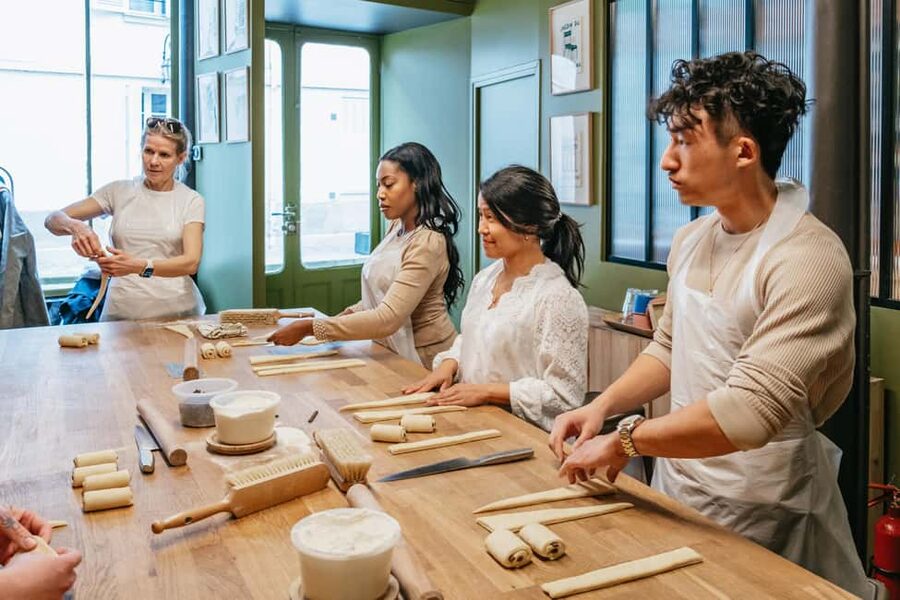
I would choose this for couples, families with older children, friends, and solo visitors who enjoy meeting people through food. The English instruction and small group make it approachable even if you have never baked before.
It is also a strong choice for anyone who wants to take home a practical souvenir. A miniature Eiffel Tower is easy to buy, but a pastry recipe you can make for friends is more personal. The class gives you something to do during your trip and something to repeat after returning home.
Baking enthusiasts should know that this is an instructional workshop, not an advanced professional course. You will learn the core method and receive expert help, but the 150-minute format cannot cover every variation of laminated pastry or every problem you might meet in a home kitchen.
Families should also remember the pair-work setup. It can be a nice way to cooperate, but a group of five may need to split into pairs with one person joining another participant. The class has welcomed different ages and ability levels, though everyone must be ready to participate.
The school is wheelchair accessible, and the class is offered in English. Free cancellation is available up to 24 hours before the activity, and you can reserve now and pay later, useful if your Paris schedule is still changing.
Should you book the Maison Fleuret croissant class?
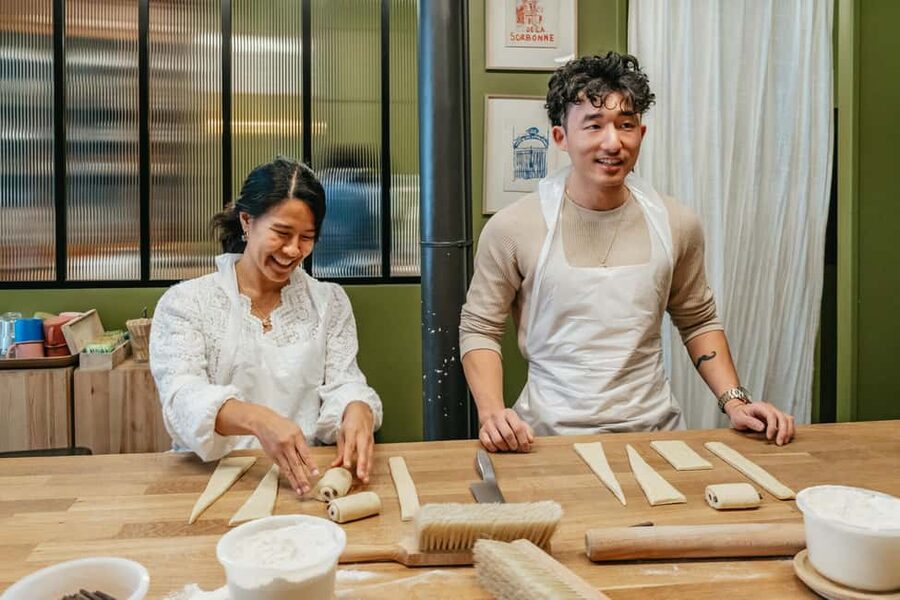
Book it if you want more than a pastry tasting. The best reasons are the small class, patient chefs, hands-on work, and the chance to leave with both fresh baking and a method you can use at home.
Skip it if $159 feels too high for a food activity, or if you would rather spend the morning visiting museums and bakeries. Paris gives you plenty of cheaper ways to eat a croissant.
For most people who enjoy cooking, I think this is a worthwhile splurge, especially early in a Paris stay. You get a warm indoor activity, a taste of French pastry culture, and several breakfasts to carry into the days ahead.
FAQ
Where does the croissant class take place?
The class takes place at Maison Fleuret, located at 3 Rue des 3 Portes on Paris’s Left Bank.
How long does the class last?
The activity lasts 150 minutes, or two and a half hours.
How much does the class cost?
The listed price is $159 per person.
Is the class taught in English?
Yes. The instructor language is English.
How many people are in the class?
The class is limited to eight participants.
What pastries do you make?
You learn to make French croissants and may also make pain au chocolat, chocolate snails, and cinnamon pastries.
Is cooking equipment provided?
Yes. Cooking equipment and a chef instructor are included.
Can I take pastries home?
Yes. You make enough pastries to eat some and take others home.
Is hotel transportation included?
No. Hotel pickup and drop-off are not included. You make your own way to the Left Bank meeting point.
Is the class wheelchair accessible?
Yes. The activity is listed as wheelchair accessible.
More perfume and craft workshops in Paris
- Fragonard Paris: Mini Perfume Workshop
★ 4.5 · 1,924 reviews - Paris: Macaron Class at Galeries Lafayette
★ 4.3 · 905 reviews - Paris: 2-Hour Perfume Creation Workshop
★ 4.8 · 731 reviews - Paris: French Macaron Culinary Class with a Chef
★ 4.9 · 591 reviews
Just added around Paris
- Paris: The Da Vinci Code Walking Tour with a Local Guide★ 4.3 · 5 reviews
- Paris: Flea Market Insider’s Tour in Extra-Small Group★ 4.6 · 73 reviews
- Paris: Private Fashion Tour (Chanel, Dior, Sex & the City)★ 5.0 · 3 reviews
- Paris: Floral Earrings workshop★ 5.0 · 3 reviews
- Paris: Fashion History Walking Tour in the Heart of Paris★ 4.9 · 22 reviews
- PARIS: Family e-bike longtail renting★ 5.0 · 3 reviews
- Paris: Famous Monuments Cycling Tour★ 4.7 · 20 reviews
- Paris: private city tour with seine river cruise★ 4.8 · 28 reviews
Paris Pastry and Macaron Classes, compared.
Montmartre Cheese, Wine & Pastry Guided Walking Tour
Read our review →
Private Montmartre Food Tour with Wine, Cheese & Pastries
Read our review →
Paris French Sweets Tasting Tour with Pastries and Chocolates
Read our review →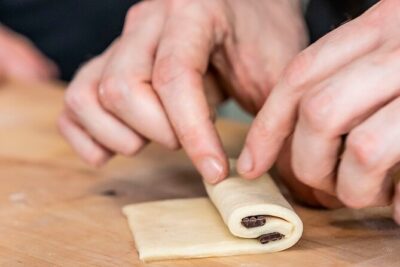
Paris Croissant Small-Group Baking Class with a Chef
Read our review →
Paris Cooking Class: Learn How to Make Macarons
Read our review →
A Morning in Paris Food Tour: Croissants, Baguettes & Chocolate
Read our review →
Chocolate & Patisserie Walking Tour with Tastings
Read our review →Browse the lists this tour appears in