
Reviewed · WORKSHOPS
Paris: Baguette and French Breads Class
Paris is one of the world’s great bread cities, and this class gets past the bakery counter. You work with the basic building blocks of French bread, flour, water, salt, and yeast, then turn them into baguettes, brioche, and ciabatta. I like the small group of no more than eight, and I like that you leave with a bag of bread rather than only a recipe card.
The four-hour format gives the dough time to rise while you learn the next step, but it also means parts of the process are shared between demonstrations and hands-on work. If you want to weigh every ingredient and control every bake from start to finish, ask about that at the beginning.
Key points at a glance
- Three French breads in one class: Make baguettes, brioche, and ciabatta from scratch.
- A small English-speaking group: The class is limited to eight people, with work often done in pairs.
- Technique matters: Learn mixing, proofing, deflating, shaping, scoring, and baking.
- A proper tasting at the end: Eat the finished bread with butter, cheese, jam, and sometimes wine.
- Take-home value: Pack up your creations for a picnic, sharing, or a later snack in Paris.
Starting with four ingredients in Paris
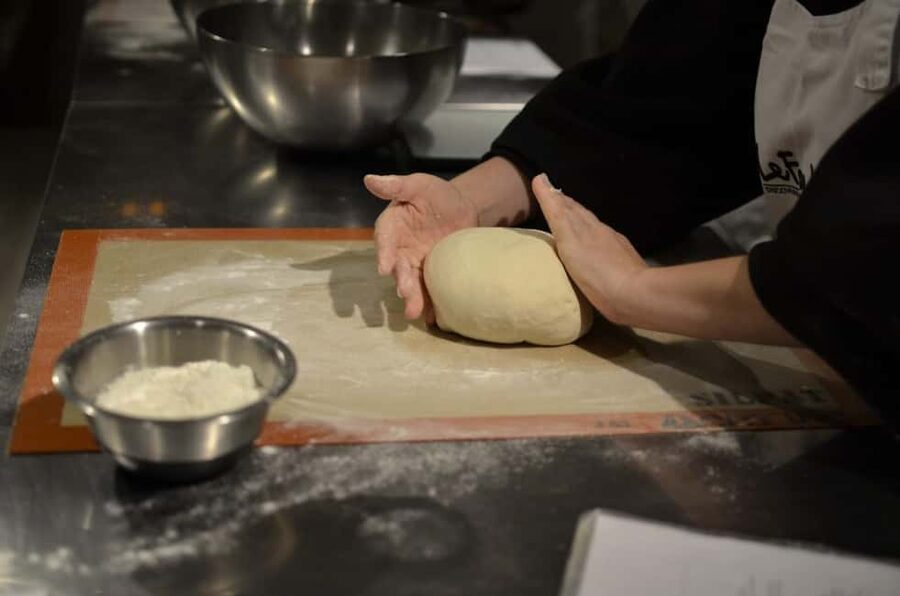
The class begins simply. Flour, water, salt, and yeast are the starting point, which is useful because you can see how much technique comes from handling the dough rather than from a long shopping list.
You may also work with butter or oil, depending on the bread. That small change helps explain why a chewy baguette feels so different from a soft, rich brioche. I appreciate this kind of foundation because it gives you a better chance of repeating the recipes at home.
The first job is measuring. This sounds basic, but bread is not very forgiving when proportions drift. One point raised during the class was that seeing the exact weight of ingredients can matter a great deal when you bake later. If you want to learn well, pay close attention here and ask to see the measurements clearly.
Next comes mixing. You learn what the dough should feel and look like, along with the common mistakes that can spoil the result. The instruction covers practical do’s and don’ts rather than treating bread-making as a mysterious craft.
More perfume and craft workshops in Paris:
- Fragonard Paris: Mini Perfume Workshop
★ 4.5 · 1,924 reviews - Paris Cooking Class and Lunch with Wine plus Market Visit Option
★ 5.0 · 1,024 reviews - Paris Croissant Small-Group Baking Class with a Chef
★ 5.0 · 910 reviews
Mixing and proofing: where patience begins
Bread dough needs time. After mixing, it must rest and rise, or proof. You then deflate it before shaping, and some breads may require more than one rise or handling stage.
This part of the class is valuable because it shows you that a timer alone cannot tell the whole story. Dough responds to its condition, and you need to watch it as it changes. The class focuses on what you are looking for at each stage, which is more useful than simply being told to wait a set number of minutes.
The pace also explains why the class lasts four hours. You are not rushing through a quick demonstration. The dough needs time to rest, and the class uses those pauses to move through other techniques.
One practical limitation is that a small class still has shared equipment and a group schedule. A recent participant enjoyed the experience but wanted more direct control over mixing, weighing, and seeing the bread in the oven. If you want a fully individual baking session, this may feel less hands-on than expected at certain moments.
Shaping baguettes, brioche, and ciabatta
Once the dough has rested, the class turns to shaping. This is where the breads begin to look different, and each style calls for its own method.
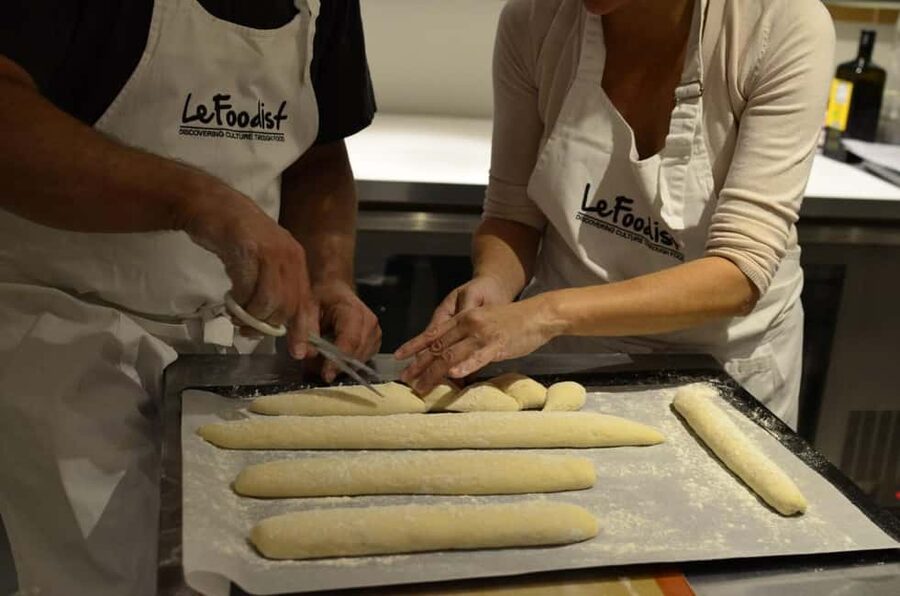
For baguettes, tension is the key idea. The dough must be shaped with enough structure to hold its form, while keeping the light interior you expect from a French loaf. This is not simply rolling dough into a long tube. Your instructor guides you through the movements that give the loaf strength.
Brioche uses a different approach. The class includes rolling, and the dough’s butter-rich character makes it feel unlike baguette dough. It is a good comparison because you can handle two very different mixtures in the same session.
Ciabatta adds another useful contrast. Its shape and texture require a different touch from the firmer baguette. Making all three gives you a broad lesson in how ingredients and handling affect the final bread.
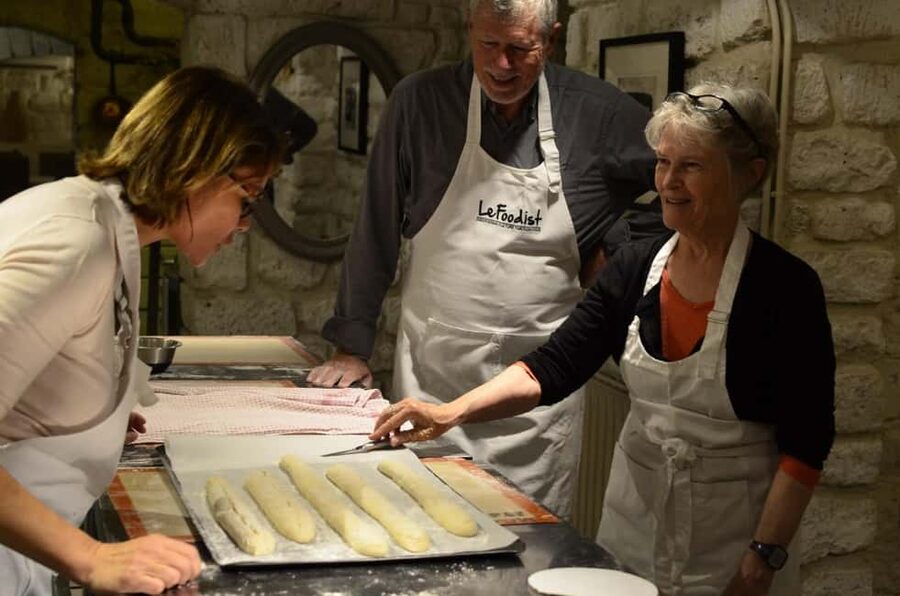
The group is small enough that you work in pairs, which can make the class friendly and manageable. It also means you may not personally perform every action for every loaf. If you want to build confidence, take turns with your partner and speak up when the instructor demonstrates a move you want to try.
Scoring the loaves before the oven
After shaping and another rest, the bread is ready to be scored. You make cuts across the surface before baking, and the instructor guides you through this step.
Scoring has an obvious visual purpose, but it also affects how the loaf behaves in the oven. The cuts give the expanding bread a planned place to open. A badly placed or shallow cut can change the look and shape of the finished loaf.
This is one of the most satisfying stages because the dough begins to look like real bakery bread. It is also a good moment to ask questions. If you are hoping to repeat the class at home, remember the angle, depth, and pattern used for each type of bread.
The class also covers baking conditions. Temperature and time matter, but humidity matters too. That is an important lesson for home bakers, since a domestic oven may not produce the same conditions as a professional baking setup. You can still learn what affects the crust and interior, even if your own oven works differently.
Same city, a completely different afternoon:
- Paris: Louvre Museum Timed-Entrance Ticket
★ 4.6 · 71,977 reviews - Disneyland® Paris 1-Day Ticket
★ 4.6 · 49,412 reviews - Paris: Versailles Palace and Gardens Full Access Ticket
★ 4.6 · 41,579 reviews - Paris: Evening River Cruise with Music
★ 4.4 · 22,721 reviews
The shared table at the end
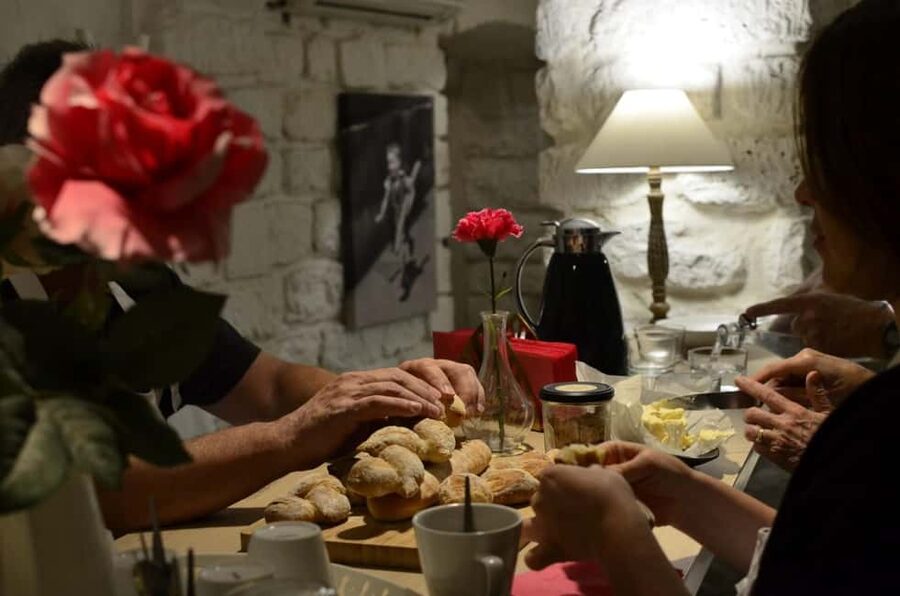
When the bread is baked, the class comes together to taste it. Finished loaves may be served with French cheese, butter, jam, and wine. Bread can also be enjoyed as pain perdu, the French version of a sweet bread-based dish.
This final meal gives the class a social finish without adding another formal stop. You eat what you made, compare textures, and see how the same bread changes with different toppings. Cheese highlights a savory loaf, while jam works well with brioche. Butter keeps things simple and lets you judge the bread itself.
One participant described sitting together at the end with bread, butter, cheese, and wine. That shared tasting is an important part of the value. You are not only learning a technique in a workroom, then leaving hungry. You get to understand how French bread is served and enjoyed.
The food is also a useful quality check. A loaf that looks good may still be too dense, too dry, or underbaked. Tasting the results helps connect the technical lesson to the final goal: bread that is pleasant to eat.
What you take home
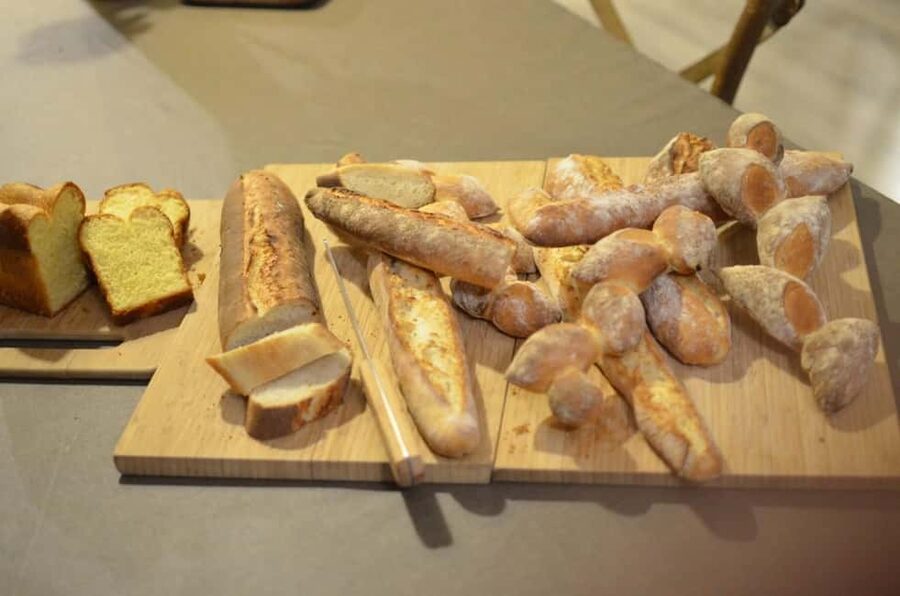
You leave with a bag filled with your creations. That gives this class a practical advantage over an experience where the food disappears at the end.
You can share the bread with friends, eat it later, or use it for a picnic during the rest of your Paris day. Since the class lasts four hours, you may want to plan the next part of your day around carrying fresh bread rather than making a distant reservation immediately afterward.
The take-home portion also helps you remember the class. A recipe sheet can sit in a suitcase and be forgotten. A baguette or brioche gives you a direct reminder of what you learned, along with a chance to judge how well the bread keeps.
The exact amount of bread is not stated, so do not book this expecting a guaranteed quantity. The clear promise is that you leave with your creations, packed for sharing or later eating.
How small is the group?
The maximum group size is eight people, and the class is taught in English. That is a useful size for a practical lesson. You should have a better chance of hearing the demonstrations and getting help than you would in a large cooking school.
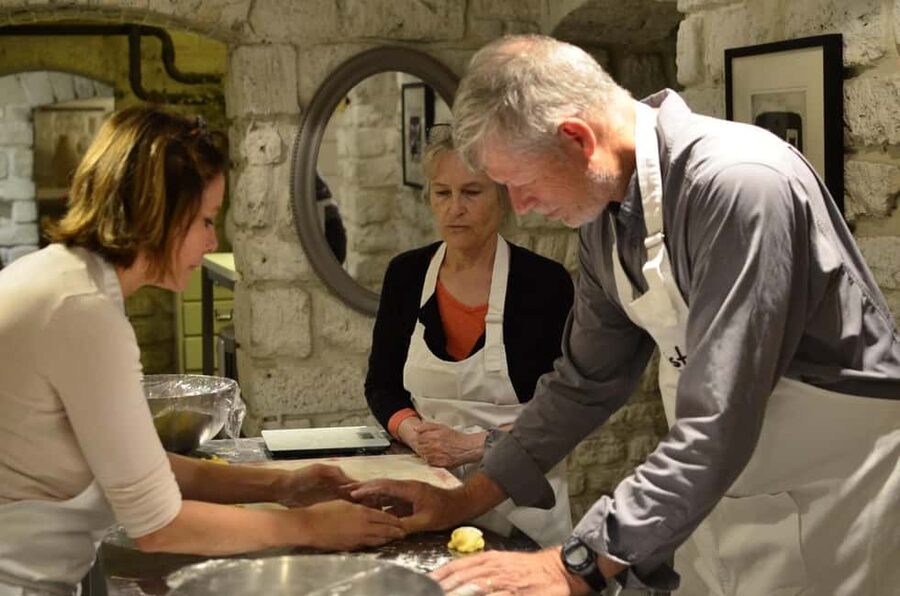
The class often works in pairs. This can make the session more social, and it lets you compare your handling with someone else’s. It also means you may share parts of the work, so take an active role if baking technique is your main reason for booking.
A recent class was taught by Florence, who demonstrated the bread-making skills and helped the group achieve good results. Instructor assignments can change, so Florence should be viewed as a helpful example of the teaching style rather than a guaranteed name for every date.
The small format is especially useful for first-time bakers. You can watch a technique, try it, and ask for correction before moving on. More experienced bakers may appreciate the chance to compare methods, though they could find some shared work less demanding than a private lesson.
Is $175 a fair price?
At $175 per person, this is not a cheap way to buy bread. You can purchase a baguette in Paris for a small fraction of the cost. The price makes more sense if you value the instruction, the four-hour schedule, the tasting, and the bread you take away.
You are paying for a guided food experience rather than a bakery visit. The lesson covers several major stages of bread-making, including measuring, mixing, proofing, deflating, shaping, scoring, and baking. You also try three distinct breads, which gives the class more range than a session focused only on baguettes.
The small group helps support the price. Eight people or fewer allows for personal help, though the pair-based format means it is not the same as one-on-one teaching. If you are mainly after a fun Paris activity with food at the end, the value is easier to see. If you want professional-level control over every loaf, compare it with a private or more advanced workshop before booking.
The included tasting adds another layer. Cheese, butter, jam, and wine turn the end of the class into a shared meal, while the take-home bread gives you something tangible for later. For a food-focused visitor, those details make the cost more reasonable.
Who will enjoy this bread class most?
I would choose this for you if you like eating as much as learning. You do not need to be an experienced baker, since the class begins with basic ingredients and explains the handling stages. You should, however, be ready to work, wait for dough to rise, and pay attention to small changes in texture.
It suits couples, friends, and solo visitors who enjoy a small group setting. Working in pairs can help solo participants meet people, while couples or friends may enjoy dividing the tasks and comparing the finished loaves.
It is also a strong choice for anyone who wants a break from sightseeing. Four hours at a worktable gives you a slower activity than moving between museums and monuments. The bread provides a clear connection to everyday Parisian food culture without requiring a formal restaurant meal.
I would be more cautious if you have strict dietary needs, want a private class, or expect to handle every loaf alone. The supplied details do not specify dietary substitutions, private options, or individual equipment. Ask before booking if any of those points matter to you.
Planning your four hours
The class lasts four hours, with starting times based on availability. That is long enough for the dough to pass through several stages, but it also takes a meaningful part of your day.
Plan around the full duration rather than hoping to slip away early. Proofing and baking are built into the process, and leaving midway would mean missing some of the most useful steps.
The end of the class includes tasting and packing the bread. You may want to keep the rest of your schedule flexible so you can enjoy the meal and carry your creations without rushing to the next appointment.
The experience is in the Ile-de-France region, and the supplied information does not give a precise meeting address. Check the confirmed meeting details before planning transport or deciding what activity comes next.
You can cancel up to 24 hours in advance for a full refund, and you can reserve now while paying later. Those options are useful if your Paris plans are still shifting, though they do not remove the need to check the final starting time and meeting location.
Should you book the Paris baguette class?
Book it if you want to learn the basics of French bread while making several styles in one sitting. The best reasons are the eight-person limit, the broad mix of baguette, brioche, and ciabatta, and the chance to eat and carry home what you make.
Go in with realistic expectations. You may work in pairs, and some parts of weighing, mixing, or oven handling may be demonstrated rather than performed entirely by you. That is the main tradeoff for a social small-group class at $175.
For a food lover, a first-time baker, or anyone wanting a hands-on pause from sightseeing, I think the price can be worthwhile. If you need a fully private lesson or exact control over every loaf, ask detailed questions before paying. Otherwise, this is a tasty and useful way to spend four hours in Paris.
FAQ
How long does the Paris baguette class last?
The class lasts four hours.
How much does the class cost?
The price is $175 per person.
Which breads will I make?
The class includes baguettes, brioche, and ciabatta made from scratch.
Is the class taught in English?
Yes. The instructor language is English.
How many people are in the group?
The class is limited to eight participants.
Do participants work alone or in pairs?
The class commonly involves working in pairs.
What happens after the bread is baked?
You taste the bread together with foods such as French cheese, jam, butter, and wine. Bread may also be enjoyed as pain perdu.
Can I take bread home?
Yes. You leave with a bag of your creations to share, eat later, or use for a picnic.
Can I cancel for a refund?
You can cancel up to 24 hours in advance for a full refund.
Just added around Paris
- Paris: The Da Vinci Code Walking Tour with a Local Guide★ 4.3 · 5 reviews
- Paris: Flea Market Insider’s Tour in Extra-Small Group★ 4.6 · 73 reviews
- Paris: Private Fashion Tour (Chanel, Dior, Sex & the City)★ 5.0 · 3 reviews
- Paris: Floral Earrings workshop★ 5.0 · 3 reviews
- PARIS: Family e-bike longtail renting★ 5.0 · 3 reviews
- Paris: Fashion History Walking Tour in the Heart of Paris★ 4.9 · 22 reviews
- Paris: Famous Monuments Cycling Tour★ 4.7 · 20 reviews
- Paris: private city tour with seine river cruise★ 4.8 · 28 reviews
Workshops, compared.

Paris Cooking Class and Lunch with Wine plus Market Visit Option
Read our review →
Paris Croissant Small-Group Baking Class with a Chef
Read our review →
Paris Cooking Class: Learn How to Make Macarons
Read our review →
Browse the lists this tour appears in