
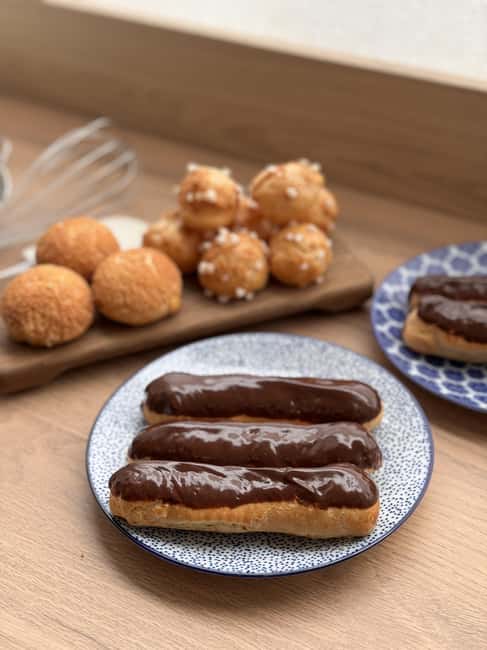
Reviewed · PARIS PASTRY AND MACARON CLASSES
Eclair Baking Class with A Pastry Chef
The best part of this class is that you do not simply watch a pastry chef pipe dough and decorate a finished eclair. You make the choux pastry yourself, learn why precise measurements and temperatures matter, and leave with a box of your own work. I especially like the small group of eight and the chance to try different fillings, from pastry cream to chocolate ganache.
The main drawback is its strict timing. You need to arrive 5 to 10 minutes early, and if you are more than 15 minutes late, you cannot join. At $128 per person, this is also a focused pastry lesson rather than a cheap snack stop, so it makes the most sense if you want practical baking skills as well as something sweet to eat.
Key points at a glance
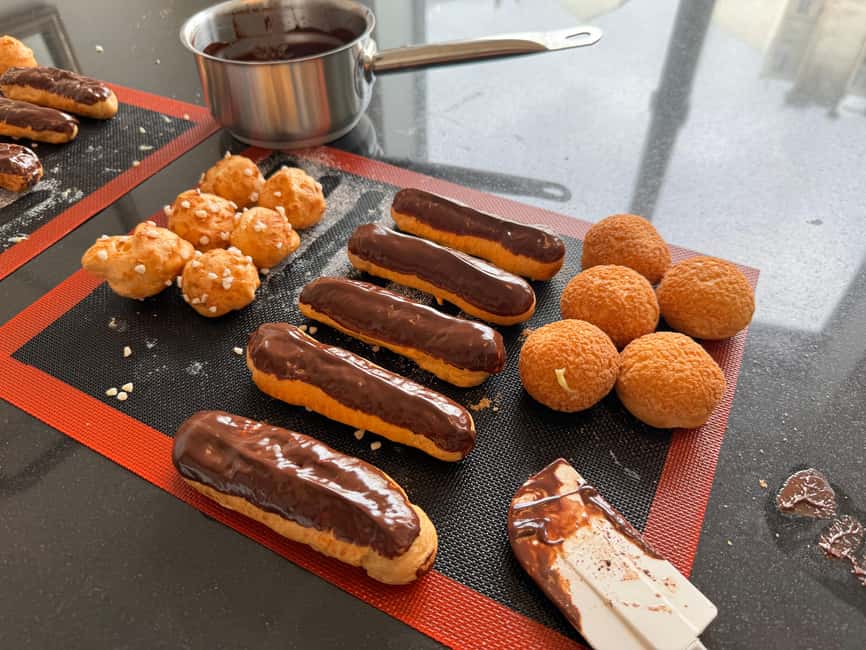
- Make the choux pastry yourself: Learn the dough, piping, baking, and finishing stages rather than only watching a demonstration.
- Work with a trained pastry chef: Your English-speaking instructor trained at Le Cordon Bleu and shares methods for crisp shells and airy centers.
- Try several fillings: Prepare fillings such as silky pastry cream and chocolate ganache, then customize your pastries.
- Keep the group small: With no more than eight participants, you have room to ask questions and get help with technique.
- Take home your baking: A box of freshly made eclairs and choux pastries is included.
- Plan around the clock: The class lasts 150 minutes and begins promptly at a Parisien-type ground-floor apartment with a gray storefront.
What the 150-minute pastry class is really about
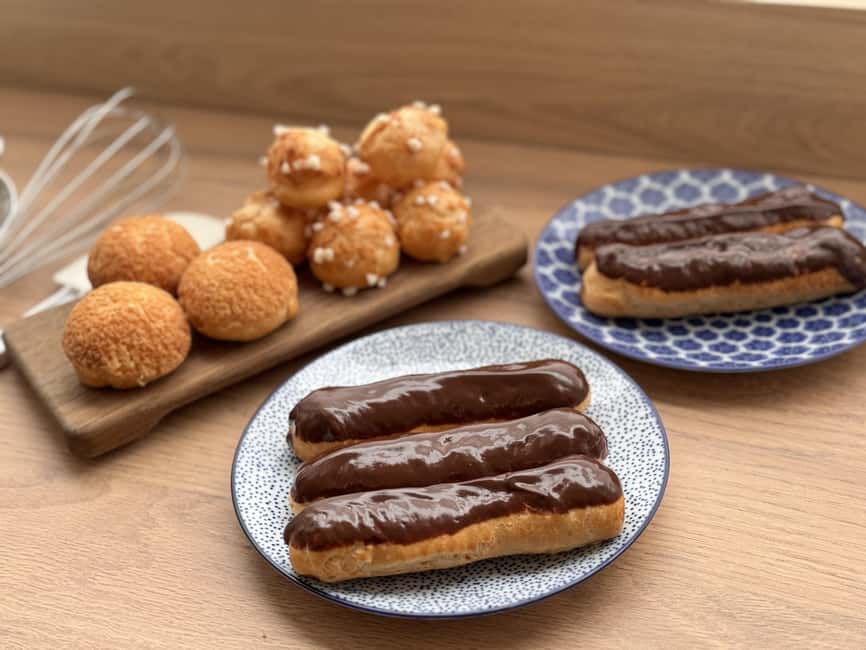
This is a practical French baking workshop centered on two closely related treats: eclairs and choux pastries. The class takes place in a Parisien-type apartment on the ground floor, identified by a gray-colored storefront. That setting suggests a more personal lesson than a large culinary school session, though the supplied details do not give a full street address.
You work with an English-speaking pastry chef who trained at Le Cordon Bleu. The chef guides you through the process from the first mixture to the final toppings. Since the group is limited to eight, you should have a fair chance to ask about anything that feels uncertain, such as dough texture, piping pressure, or the right point to stop cooking.
The focus is not just on following a recipe. You learn the reasons behind the steps. Choux pastry can look simple on paper, but small changes in measurement, temperature, and technique affect the finished result. The class puts those details at the center, which is useful if you want to repeat the process at home.
More pastry and macaron classes in Paris:
- Paris: Montmartre Cheese, Wine & Pastry Guided Walking Tour
★ 4.8 · 2,255 reviews - Private Montmartre Food Tour with Wine, Cheese & Pastries
★ 5.0 · 1,027 reviews - Paris French Sweets Tasting Tour with Pastries and Chocolates
★ 4.5 · 947 reviews
Starting with choux pastry and precise measurements
The foundation of an eclair is choux pastry, a light dough that must be handled carefully. Your instructor explains the basic method and the role of accurate measurements. This is one of the most useful parts of the class because pastry is less forgiving than many home-cooking projects.
You learn to pay attention to temperature as well as quantity. The dough needs the right consistency before it is piped, and the baked pastry needs to develop a crisp outer shell with a light, airy interior. Those results do not happen by accident. The chef shares tips intended to help you recognize when the dough is ready and how to avoid common mistakes.
For a first-time baker, the hands-on format matters. You can see the mixture change as you work and ask questions at the moment they arise. For an experienced baker, the class offers a chance to refine habits and compare home methods with professional pastry technique.
The exact recipe and equipment setup are not specified, so you should not expect a detailed list of every tool in advance. All necessary ingredients and equipment are included, however, so you can concentrate on the task rather than bringing supplies.
Piping, baking, and getting the texture right
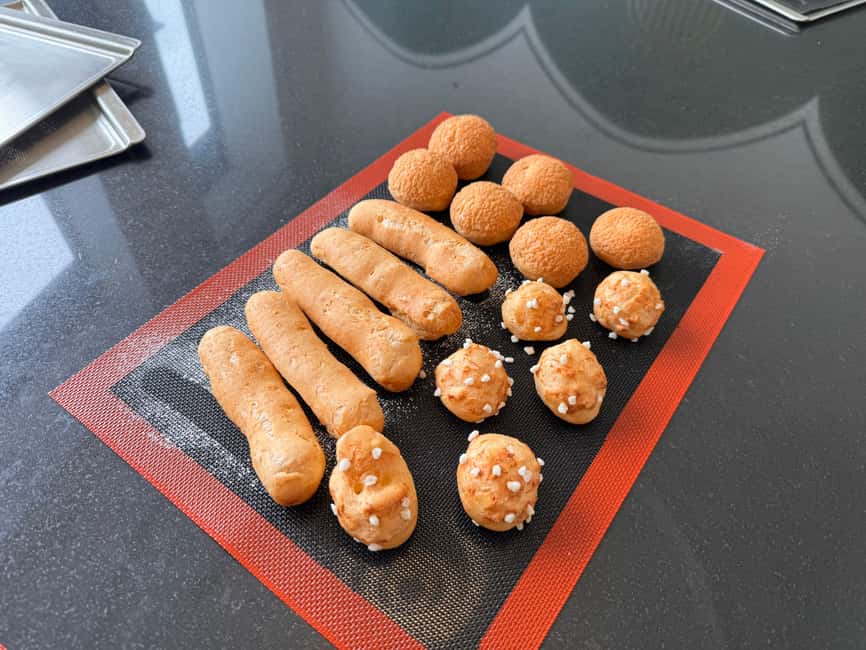
Once the choux pastry is ready, you work with the shape and size of the pastries. Eclairs depend on an even form, since uneven pieces can bake at different rates. Your instructor covers the technique needed to create the pastries and points out the details that affect the final texture.
The class places special attention on the contrast between a crisp shell and an airy center. That advice is valuable long after the workshop ends. If an eclair is soft when it should be crisp, or heavy inside instead of light, you can start thinking about the temperature and technique rather than simply blaming the recipe.
The 150-minute length gives the session enough room for several stages of preparation, but it is still a compact class. You should arrive ready to work at a steady pace. This is not designed as a leisurely afternoon with long breaks between steps.
Coffee, tea, sparkling water, soda, and juice are included. These drinks make sense during a hands-on class, especially while pastries are baking or being finished. Meals are not included, so do not treat the workshop as a full lunch or dinner replacement.
Filling eclairs with pastry cream and ganache
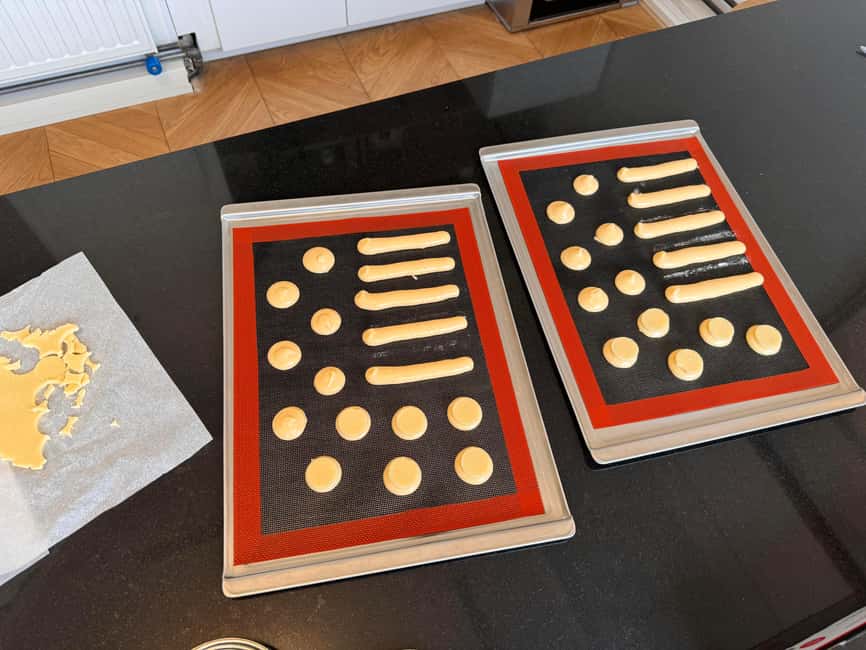
The filling stage adds variety. You learn how to prepare more than one type of filling, including silky pastry cream and rich chocolate ganache. These give you different ways to finish the pastries and help you understand how the filling changes the character of an eclair.
Pastry cream brings a smooth, classic center. Chocolate ganache adds a fuller chocolate flavor and a different texture. The point is not simply to make one fixed batch. You can use the class to see how fillings work and think about which combinations suit your taste.
The supplied information does not promise a specific number of fillings or a fixed menu beyond these examples. That is worth keeping in mind if you have a particular flavor in mind. Still, the chance to prepare an array of fillings is a clear advantage over a class that teaches only one finished product.
You also learn about toppings and final presentation. The details of the toppings are not specified, so the finished pastries may depend on the day’s class plan. What is clear is that the lesson covers more than plain baked shells. You take the pastries through the stages that turn choux dough into a finished French treat.
More cooking classes in Paris:
- Paris Cooking Class and Lunch with Wine plus Market Visit Option
★ 5.0 · 1,024 reviews - Paris Croissant Small-Group Baking Class with a Chef
★ 5.0 · 910 reviews - Paris: French Croissant Baking Class with a Chef
★ 4.9 · 712 reviews - Paris Cooking Class: Learn How to Make Macarons
★ 5.0 · 634 reviews
A small class with room for questions
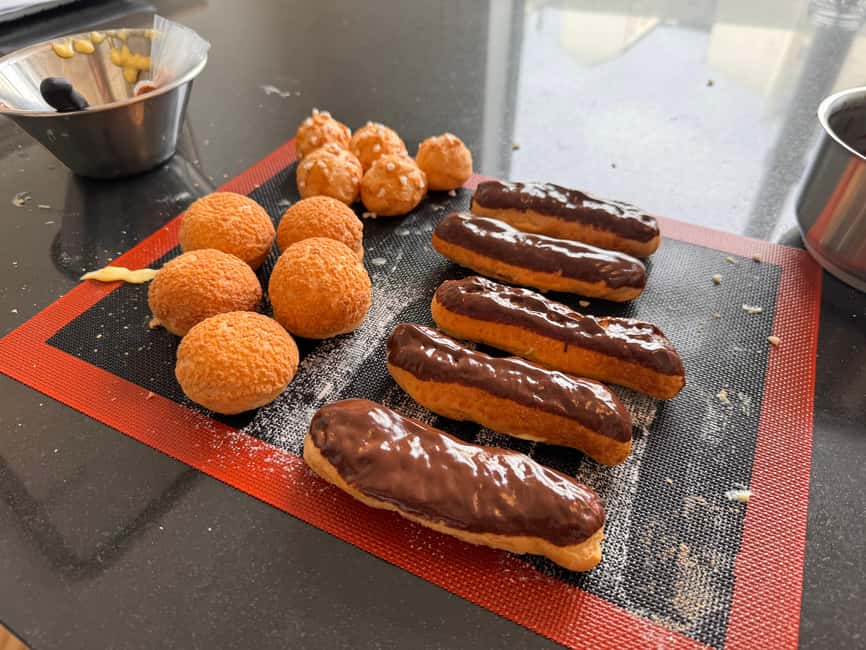
A limit of eight participants is one of the strongest practical features here. Pastry lessons can become frustrating when the instructor demonstrates once and then moves quickly through a crowded room. A group of this size should give you more opportunity to ask for help and receive feedback.
That matters most during the stages where texture and timing are hard to judge. You may want to check whether your dough looks right, whether your piping is even, or how a filling should feel before it is used. The chef can help fine-tune those skills rather than leaving you to guess.
The class is taught in English, which makes it a straightforward choice for English-speaking visitors. The chef’s Le Cordon Bleu training adds a professional foundation, but the workshop is presented as suitable for both beginners and more experienced bakers.
Children under 10 cannot join. Participants aged 17 and under must attend with an adult. That makes the class better suited to adults, older teenagers with supervision, couples, friends, and solo visitors who want a hands-on activity with a clear result.
What you take home at the end
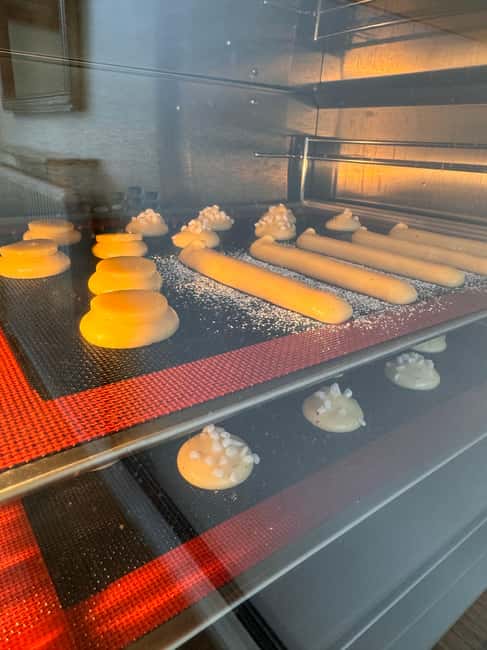
The class includes a box of your freshly baked creations. This is more useful than a recipe card alone. You can taste the results later, share them with friends, and compare the finished pastries with what you make in your own kitchen.
Taking home your own work also gives the class a satisfying finish. You are not only learning a technique in theory. You can see how your shells, fillings, and toppings came together. The box may also be a practical reason to schedule the class when you can carry pastries comfortably afterward.
The amount of pastry in the box is not stated, so I would not book this expecting a guaranteed number of eclairs. The promise is simply a box of your creations, which is enough to make the result personal rather than a sample handed to you by someone else.
The pastries are also the main food included. Drinks are provided, but no meal is. If you are booking the class around lunchtime or dinner, plan another meal before or after it.
Is $128 a fair price?
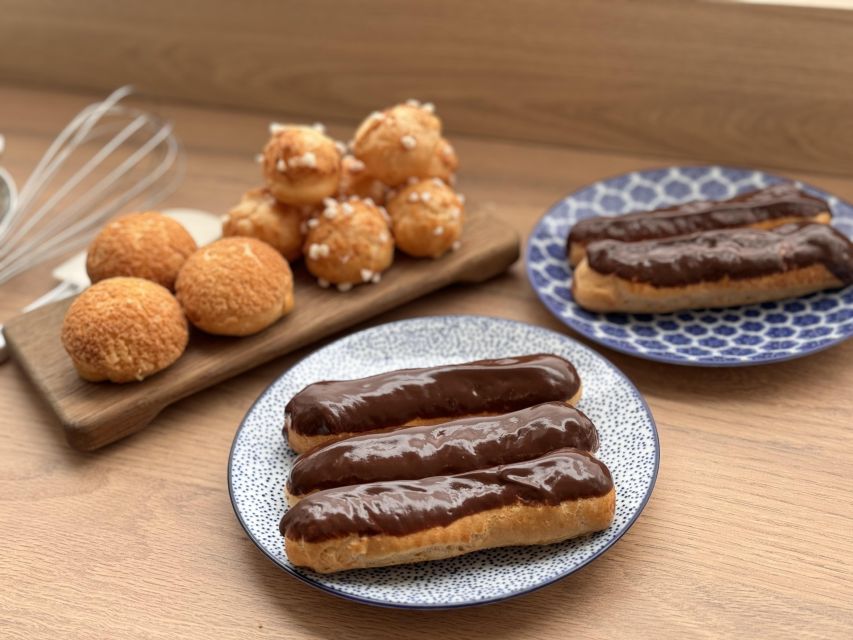
At $128 per person, this class is not the budget choice for trying one French pastry. You can buy an eclair for far less. The price is easier to justify if you value instruction, equipment, ingredients, several preparation stages, and a take-home box.
The small group helps the value calculation. You are paying for access to a pastry chef, not just for a seat in a large demonstration. The chance to ask questions and get feedback can save you failed batches later, especially with choux pastry, where small errors can affect the result.
The Le Cordon Bleu training is another part of the price. It does not guarantee that every participant will become a professional baker, but it gives the class a strong instructional basis. You are learning from someone with formal pastry training and practical experience.
I would choose this for a visitor who wants a skill-based activity and enjoys food preparation. If you only want a quick taste of eclairs, the cost is hard to defend. If you want to understand the process and take home pastries you helped make, the price is more reasonable.
The published rating is five out of five from three ratings. The comments are brief but strongly positive, with one five-star response calling the class Perfect and another recommending it 100 percent. Those comments support the idea that the experience delivers a clear, satisfying pastry session, though they do not provide enough detail to judge every part of the teaching or setup.
Timing, arrival, and accessibility
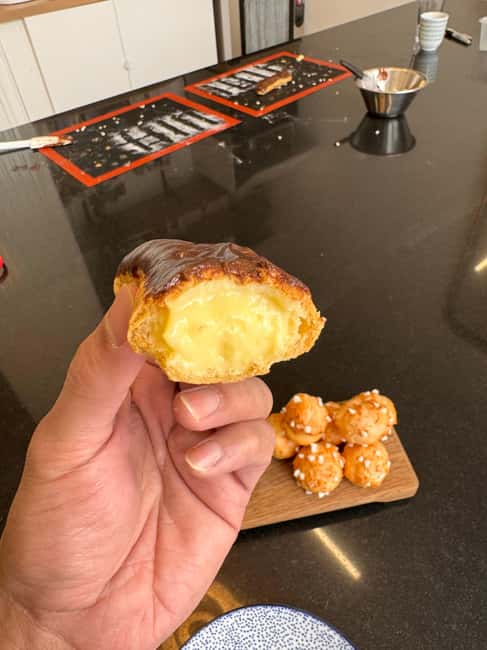
The total duration is 150 minutes, or two and a half hours. That is long enough for a proper workshop, but short enough to fit into a day of sightseeing if you plan carefully.
Arrive 5 to 10 minutes early. The class starts on time, and arriving more than 15 minutes late means you cannot join. This rule matters because pastry work is staged. Missing the opening preparation could leave you out of step with the rest of the group.
Starting times depend on availability, so check the schedule before you build the class into your day. The meeting point is a ground-floor apartment with a gray-colored storefront. Since a complete street address is not provided here, use the exact meeting details supplied at booking and allow time to identify the entrance.
The activity is wheelchair accessible. That is useful information for planning, though the available details do not describe the width of work surfaces, seating arrangements, or restroom access. If you need a particular setup, ask the provider before booking.
Free cancellation is available up to 24 hours in advance for a full refund. You can also reserve and pay later, which helps if your schedule is still changing.
Who should book this pastry workshop?
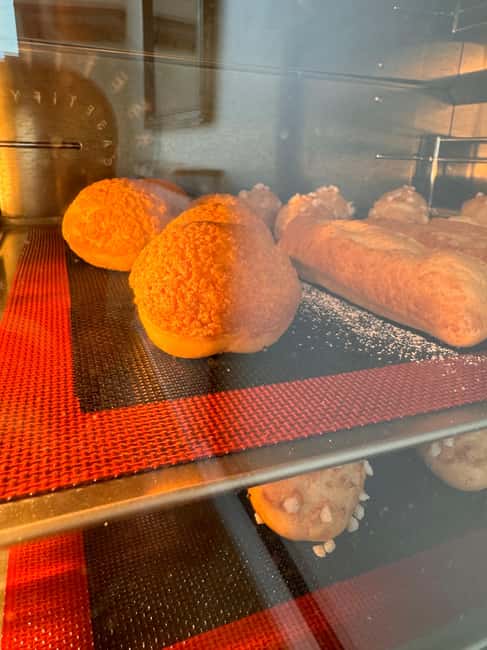
I would recommend it to anyone who likes to understand how food is made. It suits a beginner who wants clear guidance, but it also has enough technical detail to interest someone who has already baked at home.
It works well for a couple or small group of friends looking for an activity that produces something to share. Solo participants should also fit comfortably into the format because the group is small and the focus is on individual pastry work.
This is not a good pick for young children, since participants must be at least 10 years old. Teenagers aged 17 and under need an accompanying adult. It is also not ideal for anyone who dislikes strict start times or prefers a relaxed, drop-in activity.
The class is best for people who enjoy the process as much as the reward. You will spend time on measurements, dough, fillings, and technique before you get to eat the finished pastries. That is the point, but it may not suit someone looking for a quick food tasting.
Should you book it?
Book this class if you want more than a photo of a French dessert. You will work with choux pastry, prepare fillings, receive guidance from a Le Cordon Bleu-trained chef, and take home a box of your own baking.
The strongest reasons to choose it are the group size, English instruction, practical format, and focus on skills you can repeat at home. The main cautions are the $128 price, the strict arrival rule, and the fact that drinks and pastries are included but not a full meal.
For a pastry enthusiast, a curious beginner, or anyone who wants a hands-on food activity in the Paris area, this is a sound choice. If your priority is the cheapest possible eclair, spend the money at a bakery instead.
FAQ
How long does the eclair class last?
The workshop lasts 150 minutes, or two and a half hours.
Where does the class meet?
The meeting point is a Parisien-type apartment on the ground floor with a gray-colored storefront.
What language is the class taught in?
The instructor teaches in English.
How many people can join the class?
The class is limited to eight participants.
What is included in the price?
The price includes instruction, all necessary ingredients and equipment, a box of freshly baked creations, coffee, tea, sparkling water, soda, and juice.
Are meals included?
No. Meals and drinks other than the listed beverages and the pastries made during class are not included.
Can children join the workshop?
Children under 10 are not permitted. Participants aged 17 and under must be accompanied by an adult.
What happens if I need to cancel?
You can cancel up to 24 hours in advance for a full refund. A reserve-now, pay-later option is also available.
More perfume and craft workshops in Paris
- Fragonard Paris: Mini Perfume Workshop
★ 4.5 · 1,924 reviews - Paris: Macaron Class at Galeries Lafayette
★ 4.3 · 905 reviews - Paris: 2-Hour Perfume Creation Workshop
★ 4.8 · 731 reviews - Paris: French Macaron Culinary Class with a Chef
★ 4.9 · 591 reviews
Just added around Paris
- Paris: The Da Vinci Code Walking Tour with a Local Guide★ 4.3 · 5 reviews
- Paris: Flea Market Insider’s Tour in Extra-Small Group★ 4.6 · 73 reviews
- Paris: Private Fashion Tour (Chanel, Dior, Sex & the City)★ 5.0 · 3 reviews
- Paris: Floral Earrings workshop★ 5.0 · 3 reviews
- Paris: Fashion History Walking Tour in the Heart of Paris★ 4.9 · 22 reviews
- PARIS: Family e-bike longtail renting★ 5.0 · 3 reviews
- Paris: Famous Monuments Cycling Tour★ 4.7 · 20 reviews
- Paris: private city tour with seine river cruise★ 4.8 · 28 reviews
Paris Pastry and Macaron Classes, compared.
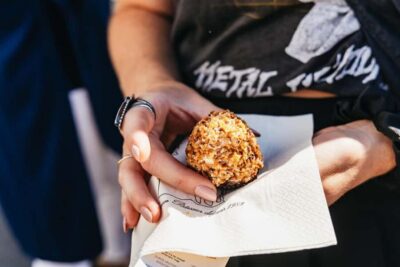
Montmartre Cheese, Wine & Pastry Guided Walking Tour
Read our review →
Private Montmartre Food Tour with Wine, Cheese & Pastries
Read our review →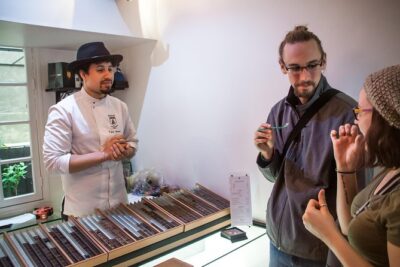
Paris French Sweets Tasting Tour with Pastries and Chocolates
Read our review →
Paris Croissant Small-Group Baking Class with a Chef
Read our review →
Paris Cooking Class: Learn How to Make Macarons
Read our review →
A Morning in Paris Food Tour: Croissants, Baguettes & Chocolate
Read our review →Browse the lists this tour appears in