
Reviewed · WORKSHOPS
Further training workshop
Paris is a fine place to learn photography because the city gives you grand monuments, quiet corners, changing light, and strong lines at every turn. This private workshop takes you from Notre Dame to the Louvre, the Tuileries, the Eiffel Tower, and Pont Neuf while showing you how to make better choices with the camera you already own.
I like the small group size, limited to four people, and the fact that the lesson can be tailored to your level. I also like the practical focus on exposure, lighting, composition, and camera angles rather than simply marching you past famous sights for quick snapshots.
The main thing to consider is the pace. Five stops in about three hours leaves roughly 30 minutes beyond the listed 30-minute blocks, so this is a compact introduction rather than a long, relaxed photo expedition. You will get more from it if you arrive ready to practice.
Key points at a glance
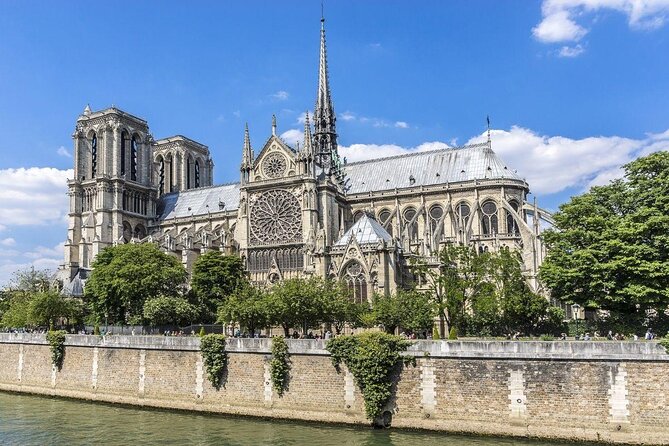
- Five classic Paris photo stops: Photograph Notre Dame, the Louvre, the Tuileries, the Eiffel Tower, and Pont Neuf.
- Private instruction for up to four people: You receive direct help instead of trying to follow a large class.
- Bring your own camera: A camera is not provided, but no specialist equipment or prior experience is required.
- Technique over simple sightseeing: Work on exposure, light, composition, and unusual angles.
- A patient named guide: Alexander is specifically praised for being informative and patient.
- Useful booking flexibility: Several departure times are offered, with the stated start time at 1:00 pm.
What this Paris photography workshop really offers
This is not a standard sightseeing walk with a few photography tips added on. It is a hands-on lesson built around Paris landmarks. You walk, stop, frame a subject, make adjustments, and try again.
The guide is a professional photographer and teacher. That matters because the value is not just in knowing where Notre Dame or the Louvre is. The useful part is learning why one angle works better than another, how light changes the mood of a picture, and how your camera settings affect the final image.
You do not need experience or specialist equipment. Bring your own camera, and the guide adapts the lesson to what you have. The supplied information does not specify a camera type, so you should expect to use your personal equipment rather than borrow anything during the session.
The group limit is four people, and the activity is private. That gives you room to ask questions and spend a little more time on a setting that causes trouble. If one person in your group uses a phone and another carries a more advanced camera, ask the guide how the workshop will handle both. The stated description focuses on bringing a camera, but it does not promise loan equipment or a particular camera format.
More perfume and craft workshops in Paris:
- Fragonard Paris: Mini Perfume Workshop
★ 4.5 · 1,924 reviews - Paris Cooking Class and Lunch with Wine plus Market Visit Option
★ 5.0 · 1,024 reviews - Paris Croissant Small-Group Baking Class with a Chef
★ 5.0 · 910 reviews
Notre Dame and the Île de la Cité
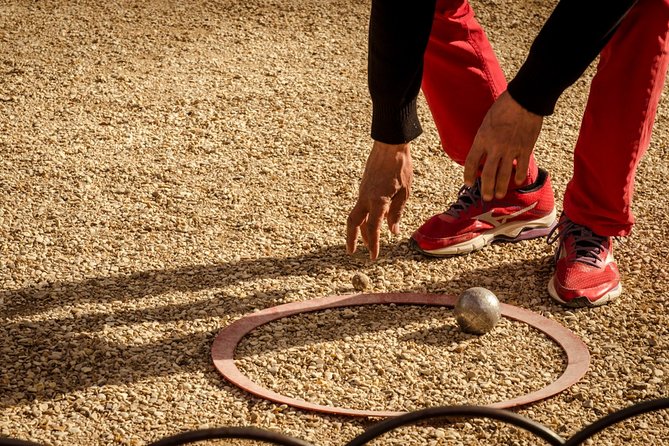
The first stop is Notre Dame de Paris, with about 30 minutes set aside for photography. The cathedral is one of the city’s strongest subjects, but it is also an easy place to make ordinary pictures. A straight-on shot of the facade may record the building, yet it may not say much about the experience of being there.
This is where guidance on composition and angle can help. You can work out how much of the structure belongs in the frame, how to use nearby streets or open space, and how the available light affects the stonework. The guide can also help you make choices quickly instead of changing settings at random.
The Île de la Cité gives this part of the walk a useful sense of place. You are not only photographing an isolated monument. You are working in one of central Paris’s most recognizable areas, where the cathedral and surrounding streets can provide different kinds of images.
Thirty minutes is enough for an introduction, though not for a full study of the site. If Notre Dame is your main reason for booking, tell the guide at the start. In a private group, that kind of preference should be easier to address than on a large public walk.
The Louvre and the problem of photographing famous buildings
The Louvre receives another 30-minute block. Its scale can make photography tricky. A large building often looks less impressive in a picture than it feels in person, and the famous glass pyramid can produce familiar images very quickly.
The lesson’s focus on exposure and composition is especially useful here. You can test how much sky, courtyard, architecture, or pedestrian space to include. You can also experiment with different angles rather than settling for the first view that appears in front of you.
This is a good stop for learning how to simplify a busy subject. The Louvre offers strong shapes and repeated lines, but a frame can become crowded. A professional guide can help you decide what to leave out, which is often as important as deciding what to include.
The activity does not include admission to the Louvre, and none is needed for the stated photo stop. You are photographing the exterior rather than taking a museum tour. That keeps the workshop moving, but anyone hoping to photograph inside should know that this experience does not promise interior access.
Tuileries Garden and changing light
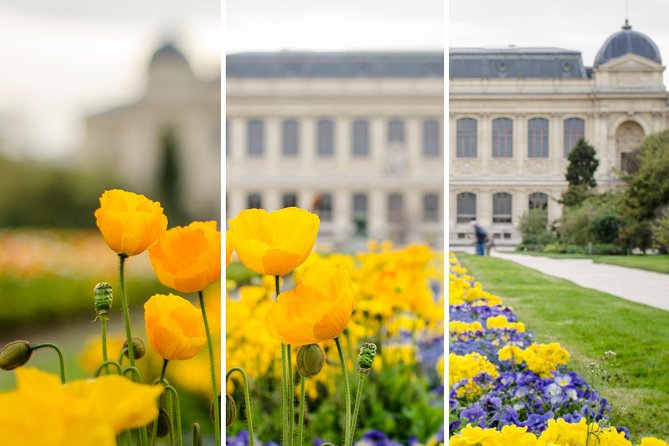
The Tuileries is the third stop, again with about 30 minutes for photography. This adds a different type of subject after the stone and glass of Notre Dame and the Louvre. The gardens can help you practice balance, depth, paths, open space, and the relationship between formal design and surrounding architecture.
The exact shooting conditions will depend on the day and time. The listed start is 1:00 pm, and multiple departure times are available, so the light may differ depending on your booking. That makes the guide’s advice on exposure and lighting practical rather than abstract.
This stop may also give you a break from photographing a single large monument. You can work with smaller details and broader views, then compare how different compositions change the feeling of the picture. If you are new to photography, this variety is helpful because you are not repeating one exercise for three hours.
The itinerary assigns 30 minutes here, so you should not expect a long garden walk or a detailed history lesson. The purpose is to use the setting as a photography classroom.
Same city, a completely different afternoon:
- Paris: Louvre Museum Timed-Entrance Ticket
★ 4.6 · 71,977 reviews - Disneyland® Paris 1-Day Ticket
★ 4.6 · 49,412 reviews - Paris: Versailles Palace and Gardens Full Access Ticket
★ 4.6 · 41,579 reviews - Paris: Evening River Cruise with Music
★ 4.4 · 22,721 reviews
The Eiffel Tower from a photographer’s point of view
The fourth stop is the Eiffel Tower. The information provided does not specify the exact viewing point, so you should not book this expecting a particular secret platform or named street corner. What is clear is that the tower is one of the workshop’s main subjects.
The Eiffel Tower creates familiar photography problems. Its size makes framing difficult, and the best composition may not be the most obvious one. The guide can show you how to try different angles and use light to create a more personal picture instead of another record shot.
You will have about 30 minutes here. That is enough time to practice a few approaches, but the stop remains part of a wider route. If you want a detailed session devoted only to the tower, this workshop may feel too broad. If you want to add it to a sampler of Paris subjects, the range works well.
The tour’s emphasis on using your own camera is important here. You are not being handed a professional setup that makes the work easy. You learn how to get more from the equipment you already carry, which is more useful for the rest of your trip.
Pont Neuf and the final practice session
Pont Neuf is the fifth and final listed stop, with approximately 30 minutes for photography. The bridge gives the lesson another change of subject and viewpoint. Rather than working only with monumental buildings, you can apply the earlier advice to a major Paris crossing and its surroundings.
By this point, you should have had chances to think about exposure, light, composition, and angle. Pont Neuf works as a practical final exercise because you can use those ideas without simply repeating the Louvre or Notre Dame assignment.
The supplied details do not say whether the guide ends with a formal photo critique or a review of your images. Do not assume that you will receive edited photographs, a written lesson, or a digital gallery. The included service is the local guide and private photography instruction.
The activity ends back at the meeting point. Since the route includes several central sights, wear comfortable shoes and keep your equipment easy to carry. That is straightforward advice for any three-hour walking workshop, especially when you may stop often to adjust settings and frame pictures.
How much value do you get for $190.10?
The listed price is $190.10 per person. That is not a cheap way to see Paris, but the comparison should be with private photography instruction, not with a basic sightseeing walk.
The tour is private for your group, with a maximum of four people, and includes a professional photographer professor as guide. If four people share the booking, the group gets direct access to one instructor while dividing the cost among the group. Group discounts are also listed, though no discount amount is provided, so check the final price before booking.
The value is strongest for people who want to improve during the trip, not just collect landmarks. A guide who can correct your settings, suggest a new angle, and explain why a picture is not working may save you hours of trial and error.
The value is weaker if you already have strong control of exposure, composition, and lighting. In that case, you may be paying mainly for a private route through famous parts of Paris. The workshop does not include a camera, museum admission, or stated post-tour editing service.
The rating is 5 out of 5 from 21 ratings, with 100 percent recommending it. One detailed response praises Alexander as patient and informative, and says the route produced strong photo opportunities. That matches the core promise of the activity: personal instruction in attractive locations.
Timing, transport, and practical details
The activity lasts about three hours and has a stated start time of 1:00 pm. Multiple departure times are available, so confirm the time attached to your booking rather than assuming every session begins at 1:00 pm.
The meeting point is also the ending point. The supplied information does not name the exact address, so check your confirmation carefully for the precise place and any instructions from Aperture Tours.
The route is near public transportation. That makes it easier to reach without arranging a private transfer, but the information does not specify which stations or lines are closest. Plan to use the meeting point details supplied after booking.
A mobile ticket is available. Confirmation is received at the time of booking, which is useful if you are organizing a tightly scheduled day in Paris.
Service animals are allowed, and most people can participate. This is a walking activity with repeated stops, but no more specific mobility information is provided. If you have access needs beyond the stated details, contact the provider before booking.
Cancellation is free up to 24 hours before the start time. You need to cancel at least 24 hours in advance for a full refund. Changes or cancellations made less than 24 hours before the local start time are not accepted for a refund.
Who should book this experience?
I would recommend it most to a small group that wants practical help with photography and does not want a large class. It also suits couples, friends, or families with different skill levels, since the guide can tailor the lesson to the group.
It is a good fit for a beginner who owns a camera but is not sure how to use its controls. It also suits a casual photographer who understands the basics but wants better images of Paris landmarks.
The experience may not suit you if you want a long historical tour, indoor access to the Louvre, a dedicated Eiffel Tower shoot, or professional equipment supplied on the day. The tour visits major sights, but photography instruction is the main point.
You should also consider the compact schedule. Five locations in three hours gives you variety, but each stop has a limited window. Bring a camera with a charged battery, know how to access its basic controls, and arrive ready to work rather than simply follow the guide.
Should you book the Paris photography walking tour?
Book it if you want to learn by doing, value one-on-one attention, and like the idea of photographing five famous Paris locations in one private session. The strongest reasons are the four-person limit, the practical teaching, and Alexander’s specifically praised patience and clarity.
Skip it if you already feel fully comfortable with your camera or if your priority is museum access and extended sightseeing. At $190.10 per person, the price makes sense when you use the instruction. It is less convincing if you mainly want a guided walk with photo stops.
For the right person, this is a useful way to leave Paris with more than a memory card full of quick snapshots. You get a focused lesson in seeing the city, framing it, and making better use of the camera you already own.
FAQ
How long does the photography tour last?
The workshop lasts approximately three hours.
What time does the tour start?
The stated start time is 1:00 pm. Multiple departure times are available, so confirm your selected time when booking.
How many people can join the private workshop?
The private activity is limited to your group, with a maximum of four people.
Do I need photography experience?
No. Experience and specialist equipment are not required. The guide tailors the lesson to your group.
Do I need to bring a camera?
Yes. A camera is not included, so you should bring your own.
Which Paris sights are included?
The photography stops are Notre Dame de Paris, the Louvre, the Tuileries, the Eiffel Tower, and Pont Neuf.
Is transportation provided?
No transportation service is listed. The activity is a walking tour near public transportation.
What is the cancellation policy?
You can cancel for a full refund up to 24 hours before the experience starts. Cancellations or changes made less than 24 hours before the local start time are not accepted for a refund.
Just added around Paris
- Private Paris Marche d’Aligre Walking Tour with Tastings★ 5.0 · 8 reviews
- Private Louvre Museum Tour for Kids & Families with Alberto or his team in Paris★ 5.0 · 41 reviews
- Private Highlights of Paris Tuk-Tuk Experience★ 5.0 · 26 reviews
- Paris Latin Quarter Walking Tour: History & Culture – Small Group★ 5.0 · 14 reviews
- Private Highlights of Paris Bike Tour★ 4.5 · 15 reviews
- Paris Musee d’Orsay PRIVATE TOUR with a Local Private Guide★ 5.0 · 41 reviews
- Private Half Day Historic Tour★ 5.0 · 58 reviews
- Pere Lachaise Cemetery Paris – Exclusive Guided Walking Tour★ 5.0 · 72 reviews
Workshops, compared.

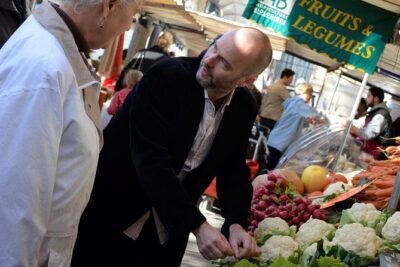
Paris Cooking Class and Lunch with Wine plus Market Visit Option
Read our review →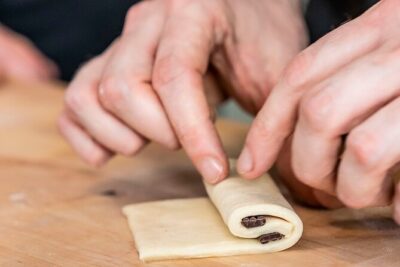
Paris Croissant Small-Group Baking Class with a Chef
Read our review →


Paris Cooking Class: Learn How to Make Macarons
Read our review →
Browse the lists this tour appears in