
Reviewed · PARIS PASTRY AND MACARON CLASSES
Mille Feuille Napoléon Pastry Class in Paris
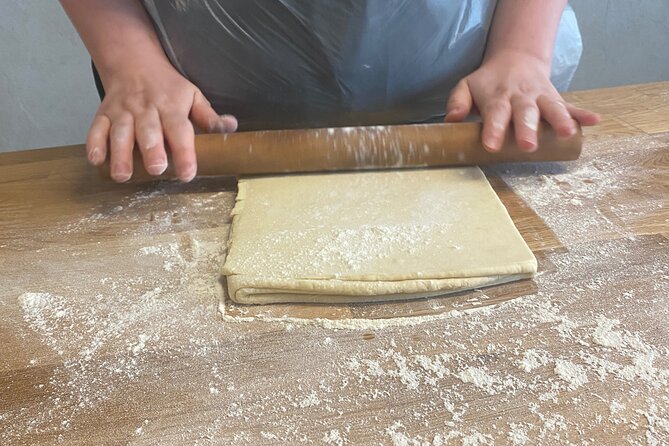
The best part of this Paris class is that you do not simply eat a mille-feuille, you learn why it works. At Maison Fleuret, a pastry chef walks you through crisp caramelized puff pastry and smooth vanilla custard, then helps you build the layers yourself.
I like the small group size, capped at six, and the calm, personal teaching style praised by people who worked with Julie and Chef Minel. I also like that the class suits families, couples, and solo visitors. The main drawback is the price: at $132.45 per person, this is a serious pastry purchase, not a casual coffee stop.
Key Points to Know Before You Book
- You make a classic French mille-feuille: Learn the pastry, custard, layering, and finishing techniques behind the dessert also called Napoleon.
- The group is limited to six people: That leaves room for questions and individual help, especially useful for first-time bakers.
- English instruction is available: Julie and Chef Minel are specifically praised for clear, friendly teaching in English.
- The class lasts about two and a half hours: It gives you time to work through the dessert rather than rush through a quick demonstration.
- Coffee or tea is included: Your finished 1000 Leaves dessert is the main tasting reward.
- You return to the starting point: Meet at 7 Rue de Béarn in the 3rd arrondissement, near public transportation.
Why Mille-Feuille Makes a Good Paris Pastry Class
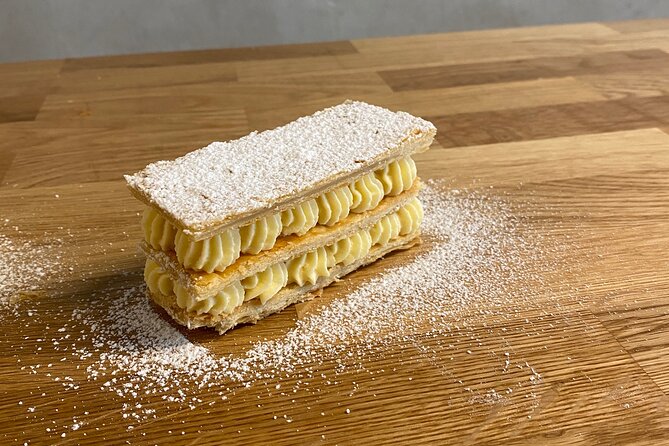
Mille-feuille means 1000 leaves, a nod to its many thin pastry layers. In the United States, you may know the same style of dessert as Napoleon. The name is less important than the contrast: brittle, buttery pastry against soft, cool cream.
This is a smart choice if you want more than a standard cooking demonstration. You are dealing with a pastry that looks simple in a bakery case but demands care. The puff pastry must be baked and caramelized properly. The custard must be smooth. The layers need enough structure to hold together without becoming heavy.
That balance gives the class real value. You leave with a better sense of why French pastry takes time and precision. You also get a dessert that you made with your own hands, rather than another boxed souvenir.
The class is offered in English, which matters when the lesson depends on small details. You need to understand when pastry is ready, how to handle the cream, and how much pressure to use when piping. Clear instruction can save you from a collapsed Napoleon and a very flat afternoon.
More pastry and macaron classes in Paris:
- Paris: Montmartre Cheese, Wine & Pastry Guided Walking Tour
★ 4.8 · 2,255 reviews - Private Montmartre Food Tour with Wine, Cheese & Pastries
★ 5.0 · 1,027 reviews - Paris French Sweets Tasting Tour with Pastries and Chocolates
★ 4.5 · 947 reviews
Entering Maison Fleuret at 7 Rue de Béarn
The class begins at 7 Rue de Béarn, 75003 Paris, in the 3rd arrondissement. The meeting point is near public transportation, so you can reach it without private transport. The activity ends at the same address, which makes the timing easy to plan around a museum visit, lunch, or an evening reservation.
You should allow enough time to arrive calmly. Pastry classes are not ideal for a last-second entrance, since the early steps can affect everything that follows. Your confirmation arrives at booking, so keep the meeting details available on your phone.
The setting is designed for a small class rather than a large public demonstration. With a maximum of six people, the chef can keep an eye on each stage. That matters most when you are handling pastry or piping custard. A big class can leave beginners watching from the back. This one is built for participation.
The intimate format also works well for solo visitors. One solo baker had a class with individual attention and plenty of time to ask questions. If you are traveling alone and want an activity that gives you a natural way to meet a few people, this is a stronger choice than a large food tour.
Caramelized Puff Pastry: The First Technical Test
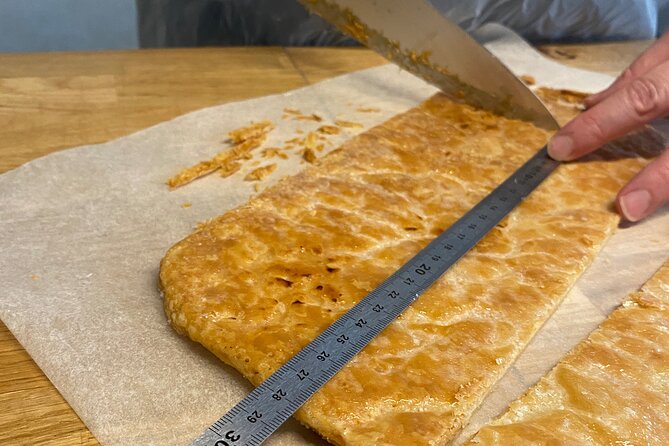
The puff pastry is the foundation of the dessert. It supplies the crackle and butter flavor that keeps the cream from feeling too soft. The class covers the process of preparing and carefully caramelizing the pastry, an important step because the finished sheets need color, crispness, and enough strength to support the filling.
This is where the lesson becomes more useful than a recipe printed on a card. Pastry depends on touch, timing, and visual clues. A chef can point out what you should notice rather than leaving you to guess from a photograph.
You should expect to work carefully instead of rushing. Mille-feuille rewards patience, and the pastry can lose its character if it is handled poorly. The class gives you a chance to see how a professional approaches the base of the dessert, including the need for even layers and a well-baked finish.
The tradeoff is that two and a half hours does not turn you into a professional pastry chef. You will learn practical methods and receive helpful tips, but repeating the recipe at home will still take practice. That is not a flaw. It is an honest part of choosing an advanced pastry rather than a simple tart.
Vanilla Custard and the Art of Piping
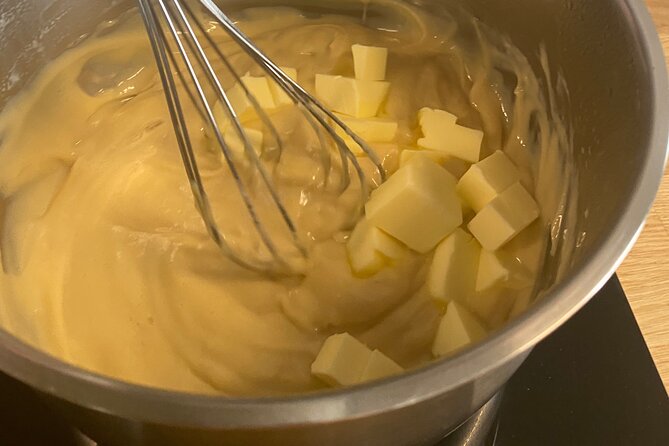
The filling brings the pastry together. The class focuses on delicate vanilla custard, also described as crème anglaise in the teaching experience. Its job is to add softness and fragrance without drowning out the pastry.
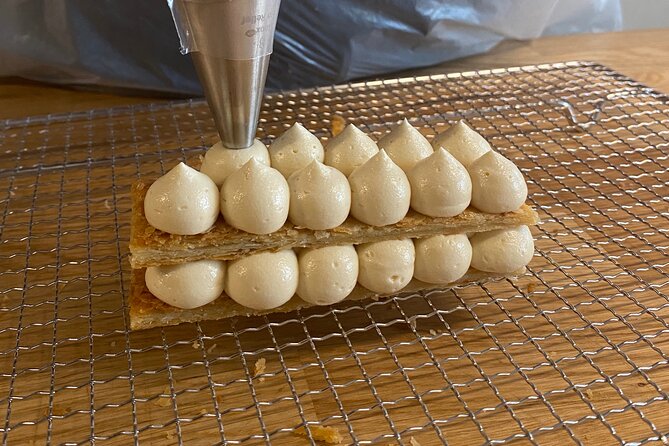
You will learn how the creamy element fits between the crisp layers and how to pipe it into place. Piping gives the finished dessert a clean look, but it also controls the balance of each bite. Too little cream leaves the pastry dry. Too much makes the stack difficult to handle.
The class is useful for anyone who enjoys detail work. You are not only mixing ingredients. You are learning how texture changes the experience of the dessert. The chef’s guidance can help you understand the difference between a smooth custard and one that is too loose, too thick, or poorly balanced.
This part also makes the class approachable for beginners. You do not need to arrive as an experienced baker. One participant who described not being a baker still came away with many useful tips. The key is to listen closely and accept that the finished pastry may have a few charming imperfections.
More perfume and craft workshops in Paris:
- Fragonard Paris: Mini Perfume Workshop
★ 4.5 · 1,924 reviews - Paris Cooking Class and Lunch with Wine plus Market Visit Option
★ 5.0 · 1,024 reviews - Paris Croissant Small-Group Baking Class with a Chef
★ 5.0 · 910 reviews - Paris: Macaron Class at Galeries Lafayette
★ 4.3 · 905 reviews
Building Your Own 1000 Leaves Dessert
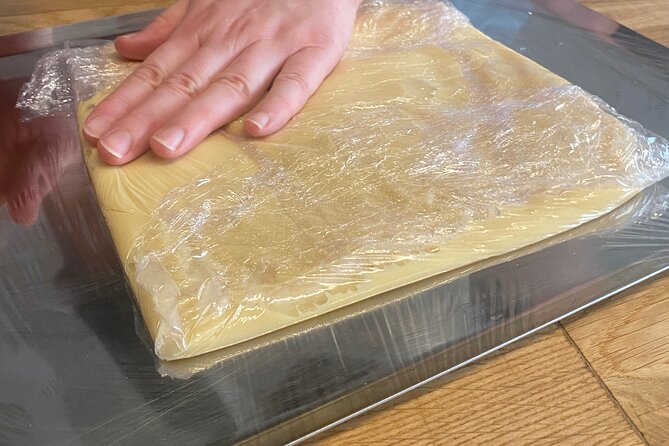
Once the pastry and custard are ready, you assemble the mille-feuille. This is the moment when separate techniques become one dessert. You will work with the layers, add the cream, and create the finished Napoleon under the chef’s direction.
The appeal here is practical. You can taste the effect of each decision. A crisp sheet feels different from a soft one. A balanced amount of custard changes the bite. The final dessert gives you a clear result to judge, even if your piping is not perfectly even.
The experience includes the dessert listed as 1000 Leaves or Napoleon. Coffee and tea are also included, giving you a simple way to enjoy the result at the end of the class. The pastry itself is the focus, so do not book this expecting a full meal or a broad menu.
The dessert is rich, with butter and cream playing major roles. One class participant specifically noted that the finished pastries were especially good for people who like butter. If you prefer light fruit desserts or restrained sweetness, this may feel substantial. If you enjoy classic French pastry, the richness is part of the point.
A Teaching Style That Keeps the Class Personal
The strongest feature here is the teaching. Julie is praised for speaking perfect English and for keeping the class relaxed and down to earth. Chef Minel is also singled out as a good instructor who offered useful hints and explained each step clearly.
Those details matter more than a grand pastry-school label. A skilled chef can make a difficult recipe feel manageable. A poor explanation can turn even a simple recipe into a chore. The comments about clear instruction, warmth, and confidence suggest that the class is focused on making you comfortable at the worktable.
The small group cap supports that style. With up to six people, you can ask questions without having to compete with a crowd. A solo participant may receive especially direct help, while a family or couple can work through the recipe together.
Families should note that the class has been enjoyed as a family outing, including by children. The provided information does not give a minimum age or a specific child policy, so confirm those details before booking with young children. Service animals are allowed.
The chefs have also been willing to offer Paris dining advice. That is a pleasant extra, though it should not be the reason you book. The pastry lesson is the main event.
Who Gets the Most From the $132.45 Price
At $132.45 per person, this class is not cheap. You are paying for a two-and-a-half-hour lesson, a professional instructor, a very small group, coffee or tea, and the dessert you prepare. The value improves if you care about technique and personal instruction.
I would compare it with the cost of a good Paris meal plus a pastry tasting. A restaurant meal gives you a finished dish. This class gives you a skill, a story to take home, and a better understanding of one of France’s classic desserts. That makes the price easier to justify for a committed food lover.
The value is less convincing if you mainly want to taste mille-feuille. Paris bakeries can satisfy that wish for much less money. You should book this only if you want to participate, ask questions, and spend a focused block of time learning.
The price also makes the small group important. A six-person maximum would feel worthwhile to me because the chef can give direct help. If the class were large, I would be more hesitant at this rate.
The experience is booked an average of 27 days in advance, so you should plan ahead if the date matters. That lead time also tells you not to treat it as a last-minute filler activity during a busy Paris trip.
Timing, Transport, and What Is Included
The class takes approximately two hours and 30 minutes. That is long enough for a real process, but short enough to fit into a day of sightseeing. You should avoid placing an important timed reservation immediately afterward, since cooking activities can run slightly long and you may want a few minutes to finish your dessert.
The meeting point and end point are the same: 7 Rue de Béarn. Private transportation is not included, but the location is near public transportation. You will need to make your own way there and back.
Included:
- Mille-feuille or Napoleon pastry preparation
- Coffee and/or tea
- English-language instruction
- A small group capped at six people
Not included:
- Private transportation
- A full meal beyond the pastry and included drink
Confirmation is provided at booking. Free cancellation is available if you cancel at least 24 hours before the start time. Changes or cancellations made less than 24 hours before the start time are not accepted for a refund, with cut-off times based on Paris local time.
The Best Fit for Couples, Families, and Solo Bakers
Couples get a hands-on activity with a clear shared result. Instead of simply choosing a restaurant, you can spend part of the day learning a pastry together and then enjoy what you made.
Families may like the relaxed format and the chance for children to take part. Keep in mind that the class involves pastry handling, custard, and careful assembly. It is a better fit for children who can follow instructions than for very young children who need constant supervision.
Solo visitors are especially well served by the small format. Individual attention can make the lesson feel almost private if the class is not full. You also have an easy conversation starter, since everyone is working toward the same dessert.
Baking enthusiasts will get the most lasting value. The class covers techniques you can try again at home, especially the handling of puff pastry, custard preparation, and piping. Beginners are welcome, but you should arrive ready to learn rather than expecting effortless results.
This is not the best choice for someone who dislikes rich desserts, has no interest in baking, or wants a quick tasting between major sights. It is an activity, not simply a snack.
Should You Book This Mille-Feuille Class?
Book it if you want a focused Paris food experience with hands-on pastry work, English instruction, and a group small enough for personal help. Julie and Chef Minel bring the kind of clear, friendly teaching that can make a tricky dessert feel possible. The finished Napoleon gives you an immediate reward.
Skip it if $132.45 feels high for a dessert, or if you would rather spend your time tasting pastries from several bakeries. For everyone else, especially couples, families, solo visitors, and home bakers, this is a thoughtful way to experience French pastry from the inside.
FAQ
Where does the mille-feuille class begin?
The class begins at 7 Rue de Béarn, 75003 Paris, France.
Where does the class end?
The activity ends back at the meeting point at 7 Rue de Béarn.
How long does the class last?
The class lasts approximately two hours and 30 minutes.
What dessert do you make?
You make mille-feuille, also known as Napoleon or 1000 Leaves.
Is the class offered in English?
Yes. The experience is offered in English.
How many people can join the class?
The class has a maximum of six participants.
Are coffee and tea included?
Yes. Coffee and/or tea are included.
Is transportation included?
No. Private transportation is not included, though the meeting point is near public transportation.
Are service animals allowed?
Yes. Service animals are allowed.
Can I cancel for a full refund?
Yes, if you cancel at least 24 hours before the experience start time. Cancellations made less than 24 hours before the start time are not refunded.
How far ahead is the class usually booked?
The experience is booked an average of 27 days in advance.
Just added around Paris
- Private Paris Marche d’Aligre Walking Tour with Tastings★ 5.0 · 8 reviews
- Private Louvre Museum Tour for Kids & Families with Alberto or his team in Paris★ 5.0 · 41 reviews
- Private Highlights of Paris Tuk-Tuk Experience★ 5.0 · 26 reviews
- Paris Latin Quarter Walking Tour: History & Culture – Small Group★ 5.0 · 14 reviews
- Private Highlights of Paris Bike Tour★ 4.5 · 15 reviews
- Paris Musee d’Orsay PRIVATE TOUR with a Local Private Guide★ 5.0 · 41 reviews
- Private Half Day Historic Tour★ 5.0 · 58 reviews
- Pere Lachaise Cemetery Paris – Exclusive Guided Walking Tour★ 5.0 · 72 reviews
Paris Pastry and Macaron Classes, compared.
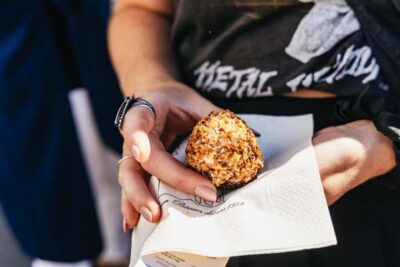
Montmartre Cheese, Wine & Pastry Guided Walking Tour
Read our review →
Private Montmartre Food Tour with Wine, Cheese & Pastries
Read our review →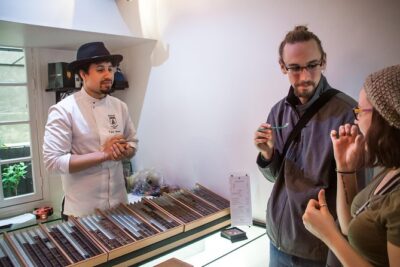
Paris French Sweets Tasting Tour with Pastries and Chocolates
Read our review →
Paris Croissant Small-Group Baking Class with a Chef
Read our review →
Paris Cooking Class: Learn How to Make Macarons
Read our review →
A Morning in Paris Food Tour: Croissants, Baguettes & Chocolate
Read our review →Browse the lists this tour appears in