
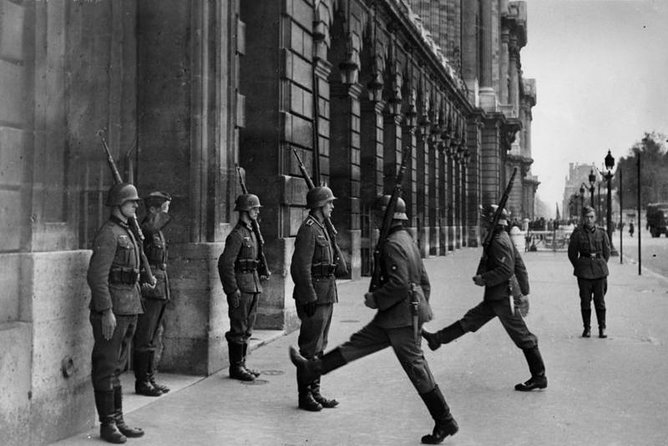
Reviewed · PARIS WORLD WAR BATTLEFIELD TOURS
Occupation and Liberation of Paris
Paris reveals a darker past on this walk from the Grands Boulevards to Place de la Concorde. Cafés, banks, cinemas, luxury hotels, and government buildings become evidence of daily life under German rule, not just pretty backdrops. Thierry Heil leads the experience, with Brad also having guided it.
I like the small maximum of 12 people, which makes it easier to ask questions, and I like the use of photographs and personal stories at the exact places where events unfolded. The route also covers uncomfortable subjects honestly, from Jewish property seizures to collaboration and denunciation.
The main catch is language: the tour is conducted in French, and English-speaking visitors must contact the provider about an English option. You will also spend more than two hours on city streets, so good weather and comfortable shoes matter.
Key points about Occupied Paris
- A 2-hour-15-minute historical walk: Start on Boulevard Poissonnière and finish at Place de la Concorde.
- A small group of up to 12 people: The size suits questions and discussion.
- A serious look at ordinary life: Hear about food, work, entertainment, denunciations, and everyday resistance.
- Important sites beyond the usual monuments: The route includes Drouot, Place de l’Opéra, the Ritz, the Meurice, and wartime cinemas.
- Photos make the past easier to read: Images help you compare wartime Paris with the streets in front of you.
- French is the main language: Contact Interkultur Paris if you need an English-language tour.
What this Occupation walk helps you see
Many Paris tours focus on kings, painters, cafés, and grand architecture. This one asks you to look at the same streets through the years of German occupation, from 1940 to the Liberation in 1944.
That change in viewpoint is the real value. A restaurant becomes a place where people traded rumors and tried to eat under difficult conditions. A cinema becomes part of a system serving German soldiers. A bank raises questions about money, business, and cooperation. A luxury hotel points toward military headquarters, celebrity visitors, and French collaboration.
You will not enter a museum or a major wartime memorial as the central feature. Instead, you move through ordinary Paris while the guide supplies dates, names, images, and anecdotes. The result depends heavily on the guide’s storytelling. Thierry Heil is associated with this experience, and Brad has also led a version of the walk. Confirm the guide and language when you book.
The route is especially useful if you already know Paris visually but want to understand what happened behind its façades. One French-speaking American described taking the walk in French on purpose, hoping to see the city in a more local way. That approach suits this tour well, since the subject is closely tied to French memory and public life.
More wartime history tours from Paris:
- Somme Battlefields Small-Group Day Trip with John Monash Centre from Paris
★ 4.5 · 270 reviews - Somme Battlefields from Paris with Australian memorial & Amiens Cathedral
★ 5.0 · 228 reviews - Paris WW2 The German Occupation Small group or Private tour
★ 4.5 · 128 reviews
From Bouillon Chartier to the Folies Bergère
The walk begins at 32 Boulevard Poissonnière, near Bouillon Chartier Grands Boulevards. The famous restaurant provides a fitting first stop because the guide starts with daily life rather than generals and battle maps.
Here, expect stories about the Occupation as people experienced it at street level. The stop lasts only about five minutes, so it is an introduction rather than a long lecture. You might hear about food, mood, social habits, and the small choices that shaped ordinary days under German control.
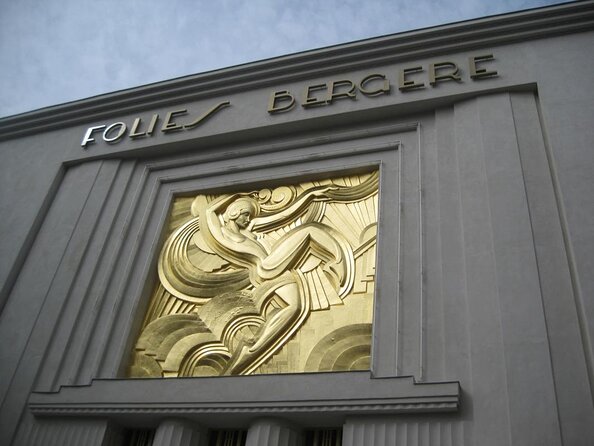
The next stop is the Folies Bergère, about seven minutes later in the tour. This is where the story turns to Parisian entertainment: music halls, cinema, performers, and the intense artistic life that continued during the war.
That subject needs careful handling. Entertainment did not simply stop in 1940, and a functioning cultural scene could offer distraction, income, or a sense of normal life. It could also exist beside censorship, occupation, and collaboration. The guide uses testimonies and anecdotes to show those tensions.
The short stop times mean you should not expect a full lecture at every location. The strength is the accumulation of places. Each one adds a piece to the larger picture.
Passage Verdeau and the uncomfortable business of occupation
Passage Verdeau keeps much of the atmosphere and decoration associated with nineteenth-century Paris. It is a quieter setting than the grand boulevards, and the covered passage helps you notice how much of the old city survives in plain sight.
Across from the passage, a building once housed a brothel requisitioned by the German army. This is not a polished version of wartime Paris. The guide brings in the less comfortable parts of military occupation, including sexual exploitation and the ways buildings were taken over for German use.
The stop lasts around five minutes. You will not get every detail of the subject in that time, but the location gives the story weight. It also shows why this walk is different from a general sightseeing route: even a decorative shopping passage can lead to questions about power, coercion, and the use of urban space.
Next comes Hôtel Drouot, one of Paris’s major auction houses. During the Occupation, many everyday objects and works of art were sold there. This provides a way to discuss the seizure and forced sale of Jewish property.
The guide also explains the unusual story of a German art dealer working for the Reich. That detail adds a personal angle to the wider subject of looted art. You are not simply hearing that art was stolen. You are examining how auctions, dealers, buyers, and institutions could become part of the process.
This may be one of the most serious sections of the walk. If you prefer tours that avoid difficult moral questions, take note. If you want a clear explanation of how occupation affected property and commerce, the Drouot stop adds real value.
Resistance at the 9th arrondissement town hall
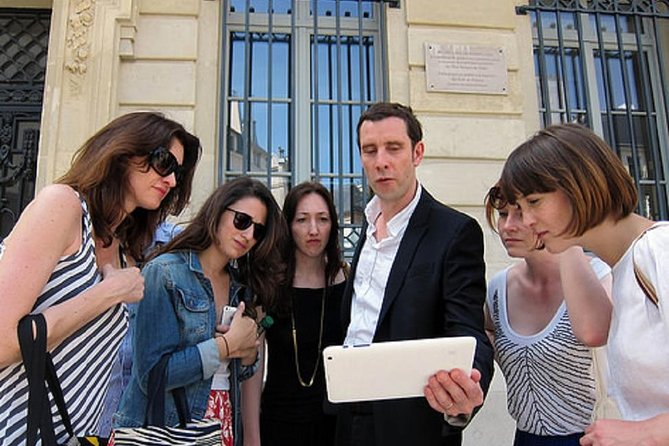
The route continues to the Mairie of the 9th arrondissement. The town hall opens a discussion about the Resistance through the actions of a municipal employee.
That focus matters. Resistance is often presented through famous leaders, secret networks, and dramatic acts. This stop also considers ordinary resistance and the role of people who worked inside public institutions. It asks what a clerk, administrator, or civil servant could do within an occupied system.
The guide also addresses denunciations, one of the most painful subjects in wartime France. Denunciation could affect neighbors, colleagues, Jewish families, suspected resisters, and anyone caught in local disputes. A public building is a useful place to discuss how occupation reached into paperwork, authority, and daily relationships.
Plan for about ten minutes here. Because the route deals with both organized Resistance and quiet individual choices, this is a good point to ask questions. The group limit of 12 should make that possible without turning the walk into a crowded street lecture.
Same city, a completely different afternoon:
- Paris: Louvre Museum Timed-Entrance Ticket
★ 4.6 · 71,977 reviews - Disneyland® Paris 1-Day Ticket
★ 4.6 · 49,412 reviews - Paris: Versailles Palace and Gardens Full Access Ticket
★ 4.6 · 41,579 reviews - Paris: Evening River Cruise with Music
★ 4.4 · 22,721 reviews
Banks, the stock exchange, and the cost of surrender
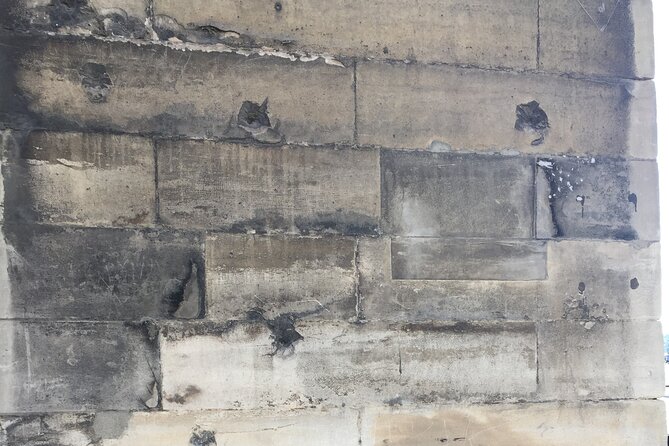
At BNP Paribas, Maison Dorée, the guide turns to finance and business under occupation. This section includes the role of banks, the surprising situation at the Paris stock exchange, and the armistice agreements between France and Germany.
You will also hear about the economic and political results of the armistice. That gives you context for the later stops. The occupation was not only a military presence. It shaped money, trade, institutions, and the choices available to French businesses.
This is a useful part of the walk if you want more than battlefield stories. The economic side can be harder to picture than soldiers in the street, but it explains how an occupied city continued to function. The guide connects financial institutions to the broader political situation rather than treating them as isolated buildings.
The stop lasts around ten minutes. Bring patience here. The material may feel more abstract than the stories about hotels or cinemas, but it helps explain how power worked.
Cinema, propaganda, and Place de l’Opéra
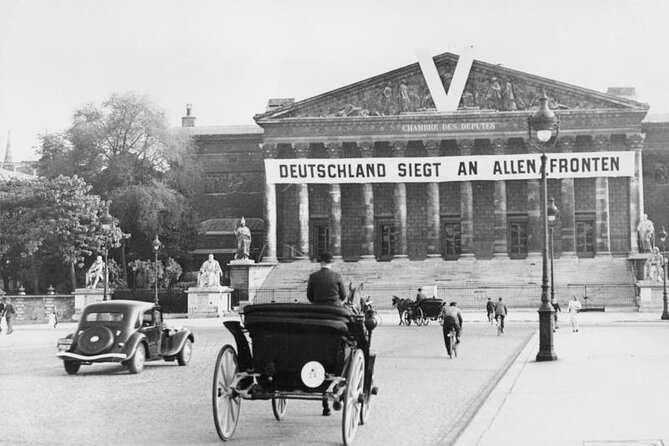
At Pathé Opéra Premier, you see an example of a cinema requisitioned for German soldiers. The stop nearby also points to a building associated with a major anti-Semitic propaganda exhibition in Paris.
These two details show different sides of culture under occupation. Cinema could serve soldiers and provide entertainment, while exhibitions could be used to spread hatred and political messaging. The location makes the connection between popular culture and propaganda easier to grasp.
Place de l’Opéra follows. It is one of the most symbolic areas on the route, with the Kommandantur, the Café de la Paix, and the Opéra all tied to wartime stories.
The guide uses this square to bring together military authority, social life, and public spectacle. It is also a striking place to pause because the grand buildings can make the past seem distant. The anecdotes bring it back to people who worked, performed, socialized, or exercised power here during the Occupation.
The stop at Place de l’Opéra lasts about ten minutes. Keep your eyes open for the surrounding façades, but listen closely too. Much of the interest lies in what the buildings represented at the time, not simply in their architecture.
Place Vendôme, the Ritz, and the world of collaboration
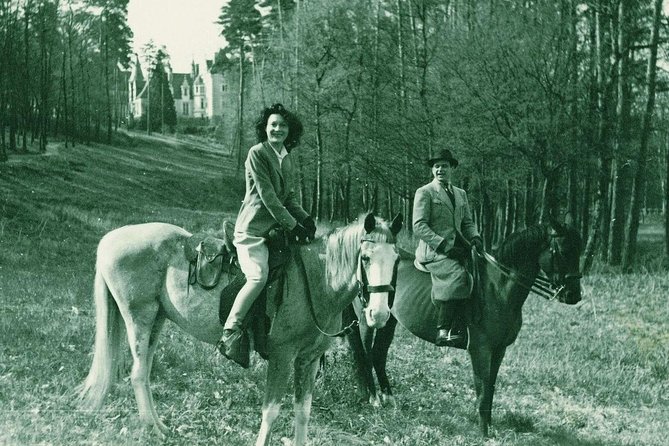
Place Vendôme introduces the fate of jewelry shops on Rue de la Paix. That leads into a discussion of the Ministry of Justice, which was occupied by the German army, and one of the first Resistance networks established across the street.
The most famous address here is the Ritz. During the Occupation, it became an important meeting place for collaboration and German authorities, with well-known figures regularly visiting. The guide uses the hotel to examine the social side of occupation, including the celebrities and powerful people who moved through these spaces.
This is a strong stop for understanding that collaboration was not confined to official offices. It could also involve social connections, luxury, ambition, and access. The contrast between jewelry shops, a ministry, a Resistance network, and a grand hotel gives the area unusual range.
Allow about 15 minutes at Place Vendôme, the longest stop so far. That extra time makes sense because several subjects meet here. You will need to listen for names and connections, especially if French is not your first language.
Rue de Castiglione and the final battles
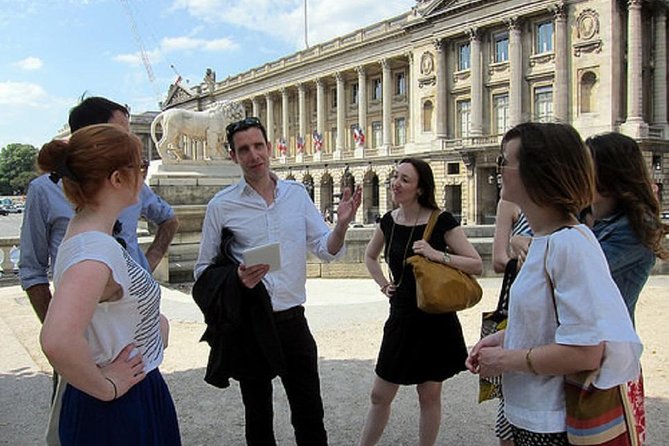
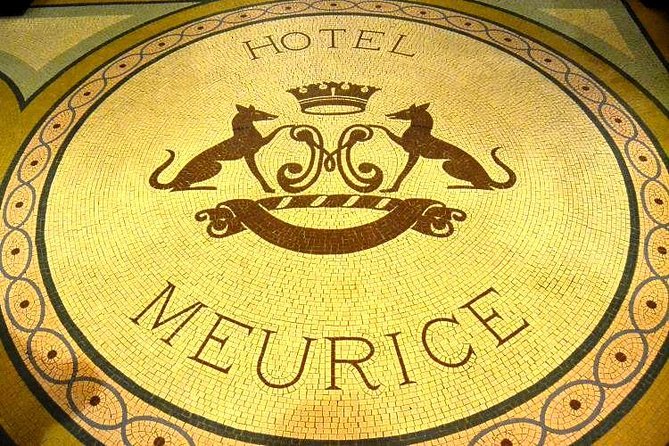
Rue de Castiglione brings the tour toward the end of the Occupation. Many large hotels housed German army headquarters, and the guide uses the area behind the Meurice hotel to discuss the people connected with those buildings.
The subject then shifts to the battles of the Liberation. The walk shows how military headquarters and luxury hotels became part of the final struggle for control of Paris.
This stop lasts about ten minutes. It is a useful bridge between the years of occupation and the dramatic days of August 1944. Rather than treating Liberation as a clean, sudden event, the route connects it to the people and institutions already introduced earlier.
Place de la Concorde and the meaning of Liberation
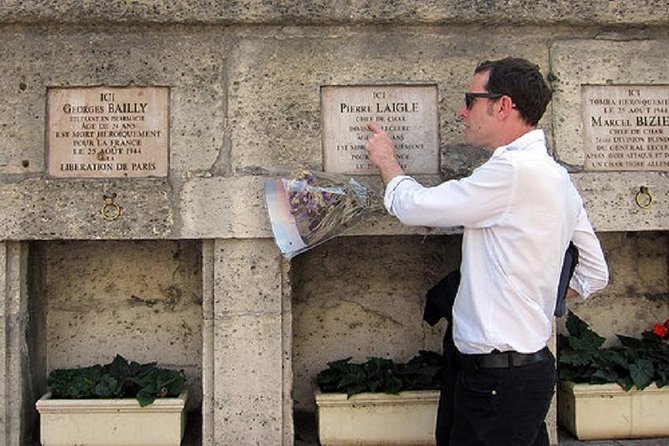
The walk ends at Place de la Concorde. Here, you can see traces of the Liberation battles and memorial plaques dedicated to soldiers, Resistance members, and civilians.
The guide also uses photographs on a terrace to compare the square and nearby sites with their wartime appearance. This visual aid is one of the most practical features of the experience. It helps you understand where barricades, fighting, and movement took place, even when modern traffic and buildings make the scene hard to read.
The final stop lasts around 15 minutes. It also returns to several famous people linked with the period. By ending at a major public square rather than a single museum, the tour leaves you with a wider picture of Paris during the war: occupied, divided, active, fearful, and eventually liberated.
Price, group size, and practical value
The price is $25.44 per person. For a 2-hour-15-minute guided walk with a maximum of 12 people, that is a fair price, especially if you care about modern Parisian streets and the history attached to them.
You are paying for the guide’s preparation and interpretation, not admission tickets. All stops are viewed from the public streets, and the itinerary lists no paid entry. That keeps the cost low, but it also means the experience depends on clear storytelling and your willingness to remain engaged outdoors.
The walk covers 11 stops and ends in a different part of the city from where it starts. The start time is 2:00 p.m., and the end point is Place de la Concorde. Plan your onward route from there rather than assuming you will return to the Grands Boulevards.
The tour is booked, on average, 25 days ahead. That suggests you should not leave it until the last minute if the date matters to you. Confirmation arrives at booking, and free cancellation is available up to 24 hours before the start time. Changes or cancellations inside that window are not accepted for a refund.
Good weather is required. If poor weather cancels the walk, you are offered another date or a full refund. The same applies if the minimum number of participants is not reached.
The route is near public transportation, and most people can participate. Service animals are allowed. Still, this is a walking tour on city streets, so bring shoes you can wear comfortably for more than two hours.
Who should book this walk
I would choose this experience if you want wartime Paris explained through real locations rather than presented only in a classroom or museum. It suits history-minded visitors, people interested in the Resistance, and anyone curious about how occupation affected ordinary business and social life.
It is also a good fit if you have already seen the major monuments and want a different way to read central Paris. The route connects places you might otherwise pass without knowing their wartime role.
I would think twice if you need an English tour and do not want to arrange one in advance. The standard experience is in French. I would also skip it if you want interior access, military artifacts, or a fast sightseeing walk. This is a street-based history lesson, with serious subjects and frequent stops.
Should you book Occupation and Liberation of Paris?
Book it if you can follow French, or if Interkultur Paris confirms an English-language guide for your date. Thierry Heil’s approach centers on clear stories, photos, and specific locations, while the smaller group gives the walk room for questions. The route is strongest when it covers the links between daily life, business, art, collaboration, Resistance, and the final battles.
At $25.44, it offers a useful amount of historical context for a modest cost. Just arrive ready for a serious subject, outdoor walking, and a tour that asks you to look twice at familiar Paris streets.
FAQ
How long is the Occupation and Liberation of Paris tour?
The tour lasts approximately 2 hours and 15 minutes.
Where does the tour begin?
It begins at 32 Boulevard Poissonnière, 75009 Paris, France, near Bouillon Chartier Grands Boulevards.
Where does the tour end?
The walk ends at Place de la Concorde, 75001 Paris.
What time does the tour start?
The scheduled start time is 2:00 p.m.
Is the tour offered in English?
The tour is in French. You should contact the provider about arranging an English-language tour.
How many people can join the tour?
The maximum group size is 12 participants.
Is the tour accessible by public transportation?
Yes. The experience is near public transportation.
Can I cancel for a full refund?
Yes. You can cancel at least 24 hours before the start time for a full refund. Poor weather or failure to meet the minimum number of participants may also result in another date or a full refund.
Just added around Paris
- Private Paris Marche d’Aligre Walking Tour with Tastings★ 5.0 · 8 reviews
- Private Louvre Museum Tour for Kids & Families with Alberto or his team in Paris★ 5.0 · 41 reviews
- Private Highlights of Paris Tuk-Tuk Experience★ 5.0 · 26 reviews
- Paris Latin Quarter Walking Tour: History & Culture – Small Group★ 5.0 · 14 reviews
- Private Highlights of Paris Bike Tour★ 4.5 · 15 reviews
- Paris Musee d’Orsay PRIVATE TOUR with a Local Private Guide★ 5.0 · 41 reviews
- Pere Lachaise Cemetery Paris – Exclusive Guided Walking Tour★ 5.0 · 72 reviews
- Paris Revolutionary Walking Tour: Iconic French Sights & Stories★ 5.0 · 11 reviews
Paris World War Battlefield Tours, compared.
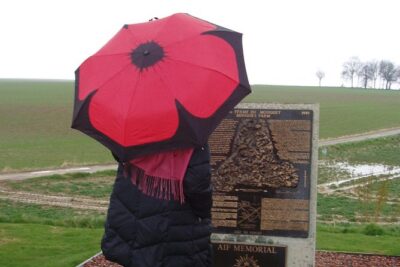
Somme Battlefields Small-Group Day Trip with John Monash Centre from Paris
Read our review →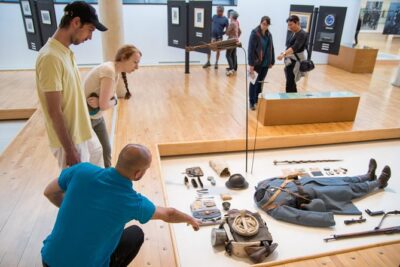
Somme Battlefields from Paris with Australian memorial & Amiens Cathedral
Read our review →
Paris WW2 The German Occupation Small group or Private tour
Read our review →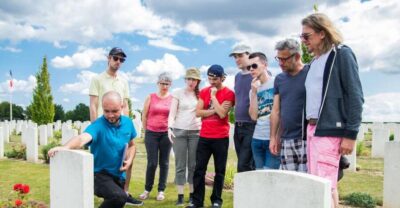
Normandy D-Day Beaches and World War II Sites Day Trip from Paris
Read our review →
WWII American Landing Beaches Discovery Private Tour
Read our review →
A Day in Normandy Landing Beaches of WWII with Private Guide
Read our review →Browse the lists this tour appears in