
Reviewed · PARIS PASTRY AND MACARON CLASSES
Ohlala Macarons in Paris!
The best part of this Paris class is that you do not just watch someone make macarons. You practice the fussy parts yourself: Italian meringue, piping, and filling. The 90-minute lesson takes place at Passage du Génie, and the finished treats are served with coffee or tea.
I like the small format, which gives you a better chance to get hands-on help. I also like that the class covers both chocolate ganache and homemade jam, so you leave with more than one flavor idea. The main caution is price: at $138.77 per person, this is a costly way to make a pastry, especially since the class lasts about an hour and a half.
The class is led by instructors including Eduardo and Gaby, both praised for clear, patient teaching. One point to note: the setting is a cooking workshop rather than a lesson with a traditional Parisian pastry chef, so book it for practical instruction and a pleasant small-group activity, not celebrity-chef theater.
Key points to know before booking
- Italian meringue is the main technique: You will learn the method used for the macaron shells, including piping.
- Chocolate ganache and jam are both part of the session: The fillings give you two useful flavor options to repeat at home.
- The class is genuinely hands-on: You prepare shells, make filling, pair the cookies, and taste the result.
- The group is small: The advertised maximum is seven people, with some sessions operating with even fewer.
- Coffee and tea are included: They accompany the macarons at the end of the workshop.
- The location is easy to reach: Meet at 22 Passage du Génie in Paris, near public transportation and the Faidherbe-Chaligny metro.
Making macarons in Passage du Génie
Macarons look simple in a pastry case. Two smooth, colorful shells with a neat band of filling. In practice, they can be temperamental. The batter needs the right texture, the shells must be piped evenly, and the oven can make the difference between a polished result and a tray of cracked sweets.
This class focuses on those trouble spots instead of treating macarons as a quick demonstration. You begin with a short introduction, including a discussion of where macarons come from. That opening adds useful context without taking over the session. You are there to bake, not sit through a long lecture.
The meeting point is 22 Passage du Génie in the 12th arrondissement. It is near public transportation, including the Faidherbe-Chaligny metro area, which makes it a practical stop if you are exploring eastern Paris. The activity ends at the same place, so you do not need to arrange a second pickup point.
The listed duration is about 90 minutes. That is long enough to cover the main techniques, but not long enough for a slow, full pastry-school course. You should arrive ready to work and listen closely. The instructor has several steps to fit into a short period, and the hands-on parts matter more than taking a passive seat.
More pastry and macaron classes in Paris:
- Paris: Montmartre Cheese, Wine & Pastry Guided Walking Tour
★ 4.8 · 2,255 reviews - Private Montmartre Food Tour with Wine, Cheese & Pastries
★ 5.0 · 1,027 reviews - Paris French Sweets Tasting Tour with Pastries and Chocolates
★ 4.5 · 947 reviews
A small class with Eduardo or Gaby
The group limit is listed as seven people, while the experience is also described as capped at six. In practical terms, you should expect a small class rather than a large demonstration, but the exact number can vary. One session had only four people, and another had a single participant.
That size is a real advantage for macarons. Piping is easier to understand when the instructor can look at your technique and correct it. You can also ask about batter texture, filling consistency, and how to repeat the recipe at home without waiting behind a crowd.
Eduardo and Gaby are the named instructors associated with the class. Eduardo is praised for making the lesson easy and fun, while Gaby is noted for explaining each step carefully and making sure participants practiced the technique. The instruction appears to be the strongest part of the activity.
You should keep your expectations in the right place. This is not presented as a lesson with a famous Parisian pastry chef, and one participant expected a more traditional local chef than the class provided. That did not prevent the session from being enjoyable, but it is an important distinction. You are paying for a friendly, practical workshop led by an instructor, not a meeting with a high-profile professional from a grand patisserie.
Starting with the macaron basics
The class begins with an introduction and a question about the origins of macarons. That small history lesson helps place the pastry in its French food setting, but the focus quickly turns to making them.
You will learn how the shell and filling work together. A macaron is not just a meringue cookie. Its success depends on the balance between a crisp or lightly firm exterior, a softer middle, and enough filling to bring the two halves together without making the pastry heavy.
The workshop format lets you see the process in order. That matters because recipes often hide the small decisions that cause trouble at home. The instructor can show you what the mixture should look like and how the piping should be handled, rather than leaving you to guess from a written recipe.
The experience also includes ingredients, tools, and an apron. You do not need to bring baking equipment with you, which makes this easy to fit into a day of sightseeing. You are welcome to take photos or videos during the session, a useful option if you want visual reminders of the piping or filling technique.
Preparing the chocolate ganache
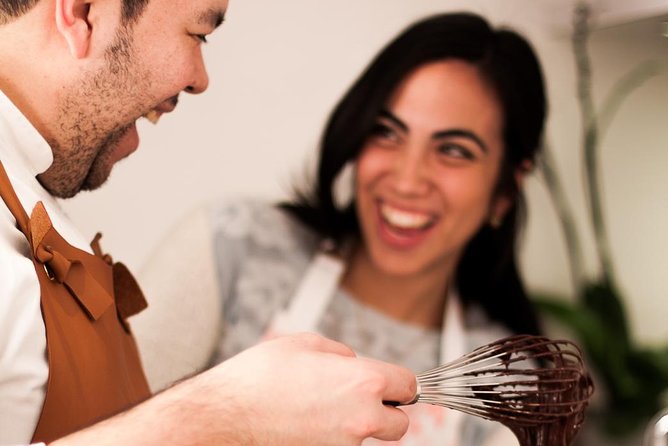
The first major food task is the filling. The class prepares a chocolate ganache and spends time on the tricky part of getting it right.
Ganache sounds straightforward, but its texture matters. It needs to be smooth enough to pipe or spread and firm enough to hold the shells together. If it is too soft, the macarons can slide. If it is too firm, it becomes difficult to use neatly.
The class also works with homemade jam as another filling option. The pairing of chocolate ganache and jam gives you a useful contrast. Ganache brings richness, while jam adds fruit and acidity. You can taste both approaches and decide which one you would rather recreate at home.
This part of the workshop is especially valuable if you have tried macarons before and struggled with the filling. You are not just watching a finished pastry being assembled. You are seeing how the filling is prepared and how it fits into the final cookie.
Same city, a completely different afternoon:
- Paris: Louvre Museum Timed-Entrance Ticket
★ 4.6 · 71,977 reviews - Disneyland® Paris 1-Day Ticket
★ 4.6 · 49,412 reviews - Paris: Versailles Palace and Gardens Full Access Ticket
★ 4.6 · 41,579 reviews - Paris: Evening River Cruise with Music
★ 4.4 · 22,721 reviews
Making shells with Italian meringue
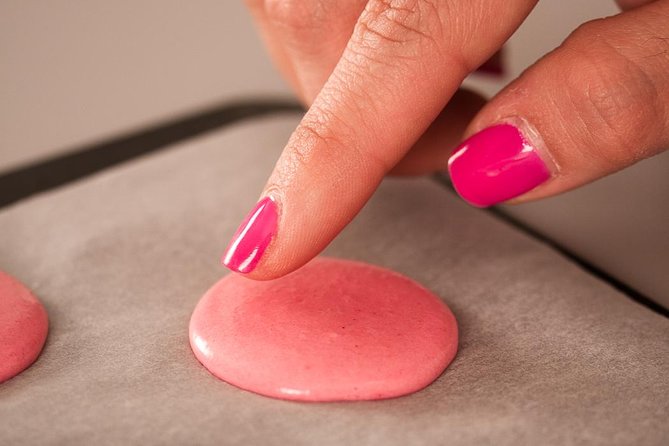
The shells are the technical center of the class. You will use the Italian meringue method, which involves preparing a meringue before combining it with the almond mixture.
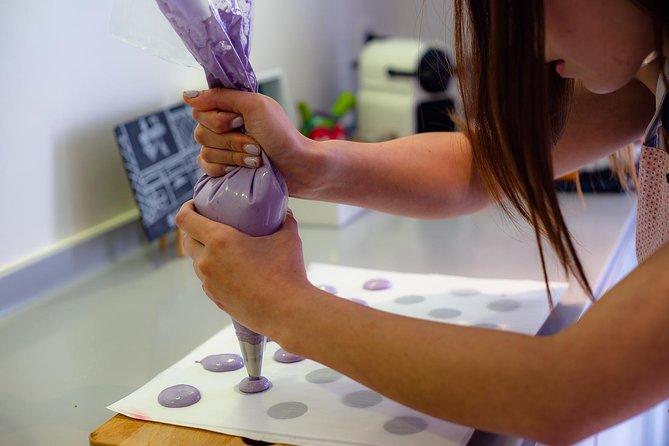
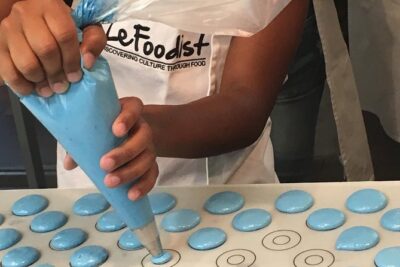
The instructor demonstrates the process, then shows you how to pipe the batter. Piping is one of the most useful skills to practice in person. The size and shape of each shell affect baking time, pairing, and the finished appearance. Even shells also make the final macarons easier to match.
This is where a small group helps most. You can watch the instructor’s hand position, then try it yourself. If your batter spreads too much or your circles are uneven, you can ask for help while the mixture is still in front of you.
The session aims to show you how to succeed with the shells, but remember that macarons are sensitive pastries. A single class cannot remove every variable from home baking. Your oven, ingredients, weather, and piping habits can all affect the result. Still, seeing the method and practicing it under guidance gives you a stronger starting point than reading a recipe alone.
The shells are baked during the workshop, then paired with the filling. The listing does not give a detailed baking schedule or oven setup, so you should not expect a full pastry-production timetable. The aim is to teach the core process and let you enjoy the finished macarons within the 90-minute visit.
Pairing, tasting, and the useful finish
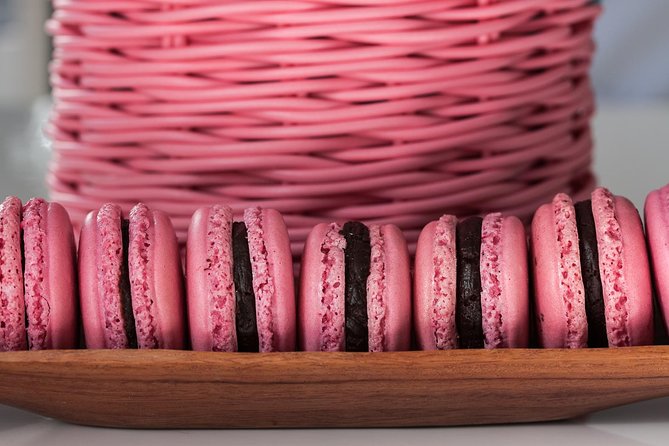
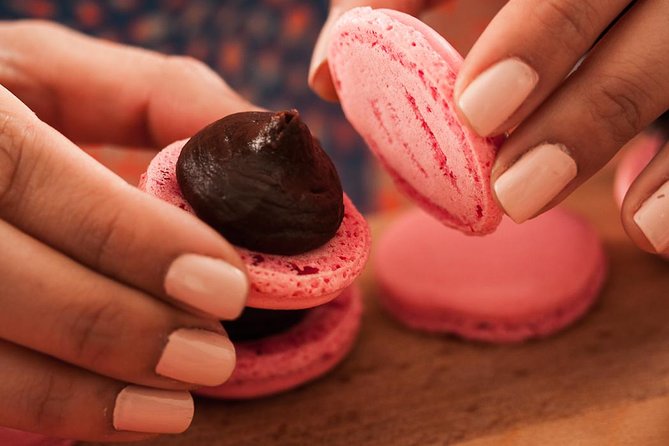
Once the shells and filling are ready, you pair them into macarons. You may use chocolate ganache, homemade jam, or both, depending on how the class is organized that day.
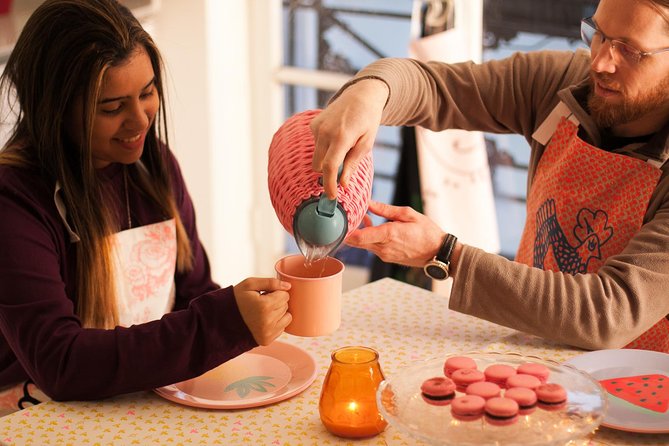
The final tasting is simple and pleasant. Coffee or tea is included, giving you something to drink with the sweets and a short chance to enjoy what you made. Alcohol is not included, though that will not matter to most people booking a baking lesson.
The tasting also gives you a practical check on the result. You can compare the texture of the shells with the filling and ask questions while the process is fresh. If you want to repeat the recipe later, this is the moment to clarify the details you may have missed.
Several participants took home the idea that the recipe was repeatable. One person later made macarons successfully after the class, which is a good sign for anyone hoping to carry the skill beyond Paris. The class does not promise a take-home box or packaged pastries, so you should book it for the lesson and tasting rather than for souvenirs.
Is $138.77 good value?
At $138.77 per person, this is not an inexpensive pastry stop. You can buy excellent macarons in Paris for far less than the cost of the workshop. The price needs to be judged against the instruction, equipment, ingredients, small group, and the chance to practice rather than simply sample.
I see the value if you enjoy cooking and want a memorable activity with a clear result. You receive a guided lesson, use the provided tools and apron, make the fillings and shells, and taste your work with coffee or tea. A private or very small class can also be worth more to you than a standard sightseeing stop.
The value is weaker if you mainly want to eat macarons or if you have little interest in baking again. In that case, a pastry shop visit gives you a cheaper taste of French macarons, and you can spend the difference on several flavors from a respected bakery.
The small-group size helps justify some of the cost. Hands-on pastry instruction is more useful when the teacher can watch your technique. Still, the short duration and the absence of a high-profile chef mean you should book with realistic expectations.
Who will enjoy this Paris cooking class?
This workshop suits visitors who like to learn by doing. You will get the most from it if you enjoy recipes, want to practice pastry technique, or hope to make macarons for family and friends after returning home.
It also works well for families. Children had a good time preparing and eating the macarons, though the activity still requires attention during the meringue, piping, and baking steps. Adults should decide how much help younger children need with the equipment and technique.
Solo visitors can book it too. A single participant enjoyed the class, and the small format can make it easier to ask questions. You do not need to arrive with your own group to get something from the session.
I would be more cautious about recommending it to someone seeking a formal chef-led culinary course. The class is friendly and practical, but it is not described as an advanced pastry program. It is best viewed as a compact introduction to one French specialty.
Getting there and planning your time
The meeting point is 22 Passage du Génie, 75012 Paris. It is near public transportation and the Faidherbe-Chaligny metro, so you can reach it without a special transfer arranged by the operator.
Plan your route before leaving, and arrive with enough time to find the passage. The session lasts about 90 minutes and ends where it begins, making it easy to add before or after other plans in the 12th arrondissement.
A mobile ticket is provided, and booking confirmation is received at the time of booking. Ingredients, tools, and an apron are supplied. Since the experience is non-refundable and cannot be changed after booking, check your schedule carefully before paying.
The class requires a minimum number of participants. If the operator cancels because that minimum is not reached, you are offered another date or experience, or a full refund. That protection applies to an operator cancellation, not to a change of mind on your part.
My booking advice
I would book Ohlala Macarons if you want a hands-on Paris activity and care about learning a skill you can repeat at home. The strongest reasons are the small group, the chance to practice Italian meringue and piping, and the helpful instruction associated with Eduardo and Gaby.
I would skip it if your goal is simply to taste the best macarons in Paris, or if $138.77 feels high for a 90-minute class. Visit a pastry shop instead and spend the rest on more sweets.
For families, solo visitors, and home bakers, this is a pleasant, focused workshop with a clear payoff: macarons you helped make, plus a recipe and technique to try again. Just remember that the attraction is the process, not a famous chef or a long professional pastry course.
FAQ
Where does the macaron class meet?
The class begins at 22 Passage du Génie, 75012 Paris, France. It also ends at the same meeting point.
How long does the experience last?
The workshop lasts approximately one hour and 30 minutes.
What will I learn to make?
You will learn how to make macaron shells, prepare a chocolate ganache, pipe the shells, and pair them with ganache or homemade jam.
Which meringue method is used?
The class uses the Italian meringue method for the macaron shells.
Are coffee and tea included?
Yes. Coffee and/or tea are included and are served while you enjoy the macarons.
Are ingredients and equipment provided?
Yes. Ingredients and tools are provided, and an apron is loaned during the experience.
How many people can attend?
The activity has a maximum of seven participants. It is also described as a small class capped at six, so the exact group size may vary.
Can I take photos or videos?
Yes. You are welcome to take as many photos or videos as you like during the experience.
Can I cancel for a refund?
No. The experience is non-refundable and cannot be changed for any reason. If the operator cancels because the minimum number of participants is not met, you will be offered another date or experience, or a full refund.
Just added around Paris
- Private Paris Marche d’Aligre Walking Tour with Tastings★ 5.0 · 8 reviews
- Private Louvre Museum Tour for Kids & Families with Alberto or his team in Paris★ 5.0 · 41 reviews
- Private Highlights of Paris Tuk-Tuk Experience★ 5.0 · 26 reviews
- Paris Latin Quarter Walking Tour: History & Culture – Small Group★ 5.0 · 14 reviews
- Private Highlights of Paris Bike Tour★ 4.5 · 15 reviews
- Paris Musee d’Orsay PRIVATE TOUR with a Local Private Guide★ 5.0 · 41 reviews
- Private Half Day Historic Tour★ 5.0 · 58 reviews
- Pere Lachaise Cemetery Paris – Exclusive Guided Walking Tour★ 5.0 · 72 reviews
Paris Pastry and Macaron Classes, compared.
Montmartre Cheese, Wine & Pastry Guided Walking Tour
Read our review →
Private Montmartre Food Tour with Wine, Cheese & Pastries
Read our review →
Paris French Sweets Tasting Tour with Pastries and Chocolates
Read our review →
Paris Croissant Small-Group Baking Class with a Chef
Read our review →
Paris Cooking Class: Learn How to Make Macarons
Read our review →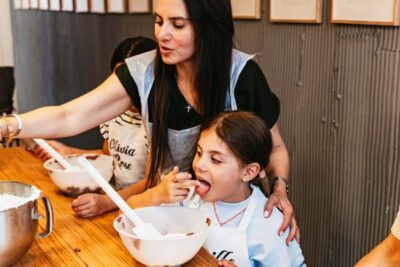
A Morning in Paris Food Tour: Croissants, Baguettes & Chocolate
Read our review →Browse the lists this tour appears in