
Reviewed · PARIS PASTRY AND MACARON CLASSES
Paris: Bread and Croissant-Making Class
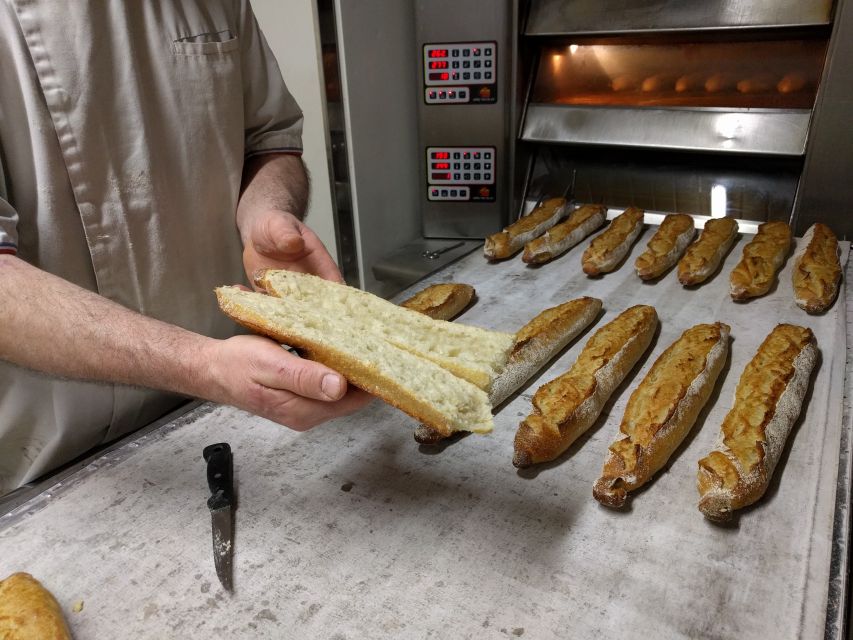
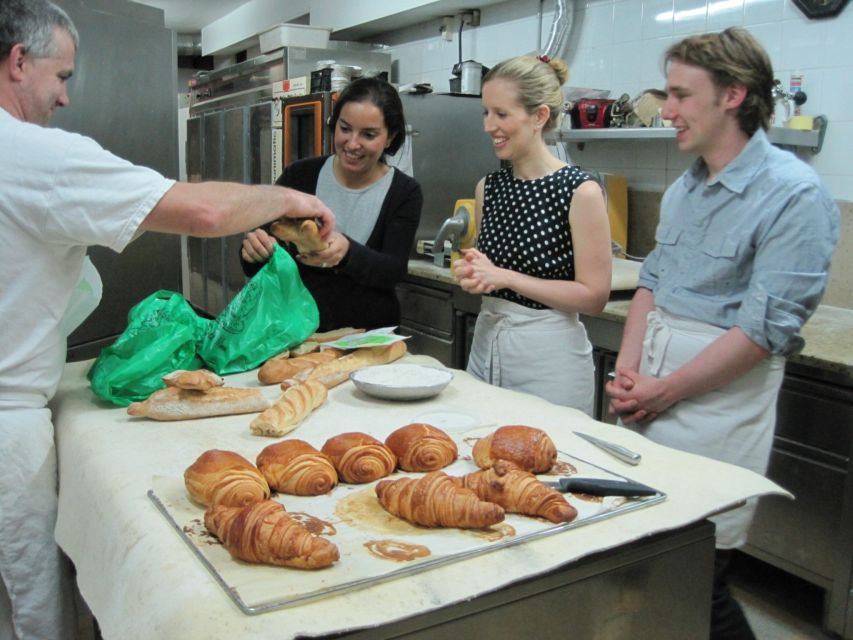
The best part of this Paris class is that you work inside a real family-run boulangerie, not a polished cooking school built only for visitors. Baker Didier carries on a trade practiced by his father and grandfather, and he shares the small decisions that shape a crisp crust, tender crumb, and flaky croissant.
I like the small group of eight and the chance to handle the dough yourself. I also like that you make two kinds of baguette, including La Parisse, the bakery’s own specialty, rather than stopping at a standard demonstration. The main consideration is time: two hours goes quickly, so expect a lively introduction with hands-on work, not a full professional pastry course.
Key points to know
- Baker Didier teaches from inside his own bakery, adding personal stories, humor, and practical advice to the lesson.
- You make classic baguettes and La Parisse, a special bread unique to the bakery.
- Croissant shaping is included, along with tasting warm bread and pastries during the session.
- English, French, Japanese, and Spanish support is available, with interpreters such as Luis, Luce, or Elsa depending on the class.
- The group is limited to eight people, which allows more personal help at the worktable.
- Recipes are sent by email, so you can try the methods again at home.
Inside Le Petit Mitron on Rue Oberkampf
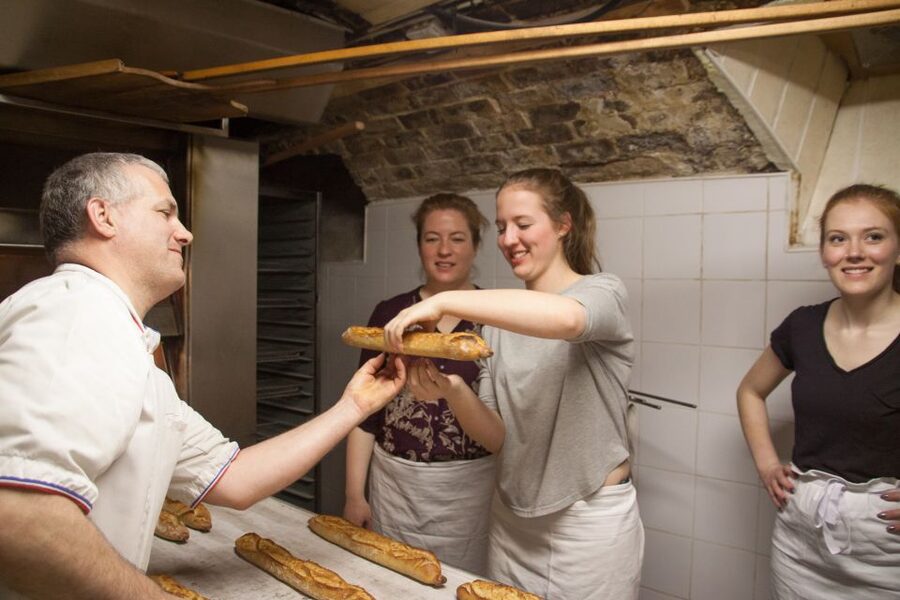
The class meets at Le Petit Mitron, 8 rue Oberkampf in Paris’s 11th arrondissement. You are not visiting a bakery as a spectator. You go behind the counter, put on an apron, and work with flour, dough, utensils, and the ingredients used in the lesson.
That setting matters. A bakery has a working rhythm and a practical feel that a hotel kitchen often lacks. You see the space where the bread is made and learn from someone whose daily work depends on getting the dough right. It also makes the session feel personal. Didier is teaching from his own shop, with family methods passed down through generations.
The class is available in English, French, Japanese, and Spanish. English-language sessions may include a translator or host such as Luis, Luce, or Elsa. The translations have been praised for being clear and conversational, which is important when the subject includes texture, timing, and hand movements that are hard to explain with a few simple words.
More pastry and macaron classes in Paris:
- Paris: Montmartre Cheese, Wine & Pastry Guided Walking Tour
★ 4.8 · 2,255 reviews - Private Montmartre Food Tour with Wine, Cheese & Pastries
★ 5.0 · 1,027 reviews - Paris French Sweets Tasting Tour with Pastries and Chocolates
★ 4.5 · 947 reviews
Mixing dough and learning the baker’s small tricks
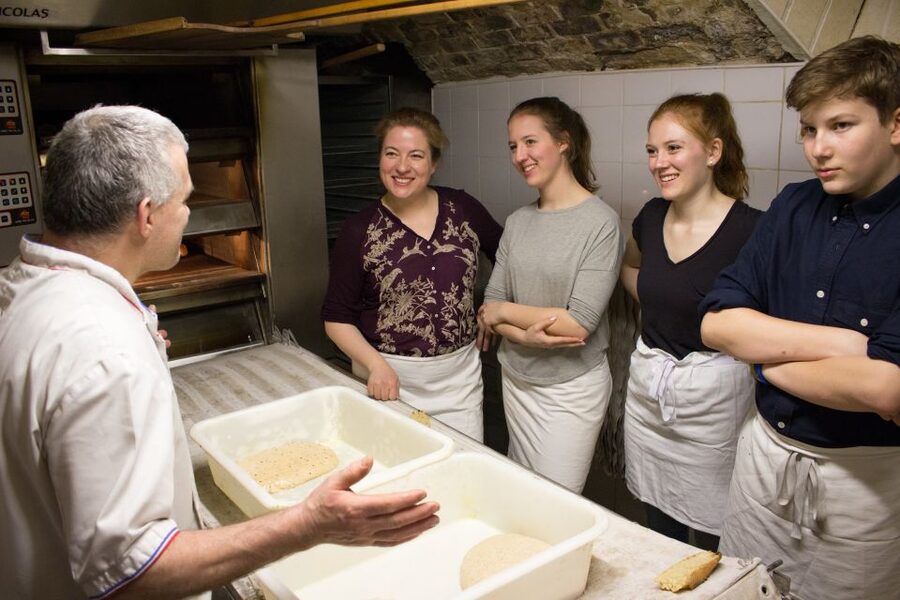
The lesson begins with the building blocks of French bread. You handle the flour and dough, then learn how the ingredients behave as they are mixed and worked. The hands-on element is useful because bread making is not only about following a recipe. You need to notice how the dough feels.
Didier explains the process from start to finish, including the details that help produce a thin, golden crust and soft interior. You may hear about flour, fermentation, shaping, and baking, along with the practical problems that face a working bakery. He also has his own approach to ingredients. One class member noted that he sources his wheat and grinds it in the shop, a detail that gives the discussion more substance than a basic baguette demonstration.
The teaching style is energetic and informal. Didier is known for jokes, anecdotes, and plenty of personality, but the humor does not replace the instruction. You still get technical information and time to try the methods yourself.
This is a good fit if you already bake at home and want to improve your technique. It also works for beginners because the lesson is built around simple physical steps. You do not need professional baking experience to take part.
Shaping two baguettes, including La Parisse
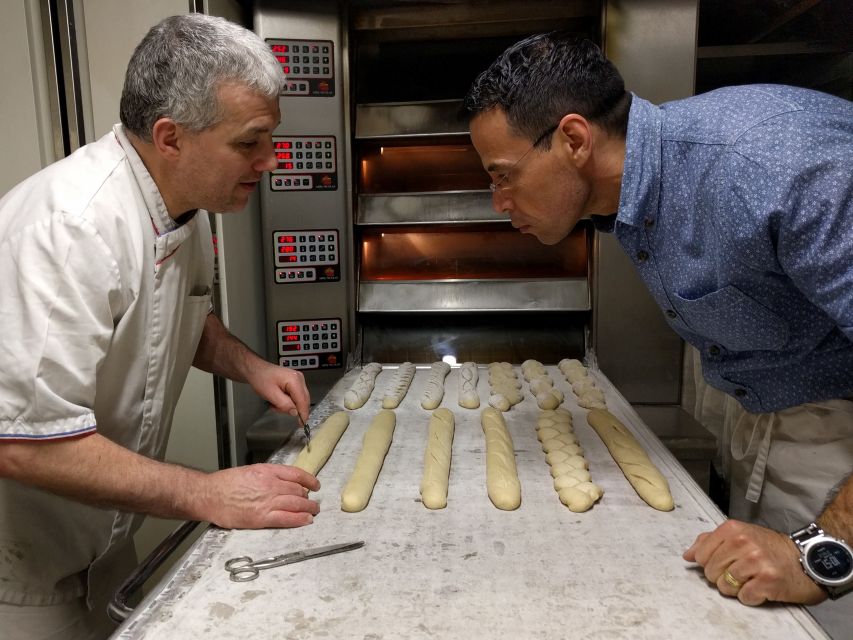
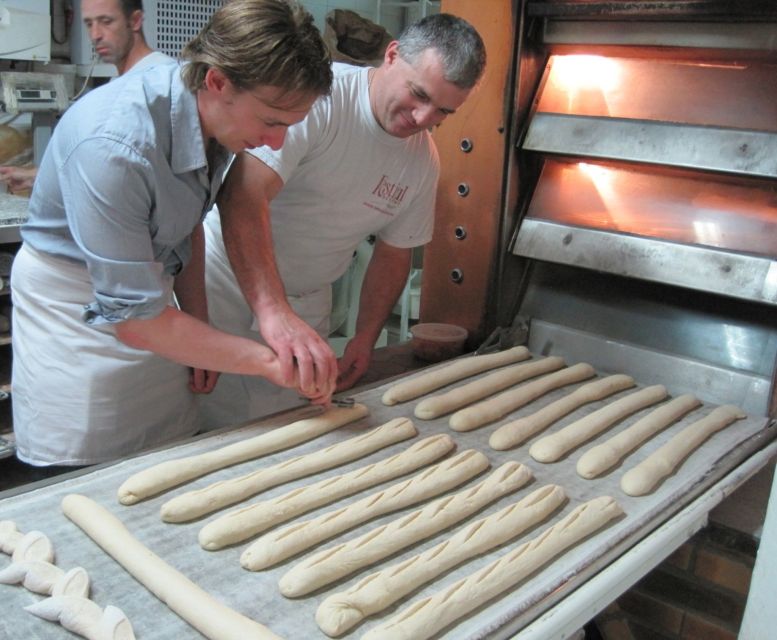
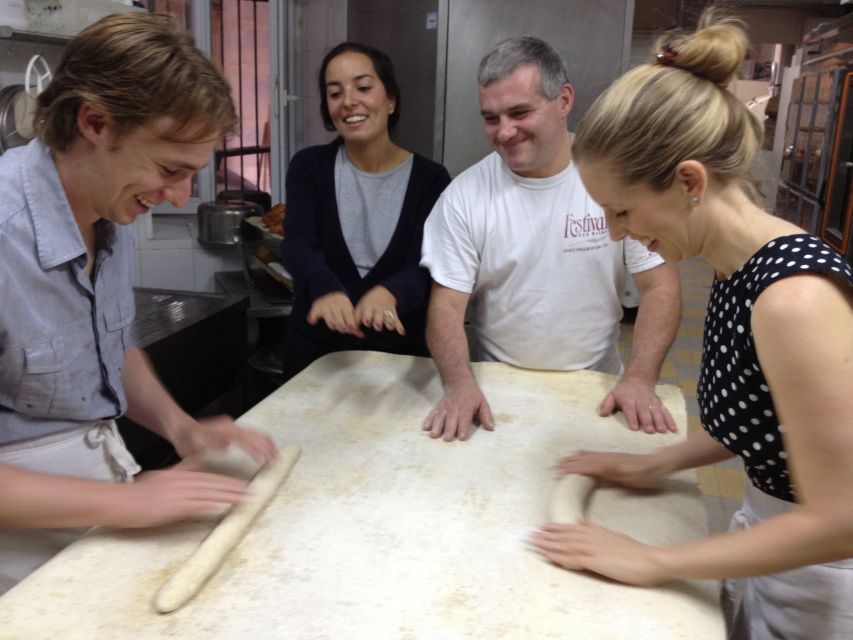
The baguette portion is the heart of the class. You learn to shape a classic French baguette and La Parisse, the bakery’s own version. Making both gives you a useful point of comparison. You are not just memorizing one recipe. You see how a standard loaf differs from a house specialty.
The shaping stage is where the class earns much of its value. Small changes in handling can affect the final loaf, and Didier shows how to create the form that allows the bread to bake evenly. The goal is that familiar French combination: a crust that crackles and a center that stays soft and warm.
You also learn about the cultural side of bread in France. The class includes stories about how bread styles developed and how the shape of the baguette came to be. These details help explain why the baguette is more than a food souvenir. It is part of the everyday French table and a visible part of Paris life.
Do not expect each participant to produce a bakery-perfect loaf on the first try. The point is to learn the method, feel the dough, and understand the decisions behind the result. Your first home attempt may still need practice, but you leave with better tools than a recipe alone can provide.
Croissants, pastry shaping, and warm tasting
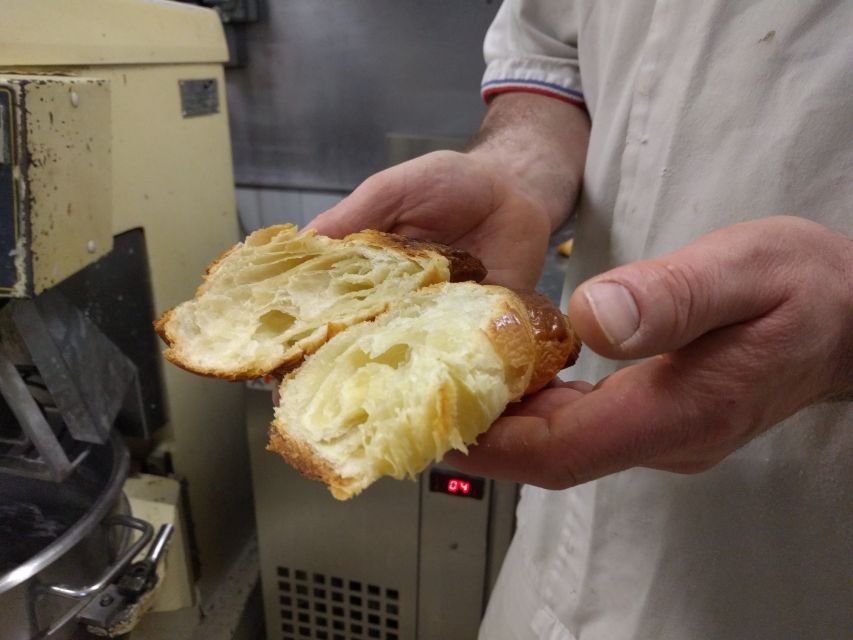
Croissant making adds a different skill set. You learn to work with pastry dough and shape croissants, with the baker showing the steps and correcting technique where needed. Some sessions have also included pain au chocolat, but the stated class focuses on croissants, so you should not book expecting a full pastry menu.
The pastry section is especially appealing for couples, families, and anyone who wants a practical food activity between museum visits. You get to feel the dough and see how shaping affects the finished pastry. The process is short enough to fit into a busy Paris day, but it still gives you a clear look at the care behind a good croissant.
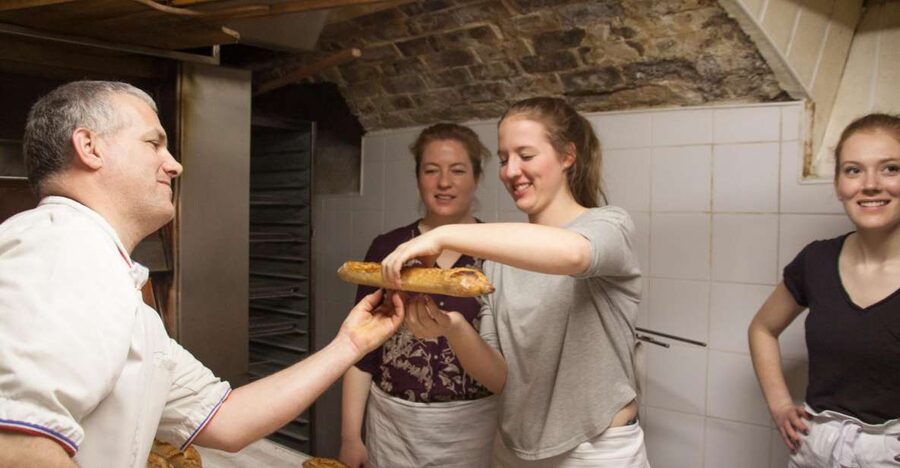
The tasting is one of the pleasures of the class. You sample baguettes and croissants, including bread while it is still warm. That timing can make the wait for the oven worthwhile. One practical tip: come hungry. The combination of flour, fresh bread, and pastry is filling, but you may spend part of the session watching the baking and waiting for the finished items.
The amount you take away can vary by class and group, but past participants have left with baguettes, croissants, and sometimes a large bag of bread. The activity includes the food made during the lesson, though the exact quantity is not specified.
More perfume and craft workshops in Paris:
- Fragonard Paris: Mini Perfume Workshop
★ 4.5 · 1,924 reviews - Paris Cooking Class and Lunch with Wine plus Market Visit Option
★ 5.0 · 1,024 reviews - Paris Croissant Small-Group Baking Class with a Chef
★ 5.0 · 910 reviews - Paris: Macaron Class at Galeries Lafayette
★ 4.3 · 905 reviews
Why the translator matters
The baker is the star, but the interpreter can make or break a bilingual class. Bread instruction depends on precise language. A vague translation of a shaping motion or dough texture does not help much.
The English support described for this experience has been a real part of the teaching, not a quick summary at the start. Luis, Luce, and Elsa have each been praised for keeping the conversation moving and making sure participants do not miss the technical points. Some interpreters also bring their own background in bread making or add useful stories about French pastries and food history.
You should still expect a class with a French baker speaking through interpretation rather than an originally English-language lesson. For many people, that adds charm and a little French practice. Didier is said to speak slowly and clearly enough that French speakers or learners can follow much of the session, while the interpreter fills in the gaps.
The listed instructor languages are English, French, Japanese, and Spanish. Confirm the language of your selected time when booking, especially if language support is central to your decision.
A two-hour class with real limits
Two hours is a sensible length for a food activity in Paris. It is long enough to mix, shape, bake, taste, and ask questions without taking over your day. You can pair it with other plans in the 11th arrondissement or use it as a break from sightseeing.
The tradeoff is that bread and croissant making normally involve long resting and fermentation periods. A two-hour class cannot show every stage from raw ingredients to a fully fermented professional batch in real time. The baker must prepare some stages in advance or demonstrate parts of the process while your dough is handled alongside it.
That means the class is best understood as a concentrated workshop. You get the essential methods, explanations, demonstrations, and tasting, but not an apprenticeship. If you want to study sourdough schedules, advanced lamination, commercial ovens, or flour chemistry in depth, you will need a longer course.
The small group helps offset the short timetable. With no more than eight participants, Didier can give individual attention, answer questions, and help you shape the dough. Large classes often turn hands-on baking into a show-and-tell session. This one is designed to keep you involved.
The teaching style: funny, direct, and personal
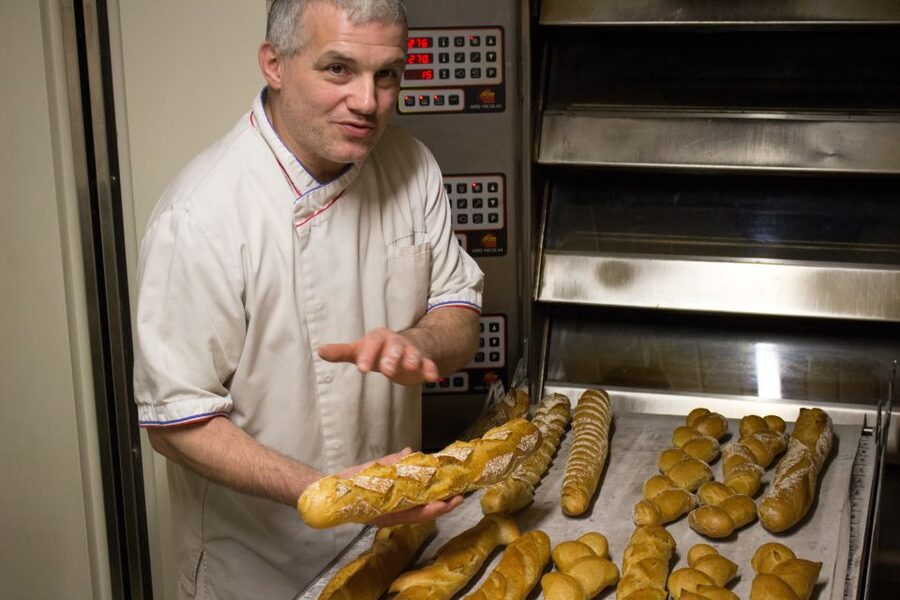
A strong part of the experience is Didier himself. He is described as warm, funny, high-energy, and generous with his methods. That personality matters because a technical baking lesson can become dry very quickly. Here, jokes and personal stories keep the pace lively.
His family connection to baking gives the class a useful human angle. You are not learning from a generic instructor reading from a script. You are hearing how one baker built his craft and runs his shop. The class can touch on ingredients, food traditions, health, and the current challenges of operating a bakery.
The informal setting also suits children. The minimum age is six, and families with children from eight years old upward have found the class engaging. Younger participants may enjoy pressing and shaping dough, while adults tend to focus on technique and the stories behind French baking.
Keep in mind that the class is still held in a bakery, not a children’s play space. Children need to follow instructions around flour, utensils, and baking equipment. Older children and teenagers who enjoy cooking will get the most from it.
What you take home besides bread
The most useful souvenir is the recipe copy sent by email after the class. You can try the baguettes and croissants again in your own kitchen rather than letting the experience end when you leave Paris.
The recipes are valuable, but your notes and memory of the dough matter too. Pay attention to how Didier handles the mixture, how he shapes the loaf, and what he looks for before baking. Those visual and physical cues are hard to capture in writing.
Some sessions have also included a dough starter, though this is not listed as a standard inclusion, so do not count on receiving one. The confirmed take-home benefit is the recipe copy, along with the bread and pastries made as part of the class.
The experience is especially worthwhile for people who already bake. You can ask sharper questions and understand why a crust failed or why a croissant lost its layers. But beginners gain something important too: a clear starting method and a chance to learn what properly worked dough feels like.
Is $258 a fair price?
At $258 per person, this is not a cheap way to eat breakfast in Paris. You can buy a baguette and croissant for a small fraction of the cost. The price makes sense only if you want instruction, access to a working bakery, a small group, tasting, and recipes you can use later.
The value is strongest for people who care about French food beyond taking a photograph of it. You are paying for direct time with an artisan baker, interpretation when needed, hands-on practice, and the chance to ask questions in a group capped at eight. For a family or couple who sees food experiences as a central part of a trip, that can justify the cost.
The value is weaker if you only want a quick bakery visit or a large amount of food to take home. The exact quantity of bread is not guaranteed, and the class is not designed as a full meal. It is a workshop with tasting, not an inexpensive food tour.
Free cancellation up to 24 hours before the start gives you some planning room, and reserve-now, pay-later booking can help if your Paris schedule is still shifting. Check available start times before arranging other activities.
Who should book this Paris bakery class?
I would point this class toward:
- Home bakers who want better baguette and croissant technique
- Couples looking for an activity beyond museums and monuments
- Families with children six and older who enjoy cooking
- Visitors interested in French food culture and bakery traditions
- People who value a small group and direct contact with an artisan
- Anyone who wants recipes to try again after returning home
I would hesitate if you dislike flour on your hands, prefer a quiet demonstration, or need a fully structured professional pastry course. The class is lively and interactive, and the baker’s humor is part of the experience.
The language support makes it accessible, but confirm your preferred language before booking. Also allow a little flexibility after the two-hour end time. Past sessions have run longer when conversation and tasting continued, although this should not be treated as guaranteed.
Should you book it?
Book this if you want to understand why French bread tastes and feels different, not simply eat it. The strongest reasons are the access to Didier’s bakery, the chance to make both a classic baguette and La Parisse, the croissant practice, and the small group.
I would especially choose it for a family trip or for anyone who bakes at home. It gives you a skill to carry back from Paris, along with a better sense of the work behind an ordinary-looking baguette.
Skip it if $258 feels too high for a two-hour activity or if you want a longer, more advanced course. For the right person, though, this is a personal and practical way to spend part of a Paris day, with warm bread at the end and recipes waiting in your inbox.
FAQ
Where does the bread and croissant class meet?
The class meets at Le Petit Mitron, located at 8 rue Oberkampf, 75011 Paris.
How long does the class last?
The scheduled duration is two hours. Check the available start times when booking.
What languages are available?
The listed languages are English, French, Japanese, and Spanish. Translators or hosts may support the baker during the session.
What will I make?
You learn to make a classic French baguette, the bakery’s special La Parisse baguette, and croissants. Some past sessions have also included pain au chocolat, but it is not listed as a standard part of the activity.
Are children allowed to participate?
Children under six are not suitable for the class. Children six and older may attend, and the experience includes hands-on work with dough.
What is included in the price?
Ingredients, utensils, and an apron are included. A copy of the recipe is sent by email. The class also includes tasting the bread and pastries made during the session.
Just added around Paris
- Paris: The Da Vinci Code Walking Tour with a Local Guide★ 4.3 · 5 reviews
- Paris: Flea Market Insider’s Tour in Extra-Small Group★ 4.6 · 73 reviews
- Paris: Private Fashion Tour (Chanel, Dior, Sex & the City)★ 5.0 · 3 reviews
- Paris: Floral Earrings workshop★ 5.0 · 3 reviews
- Paris: Fashion History Walking Tour in the Heart of Paris★ 4.9 · 22 reviews
- PARIS: Family e-bike longtail renting★ 5.0 · 3 reviews
- Paris: Famous Monuments Cycling Tour★ 4.7 · 20 reviews
- Paris: private city tour with seine river cruise★ 4.8 · 28 reviews
Paris Pastry and Macaron Classes, compared.
Montmartre Cheese, Wine & Pastry Guided Walking Tour
Read our review →
Private Montmartre Food Tour with Wine, Cheese & Pastries
Read our review →
Paris French Sweets Tasting Tour with Pastries and Chocolates
Read our review →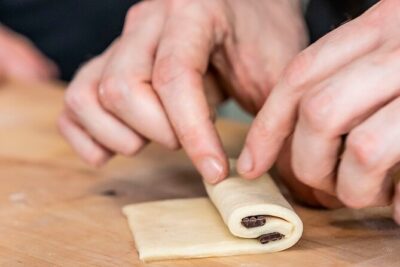
Paris Croissant Small-Group Baking Class with a Chef
Read our review →
Paris Cooking Class: Learn How to Make Macarons
Read our review →
A Morning in Paris Food Tour: Croissants, Baguettes & Chocolate
Read our review →Browse the lists this tour appears in