
Reviewed · PARIS PASTRY AND MACARON CLASSES
Paris: Croissant Baking Class with a Chef
The best part of this Paris experience is that you do not just watch a chef make croissants. You roll the dough, fold in the butter, shape the crescents, and pull your own pastries from the oven. Chef Leo leads the class, with Maria also teaching some sessions, and both bring a friendly, practical style to the work.
I like the small group of no more than eight, which gives the chef time to check your folds and shaping. I also like that you learn the reasons behind each step, from butter quality to proofing, rather than simply copying a recipe. The one drawback is physical: rolling laminated dough takes real arm strength, and three hours can feel long if you are not keen on hands-on baking.
Key points at a glance
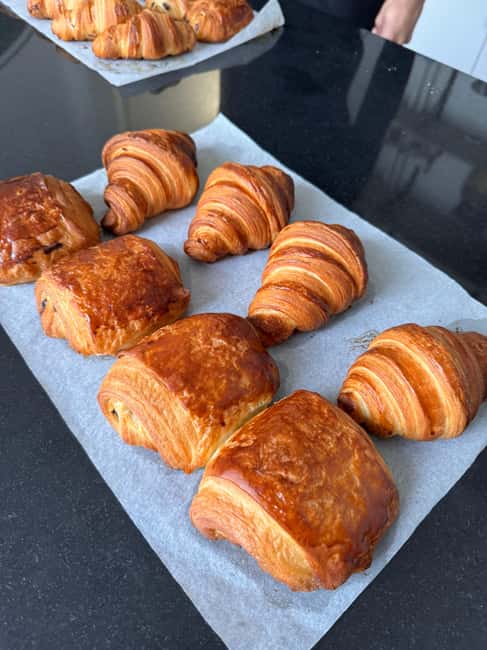
- Make a generous batch: Each person may produce four butter croissants and four pain au chocolat, depending on the session.
- Get close guidance: A maximum of eight participants keeps the class personal.
- Learn the science: The chef explains butter, resting, rising, texture, and flavour.
- Bake in a working kitchen: Studio Pâtisserie provides professional equipment, ingredients, and tools.
- Take home useful skills: You receive a recipe and practical tips for repeating the process at home.
- Choose extra colour: A bi-colour croissant class is offered on selected days.
Why this three-hour Paris class feels different
Croissants look simple on a bakery counter. They are not simple to make.
The dough must be rolled evenly. The butter must remain firm enough to form layers but soft enough to spread. The dough needs rests between folds, and the final proof affects both shape and texture. This class gives you a clear look at that process, with your own hands doing much of the work.
That matters because many baking demonstrations leave you with a few notes and a taste. Here, you build the pastries from dough to oven. You see where the layers come from, and you learn why rushing a step can lead to heavy or misshapen results.
The class is held in the cosy kitchen at Studio Pâtisserie, in a gray-fronted building. It is easy to reach by public transport, with Rome on Metro Line 2 and Villiers on Metro Line 3 among the nearest stations. Allow enough time to find the entrance, especially if you are coming straight from another Paris sight.
More pastry and macaron classes in Paris:
- Paris: Montmartre Cheese, Wine & Pastry Guided Walking Tour
★ 4.8 · 2,255 reviews - Private Montmartre Food Tour with Wine, Cheese & Pastries
★ 5.0 · 1,027 reviews - Paris French Sweets Tasting Tour with Pastries and Chocolates
★ 4.5 · 947 reviews
Meeting Chef Leo or Maria in the small kitchen
Chef Leo is the named instructor for the experience, and his teaching style is lively, patient, and hands-on. He keeps the tone light while still stopping to correct technique. Maria also teaches sessions and brings the same mix of clear instruction and humour.
The group limit of eight is one of the strongest features. Croissant dough is not an ideal subject for a large class. You need room to roll it, and you need someone to look at the thickness, corners, and folds before you move on.
In a group this size, you can ask why your dough feels too soft or why a fold needs to be tighter. The chef can walk around and give individual help. That is much more useful than standing at the back of a crowded demonstration.
English is the teaching language. The class welcomes beginners, and you do not need professional pastry experience. Still, you should be ready to work. This is not a relaxed tasting with occasional stirring.
Rolling, folding, and building the layers
The first major task is preparing the dough. You work through the basic mixture before moving into the folding process that creates the thin layers associated with a proper croissant.
This is where the class earns its keep. A chef can show you what laminated dough should feel like, while a recipe alone cannot. You learn to roll with even pressure and to keep the shape under control. The chef also explains why the dough needs to rest between stages.
The pauses are part of the process. One participant described the class as broken up a little because the dough needs time to rest, but that is a limitation of croissant making rather than poor planning. The waiting periods let the dough relax and allow the butter and dough to stay in better condition.
Use those pauses well. Ask questions, watch the chef’s demonstrations, and take mental notes about texture and timing. The class covers the history and science of croissant making, so you are not left wondering why a particular step matters.
You will also hear about butter quality and proofing. Those details may sound technical, but they affect the final bite. Good butter contributes flavour and helps create clean layers. Proofing changes the lightness and shape of the finished pastry.
Shaping classic croissants and pain au chocolat
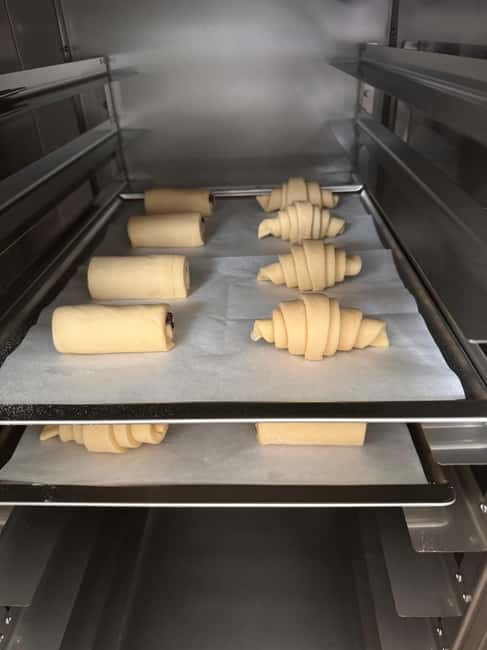
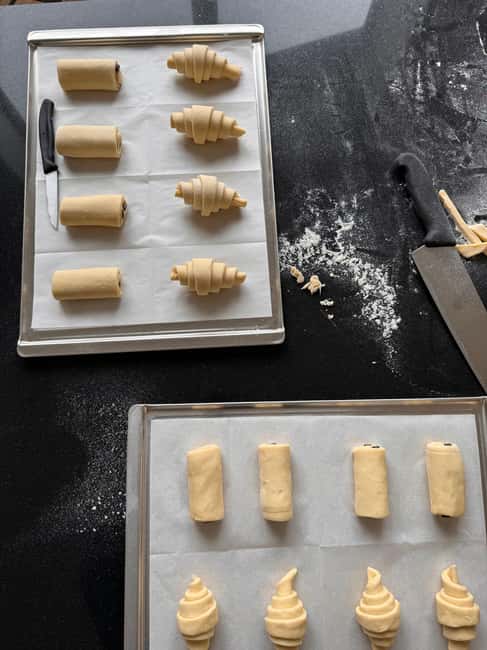
Once the dough is ready, you cut it into pieces and shape the pastries. Classic croissants require careful rolling into crescents, while pain au chocolat uses a different shape and filling approach.
The shaping stage is satisfying because the pastry finally starts to look familiar. It is also where small errors become obvious. Uneven triangles may produce uneven croissants, and loose rolling can affect the final form. The chef keeps an eye on each person’s work and offers corrections as needed.
Many sessions produce eight pastries per person: four butter croissants and four pain au chocolat. The exact selection can depend on the class option, but the repeated pattern is clear. You should expect to make more than a token sample.
That quantity is excellent for practice and for sharing. It can also be too much to eat in one sitting, especially after three hours of baking. Bring a bag or container if you have one, though the supplied information does not promise special transport packaging. At the end, you can take your finished pastries with you.
More cooking classes in Paris:
- Paris Cooking Class and Lunch with Wine plus Market Visit Option
★ 5.0 · 1,024 reviews - Paris Croissant Small-Group Baking Class with a Chef
★ 5.0 · 910 reviews - Paris: French Croissant Baking Class with a Chef
★ 4.9 · 712 reviews - Paris Cooking Class: Learn How to Make Macarons
★ 5.0 · 634 reviews
The reward: warm pastries from your own oven
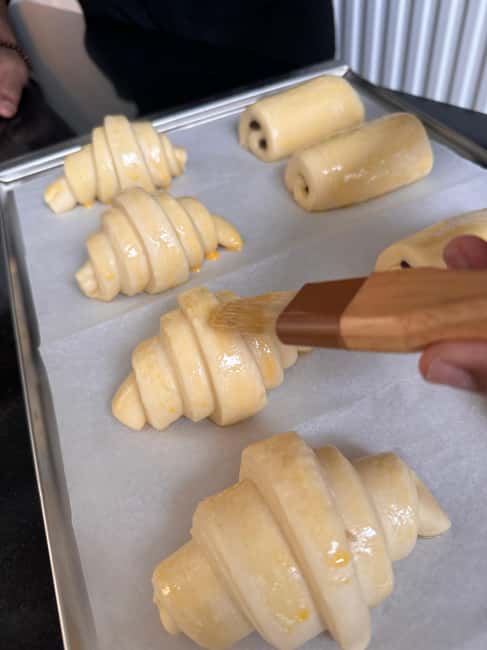
The class ends with the best kind of lesson review: eating the results.
You sample freshly baked croissants made during the session. Some classes also offer a beverage at the end, though this should not be treated as a guaranteed inclusion unless your booking confirms it. The warm pastry gives you an immediate sense of whether the folds, proofing, and baking worked.
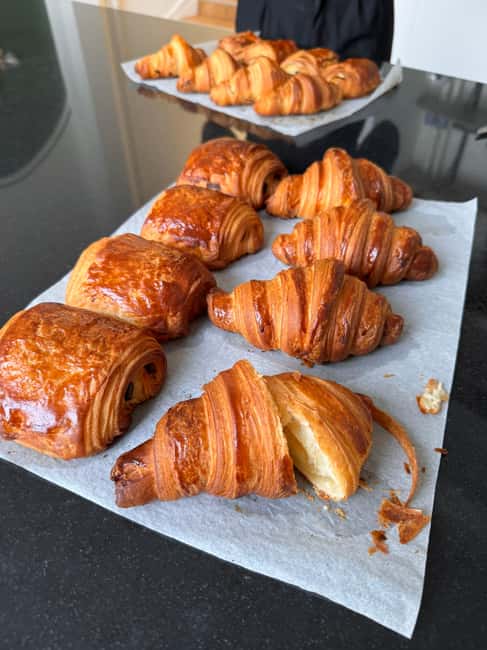
There is a real difference between eating a croissant bought from a bakery and eating one you shaped yourself. The latter gives the class an emotional payoff, but it also helps you judge texture. You can see whether the outside is crisp, the inside is light, and the layers have formed properly.
You may take most of the batch back to your hotel. That is useful, but remember that croissants are at their best fresh. Plan the class on a morning or afternoon when you can enjoy them soon rather than carrying them around all day.
What you actually learn for home baking
The recipe is useful, but the tips around it may be even more valuable. Croissant recipes often look manageable on paper, then become confusing when the dough behaves differently from the instructions.
The chef explains the practical signals to watch. You learn how the dough should feel, why the butter matters, and when resting and proofing are necessary. These are the parts that help you adapt the method in your own kitchen.
You also gain a better sense of the labour involved. A Paris bakery croissant may look like an everyday breakfast item, but the class shows you the repeated rolling, folding, resting, cutting, and shaping behind it. That context can make a bakery visit more interesting after the class.
The experience is especially useful if you already bake and want better pastry technique. Beginners also get plenty from it, but do not expect to master every detail after one morning. You leave with a strong introduction, a recipe, and practical advice, not a professional qualification.
Bi-colour croissants for something more decorative
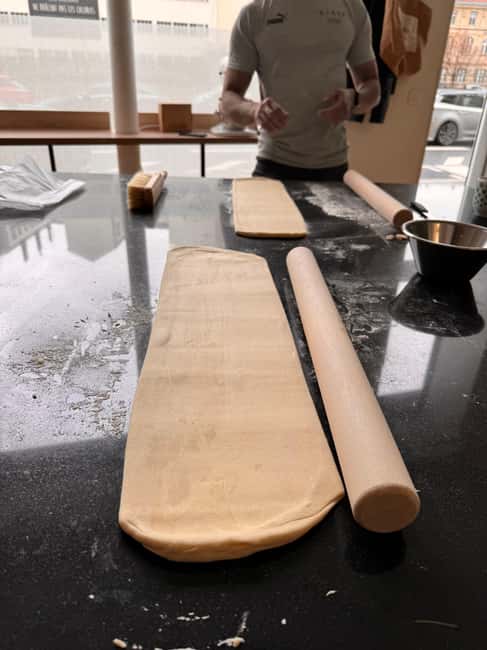
On selected days, you can book the bi-colour croissant option. This adds coloured dough to the process, giving the finished pastries a more decorative look.
It is a good choice for experienced bakers or anyone who wants a visual project. The basic croissant skills still matter, since colour does not remove the need for even rolling, careful folding, and proper proofing.
Check the specific option before booking. The bi-colour class is not presented as part of every session. Some classes focus on regular butter croissants and pain au chocolat, while the special option adds the coloured dough work.
If your priority is learning the classic method, the standard class is likely enough. Choose bi-colour if you want an extra creative element and do not mind giving some attention to appearance as well as texture.
Price and value at $140 per person
At $140 per person, this is not a cheap breakfast. You are paying for a three-hour lesson, ingredients, professional kitchen equipment, chef instruction, a recipe, and a substantial batch of pastries.
The value depends on what you want from a Paris food activity. If you only want to eat a croissant, a bakery will cost far less. If you want to understand how croissants are made and have a practical skill to take home, the price makes more sense.
The small group is important here. You are not paying simply for a seat in a demonstration. You get access to the workstation, ingredients, tools, and direct corrections from the chef. The eight pastries per person, when included in that format, also add something tangible.
I would consider the class good value for a food-focused visitor, a couple, or a family with older children who will take part fully. It is less suitable if you are looking for a passive activity or trying to keep daily spending very low.
Who should book, and who should think twice
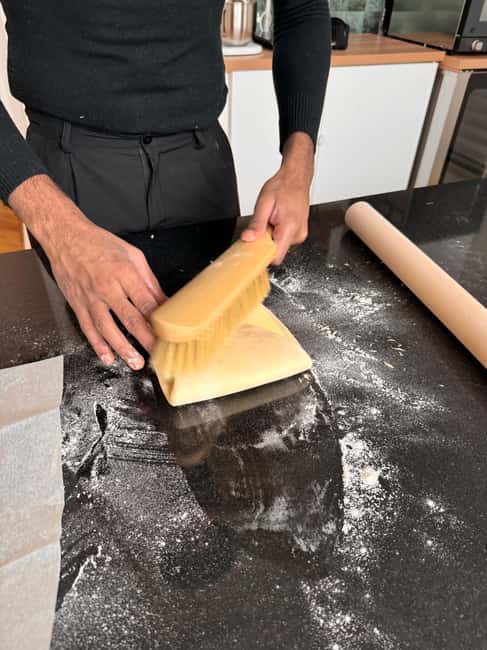
This works best for people who enjoy doing things rather than only seeing them. It suits couples, solo visitors, parent and adult-child trips, and small family groups. It can also work well on a rainy Paris morning when outdoor sightseeing is less appealing.
You do not need to be a serious baker. The instruction is designed for different skill levels, and the chef checks that everyone understands each stage. A confident home baker may still learn useful details about dough handling and proofing.
The class has an age restriction. Children under 15 are not suitable for the experience. Anyone under 17 must be accompanied by a paying adult, and the rolling work requires physical effort.
Think about your hands and shoulders before booking. The dough must be rolled and folded, and several participants have specifically noted the need for arm strength. If you have limited mobility or cannot manage firm rolling, this may not be the right food class for you.
Location, timing, and simple planning advice
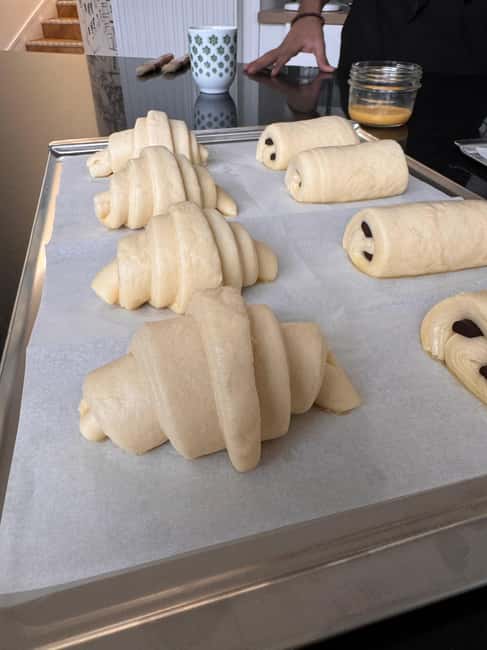
Studio Pâtisserie is in a gray-fronted building, with Rome and Villiers Metro stations nearby. The activity lasts three hours, and starting times vary, so check the available time before planning museum visits or restaurant reservations around it.
Wear comfortable clothes that you do not mind using in a kitchen. The supplied information does not list a dress code, but rolling pastry is hands-on work. Arrive ready to participate, not just observe.
The booking terms are friendly to changing plans. You can cancel up to 24 hours before the class for a full refund, and a reserve-now, pay-later option is available. These choices are useful if your Paris schedule is still shifting.
Keep your afternoon reasonably open. The class itself lasts three hours, and you may want time afterward to enjoy or carry your pastries without rushing to another appointment.
The strongest reasons to choose this class
I would choose this experience for its balance of doing and understanding. You make the pastries yourself, but the chef also explains the reasons behind the method.
The personal attention is another major strength. Eight people is small enough for the chef to check individual work, yet large enough to keep the room sociable. Several sessions have included solo visitors, couples, and family groups, so you do not need to arrive with a large party.
The instructors also add personality. Leo is energetic and funny, while Maria brings warmth and clear explanations. That matters during a technical process, since the atmosphere stays relaxed when the dough does not behave perfectly.
Finally, you leave with more than a photograph. You have warm pastries, a recipe, and a better idea of what to look for when you bake at home. The class turns a familiar French food into a skill you can attempt again.
Should you book the Studio Pâtisserie class?
Book it if you want a genuinely hands-on Paris activity and you are willing to put in physical effort. The small group, English instruction, named pastry chefs, professional tools, and generous batch of croissants make the $140 price easier to justify.
I would especially recommend it for food lovers, enthusiastic beginners, home bakers, and families with teenagers who meet the age rules. The bi-colour option adds interest if you want something more decorative.
Skip it if you mainly want a quick tasting, if three hours feels too long, or if rolling dough is difficult for you. For everyone else, this is a practical way to spend part of a Paris day, with the rare advantage that your souvenir is edible.
FAQ
How long does the croissant class last?
The class lasts three hours. Starting times vary, so check availability for the date you want.
Where does the class meet?
You meet at Studio Pâtisserie, a building with a gray-colored storefront. The nearest listed Metro stations are Rome on Line 2 and Villiers on Line 3.
Who teaches the class?
Chef Leo is listed as the instructor, and Maria also teaches some sessions. The class is taught in English.
How many people are in each group?
The class is limited to eight participants, allowing the chef to provide individual guidance.
What is included in the price?
The price includes chef instruction, ingredients, professional kitchen tools and equipment, a recipe to take home, sampling of the pastries you make, and information about the history and science of croissant making.
Will I make pain au chocolat as well as croissants?
Many sessions include four butter croissants and four pain au chocolat per person. The exact pastries can depend on the class option you select.
Is the class suitable for children?
Children under 15 are not suitable for this activity. Anyone under 17 must be accompanied by a paying adult.
Is a bi-colour croissant option available?
Yes. A bi-colour croissant class is offered on selected days and includes the ingredients and instruction needed to add colour to the dough.
Can I cancel or pay later?
You can cancel up to 24 hours in advance for a full refund. A reserve-now, pay-later option is also available.
More perfume and craft workshops in Paris
- Fragonard Paris: Mini Perfume Workshop
★ 4.5 · 1,924 reviews - Paris: Macaron Class at Galeries Lafayette
★ 4.3 · 905 reviews - Paris: 2-Hour Perfume Creation Workshop
★ 4.8 · 731 reviews - Paris: French Macaron Culinary Class with a Chef
★ 4.9 · 591 reviews
Just added around Paris
- Paris: The Da Vinci Code Walking Tour with a Local Guide★ 4.3 · 5 reviews
- Paris: Flea Market Insider’s Tour in Extra-Small Group★ 4.6 · 73 reviews
- Paris: Private Fashion Tour (Chanel, Dior, Sex & the City)★ 5.0 · 3 reviews
- Paris: Floral Earrings workshop★ 5.0 · 3 reviews
- Paris: Fashion History Walking Tour in the Heart of Paris★ 4.9 · 22 reviews
- PARIS: Family e-bike longtail renting★ 5.0 · 3 reviews
- Paris: Famous Monuments Cycling Tour★ 4.7 · 20 reviews
- Paris: private city tour with seine river cruise★ 4.8 · 28 reviews
Paris Pastry and Macaron Classes, compared.
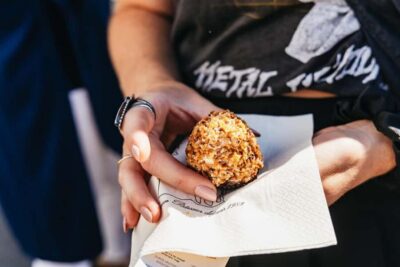
Montmartre Cheese, Wine & Pastry Guided Walking Tour
Read our review →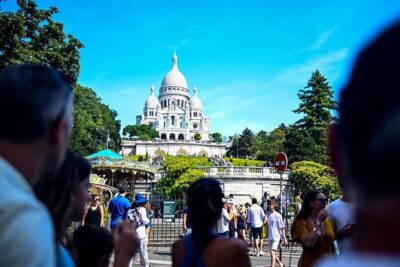
Private Montmartre Food Tour with Wine, Cheese & Pastries
Read our review →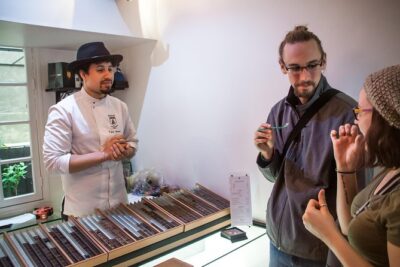
Paris French Sweets Tasting Tour with Pastries and Chocolates
Read our review →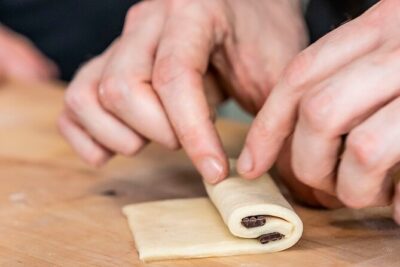
Paris Croissant Small-Group Baking Class with a Chef
Read our review →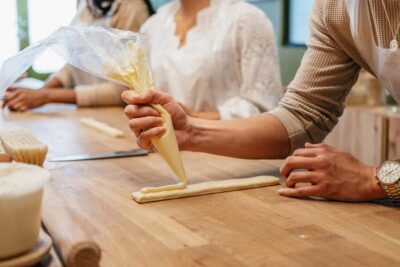
Paris Cooking Class: Learn How to Make Macarons
Read our review →
A Morning in Paris Food Tour: Croissants, Baguettes & Chocolate
Read our review →Browse the lists this tour appears in