
Reviewed · PARIS PASTRY AND MACARON CLASSES
Paris: Eclair and Choux Pastry Making Class
Parisian pastry is at its best when it looks delicate but depends on simple, exact work. In this 150-minute éclair and choux class, you learn how one dough becomes several pastries, then fill and decorate your own batch. The hands-on format keeps you busy, with a chef guiding each stage rather than leaving you to watch from the sidelines.
I like two things right away: you get practical tips for making choux at home, and you leave with both pastries and recipes. Instructors including Guillaume, Morgan, and Ke have been praised for clear teaching and patience. The main consideration is that instruction is in French, and the recipe booklet may be in English only, so ask questions as you work if you want to remember every detail.
Key points to know before booking
- You make the pastry yourself: Prepare éclairs and choux with help from a professional pastry chef.
- You learn more than one technique: The class covers choux pastry, éclairs, craquelin, whipped cream, fillings, and toppings.
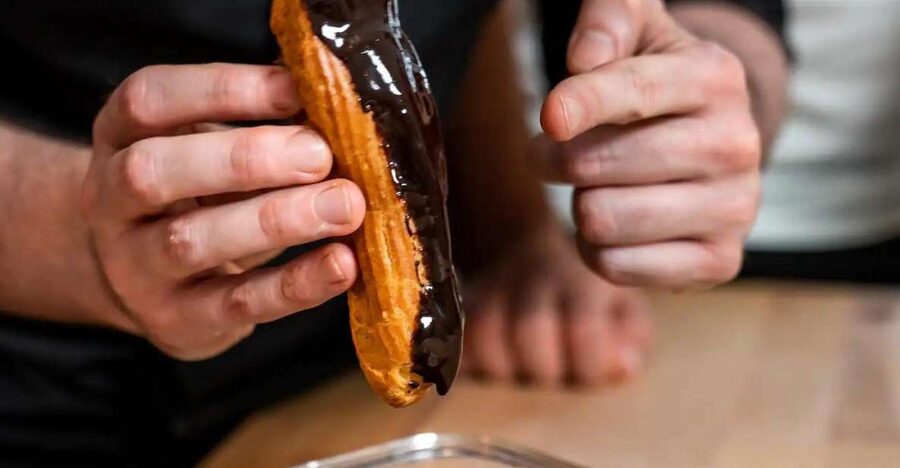
- You can personalize the finish: Add different fillings and decorations to make the pastries your own.
- You take home useful results: Leave with your finished pastries and a recipe booklet for future baking.
- The class is friendly to beginners: Past instruction has included patient, step-by-step teaching for people with little baking experience.
- The language and location matter: The instructor teaches in French, and you meet at the grey door at your reserved time.
Why choux pastry makes a good Paris cooking class
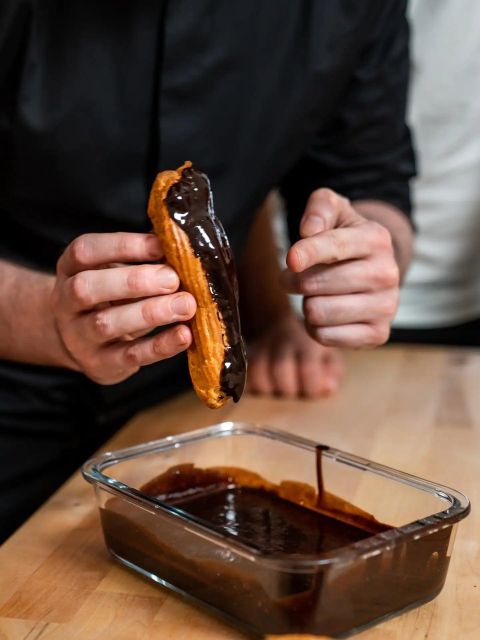
Choux pastry is a smart choice for a short cooking lesson because it teaches a basic mixture with many uses. The same dough can become éclairs and other choux pastries, so you are not learning one narrow recipe that ends when the class does.
The process also rewards attention. You need to understand the texture of the dough, how to shape it, and how to combine it with fillings and toppings. Those are the details that make a home batch succeed or collapse. A chef can spot problems as you work, which is far more useful than simply reading a recipe later.
I like that the class focuses on both technique and assembly. You are not just handed a finished pastry to decorate. You work through the stages with the chef’s help, then see how different fillings and toppings change the result.
This is also a good introduction to the logic of French pastry. Éclairs may look fancy in a pastry shop window, but the class breaks them into manageable tasks. You learn how to build the pastry, prepare its filling, and finish it neatly.
More pastry and macaron classes in Paris:
- Paris: Montmartre Cheese, Wine & Pastry Guided Walking Tour
★ 4.8 · 2,255 reviews - Private Montmartre Food Tour with Wine, Cheese & Pastries
★ 5.0 · 1,027 reviews - Paris French Sweets Tasting Tour with Pastries and Chocolates
★ 4.5 · 947 reviews
What happens during the 150-minute workshop
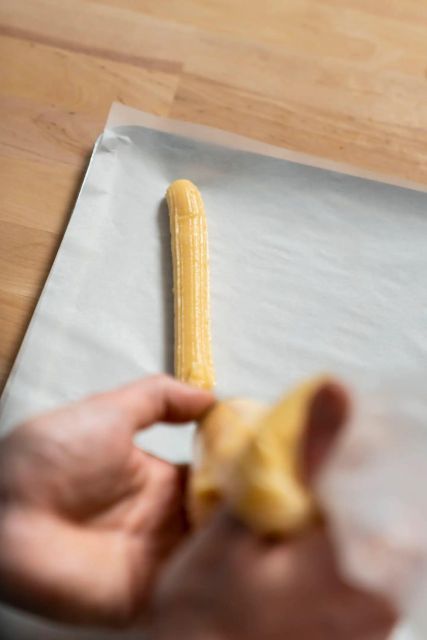
The class begins with the preparation of the choux pastry. The supplied ingredients are included, so you can focus on the method rather than measuring and bringing supplies from home. Your chef guides you through the actions and quantities needed at each step.
This early part is where the class earns its price. Choux pastry is not difficult because it requires exotic ingredients. It is difficult because small changes in texture and timing can affect the finished pastry. Watch the chef closely, and write down any extra tips you want to remember, since the recipe booklet may not capture every practical pointer.
Once the dough is ready, you use it to form éclairs and other choux pastries. The shaping stage gives you a chance to understand how appearance and baking work together. Even if your first pastries are not perfectly uniform, you will see how the chef handles the dough and how to improve your technique.
The class also introduces related elements such as craquelin and whipped cream. Craquelin adds a crisp, sweet layer to the outside of a choux pastry, while whipped cream brings a light filling or finishing touch. These extra preparations make the session more useful than a single éclair recipe.
The next stage is filling and decorating. You can personalize the pastries with different fillings and toppings, which gives the class a creative side without losing its practical focus. I would treat this part as a chance to compare textures and learn which combinations you would actually want to repeat at home.
Finally, you take your pastries with you. The exact number is not specified, so do not book this expecting a stated quantity. The clear benefit is that you leave with your own finished work, a recipe booklet, and techniques you can practice again.
The teaching style and the people leading it
The experience is led by professional pastry chefs, with instruction in French. Past sessions have been led by Guillaume, Morgan, and Ke, among others. Guillaume has been praised for keeping the class organized and making the process feel possible at home. Morgan has been described as a natural teacher, especially during a one-person class, and Ke was noted for patience and helpful baking tips.
Those details matter because the quality of a short cooking class depends heavily on the instructor. A recipe can be found elsewhere. What you are paying for is the chef’s ability to show you the right texture, correct a mistake, and explain why a particular step matters.
The teaching appears to work well for beginners. You do not need to arrive as an experienced baker, and the class is designed around direct help as you prepare the pastries. At the same time, an experienced home baker can pick up useful refinements, especially around shaping, filling, and finishing.
The class may feel especially personal when numbers are low. One recorded session became a one-to-one lesson because only one person attended, while another account praised the intimate class size. That does not guarantee a private class for your booking, but it suggests the format can allow close contact with the chef.
Because the instructor teaches in French, English-speaking participants should plan carefully. The practical demonstrations and hands-on work may make the class accessible to many people, but the recipe material has not always been available in more than English. If you need repeated explanations, ask during the workshop rather than waiting until the end.
The pastries you get to make and customize
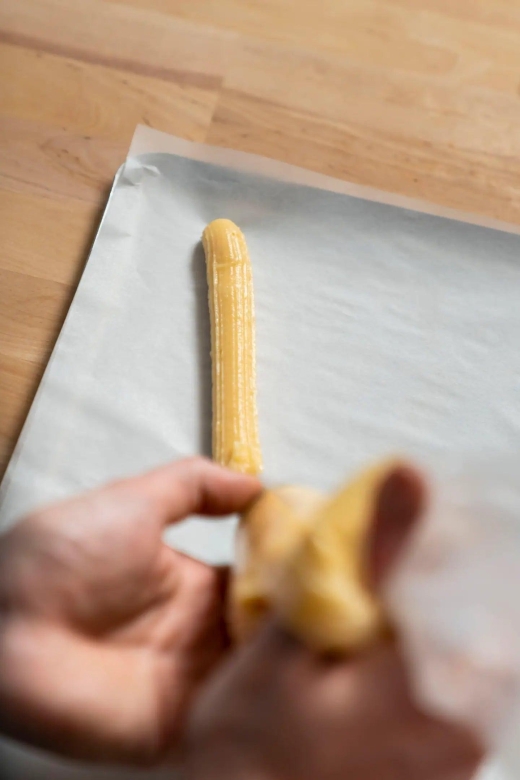
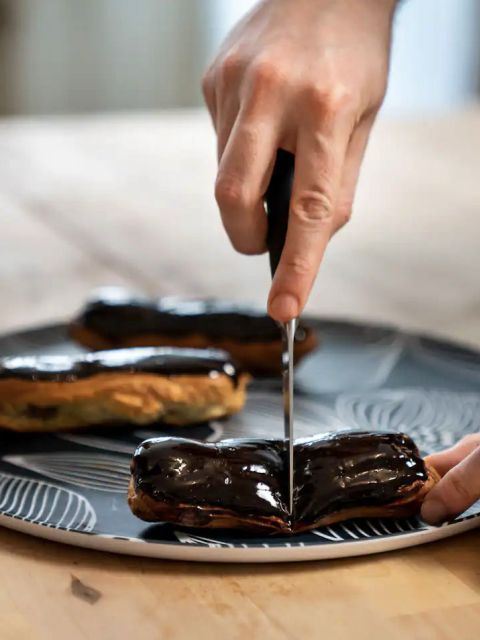
The central project is the éclair, a long choux pastry filled and decorated to your taste. You also work with choux in other forms, so the class gives you a broader sense of what the dough can do.
The filling and topping stage is where you can make the pastries feel personal. The available choices are described as a variety of fillings and toppings, but no fixed menu is provided. That means you should enjoy the creative freedom without arriving with a specific flavor combination guaranteed in mind.
Craquelin and whipped cream add useful range. You learn that the final pastry is not only about the baked shell. Texture comes from the contrast between the outer pastry, the filling, and the topping. This is the kind of lesson that can improve your home baking even when you later use different flavors.
I also like the fact that you take home the results. A tasting at the end would be pleasant, but carrying your own pastries away gives the class a stronger connection to the work you just completed. You can share them, eat them later, or use them as a reminder when you try the recipes again.
Handle the pastries with care after the class. No special transport container is described, so it is sensible to have a stable way to carry your finished work, especially if you plan to continue sightseeing afterward.
More perfume and craft workshops in Paris:
- Fragonard Paris: Mini Perfume Workshop
★ 4.5 · 1,924 reviews - Paris Cooking Class and Lunch with Wine plus Market Visit Option
★ 5.0 · 1,024 reviews - Paris Croissant Small-Group Baking Class with a Chef
★ 5.0 · 910 reviews - Paris: Macaron Class at Galeries Lafayette
★ 4.3 · 905 reviews
What you take home besides pastries
The recipe booklet is one of the most important inclusions. It gives you a way to repeat the experience at home instead of treating the class as a one-time activity.
You also take home the chef’s small corrections and practical advice, provided you pay attention and make notes. One useful criticism of the class was that the recipe was not presented alongside each step, making it harder to record quantities and tips in real time. I would bring a small notebook or use your phone for notes if permitted.
The booklet may be in English only. For English-speaking visitors, that is useful. For French speakers, it is worth checking the language situation before booking if you want French recipes. The instruction itself is listed as French, so language needs are a real part of your decision.
The included drink is a pleasant extra during the workshop. It is not presented as a food pairing or a full refreshment service, so think of it as a simple drink while you work rather than part of a larger meal.
Is $159 a fair price?
At $159 per person, this is not a cheap snack stop. You are paying for a professional chef, ingredients, a drink, instruction, a recipe booklet, and a hands-on activity lasting two and a half hours.
The value makes the most sense if you want to learn a skill rather than simply eat a pastry. A bakery visit costs far less, but it does not show you how to make the dough, prepare the fillings, or fix mistakes. If you plan to bake at home, the techniques and recipes add lasting value.
The price also covers an activity in central Paris that can fill part of your day without requiring transportation. You meet at the specified grey door, and transportation is not included, so you must make your own way there. Check the meeting details carefully before setting out, since a simple doorway can be easy to miss in an unfamiliar street.
This is a stronger buy for couples, friends, families with older children, or solo visitors who enjoy food activities. It is less suitable if you want a quick tasting, a formal pastry demonstration with no participation, or a low-cost stop between museums.
Who should book this class?
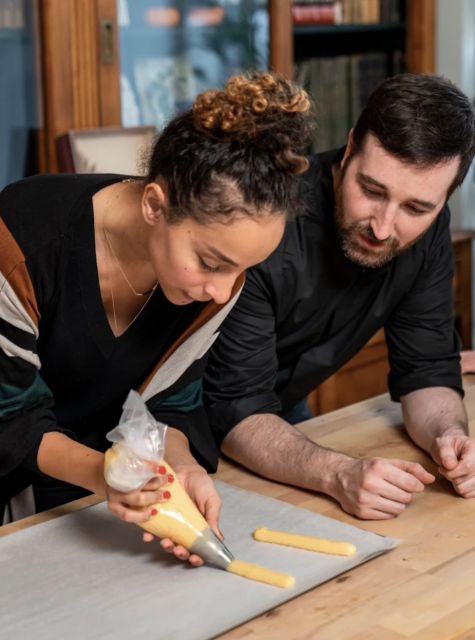
I would recommend it to a first-time baker who wants a clear introduction to French pastry. The direct help matters when you are learning how dough should look and feel, and the class lets you practice instead of merely watching.
It also suits a keen home baker who already knows the basics but wants better choux technique. The extra work with craquelin, whipped cream, fillings, and toppings gives you more to take away than a plain éclair formula.
Families should note the age rule. Children under five are not suitable for the class, so this is not an activity for families with toddlers. The experience is listed as wheelchair accessible, which may help some visitors plan with greater confidence, though you should still confirm any personal access needs when booking.
Solo visitors can be a good fit, particularly if the class has a small number of participants. A one-person session has occurred before, but you should not assume that level of personal attention will always be available.
Practical details that can shape your day
The workshop lasts 150 minutes, or two and a half hours. That is long enough to learn several connected techniques but short enough to fit beside other Paris plans. I would avoid scheduling a tight appointment immediately afterward, since cooking classes can run on the pace of the group and the pastry work deserves your attention.
The meeting point is in front of a grey door at your reserved time. No transportation is included, so plan your route in advance and allow time to locate the entrance.
The activity is offered with free cancellation up to 24 hours before the booking for a full refund. You can also reserve and pay later, which helps if your Paris schedule is still changing. These options are useful, but check the booking conditions attached to your selected time before relying on them.
Pets, alcohol, and drugs are not allowed. The class is a food preparation setting, so arrive ready to take part and follow the chef’s instructions.
The overall rating is 4.8 from nine reviews, with strong praise for the instructors, the organization, the useful home-baking advice, and the taste of the finished pastries. One lower rating still described the workshop as enjoyable and well prepared, while pointing out that the recipes were not shared step by step during the work. That is a fair warning, and it is easy to address by taking notes as you go.
Should you book the Paris éclair class?
Book it if you want to do something active with French pastry and you care about learning a method you can repeat at home. The strongest parts are the patient chef-led instruction, the chance to make several pastry elements, and the freedom to decorate your own éclairs and choux.
Think twice if you need English instruction, want a fixed recipe handout in French, or are mainly seeking a quick pastry tasting. You should also allow for the $159 price and arrange your own transportation to the grey-door meeting point.
For most food-minded visitors, this is a useful Paris experience rather than just another dessert stop. You leave with pastries in hand, a recipe booklet, and a better understanding of why choux pastry succeeds. Just bring questions, take notes during the demonstrations, and keep your schedule loose enough to enjoy the work.
FAQ
How long does the éclair and choux pastry class last?
The workshop lasts 150 minutes, or two and a half hours.
What will I make during the class?
You will learn to prepare choux pastry and use it to make éclairs and other choux pastries. The class also includes elements such as craquelin and whipped cream, along with fillings and toppings.
Are ingredients included?
Yes. All necessary ingredients are included in the class price.
Do I take the pastries home?
Yes. You create your own éclairs and choux pastries and take the finished pastries home with you.
Are recipes provided?
Yes. A recipe booklet is included. The recipes may be provided in English only.
What language is the class taught in?
The instructor teaches in French.
Is the class suitable for young children?
Children under five are not suitable for this activity.
Is the workshop wheelchair accessible?
Yes. The activity is listed as wheelchair accessible.
Just added around Paris
- Paris: The Da Vinci Code Walking Tour with a Local Guide★ 4.3 · 5 reviews
- Paris: Flea Market Insider’s Tour in Extra-Small Group★ 4.6 · 73 reviews
- Paris: Private Fashion Tour (Chanel, Dior, Sex & the City)★ 5.0 · 3 reviews
- Paris: Floral Earrings workshop★ 5.0 · 3 reviews
- PARIS: Family e-bike longtail renting★ 5.0 · 3 reviews
- Paris: Fashion History Walking Tour in the Heart of Paris★ 4.9 · 22 reviews
- Paris: Famous Monuments Cycling Tour★ 4.7 · 20 reviews
- Paris: private city tour with seine river cruise★ 4.8 · 28 reviews
Paris Pastry and Macaron Classes, compared.
Montmartre Cheese, Wine & Pastry Guided Walking Tour
Read our review →
Private Montmartre Food Tour with Wine, Cheese & Pastries
Read our review →
Paris French Sweets Tasting Tour with Pastries and Chocolates
Read our review →
Paris Croissant Small-Group Baking Class with a Chef
Read our review →
Paris Cooking Class: Learn How to Make Macarons
Read our review →
A Morning in Paris Food Tour: Croissants, Baguettes & Chocolate
Read our review →Browse the lists this tour appears in