
Reviewed · PARIS PASTRY AND MACARON CLASSES
Paris: Macaron Baking Class in Central Paris
Macarons look dainty, but they are not simple cookies. This 150-minute class at Studio Pâtisserie shows you why temperature, mixing, piping, and even the weather at home can affect the result. Chef Leo and Maria keep the work practical, with each baker taking part rather than watching from the side.
I like the small group of no more than 10, which gives you a fair chance to ask questions and get help with the batter. I also like the useful finish: you taste the macarons, take home a recipe, and leave with enough practical advice to try again in your own kitchen. The main drawback is that this is not suitable for children under 12, vegans, or people with nut allergies, and the filling flavors may be chosen for you.
Key points before you book
- You make the macarons from start to finish: Mix the batter, pipe the shells, prepare fillings, and bake your own batch with guidance.
- Chef Leo and Maria lead the English class: Both instructors are praised for clear explanations, humor, patience, and hands-on help.
- The class is capped at 10 people: Smaller groups make it easier to see demonstrations and get help with tricky techniques.
- You usually leave with a generous box: Previous class formats have produced about 15 macarons per person, though the exact amount may vary.
- The recipe has real value: You receive instructions to recreate the macarons at home, including advice for different climates.
- Check the restrictions carefully: The class uses nuts and is not suitable for vegans, people with nut allergies, or children under 12.
Why macarons are harder than they look
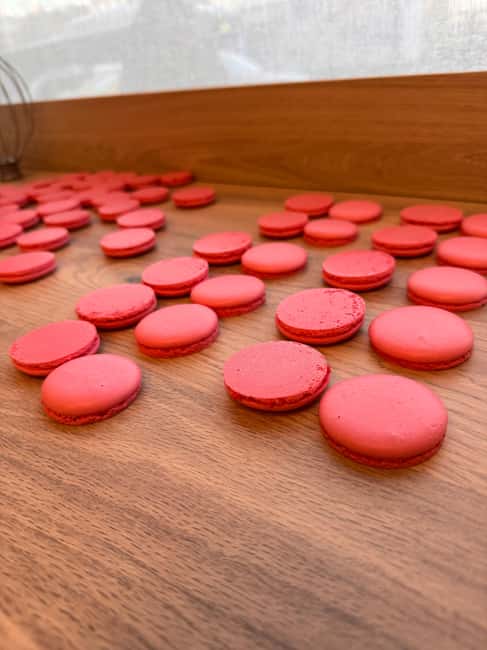
A Paris macaron is built from two crisp-edged, tender shells joined by a flavored filling. The shell needs a smooth surface, a firm shape, and the familiar ruffled foot around its base. Small errors in mixing or baking can leave you with cracked tops, hollow centers, or shells that spread too far.
That is what makes this class more useful than a simple pastry demonstration. You are not just decorating sweets that someone else prepared. You work through the stages that usually cause trouble, including mixing the batter to the right texture and piping evenly sized shells.
The opening talk covers the origins and cultural role of macarons, then moves quickly into the ingredients and technique. You learn why the recipe depends on exact proportions and careful handling. This is a good fit if you like knowing why a recipe works, not just copying a list of steps.
The class is taught in English. Chef Leo is especially known for explaining the process step by step, while Maria is described as clear, encouraging, and funny. The tone sounds relaxed rather than formal, but the work still has enough precision to teach you something useful.
More pastry and macaron classes in Paris:
- Paris: Montmartre Cheese, Wine & Pastry Guided Walking Tour
★ 4.8 · 2,255 reviews - Private Montmartre Food Tour with Wine, Cheese & Pastries
★ 5.0 · 1,027 reviews - Paris French Sweets Tasting Tour with Pastries and Chocolates
★ 4.5 · 947 reviews
Arriving at Studio Pâtisserie in central Paris
The meeting point is a grey-colored storefront on the main road. Keep your eyes open as you approach, since the directions rely on recognizing the frontage rather than finding a large, obvious attraction. The studio itself has been described as clean, organized, and well prepared before the class begins.
Once inside, you settle at your work area and meet the other bakers. The group limit is 10, and several sessions have had eight or nine participants. That size gives the class a social feel without turning the kitchen into a crowded demonstration.
Wear comfortable clothes and shoes. Baking involves standing, moving around the work area, and handling ingredients, so this is not the moment for stiff clothing or uncomfortable footwear. You do not need to bring baking equipment. The ingredients and tools are supplied, with the ingredients measured out to keep the process moving.
Some sessions include a drink while the macarons bake. This is a small touch, but it makes the waiting stage more pleasant and gives the group time to chat with the instructor.
The opening lesson: from French treat to precise recipe
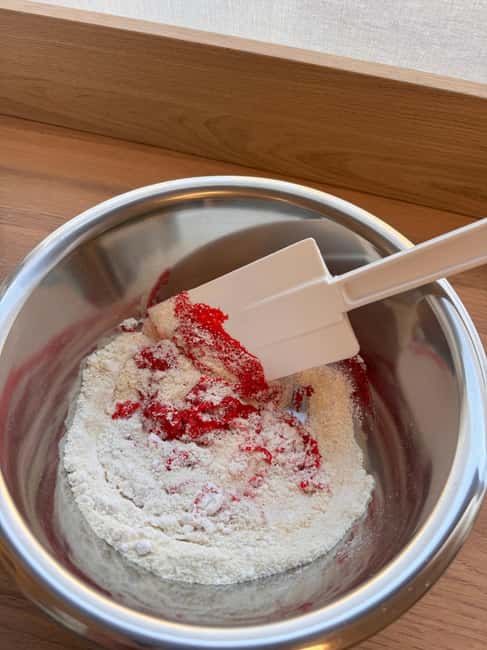
The first part gives you a short introduction to the macaron and its place in French pastry. You also learn about the main ingredients and how each one affects the finished shell and filling.
Do not expect a long museum-style talk. The useful part is the connection between the ingredients and the result in front of you. You begin to see macarons as a controlled baking exercise, where the small details matter.
I would pay close attention here, even if you already bake at home. Several of the most useful tips concern details that are easy to miss when you are eager to start mixing. The instructors explain the reasons behind the steps, rather than asking you to follow a recipe without context.
This is also a good time to ask questions about baking conditions at home. Advice can change depending on the climate, and Chef Leo has offered suggestions for making macarons in different countries. That matters because a dry Parisian kitchen and a humid home kitchen can produce different results from the same recipe.
Mixing, piping, and baking your own shells
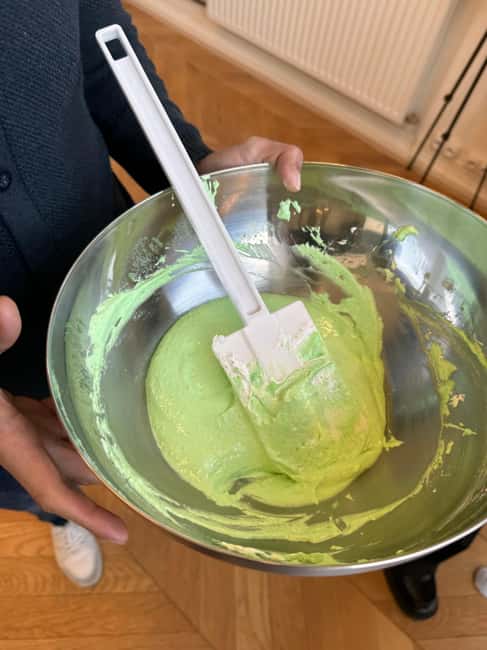
The hands-on work begins with the macaron shells. You follow the method under supervision, then work on the consistency of the batter. This is the stage where many first attempts go wrong, so the instructor’s help is important.
The batter must be mixed enough to become smooth, but not so much that it turns runny. You learn to look for the right texture before transferring it for piping. The goal is not just to make attractive circles. It is to create shells that bake evenly and pair well with the filling.
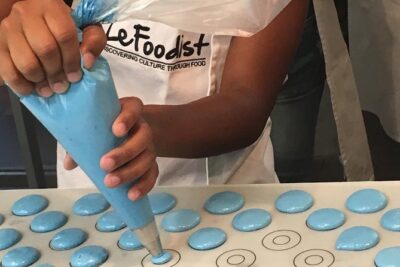
Piping gives you another chance to practice. You work on size, spacing, and shape, while the instructor checks your technique. If you have never made macarons, the first few may look less than perfect. That is part of the point. You get to correct your method before trying it again at home alone.
Baking is another critical step. The class lets you see how the shells change in the oven and how the finished texture develops. You learn what to look for when deciding if the shells are ready, rather than relying only on a fixed time.
The studio setup helps here. Tools are ready, ingredients are portioned, and the workstations are arranged so you are not all reaching over one another. That leaves more time for the actual baking instead of weighing and organizing every item from scratch.
More cooking classes in Paris:
- Paris Cooking Class and Lunch with Wine plus Market Visit Option
★ 5.0 · 1,024 reviews - Paris Croissant Small-Group Baking Class with a Chef
★ 5.0 · 910 reviews - Paris: French Croissant Baking Class with a Chef
★ 4.9 · 712 reviews - Paris Cooking Class: Learn How to Make Macarons
★ 5.0 · 634 reviews
Fillings, flavors, and the final assembly
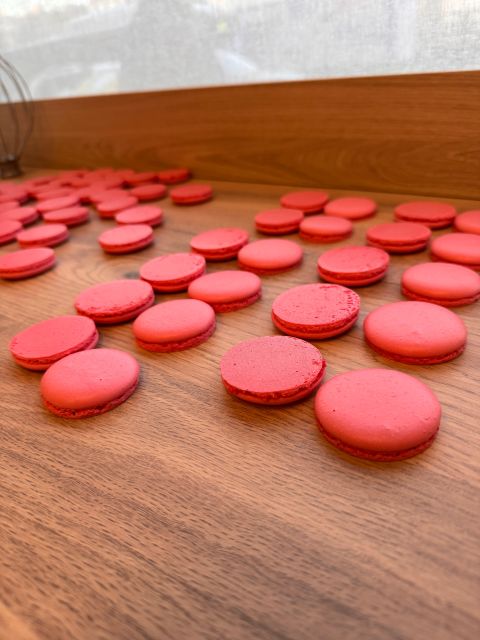
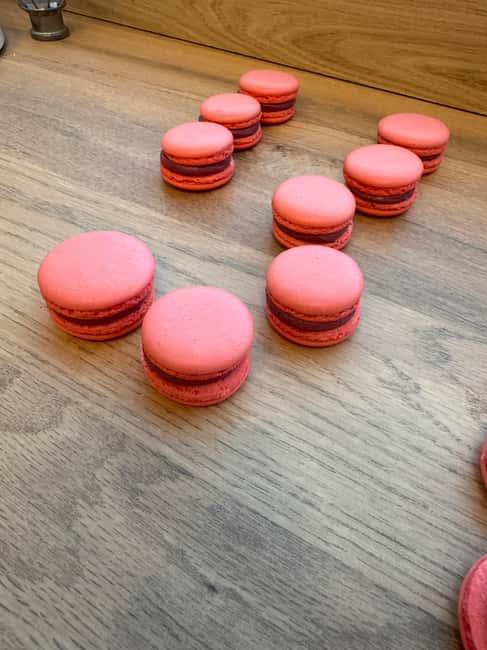
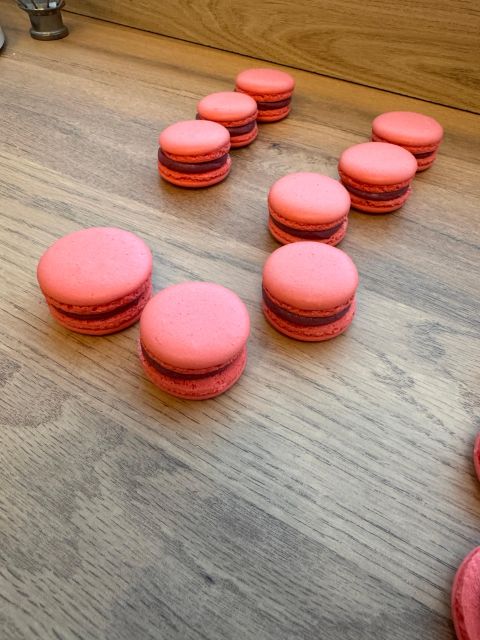
Once the shells are prepared, you work with the fillings and bring the macarons together. The exact flavor selection can vary, but previous sessions have included chocolate, black currant, and passionfruit.
The flavor choice is one point to consider before booking. If you prefer classic options such as vanilla, pistachio, or lemon, you may not get to select every flavor yourself. One class format used a set of flavors chosen by the chef. That keeps the lesson organized, but it may disappoint you if you have a strong preference.
On the other hand, less familiar flavors can make the class more interesting. Chocolate gives you a familiar base, while black currant and passionfruit show how French pastry uses sharper fruit notes to balance sweetness. You may also have the chance to exchange flavors with others, depending on how the session is organized, but this should not be assumed.
The instructor helps you pair shells and filling, then checks the finished macarons. The final product should have a delicate shell, a tender center, and enough filling to hold the two halves together without overwhelming them.
Tasting the results and taking your work home
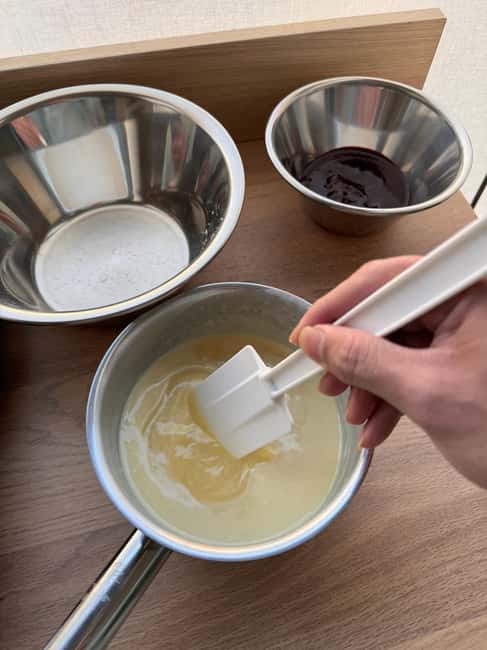
The tasting is more than a snack at the end. It gives you a quick lesson in judging the finished product. You can check the shell texture, the balance between filling and biscuit, and the difference between flavors.
The sense of accomplishment comes from the fact that you made the shells yourself. Even if your piping is not perfectly uniform, you see how technique turns a temperamental pastry into something you can serve.
Many class sessions have produced about 15 macarons per person, and some pairs have taken home around 30 in total. The exact number is not stated as a fixed promise, so confirm the current arrangement when booking. Either way, plan to carry a box carefully after class.
The recipe is included to take home. That is one of the strongest parts of the experience because macarons take practice. You can use the lesson as a reference when you try again, rather than relying on memory after a busy day in Paris.
The recipe has also worked as a bridge between the class and home baking. Participants have used it successfully after returning home, with the main adjustment being attention to local weather and kitchen conditions.
What makes the instructors effective
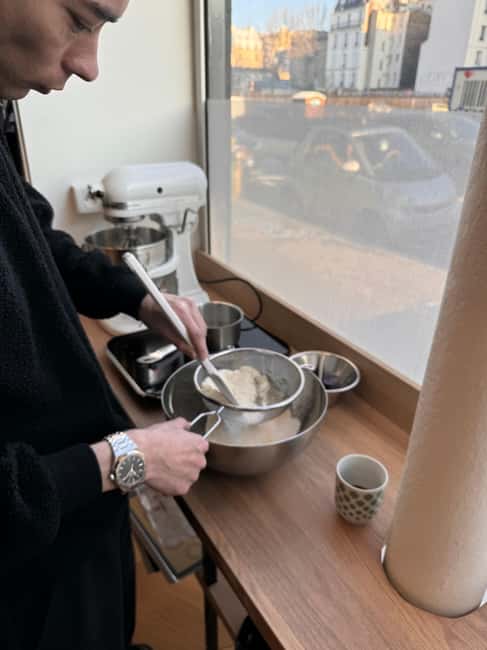
Chef Leo receives the most repeated praise for his patience, humor, clear explanations, and friendly manner. He also offers Paris food suggestions, so the conversation can extend beyond the pastry itself. If you book early in your stay, those recommendations may help shape the rest of your meals.
Maria brings the same practical strengths in a slightly different style. She is described as welcoming, funny, encouraging, and careful to make sure everyone understands the steps. That matters in a group class, since people arrive with very different levels of baking experience.
You should not need advanced skills. The class is designed to teach the process from the beginning, with guidance during the most delicate parts. Still, you will get more from it if you listen closely and accept that precision matters.
The instructors also appear to keep to the scheduled two-and-a-half-hour duration. That makes it easier to fit the class into a day of sightseeing, though you should leave some breathing room around it rather than booking a timed museum visit immediately afterward.
Is $122 a fair price?
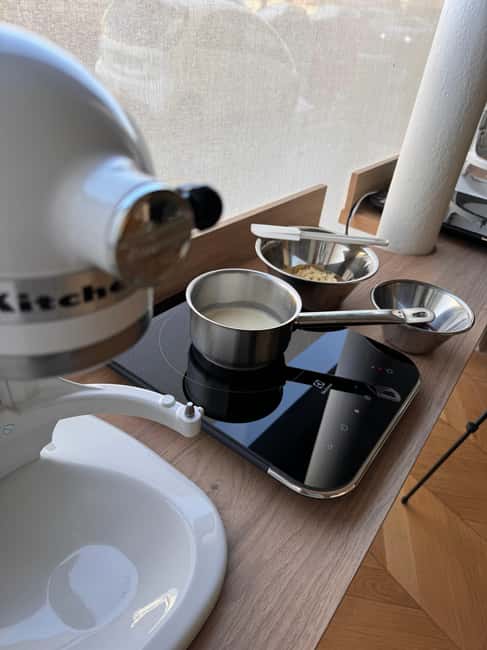
At $122 per person, this is not a cheap way to buy macarons. You could purchase a box from a Paris pastry shop for much less. The value comes from the lesson, the use of the studio and equipment, the instructor’s help, the tasting, and the recipe you can use again.
I think the price makes sense for someone who wants an activity rather than another food purchase. You spend 150 minutes learning a skill, then leave with your own batch. The experience also works well for couples, parent and teenage child, solo visitors, and families with children aged 12 or older.
The value is weaker if you only want to sample famous French pastries. A pastry shop crawl will give you more variety and may cost less. This class is aimed at people who want to understand how macarons are made and enjoy the satisfaction of doing the work.
The small group helps justify the cost. A class limited to 10 offers more contact with the chef than a large cooking demonstration. You still share the experience with others, but you are not left watching from the back of a crowded room.
Who should book this Paris baking class?
Book it if you want a hands-on food activity with a clear result at the end. It is particularly good for couples and families with older children, and it suits solo visitors who enjoy meeting people through a shared task.
It also works well for first-time visitors who want a small connection with French food culture. You do not need to be an expert baker. In fact, beginners may gain the most because the class explains the basic technique and common trouble spots.
Consider booking near the start of your Paris stay if you want the chef’s local food recommendations. You can also use the recipe later in your trip by shopping for pastry ingredients and testing your new skills once you return home.
Think twice if you have a nut allergy, follow a vegan diet, or are traveling with a child under 12. The activity is not suitable for those groups. You should also check the flavor plan if you are hoping for a particular filling.
Practical details worth knowing
The activity lasts 150 minutes and is conducted in English. The price is $122 per person, and the group is limited to 10 participants.
Look for the grey-colored storefront on the main road at the meeting point. Comfortable shoes and clothes are the only listed items to bring, and the baking tools and ingredients are provided.
Free cancellation is available up to 24 hours before the class for a full refund. You can also reserve now and pay later, which is useful when your Paris schedule is still changing.
FAQ
Where does the macaron baking class take place?
The class takes place at Studio Pâtisserie in central Paris, in the Ile-de-France region. Look for a grey-colored storefront on the main road.
How long does the class last?
The class lasts 150 minutes, or two and a half hours.
What language is the class taught in?
The class is taught in English.
How many people can join?
The group is limited to 10 participants.
What is included in the price?
The price includes the instructor, the baking class, a tasting, and a recipe to take home.
Do I make the macarons myself?
Yes. The session includes hands-on work with the macaron shells and fillings. You practice mixing, piping, baking, and assembling the macarons with help from the instructor.
Do I take macarons home?
Yes. You taste the finished macarons and take home the macarons you make. Previous class formats have produced about 15 macarons per person, but the exact amount can vary.
Is the class suitable for children?
The class is not suitable for children under 12 years old.
Can vegans or people with nut allergies join?
No. The class is not suitable for vegans or people with nut allergies.
What should I bring?
Bring comfortable shoes and comfortable clothes. The baking tools and ingredients are provided.
Can I cancel for a full refund?
Yes. You can cancel up to 24 hours in advance for a full refund.
Can I reserve now and pay later?
Yes. The activity offers a reserve-now, pay-later option.
Should you book it?
I would book this class if you want to leave Paris with more than a box of sweets. You get a practical lesson, an English-speaking chef, a small group, a tasting, and a recipe that can lead to another baking session at home.
The best reasons to choose it are the hands-on format and the patient instruction from Chef Leo or Maria. Skip it if you have dietary restrictions, need a child-friendly activity for younger children, or would rather spend your food budget sampling pastries across the city. For everyone else, this is a useful, cheerful way to spend part of a Paris day, with edible results to prove you did more than look at macarons in a shop window.
More perfume and craft workshops in Paris
- Fragonard Paris: Mini Perfume Workshop
★ 4.5 · 1,924 reviews - Paris: Macaron Class at Galeries Lafayette
★ 4.3 · 905 reviews - Paris: 2-Hour Perfume Creation Workshop
★ 4.8 · 731 reviews - Paris: French Macaron Culinary Class with a Chef
★ 4.9 · 591 reviews
Just added around Paris
- Paris: The Da Vinci Code Walking Tour with a Local Guide★ 4.3 · 5 reviews
- Paris: Flea Market Insider’s Tour in Extra-Small Group★ 4.6 · 73 reviews
- Paris: Private Fashion Tour (Chanel, Dior, Sex & the City)★ 5.0 · 3 reviews
- Paris: Floral Earrings workshop★ 5.0 · 3 reviews
- Paris: Fashion History Walking Tour in the Heart of Paris★ 4.9 · 22 reviews
- PARIS: Family e-bike longtail renting★ 5.0 · 3 reviews
- Paris: Famous Monuments Cycling Tour★ 4.7 · 20 reviews
- Paris: private city tour with seine river cruise★ 4.8 · 28 reviews
Paris Pastry and Macaron Classes, compared.
Montmartre Cheese, Wine & Pastry Guided Walking Tour
Read our review →
Private Montmartre Food Tour with Wine, Cheese & Pastries
Read our review →
Paris French Sweets Tasting Tour with Pastries and Chocolates
Read our review →
Paris Croissant Small-Group Baking Class with a Chef
Read our review →
Paris Cooking Class: Learn How to Make Macarons
Read our review →
A Morning in Paris Food Tour: Croissants, Baguettes & Chocolate
Read our review →Browse the lists this tour appears in