
Reviewed · PARIS PASTRY AND MACARON CLASSES
Paris: Macarons Class, Teatime and To-Go Box
Making macarons is less about stirring ingredients than mastering small details. This Paris class shows you the Italian meringue method, teaches you how to pipe neat shells and make a ganache or curd filling, then lets you eat the results at a relaxed teatime.
I like the small group size, which gives the chef time to correct your technique, and I like the practical ending: you take home a box of macarons, not just a recipe. The main drawback is that children under 12 cannot participate, and every participant needs a kitchen spot, so this is not a casual parent-and-child observation activity.
Key points at a glance
- Italian meringue technique: A more demanding method, but one designed to be dependable once you understand the steps.
- Hands-on from start to finish: You pipe shells, add color, and prepare a ganache or curd filling.
- Small English-speaking class: Groups are limited to six, allowing plenty of help from the instructor.
- Teatime with a French twist: Tea, coffee, juices, macarons, and stories about French food and culture follow the baking.
- A useful souvenir: You receive printed and electronic recipes, plus a box of your own macarons.
- Best for ages 12 and up: Children aged 12 to 16 must attend with a participating adult.
A serious pastry lesson in the Latin Quarter
The class takes place at Le Foodist, at 59 Rue Cardinal Lemoine in Paris’s 5th arrondissement. This puts you near the Latin Quarter, an easy area to pair with an afternoon or evening of sightseeing, though one older participant found the street a little difficult to locate. I would allow extra time to find the entrance rather than arriving at the last minute with flour on your sleeves before the class has even begun.
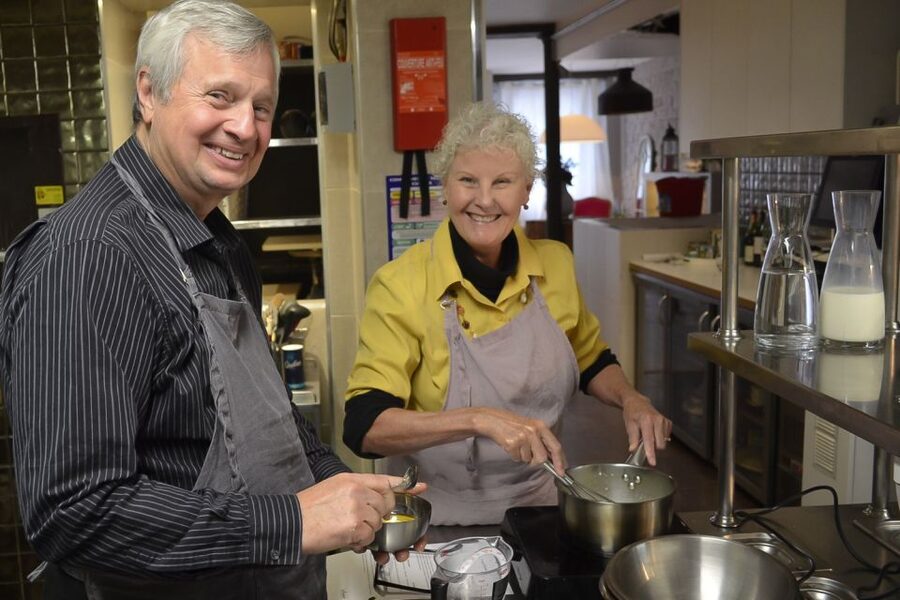
The experience lasts three hours. About two hours are devoted to the macarons class, followed by teatime and conversation. This is not a quick demonstration where you stand at the back and watch a professional do all the work. You are expected to measure, mix, pipe, and pay attention.
That matters because macarons are fussy pastries. The shell mixture needs the right texture, the piping needs a steady hand, and the baking requires care. You will probably make a few imperfect shapes along the way. That is part of the value. You learn what the batter should look like and how small mistakes affect the finished macaron.
The class is taught in English. Past sessions have been led by chefs and instructors including Stéphane Jimenez, Anne, Fanny, Luc, Amanda, Florence, Anna, Hugo, and Frédéric. The exact instructor can vary, but the teaching style described across the supplied information is consistent: patient guidance, clear explanations, and plenty of help for beginners.
More pastry and macaron classes in Paris:
- Paris: Montmartre Cheese, Wine & Pastry Guided Walking Tour
★ 4.8 · 2,255 reviews - Private Montmartre Food Tour with Wine, Cheese & Pastries
★ 5.0 · 1,027 reviews - Paris French Sweets Tasting Tour with Pastries and Chocolates
★ 4.5 · 947 reviews
Why the Italian meringue method matters
Many home bakers find macarons intimidating because the pastry looks simple but reacts badly to rough handling. This class uses the Italian meringue method, in which hot sugar syrup is incorporated into whipped egg whites. It is harder to master than some simpler methods, but it gives the instructor a reliable framework for teaching the process.
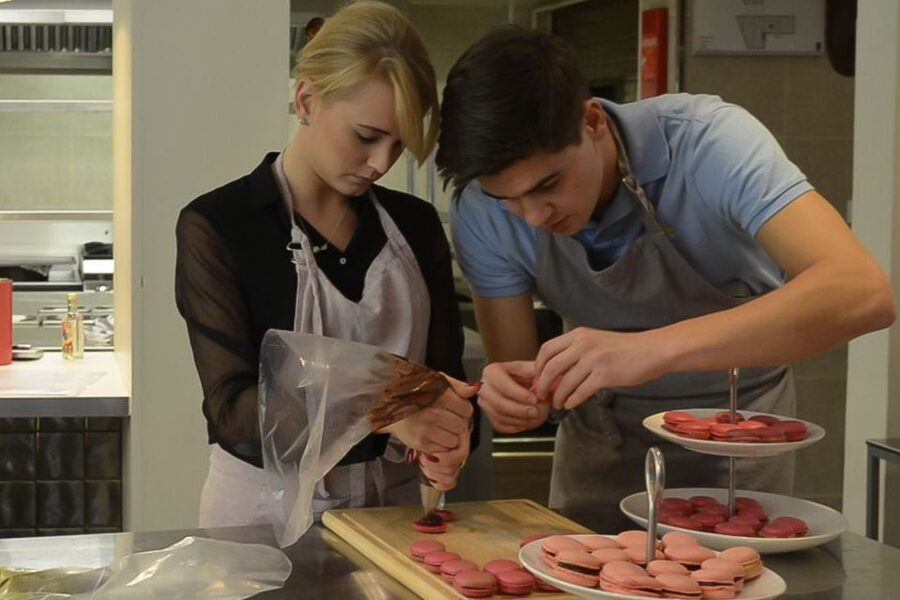
You will learn how to prepare the macaron mixture, incorporate color into the shells, and judge the consistency before piping. The piping stage is where technique becomes visible. The goal is to create even rounds rather than flat puddles or tall peaks, and the chef can show you how to adjust your pressure and finish each shell cleanly.
The class also covers the filling. Depending on the session, you learn to prepare a ganache or a curd, then use it to sandwich the shells. This is a useful lesson because the filling affects both flavor and texture. A macaron should not be all crunch, nor should it collapse under a wet filling.
One benefit of learning in a small group is that the chef can watch each person work. That is especially helpful if you are new to baking. Several instructors have been praised for taking time with each student, answering questions, and making sure no one falls behind. I would not book this expecting to arrive with professional pastry skills. You do not need them.
What the two-hour class feels like
The session begins with instruction and a demonstration, then moves into hands-on preparation. You receive an apron, use the provided equipment, and work through the recipe with the rest of the group. The process is organized, but it is still active. One participant described working almost continuously for the full two hours, which gives you a good sense of the pace.
You will likely spend much of the class moving between careful measuring, mixing, piping, and waiting for the right stage in the process. This is not a sit-back activity. It suits you if you enjoy doing something with your hands and asking questions as you go.
The group is limited to six participants under the current arrangement, although older sessions had larger groups. A small class makes a real difference here. Macaron batter can look correct to one person and completely wrong to another, so direct feedback is far more useful than a general talk.
The kitchen setting has also been praised for being clean and well organized. Equipment and aprons are included, and you do not have to plan for a mountain of washing up afterward. That makes the experience particularly appealing if you want a cooking activity during a short Paris visit without turning your hotel room into a pastry laboratory.
Piping, filling, and the pleasure of small mistakes
Piping is likely to be the most revealing part of the lesson. You may begin with uneven circles, too much batter, or little peaks that refuse to disappear. The chef can help you correct your pressure and angle, and you get an immediate chance to see how the shells change as you work.
The class also teaches you to add color to the shells. This is a small detail, but it gives you a better feel for how professional macarons get their polished appearance. You are not simply following a recipe. You are learning the visual cues that tell you when the mixture is ready.
Then comes the filling. Ganache gives you a rich chocolate-based option, while curd brings a sharper, fruitier character. The supplied information does not promise one fixed menu for every class, so you should think of these as the techniques covered rather than a guaranteed list of flavors. One past session included four different flavors, but the number and selection may change.
I like this balance of precision and play. The lesson is technical enough to be useful at home, but not so formal that a crooked shell ruins the afternoon. You can expect guidance, not perfection on the first attempt.
More perfume and craft workshops in Paris:
- Fragonard Paris: Mini Perfume Workshop
★ 4.5 · 1,924 reviews - Paris Cooking Class and Lunch with Wine plus Market Visit Option
★ 5.0 · 1,024 reviews - Paris Croissant Small-Group Baking Class with a Chef
★ 5.0 · 910 reviews - Paris: Macaron Class at Galeries Lafayette
★ 4.3 · 905 reviews
Teatime, stories, and a taste of French culture
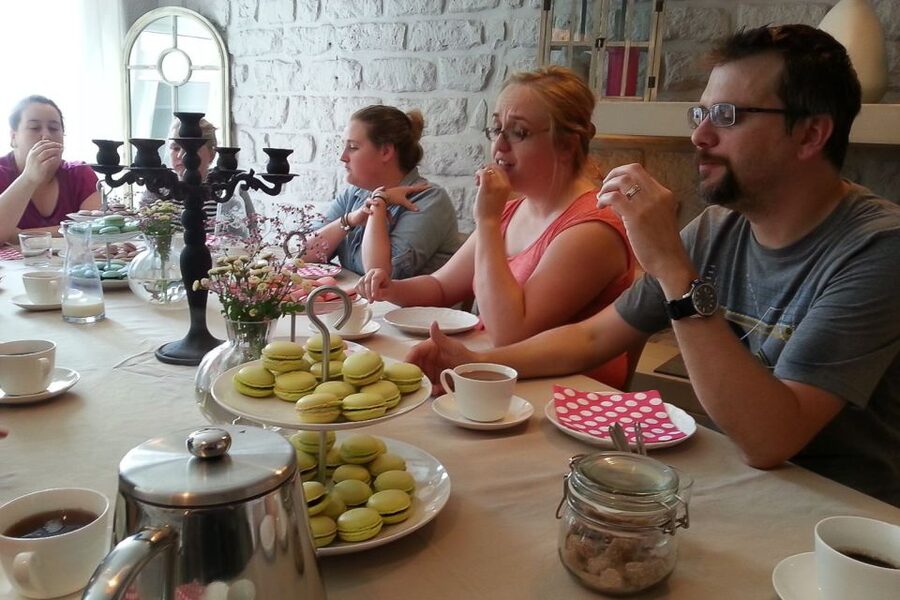
After the baking work, you sit down for tea, coffee, fruit juices, and some of the macarons you have made. This pause is built into the experience, not an afterthought. You have time to taste the results while the instructor talks about the history of the macaron and shares stories about French culture.
The cultural conversation is often playful and tongue in cheek. That gives the class a social side that a standard baking lesson may lack. You are sharing a table with a small group, comparing results, and hearing the stories behind a familiar French treat.
I would especially recommend this part to you if you want more than a technical workshop. The macaron is one of France’s best-known sweets, but the experience helps connect it to French food culture rather than treating it as a decorative cookie. The setting also gives you a chance to slow down after the concentration of piping and filling.
Do not expect a full meal. Teatime includes drinks and macarons, but this is still a pastry class, not lunch or dinner. If you are booking it around a major meal, plan accordingly.
The box you take home
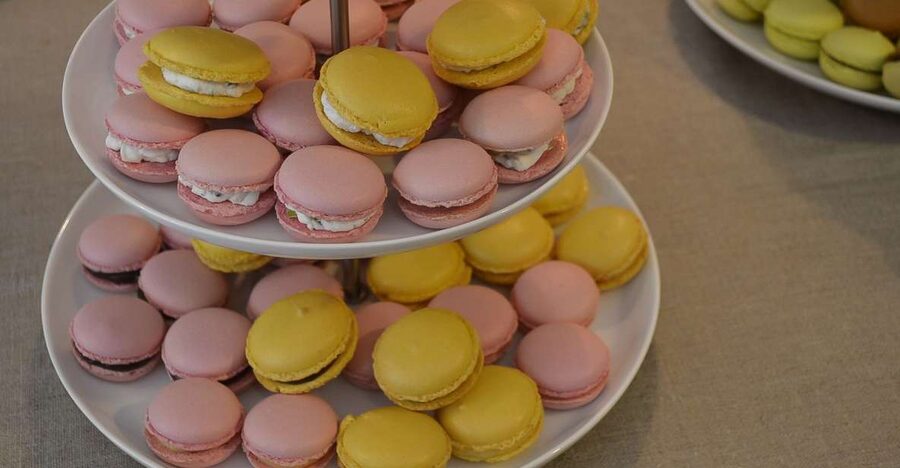
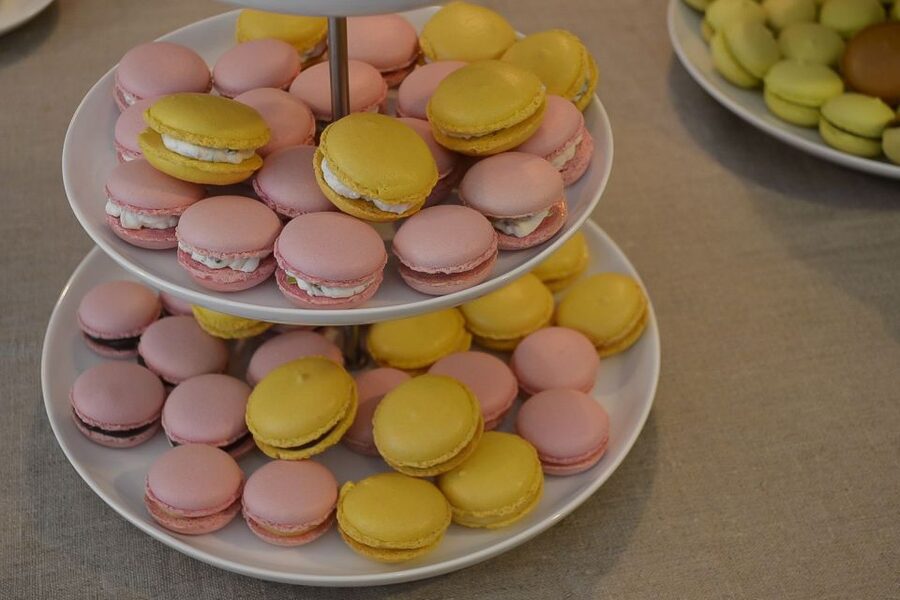
The take-home box is one of the strongest practical reasons to choose this class. You leave with your own macarons, enough to share with family and friends or keep for the next few days. Several participants described taking home a generous quantity, and one family said there were plenty left after the tasting.
This makes the class feel more substantial than a typical souvenir activity. You get an edible reminder of Paris and a chance to show people at home what you learned. The macarons may not all look identical, but that is part of their charm. You made them.
You also receive the recipes in English, in both hard copy and electronic form. Having the recipe during the lesson is useful because you can write notes beside the instructions. One participant specifically appreciated receiving the recipe at the time of the class, while another wished the printed directions had included more of the chef’s personal tips. My advice is to bring a pen and make your own notes as you work.
The recipes will not remove every challenge from baking macarons at home. Oven temperatures, humidity, equipment, and ingredient handling all matter. Still, watching the process in person gives you a much better starting point than reading a recipe alone.
The $152 price and what you receive
At $152 per person, this is not a cheap way to eat a few French pastries. You are paying for a three-hour activity, a professional English-speaking instructor, equipment, an apron, drinks, food, recipes, and a box of your own macarons.
The value improves if you want a memorable activity rather than a simple tasting. You get direct instruction, hands-on practice, and a finished product. The small group also matters. You are not paying for a large demonstration where personal help is limited.
It is less compelling if your main goal is simply to sample excellent macarons. Paris has plenty of pastry shops for that, and buying a box will cost much less. Book this class for the process, the social setting, and the satisfaction of making something yourself.
The strongest praise has focused on the instructors. Stéphane has been described as entertaining and patient, and one participant noted his background as head pastry chef at The French Laundry. Anne has been praised for helping people of all skill levels, while Fanny was singled out for making the class especially approachable for beginners. These details suggest that the teacher can shape the experience, though you cannot necessarily request a particular chef unless the provider confirms it.
Who should book this class
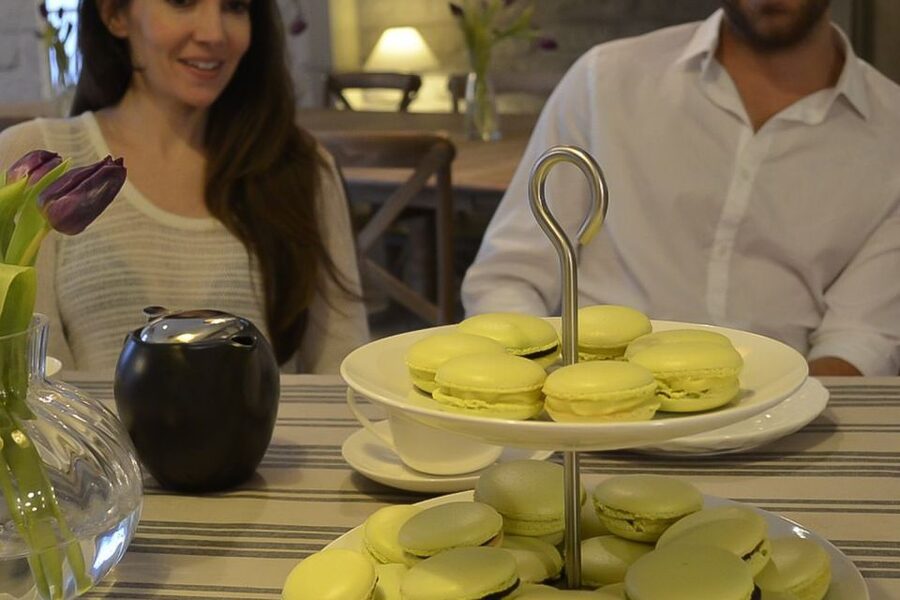
I would choose this for first-time bakers, couples, families with teenagers, and anyone who wants a break from museums and monuments. It also works well for people who enjoy meeting others, since the class brings together a small group that works as a team.
Teenagers can have a particularly good time here. Children under 12 cannot participate, and those aged 12 to 16 must be accompanied by a participating adult. Only paying participants may enter the kitchen, and there is no childcare facility. If you are traveling with younger children, this is not an activity where they can simply sit nearby and watch.
The class also suits you if you want an activity that works in poor weather. It is indoors, structured, and does not depend on views or outdoor conditions. You should be ready to stand, follow instructions, and stay involved for much of the two-hour lesson.
I would think twice if you dislike precise cooking, have no interest in eating sweets, or want a quiet afternoon with no schedule. The work is hands-on, and the class moves at a steady pace.
Timing and planning advice
Check the available start times when booking, since the class lasts three hours and exact schedules can vary. I would avoid placing a tight restaurant reservation immediately afterward. The class has a defined duration, but baking and teatime are more enjoyable when you are not watching the clock.
Plan to arrive early at Le Foodist on Rue Cardinal Lemoine. The address is in the 5th arrondissement, but one older participant found the street difficult to locate. A few spare minutes will help you find the entrance and settle in.
The experience is offered in English, which makes it a practical choice if you do not speak French. Recipes are also provided in English. Free cancellation is available up to 24 hours before the class, and you can reserve now and pay later, useful if your Paris schedule is still shifting.
Should you book the macaron class?
Book it if you want to learn a real pastry technique, work closely with a chef, and leave Paris with something you made yourself. The small class and patient instruction make it friendly to beginners, while the Italian meringue method gives the lesson enough substance for more experienced home bakers.
Skip it if you only want to eat macarons or if your children are under 12. At $152, the class earns its price through instruction, equipment, teatime, recipes, and the take-home box, not through the food alone. For a hands-on afternoon near the Latin Quarter, it is a strong choice, especially for couples and families with teenagers.
FAQ
How long does the Paris macaron class last?
The full experience lasts three hours. About two hours are devoted to hands-on macaron instruction, followed by teatime, drinks, stories, and tasting.
Where does the class meet?
The class meets at Le Foodist, 59 Rue Cardinal Lemoine, 75005 Paris, in the 5th arrondissement.
Is the class taught in English?
Yes. The instructor teaches in English, and the recipes are provided in English in both printed and electronic formats.
How many people are in the class?
The current activity information limits the group to six participants. The class is designed as a small-group experience.
What will I learn to make?
You will learn to make macaron shells using the Italian meringue method, pipe the shells, add color, and prepare a ganache or curd filling.
Can children participate?
Children under 12 cannot participate. Children aged 12 to 16 must be accompanied by a participating adult, and only participants may enter the kitchen. There are no childcare facilities.
What is included in the price?
The price includes the two-hour class, cooking equipment, an apron, teatime with tea, coffee, fruit juices and macarons, a box of your creations to take away, and printed and electronic recipes.
Just added around Paris
- Paris: The Da Vinci Code Walking Tour with a Local Guide★ 4.3 · 5 reviews
- Paris: Flea Market Insider’s Tour in Extra-Small Group★ 4.6 · 73 reviews
- Paris: Private Fashion Tour (Chanel, Dior, Sex & the City)★ 5.0 · 3 reviews
- Paris: Floral Earrings workshop★ 5.0 · 3 reviews
- Paris: Fashion History Walking Tour in the Heart of Paris★ 4.9 · 22 reviews
- PARIS: Family e-bike longtail renting★ 5.0 · 3 reviews
- Paris: Famous Monuments Cycling Tour★ 4.7 · 20 reviews
- Paris: private city tour with seine river cruise★ 4.8 · 28 reviews
Paris Pastry and Macaron Classes, compared.
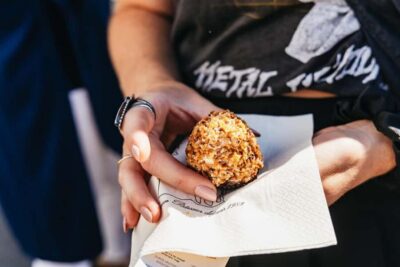
Montmartre Cheese, Wine & Pastry Guided Walking Tour
Read our review →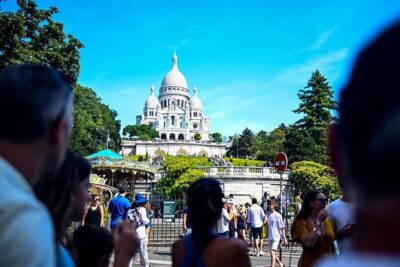
Private Montmartre Food Tour with Wine, Cheese & Pastries
Read our review →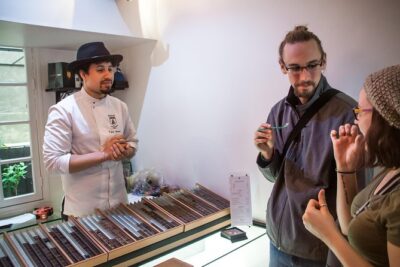
Paris French Sweets Tasting Tour with Pastries and Chocolates
Read our review →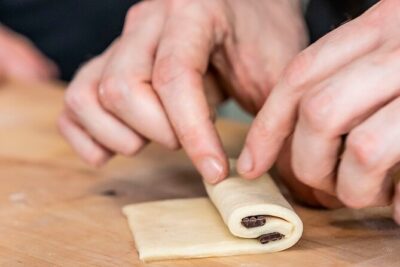
Paris Croissant Small-Group Baking Class with a Chef
Read our review →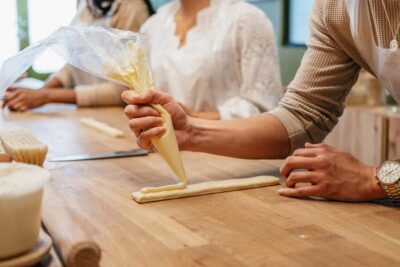
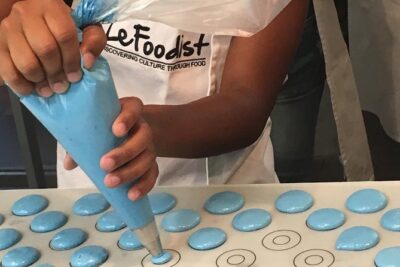
Paris Cooking Class: Learn How to Make Macarons
Read our review →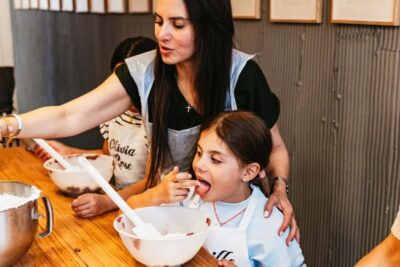
A Morning in Paris Food Tour: Croissants, Baguettes & Chocolate
Read our review →Browse the lists this tour appears in