
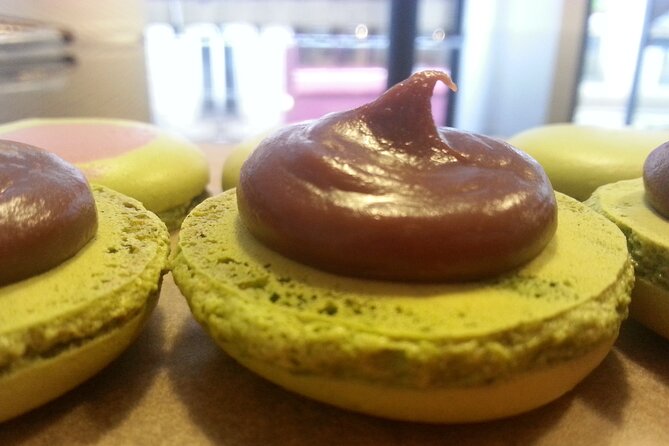
Reviewed · PARIS PASTRY AND MACARON CLASSES
Paris Small-Group Macaron Making Class with a French Chef
French macarons look delicate, but the method behind them is exacting. This Paris class takes you through the full process, from Italian meringue and macaronage to piping shells, making ganache, and judging doneness by touch. You do not just watch a chef work. You mix, pipe, fill, and learn why each step matters.
I like the maximum six-person group, which gives the chef time to correct your technique. I also like that the class teaches the Italian meringue method, a more technical approach that can produce dependable results at home. The main consideration is pace: at 2½ hours, this is a serious pastry lesson rather than a quick tourist activity, and some participants may find the careful instruction a little intense.
Key points at a glance
- Six people maximum: You get close guidance while mixing, piping, and filling.
- Italian meringue method: A technical process designed to make reliable macaron shells.
- Full hands-on preparation: You make the shells and ganache, then finish the macarons.
- Instructors with different teaching styles: Hiba, Gaëlle, Marie, Julie, and Gail are among the chefs named in class feedback.
- Useful take-home package: Recipes, an English recipe copy, a bag for your macarons, and the tools used during class are included.
- Good family option: The class welcomes children age 12 and up when accompanied by a registered adult.
What the 2½-hour Paris macaron class is really like
The class takes place at Patisserie a la Carte, at 9 Rue Thimonnier in the 9th arrondissement. It begins and ends at the same address, making the return simple. The location is near public transportation, and you should allow extra time to find the building and arrive before the start.
Once the class begins, the chef leads you through the process in a set order. Ingredients are precisely measured, which lets you focus on technique rather than weighing flour and sugar while the clock runs. That does not make the class passive. You still need to mix properly, make the ganache, pipe the shells, and watch the stages closely.
The class is conducted in English and includes an English copy of the recipes. Instructors vary. Hiba, Gaëlle, Marie, Julie, and Gail have all taught sessions, so the personality of your chef will depend on the date. The teaching style may also vary. Some chefs are warm and highly encouraging, while others keep a calm, businesslike focus on getting each technical step right.
That difference matters. If you want a lively cooking show with lots of chatter, this may feel more serious than expected. If you want to learn a recipe you can repeat at home, the attention to detail is a plus.
More pastry and macaron classes in Paris:
- Paris: Montmartre Cheese, Wine & Pastry Guided Walking Tour
★ 4.8 · 2,255 reviews - Private Montmartre Food Tour with Wine, Cheese & Pastries
★ 5.0 · 1,027 reviews - Paris French Sweets Tasting Tour with Pastries and Chocolates
★ 4.5 · 947 reviews
Starting with Italian meringue and precise measurements
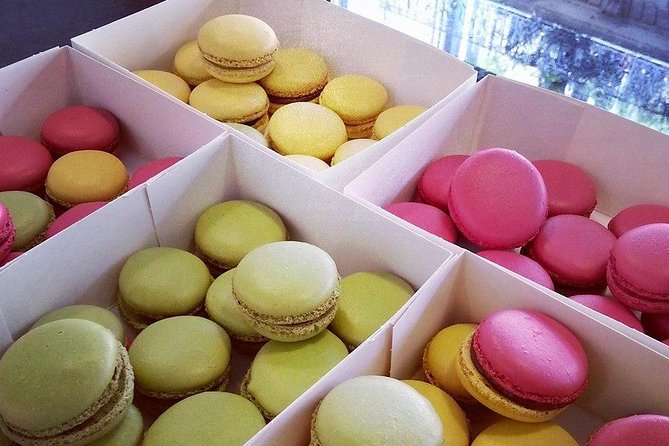
Macarons are unforgiving. A small mistake in the meringue, the mixing, or the oven stage can leave you with cracked shells, hollow centers, or a batter that spreads too far. The Italian meringue method adds hot sugar syrup to whipped egg whites, so it is more technical than simpler methods.
The benefit is consistency. The chef explains the stages and shows you what the mixture should look and feel like. You learn not only what to do, but why the timing and texture matter. That explanation is one of the strongest parts of the class because it gives you a better chance of repeating the recipe in your own kitchen.
The ingredients are pre-weighed, which is practical in a short class. At home, you will still need a scale and the right equipment, but the session keeps the focus on the skills that are hardest to judge from a printed recipe.
You will also learn how to hold and use the whisk to make a smooth ganache. This may sound like a small detail, but ganache texture affects how easily it pipes and how well it sits between the shells. The chef points out small corrections along the way, the kind of advice that can save you from another failed batch at home.
Macaronage, piping, and judging when the shells are done
The central skill is macaronage, the process of folding the batter until it reaches the right consistency. Mix too little and the batter can remain stiff. Mix too much and it may become loose and difficult to pipe. The chef shows you how to reach a smooth, workable paste.
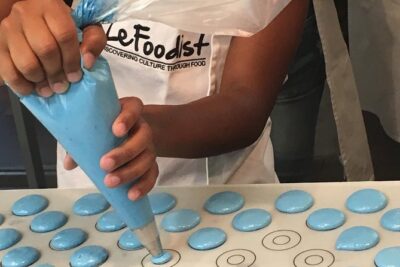
You then pipe the mixture into shells. This is one of the most useful hands-on sections because the shape and size of your shells affect the final sandwich. The small class size helps here. With no more than six people, the chef can look at your piping and offer help before the trays go into the oven.
You also learn to judge doneness by touch. This is valuable because oven times can vary, even when you follow the recipe carefully. A macaron shell should not be judged only by its color. Texture and firmness tell you more, and the class gives you a practical way to recognize the right stage.
The process is guided, but you are not simply handed finished pastries. You take part in the work. That makes the class more rewarding for a keen baker, and it also explains why the session takes around two and a half hours.
Making ganache and choosing the finishing flavors
After the shells, you prepare the ganache filling. The chef shares techniques for creating a smooth mixture and explains how to work with the whisk. Ganache is the main filling described for the class, but the lesson also discusses different flavor and garnish options.
Possible combinations include chocolate ganache, pistachio, vanilla, raspberry, chocolate shavings, and passionfruit. The exact flavor choices may depend on the class, but the wider lesson is useful: you begin to see how a basic macaron recipe can change with different fillings and finishes.
This part gives the class a creative edge. The shells require precision, while the garnish allows more personal choice. You can pay attention to the professional finish, then use the recipes as a base for your own variations later.
The class is gluten-free, which makes it useful for people avoiding gluten. You should still tell the operator about allergies or special dietary needs when booking. Gluten-free does not mean every possible allergy is covered, so advance notice is important.
More perfume and craft workshops in Paris:
- Fragonard Paris: Mini Perfume Workshop
★ 4.5 · 1,924 reviews - Paris Cooking Class and Lunch with Wine plus Market Visit Option
★ 5.0 · 1,024 reviews - Paris Croissant Small-Group Baking Class with a Chef
★ 5.0 · 910 reviews - Paris: Macaron Class at Galeries Lafayette
★ 4.3 · 905 reviews
A small class that works well for families
The six-person limit is more than a marketing detail. Macarons require close attention, especially during meringue preparation, batter folding, and piping. A large group would make it harder for the chef to catch small problems before they affect the result.
The format also suits a parent and teenager. The minimum age is 12, and children must attend with a registered adult, with one adult required per child. The class has worked well for parents attending with 13-, 14-, and 16-year-old children who enjoy baking.
You should expect some paired work for certain preparations. The class is hands-on, but not every step necessarily means each participant works alone. If you are hoping to prepare every single component independently, this is worth knowing before you book.
The social side is pleasant without taking over the lesson. You work alongside a few other people, share the kitchen, and have tea and coffee during the session. It is a good way to spend part of a Paris morning or afternoon when you want a break from museums and long walks but still want an activity with a clear purpose.
What you take home from Patisserie a la Carte
At the end, you can eat the macarons at the patisserie or pack them in the provided take-home bag. Resisting them on the spot may be difficult, but carrying some back to your hotel or apartment gives you a sweet reminder of the class.
You receive the recipe in English, along with the equipment and apron used during the lesson. The recipe is the most useful item for future baking, but the practical lessons about texture, whisking, and touch are just as important. A recipe tells you quantities. It does not always tell you what the mixture should look like at each stage.
The amount you take home can vary. One class participant reported taking home 15 macarons, but you should not treat that number as a fixed guarantee. The main value is learning the process and leaving with the finished results you helped make.
As an anniversary extra, the provider also offers an Everyday Gourmet French Tarts eBook. That gives you another baking project beyond the macaron recipe.
Is $114.65 a fair price?
At $114.65 per person, this is not a cheap pastry tasting. You are paying for a 2½-hour lesson with a professional French pastry chef, a small group, ingredients, equipment, an apron, tea and coffee, recipes, and take-home packaging.
The value depends on what you want. If you only want to eat macarons, Parisian pastry shops offer a less expensive route. If you want to learn a difficult technique and leave with a recipe you can use again, the price is easier to justify.
A private lesson would normally cost more, while a large demonstration class might cost less but give you less personal help. The six-person maximum is the key value point here. It gives the chef a realistic chance to correct your batter and piping before the mistakes are baked into the final product.
The class is also a good use of time for a return visit to Paris or a rainy afternoon. It provides a structured activity, food to enjoy afterward, and a practical skill rather than another object to carry home.
Getting there and planning your timing
The meeting point is 9 Rue Thimonnier, 75009 Paris, and the activity ends there. It is near public transportation. Give yourself extra time, particularly if you are not familiar with the neighborhood, because arriving late can have serious consequences.
After five minutes of delay, the course may begin without you. After 15 minutes with no participant present, the class is automatically canceled, and the booking may be treated as a last-minute non-refundable cancellation. In plain terms, do not cut your timing close.
Confirmation is sent within 48 hours of booking, subject to availability. The experience is often reserved well ahead, with an average booking lead time of about 31 days, so reserve early if your Paris dates are fixed.
Free cancellation is available up to 24 hours before the start time. Cancellations or changes made less than 24 hours before the class are not refunded or accepted.
The teaching style and what to expect from your chef
The chefs are professional, but the tone can differ from one session to another. Gaëlle is praised for careful explanations, patience, and attention to the point when ingredients are ready. Hiba is described as patient and particularly good with parents and children. Marie and Julie are also named as clear, supportive instructors, while Gail is noted for precise English and useful tips.
The strongest teaching feature is the explanation of why each step matters. That helps you at home when your mixture does not look exactly like the class version. You learn to respond to texture and timing instead of blindly following a list of instructions.
One caution: the class can feel intense. The technique is precise, and the chef may concentrate more on correct results than on creating a theatrical atmosphere. That is not necessarily a problem, but it is useful to know if you want a very relaxed, highly playful experience.
Who should book this French pastry lesson?
I would recommend it most to:
- Home bakers who have struggled with macarons and want direct correction.
- Food lovers who want a hands-on Paris activity rather than a tasting alone.
- Parents with children age 12 and up who enjoy cooking together.
- Couples or friends looking for a quieter activity away from the main sightseeing circuit.
- Visitors who want an English-language lesson with a recipe to use at home.
I would think twice if you have a packed sightseeing schedule. The class lasts around 2½ hours, and the fixed start time means you must plan around it. I would also skip it if you have no interest in baking, since the value comes from taking part in each technical stage.
Should you book the Paris macaron class?
Book it if you want to understand why macarons succeed or fail, not just sample a box from a pastry shop. The small group, hands-on work, English recipe, and patient instruction make this a practical choice for bakers and families.
The main trade-off is the price and the serious pace. You may not get a loud, showy class, and the chef may focus more on technique than entertainment. But if your goal is to make beautiful, crisp shells with a smooth filling, this class gives you the tools, guidance, and confidence to try again at home.
FAQ
Where does the macaron class take place?
The class begins and ends at Patisserie a la Carte, 9 Rue Thimonnier, 75009 Paris, France.
How long does the experience last?
The class lasts approximately 2 hours and 30 minutes.
Is the class taught in English?
Yes. The class is offered in English, and an English copy of the recipes is included.
How many people can attend?
The class has a maximum of six participants.
What age must children be to attend?
The minimum age is 12. Children must attend with a registered adult, with one adult required per child.
What do you make during the class?
You make macarons with a ganache filling. The lesson covers Italian meringue, macaronage, piping, baking, ganache, and possible garnishes such as pistachio, vanilla, raspberry, chocolate shavings, and passionfruit.
What is included in the price?
A professional pastry chef, ingredients, cooking equipment, an apron, English recipes, take-home bags, tea, coffee, and the finished macarons are included. The provider also offers an Everyday Gourmet French Tarts eBook.
Can I cancel for a full refund?
Yes, if you cancel at least 24 hours before the experience start time. Cancellations and changes made less than 24 hours before the start time are not accepted or refunded.
Just added around Paris
- Private Paris Marche d’Aligre Walking Tour with Tastings★ 5.0 · 8 reviews
- Private Louvre Museum Tour for Kids & Families with Alberto or his team in Paris★ 5.0 · 41 reviews
- Private Highlights of Paris Tuk-Tuk Experience★ 5.0 · 26 reviews
- Paris Latin Quarter Walking Tour: History & Culture – Small Group★ 5.0 · 14 reviews
- Private Highlights of Paris Bike Tour★ 4.5 · 15 reviews
- Paris Musee d’Orsay PRIVATE TOUR with a Local Private Guide★ 5.0 · 41 reviews
- Private Half Day Historic Tour★ 5.0 · 58 reviews
- Pere Lachaise Cemetery Paris – Exclusive Guided Walking Tour★ 5.0 · 72 reviews
Paris Pastry and Macaron Classes, compared.
Montmartre Cheese, Wine & Pastry Guided Walking Tour
Read our review →
Private Montmartre Food Tour with Wine, Cheese & Pastries
Read our review →
Paris French Sweets Tasting Tour with Pastries and Chocolates
Read our review →
Paris Croissant Small-Group Baking Class with a Chef
Read our review →
Paris Cooking Class: Learn How to Make Macarons
Read our review →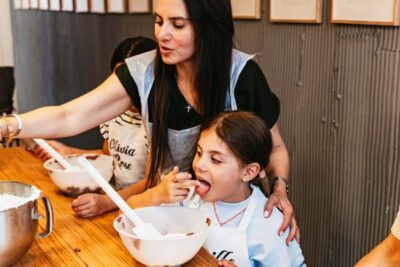
A Morning in Paris Food Tour: Croissants, Baguettes & Chocolate
Read our review →Browse the lists this tour appears in