
Reviewed · PARIS JEWISH HERITAGE TOURS
Jewish History Private Tour
Paris reveals a less familiar story on this private Jewish history walk, linking Notre-Dame, medieval streets, wartime memorials, and the Marais. You learn about a Hebrew community that existed before France took shape, then follow its story through royal rule, the Black Plague, the Dreyfus affair, Vichy, and the Nazi occupation.
I like the personal format, which lets your guide adjust the pace and explain difficult subjects without rushing. I also like the way the route connects famous places, such as Notre-Dame, with details you could easily miss, including markings on old buildings and the long Jewish presence around Rue des Rosiers.
The main drawback is time. Two hours is enough for a strong introduction, but not enough for a slow visit to every site, and Notre-Dame is viewed from the nearest practical point rather than entered.
Key points to know before booking
- A private route for up to six people: The $361.23 group price makes the tour more sensible for a small family or group than for one or two people.
- Notre-Dame is discussed from outside: The cathedral remains part of the story, but admission is not included and the building is currently unavailable for the planned visit.
- The Shoah Memorial is a major stop: Allow yourself time afterward to think about what you have seen and heard.
- Rue des Rosiers brings the subject into present-day Paris: This is the center of the city’s Jewish quarter and a useful counterpoint to the memorials.
- The guide matters greatly: Sonja, Tina, Barbara, Anja, and Boris have all been praised for clear English, strong subject knowledge, and an engaging personal approach.
- Expect a real walking tour: Wear comfortable shoes, and plan for rain or changing weather.
Why Jewish Paris deserves a place on your itinerary
Paris is often presented through art, royal power, revolution, cafés, and grand monuments. This tour adds another layer: the long, often difficult story of Jewish life in the city.
You begin near Shakespeare and Company at 37 Rue de la Bûcherie, on the Left Bank, then cross toward the Île de la Cité and the Marais. The route moves through centuries rather than treating Jewish history as a single wartime subject. You hear about medieval life, persecution during the Black Plague, political conflict in modern France, the Dreyfus affair, Vichy rule, the German occupation, deportation, and the community that exists today.
That range is the tour’s real value. You are not simply being led from one memorial to another. You are shown how religious minorities fitted, or failed to fit, into the political and social life of France.
The guide is a professional art historian, and that background matters because the tour depends on reading buildings and public spaces. The best moments may come from a small sign, an architectural detail, or a location that seems ordinary until its story is explained.
More Jewish heritage tours in Paris:
- Le Marais District & Jewish Quarter Guided Walking Tour 12ppl Max
★ 5.0 · 361 reviews - Le Marais/Paris – The Historic, Trendy, Jewish, LGBT district
★ 5.0 · 341 reviews - Paris: Le Marais & Montmartre Jewish History Walking Tour
★ 4.8 · 170 reviews
Notre-Dame and the community before France
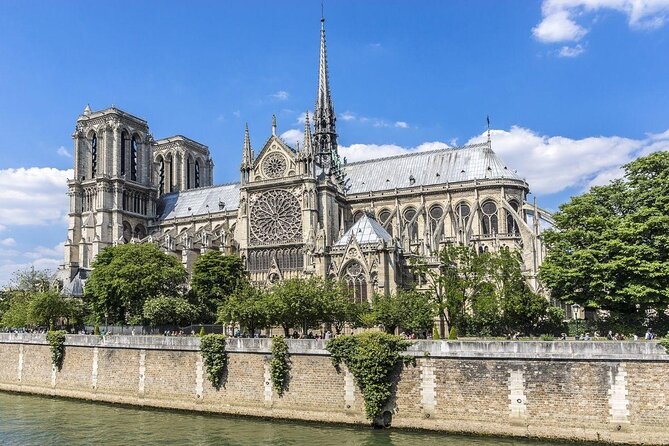
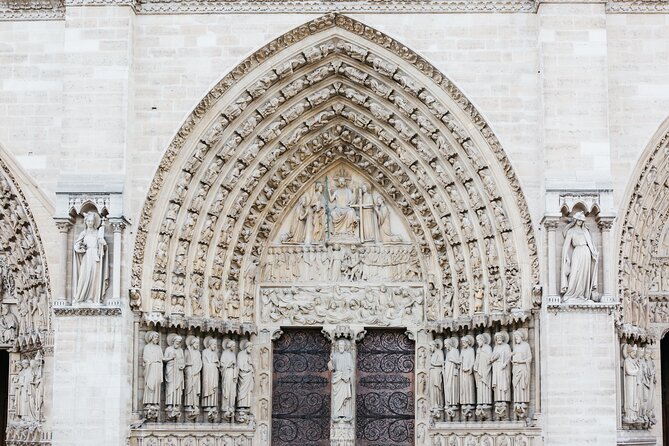
The first stop is Notre-Dame de Paris, scheduled for about 30 minutes. Because the cathedral is currently unavailable for the planned visit, your guide comments on it from the nearest possible distance.
That change is important to understand before booking. You will not have a standard cathedral visit, and no admission ticket is included. Instead, Notre-Dame serves as a starting point for discussing the Jewish community during the medieval period and the cathedral’s role in daily life.
The subject is not limited to architecture. The cathedral helps explain the place of Jews in a Christian medieval city, the relationship between religious institutions and civic power, and the pressures faced by a community living under royal and church authority.
I like this opening because it avoids treating Jewish Paris as an isolated neighborhood. Notre-Dame places the story at the center of Parisian life. It also introduces one of the tour’s most useful ideas: Jewish history can be found in places that are not marked as Jewish attractions.
The route may include details on buildings and markings that you would likely pass without noticing. One guide, Sonja, was praised for explaining these signs and connecting them to the larger story. Her clear English and calm explanations were especially useful in heavy rain, when the group continued with ponchos and umbrellas.
The Deportation Memorial at the Île de la Cité
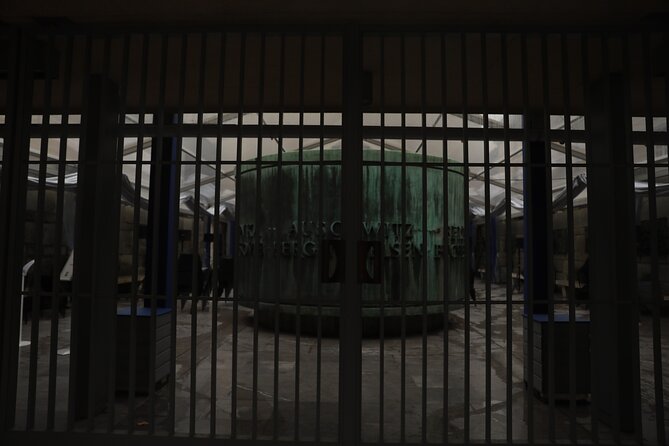
The next stop, the Memorial des Martyrs de la Déportation, takes about 15 minutes. This stark memorial honors people deported during the Second World War and asks you to think about their fate in a confined, serious setting.
It is a short visit, but the subject is heavy. Your guide provides context rather than leaving you to view the memorial without explanation. That matters because the site is easy to approach as another monument on a busy sightseeing day. Here, the purpose is remembrance, not decoration.
You should expect the tone of the walk to change at this point. The medieval section deals with long-term patterns of exclusion and survival. The deportation memorial brings the story into the 20th century, where decisions by the Vichy government, the Nazi occupation, and French institutions had immediate and devastating consequences.
A two-hour tour cannot provide a full account of wartime France. It can, however, show you how the local story fits into the wider European one. If you want a quiet, lighthearted walk, this is not the right choice. If you want a serious introduction with a guide who can explain the setting, this stop gives the tour weight.
The Shoah Memorial and the names that remain
The Mémorial de la Shoah is scheduled for about 20 minutes and is one of the most important parts of the route. The memorial has a major place in Parisian public life, not only within the Jewish community, and your guide explains its wider cultural importance.
This is where the tour’s subject becomes especially direct. You may encounter names, records, and memorial elements that make the scale of deportation more personal. One guide, Anja, was praised for explaining the Holocaust Memorial and the wall honoring the Righteous, as well as for connecting the site with family stories and Jewish life during and after the war.
That personal element can make a difference. A guide who can place memorials within family and European history helps you understand that these events were not distant, abstract episodes. At the same time, you should remember that a short walking tour can only introduce the memorial. If you want to study its exhibits at length, plan a separate visit.
The schedule allows 20 minutes here, so listen closely and use the guide’s explanation to decide if you want to return later. The memorial is not treated as a quick photo stop, and it should not be.
More history tours in Paris:
- Paris: Dark History and Ghostly Guided Walking Tour
★ 4.7 · 1,000 reviews - Paris City of Fashion History Private Guided Walking Tour
★ 5.0 · 221 reviews - Explore the Marais: Culture, History & Hidden Gems of Paris
★ 4.6 · 100 reviews - Historic Paris Walking Tour in English
★ 4.9 · 78 reviews
Rue François Miron and Jewish life in the 14th century
Rue François Miron brings you back to medieval Paris. The stop lasts about 20 minutes and focuses on the position of the Jewish community in the 14th century, especially during the Black Plague.
This perspective is one of the tour’s more unusual features. The Black Plague is often taught as a broad European disaster, but the experience examines how Jewish communities were viewed and treated during the crisis. That helps you see how fear, rumor, religious prejudice, and political power could turn a public catastrophe into a new wave of persecution.
The street itself is useful because it puts the subject in the middle of the old city rather than in a purpose-built museum. Your guide helps you picture how people lived, worked, worshiped, and faced restrictions in medieval Paris.
Do not expect a long architectural lecture here. The main point is historical context, supported by the street around you. The stop will appeal most to you if you like connecting major events with the daily life of a particular community.
Rue des Rosiers, the living center of the route
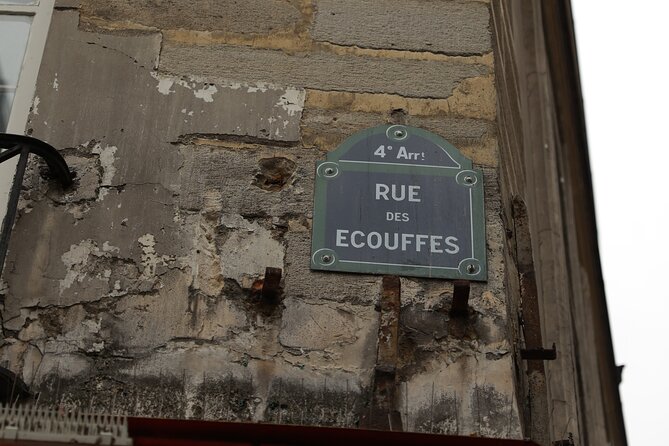
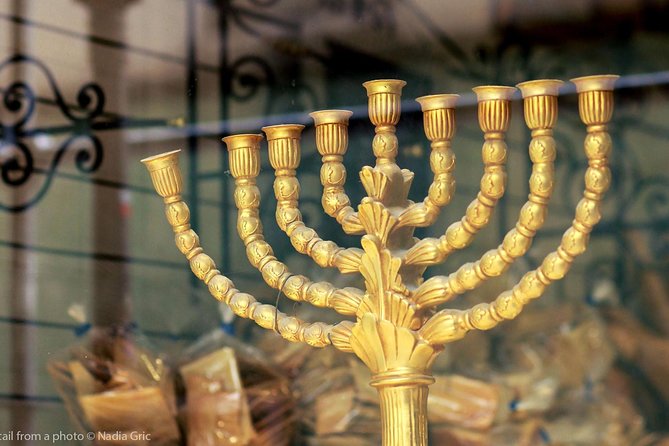
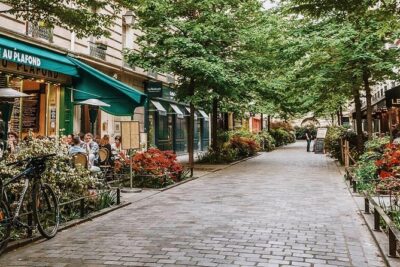
Rue des Rosiers is described as the center of Parisian Jewish life and is a must-see part of the walk. It provides a needed change in tone after the memorials.
Here, Jewish Paris is not presented only through loss. The street represents continuity, culture, food, commerce, and an active community. The stop helps you understand that the story did not end with the war, and that the Marais remains an important place to encounter Jewish identity in Paris.
Because the tour ends at Place de la Bastille, Rue des Rosiers is not the final point. You may want to note the street and its surroundings so you can stay in the area afterward, especially if you want more time for lunch, shopping, or independent exploration. Food and drinks are not included, so any meal or snack is your own expense.
The route’s combination of Rue des Rosiers and the Shoah Memorial works well. One gives you a sense of present-day community life. The other forces you to face the destruction that threatened that continuity.
How the guides shape the experience
The guide is the heart of this tour. The experience is offered in English, though it may be operated by a multilingual guide. The named guides associated with strong feedback include Sonja, Tina, Barbara, Anja, and Boris.
Sonja was praised for excellent English, clear explanations, and the ability to keep the tour worthwhile in pouring rain. Tina was described as patient, informative, and unhurried. Barbara was praised for her command of the subject and her warm approach.
Anja received special praise for bringing the Jewish experience during and after the war to life through extensive knowledge and family stories. Boris was praised for placing the sites within wider European history, political influence, and belief systems.
You cannot assume which guide you will receive, so book this for the route and subject rather than for a guaranteed individual. Still, the range of guide experiences points to something useful: this is not a script-only walk. The best version depends on a guide who can explain difficult material clearly and respond to your questions.
Since the tour is private, your group alone participates. That gives you more freedom to ask about a family connection, a particular period, or a site you want to understand better. It also makes the $361.23 price easier to justify when divided among four to six people.
Is $361.23 good value for a two-hour walk?
At first glance, $361.23 may seem high for a two-hour tour. The price is per group of up to six, however, not per person. Six people pay about $60 each, while two people pay about $181 each. The value improves sharply as your group gets larger.
You are paying for a private professional guide, not admission tickets or transportation. The major sites are viewed as part of the walking route, and food, drinks, hotel pickup, and drop-off are not included.
I would consider it good value for a family or small group that wants a focused introduction and the chance to ask questions. For a solo visitor or couple on a tight budget, a shared walk or self-guided visit may be more economical, though neither would provide the same private discussion.
The tour also tends to be booked well ahead, with an average booking time of 52 days. That suggests you should not leave it until the last moment if this subject is important to your Paris plans.
Timing, walking, and practical details
The stated duration is about two hours. The scheduled stops add up to roughly 105 minutes, leaving the rest for walking between sites and transitions. That makes the timing fairly active, especially if the streets are crowded or the weather is poor.
The route starts at Shakespeare and Company, 37 Rue de la Bûcherie, and ends at Place de la Bastille. There is no hotel pickup or drop-off, so you need to reach the starting point independently and arrange your own onward transport.
Wear comfortable shoes. The tour requires a moderate level of physical fitness, and rain can make the walk less pleasant. One group continued through heavy rain in ponchos and umbrellas, but you should treat that as a warning to check the forecast and dress properly.
Children must be accompanied by an adult. The subject matter, particularly at the deportation and Shoah memorials, may be difficult for younger children, so consider your family’s interest and comfort before booking.
The meeting point deserves extra attention. One group lost about 30 minutes because app directions gave the wrong location. Confirm the starting address, 37 Rue de la Bûcherie, before setting out, and do not rely on a map pin without checking the written details.
If you want to visit Notre-Dame or Sainte-Chapelle separately, make those arrangements with extra time. This walking tour does not replace an interior visit, and one guide-specific note recommended allowing more time for both.
Cancellation is free up to 24 hours before the start time. Changes or cancellations inside that window are not accepted for a refund. Confirmation is normally issued at booking, though bookings made within seven days may take up to 48 hours and remain subject to availability.
Who should book this Jewish Paris tour?
I would choose this tour if you want history explained at street level and prefer a private guide to a large group. It is especially suited to people interested in Jewish history, the Holocaust, French political history, medieval Europe, or the way religion shapes a city.
It also works well for families with older children, provided they can handle serious material, and for small groups who can share the cost. The private format gives you room to ask questions and adjust the pace.
I would think twice if you want a museum-heavy experience, a long visit inside Notre-Dame, or a relaxed food walk through the Marais. The tour is focused and serious. It covers a great deal in two hours, but it cannot provide extended time at each memorial or attraction.
Should you book it?
Book this tour if you want to see Paris through a part of its past that is easy to miss. The strongest features are the route’s range, the private format, the connection between famous landmarks and overlooked details, and the guides’ ability to explain painful subjects with care.
The best plan is to book it early, confirm the Shakespeare and Company meeting point, wear good shoes, and leave extra time if you want to visit Notre-Dame or Sainte-Chapelle separately. For a group of four to six, the price is reasonable for a private two-hour introduction. For a couple, it is a more serious expense, but the personal discussion may make it worthwhile.
FAQ
How long is the Jewish History Private Tour?
The tour lasts approximately two hours.
Where does the tour begin?
It begins at Shakespeare and Company, 37 Rue de la Bûcherie, 75005 Paris, France.
Where does the tour end?
The tour ends at Place de la Bastille.
Is the tour private?
Yes. Only your group participates, with up to six people included in the group price.
What language is offered?
The tour is offered in English. It may be operated by a multilingual guide.
Can I enter Notre-Dame during the tour?
No. Notre-Dame is currently unavailable for the planned visit, so the guide comments on the cathedral from the nearest possible distance.
What places are included on the route?
The route includes Notre-Dame de Paris, the Memorial des Martyrs de la Déportation, the Mémorial de la Shoah, Rue François Miron, and Rue des Rosiers.
Are food and drinks included?
No. Food and drinks are not included.
Is hotel pickup included?
No. Hotel pickup and drop-off are not included.
What happens if I need to cancel?
You can cancel up to 24 hours before the start time for a full refund. Cancellations or changes made less than 24 hours before the experience are not accepted for a refund.
Just added around Paris
- Private Paris Marche d’Aligre Walking Tour with Tastings★ 5.0 · 8 reviews
- Private Louvre Museum Tour for Kids & Families with Alberto or his team in Paris★ 5.0 · 41 reviews
- Private Highlights of Paris Tuk-Tuk Experience★ 5.0 · 26 reviews
- Paris Latin Quarter Walking Tour: History & Culture – Small Group★ 5.0 · 14 reviews
- Private Highlights of Paris Bike Tour★ 4.5 · 15 reviews
- Paris Musee d’Orsay PRIVATE TOUR with a Local Private Guide★ 5.0 · 41 reviews
- Private Half Day Historic Tour★ 5.0 · 58 reviews
- Pere Lachaise Cemetery Paris – Exclusive Guided Walking Tour★ 5.0 · 72 reviews
Paris Jewish Heritage Tours, compared.
Le Marais District & Jewish Quarter Guided Walking Tour 12ppl Max
Read our review →
Le Marais/Paris – The Historic, Trendy, Jewish, LGBT district
Read our review →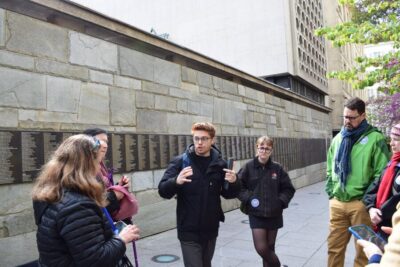
Le Marais & Montmartre Jewish History Walking Tour
Read our review →
Le Marais District & Jewish Quarter – Exclusive Guided Walking Tour
Read our review →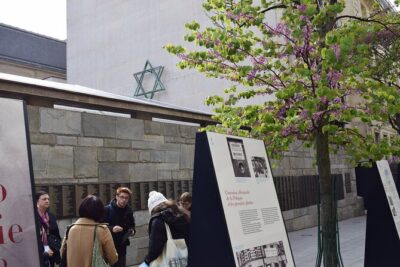
Paris Jewish Heritage: Le Marais & Montmartre Guided Walking Tour
Read our review →
Paris Jewish History 2-Hour Private Guided Walking Tour
Read our review →
Jewish Marais – Yiddish world : Walking tour and pastries
Read our review →
Browse the lists this tour appears in