
Reviewed · MONTMARTRE AND SACRé-CœUR TOURS
Paris Jewish Heritage: Le Marais & Montmartre Guided Walking Tour
Paris’s Jewish story comes into focus on foot, beginning with the old community streets of Le Marais and ending among the artists of Montmartre. In three and a half hours, you move from synagogues and delis to Modigliani, Chagall, and the sweeping view from Sacré-Cœur.
I like the small-group format, which makes it easier to ask questions and keep a comfortable pace. I also like the short public transport ride between districts, since it saves your legs and gives the tour a useful change of scene. The main drawback is that the tour looks at most sites from outside, and the opening section can feel slow if your guide does not explain the plan early on.
Key points to know before booking
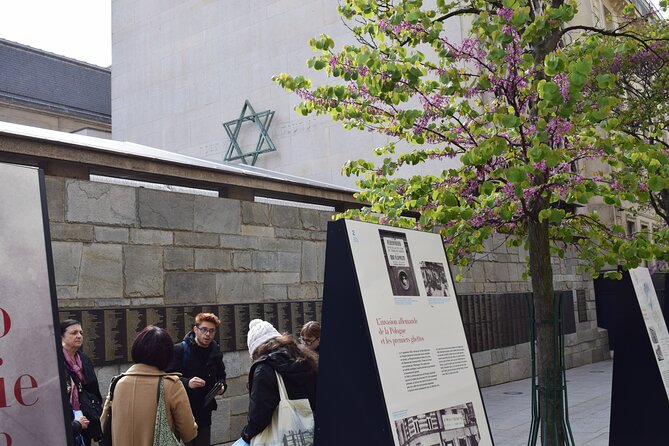
- Le Marais gives you the strongest sense of place, with Rue des Rosiers, Jewish shops, the Agoudas Hakehilos Synagogue, and the Shoah Memorial.
- Montmartre adds an artistic angle, linking Jewish immigrant artists with the cafés and studios of early 20th-century Paris.
- The tour ends at Sacré-Cœur, with time for the Paris panorama from Square Louise-Michel.
- Public transport tickets are included, making the transfer from Hôtel de Ville to Montmartre simple.
- Indoor entry is not included, so you will not tour the synagogue or monuments from inside.
- Guide quality matters, and past guides have included Benjamin, Thomas, Pierre Louis, Benoit, Adrian, and Boniet.
Two Paris neighborhoods, two Jewish stories
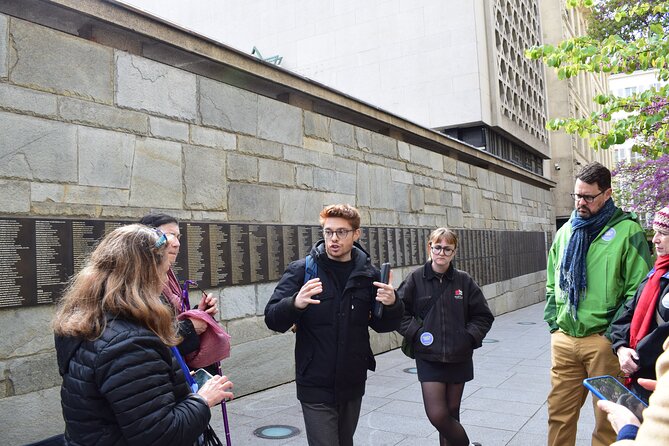
The strength of this walk is its contrast. Le Marais shows Jewish Paris as a place of community, religion, family life, and commerce. Montmartre presents a more restless world of painters, writers, musicians, immigration, and artistic experiment.
That contrast gives the tour a clear purpose. You are not simply walking through two attractive neighborhoods and attaching a Jewish label afterward. You are looking at two different ways Jewish life took shape in Paris: rooted community life in the Marais, and creative reinvention on the northern hill.
The tour begins at L’Elephant Du Nil on Rue Saint-Antoine at 2:30 pm. Arrive five to ten minutes early. Late arrivals cannot join once the walk has started, so this is not the activity to schedule tightly after a museum visit or train arrival.
The advertised experience is private for your group, while the general information also gives a maximum of 12 people and describes an interactive group of up to nine. That difference is worth checking when you book. In any case, this is designed to be much more personal than a large city walk.
More Le Marais Tours:
- Award-Winning Paris French Bakery Experience — Le Marais, 4th Arr
★ 4.5 · 1,186 reviews - Paris Le Marais Food Tour With 10+ Tastings, Cheese, Wine & More
★ 5.0 · 985 reviews - Paris Le Marais District Original Food and Wine Tasting Tour
★ 4.5 · 880 reviews
Le Marais, where Jewish Paris feels most tangible
The first hour is spent in Le Marais, the part of the tour with the clearest physical connection to Jewish life. The streets are narrow, old, and easy to cover on foot, but the important part is what your guide adds to the buildings around you.
You will hear about the medieval Jewish presence in the area, later waves of immigration from Eastern Europe, wartime destruction, and the rebuilding of communal life. The subject reaches across centuries, so a good guide needs to keep the story tied to the street you are standing on.
This is also where guide style makes a real difference. Benjamin was praised for placing French Jewish history within a wider European and world setting. Thomas was especially good at turning historical facts into stories, while Pierre Louis was described as patient, engaging, and willing to answer questions at the group’s pace.
The tour is not only about persecution and loss. You also hear about schools, religious institutions, businesses, family life, and the ways identity has continued to change. That balance matters. A walk focused only on tragedy can leave you with a narrow picture of Jewish Paris.
Agoudas Hakehilos Synagogue
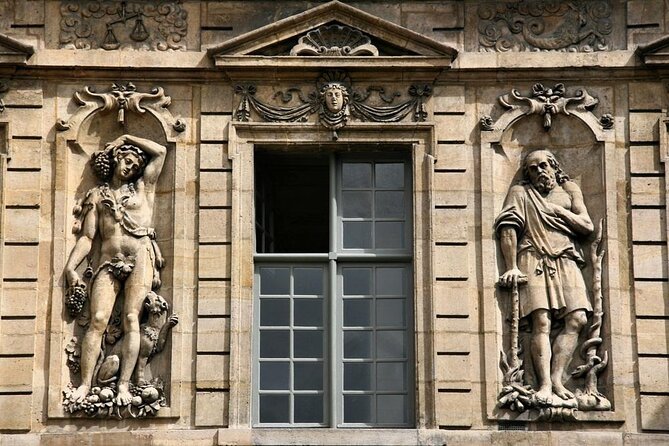
One of the most memorable stops is the exterior of the Agoudas Hakehilos Synagogue, designed by Hector Guimard. The architect is best known for the flowing Art Nouveau entrances of the Paris Métro, and the synagogue gives you another way to see that style.
You will learn how Jewish immigration from Eastern Europe changed this area in the late 19th and early 20th centuries. The synagogue is not just an architectural curiosity. It points to the institutions that helped new arrivals build religious and social lives in a new city.
The limitation is clear: the interior is not included. You will view the building from outside and listen to the explanation. If you want to visit Paris synagogues from within, this walk alone will not provide that experience.
The Shoah Memorial and the weight of remembrance
The walk continues to the exterior of the Mémorial de la Shoah. Your guide explains the occupation, resistance, deportation, and the role of remembrance in present-day French Jewish life.
This section can be emotionally difficult, and the best guides handle it with care. One particularly useful point from the experience is that you can choose to return to the memorial after the tour and spend more time inside. The walk itself does not include indoor admission, but the location makes a separate visit possible.
Do not expect a full museum visit here. You receive context from the pavement outside, then continue through the neighborhood. If the memorial is a main reason for booking, plan extra time on another day or after the walk, rather than assuming the guided tour covers the exhibits.
One criticism raised about the experience is that some guides spend too much time giving broad lectures and too little time explaining the immediate buildings and streets. Another concern is that the Holocaust can take up so much space that everyday Jewish life in the Marais receives less attention. You can improve the experience by asking direct questions about housing, work, schools, food, and communal life.
More Montmartre and Sacré-Cœur Tours:
- Montmartre Hidden Gems and Scenic Highlights Walking Tour
★ 5.0 · 2,684 reviews - Montmartre Hill French Gourmet Food and Wine Tasting Walking Tour
★ 5.0 · 2,588 reviews - Paris: Montmartre Cheese, Wine & Pastry Guided Walking Tour
★ 4.8 · 2,255 reviews - Paris: Montmartre Highlights Walking Tour with a Local Guide
★ 4.9 · 1,668 reviews
Rue des Rosiers and the living neighborhood
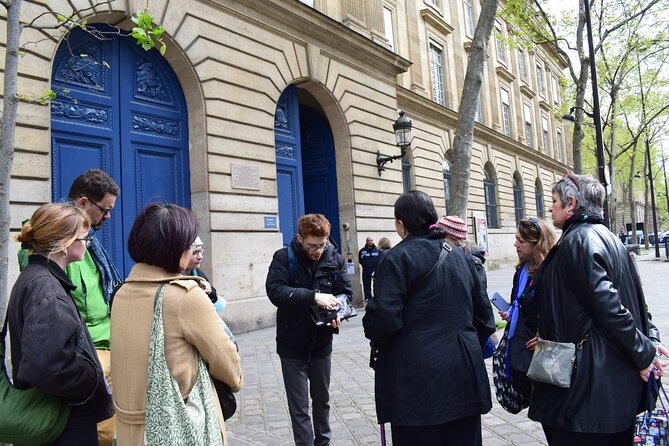
Rue des Rosiers is the most recognizable Jewish street on the route. Bakeries, delis, falafel restaurants, and specialty shops reflect traditions that have continued, shifted, and sometimes become part of the wider Paris food scene.
This is where the tour becomes more grounded. Instead of hearing only about dates and political events, you can connect the story to food, storefronts, and the daily movement of people through the neighborhood.
Some guides have included a small taste of falafel, including a stop connected with L’As du Fallafel. Treat this as a possible extra rather than a guaranteed part of every departure. Food is not listed as a formal inclusion, but it has been a memorable touch on some tours.
The Marais portion finishes near Hôtel de Ville. One past participant felt the early part moved slowly because the overall sequence was not explained at the beginning. That is useful advice: ask your guide early how the Marais and Montmartre sections fit together. Once the larger idea is clear, the stops make more sense.
The public transport link to Montmartre
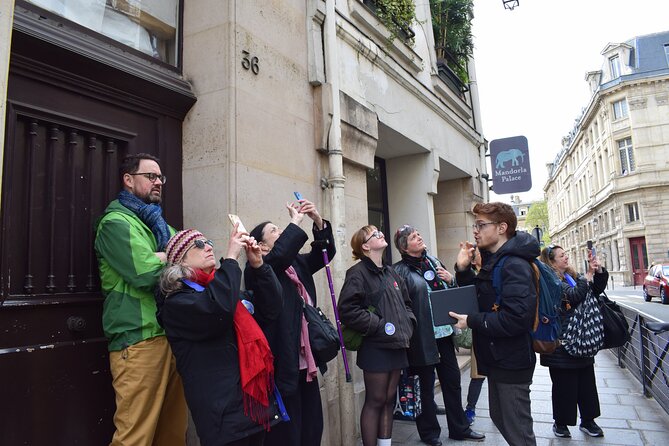
The transfer to Montmartre uses public transport, and tickets are included. This is a practical feature rather than a sightseeing highlight, but it matters. The two districts are not next door, and walking between them would add unnecessary time and effort.
The ride also creates a natural pause after the serious material in the Marais. You get a chance to sit or rest before the tour changes direction. The route then moves from community history to the artistic world associated with Montmartre.
Because the tour begins in the Marais and ends in the north of Paris, it is not a loop. That is useful if you plan to continue around Montmartre afterward, but less convenient if you need to return quickly to the starting point.
Montmartre, Jewish artists, and modern Paris
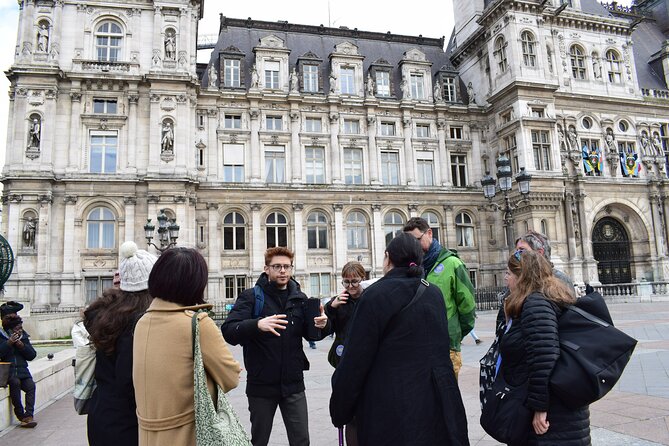
The Montmartre section lasts about an hour and a half. Here the focus shifts to immigrant artists, writers, and musicians who worked in the district’s cafés, studios, and literary circles.
Names connected with this part include Amedeo Modigliani, Max Jacob, and Marc Chagall. The point is not simply to list famous artists. Your guide explains how Montmartre offered room for ambition and experiment while Jewish artists also faced nationalism, antisemitism, and political uncertainty.
This section gives the tour a wider cultural frame. You see how Jewish identity in Paris could be tied not only to synagogue life and neighborhood commerce, but also to painting, poetry, music, and the search for a new artistic language.
The story is not entirely romantic. The artists and writers associated with this world later faced exile, persecution, or broken careers during the Second World War. That tension is important. Montmartre’s artistic mythology can feel glamorous, but the tour places it beside the dangers faced by many immigrant and Jewish communities.
If your main interest is the physical Jewish quarter, Montmartre may feel less direct than Le Marais. Some participants found the tour too focused on general Jewish history and not focused enough on the streets themselves. If you enjoy cultural history and biographies, this section should be rewarding. If you want interiors, religious sites, or a detailed account of present-day Jewish institutions, it may feel limited.
Finishing below Sacré-Cœur
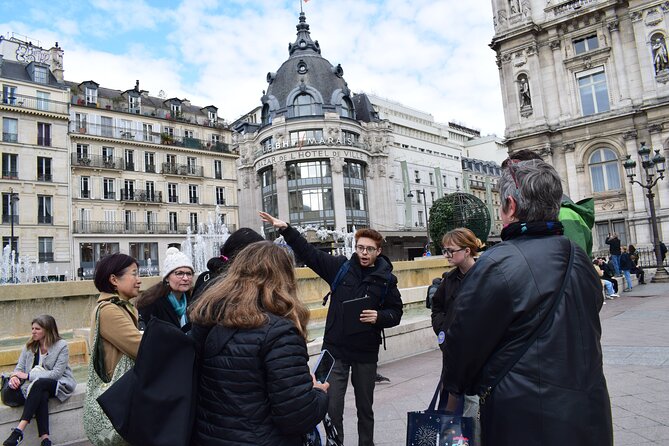
The walk ends at Square Louise-Michel, at the steps below the Sacré-Cœur Basilica. The final 15 minutes are a visual pause, with one of the city’s best high views spread out below.
Sacré-Cœur is not presented as a Jewish site. Its value here is as a closing point, giving you a chance to look across Paris after moving through several layers of the city’s past. It also places the ending near the cafés, streets, and sights of Montmartre, so you can continue exploring on your own.
The finish is well chosen for a walking tour. You end somewhere memorable rather than beside a random Métro entrance. Keep in mind that the walk reaches the hill and basilica steps, so comfortable shoes are essential. Rain also matters. One past group had cold, wet weather, but a committed guide kept the experience moving. Still, a waterproof jacket and shoes with a firm grip will make the afternoon much easier.
Guide quality and the small-group advantage
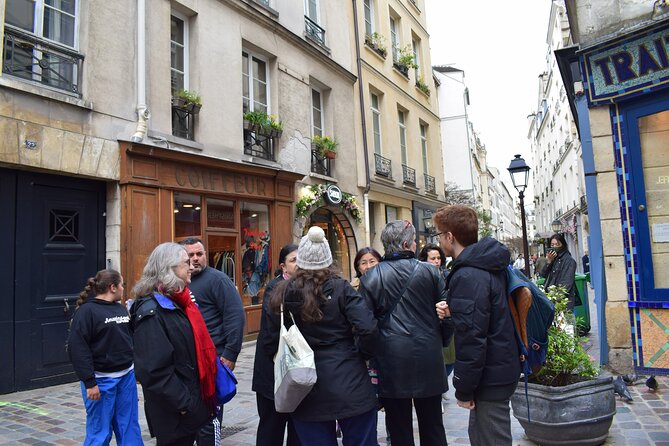
The most consistent strength of this experience is the guide. Benjamin received especially strong praise for his storytelling and broad historical context. Thomas was noted for his ability to make long periods of history easy to follow. Pierre Louis was valued for his patience, energy, and willingness to walk at the group’s pace.
Benoit, Adrian, and Boniet were also singled out for clear explanations and a friendly manner. Guide assignments can change, so you should not book on the assumption that one specific person will lead your tour. Still, the range of strong guide reports suggests that the experience depends on local staff who care about the subject.
A small group helps in several ways. You can ask about a family connection, pause when a building catches your eye, or request more detail about a topic that interests you. It also makes it easier for the guide to notice when the group is tired or struggling with the pace.
The downside is that a small group does not automatically guarantee a good tour. Two lower-scoring experiences describe guides who gave long speeches, offered too much opinion, or did not point out enough about the immediate surroundings. I would ask questions and make clear what you want to understand. That turns the walk from a general history talk into a more useful neighborhood tour.
Is $102.12 a fair price?
At $102.12 per person, this is not a bargain-priced stroll. You are paying for roughly three and a half hours, an English-speaking local guide, public transport tickets, and a small-group format rather than admission to major monuments.
The value is strongest if you want interpretation. The buildings and streets are free to see on your own, but the connections between medieval settlement, immigration, wartime history, religious life, food, and modern art are harder to assemble without help.
The value is weaker if you expect indoor access. The synagogue, Shoah Memorial, and Sacré-Cœur are not included as interior visits. You may also find the cost high if your main goal is simply to walk Rue des Rosiers and see the outside of a few landmarks.
I would consider this a specialist tour. For someone with a strong interest in Jewish history, migration, French culture, or the artists of Montmartre, the price can make sense. For a first-time Paris visitor with limited time, a broader city tour may cover more essential sights for less money.
Who should book this walk?
You should consider it if you want:
- A focused look at Jewish Paris rather than a general sightseeing route
- A guide who can connect local streets with wider European history
- A manageable small-group experience
- Both communal history and the Jewish artistic world of Montmartre
- A tour that ends near Sacré-Cœur instead of returning to its starting point
- A thoughtful option for families, provided children can manage a long walking afternoon and serious subject matter
You may want something else if you need synagogue interiors, museum admission, extensive present-day community information, or a tour centered mainly on architecture. You should also allow extra time if you want to visit the Shoah Memorial indoors after hearing the introduction outside.
Overall, I would book this tour for its subject and its guides, not for its included attractions. The best version is a personal history walk led by someone like Benjamin, Thomas, or Pierre Louis, with time for questions and clear links between each stop. Arrive early, wear good shoes, bring weather protection, and ask your guide to explain the full route at the start.
FAQ
How long does the tour last?
The experience lasts approximately 3 hours and 30 minutes, including the walking sections and the public transport transfer between Le Marais and Montmartre.
Where does the tour begin?
It begins at L’Elephant Du Nil, 125 Rue Saint-Antoine, 75004 Paris, France.
What time does the tour start?
The scheduled start time is 2:30 pm. You should arrive five to ten minutes early because joining after the tour has started is not possible.
Where does the tour end?
The tour ends at Square Louise-Michel, 6 Place Saint-Pierre, 75018 Paris, near the steps of Sacré-Cœur.
Is public transport included?
Yes. Public transport tickets for the short transfer between the Marais and Montmartre are included.
Can I go inside the synagogue or the Shoah Memorial?
No. The tour includes exterior visits only, and entry to monuments and historical sites is not included.
How large is the group?
The activity has a maximum of 12 people. Its description also presents the experience as a private or small-group activity, with an interactive format of up to nine people, so confirm the exact arrangement when booking.
Is the tour offered in English?
Yes. The tour is offered in English.
What is the cancellation policy?
You can cancel up to 24 hours before the start time for a full refund. Cancellations or changes made less than 24 hours before the start time are not accepted for a refund.
More walking tours in Paris
- Paris Top Sights Half Day Walking Tour with a Fun Guide
★ 5.0 · 2,893 reviews - Paris Île de la Cité and Notre-Dame Walking Tour With Crypt
★ 5.0 · 2,272 reviews - Paris in a Day: Louvre or Orsay, Eiffel Tower, City Walk & Cruise
★ 5.0 · 1,956 reviews - Paris City Center Free Walking Tour (Tip-Based)
★ 5.0 · 1,340 reviews
More Jewish heritage tours in Paris
- Le Marais District & Jewish Quarter Guided Walking Tour 12ppl Max
★ 5.0 · 361 reviews - Le Marais/Paris – The Historic, Trendy, Jewish, LGBT district
★ 5.0 · 341 reviews - Paris: Le Marais & Montmartre Jewish History Walking Tour
★ 4.8 · 170 reviews - Le Marais District & Jewish Quarter – Exclusive Guided Walking Tour
★ 5.0 · 154 reviews
Just added around Paris
- Private Paris Marche d’Aligre Walking Tour with Tastings★ 5.0 · 8 reviews
- Private Louvre Museum Tour for Kids & Families with Alberto or his team in Paris★ 5.0 · 41 reviews
- Private Highlights of Paris Tuk-Tuk Experience★ 5.0 · 26 reviews
- Paris Latin Quarter Walking Tour: History & Culture – Small Group★ 5.0 · 14 reviews
- Private Highlights of Paris Bike Tour★ 4.5 · 15 reviews
- Paris Musee d’Orsay PRIVATE TOUR with a Local Private Guide★ 5.0 · 41 reviews
- Private Half Day Historic Tour★ 5.0 · 58 reviews
- Pere Lachaise Cemetery Paris – Exclusive Guided Walking Tour★ 5.0 · 72 reviews
Montmartre and Sacré-Cœur Tours, compared.

Montmartre Hidden Gems and Scenic Highlights Walking Tour
Read our review →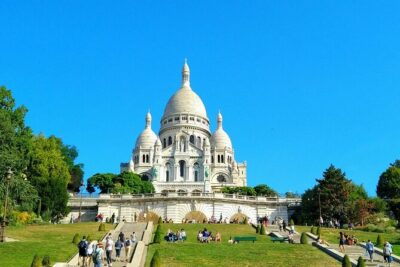
Montmartre Hill French Gourmet Food and Wine Tasting Walking Tour
Read our review →
Montmartre Cheese, Wine & Pastry Guided Walking Tour
Read our review →
Montmartre Highlights Walking Tour with a Local Guide
Read our review →
Sacré-Coeur and Montmartre Tour with Expert Guide
Read our review →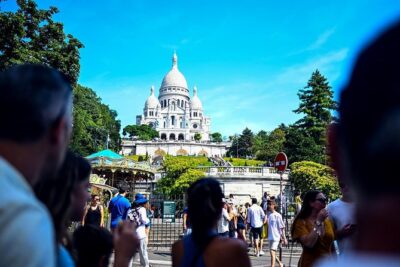
Private Montmartre Food Tour with Wine, Cheese & Pastries
Read our review →
Paris Montmartre Food Tour – A Full French Meal by Do Eat Better
Read our review →
Hidden Montmartre: Paris’ Secret Streets Walking Tour
Read our review →Browse the lists this tour appears in